Chapter 4
Supporting people and strengthening societies

 View photo caption
Over the past few years, in the face of global challenges, the cost-of-living crisis, climate change and the complexities of the digital transition, the European Union has redoubled its efforts to protect and empower people and communities. In 2025, its work to improve living and working conditions for everyone continued apace. The year was defined by initiatives to tackle labour and skills shortages, thereby supporting the EU’s sustainable and inclusive growth and ensuring its competitiveness. The EU continued to support new measures so workers can enjoy their social rights. In addition, ensuring all citizens are treated fairly and equitably, regardless of background, remained a key priority, with the introduction of a crucial framework to combat gender-based violence, along with plans to strengthen consumer rights.
The European Pillar of Social Rights – open a new tab. functions as a beacon guiding the EU towards a strong, social Europe that is fair, inclusive and provides equal opportunities for all. In 2025, the European Commission carried out a review of the European Pillar of Social Rights Action Plan – open a new tab. with the aim of better implementing the pillar, turning its 20 key principles – open a new tab. into concrete action to benefit citizens. In parallel, the Commission started working – open a new tab. on the upcoming EU Anti-Poverty Strategy, the first of its kind at the EU level.
Social dialogue plays a crucial role in keeping European enterprises competitive, increasing their productivity, providing quality jobs and ensuring social fairness. On 5 March, the Commission and its cross-industry social partners signed a new Pact for European Social Dialogue – open a new tab., which will strengthen the role of the social partners in shaping labour market, employment and social policies. Additionally, the European Parliament and the Member States reached a political agreement during the year on the revised European Works Council Directive – open a new tab., which strengthens the meaningful involvement of employees in company decisions to help manage change in transnational settings.
The social economy has firmly established itself as an integral part of the EU’s economy and society, contributing to Europe’s prosperity, competitiveness and resilience. In 2025, the Commission launched the midterm review – open a new tab. of its 2021–2030 Social Economy Action Plan – open a new tab.. Already, more than 4.3 million associations, cooperatives, mutual societies, foundations and social enterprises pursue activities that prioritise social and environmental objectives over profit.
EU targets for 2030
- At least
78 % of the population aged 20 to 64 should be in employment. - At least
60 % of all adults should participate in training every year. - At least
15 million fewer people should be at risk of poverty or social exclusion.
Skills for the EU’s prosperity and for economic and societal resilience
Human capital is key to the EU’s prosperity, democracy, economic and societal resilience, and unique social market economy. To be competitive and prepared for the future, the EU needs to support and prepare its citizens with the skills needed for success in education, work and daily life, as highlighted by the Competitiveness Compass – open a new tab. (see Chapter 2).
This is why, in March, the Commission launched the union of skills – open a new tab., a comprehensive strategy aiming to support the development of quality, inclusive and adaptable education, training and skills systems to increase the EU’s competitiveness. Enhanced skills intelligence at the EU level will be of key importance in this context, for effective and targeted policies. The union of skills also builds on and works synergistically with action already taken under the European Education Area (EEA).
-
1 in 5 adults struggles with reading and writing
(DG Education, Youth, Sport and Culture, Education and Training Monitor 2025 – Comparative report, Chapter 7.2 – open a new tab., 2025).
-
1 in 4 15-year-olds falls short in reading, maths and
science
(DG Education, Youth, Sport and Culture, The twin challenge of equity and excellence in basic skills in the EU – open a new tab., 2024).
-
Nearly 4 out of 5 small and medium-sized
enterprises cannot
find the talent they need
(European Commission, Flash Eurobarometer 529 – open a new tab., September 2023).

The union of skills
- Building skills for quality lives and jobs.
- Upskilling and reskilling for the digital and clean transitions.
- Circulating skills across the EU for competitiveness.
- Attracting, developing and retaining talent for Europe’s future.
An increase of just 0.1 % in skills investment for young workers could raise employment by 0.25 % and increase gross domestic product by 0.18 % (DG Employment, Social Affairs and Inclusion, Employment and Social Developments in Europe 2024 – open a new tab., 2024).
Between 2021 and 2027 the EU is investing over €150 billion to support people, businesses, education institutions and others to develop the education and skills needed for a thriving, competitive European economy. In the new multiannual financial framework (see Chapter 8), set to run from 2028 to 2034, the European Commission proposes that at least 14 % of the funds under any national and regional partnership plans – open a new tab. (excluding ring-fenced amounts for agriculture and for the Social Climate Fund) would be dedicated to social objectives. The new budget will help deliver on the European Pillar of Social Rights by investing in people through quality jobs, social inclusion, education, skills, health, housing and social infrastructure.
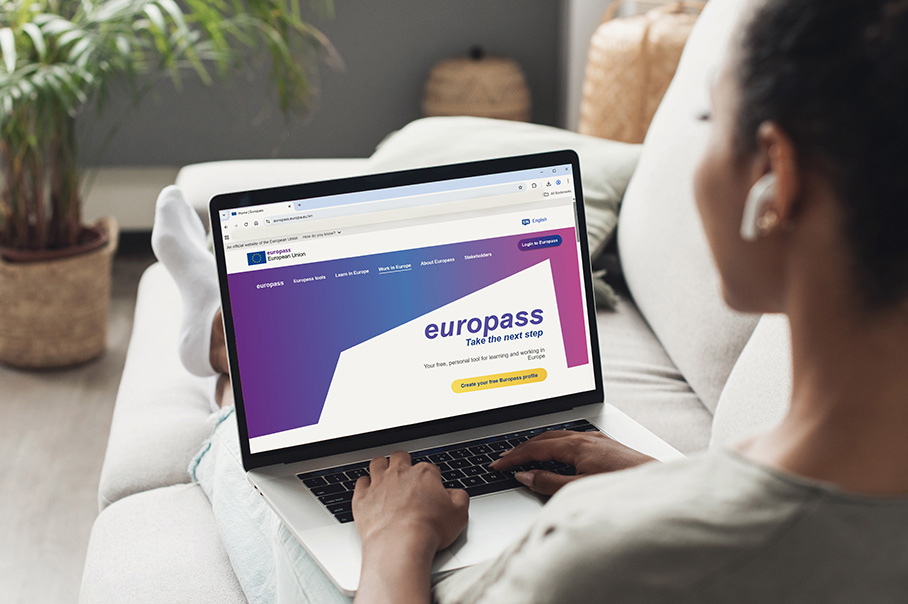
Investing in people, recognising their skills and attracting talent across Europe are key pillars of the union of skills. In 2025, the Commission celebrated 20 years of Europass – open a new tab., a free and secure online platform that supports citizens throughout their professional journeys.
 © kite_rin – stock.adobe.com
Attracting talent from non-EU countries is on of the key objectives of the union of skills. In November, the Parliament and the Council of the European Union also reached a political agreement on the EU Talent Pool – open a new tab., a key tool to address the EU’s labour and skills shortages. It will be a user-friendly, modern and trustworthy platform to match jobseekers from non-EU countries with EU employers. Moreover, a Marie Skłodowska-Curie action ‘MSCA Choose Europe’ pilot project was launched in 2025 to increase the attractiveness of European research careers by addressing the issue of precarity and offering excellent working conditions.
Providing quality jobs
Ensuring the availability of quality jobs not only helps to foster social fairness but also contributes to a robust and competitive industrial landscape. The Commission adopted the Quality Jobs Roadmap – open a new tab. in December. Prepared with the close involvement of social partners, it focuses on creating and preserving quality jobs, particularly during the clean and digital transitions, while ensuring that workers’ rights keep pace with a modern economy. The roadmap also calls for the enforcement of existing rights, quality services for all and across regions, adequate funding, and strengthened social dialogue and collective bargaining. In conjunction, the Commission launched the first-stage consultation on a quality jobs act – open a new tab. to gather social partners’ views on a potential initiative in this field.
Supporting workers
While digital tools provide both workers and employers with more flexibility, allowing for greater autonomy and innovation, there are also increasing calls for safeguards to ensure that digitalisation does not weaken workers’ rights. In 2025, the Commission continued to take steps towards defending workers’ right to disconnect and to fair telework, concluding second-stage consultations with social partners. Furthermore, by the end of the year, the Commission had successfully concluded the work of the expert group dedicated to the transposition of the Platform Work Directive – open a new tab. into national law, which Member States are required to do by December 2026.
In July, the Commission proposed stronger safeguards for workers exposed to hazardous substances with new chemical exposure limits – open a new tab.. The measures are expected to prevent around 1 700 cases of lung cancer and 19 000 other serious illnesses over the next 40 years and could save up to €1.16 billion in healthcare costs. The Commission’s proposal will be discussed by the Parliament and the Council. In a similar vein, the EU also published a new indicative list of hazardous medicinal products – open a new tab., along with guidelines for managing health and safety risks relating to asbestos – open a new tab..
In an increasingly challenging geopolitical environment, the European Globalisation Adjustment Fund for Displaced Workers – open a new tab. continued to assist workers dismissed due to major restructuring events. As a flagship initiative of the Action Plan on the Future of the Automotive Sector – open a new tab., the Commission proposed to amend the fund to allow companies to request support for workers facing imminent redundancy.
Funding under the European Globalisation Adjustment Fund for Displaced Workers
- €8 million to support 2 400 workers dismissed after the bankruptcy of Belgian coach manufacturer Van Hool.
- €1 million to support 417 former employees in Belgium after the closure of chip manufacturer BelGaN’s factory.
- €3 million to help 915 workers dismissed following the closure in Germany of Goodyear’s production site in Fulda and the partial shutdown of the site in Hanau.
- €8.5 million to support 5 800 workers dismissed after the bankruptcy of battery maker Northvolt in Sweden.
Furthermore, in May, trade unions and employers’ organisations from five sectors signed guidelines – open a new tab. to prevent and tackle violence and harassment related to work. These expand the scope of the existing guidelines to include cyberviolence and underscore the principles of gender equality and anti-discrimination.
Affordable housing and energy
Unaffordable housing has become a widespread and urgent issue across Europe, making it harder for people to move for studies or work and in turn undermining the EU’s competitiveness and economic prosperity. Following a conference – open a new tab. on 24 March, co-organised by the Parliament and the Commission, the process began for the development of the first-ever European Affordable Housing Plan – open a new tab., adopted in late 2025 and drawing on the input of a new Housing Advisory Board – open a new tab.. The plan aims to support Member States, regions and cities in overcoming structural challenges, unlocking public and private investment and, ultimately, improving access to sustainable, affordable and quality housing, including social housing.

40 %
of young people see the cost of living as the most pressing concern for the future.
Source: European Parliament, Flash Eurobarometer – Youth Survey 2024 – open a new tab., February 2025.
The plan also proposes measures for a more productive and innovative construction and renovation sector that will address the mismatch between housing supply and demand through the European Strategy for Housing Construction – open a new tab.. Bolstering this is the New European Bauhaus – open a new tab. initiative, in relation to which the Commission adopted a communication and a proposal for a Council recommendation – open a new tab. in December, together with the European Affordable Housing Plan. The initiative seeks to foster sustainable, inclusive and aesthetically pleasing spaces, products and lifestyles, aligning with the European Green Deal and the Clean Industrial Deal, while respecting diverse cultures and traditions.
The issue of access to affordable housing is not confined to lower income groups. As such, in 2025, the Commission proposed to revise the Decision on Services of General Economic Interest – open a new tab., with the aim of ensuring that State-aid rules facilitate investment in both affordable housing and social housing. The Commission will work with national, regional and local authorities to simplify rules and procedures that restrict housing supply, with a particular focus on planning and permitting. A new legislative initiative on short-term rentals will support areas under housing stress.
By addressing the underlying causes of the housing crisis in a comprehensive way, this plan will be particularly beneficial for those most affected: young people, students, essential workers, people with a low income and other disadvantaged groups. The Commission will mobilise new investment in student and social housing and help Member States put in place better solutions for homeless people based on Housing First principles.
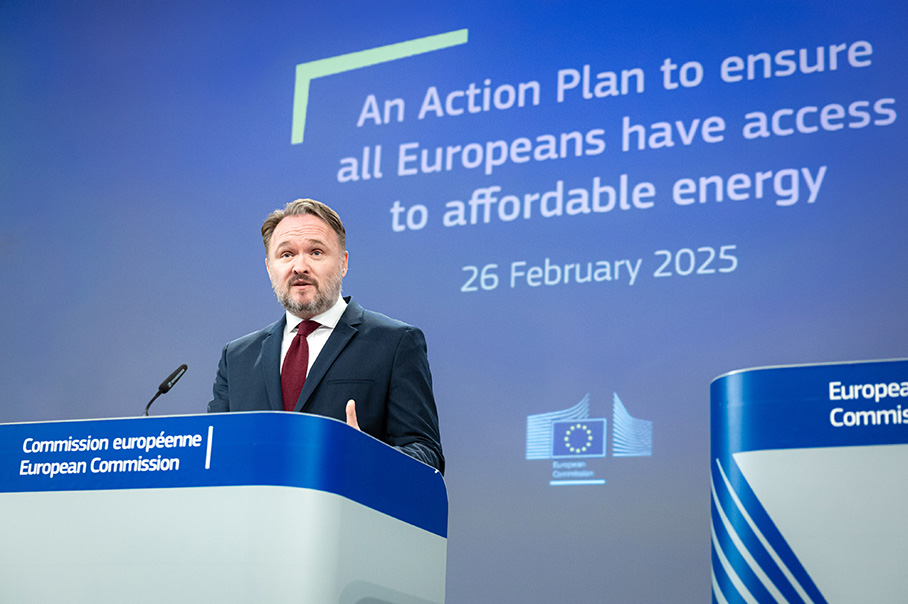
The EU is not only working to make housing more affordable but also helping consumers cut their energy costs. The Action Plan for Affordable Energy – open a new tab. will bring relief to households and businesses facing high energy bills (see Chapter 2), with the savings from reducing Europe’s dependence on fossil fuels potentially reaching €130 billion by 2030. Additional tailored solutions developed throughout the year, such as the revised rules on the energy consumption of electrical appliances in standby mode – open a new tab. – which have applied since 9 May – will further reduce energy use.
The updated standby-mode rules alone are expected to save EU consumers an estimated €530 million annually by 2030.
The Social Climate Fund – open a new tab. will mobilise at least €86.7 billion of spending in the Member States from 2026 to 2032. The fund provides resources to support citizens through the clean transition and to address the potential social impacts of the new Emissions Trading System for buildings and road transport – open a new tab. (ETS2) on vulnerable households, microenterprises and transport users. Additionally, in December, the Commission approved the first national Social Climate Plan – open a new tab. – submitted by Sweden.
Empowering consumer protections
Thanks to the EU’s consumer protection rules, consumers are well protected from unfair practices and have the right to clear information about the products and services they buy. However, the rise of the digital economy and e-commerce has brought new challenges for consumers online.
The new Consumer Agenda – open a new tab. for 2025–2030, adopted on 19 November, focuses on strengthening consumer rights within the Single Market. This will improve enforcement, drive competitiveness and sustainable prosperity, protect vulnerable consumers, reduce administrative burdens and promote a fair, green and digital economy. An important element of the agenda will be the digital fairness act – open a new tab., set for adoption in the latter half of 2026, which specifically aims to address harmful practices – such as dark patterns and deceptive influencer marketing – across online spaces, with a particular focus on minors. It will also look into opportunities for simplification and the reduction of burdens without lowering consumer protection. The Commission also published an e-commerce communication – open a new tab. to tackle the health and safety risks linked to a surge in low-value imports into EU markets.
The 2025 European Consumer Summit – open a new tab. brought together policymakers, businesses and civil society to discuss consumer protection, cross-border e-commerce and digital markets, shaping the new Consumer Agenda and the related action plan. The event also saw two new e-commerce platforms join the Consumer Protection Pledge – open a new tab., joining 10 existing signatories in committing to go beyond legal requirements to protect consumers and their digital rights.
The findings of the EU’s 2025 Consumer Conditions Scoreboard – open a new tab.

Online shoppers are 60 % more likely to experience problems than offline shoppers.

93 % worry about targeted advertising, including:
- the collection of personal data without consent (71 %);
- excessive advertising (67 %);
- unavoidable personalisation (63 %).

45 % had encountered online scams in the previous year.
Many had faced unfair practices, such as:
- fake reviews (66 %);
- misleading discounting (61 %).

Other 2025 consumer protection actions
- The Parliament and the Council reached a political agreement on the new toy-safety rules – open a new tab..
- An investigation – open a new tab. by the Commission and national consumer authorities revealed that nearly half of second-hand online traders fail to properly inform consumers of their return rights.
- The Commission hosted an implementation dialogue – open a new tab. on consumer protection in the digital environment in July.

To ensure consumers have access to trustworthy reviews and ratings for tourist accommodation, the EU has supported booking platforms, hotel operators and consumer organisations in developing a new code of conduct – open a new tab..
Youth engagement and participation
The importance of young people in shaping the EU’s future is reflected in the Political Guidelines – open a new tab. for the 2024–2029 Commission. The EU is committed to hearing what young people have to say and addressing their concerns directly.
The new President’s Youth Advisory Board – open a new tab., the annual Youth Policy Dialogues – open a new tab. and the Commission’s Youth Check – open a new tab. put young people at the heart of the EU’s policymaking. In 2025, the Commission applied the Youth Check to its annual work programme for the first time, consulting young people and youth civil society on key initiatives of significant relevance for young people. Moreover, all Commissioners organised Youth Policy Dialogues to encourage young people to share their perspectives, making sure their voices are heard at the highest level of EU decision-making.
The President’s Youth Advisory Board brings together one young representative from each Member State’s National Youth Council and one from the European Youth Forum – open a new tab., along with observers from candidate countries and potential candidates for EU accession. It advises the President on issues that matter most to young people, shares their perspectives on policies developed by the Commission and puts young people at the heart of EU policymaking.

Each Commissioner held their first Youth Policy Dialogue within the initial 100 days of the new mandate and continued to personally engage with young Europeans throughout the year:
41 dialogues
have
been held since the start of this
mandate;
9 dialogues
provided
valuable input for initiatives
going through the Youth Check
process, such as the European Democracy Shield, the European Ocean Pact and the
Vision for Agriculture and Food.

New guidelines – open a new tab. on the protection of minors have been adopted under the Digital Services Act – open a new tab. to protect children and young people from online risks such as grooming, harmful content, and problematic and addictive behaviours, along with cyberbullying and harmful commercial practices.
The Commission’s Political Guidelines also emphasise the importance of guaranteeing intergenerational fairness; focusing on ensuring that decisions taken today do not harm future generations; and fostering solidarity and engagement between people of different ages. In 2025, the Commission organised a European Citizens’ Panel (see Chapter 6) and a series of strategic dialogues with citizens, institutions and civil society to inform a future Strategy on Intergenerational Fairness – open a new tab..
Supporting education and building bridges
The union of skills significantly builds on and is being implemented together with the EEA – open a new tab., an initiative to help Member States build more inclusive and resilient education and training systems. In June, the Commission published a report on the interim evaluation of the EEA – open a new tab., which serves as a basis for the Council to agree on a new strategic cooperation framework for 2026–2030.
An Action Plan on Basic Skills – open a new tab. and a STEM Education Strategic Plan – open a new tab. will also come under the union of skills. These aim both to support Member States’ efforts to ensure that all people – from early childhood through to adulthood – have strong basic skills and to increase the share of students enrolled in STEM (science, technology, engineering and maths) fields, with a special focus on female students.
The successful roll-out of the union of skills and the EEA relies on robust support for education and training. Erasmus+ – open a new tab. is a lasting EU success story, with nearly 40 years of impact on the personal and academic growth of more than 16 million people. In this context, the Commission proposed to increase the budget of the Erasmus+ programme by 50 % to help young people, adult learners and staff undertake a learning mobility experience in other Member States, thus reinforcing a sense of connection, common EU values and civic engagement. The proposal also aims to extend the programme’s scope to cover volunteering, creating a one-stop shop for all EU-funded youth projects and initiatives.
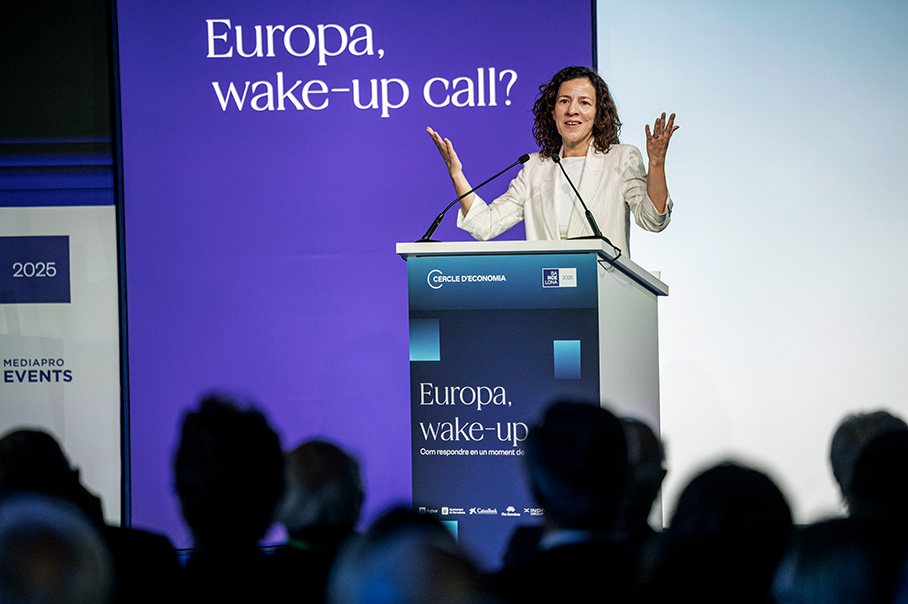
In 2025, the Erasmus+ programme received the Cercle d’Economia Award for European Integration – open a new tab..
The 2025 European Education and Skills Summit – open a new tab., under the theme ‘Fuelling Europe’s growth’, focused on preparing Europe’s education systems for rapid societal and economic change. Ministers, policymakers, educators, students, social partners and industry leaders discussed how education can strengthen Europe’s competitiveness, cohesion and democratic values. The Commission also presented the new Education and Training Monitor – open a new tab. and the Erasmus+ Annual Report 2024 – open a new tab..
Steadfast in its dedication to ensuring a robust EEA, in 2025 the Commission convened the first European Degree Forum – open a new tab. in Florence, Italy. It brought together more than 160 representatives of national authorities, universities, quality assurance agencies and student organisations to prepare the ground for the roll-out of a joint European degree label under the Florence Pledge.
Education and skills development is not just confined to universities, however. A variety of stakeholders, such as vocational education and training (VET) providers, schools and labour market stakeholders, benefit from Erasmus+ learning mobility and cooperation projects. The Centres of Vocational Excellence – open a new tab., a flagship initiative of Erasmus+ in the VET field, saw a record number of applications in 2025, reaching a total of 303, up from the previous year’s 132. For the 2021–2027 period, the Erasmus+ programme has allocated an indicative budget of €400 million to finance these centres. In the 2025 call for interest, the budget available allows at least 15 new Erasmus+ projects to be funded.
The Herning Declaration on attractive and inclusive vocational education and training for increased competitiveness and quality jobs 2026–2030
Endorsed on 12 September 2025 by ministers responsible for VET from Member States, EU candidate countries, European Economic Area countries, European social partners and the Commission, the Herning Declaration – open a new tab. renews and strengthens coordinated efforts for VET reforms in line with evolving societal and labour market needs. The declaration is an important contribution to the upcoming European VET strategy, announced under the union of skills, to help define the new policy framework in this area for 2026–2030.
The European Alliance for Apprenticeships – open a new tab. hosted its most recent high-level event – open a new tab. over the summer, bringing together more than 230 participants. Key stakeholders, policymakers, social partners, education providers, companies and apprentices gathered to explore how apprenticeships can drive Europe’s clean transition and develop a skilled, resilient workforce for the future. Together with the European Training Foundation – open a new tab., it also organised a seminar for partner countries in Montenegro – open a new tab. in October.
In 2025, the Commission continued to support the negotiations on the proposed traineeships directive – open a new tab., along with the revised Council Recommendation on a reinforced Quality Framework for Traineeships – open a new tab..
For the first time, the Action Plan on Basic Skills, part of the union of skills, also recognises citizenship skills alongside those such as literacy, mathematics and science. With this in mind, the theme for the 2025 edition of the European Innovative Teaching Award – open a new tab. was ‘Citizenship education – Participation in democratic life, common values and civic engagement’. During the year, through Erasmus+ Jean Monnet Learning EU initiatives – open a new tab., 106 proposals were selected to deliver a minimum of 120 hours of EU democracy and values teaching per school over a three-year period. The Jean Monnet school networks also expanded in 2025. These networks are composed of institutions across at least three Member States, and help integrate EU topics into primary, secondary and VET classroom learning.
Additionally, in 2025, the Commission launched two DiscoverEU – open a new tab. application rounds, offering more than 75 000 travel passes to 18-year-olds across Europe. DiscoverEU helps young people explore the continent’s shared cultural heritage and gain skills and competences that will serve them throughout their lives. These rounds took place in the context of the 40th anniversary of the Schengen Agreement, marking four decades of free movement across much of Europe.
A Culture Compass for Europe
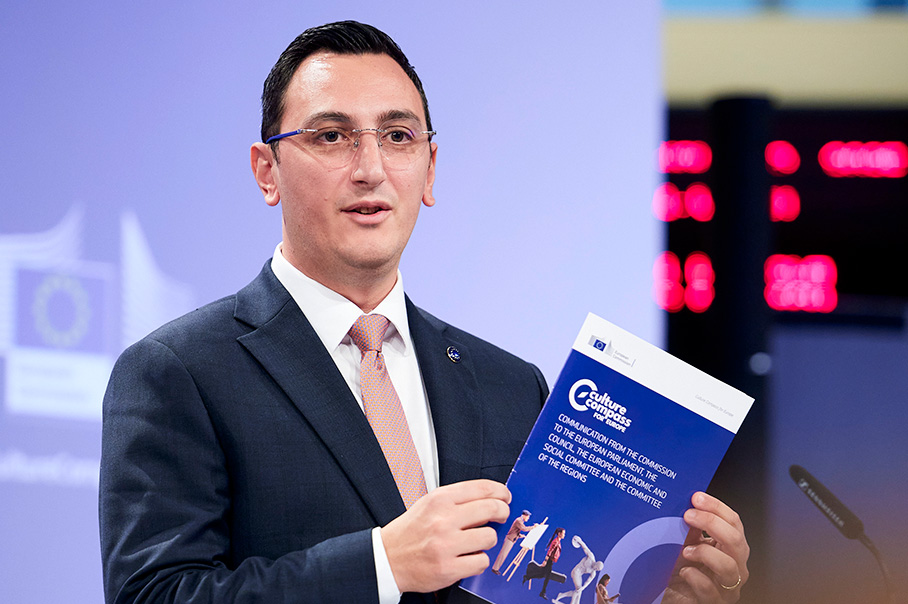
In an era of rapid change, it is imperative to recognise and fully harness culture’s potential and to address the challenges facing the culture and creative sectors and industries. The Commission has therefore presented a Culture Compass for Europe – open a new tab., establishing a vision and setting out key directions for placing culture at the heart of EU policymaking. The compass’s ambition is underpinned by 20 flagship initiatives, including a proposal for an EU Artists Charter to improve working conditions for artistic and culture professionals.
In 2025, the EU continued to work towards achieving a union of equality. In this context, a key landmark came in March when the Commission unveiled its Roadmap for Women’s Rights – open a new tab.. The roadmap outlines a long-term vision for achieving gender equality, aiming to uphold and advance women’s rights and to address gender-equality challenges, including discrimination, violence and technology-facilitated bias. On 16 October, representatives of EU institutions, Member States and women’s rights organisations came together in Brussels, Belgium, to officially endorse the Declaration of Principles for a Gender-equal Society (available as an annex to the roadmap). This declaration builds on the significant progress made under the 2020–2025 Gender Equality Strategy – open a new tab. on working towards a society where women and girls can thrive free from discrimination and violence.
- 1 in 3 women has experienced physical or sexual violence in adulthood.
- 1 in 5 women has faced domestic violence.
- 1 in 6 women has experienced sexual violence.
Source: Eurostat, EIGE and FRA, EU Gender-based Violence Survey – Key results – open a new tab., 2024.
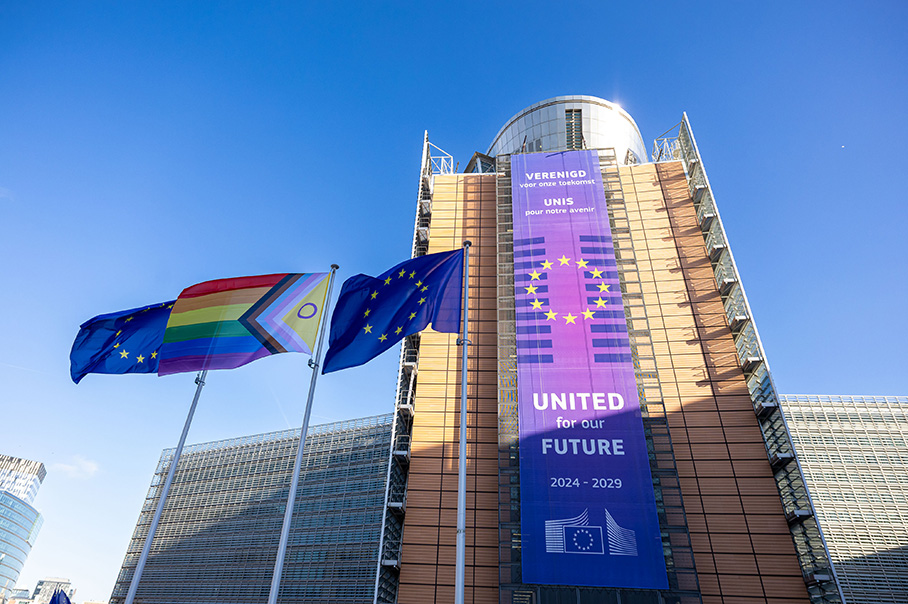
On top of this, in October the Commission also launched its LGBTIQ+ Equality Strategy for 2026–2030 – open a new tab., which combines targeted measures with strengthened efforts to mainstream LGBTIQ+ equality across all EU policies. Social acceptance of LGBTIQ+ people has increased across the EU in the last five years. According to the Eurobarometer on discrimination in the EU – open a new tab., some 75 % of people say they are comfortable with having gay, lesbian or bisexual colleagues. Nonetheless, LGBTIQ+ people continue to experience disproportionate and unacceptable levels of hate.
- 1 in 2 LGBTIQ+ people still experiences hate-motivated harassment.
Source: FRA, LGBTIQ Equality at a Crossroads – Progress and challenges – open a new tab., 2024.
Tackling discrimination
Combating antisemitism was another key area of focus for the EU in 2025, as Europe witnessed a surge in antisemitic hate incidents and violence targeting Jewish people in the wake of the attacks on 7 October 2023. The Commission hosted the second Civil Society Forum on Combating Antisemitism and Fostering Jewish Life – open a new tab. in April, which brought together 250 experts and activists to discuss specific measures to further step up the fight against antisemitism in the EU. In the face of manifest threats, the 2021–2030 EU Strategy on Combating Antisemitism and Fostering Jewish Life – open a new tab. will continue to guide Commission action to protect the Jewish community.
Anti-racism and accessibility were also on the agenda during 2025. In April, the Commission launched a new public consultation – open a new tab. aimed at shaping the upcoming 2026–2030 EU Anti-Racism Strategy. This new strategy will put in place measures to tackle all forms of racism, including antigypsyism and anti-Muslim hatred. It will build on the path set out in the EU Anti-Racism Action Plan 2020–2025 – open a new tab., aiming to step up efforts to combat racism at both the individual and the structural level.
Building upon the 18th European Platform for Roma Inclusion – open a new tab. on 2 October, the Commission held an implementation dialogue – open a new tab. on 12 November to identify remaining challenges, opportunities for simplification and best practices to help reach the targets of the 2020–2030 EU Roma Strategic Framework – open a new tab..

70 %
of Roma live in poverty. While this is less than in 2016 (80 %), Roma families are still four times more likely to struggle with poverty than the general population in the EU.Source: FRA, Rights of Roma and Travellers in 13 European countries – open a new tab., 2025.
On the accessibility front, the European Accessibility Act – open a new tab., which has applied in the Member States since 28 June, ensures that key products and services – such as phones, computers, televisions, banking and payment services, public transport, e-commerce platforms and electronic communications – are accessible to persons with disabilities, making it easier for them to fully participate in society.
The Commission also announced, in its 2026 Work Programme – open a new tab., a communication on enhancing the Strategy for the Rights of Persons with Disabilities – open a new tab.. Then, in November, the Commission launched a call for evidence and an open public consultation – open a new tab. to gather feedback on the current challenges and needs to ensure equal rights for persons with disabilities in the EU.
Making EU cities more accessible
Accessible spaces are a crucial first step towards achieving equality. 2025 marked the 16th anniversary of the Access City Award – open a new tab., recognising the efforts made by EU cities to prioritise accessibility for persons with disabilities.
In December, Zaragoza, Spain, won the 2026 Access City Award, for being a standout example of how EU cities can successfully integrate accessibility into every aspect of urban life.
 © rh2010 – stock.adobe.com
The EU’s commitment to tackling discrimination extends to all spaces, including digital. In 2025, the Code of Conduct on Countering Illegal Hate Speech Online + – open a new tab. was assessed positively by the Commission under Article 45 of the Digital Services Act, and therefore integrated into the act’s co-regulatory framework (see Chapter 6). The signatories to the code committed to strengthening their systems for detecting and removing illegal hate speech, improving transparency and accountability, and working closely with civil society to prevent the spread of such content, among other things.
- In 2025, the Commission elevated the visibility of sport-driven social initiatives via its #BeActive Awards, which recognise organisations and individuals using sport to foster, among other things, inclusion, gender equality and peace.
Celebrating inclusive societies
Celebrated every year in May, European Diversity Month – open a new tab. embodies the EU’s long-term commitment to diverse and inclusive workplaces and societies. In 2025, more than 500 events took place across the EU.
One of the highlights was the fourth annual European Capitals of Inclusion and Diversity Award – open a new tab., which recognises the work done by EU cities, towns or regions to promote inclusion and create discrimination-free societies.
The winners of the various categories were as follows:
- local authorities with more than 50 000 inhabitants: Utrecht, Netherlands;
- local authorities with fewer than 50 000 inhabitants: Mariehamn, Finland;
- specific award category for inclusive housing: Braga,
Portugal.
 © Jacob Lund – stock.adobe.com