Chapter 6
Upholding European democracy and values
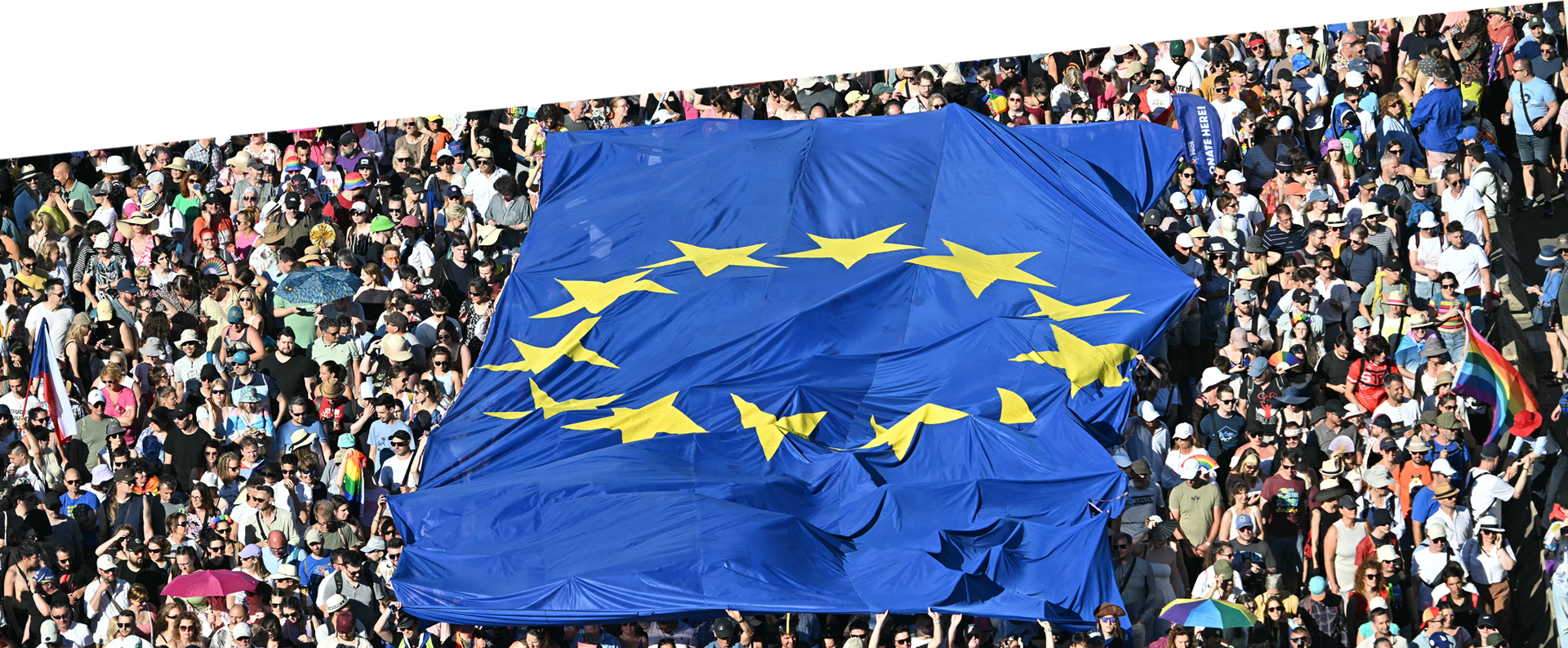
 View photo caption
In a thriving democracy, citizens are free to express their views and form their own opinions. They can participate in democratic life, choose their political representatives and have a say in their future, in a public space where different views can be expressed and diversity is embraced. In 2025, the European Union stepped up its work to strengthen democracy and its resilience to internal and external pressures. It also continued to empower citizens to participate actively in the democratic process and shape the policies that affect their lives and communities.
The European Democracy Shield
Building upon work already set out under the European Democracy Action Plan - open a new tab. and the defence of democracy package - open a new tab., the European Democracy Shield - open a new tab. was presented in November. It is set to strengthen European democracies and empower Europeans to exercise their rights, freely form and express their opinions and participate in the democratic life of the EU actively and safely. Its actions will strengthen democratic institutions, protect the integrity of elections and support media freedom and pluralism.
Key priorities of the European Democracy Shield
- Reinforce situational awareness and support response capacity to safeguard the integrity of the information space.
- Strengthen democratic institutions, free and fair elections, and free and independent media.
- Build societal resilience by supporting citizenship education, skills for democracy and media literacy, and boost citizens’ engagement in democratic life.
Acting as an operational hub for the new European Democracy Shield, a European Centre for Democratic Resilience is set to be established to anticipate and detect threats, issue early warnings and coordinate rapid responses. With Member States at its core, the centre will act as a framework to facilitate information sharing and build the capacity to withstand evolving common threats, in particular foreign information manipulation and interference, and disinformation.

In 2025, the Commission also pledged to step up its engagement with, protection of and support for civil society, recognising the important role it plays in strengthening democracies and building resilient societies. The new EU Strategy for Civil Society - open a new tab. has the following three main objectives.
Main objectives of the EU Strategy for Civil Society
- Strengthen effective and meaningful engagement with civil society as a partner in governance.
- Ensure an open, safe and enabling civic space by providing support and protection to civil-society organisations.
- Support civil-society organisations with adequate, sustainable and transparent funding.
Ensuring information integrity
New technologies have made it possible for hostile actors to operate and to spread disinformation at a scale and with a speed never seen before. Therefore, tackling foreign information manipulation and interference and enhancing societal resilience against these threats are pressing issues for the EU and its Member States.
The EU’s Code of Practice on Disinformation - open a new tab., established in 2018, is the world’s first voluntary self-regulatory instrument for online platforms and search engines. Since February 2025 it has been formally integrated - open a new tab. into the Digital Services Act’s co-regulatory framework as a code of conduct.

82 % of Europeans agree that the existence of news or information that misrepresents reality or is false represents a problem for democracy.

77 % of Europeans agree that the existence of such news or information is a problem in their country.
Source: European Commission, Standard Eurobarometer 102 - open a new tab., November 2024.
General-purpose artificial intelligence (AI) models are becoming the basis for many AI systems in the EU. To ensure safe and trustworthy AI, the AI Act - open a new tab. puts in place rules for the providers of such models. To help the industry comply with these rules, which started to apply in August, a voluntary code of practice - open a new tab. was published with input from over 1 000 stakeholders, including model providers, small and medium-sized enterprises, academics, AI safety experts, rights holders and civil-society organisations.
The European Digital Media Observatory - open a new tab. is an important pillar of the EU’s efforts to gain insights into Europe’s online information space and to strengthen societal resilience against disinformation. A new regional European Digital Media Observatory hub, called FACT - open a new tab., began its work in 2025 to support Moldova and Ukraine, among other countries, in fighting disinformation. As part of its mission, FACT also monitored the 2025 electoral period in Moldova, contributing to ensuring its electoral integrity.
Strengthening electoral rules
Facilitating electoral participation for all citizens is essential for guaranteeing a healthy democracy and building trust in the EU. This is why, in June, the EU adopted new rules - open a new tab. to strengthen the rights of mobile citizens to vote and to stand as candidates in European elections, regardless of where in the EU they live. Member States now have until June 2027 to transpose the rules into national law.
A key element of free and fair elections is that of the electorate’s unfettered access to information. The EU’s new rules on the transparency and targeting of political advertising - open a new tab., which have applied since October, ensure open debate, fair campaigns and free elections. They also support the accountability of political actors and the right of citizens to be informed. Under the rules, political adverts must be clearly labelled as such and must indicate who paid for them, how much they paid and whether they are targeted at a specific audience. This will allow citizens to identify political advertisements easily and make informed choices.
Europe’s democracy, security and economy rely on the rule of law. It is the means through which EU values are translated into tangible benefits for those living in the EU, fostering stability, social cohesion, competitiveness and economic prosperity. Respect for the rule of law is also a must for EU funds. The European Union is committed to upholding the rule of law so that people and businesses across the EU can enjoy the rights and freedoms they are entitled to.

89 % of EU citizens recognise the importance of respect for EU values, including the rule of law.
Source: European Commission, Special Eurobarometer 553 - open a new tab., July 2024.
The 2025 rule of law report - open a new tab., which looks at the Member States and four candidate countries – Albania, Montenegro, North Macedonia and Serbia – confirmed that there is a positive trajectory in many Member States, as important reforms have been undertaken. Challenges remain, however, and in a few cases the situation is serious. In the report, particular emphasis was placed on the Single Market dimension to help identify and address rule-of-law issues that have a direct impact on how companies invest, compete and grow in Europe. The 2025 EU Justice Scoreboard - open a new tab. presents new indicators relevant to the Single Market, highlighting the essential role of efficient and independent justice systems in fostering a fair and competitive market environment.
On a global scale, the EU remains a stronghold for free media, setting a standard for democracy. Yet, there are increasingly worrying trends that confirm the need for the EU to take stronger measures to protect this tenet of European democracy. To that end, most of the provisions of the European Media Freedom Act - open a new tab. started to apply as of 8 August. The rules aim to better protect media and journalists against political interference and to ensure that they can operate more easily across borders, without undue pressure. The new European Board for Media Services - open a new tab., established under the act, aims to strengthen cooperation at the EU level, including against foreign information manipulation and interference, and to promote the effective and consistent application of the EU media law framework.
EU support for free media
€900 000 to strengthen the position of press and media councils in a converged media environment.
€500 000 to implement a media ownership monitoring system - open a new tab. to provide a country-based database.
€2 million in grants to support innovation by local and regional media and boost pluralism.
€3 million for a rapid response mechanism - open a new tab. to provide practical help to protect journalists under threat.
€1.1 million to implement a Media Pluralism Monitor - open a new tab. to identify potential risks to media pluralism.
€5.2 million to support regranting for media sectors of special relevance to democracy - open a new tab. (such as local and investigative journalism, public-interest journalism and community media).
€2.9 million for a media freedom hub - open a new tab. to support existing and established independent Belarusian and Russian media working in the EU.
€3 million for a European festival of journalism and media freedom - open a new tab..
2025 Sakharov Prize
Each year, the European Parliament awards the Sakharov Prize to honour exceptional individuals and organisations defending human rights and fundamental freedoms, safeguarding the rights of minorities and fighting for the respect of international law, democracy and the rule of law.
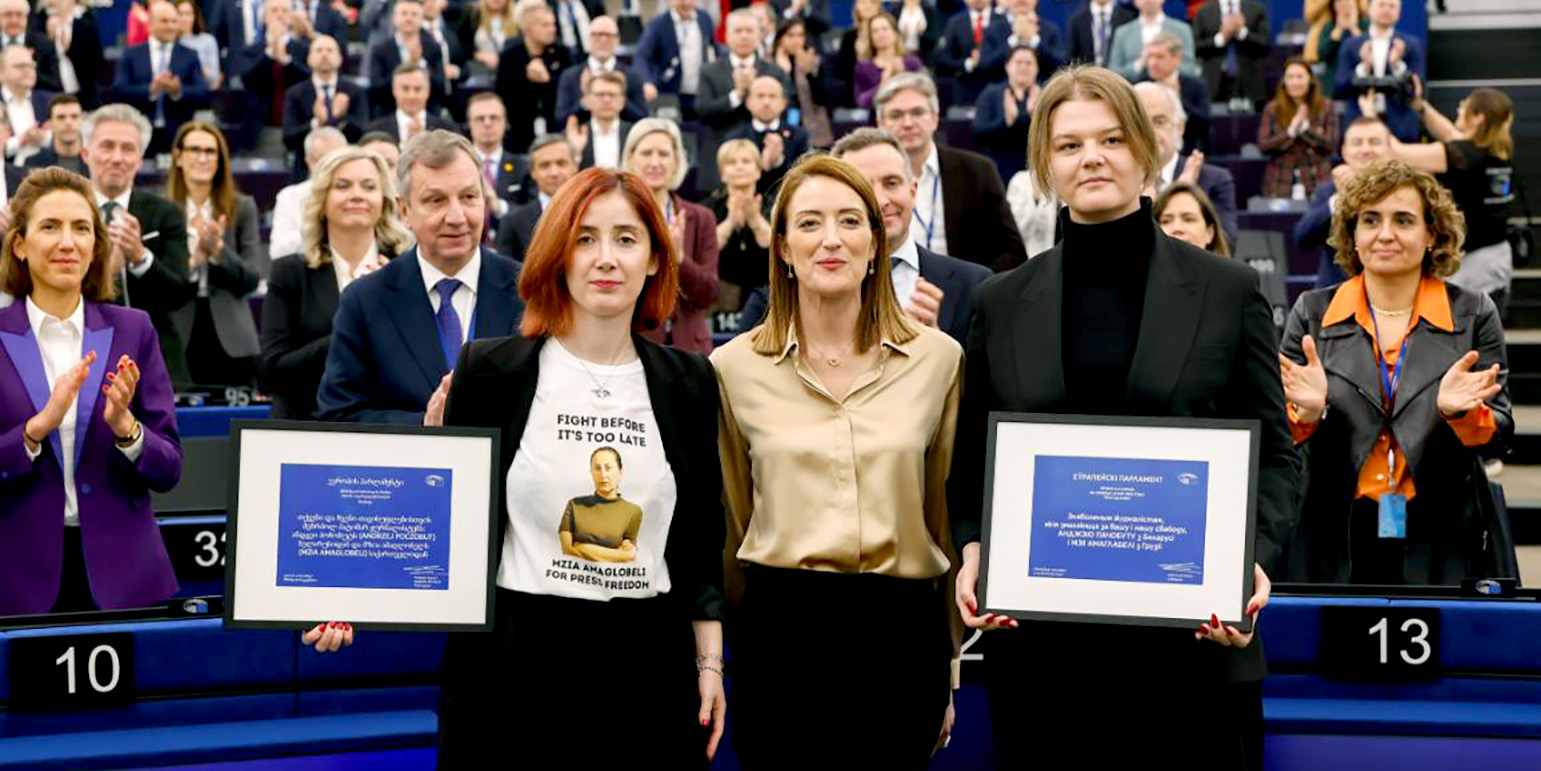
The 2025 Sakharov Prize for Freedom of Thought was awarded to Andrzej Poczobut from Belarus and Mzia Amaglobeli from Georgia, two journalists imprisoned for speaking truth to power, both of whom are becoming symbols of the struggle for freedom and democracy. The EU stands with them, and with all those who continue to demand freedom.
The key to a healthy democracy is empowered citizens. The EU is committed to listening closely to citizens and stakeholders and engendering public participation in the policymaking process. It achieves this through a number of initiatives, such as public consultations and feedback - open a new tab., the European Citizens’ Initiative - open a new tab. and the European Citizens’ Panels - open a new tab.. The latter, now a regular part of democratic life in the EU, bring together 150 randomly selected citizens from all 27 Member States to deliberate on critical long-term challenges and make recommendations to policymakers. During the year the EU also launched strategic dialogues with key industry sectors, creating an inclusive forum to address specific challenges.
2025 also saw the Commission follow up on the successful 2023 European Citizens’ Initiative ‘Stop finning – Stop the trade’, which called on the EU to take action to end the international trade in loose shark fins. As of January 2025, the EU had stepped up the monitoring of the shark-product trade thanks to 13 new tariff codes for sharks and their fins.
-
98 public consultations launched in 2025
Feedback received on:
- 201 calls for evidence documents,
- 51 legislative proposals,
- 224 draft implementing and delegated acts.
-
4 new European Citizens’ Initiatives launched
- ‘HouseEurope! Power to Renovation’.
- ‘Food is a Human Right for All! Guaranteeing healthy, just and sustainable food systems’.
- ‘Save your right, save your flight!’
- ‘Demand the full suspension of the EU–Israel Association Agreement in view of Israel’s violations of human rights’.
-
2 new citizens’ panels organised
- The European Citizens’ Panel on the EU Budget.
- The European Citizens’ Panel on Intergenerational Fairness.

2025 strategic dialogues
-
30 January
Automotive industry (first dialogue - open a new tab.)
-
3 March
Automotive industry (second dialogue - open a new tab.)
-
4 March
-
15 April
-
12 September
Automotive industry (third dialogue - open a new tab.)