Chapter 8
Preparing Europe for the future
 View photo caption
In 2025, the European Union focused on preparing itself for the challenges and opportunities of the coming decade. Its institutions worked together to strengthen resilience, simplify rules and ensure that policies deliver tangible results for both people and businesses. A central pillar of this effort was the preparation of the new multiannual financial framework for 2028–2034, which was designed to provide a simpler, more flexible and future-proof budget. At the same time, the EU put forward reforms to cut red tape, reduce costs and improve financial risk management. Through foresight, stronger partnerships and effective enforcement, the EU is building a framework for long-term prosperity and security.
The 2028–2034 multiannual financial framework
The EU’s long-term budget, the multiannual financial framework (MFF), supports citizens, farmers, researchers, businesses and regions across the EU and beyond. The current MFF (for 2021–2027), together with the NextGenerationEU – open a new tab. recovery plan, has been vital in tackling the COVID-19 pandemic and the energy crisis, protecting millions of jobs and driving the clean and digital transitions. It has also delivered unprecedented support to Ukraine and strengthened Europe’s security in the face of Russia’s war of aggression.
In 2025, the European Commission adopted its proposal for the 2028–2034 MFF – open a new tab., designed to respond to growing geopolitical, economic and sustainability challenges. At nearly €2 trillion (equivalent to 1.26 % of the EU’s gross national income), it would provide a simpler, more flexible and more targeted budget to support the EU’s independence, security, prosperity, inclusiveness and resilience in the decade ahead.
A more inclusive and democratic process
While preparing the budget, the Commission ran a Europe-wide campaign to gather input from stakeholders at every level, from national governments to citizens.
-
February
Start of the Tour d’Europe – open a new tab. to consult Member State authorities, regional stakeholders and EU budget beneficiaries on the new MFF.
Roadmap – open a new tab. for drawing up the new budget proposal published.
-
February–May
Public consultation – open a new tab. on the new budget via the Have Your Say portal.
-
May
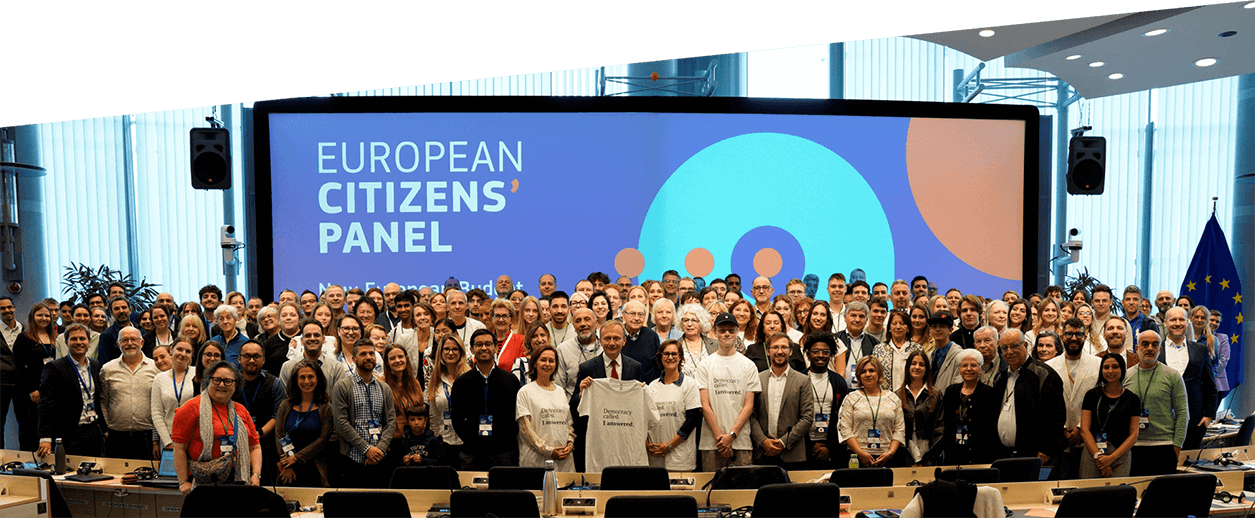
European Citizens’ Panel on the new European budget – open a new tab. (see Chapter 6) agrees on 23 recommendations – open a new tab. for the new budget.
-
16 July
First proposal – open a new tab. for the new budget published.
-
July–October
Public consultation – open a new tab. on the proposal via the Have Your Say portal.
-
3 September
Final proposal – open a new tab. for the 2028–2034 EU long-term budget published.

The MFF proposal is built on several core drivers, recognising that the status quo is no longer adequate:
create a budget that is simpler, more agile and more impactful;
address the need to invest in common strategic priorities, including defence, competitiveness, security and the clean and digital transitions;
modernise common policies, such as the Common Agricultural Policy, the Common Fisheries Policy and economic, social and territorial cohesion;
balance predictability – for long-term investment support, farmers and regions – with flexibility where needed in a fast-changing world;
send a clear message on the EU’s unity, independence and commitment to promoting and defending its core values;
ensure the EU’s credibility by providing a clear pathway for NextGenerationEU repayments.
Under the proposed budget:
- a minimum of around €296 billion would be ring-fenced to support farmers’ and fishers’ income, and there would be a 10 % rural target under the national and regional partnership plans;
- 35 % of total spending would be dedicated to climate and environmental objectives, mobilising at least €700 billion;
- almost €220 billion would be earmarked for investment in less-developed regions, alongside stable and predictable funding for transition and more-developed regions;
- respect for the rule of law and the Charter of Fundamental Rights of the European Union – open a new tab. would remain non-negotiable;
- the budget of the Erasmus+ programme – open a new tab. would be increased by 50 %;
- the budget for transport infrastructure would double to improve connections across the continent and adapt the network for military purposes;
- €131 billion would be allocated to defence and space – five times more than under the current MFF;
- a social target of 14 % of the total budget for national and regional partnership plans – excluding what is ring-fenced for farmers and fishers, and resources from the Social Climate Fund – would support skills development, poverty reduction and social inclusion;
- the budget for research and innovation activities would be almost doubled to strengthen the EU’s competitiveness, increasing from the current €95 billion to €175 billion.
With the EU facing rising financial needs, mounting pressure on national budgets and the upcoming start of loan repayments for the NextGenerationEU instrument in 2028, the Commission has proposed new ways to increase its own resources, aiming to generate over €58.2 billion per year (in 2025 prices) through new and revised revenue streams.
In its proposal for the next MFF, the Commission envisages the establishment of three main funds: a European Fund for economic, social and territorial cohesion, agriculture and rural, fisheries and maritime, prosperity and security – open a new tab.; a European Competitiveness Fund – open a new tab. that would support the development, scaling up and deployment of strategic technologies; and a Global Europe – open a new tab. Instrument that would allow for more strategic external action funding worldwide.
The midterm review of the EU’s cohesion policy – open a new tab., adopted in 2025, realigns funding from the 2021–2027 MFF to help Member States and regions reallocate resources towards new strategic priorities, including competitiveness, security and defence, civil preparedness, housing, water resilience and the energy transition.
Protecting the EU budget from fraud
Protecting every euro is essential to ensure that the EU budget delivers for its people. In July, the Commission launched a review of the EU anti-fraud architecture – open a new tab. to strengthen the protection of the EU’s financial interests in response to evolving threats. These include transnational fraud; organised crime targeting EU funds; and the misuse of advanced technologies such as artificial intelligence and cryptocurrencies.
Strengthening the EU’s financial risk management framework
The EU’s financial risk management framework covers risks linked to the EU budget, NextGenerationEU and other financial instruments. In 2025, the Commission strengthened this framework by expanding the role – open a new tab. of the independent Chief Risk Officer, who now oversees all EU financial operations, including borrowing, lending, budgetary guarantees and asset management. This change responds to recommendations – open a new tab. from the European Court of Auditors to reinforce oversight and risk management of the EU’s borrowing, guarantees and related financial instruments.
The European Semester
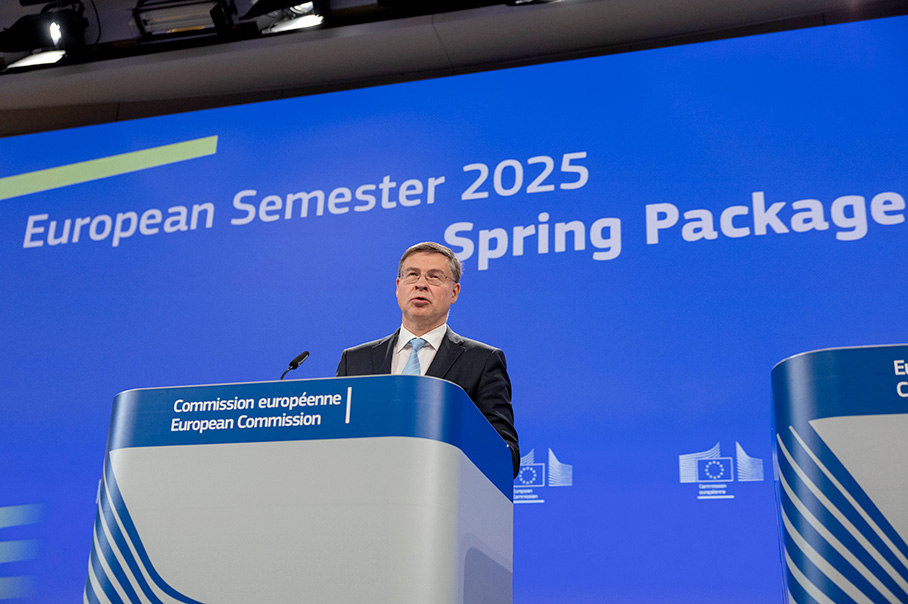
The European Semester – open a new tab. plays an important role in the EU’s economic governance. The 2025 spring package – open a new tab. marks the conclusion of the first full annual cycle of macroeconomic surveillance under the reformed economic governance framework – open a new tab., which entered into force in April 2024. This reinforces the Semester’s role not only as a channel for guiding reforms and investment, but also as the backbone of the EU’s fiscal oversight.
In 2025, country-specific recommendations – open a new tab. advised Member States to focus on the issues of competitiveness and security. For the first time, the Semester package also contained key recommendations on skills and quality jobs, while ensuring social fairness.
The country reports – open a new tab. analysed the fiscal, taxation, innovation, climate and environmental policies of Member States and regions, along with their labour, social and health policies. They also included a review of the implementation of recovery and resilience plans and cohesion-policy programmes.
The success of the Recovery and Resilience Facility

As the Recovery and Resilience Facility (RRF) nears its 2026 end date, it continues to drive reforms and investment across the EU. In 2025, the Commission urged Member States to accelerate progress while simplifying their processes, and paved the way - open a new tab. towards the smooth and successful closure of the RRF. As the centrepiece of NextGenerationEU, the RRF disbursed around €394 billion to Member States by the end of 2025, supporting economic and social resilience, along with the clean and digital transitions.
The fourth annual report on the implementation of the RRF - open a new tab. showed that the facility enhanced public investment – expected to reach 3.8 % of gross domestic product in 2025, up from 3.2 % in 2019. It did so by supporting, among other initiatives, the decarbonisation and digitalisation of industrial production and services, the deployment of over 900 000 clean-vehicle recharging stations and the connection of 16 million households to high-speed internet. According to a Commission study - open a new tab., the total financial impact of the RRF over the 2020–2030 period is estimated at €892 billion, with more than €546 billion in direct impact and more than €345 billion in spillover effects across Member States’ economies.
Strengthening the EU’s resilience
The EU must strengthen its resilience to protect its citizens and its prosperity in the face of growing security threats, a shifting international order and the escalating impacts of climate change and environmental degradation. The 2025 strategic foresight report – open a new tab., published in September, set out the steps needed to ensure the EU remains peaceful, true to its values and committed to the well-being of its inhabitants amid turbulent times and uncertainty.
The report proposes eight areas for action:
- building a coherent global vision for the EU;
- amplifying internal and external security;
- harnessing artificial intelligence and the power of technology and research;
- strengthening long-term economic resilience and preparing for labour market upheavals;
- supporting sustainable and inclusive well-being;
- reimagining education and skills;
- safeguarding democracy;
- anticipating demographic transformation and promoting intergenerational fairness.
The report highlights the need to consider even unfamiliar or hard-to-imagine scenarios, making foresight a standing feature of EU policymaking. From 2026, annual foresight reports will go beyond the analysis of trends to cover the stress-testing of policies against various scenarios, ensuring that the EU is better prepared for the future.
Simplifying EU rules
To deliver a future-ready EU, resilience and a greater capacity to act must go hand in hand with cutting red tape and making rules work better in practice. Continuing its work under the Better Regulation – open a new tab. agenda, the EU intensified its efforts to simplify policies and laws – open a new tab., as outlined in the communication on a simpler and faster Europe – open a new tab.. These efforts included implementation dialogues – open a new tab., which provide a political-level forum for Commissioners to gather practical feedback from stakeholders on how EU rules and programmes work in practice. Complementing these dialogues, each Commissioner prepared an annual progress report on simplification, implementation and enforcement – open a new tab. for the first half of 2025, outlining progress, challenges and concrete next steps within their respective portfolios.
The EU’s commitment to better regulation is already yielding results: it was ranked first in an Organisation for Economic Co-operation and Development analysis of transparency, stakeholder engagement and regulatory impact assessment, according to the OECD Regulatory Policy Outlook 2025 – open a new tab..
The 10 simplification packages – open a new tab. adopted in 2025 will bring savings of around €12 billion in annual administrative costs. By 2029, the Commission aims to cut administrative burdens by at least 25 % for all companies and 35 % for small and medium-sized enterprises.
Ensuring the effective implementation of EU law
Laws only reach their full potential when they are fully implemented and applied. To that end, the Commission works closely with Member States to help them implement EU law and policies – open a new tab.. When Member States fail to do so, the Commission can open infringement procedures – open a new tab. against them. However, it works hard to prevent breaches from happening in the first place by offering practical guidance, meetings, training and technical assistance. For example, through the new guidance on battery-related data sharing – open a new tab., the Commission helped Member States apply the Renewable Energy Directive – open a new tab.’s updated provisions. This guidance helps Member States establish a harmonised approach to sharing information such as a battery’s state of charge, health and location. It provides practical clarification and technical support to ensure consistent implementation across the EU.
- 552 new infringement procedures were opened in 2025.
- 554 infringement procedures were closed.
- 71 cases were referred to the Court of Justice of the European Union, concerning 21 Member States.
- Financial sanctions were requested in
20 cases.
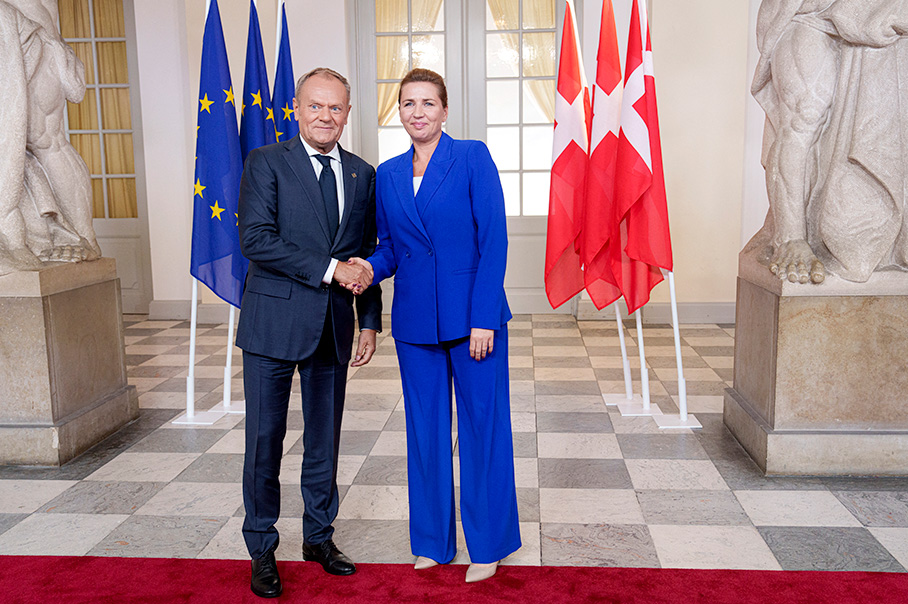
The EU’s institutional framework continues to evolve in response to new political and strategic priorities. In 2025, first Poland and then Denmark held the rotating presidency of the Council of the European Union, each placing particular emphasis on security and resilience.
As the Commission advanced legislative proposals, the European Parliament and the Council acted as co-legislators to deliver on shared priorities. Member States, supported by the Commission’s oversight role and the work of other EU institutions and bodies – open a new tab., ensured effective implementation across the EU.
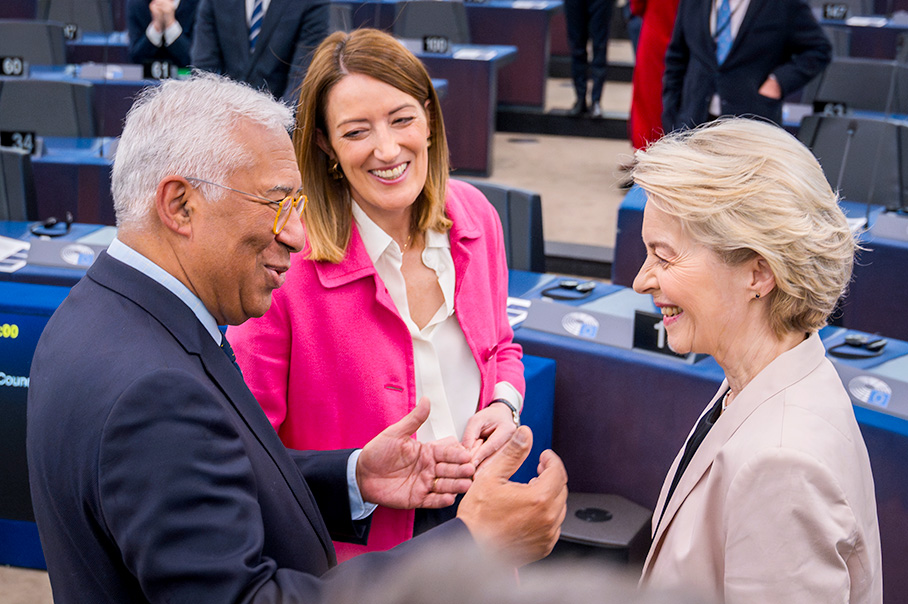
In order for the EU to function properly as a democracy, strong and transparent cooperation between its institutions is essential. In September, the Parliament and the Commission finalised negotiations – open a new tab. on an updated Framework Agreement to improve interinstitutional relations, trust, transparency and dialogue. The agreement is based on nine political principles – open a new tab.agreed by the President of the European Parliament and the President of the European Commission in October 2024.
75th anniversary of the Schuman Declaration
Every year on 9 May, the EU celebrates Europe Day. In 2025, the occasion held special significance, as it marked the 75th anniversary of the Schuman Declaration – open a new tab.. Presented by French Foreign Minister Robert Schuman on 9 May 1950, the declaration proposed the creation of the European Coal and Steel Community, the predecessor of today’s EU.