Chapter 5
Sustaining quality of life in Europe
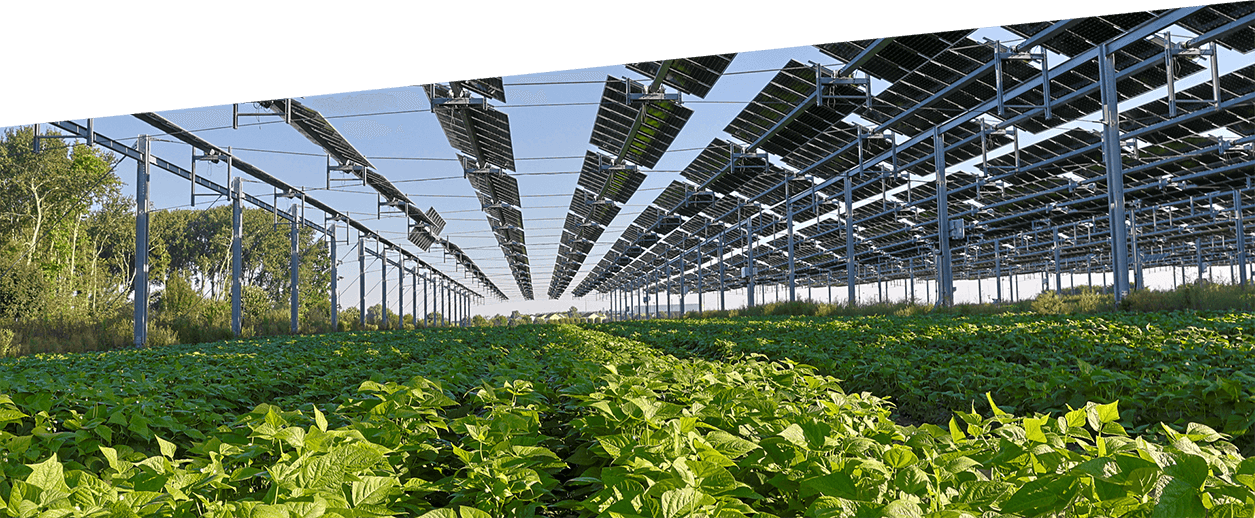
 View photo caption
Europe’s quality of life depends on functional ecosystems, which provide for our health and economic activities and for a secure and affordable supply of quality food. Europe enjoys some of the healthiest and highest-quality food in the world, and that is thanks to farmers, fishers and the wider agri-food sector. In 2025, the European Union continued its work to ensure that farming remains a core part of the European way of life, while also acting on climate change to ensure food and water security. Water is a cross-cutting resource. Investing in a water-smart economy will enhance the EU economy’s resilience and competitiveness, while at the same time promoting research, innovation, new technologies and skills development to maintain the EU’s leadership as a knowledge provider.
The Vision for Agriculture and Food
Farming is at the heart of life in Europe. Building on the report of the Strategic Dialogue on the Future of EU Agriculture - open a new tab., and in consultation with the new European Board on Agriculture and Food - open a new tab., in February the European Commission proposed the Vision for Agriculture and Food - open a new tab., which aims to secure the long-term competitiveness and sustainability of the EU’s farming and food sector.
The four priority areas of the Vision for Agriculture and Food
- Attractiveness. Making farming a viable and appealing career.
- Competitiveness. Strengthening the sector’s position in global markets.
- Future-proofing. Embracing innovation and sustainability for long-term resilience.
- Connection. Valuing food, and fostering fair living and working conditions in rural areas.
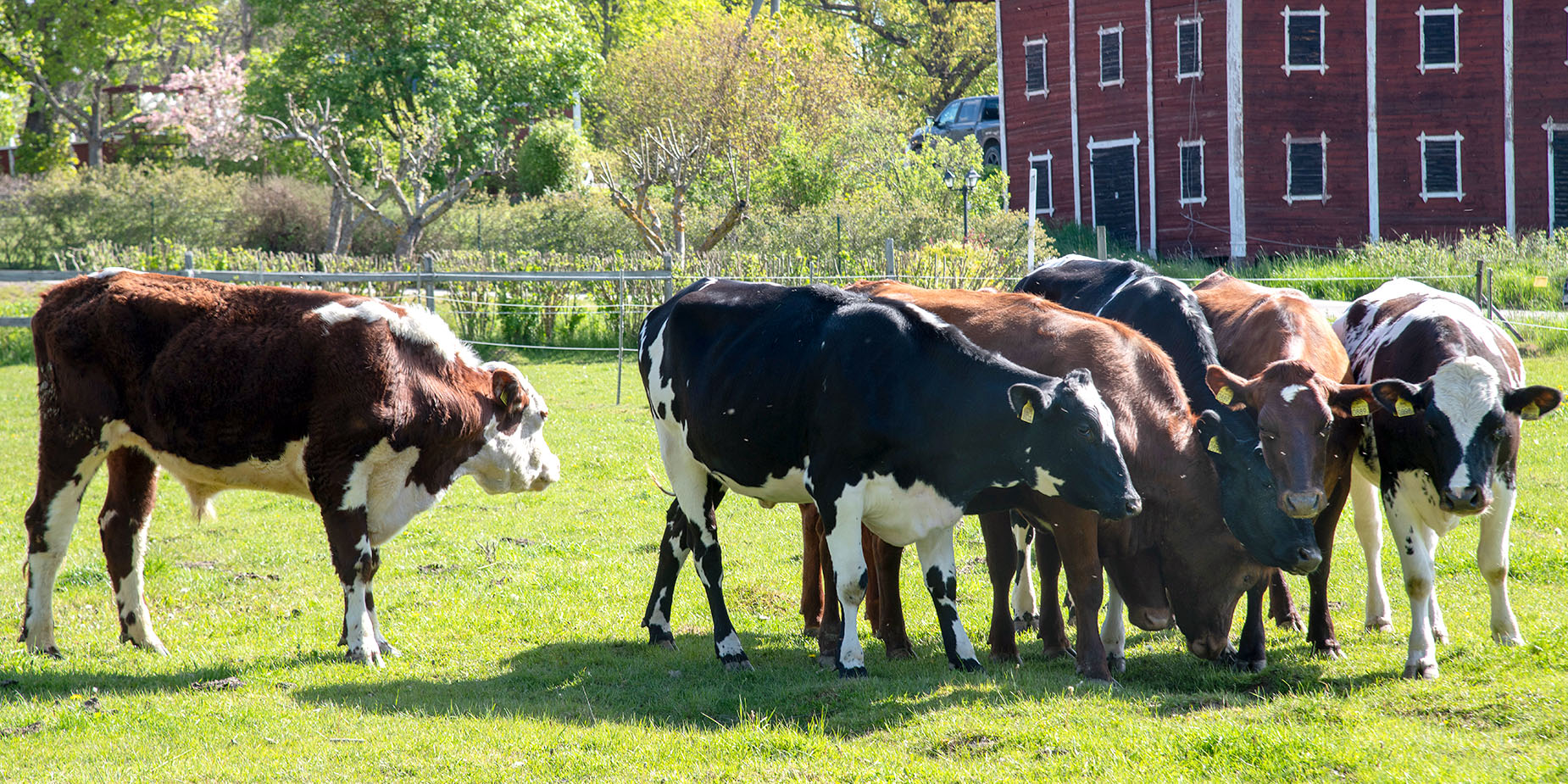
The EU is reforming its Common Agricultural Policy - open a new tab. (CAP), which ensures a stable supply of food, safeguards farmers’ income, protects the environment and keeps rural areas vibrant. The reformed CAP will ring-fence at least €300 billion for income and crisis support, targeted at those who need it most, including young farmers, small and mixed farms, and those operating in areas with natural constraints.
The CAP simplification package - open a new tab., adopted in December, supports the competitiveness, resilience and digitalisation of the agricultural sector, and young and organic farmers in particular. The proposed measures could save up to €1.58 billion annually for farmers and €210 million for national administrations, while making payments, certain requirements and crisis tools more flexible and easier to manage.
To prepare for the future, the EU is taking action to provide an evidence-based framework to adjust policies both within and outside the scope of the CAP. As part of this effort, a new livestock workstream - open a new tab. was launched in May to support this sector, which is particularly vulnerable to various shocks and to global competition. There are other factors that also greatly affect the agricultural sector, ranging from shifting consumer expectations to climate and environmental demands.
The Commission also presented a Strategy for Generational Renewal - open a new tab. to support the next generation of farmers by tackling the main barriers that young and new farmers face and making rural life more attractive.
Public support for the Common Agricultural Policy

78 %
of people in the EU are aware of the CAP, the highest level since 2007.

77 %
of people in the EU agree that the CAP helps the EU secure a stable food supply at all times.

71 %
of people in the EU agree that the CAP helps the EU provide safe, healthy and sustainable food of high quality.
Source: European Commission, Special Eurobarometer 556 - open a new tab., January 2025.
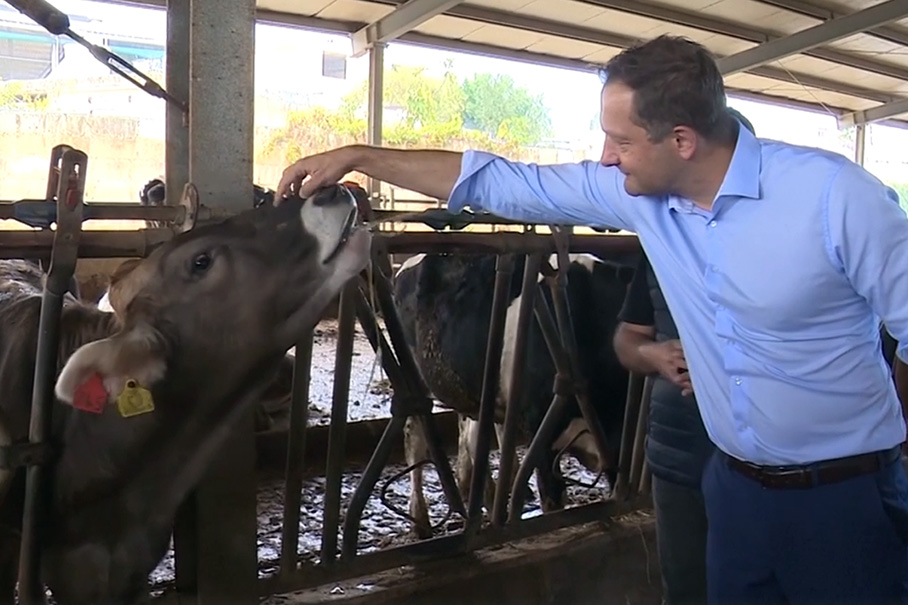
2025 initiatives to support farmers in disaster-affected regions
- €109 million in emergency support for farmers affected by climate change and natural disasters in Spain, Croatia, Cyprus, Latvia, Hungary and Slovenia.
- €5 million in exceptional support for the milk and pig-meat sectors in Germany.
- €50 million in emergency support for fruit, nut and vegetable farmers affected by climate change in Bulgaria, Latvia, Lithuania, Hungary, Poland and Romania.
- €14 million to help compensate farmers in areas affected by outbreaks of avian influenza in Poland.
- Exceptional changes to the POSEI scheme - open a new tab. to help farmers in Mayotte restart production after Cyclone Chido.
- Reducing red tape to help fruit and vegetable producers and winemakers in Valencia, Spain, recover after exceptional weather led to damaged crops and production facilities.
The Commission has proposed a range of measures - open a new tab. to ensure the EU’s wine sector remains competitive, resilient and a vital economic force in the decades to come. The sector is facing various challenges, such as shifting consumer trends, climate change and market uncertainties.
Europe’s water supplies are increasingly threatened. About 20 % of the continent’s territory and 30 % of its population are affected every year by water stress.
Source: European Environment Agency, Europe’s State of Water 2024 – The need for improved water resilience - open a new tab., 2024.
Water is a pillar of life and of the economy, playing a vital role in farming, fisheries, industry production processes and sanitation. However, reports in 2025 showed that Europe’s water is under significant stress - open a new tab., including from pollution, floods, scarcity and drought.
The European Water Resilience Strategy - open a new tab., adopted in June, aims to restore and protect the water cycle, build a water-smart economy to boost competitiveness, and secure clean and affordable water and sanitation for all. To safeguard people, assets and vital infrastructure from heightened flood risks, the strategy provides for more than 50 specific measures - open a new tab. in five priority areas.
Priority areas of EU action on water resilience
- Governance and implementation to raise awareness and facilitate change.
- Increased EU financing and cooperation with the European Investment Bank to secure investment and modernise infrastructure.
- Digitalisation and use of artificial intelligence to make it quicker and easier to implement efficient water management techniques.
- Research and innovation for a more competitive water sector.
- Security and preparedness to reduce the risk of disaster and boost collective resilience.
To support ocean conservation, ocean sciences, sustainable fisheries, aquaculture and the blue economy, the Commission announced its flagship initiative, the European Ocean Pact - open a new tab., at the 2025 UN Ocean Conference, alongside €1 billion in investment - open a new tab. for the ocean. The pact brings EU ocean policies together under a single reference framework, developing a comprehensive strategy to address the opportunities for and threats to the ocean, coastal communities, islands and the EU’s outermost regions.
The six key priorities of the European Ocean Pact
- Protecting and restoring ocean health.
- Boosting the competitiveness of the EU sustainable blue economy.
- Supporting EU coastal communities, islands and outermost regions.
- Advancing ocean research, knowledge, skills and innovation.
- Enhancing maritime security and defence.
- Strengthening EU ocean diplomacy and international ocean governance.
The blue economy
The EU’s blue economy is a major driver of economic growth and innovation. It plays a key role in the EU’s industrial and security strategies, encompassing traditional sectors such as fisheries and shipping, along with emerging fields such as renewable energy and blue biotechnology.
European Maritime Day - open a new tab. is an opportunity to put EU maritime sectors and activities in the spotlight. AquaWind - open a new tab. was one such project presented at the 2025 event. It is an innovative prototype combining offshore wind energy and aquaculture.
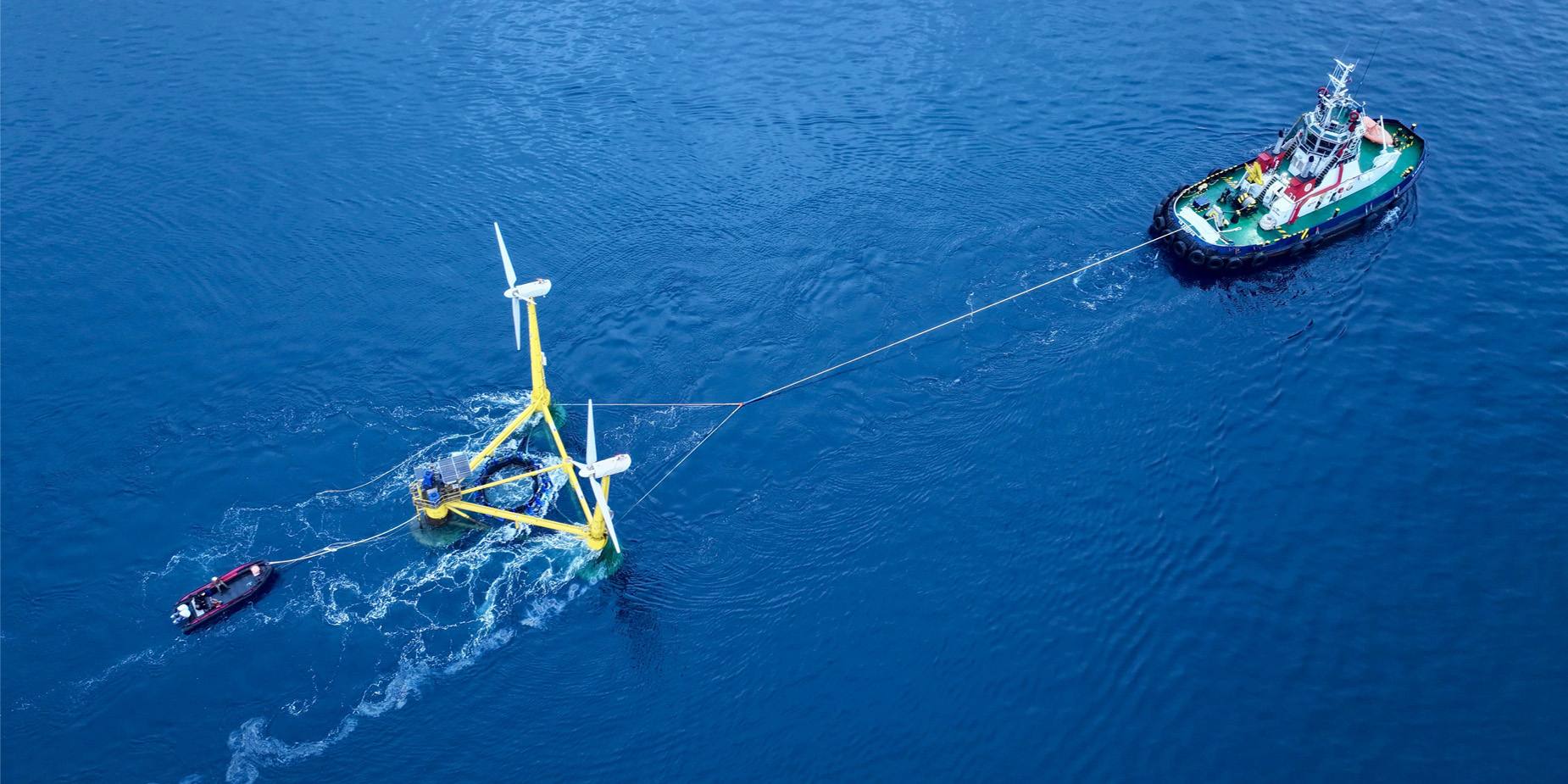 © EnerOcean S.L.
Aquaculture – the farming of fish, shellfish, algae, etc. – leads the way in sustainable food production in the EU. In July, the Commission proposed to simplify data collection on aquaculture and fisheries - open a new tab., reducing the reporting burden on Member States. The cultivation of algae can contribute to Europe’s blue bioeconomy, food security, climate neutrality and ocean restoration. The Second EU Algae Awareness Summit - open a new tab., which took place in Berlin, Germany, in October, highlighted the economic and environmental benefits of algae cultivation.

Ocean and waters
The 2025 Copernicus Ocean State Report - open a new tab. highlights the triple planetary crisis of climate change, pollution and biodiversity loss, with global sea surface temperatures reaching a record 21 °C in 2024.
Under the Marine Strategy Framework Directive - open a new tab., Member States are required to monitor, protect and take measures to improve the environmental status of their seas. Many EU policies have contributed to reducing air pollution, pesticide use and plastic litter at sea, but more can be done to combat harmful noise, microplastic release into the environment, nutrient pollution and waste, as evidenced in the Zero Pollution Monitoring and Outlook 2025 - open a new tab. and the fourth clean air outlook - open a new tab.. The Zero Pollution Dashboard - open a new tab. shows progress in regions and selected cities.
The EU Mission: Restore our Ocean and Waters - open a new tab. has now supported more than 1 000 initiatives - open a new tab. in protecting and restoring marine and freshwater ecosystems. The mission provides a systemic approach for the protection and restoration of the ocean and Europe’s seas and waters up to 2030. In 2025, the EU invested €116 million in 13 new projects - open a new tab. that focus on protecting migratory fish habitats, reducing the environmental impact of fisheries and empowering local communities to lead restoration efforts. At the Third UN Ocean Conference - open a new tab., the EU also proposed a new initiative on ocean observation and launched the prototype of the European Digital Twin of the Ocean - open a new tab. platform, a digital tool to help better understand, manage and protect the ocean.
In September, with support from the EU, the World Trade Organization Agreement on Fisheries Subsidies - open a new tab. entered into force – a significant step in ocean protection, deeply aligned with the priorities of the European Ocean Pact.
On 20 September, the Biodiversity Beyond National Jurisdiction Agreement - open a new tab., also known as the High Seas Treaty, reached 60 ratifications, triggering its entry into force in early 2026 – a landmark moment for global ocean conservation. The EU and its Member States have been central to advancing the agreement, leading the Biodiversity Beyond National Jurisdiction High Ambition Coalition - open a new tab. – a group of over 40 nations committed to ambitious, science-based ocean governance. This coalition’s political leadership has been critical in shaping the treaty and expediting its ratification.
Key measures to protect the ocean in 2025
- The EU pledged over €300 million in aid of ocean conservation efforts to support action in the fields of the sustainable blue economy, marine pollution, marine protected areas, and ocean and climate change.
- The EU helped facilitate international ocean protection agreements, including the adoption of specific catch limits - open a new tab. for all major tropical tuna species. It also secured an agreement - open a new tab. to help achieve net-zero greenhouse gas emissions from global shipping by 2050.
- The EU successfully concluded its 2025 chairing of the All-Atlantic Ocean Research and Innovation Alliance - open a new tab..
Fisheries
The Common Fisheries Policy - open a new tab. was developed to ensure that fisheries and aquaculture are environmentally sustainable and managed in a way that is consistent with the objectives of achieving economic, social and employment-related benefits. The 2025 evaluation of the policy assessed the performance of the related regulation - open a new tab. and whether it remains fit for purpose, involving extensive stakeholder consultation and using evidence from studies on topics such as the landing obligation - open a new tab..
The ‘Fishers of the future - open a new tab.’ study examined the role of fishers in society across the EU’s 22 coastal Member States and projected four potential scenarios up to 2050, depending on the extent of climate and biodiversity changes in marine ecosystems and variations in consumer demand and market dynamics.
In 2025, multiple initiatives were undertaken to bolster the rights of European fishers operating beyond EU waters. Full reciprocal access to waters - open a new tab. for fishing activities between the EU and the United Kingdom has been guaranteed until 30 June 2038, while a new memorandum of understanding with Iceland - open a new tab. enhanced cooperation on sustainable fisheries and ocean affairs. Additionally, renewed sustainable fisheries partnerships - open a new tab. grant EU vessels access to the waters of Côte d’Ivoire - open a new tab. and São Tomé and Príncipe - open a new tab. for four years, and to those of the Cook Islands - open a new tab. for seven years.
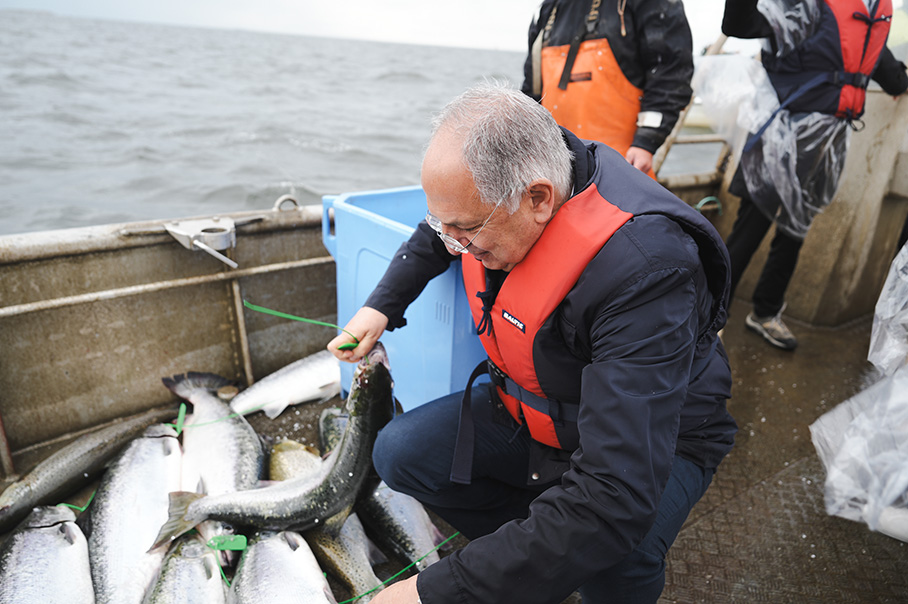
Over half of the measures outlined in the Biodiversity Strategy for 2030 - open a new tab. are now in place, and most of the remaining initiatives are under way, including through the implementation of the Nature Restoration Regulation - open a new tab..
The adoption of the Soil Monitoring Law - open a new tab., the first ever EU law on soil, addresses key soil degradation processes, such as erosion, loss of organic matter, salinisation, contamination, compaction, sealing and loss of soil biodiversity. The new directive - open a new tab. aims to also include measures on the monitoring and assessment of soil health.
Mission Soil - open a new tab. progress in 2025
- €561.5 million in funding.
- 63 research projects, with more than 1 400 participants.
- 45 of the planned 100 living labs and lighthouses - open a new tab..
The Roadmap towards Nature Credits - open a new tab. is an opportunity for simultaneous income generation from public and private sources of finance for nature restoration. It aims to boost biodiversity and preserve habitats by incentivising private investment that restores and maintains nature.
In December, the Council of the European Union adopted a targeted revision - open a new tab. of the EU regulation on deforestation-free products, aimed at simplifying its implementation. The Commission also published the first benchmarking list - open a new tab. in 2025, a tool to classify countries according to their risk of deforestation due to the production of cattle, cocoa, coffee, oil palm, rubber, soya and wood.
 © ASakoulis – stock.adobe.com
Thanks to the EU’s Birds Directive - open a new tab. and dedicated projects under the LIFE programme - open a new tab., Europe stands out as one of the few places where many bird of prey and vulture populations are improving or stabilising, including the recovery of griffon and cinereous vultures, and the revival of the bearded vulture in the Alps.
Following the increase in wolf populations in Europe in recent years, the European Parliament and the Council have approved an amendment to the Habitats Directive - open a new tab., following the amendment of the protection status of the wolf in the Bern Convention - open a new tab., giving Member States more flexibility to manage their local wolf populations.
Thanks to the National Emission Reduction Commitments Directive - open a new tab., air pollutant emissions continued to decline - open a new tab. across most Member States during the year. Urban waste water is one of the main sources of water pollution if it is not collected and treated in accordance with EU rules. The revised Urban Wastewater Treatment Directive - open a new tab., which entered into force in January 2025, addresses remaining pollution and new challenges in urban wastewater management.
In 2025, the 2027 European Green Capital Award was won by Heilbronn in Germany - open a new tab., while Assen in the Netherlands and Siena in Italy were both awarded European Green Leaf Awards, showcasing how cities can take the lead in tackling air, water and noise pollution, waste management and the circular economy, along with increasing biodiversity, reducing emissions and adapting to climate change.
The new Packaging and Packaging Waste Regulation - open a new tab. entered into force during the year, with the objective of curbing the growth of packaging waste generation. This will promote waste prevention and remove substances of concern from the value chain. In July, the Commission published the 2025 environmental implementation review - open a new tab. to support the implementation of EU rules and raise awareness about their importance in ensuring a healthy environment as a basis for the long-term prosperity and competitiveness of people living in the EU. The Commission has also adopted guidance - open a new tab. to support Member States in applying extended producer responsibility to the costs of cleaning up litter.
The Commission presented the new European Chemicals Industry Action Plan - open a new tab. in July, which is designed to strengthen the sector’s competitiveness and drive its transition towards safe, sustainable and innovative chemical production. The EU has also taken action to ban the use of harmful chemicals, endocrine disruptors and bisphenols in toys sold in the EU - open a new tab., while the use of PFAS (‘forever chemicals’) in firefighting foams has been restricted - open a new tab.. In April, the Commission published a guide - open a new tab. to support companies in adhering to the new restrictions on microplastics. In addition, new and clearer rules on detergents - open a new tab., agreed by the co-legislators in June, will help to better protect the health of people and the environment.
2025 measures to help monitor pollution
- A political agreement - open a new tab. on updating the mandate of the European Maritime Safety Agency. As part of its increased role, the agency will employ enhanced surveillance tools to detect and deter illegal discharges at sea, while also developing its emissions monitoring systems.
- The Commission adopted a regulation putting in place a voluntary Flight Emissions Label - open a new tab., offering a clear and trustworthy methodology for calculating flight emissions. This will help passengers make informed decisions and protect them from misleading greenwashing claims.
- A political agreement - open a new tab. was reached on the proposed CountEmissionsEU regulation - open a new tab., which creates a common EU framework for calculating greenhouse gas emissions from freight and passenger transport.
- New product environmental footprint category rules - open a new tab. for apparel and footwear provide a harmonised, science-based method to assess a product’s environmental impact across its life cycle.
- Adoption of the one substance, one assessment package - open a new tab., which aims to streamline the hazard and risk assessment of chemicals across the EU and improve access to information on chemicals through a common data platform.

85 %
of people in the EU believe climate change is a serious problem.

81 %
of people in the EU support the EU-wide goal of reaching climate neutrality by 2050.

77 %
of people in the EU agree that the economic cost of damage due to climate change is much higher than the investment needed for a net-zero transition.
Source: European Commission, Special Eurobarometer 565 - open a new tab., June 2025.
The European State of the Climate Report 2024 - open a new tab., published in 2025, found that 2024 was the warmest year on record, and was also the first year with an average temperature exceeding 1.5 °C above pre-industrial levels.
Europe experienced record temperatures in its central, eastern and south-eastern regions. Severe storms and widespread flooding - open a new tab. claimed at least 335 lives in 2024, and affected an estimated 413 000 people.
There is evidence - open a new tab. that every part of the ocean is now under threat from climate change, biodiversity loss and pollution, affecting ecosystems, food security, economies, coastal communities and global climate regulation.
The Preparedness Union Strategy - open a new tab. (see Chapter 3) also recognises climate change as a key risk driver, stressing the role of anticipation and prevention, and a holistic approach to risk management. To this end, work has begun on the Integrated Framework for European Climate Resilience and Risk Management - open a new tab..
The EU Mission: Adaptation to Climate Change - open a new tab. under Horizon Europe - open a new tab. translates the EU Adaptation Strategy - open a new tab. into specific action. In 2025, 18 new mission projects were launched - open a new tab. to scale up proven approaches, embed adaptation across governance levels, promote systemic and cross-sectoral solutions and support the most vulnerable social groups.
With an overall budget of €2.3 billion, the 2025–2027 funding opportunities under the LIFE programme - open a new tab. aim to drive the EU’s transition to a clean, circular, competitive and climate-resilient economy. In addition, the Commission has invested €86 million in new strategic integrated projects - open a new tab. focused on improving water quality and availability, cleaning up polluted rivers, improving fire and flood protection and reducing greenhouse gas emissions. The European Water Resilience Strategy also addresses climate change impacts such as floods and droughts.
The EU Civil Protection Mechanism - open a new tab. aims to strengthen civil protection cooperation between the Member States and participating countries to improve prevention of, preparedness for and response to disasters, including climate events (see Chapter 3).
The EU has been building a strong European health union - open a new tab., in which medical supplies are available, affordable and innovative; all Member States are prepared for health crises and respond to them together; and Member States work to improve prevention, treatment and aftercare for diseases such as cancer and cardiovascular disease.
Within the first 100 days of its mandate, the Commission proposed the critical medicines act - open a new tab. to improve the availability, supply and production of critical medicines within the EU. This act will help ensure patients have access to the medicines they need, when they need them. Complementing the critical medicines act, a political agreement has been reached on the pharma package - open a new tab.. This is the first major reform of EU pharmaceutical legislation since 2004.
The European Health Data Space - open a new tab. entered into effect during the year. It is a cornerstone of the European health union and a milestone in the EU’s digital transformation. The Commission also presented the action plan on the cybersecurity of hospitals and healthcare providers - open a new tab. in January, to further reinforce digital security in our healthcare systems.
In December, the Commission presented the first-ever EU cardiovascular health plan - open a new tab., to tackle the leading cause of death in Europe. The new plan aims to reduce the number of premature deaths due to cardiovascular disease in the EU through better prevention and the early detection, treatment and management of these diseases.
A Union Prevention, Preparedness and Response Plan - open a new tab. was put forward by the Commission as a toolbox for policymakers and crisis managers working in health emergencies. It is a key action in implementing the Preparedness Union Strategy in the health sector. The Commission has continued to advance important projects to reinforce the EU’s preparedness for future health emergencies, by inaugurating a new development hub for vaccines - open a new tab. and facilitating access to medicines via new joint procurement agreements.
The Commission has also presented the Medical Countermeasures Strategy - open a new tab. to reinforce the EU’s protection against priority health threats, including viruses with pandemic potential, antimicrobial resistance, climate-change-induced health threats, armed-conflict-related threats and chemical, biological, radiological and nuclear threats.
Measures to prevent and treat disease
- More than 90 % of the measures under Europe’s Beating Cancer Plan have already been implemented - open a new tab. or are under way, with significant support from the EU Mission: Cancer - open a new tab. and the Horizon Europe programme.
- EU marketing authorisation has been given for Zuranolone - open a new tab., a medicine to treat postpartum depression, for which no specific treatments had previously been approved.
- Authorisation has been given for a medicine that treats mild cognitive impairment - open a new tab. in the early stages of Alzheimer’s disease – the first such medicine to be authorised in the EU.
- A Joint Action on Dementia and Health - open a new tab. has been implemented, with €4.5 million from the EU4Health - open a new tab. programme to help Member States address dementia in a comprehensive way: from improving health literacy and awareness, screening and primary prevention to supporting people living with dementia and other neurological disorders.
- A Joint Action on Respiratory Diseases - open a new tab. has been launched, with almost €5 million from EU4Health to tackle chronic respiratory diseases and improve lung health across Europe.
Thanks to its Global Health Strategy - open a new tab., the EU has made substantial strides - open a new tab. in strengthening health systems and expanding universal health coverage, and in improving preparedness for and responses to cross-border health threats. In this context, in 2025, the Commission signed new agreements with Health Emergency Readiness Canada - open a new tab. and with the Pan American Health Organization - open a new tab.. The Commission also provided €9.4 million to support the Partnership to Accelerate Mpox Testing and Sequencing in Africa - open a new tab.. This will strengthen mpox detection and monitoring, while also supporting innovative tests.
The 12th European and Developing Countries Clinical Trials Partnership Forum - open a new tab., held in Kigali, Rwanda, reviewed the progress of this landmark clinical trials partnership with Africa. The partnership has now spent over €1.5 billion on 477 clinical studies, which have led to new medicines such as the world’s first two malaria vaccines.
The EU supports the World Health Organization - open a new tab. (WHO), the leading authority on global health in the UN system. Since 2020, the EU has been an active and engaged partner working with WHO countries and other relevant bodies on an ambitious Pandemic Agreement - open a new tab.. Adopted in 2025, the agreement aims to improve the prevention of, preparedness for and response to future global pandemics. The WHO launched version 2.0 of the Epidemic Intelligence from Open Sources system - open a new tab. at the WHO Pandemic Hub in Berlin, Germany, with close support from the EU and its Member States. The EU is also involved in the ongoing work on the Pathogen Access and Benefit Sharing system - open a new tab..