Chapter 7
A global Europe for peace, partnerships and economic stability
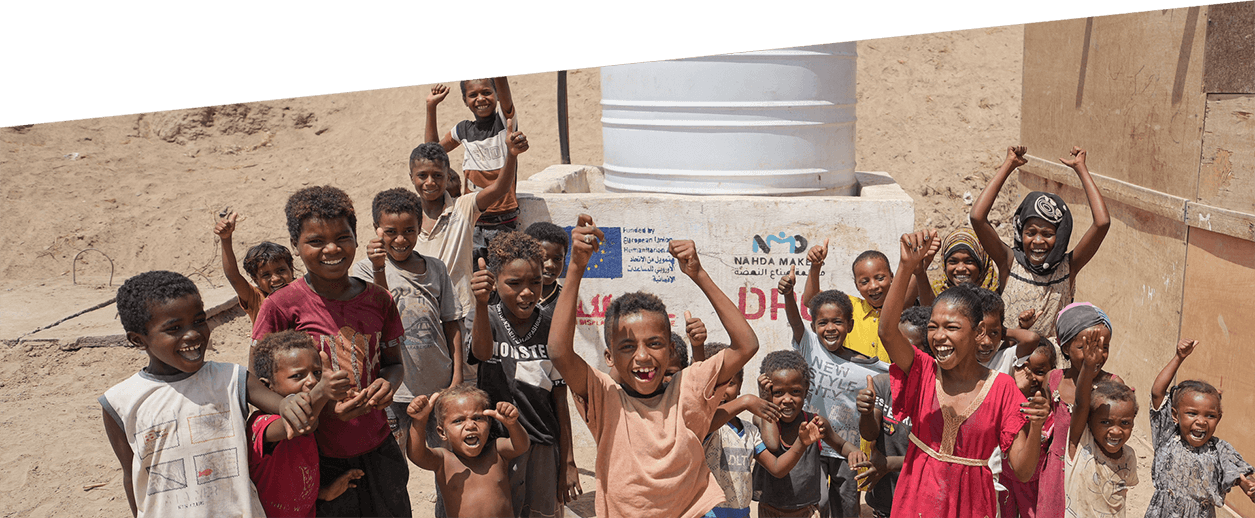
 View photo caption
The world has changed drastically in recent years. In the face of Russia’s war of aggression in Ukraine, the conflict in Gaza, more aggressive and unfair economic competition from China, the relationship with the United States and the rise of divisive politics, the European Union has worked to defend and promote a rules-based international order, build effective trade partnerships and strengthen the role of global institutions. The EU remains firmly committed to effective multilateralism with the United Nations at its core, supported by other international institutions such as the World Trade Organization. The EU also remains the largest donor of development aid and among the leading donors of humanitarian aid in the world.
Enlargement is a strategic investment in Europe’s long-term peace, stability and prosperity, and is crucial for increasing the EU’s influence on the global stage. The EU regularly evaluates the progress of all enlargement countries, including within the framework of the annual enlargement package – open a new tab.. The gradual integration of aspiring members into specific areas of EU policies, including parts of the Single Market, strengthens ties with the EU before their accession.
The European Commission is notably supporting enlargement countries’ efforts to join the Single Euro Payments Area – open a new tab. and the Roam Like at Home – open a new tab. area. The Growth Plan for Moldova – open a new tab., the Growth Plan for the Western Balkans – open a new tab. and the Ukraine Facility – open a new tab. are facilitating this process and driving the investments and reforms necessary to prepare enlargement countries for their accession to the EU.
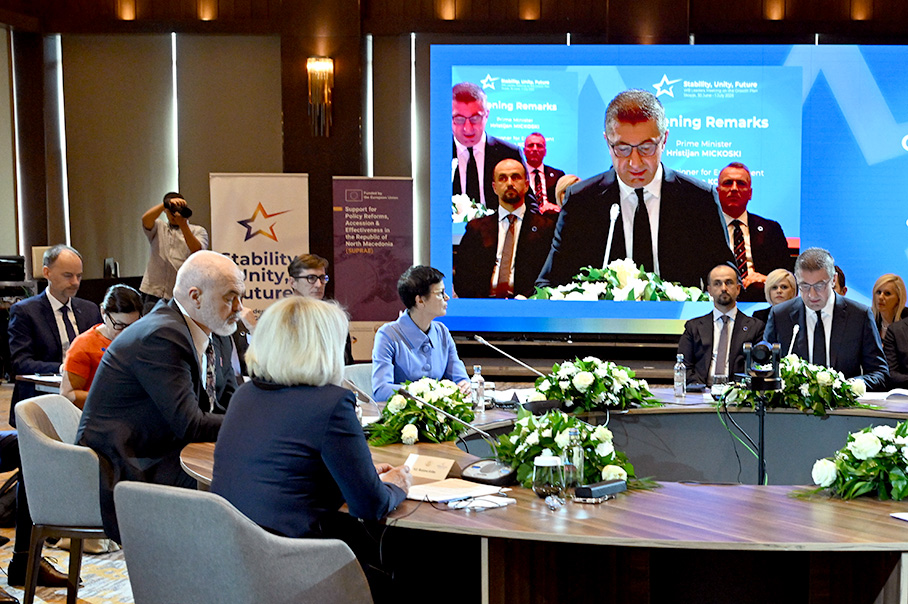
EU support for enlargement countries in 2025
- €184 million in support was disbursed under the Reform and Growth Facility for the Western Balkans – open a new tab..
- Through the WiFi4WB – open a new tab. (Wi-Fi for Western Balkans) initiative, the EU had installed free Wi-Fi hotspots in around 500 municipalities across the Western Balkans by the end of the year.
- As of June, the Western Balkans Guarantee 4 SME Resilience – open a new tab. had committed the last of its €60 million in EU funds, unlocking a total of €886 million in financing to support the sustainable growth of small and medium-sized enterprises in the region.
- €288.9 million was disbursed under the new Reform and Growth Facility for Moldova – open a new tab..
- At the EU–Montenegro Investment Conference – open a new tab., 14 new partnership projects were launched between Montenegrin and EU businesses.
- An overall package of €250 million was agreed as part of the two-year Comprehensive Strategy for Energy Independence and Resilience of Moldova – open a new tab., to help reduce Moldova’s energy dependence on Russia, increase its resilience and help it integrate into the EU energy market.
- The expansion of the European Digital Innovation Hubs Network – open a new tab. to Albania, Kosovo (this designation is without prejudice to positions on status and is in line with UNSCR 1244/1999 and the ICJ Opinion on the Kosovo declaration of independence), Montenegro, North Macedonia, Serbia, Türkiye and Ukraine is strengthening digital transformation in the region.
- The first regional EU–Western Balkans Investment Forum – open a new tab. was held in Albania.
- The Ukraine Facility continues to support Ukraine’s recovery, reconstruction and path towards EU accession (see Chapter 1).
2025 actions to enhance trade relations with candidate countries
- Agreements on a modernised trade relationship with Moldova – open a new tab. and with Ukraine – open a new tab..
- High-level dialogues between Türkiye and the EU – open a new tab. on trade, the economy, migration and security.
- Finalisation of the revision of trade regimes with Moldova and Ukraine, in the context of their EU accession process.
Eastern Partnership and Black Sea region
Regional cooperation under the Eastern Partnership – open a new tab. brings the EU, Armenia – open a new tab., Azerbaijan – open a new tab., Belarus – open a new tab., Georgia – open a new tab., Moldova – open a new tab. and Ukraine – open a new tab. together with the objective of tackling shared challenges and pursuing common objectives. Belarus suspended its participation in 2021, following the drastic deterioration in the overall human rights, democracy and rule-of-law situation in the country in the run up to and the conduct and aftermath of its August 2020 elections. Cooperation continues with key Belarusian non-state stakeholders, including civil-society organisations and the democratic forces for a democratic Belarus. Regional cooperation in the Eastern Partnership also contributes to the implementation of the EU’s strategic approach to the Black Sea region – open a new tab., adopted in May 2025. Amid Russia’s war of aggression against Ukraine, the strategy will also reinforce the EU’s geopolitical role as a reliable actor in the Black Sea region.
Three pillars for future EU–Black Sea cooperation
- Enhancing security, stability and resilience.
- Fostering sustainable growth and prosperity.
- Promoting environmental protection, climate-change resilience and preparedness, and civil protection.
In October, a Cross-Regional Connectivity Agenda – open a new tab. was launched with the aim of coordinating strategic investment to strengthen trade, transport, energy and digital links between Europe and Central Asia, via Türkiye and the Black Sea and South Caucasus countries. It reflects the EU’s strategic efforts to forge partnerships and advance cross-regional cooperation.
Middle East and North Africa
A prosperous, connected, resilient and secure Mediterranean basin is in the strategic interest of the EU as it strives to improve its competitiveness, increase its security and manage migration. The Pact for the Mediterranean – open a new tab., launched by Member States and the Southern Mediterranean partners, renews and elevates the EU’s ambition to engage more deeply with countries across the region so as to stimulate investment and bring added value for people and economies on all shores of the Mediterranean. The pact proposes flagship projects under its three pillars: people, economy and security.
Strategic and comprehensive partnerships
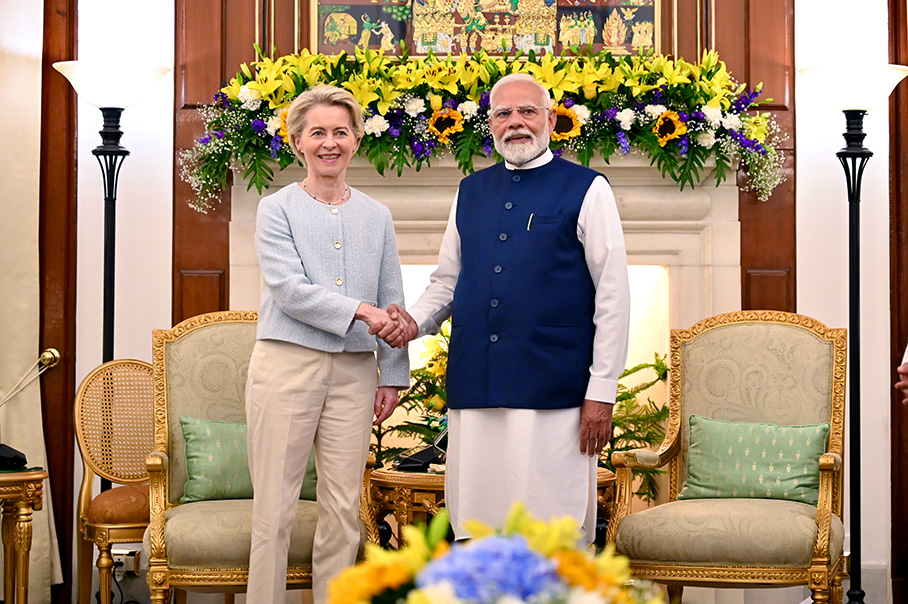
The first-ever EU–Egypt Summit – open a new tab., held concurrently with an EU–Egypt high-level event – open a new tab., marked a pivotal opportunity to convert shared ambition into concrete results, building on the EU–Egypt Strategic and Comprehensive Partnership – open a new tab..
The Council adopted the EU mandate to launch negotiations with each of the six Gulf Cooperation Council countries – open a new tab. – Bahrain, Kuwait, Oman, Qatar, Saudi Arabia and the United Arab Emirates – with the aim of concluding bilateral strategic partnership agreements.
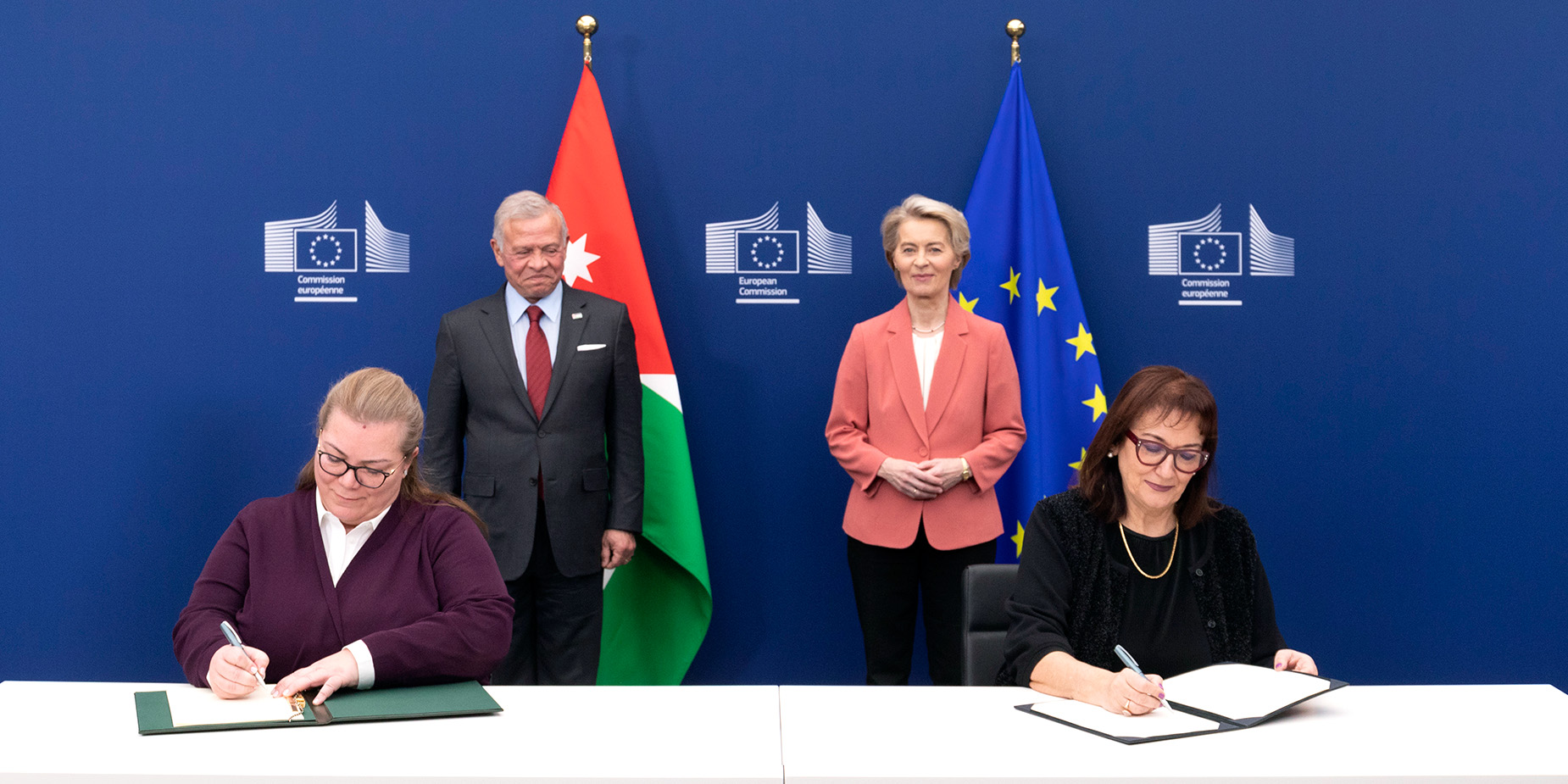
The EU and Jordan signed a joint declaration launching a new strategic and comprehensive partnership – open a new tab. to better tackle common challenges and to advance shared values of peace, democracy and human rights. They also signed a memorandum of understanding launching the implementation of €500 million of macrofinancial assistance – open a new tab. to support Jordan’s economic stability, growth, long-term resilience and reforms.
Jordan also signed the renewed Partnership for Research and Innovation in the Mediterranean Area Agreement – open a new tab., which aims to build research and innovation capacities and develop knowledge and solutions for water management, farming systems and food-chain value in the Mediterranean. Jordan will contribute €4.5 million to the partnership between 2025 and 2027.
The EU continues to defend and promote a rules-based international order and is working to strengthen the role of global institutions. It does so with the aim of ensuring that its values are upheld and that Europe stands strong in a more contested and unstable world.
Ahead of the 80th UN General Assembly, the EU reaffirmed its commitment – open a new tab. to multilateralism based on international law, including the UN Charter, recognising the intrinsic link connecting peace with security, human rights and sustainable development. The EU will remain a predictable, reliable and credible partner, committed to finding global solutions to common challenges, including through the implementation of the Pact for the Future – open a new tab.. The EU is also determined to accelerate efforts to deliver on the 2030 Agenda and achieve the Sustainable Development Goals and to support the ongoing UN reform process.
Economic security
A new economic foreign policy that focuses on economic security, trade and investment in partnerships is central to Europe’s prosperity. Open trade can grow businesses and create jobs, but fair competition and a level playing field must be maintained between domestic and foreign producers. Trade defence tools continue to protect EU jobs by promoting a fair business environment for EU firms.
To prevent outbound investments from negatively impacting the EU’s economic security, the Commission has called on Member States to review such investments – open a new tab. in non-EU countries by companies within their territories, in relation to three areas of strategic importance to the EU: semiconductors, artificial intelligence and quantum technologies. This will inform the need for possible future action in this area. Furthermore, interinstitutional negotiations – open a new tab. on improving the EU’s framework for the screening of foreign direct investment were concluded in December, to make investment screening a stronger, more coherent strategic instrument.
The EU’s Steel and Metals Action Plan – open a new tab., published in March, is designed to strengthen the sector’s competitiveness and safeguard the industry’s future.
In December, the Commission adopted an economic security package – open a new tab. consisting of a communication on strengthening the EU’s economic security – open a new tab. and the RESourceEU Action Plan – open a new tab..
The EU is the world’s second-largest economy and the biggest trading sector in the world.
Key trade and international cooperation developments in 2025
Joint statement – open a new tab. with the United States on a framework agreement on reciprocal, fair and balanced trade.
The EU is continuously engaging with the United States to lower tariffs, thus restoring stability and predictability in EU–US trade and investment relations and benefiting businesses, workers and citizens on both sides of the Atlantic.
Two proposals for landmark deals in Latin America, the EU–Mercosur Partnership Agreement – open a new tab. and the EU–Mexico Modernised Global Agreement – open a new tab., that form a critical part of the EU’s strategy to diversify its trade relations.
These agreements will create billions of euro worth of export opportunities for EU companies of all sizes, contribute to economic growth and competitiveness, support hundreds of thousands of European jobs and promote EU interests and values in the region.
Entry into force of the EU–Chile Interim Trade Agreement – open a new tab., boosting the competitiveness of businesses on both sides.
This work will be further underpinned by ongoing initiatives under the Global Gateway, such as the development of critical raw materials value chains for lithium and copper and the production of green hydrogen in Chile.
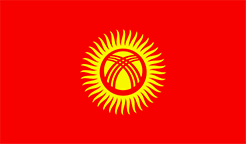
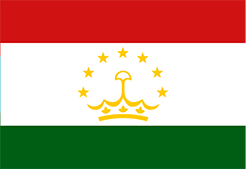
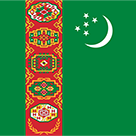
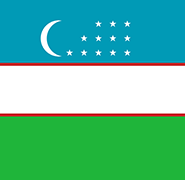
Strategic partnership – open a new tab. established with the five Central Asian countries – Kazakhstan, Kyrgyzstan, Tajikistan, Turkmenistan and Uzbekistan.
As a first sign of the new impetus in this relationship, a Global Gateway investment package of €12 billion will support cooperation on climate, energy and critical raw materials between the EU and these partners.
A new chapter in the EU–UK relationship – open a new tab. with agreements on several fronts, including reciprocal access for fishers until 2038 – open a new tab. and a security and defence partnership – open a new tab.. The latter will enable the United Kingdom to participate in common procurement actions.
Joint declaration – open a new tab. with Switzerland to strengthen cooperation in the critical areas of research, land transport and health.
Shared commitment with Japan reaffirmed – open a new tab. to strengthen cooperation on trade and economic security, Competitiveness Alliance – open a new tab. established and High-Level Economic Dialogue expanded.
Negotiations launched with the United Arab Emirates on a free trade agreement – open a new tab., opening the possibility of the first comprehensive EU trade deal in the Gulf region.
Negotiations relaunched – open a new tab. on an EU–Malaysia free trade agreement.
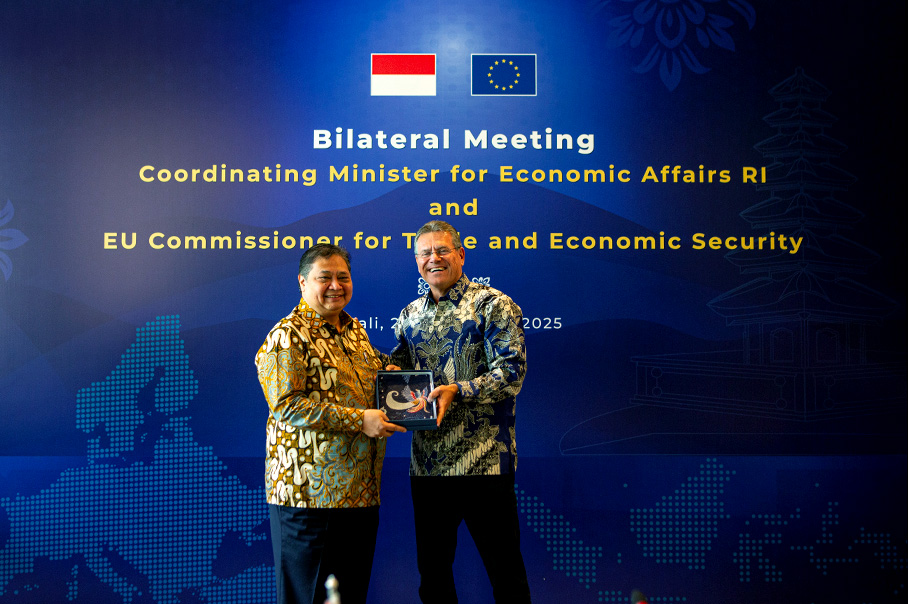
Negotiations finalised on the EU–Indonesia Comprehensive Economic Partnership Agreement – open a new tab..
Landmark digital trade agreement (DTA) signed with Singapore – open a new tab., negotiations concluded on a DTA with South Korea – open a new tab. and work started on a DTA with Canada – open a new tab..
These agreements are in line with EU’s new International Digital Strategy – open a new tab., which announces the EU’s intention to establish a Digital Partnership Network and expand the network of digital trade agreements. The strategy will also develop an EU tech business offer by combining EU private- and public-sector investment to support the digital transition of partner countries and will strengthen global digital governance in line with the EU’s fundamental values.
2025 measures to ensure fair trade
- Reduced – open a new tab. the liberalisation rate from 1 % to 0.1 % to limit the amount of steel that can be imported into the EU tariff-free.
- Made a proposal – open a new tab. for a trade measure addressing the negative trade-related effects of global steel overcapacities on the EU market.
- Activated a customs surveillance system – open a new tab. to monitor the import and export of metal waste and scrap into and out of the EU, to ensure sufficient access to scrap for the EU’s metals industries.
- Started tracking – open a new tab. imports of industrial chemicals, which are rapidly filling up the EU market and causing or threatening to cause injury to EU industry, so that the EU can level the playing field.
- Set up an import surveillance task force – open a new tab. to inform decisions and actions to protect the Single Market.
- Imposed duties – open a new tab. on imports of aluminium road wheels from Morocco, which were found to be unfairly subsidised, including via China’s Belt and Road Initiative, and as such were harming the industry in the EU.
- Imposed International Procurement Instrument measures – open a new tab. (due to consistent discrimination against EU medical devices in China’s public procurement market) to exclude bidders from China from participating in EU public tenders for medical devices with an estimated value of more than €5 million, and limited the share of medical devices originating from China to no more than 50 % of the value of relevant contracts.
- Took action – open a new tab. to prevent the dumping of mobile access equipment from China, which causes significant harm to producers in Europe, where annual sales in this field amount to €1 billion.
- Launched arbitration proceedings – open a new tab. against Algeria’s trade and investment restrictions, which infringe on the EU–Algeria Association Agreement.
- Brought a successful dispute settlement procedure against China at the World Trade Organization on anti-suite injunction decisions by Chinese courts relating to standard essential patents, for example 5G for mobile phones.
International partnerships
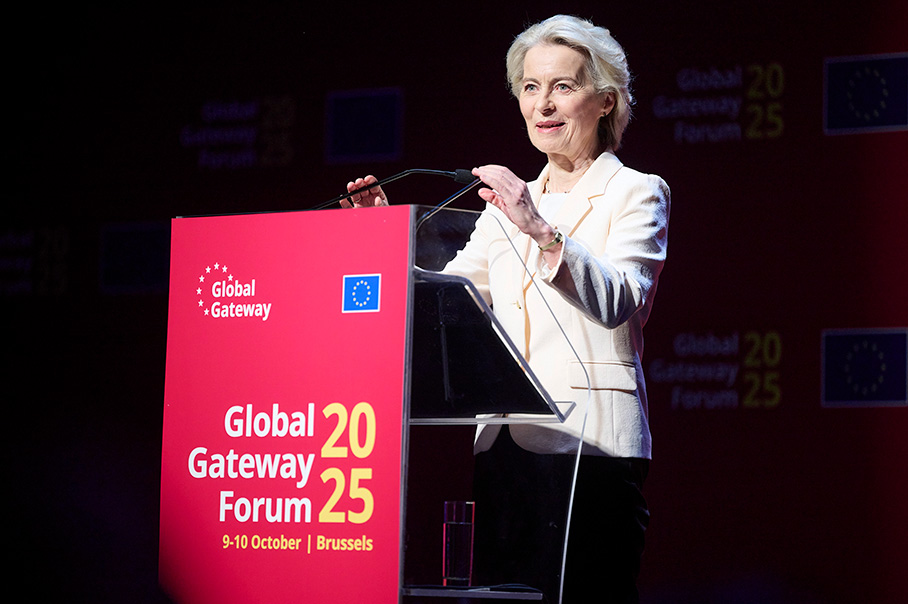
International partnerships are a key component of the EU’s external policy. The Global Gateway strategy – open a new tab., which draws on financial tools such as the Neighbourhood, Development and International Cooperation Instrument – Global Europe – open a new tab., is the EU’s contribution to narrowing the global investment gap, fully aligned with the UN’s 2030 Agenda and its Sustainable Development Goals, and with the Paris Agreement – open a new tab.. It has become a trusted strategy to mobilise investment worldwide, creating good local jobs and adding value across the globe, while also strengthening the EU’s competitiveness and security. So far, the Global Gateway has mobilised €306 billion in public and private investment – overshooting the initial target of €300 billion by 2027.
The Global Gateway Investment Hub – open a new tab., launched in October, will significantly add to these efforts by facilitating investment projects by EU companies across partner countries. To consolidate and strengthen the EU’s role as a global actor, the Commission has proposed to increase the efficiency of the External Action Guarantee – open a new tab. by cutting red tape and introducing simplification measures. The External Action Guarantee is a key financial tool under the Global Gateway strategy, offering more affordable loans to unlock investment and build trade relations with partner countries around the world.
Fostering high-level diplomacy and partnerships between the EU and Africa
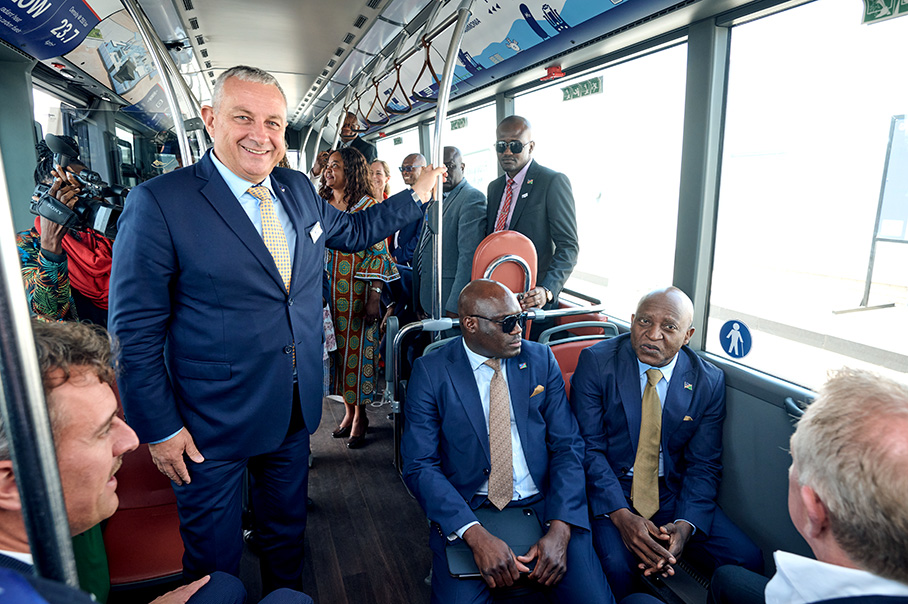
In 2025, the EU and the African Union celebrated the 25th anniversary of their partnership – open a new tab. with the seventh edition of the EU–African Union Summit – open a new tab.. Through the Global Gateway, the EU has already mobilised €120 billion for projects across Africa. At the G20 Summit in South Africa, the final pledging event of the Scaling up Renewables in Africa – open a new tab. Global Gateway campaign mobilised €15.5 billion for clean energy and access to electricity across the continent. The funding provided by the EU and Member States in a Team Europe – open a new tab. approach expands the EU’s clean energy efforts in Africa. The campaign has also joined forces with Mission 300 – open a new tab., a World Bank Group initiative that aims to provide electricity to 300 million people in Africa by 2030. It will help power homes, schools and hospitals across the continent and will create thousands of green jobs, from Côte d’Ivoire and Lesotho to Madagascar and Somalia.
International summits
The EU participated in several summits with partner countries in 2025. At the June G7 Summit – open a new tab. in Canada, leaders discussed how to step up support for Ukraine and reiterated their commitment to peace and stability in the Middle East. Other key topics discussed at the summit included strengthening economic coordination, the secure supply of critical minerals, new technologies (artificial intelligence and quantum), the energy transition and ways to better prevent and mitigate wildfires.
The G20 Summit – open a new tab. in Johannesburg, South Africa, marked the first summit on the African continent and concluded the G20’s first cycle of presidencies. The summit outcome focused on important priorities for Europe and Africa, such as the energy transition, critical minerals and debt sustainability. Other key topics discussed included global imbalances, climate action, disaster resilience and artificial intelligence.
Research and Innovation
Cooperation with India in research and innovation gained momentum in 2025, particularly within the framework of the EU–India Trade and Technology Council – open a new tab.. Under the council’s Working Group on Green and Clean Energy Technologies, collaborative research has been launched with India on marine plastic pollution, waste-to-renewable-hydrogen solutions – open a new tab. and the recycling of batteries for electric vehicles, with a joint investment of around €60 million.
Horizon Europe – open a new tab. is the EU’s key funding programme for research and innovation, and provides a platform to collaborate with the best research communities across the world. In 2025, Egypt – open a new tab., South Korea – open a new tab. and Switzerland – open a new tab. joined Horizon Europe, bringing the total number of associated countries to 22.
Supporting peace and security
At the first-ever EU–Palestine High-Level Political Dialogue – open a new tab. (this designation shall not be construed as recognition of a State of Palestine and is without prejudice to the individual positions of the Member States on this issue), the Commission proposed a multiannual Comprehensive Support Programme – open a new tab. to foster Palestinian recovery and resilience. The Commission also convened the first meeting of the Palestine Donor Group – open a new tab. in Brussels, Belgium, bringing together global partners to support the implementation of Palestinian reforms, help strengthen governance, improve economic resilience and advance Gaza’s recovery. Several Member States have pledged a total of €88 million, to be securely channelled to the Palestinian Authority through the Pegase (Palestinian–European Socio-Economic Management and Assistance) mechanism.
To foster peace in the Middle East, the Commission proposed to suspend certain trade-related provisions – open a new tab. of the EU–Israel Association Agreement and to impose additional sanctions on Hamas, extremist ministers and violent settlers. The Commission also put on hold its provision of bilateral support to Israel, with the exception of support for civil society and Yad Vashem (the World Holocaust Remembrance Center).
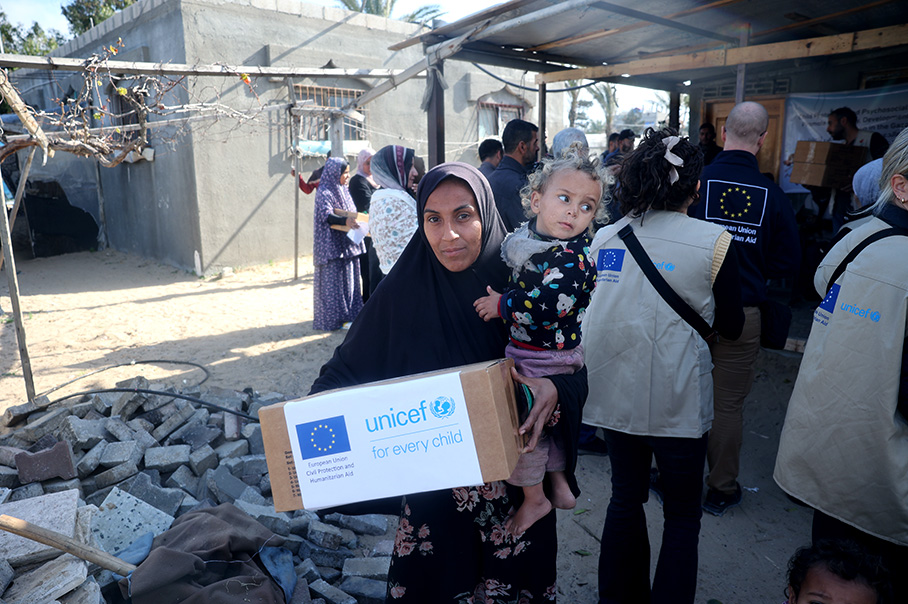
The EU remains the biggest international donor and provider of humanitarian aid to Palestinians, having allocated and disbursed a total of €220 million in emergency humanitarian support to Gaza and the West Bank, including East Jerusalem, in 2025.
The EU reaffirmed its commitment during the year to supporting the Syrian people and aiding Syria’s transition and recovery. At the ninth Brussels Conference, ‘Standing with Syria: Meeting the needs for a successful transition – open a new tab.’, the EU announced nearly €2.5 billion worth of financial commitments for 2025 and 2026 to aid Syria’s transition process and its socioeconomic recovery. The Commission also lifted economic sanctions on Syria – open a new tab., with the exception of those based on security grounds, and in 2025, for the first time, the annual Day of Dialogue – open a new tab. was held in Syria. Finally, following the reintroduction of UN sanctions on Iran, the Commission agreed to reimpose a number of sanctions in relation to the country’s nuclear proliferation activities.
Humanitarian aid
When major natural disasters occur or conflicts break out, millions find themselves in peril. Humanitarian aid becomes a lifeline, providing food, shelter and medical care.
The EU, together with its Member States, is at the forefront of these relief efforts and was the world’s leading donor of humanitarian aid in 2025. It provides life-saving aid based on needs, upholds the protection of humanitarian workers, safeguards international humanitarian principles, protects civilians and defends international humanitarian law – all of which are at the heart of humanitarian diplomacy. In 2025, the EU allocated €2.56 billion in humanitarian assistance and protection.
The EU provided humanitarian aid to its immediate neighbourhood, focusing on Armenia, Moldova, Türkiye and Ukraine. Beyond Palestine, the EU’s humanitarian assistance in the Middle East and North Africa focused on Syria and addressing the needs of Syrian refugees in the region.
The EU is a global humanitarian actor. The war in Sudan – open a new tab. and its spillover into neighbouring countries, the complex and volatile situation in the Greater Horn of Africa and in West and Central Africa – open a new tab. and extreme weather events in the southern Africa and Indian Ocean region – open a new tab. have resulted in mass displacement, food insecurity and even famine. The EU’s humanitarian aid provided life-saving assistance to millions of the most vulnerable and those affected by these crises.
In Asia, EU humanitarian aid continued to address protracted humanitarian crises, such as those in Afghanistan – open a new tab., Bangladesh and Myanmar/Burma – open a new tab., while also responding to sudden natural disasters such as floods in Pakistan – open a new tab. and tropical cyclones in the Philippines – open a new tab. and Vietnam – open a new tab., among others.
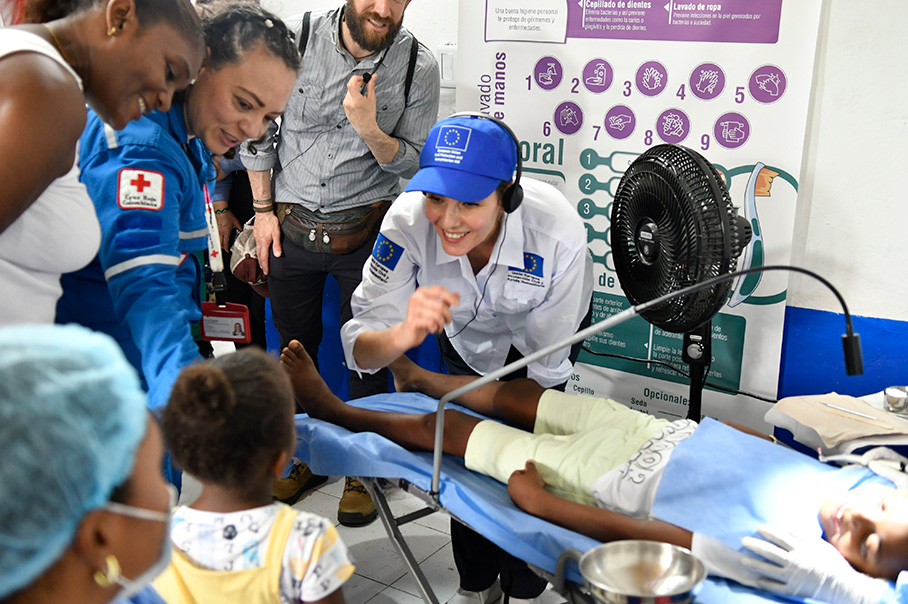
In Latin America, EU humanitarian aid supported communities affected by the ongoing crises in countries such as Colombia – open a new tab., Haiti – open a new tab. and Venezuela – open a new tab., along with victims of disasters such as Hurricane Melissa in the Caribbean.