Chapter 1
The EU’s support for Ukraine
 View photo caption
© Yan Dobronosov/Global Images Ukraine via Getty Images
The European Union remains steadfast in its commitment to supporting Ukraine in the face of Russia’s unprovoked and unjustified war of aggression against the country and its illegal attempts to annex Ukrainian territory. Ukraine’s freedom is Europe’s freedom, which is why the EU will continue to provide, in coordination with like-minded partners and allies, comprehensive political, financial, economic, humanitarian, military and diplomatic support to Ukraine and its people.
The EU has provided unprecedented military support to Ukraine’s armed forces and has welcomed more than 4 million Ukrainians seeking refuge in the Member States. It is also engaged in supporting Ukraine’s reforms on its path towards EU membership, including advancing Ukraine’s gradual integration into the Single Market. The EU has also contributed substantial financial support to boost the country’s resilience, recovery and reconstruction. Finally, the European Commission continues to push for a just and long-lasting peace in line with international law – including the principles of the UN Charter – that preserves Ukraine’s sovereignty, independence and territorial integrity.
It has been nearly four years since Russia launched its full-scale war of aggression against Ukraine. The EU remains committed to supporting Ukraine and its people for as long as it takes. This effort continued in 2025, backed by the EU’s conviction that Ukraine will soon be a peaceful, prosperous country for all its citizens, fully at home in the EU. By the end of 2025, the support provided by the EU - open a new tab. and its Member States since the beginning of the war amounted to €193.3 billion. In 2025 alone, the EU covered 84 % of Ukraine’s external financing needs. The Commission continued to coordinate its assistance with other key supporters through the Ukraine Donor Platform. At the European Council of 18 and 19 December, EU leaders decided to mobilise an additional €90 billion in financing for 2026–2027 through common borrowing backed by the EU budget.
The EU continued to support vital humanitarian aid in both Ukraine and Moldova, with funding directed towards emergency assistance. This includes €40 million - open a new tab. allocated in September to help Ukrainians endure a fourth winter of Russia’s war of aggression, assisting EU humanitarian aid partners in delivering shelter materials, repairing damaged homes and centres for displaced people and improving access to water, sanitation and heating.
Since Russia’s full-scale invasion in February 2022, the Commission has allocated over €1 billion for humanitarian aid programmes in Ukraine, including €220 million in 2025.
To provide emergency assistance to Ukrainians, the EU is coordinating its largest-ever activation of the EU Civil Protection Mechanism - open a new tab.. So far, all 27 Member States, together with six participating countries (Iceland, Moldova, North Macedonia, Norway, Serbia and Türkiye), have offered in-kind assistance ranging from medical supplies and shelter items to vehicles and energy equipment. In total, over 156 000 tonnes of assistance have been channelled to Ukraine. Additionally, since 2022, more than 4 700 patients have been transferred for care in hospitals throughout Europe.
Support for Ukraine and Ukrainians (2022–2025)

The chart illustrates the support the EU provided to Ukraine and its people between 2022 and 2025, amounting to more than €193.3 billion. The largest share – over €103.3 billion – represented financial, economic and humanitarian assistance, while military support accounted for €69.36 billion. An additional €17 billion was made available to Member States to help people fleeing the war, while €3.7 billion was mobilised from the proceeds of immobilised Russian assets.
The EU also continues to welcome those fleeing the war. Member States agreed in 2025 to extend the current temporary protection status - open a new tab., which allows Ukrainians to live, work and study in the EU, until 4 March 2027. Since 2022, the Member States have welcomed more than 4 million people. In June, the Commission proposed that Member States start preparing for a transition out of the temporary protection system towards other legal status options and that they facilitate the return and reintegration of those who wish to be repatriated to Ukraine.
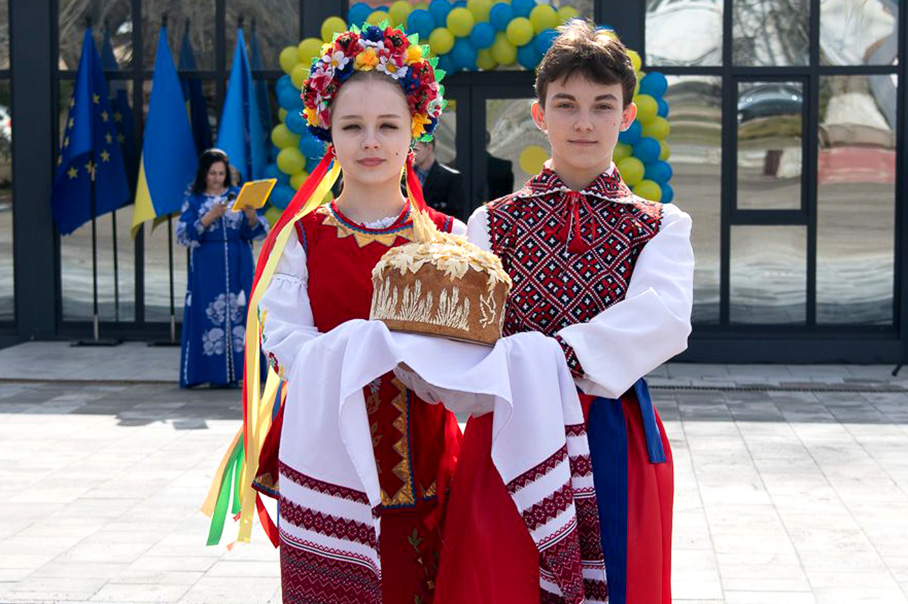
In July, the Commission also announced its commitment to provide Ukraine with associate membership of the Erasmus+ programme, expanding educational and mobility opportunities for Ukrainian students and teachers. In addition, Erasmus+ will support the distribution of 2 million new textbooks to Ukrainian pupils in the 2025/2026 school year.

EU support for education, culture and civil society in Ukraine (2022–2025)
- €100 million dedicated to supporting safe access to education for children in Ukraine.
- Mobility of more than 52 000 Ukrainian citizens in education, training, youth and sport under Erasmus+.
- €60 million for projects aimed at building the capacity of Ukrainian universities, vocational education and training institutions, and sport and youth organisations under Erasmus+.
- €65 million for free, healthy school lunches for 700 000 primary school students in Ukraine.
- More than 380 school buses donated.
- 1.5 million textbooks delivered to students.
- More than €50 million provided to support Ukraine’s cultural and creative sectors, including over €11.5 million dedicated to cultural heritage.
- Team Europe Initiative for Cultural Heritage in Ukraine now comprised of 75 initiatives by 24 Member States and the Commission.
- More than €700 000 in mobility grants for artists and cultural professionals.
- €123 million to support civil-society organisations in Ukraine.
Ukraine’s security is inextricably linked to that of Europe. This is why the EU’s top priority is to end Russia’s war of aggression and its illegal attempts to annex Ukrainian territory, and to ensure a fair and lasting peace. Throughout 2025, the EU took several significant steps towards this immensely challenging and complex objective, including providing continued military support and launching successive packages of sanctions that have imposed real costs on Russia’s economy.
With the new sanctions, the EU has further restricted Russia’s access to battlefield technologies, weakened its military–industrial complex and stepped up the fight against its shadow fleet. The EU has also tightened restrictions on Russia’s energy revenues and introduced a ban on imports of Russian liquefied natural gas as of 1 January 2027.
The EU and its Member States have provided around €66 billion in military support since the start of Russia’s full-scale military aggression against Ukraine, €6.4 billion of which has been channelled via the European Peace Facility - open a new tab.. The EU has also provided €3.4 billion from the proceeds of Russian immobilised assets, while being an essential provider of training to the Ukrainian Armed Forces through the EU Military Assistance Mission in support of Ukraine - open a new tab., which has so far trained around 85 000 Ukrainian military personnel. All these forms of military support help strengthen Ukraine on the battlefield and at the negotiation table, safeguarding Ukrainian lives.
Throughout 2025, the EU continued to ensure that Russia’s leadership is held accountable for the atrocity crimes committed in and against Ukraine. In February, the Commission, the High Representative for Foreign Affairs and Security Policy, the Council of Europe and Ukraine, along with 37 other countries, laid the foundations for the establishment of the Special Tribunal for the Crime of Aggression against Ukraine. The agreement between the Council of Europe and Ukraine on the establishment of the tribunal was signed in June. The tribunal will have the power to hold to account Russia’s political and military leaders, who bear the greatest responsibility for the atrocities committed in Ukraine. In December, the Commission signed the Convention establishing the International Claims Commission for Ukraine on behalf of the EU. The signature marked a key moment in Europe’s collective efforts to ensure accountability and justice for Ukraine and the Ukrainian people, ensuring that the victims of Russia’s brutal war of aggression are properly compensated.
To make sure that EU sanctions are fully implemented, EU law has been strengthened to allow Member States to confiscate assets linked to criminal offences. Thanks to the Freeze and Seize Task Force - open a new tab., by the end of 2025 the Member States had frozen more than €27 billion of private assets belonging to Russian and Belarusian oligarchs and their associates.
- 200 302 incidents of alleged international crimes are under investigation by Ukraine, and the actual number of atrocities is suspected to be even higher.
- More than 65 000 claims had been submitted to the Register of Damage for Ukraine, in 13 categories, by the end of 2025.
- 18 Member States have already opened national investigations into international crimes committed in Ukraine.
- 6 Member States are part of a joint investigation team supported by Eurojust – along with Ukraine, the International Criminal Court and Europol – to coordinate the collection of evidence and investigations into core international crimes committed in Ukraine.
- 5 Member States are participating, along with Ukraine, in the International Centre for the Prosecution of the Crime of Aggression against Ukraine, with the close involvement of the International Criminal Court.
The EU has established the Ukraine Facility - open a new tab., a dedicated financing instrument of up to €50 billion, to provide predictable and flexible support to Ukraine for 2024–2027 to support its recovery, reconstruction and modernisation, in line with its EU path.
In February 2025, the EU offered a new support package - open a new tab. to Ukraine to enable its full integration within the European energy market by early 2027, together with Moldova, along with further integration into the EU gas sector, provided that Ukraine significantly accelerates the necessary market reforms.
In parallel, the EU has continued to advance Ukraine’s gradual integration into the Single Market, notably through the opportunities offered by the EU–Ukraine Deep and Comprehensive Free Trade Area. As a result, Ukraine joined the Roam Like at Home - open a new tab. area on 1 January 2026. In addition, the EU and Ukraine have renewed their road transport agreement - open a new tab. until March 2027, enabling smoother cross-border freight transit to the benefit of both economies. The Commission has also completed the transportation of an entire thermal power plant from Lithuania to Ukraine to support the population’s energy needs – the largest single operation to date under the EU Civil Protection Mechanism.
The Solidarity Lanes - open a new tab., set out in May 2022, continue to ensure that Ukraine can import the goods it needs and export some agricultural and other products. While the Solidarity Lanes were essential for Ukraine’s agricultural exports until mid 2023, Ukraine has since successfully fought against Russia to secure its Black Sea corridor. The EU supports Ukraine’s Black Sea-linked trade by backing this corridor, which enables Ukrainian vessels to continue exporting. In parallel, the EU has invested in infrastructure and coordination to ensure this maritime route remains viable and secure.
The EU continued to use export credit guarantee instruments during the year to support trade. For example, in June, the first deal - open a new tab. under the EU’s Ukraine Export Credit Guarantee Facility was struck, providing €20 million in guarantees for EU exports to Ukraine via Denmark’s Export–Import Office.
The EU’s ongoing commitment to Ukraine’s reconstruction in 2025 combined financial instruments, guarantees, grants and reform‐conditional support to boost the country’s resilience and economic stability and to support its long-term sustainable recovery. Central to these efforts is the 2024–2027 Ukraine Facility. The Ukraine Investment Framework, the investment arm of the Ukraine Facility, has been provided with a total of €9.5 billion in EU support and is designed to mobilise up to €40 billion in public and private investment for Ukraine’s recovery and reconstruction. So far, €6.9 billion has been allocated to fund investment programmes that directly benefit the people of Ukraine – creating new jobs, delivering electricity, heat and clean water, supporting affordable housing, building bomb shelters, rehabilitating war-damaged infrastructure and more.
A call for proposals - open a new tab. to support small businesses, war-affected communities and recovery investments was launched in March. It aimed to expand access to financial support for micro-, small and medium-sized enterprises through banks to strengthen Ukraine’s socioeconomic cohesion. This was followed by a new call for expressions of interest that ended in October.
To improve transport connections between the EU, Ukraine and Moldova, the EU has mobilised more than €2.3 billion to date, including €1.55 billion in non-reimbursable grant support from the Connecting Europe Facility. For example, in September, Ukraine opened its first EU-standard-gauge railway line - open a new tab., enabling direct train travel from Ukraine to cities like Budapest in Hungary and Vienna in Austria. In July, a new €73.5 million project under the facility was selected to construct an EU-standard-gauge railway link from Poland to Sknyliv (near Lviv) in Ukraine. This will contribute to Ukraine’s further integration into the EU rail network.
Beyond direct financing, the EU is focusing on structural and institutional reforms as part of the reconstruction process. Ukraine is tasked with implementing a recovery and reform plan; upholding democratic mechanisms, the rule of law and human rights; and maintaining transparent, accountable governance.
Investment in Ukraine’s future
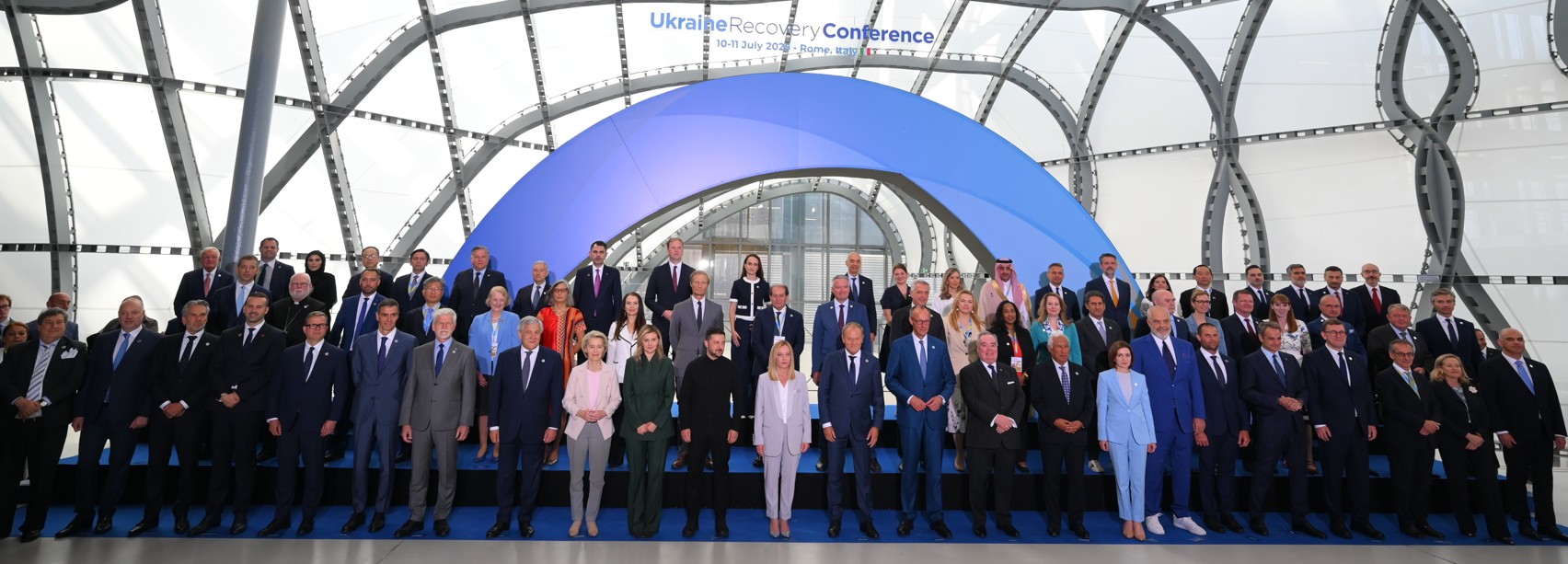
The agreements made during the Ukraine Recovery Conference aim to unlock up to €10 billion in investment to rebuild homes, reopen hospitals, revive businesses and secure energy, helping Ukraine move closer to the EU every day. These efforts reflect a vision of reconstruction that links the rebuilding of physical spaces with the strengthening of Ukraine’s capacity to integrate with European norms, values and markets.