Chapter 2
A sustainable, prosperous and competitive Europe
 View
photo caption
View
photo caption
Europe’s prosperity depends on having a competitive, sustainable and resilient economy that delivers opportunities for its people and businesses, now and in the future. In 2025, the European Union strengthened its industrial base, accelerated the clean and digital transitions and deepened the Single Market. Guided by the Competitiveness Compass and the Clean Industrial Deal, it worked to close the innovation gap, reduce dependencies, and align climate ambition and economic growth. New initiatives to cut red tape, modernise taxation and support fair competition will help businesses, especially small and medium-sized enterprises, to thrive across borders. Strategic investments in clean technologies, digital innovation and critical raw materials are driving long-term competitiveness, while the savings and investments union and the European Competitiveness Fund, together with Horizon Europe, aim to channel more capital into Europe’s future industries. People remain central to a competitive Europe, and the union of skills, launched in 2025, will equip them with the skills needed for a transforming economy (see Chapter 4).
The Competitiveness Compass
The Competitiveness Compass - open a new tab. is the roadmap that will guide the EU’s work on competitiveness for the next five years. It is based on the Draghi - open a new tab. and Letta - open a new tab. reports and follows three orienting principles - open a new tab.: closing the innovation gap; a joint plan for decarbonisation and competitiveness; and enhancing economic security by reducing excessive dependencies. These principles are supported by horizontal measures that will enable and strengthen competitiveness across the EU’s economy.
Horizontal enablers
for EU competitiveness

- Cutting red tape.
- Removing barriers within the Single Market.
- Enabling more efficient investment financing.
- Promoting skills and quality jobs.
- Ensuring better coordination of policies between the EU and the Member States.
Completing the Single Market
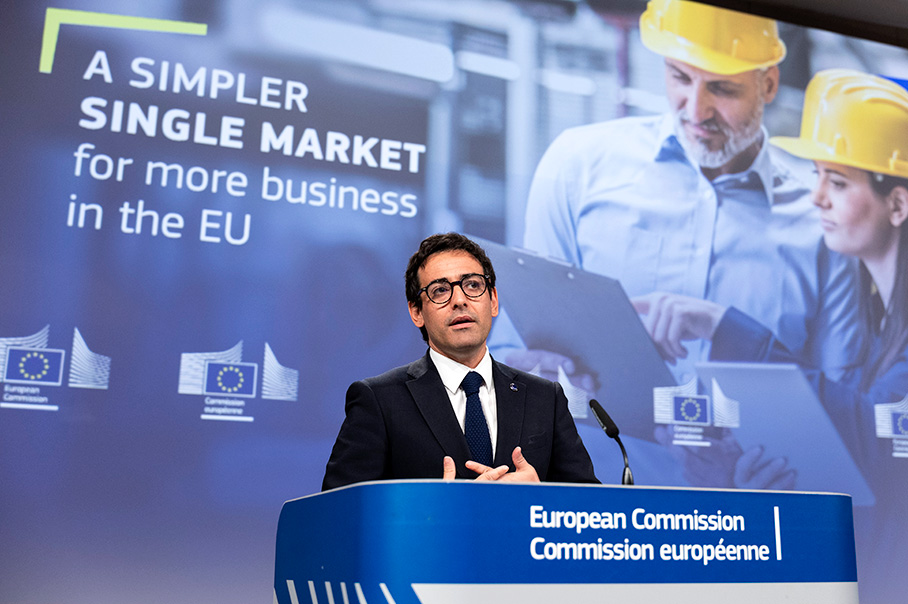
While the compass provides the strategic direction (innovation, decarbonisation, security) on the road towards competitiveness, completing the Single Market ensures that the path is obstacle-free. On 21 May, the European Commission proposed a Single Market Strategy - open a new tab. to make it easier to do business in the EU. The strategy focuses on making the cross-border provision of services and the cross-border movement of goods more seamless and on ensuring that Single Market rules are enforced quickly and efficiently. The Single Market has increased the EU’s gross domestic product by at least 3–4 % and created 3.6 million jobs since its establishment. Fully integrating the Single Market would double the gains already achieved and make the EU more competitive.
In this context, the Commission published the 2024 report on competition policy - open a new tab.. It also released the 2025 annual Single Market and competitiveness report - open a new tab., which tracks the EU’s progress across nine key drivers of competitiveness.
Main measures under the Single Market Strategy
- Dismantling the 10 most harmful barriers, known as the ‘terrible 10 - open a new tab.’, that are disrupting the smooth flow of goods and services in the Single Market.
- Addressing the challenges faced by specific service sectors when operating across borders.
- Making it easier for small and medium-sized enterprises (SMEs) to operate in the Single Market.
- Simplifying the business environment through digitalisation.
- Strengthening Member State cooperation in enforcing Single Market rules.
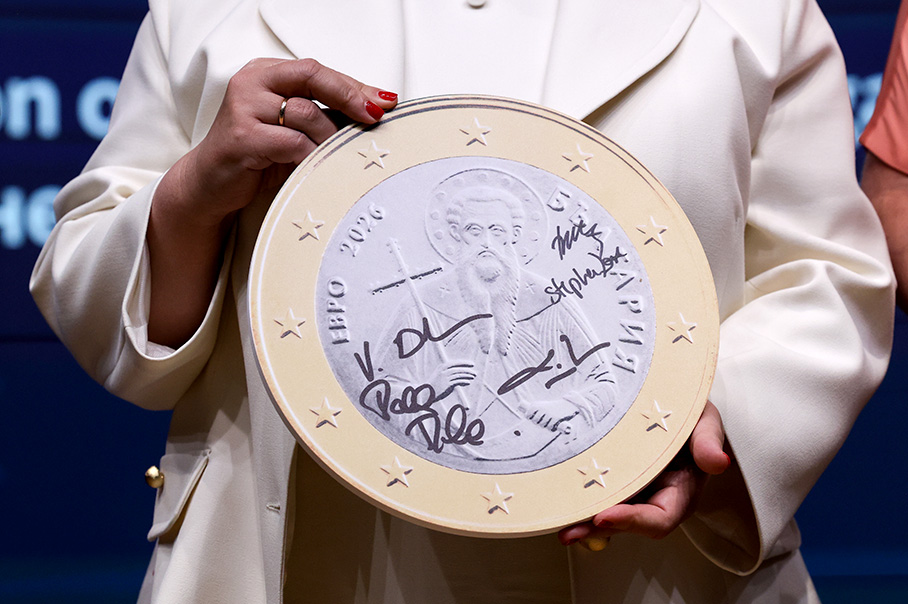
In July, Bulgaria’s adoption of the euro as of 1 January 2026 was approved, making it the euro area’s 21st Member State.
Modernising and simplifying customs procedures for e-commerce goods
In November, Member States reached an agreement to abolish the €150 customs duty relief threshold - open a new tab., transforming the way e-commerce goods are handled and aiming to level the playing field between e-commerce and traditional retail. This marks the first achievement of the 2023 customs reform proposal - open a new tab., which seeks to address the e-commerce challenges arising from the increase in low-value goods arriving directly with EU consumers from non-EU countries.
Modernising VAT rules for the digital age
In May, the Council of the European Union agreed on a new plan - open a new tab. for value added tax (VAT) rules. The changes focus on e-commerce imports and the taxation of goods sold from outside the EU. The goal is to incentivise the use of the VAT One-Stop Shop - open a new tab., which simplifies VAT declaration and collection, reduces paperwork for EU businesses and supports efforts to combat VAT fraud.
The landmark VAT in the digital age - open a new tab. package was adopted - open a new tab. in March, marking a significant step forward in digitalising and modernising the EU’s VAT system. It will make the system more business-friendly, tougher on fraud and better equipped to address the challenges of the growing platform economy.
Reducing administrative burdens
Creating a favourable business environment also means easing administrative requirements, especially for SMEs. Instead of 27 different national laws, the EU wants to create a single, optional EU-wide company law, known as the 28th regime - open a new tab., to make it easier and faster for businesses to be set up and operate anywhere in the EU, using digital tools and streamlined procedures. Its aim is to simplify cross-border business and make it easier for companies to attract investment.
The EU is also supporting SMEs in managing the complexities associated with sanctions. The EU has more than 40 sanctions regimes - open a new tab. in place to prevent conflict or respond to crises. In March, the Commission launched the EU Sanctions Helpdesk - open a new tab., a one-stop shop offering resources, events and a Compliance Support Service. The helpdesk helps SMEs understand and comply with sanctions, providing guidance to those that find it challenging to carry out due diligence independently.
The proposed European Business Wallets - open a new tab. are digital tools that will make it easier for companies of all sizes to interact and communicate securely with public authorities and other businesses anywhere in the EU. Companies and public authorities will be able to identify, authenticate and exchange data with full legal effect throughout the EU. The Business Wallets build on the European Digital Identity Framework - open a new tab. and form part of the broader simplification agenda.
To reduce tax complexity, the Council adopted an amendment to the Directive on Administrative Cooperation in Taxation - open a new tab. (DAC9 - open a new tab.). It allows multinational enterprise groups to file a single top-up tax return for the whole group, rather than having to make multiple filings in every jurisdiction. Tax authorities will also benefit from a standardised system for information exchange.
Through its Technical Support Instrument - open a new tab., the EU will support 109 reforms - open a new tab. to help Member States improve business conditions, close the innovation gap, build a net-zero economy and bolster the EU’s economic security. Among them, 38 reforms will specifically ease burdens on SMEs and support start-ups and scale-ups.
Finally, the EU is also reviewing its own rules to remove administrative barriers in the Single Market (see the section ‘Simplifying EU rules’ in Chapter 8).
Competition policy
The EU safeguards long-term competitiveness and a thriving Single Market by ensuring the consistent enforcement of rules that promote fair competition - open a new tab. among businesses across all Member States. Through the enforcement of its competition-policy instruments (antitrust, merger control and State aid), the Commission maintains a level playing field within the Single Market, encouraging companies to invest, innovate and grow, and to offer consumers goods and services on the most favourable terms.
The Commission is in the process of revising the EU merger guidelines, addressing, in particular, innovation, resilience, investment, sustainability and efficiency. It will take into account broader trends relevant to the productivity and competitiveness of the EU economy as a whole.
In addition, the Commission is carrying out a review - open a new tab. of the implementation of the Foreign Subsidies Regulation - open a new tab. on tackling market distortions from foreign subsidies. A report on this subject should be ready by July 2026; in the meantime, enforcement continues. For example, in November, the Commission approved the acquisition of Covestro - open a new tab. by Abu Dhabi National Oil Company after an in-depth investigation - open a new tab., subject to binding commitments offered by the two parties.
Ensuring fair competition
- 370 merger decisions were taken in 2025.
- 350 State-aid decisions were taken in 2025.
- €3.97 billion in fines were imposed on companies breaching EU competition law.

Driving clean and competitive industry forward
Facing the triple planetary crisis of climate change, biodiversity loss and pollution (see Chapter 5), and with 2024 being the warmest year on record according to the European State of the Climate Report 2024 - open a new tab., the EU remains committed to turning its response to these challenges into opportunities for sustainable growth and global leadership in the clean transition. The Clean Industrial Deal - open a new tab. is central to this effort, aligning climate policy with competitiveness and strategic independence. It will accelerate industrial decarbonisation and help ensure that the objective of climate neutrality by 2050, as set out in the European Climate Law - open a new tab., is achieved.
The EU continues to make measurable progress on climate action. According to the Climate Action Progress Report 2025 - open a new tab., total EU net greenhouse gas emissions fell by 2.5 % in 2024 compared to 2023. Emissions now stand at over 37 % below 1990 levels, or 39 % for domestic emissions alone, while the EU economy is 71 % larger than in 1990. The continued decoupling of emissions from economic growth confirms that effective climate action can be achieved alongside sustained economic prosperity.
Environmental degradation and climate change also pose threats to peace, stability and security. In 2025, the EU’s progress report - open a new tab. on the implementation of the joint communication on climate and security - open a new tab. explores this nexus, highlighting how these issues now feature prominently in the EU’s exchanges with partner countries and international organisations, and how this strengthened focus is driving concrete initiatives.
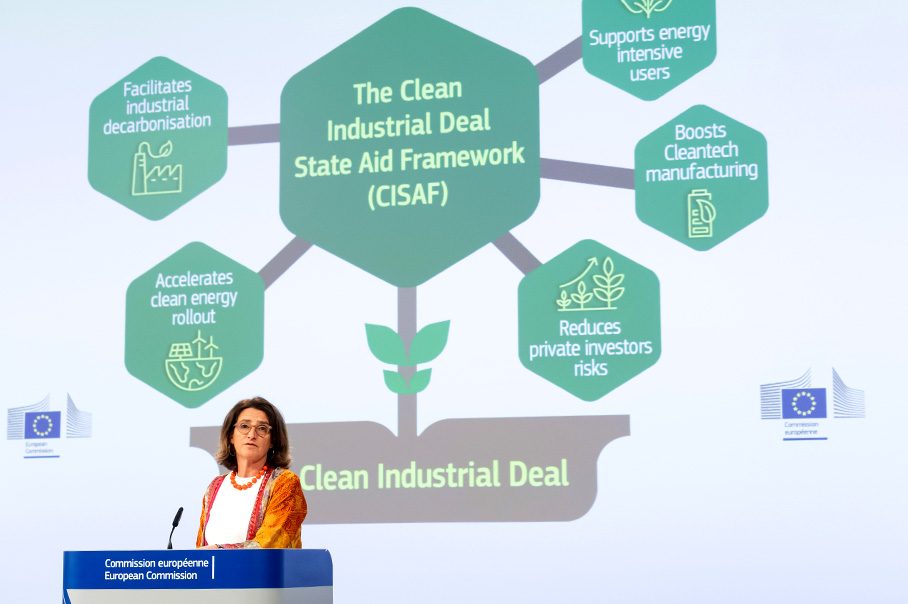
In June, the Commission adopted the Clean Industrial Deal State Aid Framework - open a new tab.. It enables Member States to support clean energy, industrial decarbonisation and clean-tech manufacturing under simplified conditions, and provides targeted support for electricity costs to energy-intensive users. Additionally, in October, the EU global climate and energy vision - open a new tab. was presented to strengthen the EU’s position in global markets. By deepening existing partnerships and building new, mutually beneficial ones with international partners, the strategy adds an external dimension to the Clean Industrial Deal and aims to drive a global clean and resilient transition.
Main strands of action to address industry challenges
Making energy more affordable (see the section ‘Clean and affordable energy’ below).
Facilitating supply and stimulating market demand for clean products and materials.
Mobilising financial resources to invest in decarbonisation and competitiveness.
Securing access to raw materials by advancing the EU’s circular economy.
Establishing international partnerships to access global markets (see Chapter 7).
Building a workforce fit for a decarbonised industry, providing quality jobs and ensuring a just transition (see Chapter 4)
Initiatives targeted at industries facing unique challenges

This is a roadmap towards reducing energy costs, strengthening trade protection, preventing carbon leakage, boosting circularity, mobilising investment and safeguarding jobs. As part of the plan, the Commission presented a proposal - open a new tab. to protect the EU steel industry from the unfair impacts of global overcapacity.

This plan outlines measures to help lower energy and feedstock costs, support clean and circular technologies, create a Critical Chemicals Alliance, simplify regulatory requirements and address harmful substances such as PFAS (‘forever chemicals’).

This plan will support the transition to clean, connected and automated vehicles and help unlock the sector’s innovative potential. A flexibility measure - open a new tab. has been proposed - open a new tab. to help manufacturers meet the 2025 carbon dioxide emission targets for new cars and vans. The action plan includes the launch of a battery booster investment package, making €1.8 billion available to help EU battery manufacturers scale up and increase their production capacity. The Commission has also presented an automotive package - open a new tab., including a proposal for the revision of the carbon dioxide standards for cars and vans, a proposal on clean corporate fleets, a Battery Booster Strategy and an Automotive Omnibus proposal.
2025 initiatives to drive the clean transition
- The Important Projects of Common European Interest - open a new tab. Design Support Hub - open a new tab. was established to help Member States accelerate the design of new innovative projects.
- A political agreement was reached on the amendment of the European Climate Law - open a new tab., which aims to reduce the EU’s net greenhouse gas emissions by 90 % by 2040 (compared to 1990 levels), reinforcing the importance of implementing the Clean Industrial Deal. It will provide investors with long-term certainty, foster innovation, strengthen the industrial leadership of EU businesses and enhance the EU’s energy security.
- The assessment of the national energy and climate plans - open a new tab. confirmed that, provided Member States implement both the measures already agreed at the EU level and those set out in the plans, the EU remains on track to collectively achieve the 2030 target of a 55 % reduction in greenhouse gas emissions and a renewable energy share of at least 42.5 %.
- €2.9 billion in funding - open a new tab. was announced for 61 cutting-edge net-zero-technology projects and €643 million for five electric vehicle battery cell manufacturing projects through the Innovation Fund - open a new tab., using revenues from the EU Emissions Trading System - open a new tab..
- The 30th UN Climate Change Conference (COP30) took place from 10 to 21 November in Belém, Brazil. The EU worked with partners - open a new tab. to secure the Global Mutirão agreement - open a new tab., which reaffirms the need to limit the global temperature increase to 1.5 °C and to move away from fossil fuels. The agreement launches a Global Implementation Accelerator and the Belém Mission to 1.5 initiative, to encourage stronger climate commitments and help countries put their climate plans into practice.
- A political agreement - open a new tab. was reached by the European Parliament and the Council to strengthen and simplify the Carbon Border Adjustment Mechanism - open a new tab.. The revision exempts 90 % of importers from reporting obligations, representing less than 1 % of the emissions embedded in imported goods, thus minimising administrative burdens while preserving the EU’s climate goals.
- The Commission adopted the RESourceEU Action Plan - open a new tab. to support the EU’s efforts to secure critical raw materials, such as rare earth minerals, cobalt and lithium. See Chapter 7 for information on the critical raw materials partnerships concluded with global partners in 2025.
Clean and affordable energy
To deliver on the Clean Industrial Deal, the EU needs affordable energy. In February, the Commission presented an Action Plan for Affordable Energy - open a new tab., introducing short-term measures to reduce energy costs by frontloading the benefits of renewable energy, energy savings, deeper market integration and better energy interconnections. The plan aims to provide relief to households facing high energy bills and to industries struggling with high production costs. Overall savings are projected at €45 billion in 2025, rising to €130 billion annually by 2030 and €260 billion by 2040.
The EU’s REPowerEU - open a new tab. plan, launched in 2022, has already made substantial progress in ensuring that citizens and businesses have access to energy that is affordable, secure and sustainable. To end dependence on Russian fossil fuels and strengthen the EU’s strategic autonomy, the Commission published the REPowerEU Roadmap - open a new tab. in May, followed by a legislative proposal - open a new tab. in June to phase out Russian gas and oil imports by the end of 2027. The Parliament and the Council reached a provisional political agreement - open a new tab. on the initiative in December.
To further strengthen the EU’s energy security, the Commission is working on a revision of the EU’s energy security framework. In December, it also proposed - open a new tab. to modernise and expand the EU’s grid infrastructure through the European Grids Package and the Energy Highways initiative.
In July, the Commission and the European Investment Bank disbursed €3.66 billion - open a new tab. from the Modernisation Fund - open a new tab. to support 34 clean energy projects, some of which focus on energy efficiency. In September, they launched the Energy Efficiency in Small and Medium-sized Enterprises initiative - open a new tab., a €17.5 billion financing programme expected to help more than 350 000 companies reduce their energy consumption.
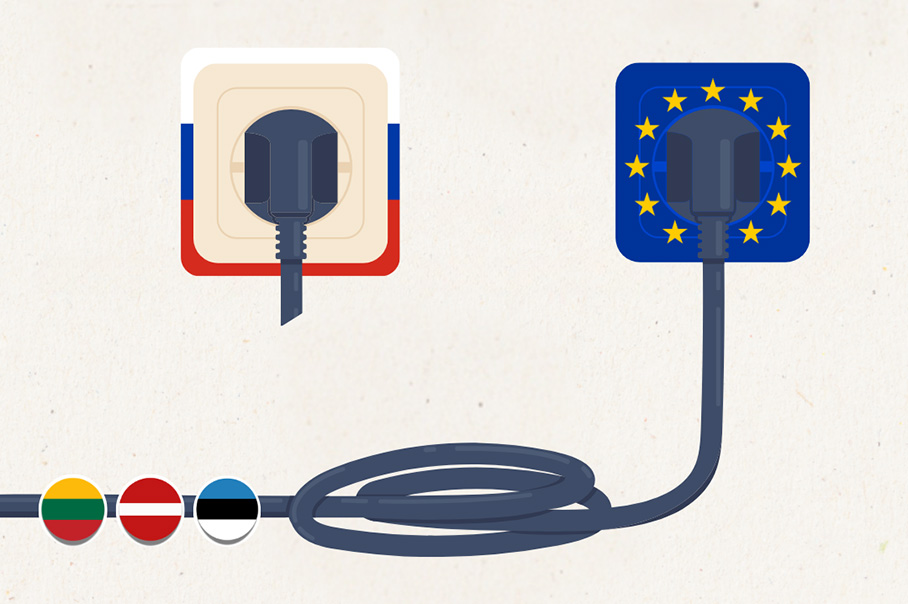
On 9 February, Estonia, Latvia and Lithuania synchronised their electricity grids with the Continental Europe Network, in cooperation with Poland. The EU supported this strategic European project with funding of more than €1.3 billion, representing 75 % of investment costs. It marks the full integration of the Baltic states into the EU energy market. The move ends dependence on Belarusian and Russian systems and strengthens regional and EU energy resilience.
Progress on renewable energy continued in the EU, with renewables accounting for 47 % of electricity generation in 2024. In 2025, a common EU methodology - open a new tab. for calculating life-cycle emissions from low-carbon fuels was provided. Nearly €1 billion from the Innovation Fund, financed through revenues from the EU Emissions Trading System, was awarded to 15 renewable hydrogen projects - open a new tab.. These projects are expected to produce almost 2.2 million tonnes of renewable hydrogen over 10 years, preventing 15 million tonnes of carbon dioxide emissions.
Member States retain the right to choose their energy mix, and for some, nuclear energy remains vital for decarbonisation, industrial competitiveness and energy security. In May, the Joint Research Centre launched a digital modelling hub - open a new tab. to support innovation in areas such as small modular reactors and energy planning. The Commission also published an updated Nuclear Illustrative Programme communication - open a new tab., providing an overview of nuclear development trends and investment needs across the EU, along with guidance on nuclear safety, waste management, skills and international cooperation.
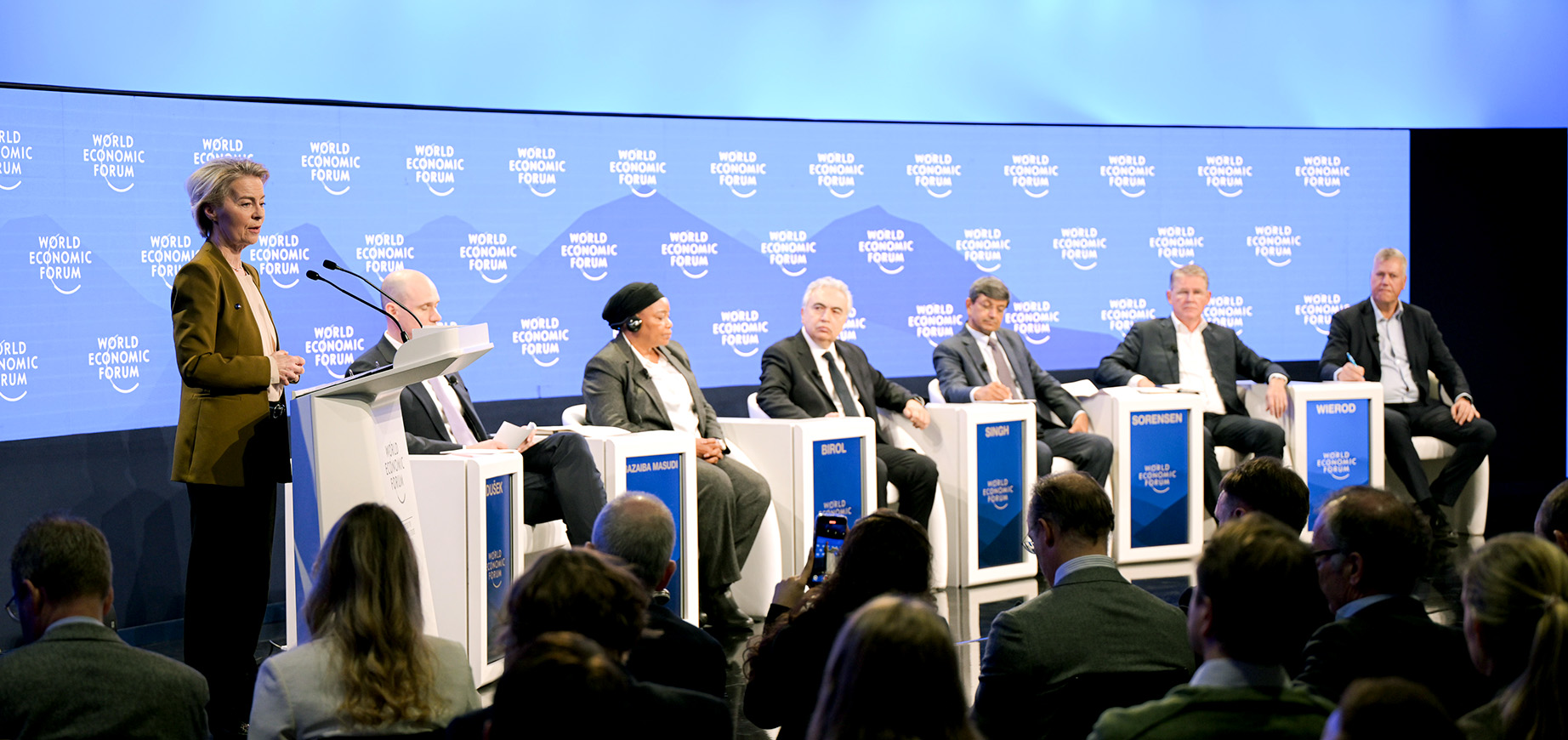
The circular economy is key to boosting the EU’s economic security, resilience, competitiveness and decarbonisation. To accelerate its transition towards circularity, the EU announced that it would propose a circular economy act in 2026, building on the second Circular Economy Action Plan - open a new tab.. The aim is to establish a single market for secondary raw materials, increase the supply of high-quality recycled materials and stimulate demand for these materials in the EU.
- In 2024, the EU’s circularity rate reached
12.2 %. - The goal is to double this rate to
24 % by 2030.
The Commission also adopted the 2025–2030 working plan - open a new tab. for the Ecodesign for Sustainable Products Regulation - open a new tab. and the Energy Labelling Regulation - open a new tab.. The plan sets out a list of products to be prioritised for the introduction of ecodesign requirements and energy labelling over the next five years to make them sustainable, repairable, circular and energy-efficient. In addition, revised rules on the energy consumption of electrical appliances in standby, off mode and networked standby - open a new tab. started to apply on 9 May.
Other efforts to further advance the EU’s circular economy
- The targeted revision of the Waste Framework Directive - open a new tab. entered into force on 16 October - open a new tab.. It introduces new measures, including mandatory extended producer responsibility requirements, to improve the circularity of textiles and cut food waste.
- The proposed end-of-life vehicles regulation - open a new tab. will stimulate circularity in the automotive industry and improve the availability of secondary materials and affordable used spare parts.
- An assessment - open a new tab. of the EU Ship Recycling Regulation - open a new tab. showed that it has largely achieved its objectives and has contributed to higher environmental and social standards in ship recycling practices.
- Rules - open a new tab. were adopted to enable economic operators to use fully digital systems for shipping waste across the Single Market, simplify intra-EU waste shipments, ensure recycling at the most suitable facilities and reduce administrative burdens and costs.
- A proposed package of measures - open a new tab. will strengthen the EU’s plastic recycling and accelerate the transition to a circular economy.
An evaluation - open a new tab. of the Waste Electrical and Electronic Equipment Directive - open a new tab. highlighted gaps in e-waste collection, critical raw material recovery and extended producer responsibility schemes.
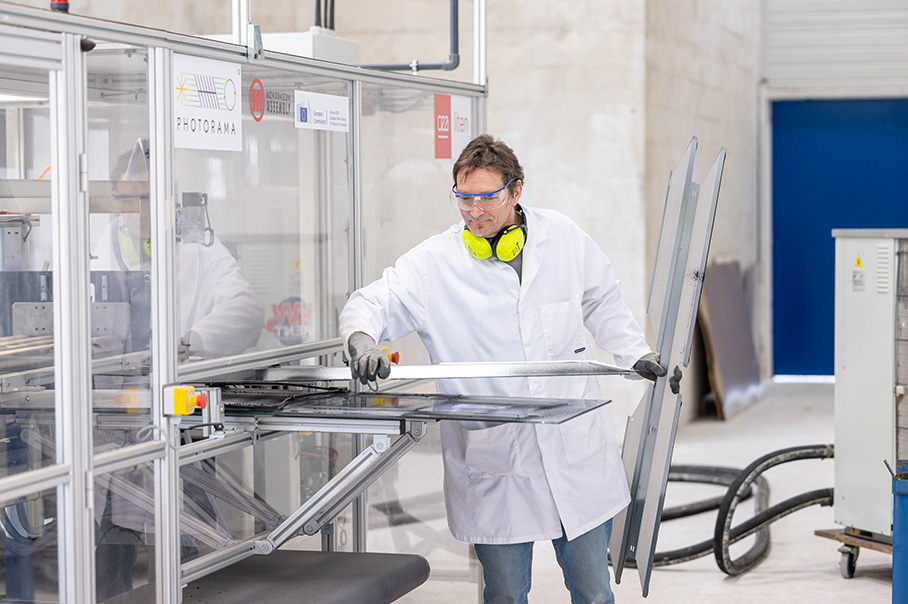
The EU-funded Photorama innovation project - open a new tab. aims to improve circularity by recovering raw materials such as glass, aluminium, copper, silver, indium and silicon from old solar panels. Tangermünde, Germany, 15 April 2025. © European Union. Reuse allowed only for education and information purposes.
Sustainable transport
To stay competitive, the EU needs a sustainable, well-connected transport network that strengthens regional integration and mobility. In 2025, the Commission selected 94 transport projects - open a new tab. to receive nearly €2.8 billion in EU grants under the Connecting Europe Facility - open a new tab. for the modernisation of railways, inland waterways and maritime routes across the Trans-European Transport Network - open a new tab.. It also selected more than 100 projects that will receive about €1 billion in Alternative Fuels Infrastructure Facility - open a new tab. grants to support the deployment of renewable and low-carbon fuel infrastructure in ports and airports and along key road sections.
In addition, the Sustainable Transport Investment Plan - open a new tab. provides a strategic framework to accelerate the decarbonisation of EU transport by boosting investment in renewable and low-carbon fuels for the aviation and waterborne transport sectors. The measures presented under the plan are expected to mobilise at least €2.9 billion by the end of 2027. As a key initiative under the plan, a coalition of first-mover Member States was launched to support the production and uptake of synthetic aviation fuels. This group intends to organise double-sided auctions – offering long-term revenue certainty for producers and competitive short-term contracts for fuel buyers – with the first auction planned for 2026.
The Commission also presented an ambitious plan - open a new tab. to accelerate the development of high-speed rail and significantly shorten train travel times across the EU.
Future train route improvements
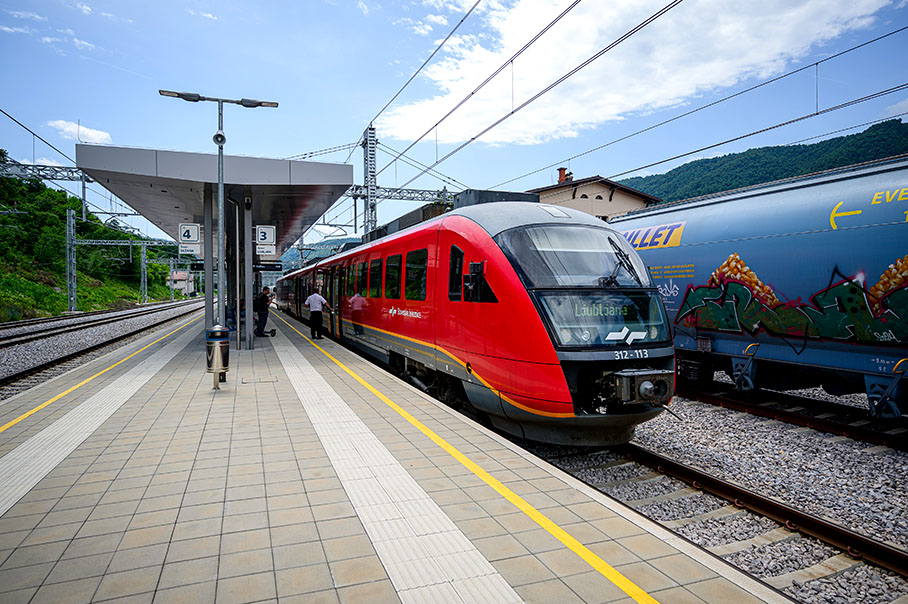
Another major milestone was reached with the breakthrough of the Brenner Base Tunnel - open a new tab., a 56 km rail link between Austria and Italy on the Trans-European Transport Network’s Scandinavian–Mediterranean Corridor. The EU has provided more than €2.3 billion in funding for the tunnel and its access routes through the Connecting Europe Facility. The European Investment Bank has also signed a financing agreement worth €875 million - open a new tab., backed by InvestEU - open a new tab., for Portugal’s Lisbon–Porto high-speed rail line.
In 2025, the implementation of the 2023 greening freight package - open a new tab. advanced steadily. A political agreement was reached on the regulation governing the use of railway infrastructure capacity - open a new tab. and on the CountEmissionsEU regulation - open a new tab.. These measures will make freight transport more efficient and sustainable by providing stronger incentives for low-emission lorries, improving rail infrastructure management and enhancing the availability of information on transport-related greenhouse gas emissions.
To encourage sustainable road transport, the Commission proposed - open a new tab. exempting zero-emission heavy-duty vehicles from road tolls until June 2031 and issued a communication - open a new tab. and a legislative proposal - open a new tab. to help accelerate the uptake of zero- and low-emission vehicles in corporate fleets, which account for around 60 % of all car registrations in the EU. In addition, the Clean Transport Corridor Initiative - open a new tab., endorsed by nine Member States, aims to speed up the deployment of recharging infrastructure for heavy-duty vehicles along key road freight corridors. To improve air quality and road safety across the EU, the Commission also proposed a comprehensive overhaul of EU road-safety and vehicle-registration rules - open a new tab..
The automotive industry’s clean and digital transition is further supported by research and innovation. Three partnerships - open a new tab., 2Zero, CCAM and BATT4EU, have signed a memorandum of understanding - open a new tab. to collaborate on a shared research and innovation agenda under Horizon Europe - open a new tab. (see the section ‘Supporting research and innovation’ below). The Horizon Europe Research and Innovation work programme is also pooling €1 billion between 2025 and 2027 to support initiatives in fields such as autonomous driving, next-generation lithium-based batteries and heavy-duty electric vehicle fleets.
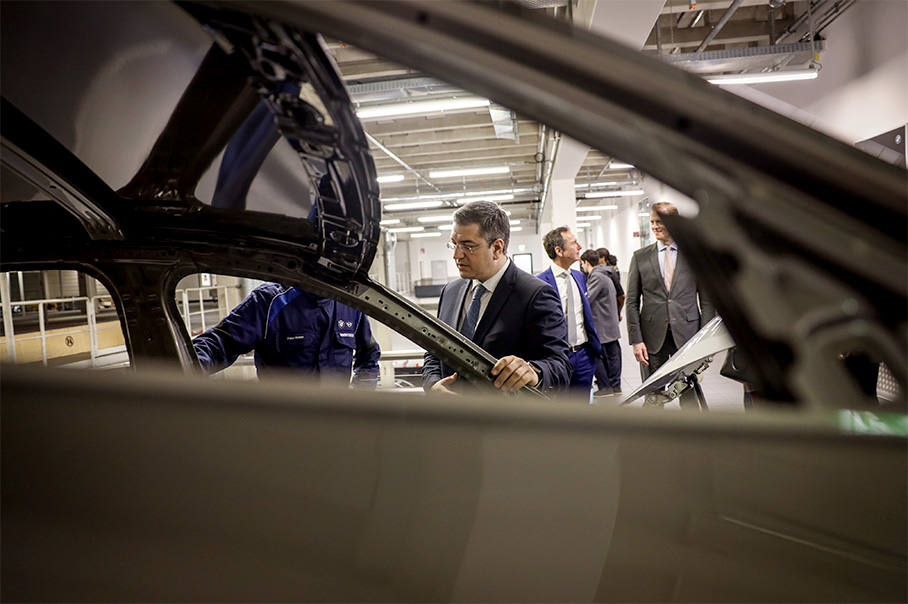
The Commission began work during the year on an EU Ports Strategy - open a new tab. and an EU Industrial Maritime Strategy - open a new tab., to enhance the competitiveness, sustainability and resilience of the EU waterborne system, linking ports, the shipping sector and industry. New informal guidance - open a new tab. on joint purchasing and standards for electric container-handling equipment in ports aims to accelerate the shift from diesel to electric machinery and cut emissions.
Finally, to keep the transport sector competitive and address labour shortages, several initiatives to make transport careers more attractive were launched. These include the recommendations - open a new tab. to attract women to and retain them in the transport sector, the Women in Transport platform - open a new tab., activities by the network of ambassadors for diversity in transport - open a new tab. and a conference - open a new tab. on making transport professions more attractive to young people.
Investing in frontier technologies
The EU’s long-term competitiveness depends on leadership in critical technologies such as supercomputing, artificial intelligence (AI) and quantum computing. To strengthen this leadership, the Commission will allocate €1.3 billion - open a new tab. under the Digital Europe Programme - open a new tab. to deploy technologies vital to the EU’s future and its technological sovereignty.
The state of the Digital Decade 2025 - open a new tab. report reviewed progress towards the EU’s 2030 digital goals. While there were advances in areas such as basic 5G coverage and edge deployment, the report highlighted continued gaps in foundational technologies, digital skills and the protection of vulnerable groups, underlining the need for greater public and private investment.
In September, the Commission presented a European Strategy on Research and Technology Infrastructures - open a new tab. to strengthen the EU’s research and technology capacity, covering everything from advanced laboratories, large scientific instruments and data centres to pilot lines, testbeds and clean rooms. This infrastructure is essential to the EU’s scientific excellence, competitiveness and technological sovereignty.
In April, the AI Continent Action Plan - open a new tab. was published, setting out plans to develop AI gigafactories equipped with more than 100 000 advanced processors. In total, 77 expressions of interest have been received to establish such facilities across 60 sites in 16 Member States. As part of the action plan, the EU launched InvestAI - open a new tab., a new initiative expected to mobilise up to €200 billion in public and private investment for AI infrastructure. Two strategies were launched to speed up AI uptake in European industry and science, namely the Apply AI Strategy - open a new tab. and the European Strategy for Artificial Intelligence in Science - open a new tab..
The first AI in Science Summit - open a new tab., held in November, marked the launch of the Resource for AI Science in Europe - open a new tab., a virtual institute that will support researchers with funding, computing capacity, data, and talent and skills building.
2025 also saw the entry into application of the first rules of the AI Act - open a new tab. and the EU rules on general-purpose AI models - open a new tab. (see also Chapter 6). It marked major advances in the European supercomputer network - open a new tab., with JUPITER - open a new tab. becoming Europe’s first exascale supercomputer - open a new tab.. Six new AI factories - open a new tab. were launched during the year, joining the 13 that were already in place. Thirteen countries - open a new tab. were also selected to establish AI factory antennas, meant to complement existing AI factories - open a new tab.. The AI factory hosting countries are Bulgaria, Czechia, Germany, Greece, Spain, France, Italy, Lithuania, Luxembourg, the Netherlands, Austria, Poland, Romania, Slovenia, Finland and Sweden. Denmark, Estonia, Norway, Portugal and Türkiye are AI factory partner countries. This was done while taking into consideration the negative impacts that growing AI use and the expansion of data-centre infrastructure have on the demand for energy and water.
AI factory hosting countries
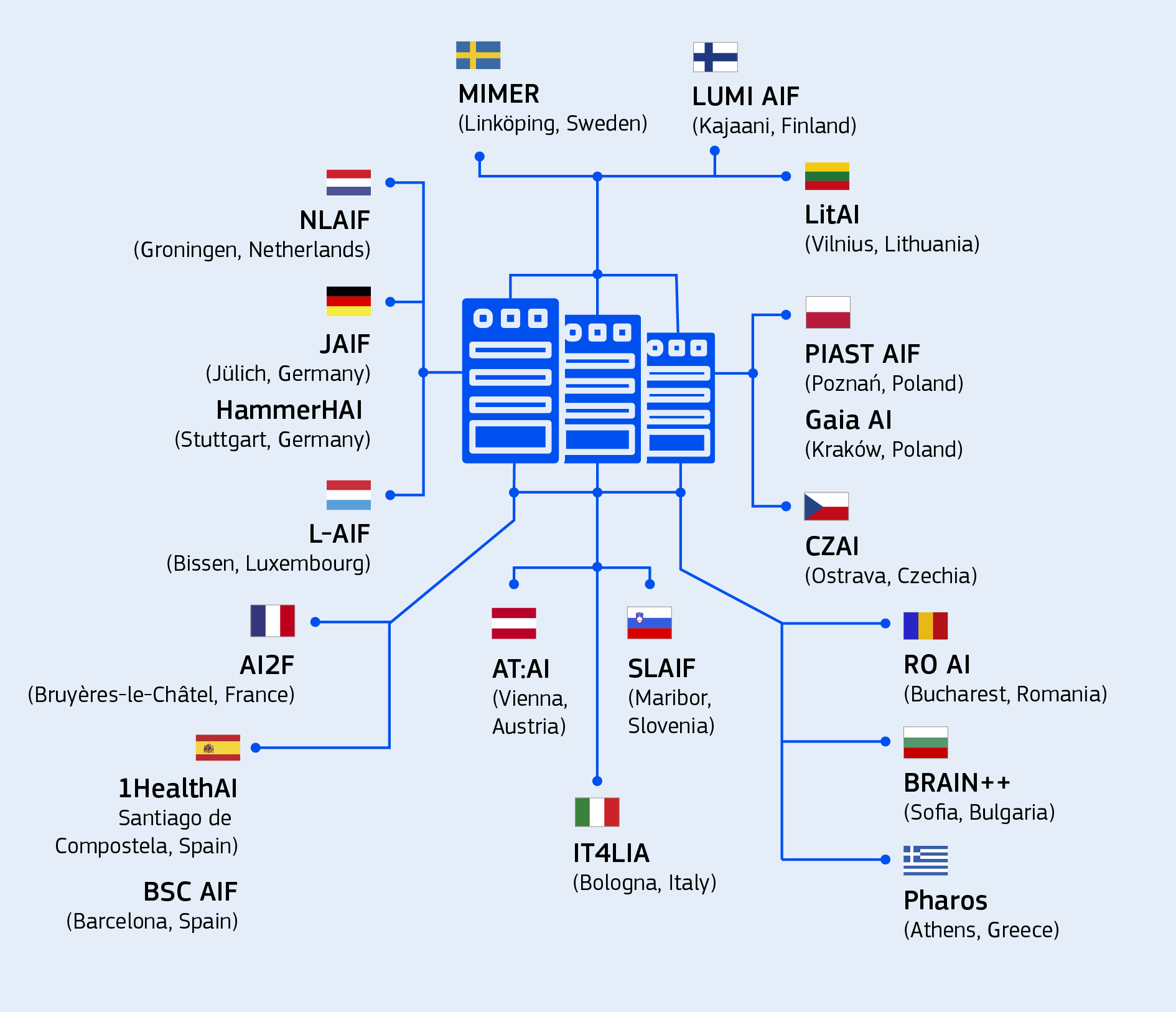
The table shows 19 AI factory sites in 16 Member States. These are Brain++ in Bulgaria; C Z A I in Czechia; J A I F and Hammer Hai in Germany; Pharos in Greece; 1 Health AI and BSC A I F in Spain; AI 2 F in France; Italia in Italy; Lit AI in Lithuania; L-A I F in Luxembourg; N L A I F in the Netherlands; A T A I in Austria; Gaia AI and Piast A I F in Poland; Ro AI in Romania; Slaif in Slovenia; Lumi A I F in Finland; and Mimer in Sweden.
Alongside AI, quantum technologies are set to transform how we tackle complex challenges, from advancing medicine to protecting critical infrastructure. In July, the Commission presented the Quantum Europe Strategy - open a new tab., aiming to make Europe a global leader in this field by 2030 through increased research, stronger ecosystems, greater private investment and the development of quantum skills across the continent.
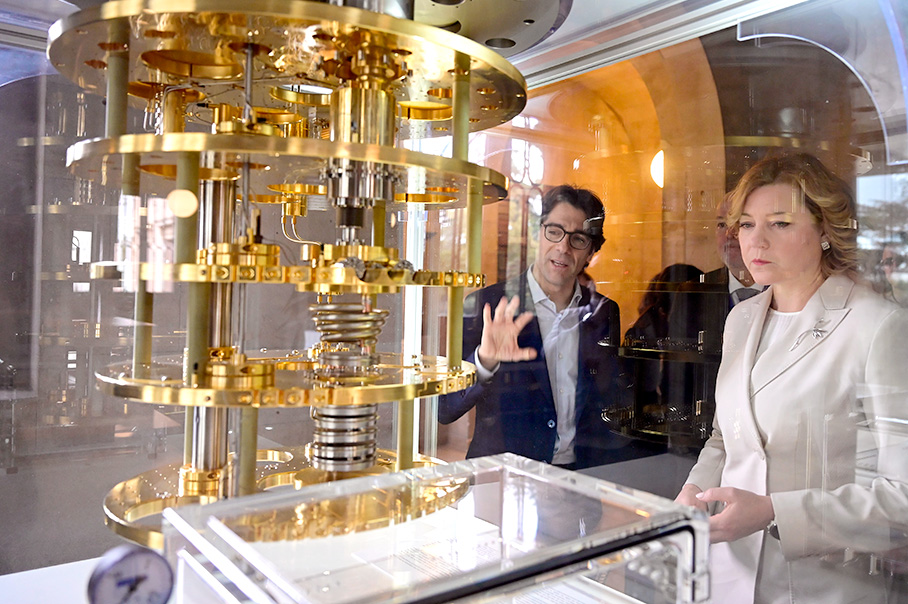
In 2025, the EU also continued implementing the European Chips Act - open a new tab.. Chip manufacturing capacity expanded further, including through the launch of pilot lines - open a new tab. under the Chips for Europe Initiative.
The space economy – covering all economic activities enabled by space technologies and data, from satellite infrastructure to the services that rely on it – is another area in which the EU aims to establish itself as a global leader. The Commission’s Vision for the European Space Economy - open a new tab. initiative will support this goal, while the EU space act - open a new tab. will harmonise space-related regulation across the Member States (see Chapter 3).
Empowering users and businesses through the data union
In 2025, alongside the ongoing roll-out of common European data spaces - open a new tab., the EU Data Act - open a new tab. entered into application. This gives users greater control over data from connected devices and creates new opportunities for businesses to develop services. A Data Union Strategy - open a new tab. was also launched to unlock data for AI, ensuring that the businesses in the EU have access to high-quality data to help them compete globally and drive innovation.
Under the Digital Services Act - open a new tab., researchers who meet a set of specific conditions will be granted access to internal data from providers of very large online platforms and very large online search engines. A delegated act - open a new tab. sets out the technical conditions and procedures needed to enable secure access for vetted research. In addition, the online DSA Data Access Portal - open a new tab. supports the data-access management process and facilitates information exchange.
Ensuring, safe, fair and open digital markets
The EU continued to strengthen its digital framework through the implementation of the Digital Services Act and the Digital Markets Act - open a new tab.. Together, these laws ensure a safer online environment for users and a level playing field for businesses, reinforcing transparency, accountability and fair and open markets across the EU’s digital landscape. For more detail on how the EU is making online spaces safer, including by protecting minors through the Digital Services Act, see Chapter 6.
How did the EU enforce the Digital Markets Act and the Digital Services Act in 2025?
Digital Markets Act

New investigations:
- investigation into Alphabet for potentially demoting media publishers’ content in Google search;
- market investigation into Amazon Web Services and Microsoft Azure as possible important gateways.

Ongoing investigations:
- non-compliance decisions - open a new tab. against Apple and Meta;
- one closing decision - open a new tab. against Apple;
- specification decisions - open a new tab. issuing formal guidance to Apple;
- two sets of preliminary findings - open a new tab. on self-preferencing and steering for Alphabet;
- one set of preliminary findings - open a new tab. on Apple’s business model.
Throughout 2025, the Commission held regulatory dialogues with the large tech companies designated as gatekeepers to encourage early compliance with the requirements of the Digital Markets Act. When necessary, it also took enforcement action.
On 23 April, the Commission adopted its first non-compliance decisions, fining Apple €500 million for breaching the act’s anti-steering rules and Meta €200 million for failing to offer users a less data-intensive alternative to personalised advertising.
Digital Services Act
Ongoing investigations:
- Meta: preliminary findings - open a new tab. on a lack of transparency and failure to provide adequate tools to report content and appeal content moderation decisions;
- TikTok: preliminary findings - open a new tab. on a lack of transparency – the Commission also accepted and made binding a series of commitments - open a new tab. by the platform to address shortcomings in its advertisement repository;
- Temu: preliminary findings - open a new tab. on illegal products on its marketplace;
- AliExpress: preliminary findings on a lack of compliance – the Commission also accepted and made binding a series of commitments - open a new tab. by the platform to safeguard its users and enhance transparency;
- X: a non-compliance decision - open a new tab. and a fine for a lack of transparency.
Research, innovation, science and technology need to be at the centre of the EU’s economy to drive competitiveness. In 2025, Horizon Europe funding continued to support researchers and innovators, notably including start-ups in sectors such as quantum, biotech and clean technology. The Horizon Europe work programmes for 2025 - open a new tab. and for 2026–2027 - open a new tab. earmarked more than €7 billion and €14 billion respectively to support research and innovation.
For every €1 invested in Horizon Europe, the EU economy gains up to €11 - open a new tab..
Besides support through funding, the EU is also creating a better research and innovation environment through the European Research Area Policy Agenda for 2025–2027 - open a new tab.. The newly launched European Strategy on Research and Technology Infrastructures will facilitate the pooling of resources, help to avoid duplication and strengthen accessibility and collaboration across borders for such infrastructures (see also the section ‘Investing in frontier technologies’ above).
Key research funding under Horizon Europe
- The European Innovation Council - open a new tab. is a programme that supports the identification and scaling up of breakthrough technologies and innovations. In 2025, it allocated over €1.4 billion - open a new tab. to identify, develop and scale up research-based breakthrough technologies and disruptive innovations.
- More than €1.25 billion in funding was announced to support research through the career development, training and mobility of researchers under the Marie Skłodowska-Curie Actions - open a new tab.. This includes €22.5 million for the new Choose Europe for Science - open a new tab. pilot project.
- Three new European partnerships - open a new tab. on advanced materials, textiles and photovoltaics were launched to advance the EU’s technological leadership and sustainability goals.
- New European co-funded partnerships were launched, such as Agriculture of Data - open a new tab., which will accelerate the digital transformation of European agriculture.
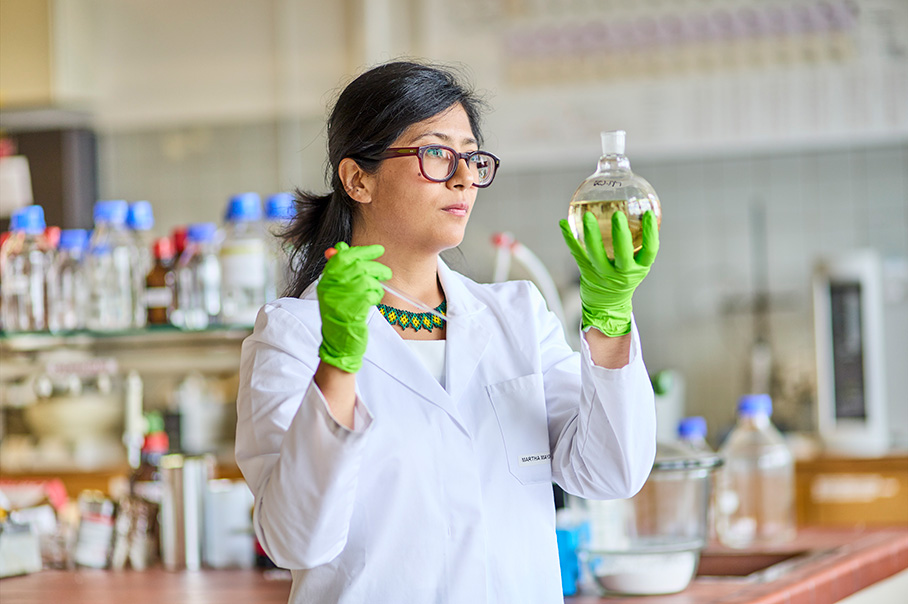
Choose Europe
The EU is working towards becoming the world’s most attractive destination for researchers and innovators. The Choose Europe initiative - open a new tab., a €500 million package of measures put forward in May, aims to attract and retain top scientific talent from around the world by offering robust and stable funding, greater research freedom and attractive living conditions. Additional measures were announced in the following months, bringing the total amount to €874 million. The initiative is proving very attractive, resulting in record-breaking numbers of applications for European Research Council grants and Marie Skłodowska-Curie fellowships. Researchers can access billions of euro worth of funding opportunities through the EURAXESS platform - open a new tab..
The Strategy for European Life Sciences
Life sciences contribute nearly €1.5 trillion to the EU economy and support 29 million jobs. With leading universities, strong patent performance and a growing role in health, food and sustainability, this sector is vital to the EU’s competitiveness. The Strategy for European Life Sciences - open a new tab. aims to make the EU the world’s most attractive location for life sciences by 2030.
The three-phase approach of the Strategy for European Life Sciences
- Optimise research and innovation to enhance global competitiveness.
- Ensure rapid market access for life-science innovations.
- Strengthen the trust in, uptake and use of these innovations.
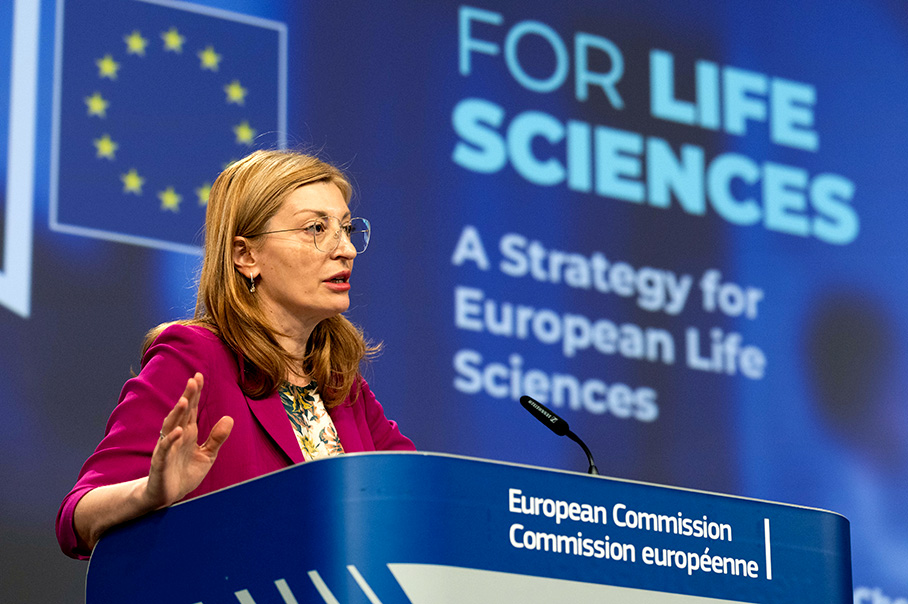
The proposed EU biotech act - open a new tab., one of the key initiatives that forms part of the strategy, aims to strengthen the EU’s competitiveness in biotechnology by facilitating the translation of research into market-ready innovations. It will streamline clinical trials and create a more supportive environment for companies and innovators, helping cutting-edge therapies reach EU patients faster.
This is complemented by initiatives such as HERA Invest - open a new tab., through which the Commission and the European Investment Bank provide risk funding to help SMEs develop strategic medical tools and technologies for a safer and healthier EU. A new biotechnology and biomanufacturing hub - open a new tab. has also been created to support innovative companies, particularly start-ups and SMEs, in bringing new products and ideas to market.
In November, the Commission presented the Bioeconomy Strategy - open a new tab., which sets out ways to make better use of the EU’s biological resources, scientific excellence and industrial base to decarbonise its economy and replace fossil-based materials and products.
Start-ups and scale-ups
In May, the Commission launched the EU Startup and Scaleup Strategy - open a new tab. to make Europe the best place to start and grow technology-driven companies. Aligned with the Choose Europe initiative, the strategy aims to strengthen the EU’s competitiveness by supporting innovative businesses throughout their life cycle, from creation and growth to maturity within the EU.
In October, the Commission also announced the Scaleup Europe Fund - open a new tab., a new multi-billion-euro fund created in partnership with private investors to support promising EU deep-tech companies. Expected to launch in 2026, the fund will focus on growth capital and late-stage investments across a broad range of EU strategic technology companies, in fields including AI, quantum technologies, semiconductors, robotics and autonomous systems.
The Commission also launched a survey to collect public feedback - open a new tab. on the forthcoming Charter of Access for Industrial Users to Research and Technology Infrastructures. The charter aims to improve companies’ access to these infrastructures, enabling them to test, scale up and validate new products more quickly.
Protecting intellectual property
The EU provides SMEs with financial support to better manage and protect their intangible assets. During the year, the Commission and the European Union Intellectual Property Office - open a new tab. launched the 2025 SME Fund - open a new tab., a grant scheme designed to help SMEs protect their intellectual property rights, including patents, trademarks, industrial designs and new plant varieties.
A process - open a new tab. was also successfully launched - open a new tab. to enable free and safe data flows between the EU and the European Patent Organisation. This will simplify the patent protection process for European innovators and contribute to growth and competitiveness in the EU market.
The savings and investments union
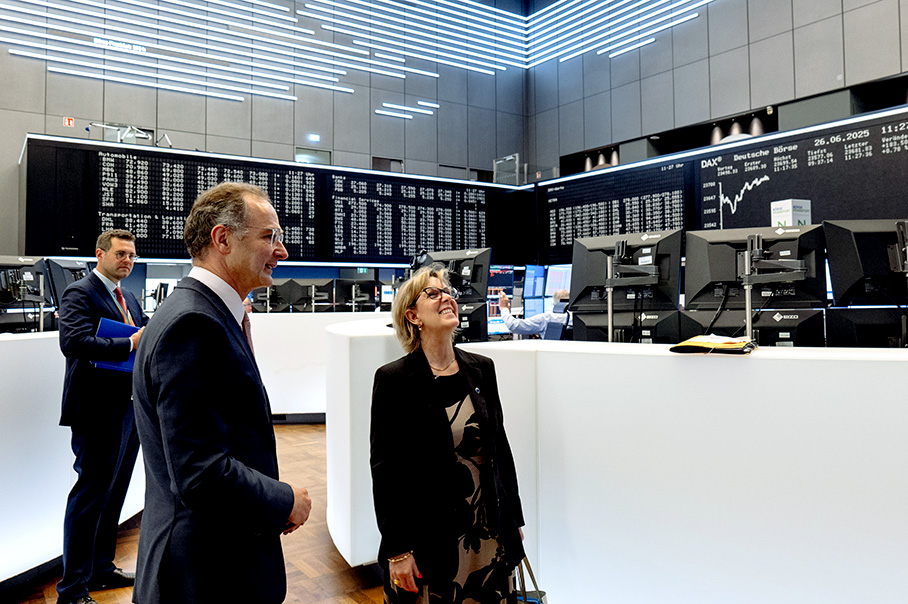
As a horizontal enabler of the Competitiveness Compass, a strong savings and investments union is central to building a deeper, more liquid and more integrated EU financial system that better serves the needs of EU citizens and businesses. By strengthening the financial system’s capability to connect savings with productive investment, the EU aims to support Member States’ major investment needs in key areas such as digital innovation, the climate transition and defence.
In March, the Commission presented the Savings and Investments Union Strategy - open a new tab., which sets out how capital markets and the banking sector can connect savers seeking better investment opportunities with businesses in need of financing. The strategy aims to empower savers to grow their financial wealth and help businesses scale up, boosting the EU’s economy and competitiveness. This includes removing barriers to the Single Market, including through the enforcement of EU rules.
Targeted measures will focus on empowering citizens with the right tools to support their financial well-being; making it easier for companies to access diversified sources of finance, including across borders; removing barriers that prevent a fully integrated capital market; and ensuring the stronger and more harmonised supervision of financial markets.
The EU also took several other steps to develop the savings and investment union. These included reaching a political agreement - open a new tab. to shorten the securities settlement cycle; putting forward a proposal - open a new tab. aimed at reviving securitisation in support of bank lending; and encouraging greater retail participation in capital markets through improved savings, investment and financial literacy initiatives - open a new tab.. Additional measures focused on helping citizens secure an adequate retirement income by improving access to better supplementary pensions - open a new tab., reaching a political agreement - open a new tab. on the retail investment strategy and strengthening the integration and supervision of EU capital markets - open a new tab.. These reforms aim to simplify rules, support innovation and remove cross-border barriers within the EU financial system.
Strands of the savings and investments union
- Citizens and savings.
- Integration and scale.
- Investing and financing.
- Efficient supervision of the Single Market.
Banking
To preserve the competitiveness and stability of EU financial markets, the Commission has proposed - open a new tab. to maintain the current liquidity treatment for short-term securities financing transactions under the Capital Requirements Regulation - open a new tab.. It has also postponed - open a new tab. the application of the Basel III market-risk rules - open a new tab. (Fundamental Review of the Trading Book) until 1 January 2027. Together, these measures aim to ensure a level playing field for EU banks globally, safeguard market liquidity and align the EU’s prudential framework with international developments.
In 2025, the Strategic Technologies for Europe Platform - open a new tab. celebrated its first anniversary. The initiative supports investment in critical technologies in three main areas: digital technologies and deep tech; clean and resource-efficient technologies; and biotechnologies. Over the past year, it has mobilised more than €13.1 billion by pooling investment from 11 EU programmes to boost the EU’s competitiveness in these three areas.