
Our activities in 2022
Annual activity report
of the European Court of Auditors

European Court of Auditors
Who we are
- the European Union’s external auditor;
- established by the 1975 Treaty of Brussels, starting work in October 1977;
- a European Institution since 1993 under the Maastricht Treaty;
- headquartered in Luxembourg;
- a collegiate body of 27 members, one from each EU member state, appointed by the Council after consulting the European Parliament;
- around 950 staff of all EU nationalities.
What we do
- make sure that the EU keeps proper accounts, and correctly applies its financial rules, and that EU policies and programmes achieve their intended objectives and deliver value for money;
- contribute to improving the EU’s financial management, and promote accountability and transparency;
- warn of risks, provide assurance, indicate shortcomings and successes, and offer guidance to EU policymakers and legislators;
- present our observations and recommendations to the European Parliament, the Council, national governments and parliaments, and the general public.
President’s foreword
Dear reader,
In 2022, the European Union and its member states, while still being confronted with the effects of the COVID‑19 pandemic and rapid climate change, faced another crisis: a massive energy, security and migration crisis, caused by Russia's war of aggression against Ukraine. All these events have a considerable impact on the EU citizens, the economy of the European Union and its global relations.
In these challenging times, the EU is providing financial assistance on an unprecedented scale. Over the 2021-2027 period, the EU will be able to spend 1.8 trillion. This includes up to a €0.8 trillion for the recovery instrument, the “Next Generation European Union” (NGEU).
As external auditors, we provide an impartial assessment of EU policies and programmes, and of the quality of the financial management of EU funds throughout the Union and beyond. We check whether the EU’s spending complies with the rules, and whether its policies and programmes provide value for money. Our strategy for 2021-2025 is guiding our efforts in auditing the EU’s finances over the coming years, making the necessary changes to our organisation and using our resources effectively and efficiently.
This activity report gives an overview of our work and publications in 2022, which was the second implementation year for our new strategy. In addition, it provides information on our management, staff, audit support and finances.
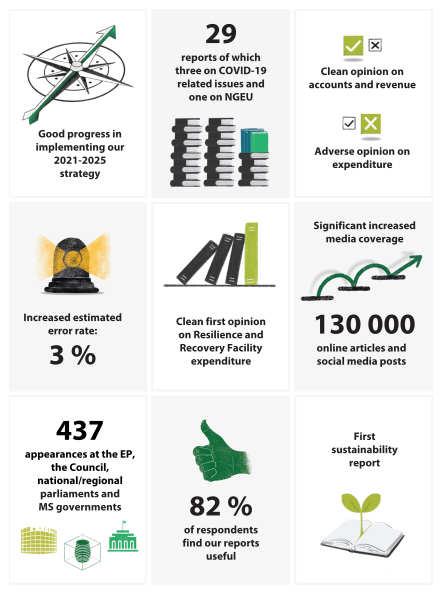
In 2022, we published all our annual reports within the official deadlines. We also published 29 special reports and reviews. Lastly, we issued eight opinions, dealing with new financial rules applicable to the general budget of the Union, the financing of the REPowerEU Plan, a diversified funding strategy as a general borrowing method, and the establishment of a Social Climate Fund, amongst others.
We continue stand in solidarity with Ukraine and strongly condemn the Russian invasion of Ukraine. The EU must continue to show solidarity and unity. As the EU’s independent external auditor, we will do everything we can to continue fulfilling our role.
EU citizens, and our institutional stakeholders and partners at both EU and member state level, can count on us to provide them with independent, objective reports on key issues for the future of the EU, highlighting what works well, drawing attention to what does not and recommending changes.
We hope you find the information in this year’s activity report useful.
Tony Murphy
President
2022 at a glance
Our activities
Our 2021-2025 strategy
For many years, we have used multiannual strategies to guide our audit work, promote organisational change for continuous improvement and remain at the forefront of development in public‑sector auditing.
implementation – good progress
At the end of 2022, we completed the second year of our strategy for 2021‑2025. Our strategic goals for this five‑year period are to improve accountability, transparency and audit arrangements across all types of EU action; target our audits at the areas and topics where we can add most value; and provide strong audit assurance, in a challenging and changing environment.
To put our strategy into practice, we agreed on implementation measures for each goal and objective, assigned responsibilities, and set deadlines. This year we continued making good progress in several actions, notably:
- selecting audit tasks that appropriately cover the strategic areas;
- starting a number of audits on the Recovery and Resilience Facility (RRF), including our first audit opinion on RRF expenditure in line with our strategic approach for the “Next Generation EU” (NGEU) initiative;
- upgrading our knowledge management framework;
- drafting strategic audit approaches on fraud and the rule of law;
- carrying out a productivity analysis of selected tasks to identify improvement areas;
- formulating an action plan for our cooperation with peers.
Auditing the performance and regularity of EU actions
compliance audits
Our audits provide EU citizens and policymakers with independent, objective reports on key issues for the future of the EU, highlighting what works well, drawing attention to what does not and recommending changes.
Our performance audits address the economy, efficiency and effectiveness of EU policies and programmes. They focus on topics reflecting the issues the EU is facing, such as:
- climate change, the environment and natural resources;
- Union’s economic competitiveness;
- resilience to threats to the Union’s security, and respect for the European values of freedom, democracy and the rule of law;
- fiscal policies and public finances of the Union.
These audits aim to help the EU to better meet its policy objectives.
Our financial and compliance audits cover the EU budget, the Recovery and Resilience Facility and the budgets of the European Development Funds (EDFs). We provide our Statement of Assurance on the reliability of the annual accounts and the legality and regularity of the underlying transactions.
We may also undertake selected compliance audits to examine the state of the EU’s budgetary accounting and financial management, or to assess whether the management and control systems for collecting and spending EU funds comply with the applicable EU and national rules.
Lastly, we are the external auditor for a large number of EU agencies, decentralised bodies and Joint Undertakings, and the European Schools.
We carry out all our audits in line with internationally accepted public‑sector auditing standards.
Work Programme
Programme
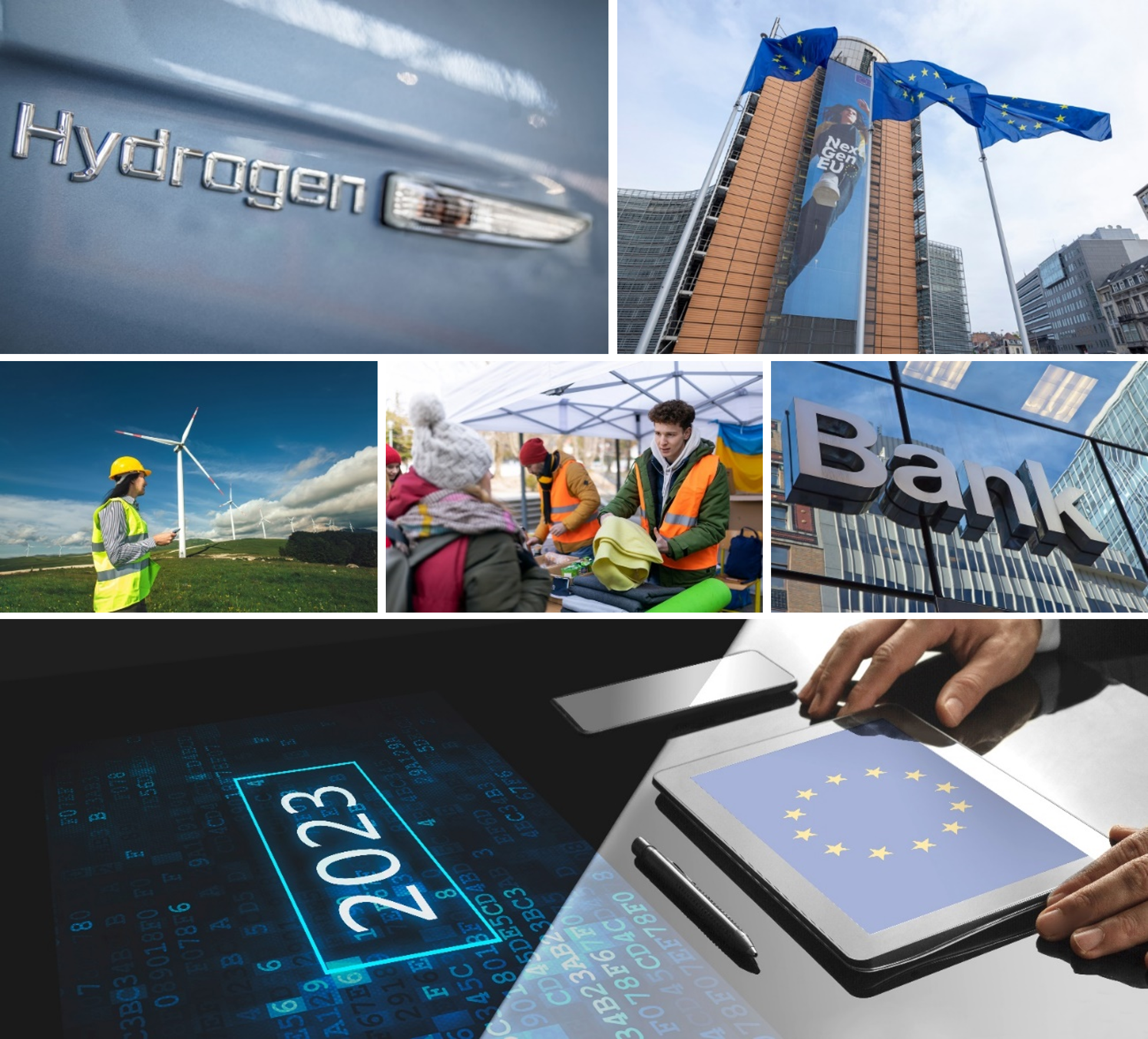
Our 2023+ Work Programme, published in November 2022, highlights our audit priorities for the coming years and gives details of the 82 special reports and reviews we intend to publish from 2023 onwards. It is strongly aligned with the priority areas set in our strategy for 2021‑2025.
Under “Climate change, the environment and natural resources”, we plan to carry out 21 audits covering a wide array of topics, among them energy security, pollution, climate‑related actions and sustainable food production.
Under “Resilience to threats to the Union’s security, and respect for the European values of freedom, democracy and the rule of law”, we have 14 tasks such as equality for people with disabilities, rule of law, military mobility and aid for refugees.
Under “The Union’s economic competitiveness”, we plan to publish 12 reports covering inter alia digitalisation of schools, hydrogen transport and artificial intelligence.
Under “The fiscal policies and public finances of the Union”, we plan to carry out seven tasks such as the EU banking supervision, foreign direct investment and recovering EU funds.
The recovery instrument, the Next Generation EU (NGEU) initiative, which provides up to €0.8 trillion to be spent in a short period, is also high on our agenda. We plan to publish 12 audit reports examining the NGEU, mainly covering the Recovery and Resilience Facility.
We prepare our audit work programme independently, but not in isolation. We reach out to our institutional stakeholders and in particular the European Parliament. The parliamentary committees submitted 131 audit suggestions for the 2023+ Work Programme. Almost two thirds of these suggestions are fully or partly taken up in ongoing or future work, or have been covered in our latest reports. We also received eight additional audit ideas submitted by nine Permanent Representations of member states. Our cooperation goes beyond the EU institutions. In 2022, we also received 29 audit proposals from six national parliaments relating to current challenges facing the EU and its member states.
Audit fieldwork
We do most of our audit work on our premises in Luxembourg. Our auditors also make a large number of visits to the European Commission – our main auditee – and other EU institutions, as well as to agencies and bodies, national, regional and local authorities in the member states, EU delegations in non‑EU countries, and international organisations that handle EU funds.
We also visit recipients of EU funds on the spot, both within the EU and beyond its borders. Through these checks, we follow the audit trail and obtain direct audit evidence from those involved in managing EU policies and programmes and collecting or paying out EU funds, as well as from the beneficiaries. In 2022, following the loosening of COVID restrictions we increased our on-the-spot checks substantially, but still carried out some of these checks virtually. Going forward, we will strive to successfully apply the experience of the pandemic years and enhance the added value and efficiency of our on-the-spot visits by combining them with virtual work.
Our audit teams generally comprise two or three auditors, while our audit visits range in length from a few days to a couple of weeks. Our on‑the‑spot checks within the EU are generally coordinated in liaison with the supreme audit institutions (SAIs) of the member states concerned.
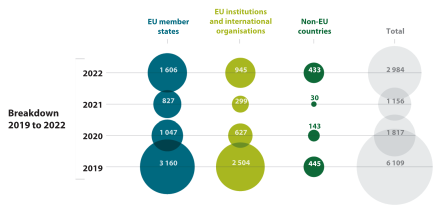
In 2022, we increased our on‑the‑spot visits compared to the previous two years, where COVID‑related travel and public health restrictions were still in place. We spent a total of 2 039 days in member states and outside the EU compared with 857 days in 2021, 1 190 days in 2020 and 3 605 days in 2019. Our auditors also spent 945 days at EU institutions, decentralised agencies and bodies across the EU, Joint Undertakings, international organisations such as the United Nations and the Organisation for Economic Co‑operation and Development (OECD), and private audit firms. The corresponding figures for 2021, 2020 and 2019 were 299, 627 and 2 504 days, respectively.
At the same time, we made increased use of remote auditing and gathering evidence electronically. We used videoconferencing tools and other information technology, such as secure data and document sharing, to interact with our auditees.
Our reports
Our audit reports, reviews and opinions are an essential element of the EU’s accountability chain. They help the European Parliament and the Council to monitor and scrutinise the achievement of the EU’s policy objectives and to hold to account those responsible for managing the EU budget, particularly in the context of the annual discharge procedure.
Special reports and reviews
In 2022, we published 29 special reports and reviews addressing many of the challenges the EU is facing across the different areas of EU spending and policies. These included climate action, energy efficiency, 5G networks, cybersecurity, fraud in the CAP and the rule of law, to name but a few. Three of the reports were COVID‑19 related, one concerning free movement in the EU during the pandemic, another the resilience of the EU institutions and the other vaccine procurement. We also finalised our first special report on the Next Generation EU recovery initiative: the Commission’s assessment of national recovery and resilience plans.
In our special reports, we examine whether the objectives of selected EU policies and programmes have been met, whether results have been achieved effectively and efficiently, and whether EU action has added‑value – i.e. whether it has delivered more than could be achieved with actions at national level alone. In these reports, we also make recommendations, identifying ways to save money, work better, avoid waste or achieve expected policy objectives more effectively.
Our reviews aim to provide scene‑setting descriptions and analysis, often from a crosscutting perspective and based on previous audit work or other publicly available information. We may also use them to present our analysis of areas or issues we have not yet audited, or to establish facts about specific topics or problems. In contrast to audits, they do not address evaluative questions or provide assurance.
The following pages provide insights into our work and examples of special reports from 2022 covering different policy areas.
Sustainable use of natural resources

The EU identified vaccines as a priority in the response to COVID‑19 early on in the pandemic, and started focusing on the development of a safe and efficient vaccine as a solution to ending the health crisis. It took measures to help compress the development timeline for vaccines from 10-15 years to 12-24 months. By November 2021, the Commission had signed €71 billion worth of contracts on behalf of the member states to purchase up to 4.6 billion COVID‑19 vaccine doses. Most of these contracts are advance purchase agreements, in which the Commission shares the development risk of a vaccine with the vaccine manufacturers and supports the preparation of at‑scale production capacity through upfront payments from the EU budget. The EU experienced some supply shortfalls in the first half of 2021, but by the end of that year, nearly 952 million vaccine doses had been delivered to EU member states and 80 % of the EU’s adult population had been fully vaccinated.
We assessed whether the Commission and member states procured COVID‑19 vaccines up to the end of 2021 effectively.
We found that the EU created a tailor‑made centralised system for vaccine procurement, which succeeded in creating an initial portfolio of vaccine candidates including different companies and technologies, but it started procurement later than the UK and the US. We also found that negotiations followed a procurement process laid down in the EU’s financial regulation, while the heart of the process were the preliminary negotiations that took place before a tender invitation was sent out. We did not receive any information on the preliminary negotiations for the EU’s biggest contract, conducted directly by the President of the European Commission. The terms of the contracts evolved over time and those signed in 2021 have stronger provisions on key issues such as delivery schedules and production location than those signed in 2020. However, the Commission had limited leverage to overcome supply challenges. When the EU was confronted with severe supply shortfalls in the first half of 2021, it became clear that most contracts did not include specific provisions to address supply disruptions. Furthermore, we found that the Commission has not yet scrutinised or benchmarked its procurement process to learn lessons for future improvements.
We recommended that the Commission produce pandemic procurement guidelines and/or lessons learnt for future negotiating teams; carry out a risk assessment of the EU’s procurement approach and propose appropriate measures; run exercises to test all parts of its updated pandemic procurement framework, including information and intelligence gathering, to identify any weaknesses and areas for improvement and publish the results.
Investment for cohesion, growth and inclusion

The “fifth generation” of telecommunication systems, or 5G, is a new global wireless standard that offers much higher data capacity and transmission speeds. 5G services are essential for a wide range of innovative applications, which have the potential to transform many sectors of our economies and improve citizens’ daily lives. 5G is therefore of strategic importance for the entire single market. In its 2016 5G Action Plan, the Commission put forward the objective of ensuring uninterrupted 5G coverage in urban areas and along main transport paths by 2025. In March 2021, it extended the objective to include 5G coverage of all populated areas by 2030. While 5G has the potential to unleash many opportunities for growth, it comes with certain risks. Owing to the cross‑border nature of threats involved, any significant vulnerability or cybersecurity incidents in one member state would affect the EU as a whole. Across the EU, the total cost of 5G deployment could reach €400 billion. In the 2014-2020 period, the EU provided funding of over €4 billion for 5G projects.
We assessed whether the Commission effectively supported member states in achieving EU objectives for the roll‑out of their 5G networks and addressing 5G security concerns in a concerted manner.
We found that there are delays in member states’ roll‑out of 5G networks. By the end of 2020, 23 member states had launched commercial 5G services and achieved the intermediate objective of at least one major city with 5G access. However, not all member states refer to the EU’s 2025 and 2030 objectives in their national 5G strategies or broadband plans. The extent to which member states are lagging behind on 5G implementation puts the achievement of the EU objectives at risk. The Commission has provided member states with support for implementing the 2016 5G Action Plan through both hard and soft law initiatives, guidance and the funding of 5G‑related research. However, the Commission has not clearly defined the expected quality of 5G services. We also found that the EU toolbox on 5G cybersecurity specifies a possible common set of measures to deal with the main 5G network security threats. However, as none of the measures put forward are legally binding, the Commission has no power to enforce them. Therefore, there remains a risk that the toolbox in itself cannot guarantee that member states address network security aspects in a concerted manner.
We recommended that the Commission promote the even and timely deployment of 5G networks within the EU; foster a concerted approach to 5G security among member states; and monitor member states’ approaches towards 5G security and assess the impact of divergences on the effective functioning of the single market.
External action, security and justice

The Council of Europe has defined the rule of law as a multi‑dimensional concept in which, among other things, all public acts are within the constraints set out by law, in accordance with the values of democracy and fundamental rights, and under the control of independent and impartial courts. The EU has adopted this definition and has enshrined the rule of law in Article 2 of the Treaty of the European Union (TEU) as one of the common values of its member states. It is a guiding principle of its foreign policy. It is also an essential and necessary condition for EU memberships. The six Western Balkan countries are candidates (Albania, Montenegro, North Macedonia and Serbia) or potential candidates (Bosnia and Herzegovina, Kosovo1) for EU membership. They receive financing from several sources, but the EU is the region’s biggest donor. EU financial assistance is mainly channelled to these countries through the Instrument for Pre‑accession (IPA II at the time of the audit). The rule of law was one of nine IPA II priority sectors. It was supported from a dedicated budgetary allocation amounting to €700 million for the 2014‑2020 period.
We assessed whether EU support for the rule of law in the Western Balkans during 2014‑2020 has been effective.
We found that, while EU action has contributed to reforms in technical and operational areas, such as improving the efficiency of the judiciary and the development of relevant legislation, it has had little overall impact on fundamental rule of law reforms in the region. A key reason for this is the insufficient domestic political will to drive the necessary reforms. We also found that the EU’s in‑country support for civil society action on the rule of law is insufficient in meeting the needs of the sector and its impact is not thoroughly monitored. Freedom of expression is the area that has progressed the least in all six countries. In some, public support for the reforms necessary for accession is declining. Furthermore, we found that IPA II lacks strict conditionality clauses that would directly link stalled rule of law reforms to restricted funding in other sectors.
We recommended that the Commission and the European External Action Service (EEAS) strengthen the mechanism for promoting rule of law reforms in the enlargement process; intensify support for civil society engaged in rule of law reforms and media independence; reinforce the use of conditionality in IPA III; and strengthen project reporting and monitoring.
1 This designation is without prejudice to positions on status, and is in line with Security Council Resolution 1244 (1999) on the situation relating Kosovo (UNSCR 1244/1999) and the International Court of Justice (ICJ) Advisory Opinion on the question of the ‘Accordance with international law of the unilateral declaration of independence in respect of Kosovo’ of 22 July 2010.
Regulation of markets and competitive economy
In July 2020, in response to the COVID‑19 pandemic, the European Council agreed a more than €800 billion recovery fund – Next Generation EU. Its centrepiece is the Recovery and Resilience Facility (RRF) amounting to up to €723.8 billion in total. The purpose of the RRF is to mitigate the economic and social impact of the pandemic and make EU economies and societies more sustainable and resilient for the future, with a specific focus on the green and digital transition. To benefit from the support under the RRF, member states submitted their draft national recovery and resilience plans (RRPs) to the Commission. The Commission is responsible for assessing the RRPs based on criteria stipulated in the RRF regulation and for providing guidance and support to member states in that respect.
We assessed whether the Commission’s assessment of the RRPs was appropriate and whether the assessment process and guidance to member states was managed effectively.
We found that the Commission’s assessment of the recovery and resilience plans was overall appropriate given the complexity of the process and the time constraints. However, we identified a number of weaknesses, risks and areas for future attention such as payment profiles being the result of negotiations, milestones and targets lacking clarity or monitoring and control systems not yet fully in place at the time of the assessment.
We recommended that the Commission improve assessment procedures and documentation; promote exchange of good practices amongst member states; follow‑up on the contribution of the implemented measures to the country‑specific recommendations; improve transparency and monitoring of the “do no significant harm” principle; ensure clear verification mechanisms of milestones and targets and their adequate definition; verify compliance with the specific milestones for monitoring and control and encourage the use of the Commission’s data‑mining and risk scoring tool.
Financing and administering the Union

Special report 11/2022: Protecting the EU budget – Better use of blacklisting needed
The EU and the member states are jointly responsible for protecting the EU’s financial interests with respect to EU funds. “Blacklisting” (or exclusion) is a key tool that international bodies and national authorities use to protect their public finances. The objective is to avoid entering into financial agreements with untrustworthy counterparties, such as those involved in fraud, corruption, professional misconduct, money laundering, or non‑payment of taxes. In 2020, the EU paid out around €150 billion under financial agreements. Since 2016, the Commission has been responsible for operating the Early Detection and Exclusion System (EDES) for the quarter of EU spending (€39 billion) that it manages directly or indirectly. For the three quarters of EU spending involving national authorities (€111 billion), member states have to follow exclusion‑related obligations but they are not required to set up exclusion systems or databases per se.
We assessed whether exclusion is being used effectively to protect EU funds from untrustworthy counterparties.
We found that exclusion is not being used effectively to protect EU funds from untrustworthy counterparties. Although the EDES has a broad range of exclusion situations and robust decision‑making procedures, the Commission services have recorded few exclusions in the system due to shortcomings in the arrangements for identifying counterparties in exclusion situations. In shared management, where EDES does not apply, member states’ differing approaches undermine the overall effectiveness of using exclusion to protect the EU budget.
We recommended that the Commission extend further the range of exclusion; strengthen the implementation of the EDES; improve the monitoring of the EDES under indirect management; extend the EDES to shared management; make better use of data and digital tools for exclusion purposes.
Annual and specific annual reports
Annual reports mainly present the results of our Statement of Assurance on the European Union budget, the Recovery and Resilience Facility and the budget of the European Development Funds (EDFs), but also cover aspects of performance and budgetary and financial management.
Specific annual reports present our annual audit work on the EU agencies and other Union bodies, Joint Undertakings, and the European Schools.
We also publish a report on contingent liabilities arising from the activities undertaken by the Single Resolution Board (SRB).

Annual report on the EU budget for the financial year 2021
Every year, we audit EU revenue and expenditure to examine whether the annual accounts are reliable and whether the income and expenditure transactions underlying the accounts comply with the financial rules at EU and member state‑level.
In addition, we specifically assess each major area of the EU budget, based on the (sub‑) headings of the multiannual financial framework (MFF) and the Recovery and Resilience Facility. We also analyse why and where errors have occurred, make recommendations for improvement, and examine whether and how our previous recommendations have been implemented.
This extensive work forms the basis for our Statement of Assurance, which we are required to provide to the European Parliament and the Council in accordance with our mandate under the Treaty on the Functioning of the European Union.
accounts and revenue
For the financial year 2021, we provided a “clean opinion” on the accounts and on the EU’s revenue.
on expenditure
In 2021, EU spending was €181.5 billion, the equivalent of 1.3 % of the combined gross national incomes of the EU‑27.
For the financial year 2021, we issued an “adverse opinion” on the EU’s expenditure.
(2021 budget expenditure)
For the financial year 2021, we estimated the level of error for budget expenditure to be between 2.2 % and 3.8 %. The mid‑point of this range, known as the “most likely error”, has increased compared to last year, from 2.7 % to 3.0 %.

Note: We use standard statistical techniques to estimate the level of error. We are 95 % confident that the level of error for the population lies in the range between the lower and upper error limits.
EU budget audit population
affected by material error
For the financial year 2021, high‑risk expenditure accounted for 63.2 % of our audit population, compared with 59 % last year. The estimated level of error for high‑risk expenditure was 4.7 %, compared with 4.0 % for the financial year 2020.
EU spending is characterised by two types of expenditure involving distinct patterns of risk:
- Low‑risk, entitlement payments: Based on beneficiaries meeting certain (less complex) conditions, these include student and research fellowships (under “Single market, digital and innovation”), direct aid for farmers (“Natural resources and environment”) and salaries and pensions for EU staff (“European public administration”).
- High‑risk, cost reimbursements: The EU reimburses eligible costs for eligible activities (involving more complex rules). These include research projects (under “Single market, digital and innovation”), investment in regional and rural development (“Cohesion, resilience and values” and “Natural resources and environment”) and development aid projects (“Neighbourhood and the world”).
headings “Single market,
digital and innovation” and
“Cohesion, resilience and values”
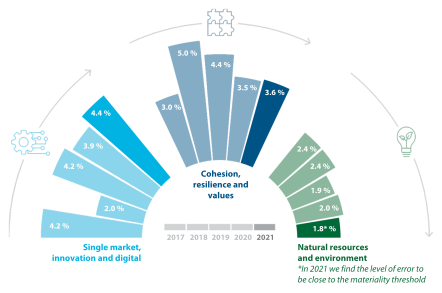
For the financial year 2021, “Single market, digital and innovation” was the most error‑prone MFF sub‑heading, followed by “Cohesion, resilience and values”.
expenditure
In 2021, for the first time, our work covered the RRF expenditure where we provide a separate opinion on the expenditure under this facility. This reflects the fact that the RRF is a temporary instrument delivered and financed in a way that is fundamentally different to normal budget spending under the MFF. Our audit population comprised the only 2021 disbursement, a payment to Spain, amounting to €11.5 billion. The Spanish request for payment included 52 milestones, which Spain considered to have been achieved.
We issued a clean opinion on RRF’s expenditure. We based our assessment on the condition for payment, i.e. that the milestones and targets had been satisfactorily fulfilled. We therefore examined whether the Commission had gathered sufficient and appropriate evidence to support its assessment of this condition. Compliance with other EU and national rules does not form part of this assessment. The overall audit evidence we obtained indicates that one of the 52 milestones associated with the first disbursement to Spain was not achieved. The Commission had not yet defined a method for quantifying the impact of not achieving a milestone or target. Our own view is that the error is not material.
reported to OLAF and EPPO
As the EU’s external auditor, we do not have a mandate to investigate cases of suspected fraud. Therefore, our audits are not specifically designed to detect fraud. When our auditors identify cases where we suspect that fraudulent activity may have taken place, we report those cases to the competent authorities.
In 2022, we reported 14 cases of suspected fraud to the European Anti‑Fraud Office (OLAF) following identification in the course of our audit work. Six of those cases were also reported to the European Public Prosecutor's Office (EPPO). In 2021, we reported 15 cases of suspected fraud to OLAF and two of those cases to the EPPO. Our annual report on the EU budget provides additional information on the nature of suspected fraud cases and on the subsequent financial recoveries recommended by OLAF.
Annual report on performance
performance: last year of
our pilot project
We split our annual report into two separate parts as a pilot project, which has now concluded with the annual report for the financial year 2021. The second part of the annual report covers the performance of spending programmes under the EU budget.
The main theme of 2021 report on performance is the mainstreaming of five horizontal policy priorities into the EU budget:
- combating climate change;
- preserving biodiversity;
- gender equality;
- the Sustainable Development Goals (SDGs) of the United Nations; and
- the digital transition.
We examined whether the Commission incorporated the horizontal policy priorities into the EU budget, tracked expenditure and reported accurately on results.
We also examined whether the Commission applied an appropriate performance framework to measure the EU budget’s support for the cross‑cutting priorities of the eleven selected programmes.
Furthermore, we followed up the audit recommendations we made in special reports published in 2018.
Annual report on the European Development Funds for the financial year 2021
accounts and revenue;
adverse opinion on
expenditure
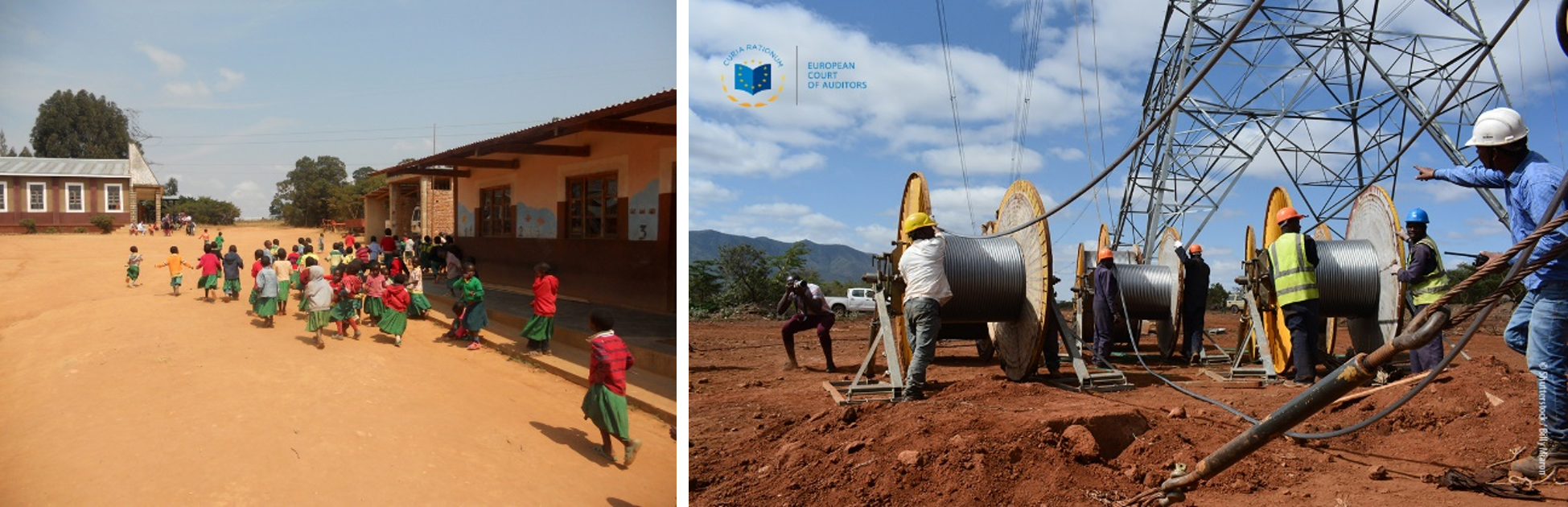
The European Development Funds (EDFs), launched in 1959, were the EU’s main instruments for providing development cooperation aid to African, Caribbean and Pacific countries (ACP) and overseas countries and territories (OCTs). They are funded by the EU member states and managed outside the EU budget by the European Commission and the European Investment Bank (EIB). They will continue to be implemented and reported on separately until their closure.
For the 2021‑2027 multiannual financial framework, development cooperation aid to the ACP countries and OCTs is funded by the EU budget.
In 2021, EDFs spending was €3.4 billion.
As in previous years, we issued a “clean opinion” both on the EDF accounts and on revenue but an “adverse opinion” on EDF expenditure for the financial year 2021. Our estimated level of error for expenditure is 4.6 % (3.8 % for the financial year 2020).
Specific annual reports on EU agencies
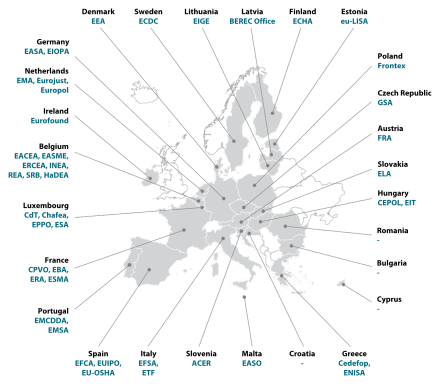
The EU agencies are distinct legal entities set up to carry out specific technical, scientific or managerial tasks that help the EU institutions to design and implement policies. In total, there are 44 agencies.
EU agencies for the financial
year 2021
In the financial year 2021, the total budget of all agencies under our mandate (excluding the SRB) was €4.1 billion, equivalent to 2.5 % of the 2021 EU general budget. The corresponding figures for the financial year 2020 were €3.7 billion and 2.2 %.
Overall, our audit of the agencies confirmed the positive results reported in previous years. We issued “clean opinions” on the 44 agencies’ accounts and on the revenues. We signed off the payments underlying all the agencies’ accounts, except for the Agency for the Operational Management of Large‑Scale IT Systems in the Area of Freedom, Security and Justice (eu‑LISA). For this agency, we issued a qualified opinion, mainly due to irregularities in procurement procedures.
Specific annual report on Joint Undertakings for the financial year 2021
Joint Undertakings (JUs) are the EU’s public‑private partnerships between the European Commission and industry, and in some cases research, intergovernmental organisations or participating member states. Their main mission is to foster the translation of scientific knowledge into marketable breakthrough innovations within a strategic vision that is shared by the industry and research partners.
In 2021, the Council adopted new regulations setting up eleven JUs to implement actions under Horizon Europe and Digital Europe programmes, the multiannual research and innovation programmes for the 2021‑2027 financial period. These JUs implement their specific research and innovation agendas in the areas of transport, energy, health, bio‑based industries, key digital technologies, supercomputing and smart network systems.
Eight of the eleven JUs were already operating under the previous programme (Horizon 2020), and will continue under the new programmes as new legal entities, with new names and increased or slightly changed remits. In addition to the JUs, which are already operating, three new ones have been established: the Smart Networks and Services JU, the Global Health JU and the European Cybersecurity Competence Centre. The ECA will audit these three new JUs for the first time after they have obtained their financial autonomy, which is expected in 2023.
In addition, there is another JU, “Fusion for Energy”, which is funded by Euratom and is responsible for providing Europe’s contribution to the International Thermonuclear Experimental Reactor (ITER).
Undertakings for
the financial year 2021
In the financial year 2021, we issued “clean opinions” on the accounts, revenue and payments for all JUs.
However, as in previous years, we issued our audit opinion on the 2021 annual accounts of the “Fusion for Energy” (F4E) JU together with an “emphasis of matter”, mainly to draw attention to the risk of further cost increases and delays in implementation of the ITER project.
Specific annual reports on European schools and contingent liabilities of the Single Resolution Board
In the financial year 2021, we issued our yearly report on the review of the consolidated annual accounts of the 13 European schools. While our review did not reveal material errors in the accounts, we were still unable to confirm that the Schools’ financial management was fully compliant with their financial regulation and staff regulations.
We also report annually on the contingent liabilities of the Single Resolution Board (SRB), the Council and the Commission, arising from the performance of their tasks under the Single Resolution Mechanism regulation. In our report on the financial year 2021, we conclude that nothing has come to our attention that causes us to believe that the contingent liabilities arising from the performance of their resolution tasks of the SRB, the Commission and the Council are materially misstated.
the European Parliament’s
discharge procedure
The publication of our annual reports also marks the start of the discharge procedure, during which the European Parliament decides – upon a recommendation from the Council – whether the Commission and other bodies have managed the EU budget satisfactorily. If they have, it grants them discharge.
In October 2022, we started presenting our 2021 annual reports to the European Parliament’s Committee on Budgetary Control and to the Council’s Budget Committee. Subsequently, we also presented them to the European Parliament in its plenary session and to the Economic and Financial Affairs Council.
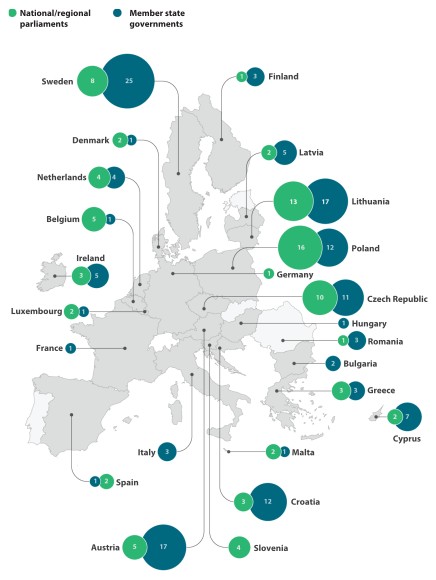
Furthermore, over the course of 2022, we presented our annual reports to the national/regional parliaments and governments of 21 member states.
Opinions
legislative proposals
As the EU’s independent external auditor, we contribute to improving financial management by issuing opinions on the Commission’s proposals for new or revised legislation. Where these legislative proposals entail a significant financial impact, EU law requires us to be consulted. Other institutions can also ask us to issue opinions on other specific issues. All our opinions are submitted to the European Parliament and the Council.
In 2022, we published eight such opinions.These mainly concerned the Commission’s legislative proposals for amending the financial rules applicable to the general budget of the Union, but also introducing new rules on the statute and funding of European political parties and European political foundations, allowingmember states to use their national recovery and resilience plans (RRPs) to finance the REPowerEU Plan, establishing a diversified funding strategy as a general borrowing method, and a Social Climate Fund.
ECA journal
Each edition of the ECA Journal features articles on a specific theme, mostly from an audit perspective, from contributors working within and outside the EU institutions.
In 2022, we issued two editions, addressing “Cohesion and Next Generation EU: concord or clash“and “The EU Recovery and Resilience Facility: a jump to a resilient Europe?”.

Conferences and webinars
In 2022, we also (co‑)organised a number of conferences and webinars, which were open to interested parties.
Below are two examples.
shift for the EU

On 29 June 2022, as part of the Conference on the future of Europe the ECA organised in collaboration with the SAIs of Germany, Lithuania and Sweden a webinar on “Paradigm shift for the EU– new priorities for supreme audit institutions at EU and national level?”. The webinar covered the following very topical issues of migration, energy efficiency and defence. Panellists exchanged ideas on how audit institutions can adapt to the new paradigm as their tasks change. The webinar gave participants the chance to ask questions and put forward their ideas in the spirit of the Conference.
anti‑money‑laundering
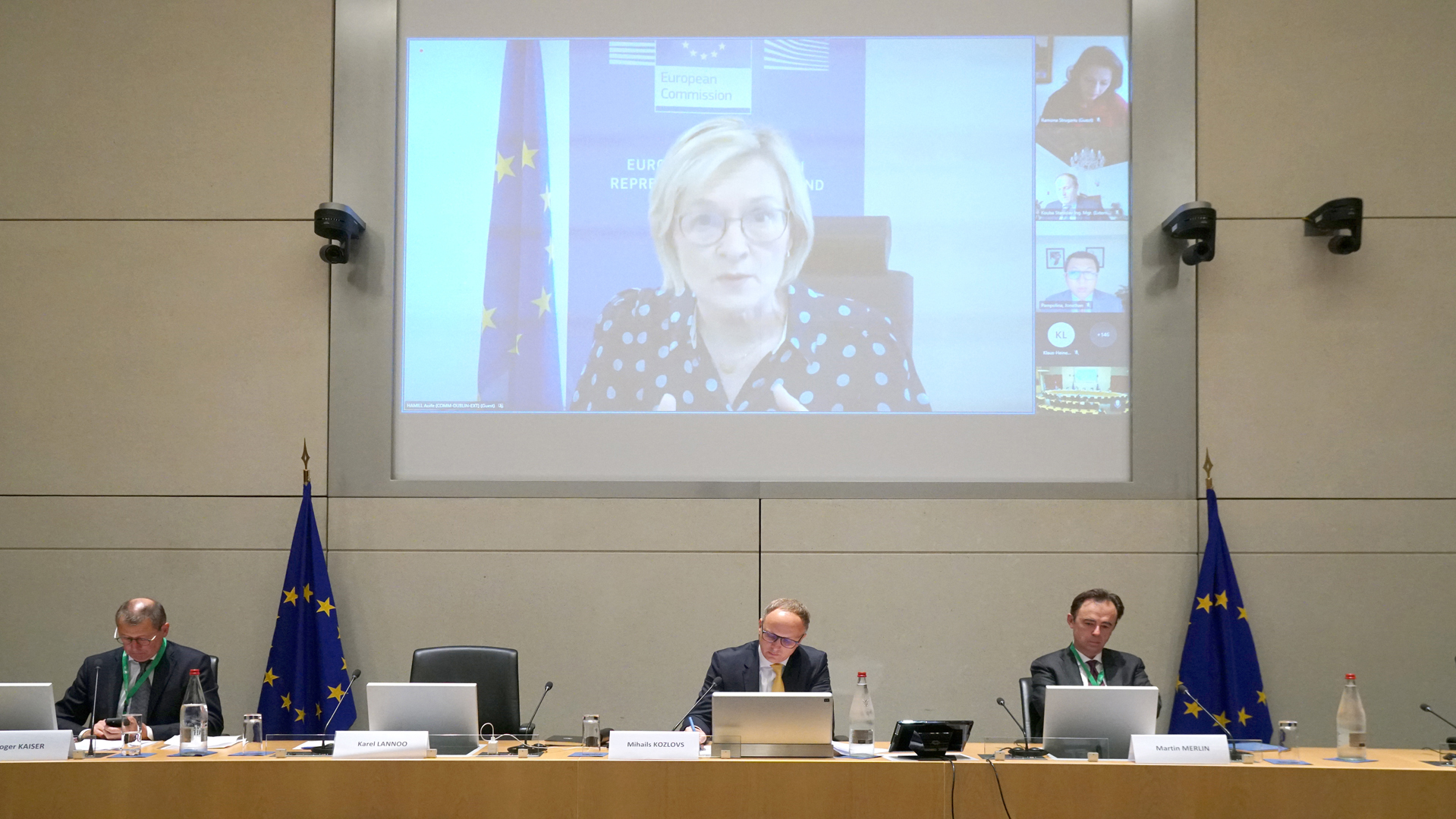
On 16 September 2022, the ECA organised a high‑level seminar conference on anti‑money‑laundering. Representatives from the EU institutions, member states, IMF, banking supervision and industry convened to discuss the new EU anti‑money‑laundering and counter‑terrorism financing supervision model proposed by the European Commission and the progress achieved in the negotiations so far. They discussed topics including expectations and feasibility, effective implementation, and future‑proofing. They paid particular attention to the proposed governance arrangements for the new Anti‑Money‑Laundering Authority (AMLA), and how the new body will be able to interact effectively with other EU and national control authorities without creating unnecessary compliance burden for the industry.
Digital transformation of audit
The ECA continues to improve the efficiency of its audit processes by enhancing the integration and interoperability of its existing systems. In parallel, it has implemented automation, IT audit and advanced data analytics activities as part of its development plan for better use of technology for audit. It also continued its innovation activities aimed at identifying emerging technology that can be used in novel ways to support audit work.
The pandemic lowered both the technological and psychological barriers of people and organisations to working and meeting remotely, improving at the same time, their digital skills level. The ECA was no exception. Remote or hybrid meetings are now regularly used for working meetings, especially with external stakeholders such as auditees and other EU and international bodies, reducing the number of missions to the level necessary for achieving the institution’s objectives.
We equipped our meeting rooms with high‑end videoconference solutions, while making portable solutions available, enabling group meetings anywhere in the ECA buildings.
Finally, we converted one meeting room into a virtual TV studio, enabling the recording and broadcasting quality streaming of press‑briefings, hybrid conferences with interpretation or other informational or educational events, supporting communication activities of the institution.
automation
The solution put in place a few years ago for the secure exchange of documents and data with the auditees, ECAFiles, has been integrated with our main audit management system, ASSYST, and with the system managing the clearance process, CLEAR, simplifying and improving communication with auditees throughout the audit.
In cases where programmatic access to databases of the auditees was not possible, we launched the robotic process automation service in 2021. This offered an alternative to manually downloading, saving and checking documents from the databases, provided the documents are made available in the required useable format.
services
The new team established in 2021 for D.A.T.A. (Data and Technology for Audit) continued working on the implementation of the development plan for better use of technology in support of ECA audit objectives.
D.A.T.A. team members worked closely with audit teams to understand their specific processes and needs. Depending on the complexity of the need, work varied from short‑term advisory activities to full‑scale participation in audit tasks.
The D.A.T.A. team led, or participated into, multiple ECA‑wide projects: data experts for the NGEU task force, creation of a data science community for auditors, assessment and feasibility of a new semantic search engine for the ECA own production.
We also put in place a “data science infrastructure” to allow for data processing and advanced analysis and visualisation primarily of unstructured datasets and big data.
In parallel our IT department launched “data warehouse as a service” in October 2022 allowing user to process and analyse structured data with different degrees of autonomy, ranging from getting predefined reports for basic users to processing data and creating ad hoc reports and visualisations for expert users.
The cooperation with supreme audit institutions from EU member states on Technology and Innovation for Audit in the context of the TiNA network and platform continued. Eleven online TiNA events took place on subject ranging from auditing cybersecurity and secure transfer of data to using specific tools for data analytics and process mining.
The ECA continued being actively involved in the Emerging technology group of the Interinstitutional Committee for Digital Transformation, working on introducing technologies such as artificial intelligence, augmented reality or blockchain in EU institutions. A proposal for a joint project to leverage distributed ledger technologies for further securing exchanges with auditees has been initiated.
Institutional relations
We work closely with the European Parliament, the Council, national/regional parliaments and member state governments, as the impact of our work depends largely on the use they make of our audit findings and recommendations.
European Parliament
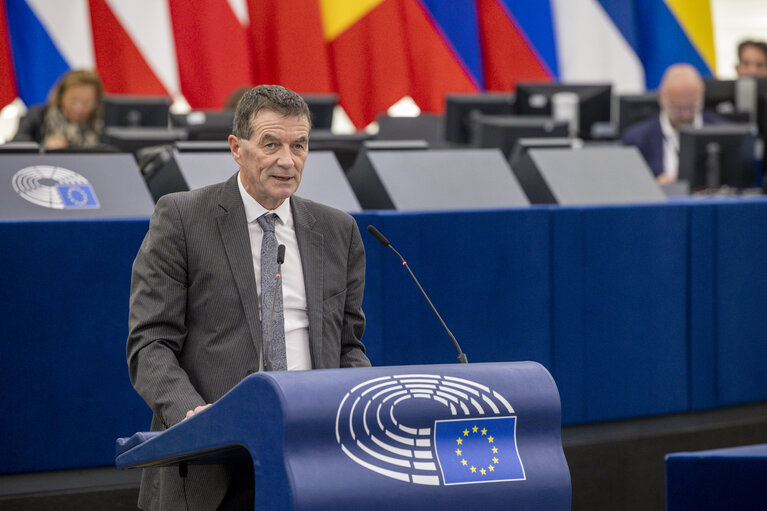
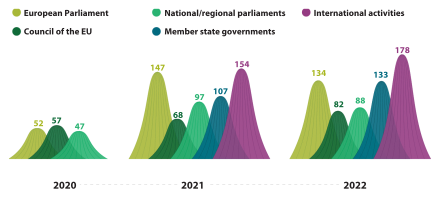
In 2022, the European Parliament (EP) resumed gradually the regular physical participation to the plenary and committee meetings by other institutions and bodies. As a result, the total number of ECA appearances, which were mostly physical in 2022, decreased slightly to 134, compared to 147 in 2021, which were all remote.
EP committees and bodies, particularly the Committee on Budgetary Control (CONT), regularly invite ECA members and audit teams to present the results of our work at their meetings.
Overall, in 2022, our members presented 16 special reports and one review to CONT. They also participated in 16 CONT public hearings on the 2021 discharge, including the presentation of our 2021 annual report by ECA President Tony Murphy.
In addition, the members gave 27 presentations on special reports and reviews to 14 other EP committees, mostly in joint meetings with other interested committees.
In March 2022, the Conference of Committee Chairs invited the ECA President for an exchange of views on our 2022+ Work Programme and on the consultation on the 2023+ Work Programme. Former ECA President Klaus‑Heiner Lehne participated to the EP plenary related to the 2020 discharge in May. In October, ECA President Tony Murphy met with the EP President Roberta Metsola and presented the 2021 annual report to the EP plenary. Chamber II members also met with the REGI Coordinators in June to discuss further cooperation and CONT Committee visited the ECA in November to have an exchange of views with the college.
Council of the European Union
The total number of ECA appearances increased substantially to 82 in 2022, compared to 68 in 2021.
As a rule, the Council’s preparatory bodies deal with all our special reports soon after publication, but not necessarily all reviews and opinions. In 2022, we presented 26 special reports and three opinions to 19 different Council committees and working parties.
In 2022, ECA representatives attended also 29 meetings dedicated to discharge of the EU budget for financial years 2020 and 2021. Furthermore, the Budget Committee of the Council invited ECA management to present our 2023+ Work Programme and draft budget for 2023.
France: January – June 2022
Czech Republic: July – December 2022
Due to the lessening of COVID‑19 restrictions, ECA representatives were able again to participate physically in most of the meetings at the Council of the EU. However, some interactions are still taking place remotely. The new way of working allowed us also to offer more interactions with the Council of the EU like targeted technical briefings on some reports to Permanent Representations to the EU.
In July 2022, former ECA President Klaus‑Heiner Lehne met with the Czech prime minister, EU affairs and finance ministers to discuss the Council Presidency priorities. ECA members Iliana Ivanova and Jan Gregor participated in an informal meeting with ministers responsible for Cohesion policy in September. ECA President Tony Murphy met with both the Swedish prime minister and finance minister in November. In December 2022, ECA President Tony Murphy together with ECA member Jan Gregor met with the Czech Minister of Finance in his capacity as ECOFIN President, before the presentation of the 2021 annual report to the EU finance ministers. In addition, ECA members and management participated in 14 meetings with representatives of Permanent Representations to the EU in 2022.
National/regional parliaments and member state governments
national/regional parliaments
In 2022, our members and staff presented our work at 88 meetings with national/regional parliaments in 20 member states.
member state governments
Our members and management presented our work at 133 meetings with member state governments and government bodies in 22 member states in 2022.
European Commission
auditees at the highest level
ECA members and Commissioners have regular bilateral contacts over planned and ongoing audit tasks.
For years, it has also been a well‑established practice for our members to hold an annual meeting with their counterparts at the European Commission. These meetings provide an opportunity to take stock, and to reflect on how to further strengthen our cooperation.

In July 2022, this tradition continued when former ECA President Lehne invited the college of Commissioners in Luxembourg. He held a bilateral meeting with President von der Leyen. The members of the ECA and the Commissioners met in four discussion groups, focusing on the following areas: the European Green Deal; the digital transition; the global dimension; and the EU budget driving European recovery/link to EU economic governance framework.
Cooperation with other supreme audit institutions
Contact Committee of the EU supreme audit institutions
Our cooperation with the supreme audit institutions (SAIs) of the 27 member states mainly takes place within the framework of the Contact Committee of the EU Supreme Audit Institutions. This forum facilitates dialogue and exchange between the SAIs of EU member states and the ECA.
In 2022, we continued the EU Network Audit on COVID‑19, which resulted in the publication on the Contact Committee website of a multitude of factsheets on the SAIs pertinent 2020 and 2021 work on this topic. We also continued with our cooperation activity on auditing the implementation of the Recovery and Resilience Facility and the National Recovery and Resilience plans. For the latter, audit managers and auditors representing 22 EU SAIs regularly met and discussed their finalised, ongoing and planned NGEU‑related audits.
In May 2022, we hosted the Contact Committee annual meeting. It was the first physical meeting of the heads of EU SAIs since 2019, following the high‑level event held online in November 2021. The main discussions focused on the strategic tasks and challenges for EU SAIs in assessing the added value of the Recovery and Resilience Facility at national and EU level.

SAIs of EU candidate and potential candidate countries
We also support the SAIs of EU candidate (Albania, Moldova, Montenegro, North Macedonia, Serbia, Turkey and Ukraine) and potential candidate countries (Bosnia and Herzegovina, Kosovo2).
In 2022, we supported SIGMA (Support for Improvement in Governance and Management), a joint initiative of the OECD and the European Union, in conducting a meeting of the Network of the SAIs of candidate and potential candidate countries in Paris.
2 This designation is without prejudice to positions on status, and is in line with Security Council Resolution 1244 (1999) on the situation relating Kosovo (UNSCR 1244/1999) and the International Court of Justice (ICJ) Advisory Opinion on the question of the ‘Accordance with international law of the unilateral declaration of independence in respect of Kosovo’ of 22 July 2010.
INTOSAI
In 2022, we continued our active involvement in the activities of the International Organisation of Supreme Audit Institutions (INTOSAI). As Vice‑Chair of the Professional Standards Committee (PSC), we provided input to the INTOSAI Task Force on Strategic Planning and actively collaborated with the other Goal Chairs. We also hosted the 21st PSC Steering Committee meeting in September where the report on the modernisation of the standards’ framework, led by the ECA, was successfully adopted.
In November 2022, we attended the XXIV INTOSAI Congress (INCOSAI) in Rio de Janeiro. This Congress takes place every three years. It is the supreme body of INTOSAI, where the organisation’s most important administrative decisions are taken. At the Congress the INTOSAI Strategic Plan 2023‑2028 was adopted, and the ECA took over from the SAI of Brazil the role of Chair of the PSC. In this capacity, the ECA is now a member of the INTOSAI Governing Board.
We also participated in the PSC subcommittees and the activities and projects of other INTOSAI working bodies, notably on environmental auditing, Big Data, financial modernisation and regulatory reform, as well as evaluation of public policies and programmes. In addition, we have led the project to update ISSAI 140 on quality management for SAIs, and collaborated with the INTOSAI Development Initiative (IDI) on producing implementing guidance for the new standard.
EUROSAI
We were also actively involved in the activities of the European Organisation of Supreme Audit Institutions (EUROSAI), the European regional group of INTOSAI, in particular its working groups on environmental auditing, information technologies, the audit of funds allocated to disasters and catastrophes, and the network for ethics.
In 2022, we continued to pursue the work of the project group on “Preparing for future risks and climate crisis: Time for audit to take a long‑term view?” (co‑led with the UK National Audit Office) in the context of the “Forward thinking and emerging issues” portfolio. Furthermore, we actively contributed to the project group on auditing the response to COVID‑19.
Our management
Members
The ECA operates as a collegiate body of members, one from each member state. After consulting the European Parliament, the Council appoints each member once their respective national governments have nominated them. We have no role in the process of nominating or appointing our members.
Our members serve a renewable term of six years. They perform their duties in complete independence and in the general interest of the EU. Upon taking office, they give a solemn undertaking to that effect before the European Court of Justice.
In 2022, the Council appointed a new Slovenian member, Jorg Kristijan Petrovič (as of 7 May), a new Dutch member, Stef Blok (as of 1 September), a new Maltese member, George Marius Hyzler (as of 1 October), a new Cypriot member, Lefteris Christoforou (as of 2 November) and a new Lithuanian member, Laima Liucija Andrikienė (as of 16 November). In addition, the Council renewed the mandates of the Czech member, Jan Gregor, the Latvian member, Mihails Kozlovs, and the Polish member, Marek Opioła, for a further period of six years (as of 7 May).
Our Dutch member, Alex Brenninkmeijer, sadly passed away on 14 April 2022.
The nomination procedure concerning the appointment of a new Portuguese member was still ongoing at the end of 2022.
25 college meetings took place in 2022. The attendance rate at these meetings was 93 %. Members also participated in chamber and committee meetings (see also Audit chambers and committees).
improve our efficiency and
make the best use of our
resources in future audits
Once a year, our members, the Secretary‑General and the directors go on a two‑day seminar to discuss important issues relating to the ECA’s long‑term strategy, work and organisation.
During this year’s ECA Seminar, the members discussed the following key topics:
- ways to achieve further efficiency and productivity gains in producing our special reports;
- issues of the practical application of the ECA’s Code of Conduct; and
- the 2023+ Work Programme.
President
The President is in charge of the institution’s strategy, planning and performance management, communication and media relations, institutional liaison, legal matters and internal audit. The President also represents the ECA in its external relations.
Our members elect one from among their number as President for a renewable period of three years. The elected person then assumes the role of first among equals (primus inter pares), chairs the college’s meetings and ensures that its decisions are implemented.
On 1 October 2022, Tony Murphy replaced Klaus‑Heiner Lehne as the ECA’s President.

Note: As at February 2023.
Audit chambers and committees
Members are assigned to one of five audit chambers, where most of our audit reports, reviews and opinions are adopted. Audit chambers allocate their tasks among their members. Each member is accountable to the chamber, and to the college, for their own audit tasks. Professional auditors working for the audit chamber directorates carry out the audit work.
The members for each audit chamber elect a Dean for a renewable period of two years. As of 11 October 2022, the Deans of our five audit chambers were Joëlle Elvinger, Annemie Turtelboom, Bettina Jakobsen, Mihails Kozlovs and Jan Gregor.
The Audit Quality Control Committee (AQCC) deals with the ECA’s audit policies, standards and methodology, audit support and development, and audit quality control. It is composed of one member from each audit chamber and chaired, as of 2 November 2022, by Iliana Ivanova.
The Administrative Committee (AC) and, where appropriate, the college of members, both of which are chaired by the President, take decisions on broader strategic and administrative issues. The Administrative Committee is made up of the President, the Deans of the chambers, the chair of the AQCC, and the member for Institutional Relations (as of 10 October 2022, Eva Lindström).
In 2022, there were 113 chamber, 15 AC and 10 AQCC meetings. The attendance rate at these meetings was 95 %, 94 % and 89 %, respectively.
Other committees include the Ethics Committee (chaired by Joëlle Elvinger), the Internal Audit Committee (chaired by Hannu Takkula), and the Foresight Advisory Panel (chaired by Helga Berger).
Our senior management comprises the Secretary‑General and directors. In total, there are 10 directorates, with five attached to audit chambers, one to the AQCC, one to the Presidency and three to the Secretariat‑General.

Note: As at February 2023.
Measuring performance
We apply a set of key performance indicators (KPIs) to inform our management about progress made towards achieving our strategic goals, support decision‑making, and provide our institutional stakeholders with information on our performance. We updated the KPIs to support our 2021‑2025 strategy. The following set of KPIs provides a broad overview of how we are performing as an organisation as regards the dissemination, impact and perception of our work:
- number of reports published (compared to plan);
- media presence;
- impact and perception of our work (stakeholder feedback);
- our appearances before other institutions, national/regional parliaments and member state governments, and international activities;
- implementation of ECA recommendations.
We published 29 reports compared with 32 in 2021. These comprised 28 special reports and one review.

Media presence
media coverage
In 2022, we recorded some 130 000 online articles and social media posts related to our audit reports, other publications or the ECA in general. This represents a significant increase in coverage compared to previous years (2021: 67 000; 2020: 32 000).
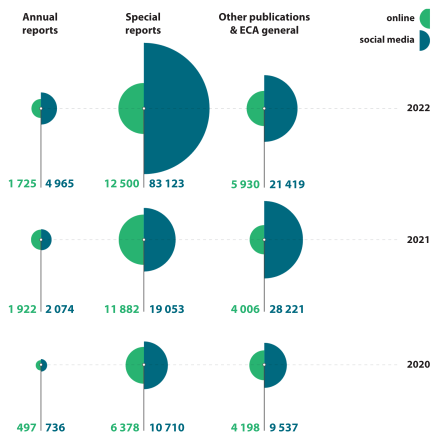
Media coverage can vary substantially depending on the subject and the complexity of a report. External factors, such as an important event or policy development, may also influence media interest in our publications. Moreover, during emergencies, such as the COVID‑19 pandemic or the Russian war of aggression in Ukraine, media attention is particularly focused on crisis‑relevant material.
Since the COVID‑19 lockdown, we have promoted our publications virtually, which has enabled us to increase contacts with journalists.
In 2022, we issued 41 press releases in 24 EU languages, as well as information notes, media advisories and (ready‑to‑use) audio‑statements in certain languages. We also gave a number of interviews with major media outlets throughout Europe, covering radio, TV and the written press. In addition, we held 14 online press briefings and nine additional country‑specific press briefings for the annual report. Altogether, our briefings attracted 350 journalists, most representing major national media outlets in EU member states.
ECA website
In 2022, we achieved over one and half million visits to our website, with around 600 000 unique visitors.
on social media continued
to rise
By the end of 2022, our three social media accounts (Twitter, LinkedIn, Facebook) had attracted over 45 000 followers, up from 39 000 in 2021.

Impact and perception of our work
surveys find our reports
useful for their work
We assess the likely impact and usefulness of our work, as perceived by the readers of our reports at the European Parliament, Council, Commission, EU agencies, member states´ permanent representations, member states’ agencies and SAIs, NGOs, academia, the media and other parties.
Since 2018, we have carried out anonymised electronic surveys to ask our readers to provide qualitative feedback on selected reports and make general suggestions for our work.
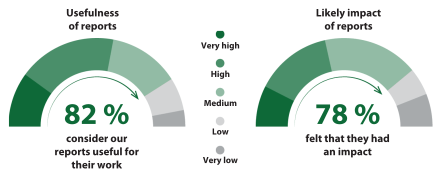
In 2022, 82 % of around 450 respondents considered our reports useful for their work, and 78 % felt that they had an impact. This is similar to last year’s result (2021: 83 % and 79 %, respectively).
Our appearances before other institutions, national/regional parliaments, and member state governments, and international activities
with our stakeholders
Overall in 2022, our interaction with our European and international stakeholders reached again a high level. We presented the results of our work on 437 occasions before European Parliament committees, Council preparatory bodies, national/regional parliaments, and member state governments (2021: 419).
Furthermore, we participated in 178 international activities. These included the activities of international public audit organisations, in particular INTOSAI and EUROSAI, as well as bilateral events with other SAIs, conferences, meetings, and activities targeting a wider audience (2021: 154).
Implementation of ECA recommendations
recommendations
implemented
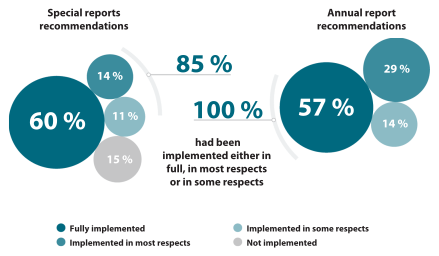
We measure the implementation of our recommendations based on the follow‑up carried out by our auditors. For 2022, we analysed the recommendationsaddressed to the Commission and other institutions in our 2018 reports.
The analysis showed that of the recommendations followed up 100 % of the 14 made in our 2018 annual report and 85 % of the 325 in our 2018 special reports had been implemented either in full, or in some or most respects.
Our staff
Staff allocation
At the end of 2022, we had 873 permanent and temporary posts (853 in previous years). The 20 additional posts were granted by the budgetary authority on a temporary basis for the audit of the NGEU initiative. 549 posts were in audit chambers, including 104 posts in members’ offices.

In addition, we had 91 contract staff and 33 seconded national experts working for us at year‑ end (2021: 92and 25 respectively).
Recruitment
Our recruitment policy follows the general principles and employment conditions of the EU institutions, and our staff have a broad range of academic and professional backgrounds.
In 2022, we recruited 107 new employees (2021: 80 employees): 33 officials, 47 temporary staff, 16 contract staff and 11 seconded national experts.
Our ASPIRE programme for auditors was introduced in 2017 and is designed to help the professional integration of newcomers, allowing them to acquire on‑the‑job experience in different audit tasks as well as taking part in targeted training activities during their first three years.
We also provided 60 internships (2021: 56) for university graduates, lasting three to five months. In 2022, our trainees worked in a similar hybrid mode to other ECA staff for the March, May and October sessions, combining on‑site and remote work.
Age profile
Three quarters (76 %) of our staff in active service at the end of 2022 were aged 40 to 59, which is the same as in 2021.
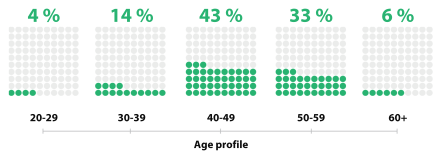
72 % of our managers are aged 50 or over (2021: 73 %). This will lead to a renewal of management over the next five to 10 years as they retire.

Equal opportunities
Overall, we employ equal proportions of women and men in our workforce.
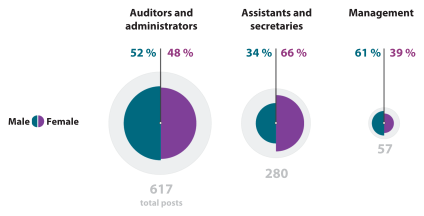

We are committed to offering equal career opportunities for our staff at all levels of the organisation. We employ equal proportions of women and men, and more than a third (39 %) of our directors and principal managers were female in 2022 (36 % in 2021).
The proportion of female principal managers in audit at the ECA reached 41.4 % (37.5 % in 2021), which is above the 2027 target of 40 %. In line with the ECA Diversity and Inclusion Action plan (2021-2025), we published in 2022 the first annual D&I report (for 2021). We also initiated for the first time an accessibility audit for the ECA buildings.
Similarly, we remain committed to geographical balance in our management.
Ethics
In 2022, the ECA updated two important documents from its ethical framework: the Ethical Guidelines, and the policy for ensuring a respectful and harassment‑free workplace. The update of the Ethical Guidelines was done following an evaluation of the ethics framework by an external consultant who provided a number of recommendations.
The ECA Ethics Committee discusses any ethical matters that it considers to be relevant to the ECA's standards and reputation, including assessing the outside activities of its members. It is composed of three members appointed by the college based on a proposal by the President for a term of three years (with the possibility of one renewal): two ECA members and an external member chosen on the basis of their abilities, experience and professional qualities.
Audit support
Audit methodology

Our internal digital platform AWARE (Accessible Web‑based Audit Resource) describes our audit methodology and guidance. Last year, we made it available on our website. This provides a single point of access for the public to our audit methodology.
Professional training
targets exceeded
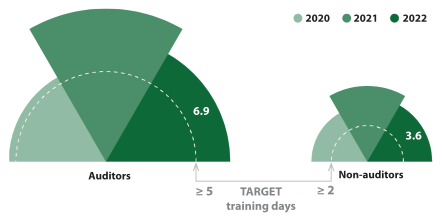
In 2022, we again exceeded the professional training target of five days of non‑language training per year for auditors, in line with the International Federation of Accountants’ recommendations, and two days for non‑audit staff.
Our auditors attended an average of 6.9 non‑language training days (8.5 in 2021 and 5.4 in 2020), of which 5.0 days were core‑business (audit‑related) training. Our non‑audit staff attended 3.6 training days on average (4.2 in 2021 and 3.1 in 2020). The year‑to‑year decrease in both indicators can be explained by the gradual return to classroom/face‑to‑face training, which provides a better learning experience, but has by definition lower capacity than the online alternatives.
While constantly striving to provide a rich training offer, we paid particular attention to core‑business (audit‑related) training. This materialised in a number of new courses and new initiatives, like the ones described below:
- Policy areas‑related training: One of the key priorities in 2022 was to build and enhance the knowledge of our audit fields/EU policies, in cooperation with our audit chambers. We organised 12 sessions under this initiative.
- A new area that received a lot of our attention was Next Generation EU (NGEU), and the Recovery and Resilience Facility (RRF) in particular. Our flagship training initiative was a two‑day training course on the RRF, which we deliver in cooperation with European Institute of Public Administration. We held six editions of this online course designed to help participants understand the details and specifics of the RRF regulation and the implementation of member states’ national recovery and resilience plans.
- New training programmes for Heads of Task and on the use of data and technology in the audit: we finalised the Competency framework for Heads of Task, which served as a basis for preparing a dedicated training programme structured around the three key competencies that Heads of Task should possess: project management, effective communication and leadership. In cooperation with the ECA Data Team, we started to upskill our audit colleagues in the use of data and technology.
raising for the new hybrid
environment
We organised training for staff and managers on how to navigate in the new hybrid reality since the new hybrid working decision entered into force in April 2022. The “Back at the office” programme ran from June to October and included different activities such as training courses, presentations, workshops, and a photo competition. A compulsory course for managers was organised in November 2022.
We continued our training programme for career counsellors, mentors, internal facilitators and confidential contact persons and launched a new internal resilience‑coaching programme.
Translation
In 2022, we translated and revised over 203 000 pages (2021: 227 003), including 21 133 pages of outsourced work. Our translators also participated in our audit activities, offering language support during audit visits, online or hybrid meetings as well as report writing. In addition, they were involved in communication work, giving language advice and improving quality by tailoring messages to the target audience, for example through cultural adaptation.
For the first time, we have translated promptly all ECA products into Irish, resulting in timely publication.
Cybersecurity
cybersecurity
The COVID‑19 crisis brought an exponential increase of cybercrime and state‑sponsored cyberattacks. The ECA IT security team has, more than ever, had the heavy burden of keeping our IT services secured. This could not have been achieved without the precious support of the Interinstitutional Computer Emergency Response Team, the CERT‑EU.
The implementation of the 2022‑2024 cybersecurity plan got underway with a relevant number of actions already accomplished or in progress. Furthermore, and under the sponsorship of CERT‑EU, we have developed a roadmap to evolve to a Zero Trust security model, which is one of the principles that drives the cybersecurity plan. The first system implementing this new paradigm is the new remote access platform that will replace in the first quarter of 2023 the current VPN solution.
Several phishing campaigns took place in 2022, including a campaign conducted at interinstitutional level. The campaigns paid off: we recorded an increase in the number of ECA staff who identified and reported the phishing messages.
CERT‑EU provided a dedicated session to ECA’s senior management, to brief them on the current threat landscape and the strategic priorities that need to be addressed.
During the year, the Secretary‑General endorsed a new IT systems logging and audit policy. The new policy is meant to reassure our users and provide transparency on the use of system audit and log data while ensuring the security of our systems.
Finally, ECA has been active in the preparation of the new interinstitutional cybersecurity rules. Currently under approval, the ECA already applies many of their provisions.
Buildings
environmentally friendly
workplace
We firmly believe that a good workplace is key to achieving strategic ECA goals. The direct impact on staff well‑being contributes to making ECA an attractive workplace.
Our vision is to provide a sustainable workplace with a collaborative, well‑being‑oriented, secure, inclusive and environmentally friendly work environment for all employees.
We currently own three buildings (“K1”, “K2” and “K3”), which operate as a single, integrated technical entity. We also rent office space for our disaster recovery centre in Luxembourg.
K1
The K1 building, which opened in 1988, contains offices for up to 310 staff and meeting rooms.
K1 was modernised in 2008 to render it compliant with national health, safety and environmental requirements. Wherever possible, the technology in K1 was adapted to make it compatible with that used in K2 and K3.
K2
The K2 building opened in 2003. It provides for offices for up to 241 staff, meeting rooms, a conference room with interpreting booths, videoconferencing rooms, a cafeteria and basic kitchen areas.
The K2 building has been renovated to optimise the organisation of its workspaces and to upgrade its technical installations, making them much more environmentally efficient.
K3
The K3 building opened in 2012. The ground floor consists of the canteen, cafeteria and training rooms. There are also offices for 503 staff, meeting rooms and an IT room. The K3 building has a rating of “very good” according to BREEAM, the leading method worldwide for evaluating and certifying the sustainability of buildings.
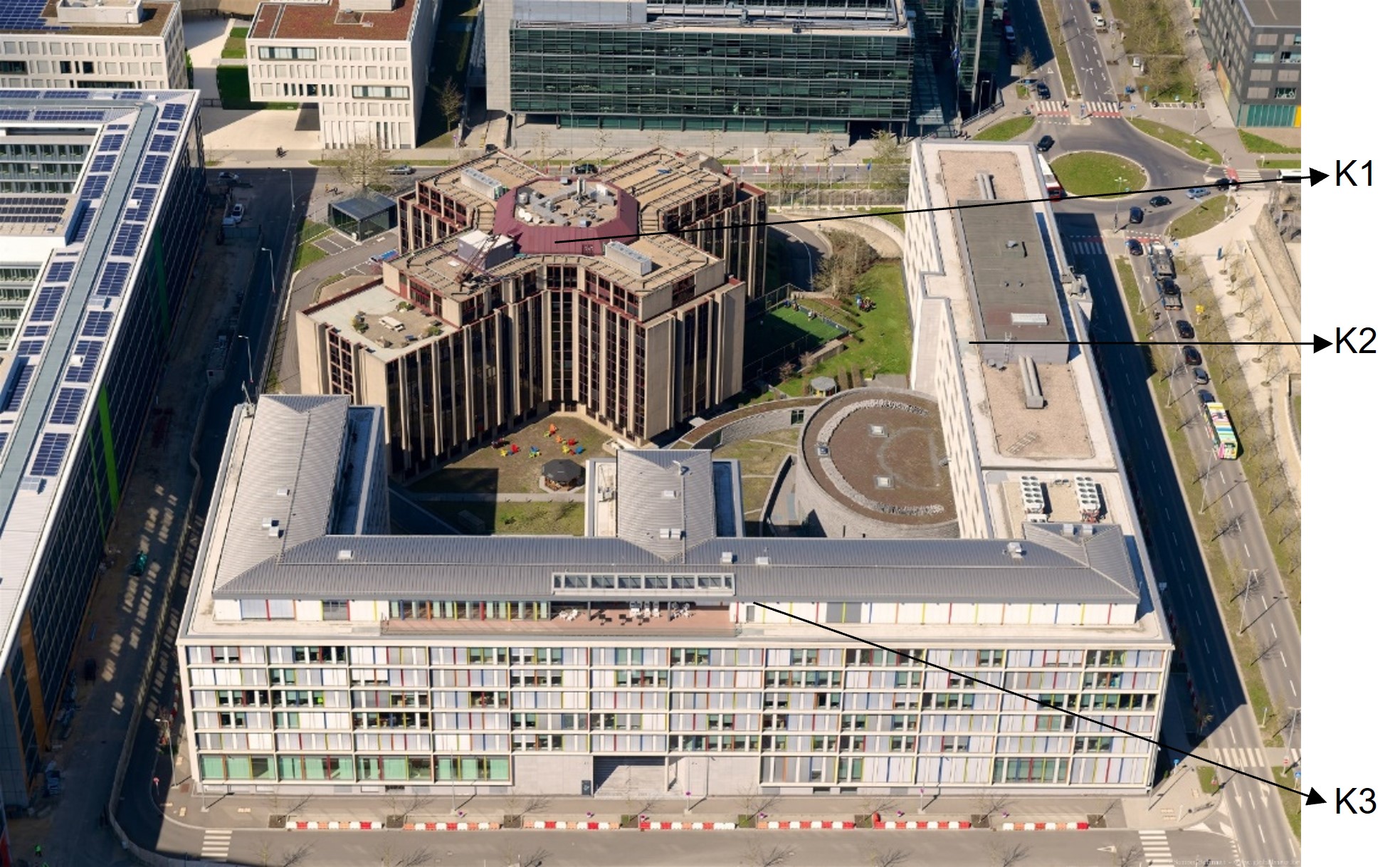
The ECA’s premises on the Kirchberg plateau in Luxembourg.
Environmental management
As an EU institution, we have a duty to apply the principle of sound environmental management in all our activities. We are therefore committed to continuously reducing our environmental impact. Every year, we monitor and analyse the greenhouse gas emissions generated by our activities
The ECAis proud of its Eco‑Management and Audit Scheme (EMAS) certification. We successfully operate an EMAS compliant environmental management system and we fully comply with the ISO 14001:2015 certification requirements.
The EMAS external verification audit took place in October 2022. The results were successful, no unconformities were found and many good practices were identified. As a result, our EMAS certification for the period 2023‑2025 was endorsed.
The ECA will take further steps to achieve the 15 % reduction in gas consumption proposed last July in the Commission and Council plan “Save Gas for a Safe Winter”. The ECA will also take into account the recent recommendation from the Luxembourg government on limiting the temperature of buildings operated by public authorities to 20°C.
In 2022, an energy audit of the ECA’s buildings proposed various energy saving options and as a result, an ambitious plan to reduce energy consumptions is currently under implementation.
by 2030
In 2022, we have launched a project to reduce greenhouse gas (GHG) emissions. It is based on three key drivers:
- Reducing the environmental impact of our buildings.
- Adopting an environmentally friendly mobility, taking into account of the need to carry out on‑the‑spot audit missions, as this is a fundamental enabler of our audit work.
- Fostering staff awareness and commitment.
The first ECA Sustainability report, corresponding to the year 2021, was adopted by the college in September 2022. The basic objective of corporate responsibility is to ensure that the activities of an organisation have a positive impact on society, the environment and the economy. These are the three basic pillars upon which corporate responsibility, or sustainability, operates. Sustainability therefore addresses the ethics of an organisation’s activities, and how it operates in a way that is viable over the long term.
Sustainability is more than just greening. It is also about economic impact, ethics and governance, respect for laws and regulations and, above all, people. At the ECA, we consider our staff to be our most valuable asset, and we implement a whole range of initiatives and actions to optimise staff wellbeing.
The report provides an overview of the economic, environmental and social impacts of our operations in auditing whether EU funds are supporting sustainable and inclusive growth in Europe and across the globe. It also provides information about the impact of our structure and the ways in which we operate administratively in order to pursue this mission.
The ECA sustainability report will become a yearly deliverable of ECA that will be published on our Internet website.
Our accountability
Financial information
Our institution is financed by the EU budget under the administrative expenditure heading.
In 2022, our budget amounted to around €162.1 million.
Our budget represents around 1.5 % of the EU’s total administrative spending (less than 0.1 % of total EU spending).
Implementation of the 2022 budget
| FINANCIAL YEAR 2022 | Final appropriations | Commitments | % use (commitment/ appropriations) | Payments |
| Title 1: People working with the institution | (thousand euros) | |||
| 10 – Members of the institution | 11 590 | 11 084 | 96 % | 10 630 |
| 12 – Officials and temporary staff | 120 203 | 118 984 | 99 % | 118 984 |
| 14 – Other staff and external services | 9 089 | 9 055 | 99 % | 8 783 |
| 162 – Missions | 1 647 | 1 647 | 100 % | 1 227 |
| 161 + 163 + 165 – Other expenditure relating to persons working for the institution | 2 752 | 2 564 | 93 % | 2 156 |
| Subtotal Title 1 | 145 281 | 143 334 | 99 % | 141 780 |
| Title 2: Buildings, movable property, equipment and miscellaneous operating expenditure | ||||
| 20 – Immovable property | 4 908 | 4 9053 | 99 % | 2 274 |
| 210 – IT&T | 8 879 | 8 879 | 100 % | 5 617 |
| 212 + 214 + 216 – Movable property and associated costs | 847 | 783 | 92 % | 534 |
| 23 – Current administrative expenditure | 540 | 478 | 89 % | 378 |
| 25 – Meetings, conferences | 381 | 185 | 48 % | 138 |
| 27 – Information and publishing | 1 305 | 1 145 | 88 % | 834 |
| Subtotal Title 2 | 16 860 | 16 375 | 97 % | 9 775 |
| Total ECA | 162 141 | 159 709 | 99 % | 151 555 |
3 Including carry over by decision.
2023 budget
The 2023 budget represents an increase of 7.97 % on the 2022 figure.
| FINANCIAL YEAR 2022 | 2023 | 2022 |
| Title 1: People working with the institution | (thousand euros) | |
| 10 – Members of the institution | 11 777 | 11 715 |
| 12 – Officials and temporary staff | 131 876 | 120 838 |
| 14 – Other staff and external services | 9 779 | 8 444 |
| 162 – Missions | 2 453 | 2 452 |
| 161 + 163 + 165 – Other expenditure relating to persons working for the institution | 2 601 | 2 732 |
| Subtotal Title 1 | 158 486 | 146 181 |
| Title 2: Buildings, movable property, equipment and miscellaneous operating expenditure | ||
| 20 – Immovable property | 4 274 | 3 778 |
| 210 – IT&T | 8 452 | 8 228 |
| 212 + 214 + 216 – Movable property and associated costs | 894 | 944 |
| 23 – Current administrative expenditure | 588 | 574 |
| 25 – Meetings, conferences | 580 | 675 |
| 27 – Information and publishing | 1 786 | 1 761 |
| Subtotal Title 2 | 16 574 | 15 960 |
| Total ECA | 175 060 | 162 141 |
Note: Figures reported relate to the initial budget.
Internal and external audit
Internal audit
Our Internal Audit Service (IAS) provides independent and objective assurance and consulting/advisory services designed to add value and improve the ECA’s operations. The IAS assists the ECA in accomplishing its strategy and objectives by adopting a systematic and disciplined approach in order to evaluate and improve the effectiveness of the ECA’s governance, risk management and internal control. The IAS reports to the Internal Audit Committee, which is composed of three ECA members and an external expert. The Committee regularly monitors the progress of the various tasks set out in the IAS’s annual work programme, and ensures its independence.
In 2022, the IAS continued to review the ECA’s risk management policy and issued reports for two tasks: “IT Governance”, “The recruitment process”. The IAS also finalised the main audit work for two other tasks, “ECA building policy – The K2 renovation” and “The evaluation and promotion processes”, for which reports will be issued in 2023.
Overall, the work of the IAS did not reveal any shortcomings that, by their nature or magnitude, would call into question the overall reliability of the internal control systems put in place by the authorising officer by delegation to ensure the legality and regularity of our financial operations in 2022.
External audit
Our annual accounts are audited by an independent external auditor. This is important, as it shows we apply the same principles of transparency and accountability to ourselves as we do to our auditees.
Our external auditor – ACG Auditing & Consulting Group S.r.l. – published its report on our accounts for the financial year 2021 on 5 May 2022, issuing a clean opinion
Our external auditor’s opinions – financial year 2021
Regarding our financial statements:
“In our opinion, the financial statements give a true and fair view of the financial position of the Court as at December 31 2021, and of the results of its operations, its cash flows and the changes in net assets for the year then ended, in accordance with Regulation (EU, Euratom) 2018/1046 of the European Parliament and of the Council of 18 July 2018 on the financial rules applicable to the general budget of the Union, amending Regulations (EU) No 1296/2013, (EU) No 1301/2013, (EU) No 1303/2013, (EU) No 1304/2013, (EU) No 1309/2013, (EU) No 1316/2013, (EU) No 223/2014, (EU) No 283/2014, and Decision No 541/2014/EU and repealing Regulation (EU, Euratom) No 966/2012, (OJ L 193, 30.07.2018, p. 1).”
Regarding our use of resources and control procedures:
“Based on the work described in this report, in our opinion, the Court has complied, in all material respects, with the criteria described above:
- The resources assigned to the Court have been used for their intended purposes;
- The control procedures in place provide the necessary guarantees to ensure the compliance of financial operations with the applicable rules and regulations.”
Contact
EUROPEAN COURT OF AUDITORS
12, rue Alcide De Gasperi
1615 Luxembourg
LUXEMBOURG
Tel. +352 4398-1
Enquiries: eca.europa.eu/en/Pages/ContactForm.aspx
Website: eca.europa.eu
Twitter: @EUAuditors
More information on the European Union is available on the internet (https://europa.eu).
Luxembourg: Publications Office of the European Union, 2023
| ISBN 978-92-847-9831-5 | ISSN 2315-3938 | doi:10.2865/559852 | QJ-AA-23-001-EN-N | |
| HTML | ISBN 978-92-847-9780-6 | ISSN 2315-3938 | doi:10.2865/121207 | QJ-AA-23-001-EN-Q |
| ISBN 978-92-847-9794-3 | ISSN 1684-0739 | doi:10.2865/36598 | QJ-AA-23-001-EN-C |
This publication is available in 24 languages and in the following format:
 |
COPYRIGHT
© European Union, 2023
The reuse policy of the European Court of Auditors (ECA) is set out in ECA Decision No 6-2019 on the open data policy and the reuse of documents.
Unless otherwise indicated (e.g. in individual copyright notices), ECA content owned by the EU is licensed under the Creative Commons Attribution 4.0 International (CC BY 4.0) licence. As a general rule, therefore, reuse is authorised provided appropriate credit is given and any changes are indicated. Those reusing ECA content must not distort the original meaning or message. The ECA shall not be liable for any consequences of reuse.
Additional permission must be obtained if specific content depicts identifiable private individuals, e.g. in pictures of ECA staff, or includes third-party works.
Where such permission is obtained, it shall cancel and replace the above-mentioned general permission and shall clearly state any restrictions on use.
For the following pictures, reuse is authorised provided the copyright holder, the source and, where mentioned, the names of the photographers are indicated:
* © European Union, 2022, source: European Court of Auditors.
* © European Union, 2022, source: European Court of Auditors.
* © European Union, 2022, source: European Court of Auditors.
* © European Union, 2022, source: European Court of Auditors.
* © European Union, 2022, source: European Court of Auditors.
* © European Union, 2022, source: European Court of Auditors.
* © European Union, 2022, source: European Parliament / Alexis Haulot.
* © GLOBAL VIEW SPRL – photographer: Simon Schmitt. Architects of the buildings: Paul Noël (1988) and Jim Clemes (2004 & 2013).
To use or reproduce content that is not owned by the EU, it may be necessary to seek permission directly from the copyright holders:
* (top, left): © depositphotos.com/ mrdoomits.
* (top, right): © depositphotos.com/ Xavier Lejeune.
* (central, left): © depositphotos.com/ adriaticphoto.
* (central, middle): © depositphotos.com/ halfpoint.
* (central, right): © depositphotos.com/ fran11.
* (bottom): © stock.adobe.com/ denizbayram.
* © stock.adobe.com/ Weyo.
* © shutterstock.com/ jamesteohart.
* © Getty Images / Tonkovic.
* © stock.adobe.com/ Negro Elkha.
* © depositphotos.com/ Tashatuvango.
* © depositphotos.com.
* © shutterstock.com/ Billy Miaron.
Software or documents covered by industrial property rights, such as patents, trademarks, registered designs, logos and names, are excluded from the ECA’s reuse policy.
The European Union’s family of institutional websites, within the europa.eu domain, provides links to third-party sites. Since the ECA has no control over these, you are encouraged to review their privacy and copyright policies.
Use of the ECA logo
The ECA logo must not be used without the ECA’s prior consent.
GETTING IN TOUCH WITH THE EU
In person
All over the European Union there are hundreds of Europe Direct centres. You can find the address of the centre nearest you online (european-union.europa.eu/contact-eu/meet-us_en).
On the phone or in writing
Europe Direct is a service that answers your questions about the European Union. You can contact this service:
- by freephone: 00 800 6 7 8 9 10 11 (certain operators may charge for these calls),
- at the following standard number: +32 22999696,
- via the following form: european-union.europa.eu/contact-eu/write-us_en.
FINDING INFORMATION ABOUT THE EU
Online
Information about the European Union in all the official languages of the EU is available on the Europa website (european-union.europa.eu).
EU publications
You can view or order EU publications at op.europa.eu/en/publications. Multiple copies of free publications can be obtained by contacting Europe Direct or your local documentation centre (european-union.europa.eu/contact-eu/meet-us_en).
EU law and related documents
For access to legal information from the EU, including all EU law since 1951 in all the official language versions, go to EUR-Lex (eur-lex.europa.eu).
EU open data
The portal data.europa.eu provides access to open datasets from the EU institutions, bodies and agencies. These can be downloaded and reused for free, for both commercial and non-commercial purposes. The portal also provides access to a wealth of datasets from European countries.