 Special Report
Future of EU agencies – Potential for more flexibility and cooperation
About the report:
Having focused in the past on the performance of individual agencies, this is the ECA’s first overall assessment of the conditions put in place by the EU to support all EU agencies in the delivery of policy for the benefit of citizens. Our audit identified a need for more flexibility in the set-up, functioning and possible winding-up of agencies. We also found that insufficient support from Member States, industry, Commission or other agencies prevents some agencies from fully performing their role. We recommend that the Commission and the agencies evaluate more sensibly the coherence of agencies over their lifetime, and adjust resources accordingly; that they assess inefficiencies in the area of governance and improve performance reporting to focus not only on agencies’ activities but also on their important contribution to policy implementation; and that they facilitate agencies’ efforts to cooperate as centres of expertise and networking.
ECA special report pursuant to Article 287(4), second subparagraph, TFEU.
 |
Executive summary
IEU decentralised agencies and other bodies (EU agencies) are bodies governed by European public law and equipped with their own legal personality, making them distinct from the EU institutions. Today, 37 EU agencies are located in 23 Member States and serve a wide range of matters of interest to EU citizens. Most were set up between 2000 and 2010. They include, inter alia, agencies for aviation safety, food safety, vocational training, equal opportunities, stability of the financial and banking sectors, the environment, animal protection, migration and border control. In 2018, their total annual budget amounted to €4.0 billion (equivalent to 2.8 % of the EU general budget) and all the agencies together employed a total of 8 957 staff (13.4 % of all staff working for the EU).
IIHaving mainly focused in the past on the performance of individual agencies, this is the ECA’s first overall assessment of the conditions put in place by the EU to ensure that the agencies are effectively delivering its policies to the benefit of all citizens. EU agencies are characterised by their diverse governance structures, mandates and tasks; and different agencies have been created to meet different kinds of challenges. This makes evaluating the overall performance of agencies difficult. However, their common purpose is to deliver EU policy and European cooperation in the interest of EU citizens.
IIIWe carried out this audit based on the interest expressed by the European Parliament, the European Commission and the EU agencies themselves. This report intends to raise a discussion on the EU’s future management of the performance of its agencies. It builds on knowledge we have gathered in our annual financial audits of the agencies and in previous performance audits of individual agencies. We complemented this by an extensive review of key documents from EU institutions and all agencies, interviews with key Commission and agency staff, a large-scale survey of agency stakeholders, two panels of experts and stakeholders, an analysis using big data techniques of agencies’ media presence and a comparison of the EU performance framework for agencies with those in the United States and Australia.
IVOur overall audit question is whether the Commission and the agencies have put in place adequate conditions to ensure the performance of EU agencies. We identified two key criteria relevant for all agencies. The first is flexibility to serve the relevant EU policy and European cooperation, especially when the scope of the policy is wide and subject to change in a complex global context. This was one of the intentions of the Common Approach signed by the Commission, Council and Parliament in 2012, requiring all agencies to be regularly evaluated. In practice, however, this has only been partially realised and we identified a lack of flexibility in the set-up, functioning, and possible winding-up of agencies.
VThe second performance criterion that we examined was the extent to which agencies acted as centres of expertise and networking for the implementation of EU policies. This requires well-organised governance and cooperation. We identified cases of overly complex or weak governance arrangements and found that performance information focused on outputs and activities rather than on their contribution to policy implementation. Furthermore, our audit showed that a lack of cooperation with and/or support from Member States, industry, Commission or other agencies prevents some agencies from fully performing their role.
VIWe recommend that the Commission and the agencies:
- ensure the relevance, coherence and flexibility of the set-up of agencies;
- allocate resources in a more flexible manner;
- improve governance, accountability and reporting on performance; and
- strengthen the role of agencies as centres of expertise and networking.
Introduction
Diversity in EU agencies
01EU decentralised agencies and other bodies (EU agencies) are bodies governed by European public law and equipped with their own legal personality, making them distinct from the EU institutions. They are set up by an act of secondary legislation. There are different legal types of agencies: six Commission executive agencies and 37 EU decentralised agencies. The Commission executive agencies act as extended branches of the Commission to implement specific tasks on behalf of the Commission. In this report, “agencies” means EU decentralised agencies and other bodies, unless specified otherwise.
02Agencies are set up by the legislator (Council and Parliament), based on a Commission proposal, for an indefinite period. They are led by a management board with, inter alia, representatives from both the Member States and the Commission. They contribute to the implementation of EU policies and support cooperation between the EU and national governments by pooling technical expertise.
Figure 1
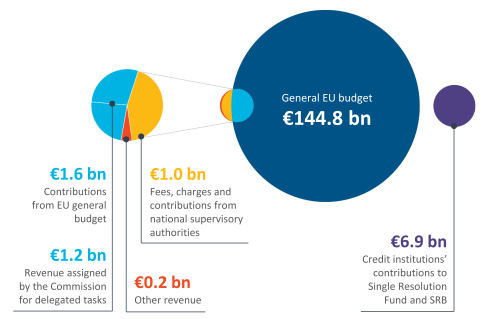
How are the EU agencies and other bodies financed?
Source: EU general budget 2018 and agencies’ budgets 2018, compiled by ECA.
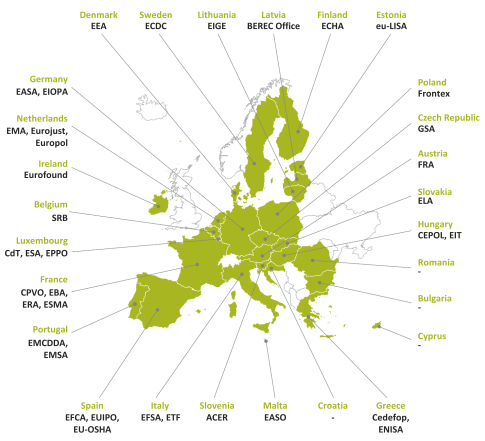
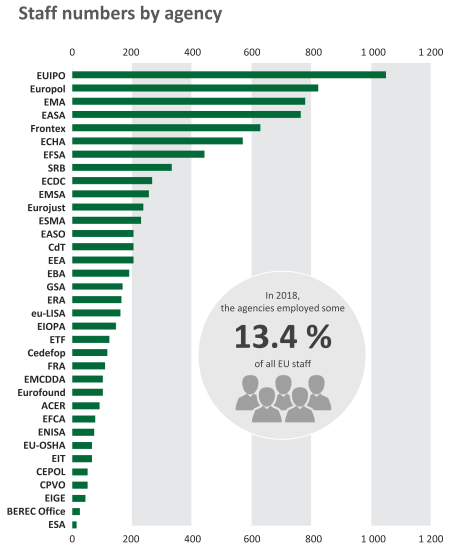
In 2018, the total budget of all agencies (excluding the SRB) came to €4.0 billion (2.8 % of the 2018 EU general budget) (see Figure 1). For the full names of all the agencies referred to in this report, see Annex I. The 2018 budget of the SRB, with its specific mandate to set up a resolution fund financed by credit institutions, was €6.9 billion (€0.1 billion for the administrative budget of the Board and €6.8 billion for the Fund)). In 2018, agencies were located in 23 Member States (see Figure 2) and employed 8 957 staff1 (13.4 % of all staff employed by EU institutions and agencies) (see Figure 3) from all the Member States.
Figure 2
Where are the EU agencies and other bodies located?
Source: ECA.
Figure 3
Who works for the EU agencies and other bodies?
Source: ECA.
The first agencies (Cedefop and Eurofound2) were created in 1975. Following the entry into force in 1987 of the Single European Act, which aimed at completing the internal market by 1992, several more agencies were set up in the nineties, but most were created during the first decade of the new millennium (see Figure 4).
Figure 4
How many EU agencies and other bodies are there?
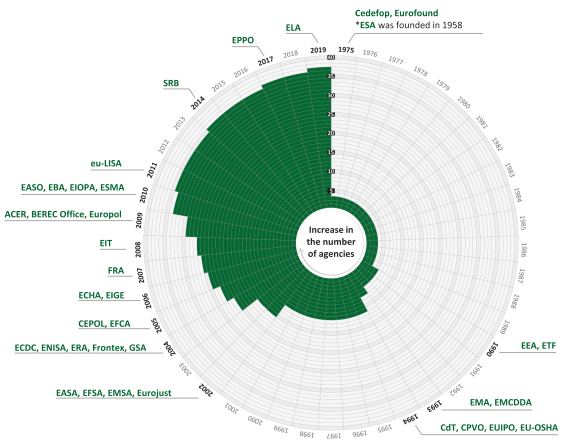
Note: The years mentioned in the figure refer to the year that the founding act of the agency came into force.
Source: ECA Annual Report on EU agencies for the financial year 2018.
Agencies were created as specific needs arose. A significant number of them were set up or received additional responsibilities in response to a crisis (e.g. EBA, EIOPA, ESMA and SRB in the financial sector; EASO and Frontex for migration issues and border control; EMSA and EFCA for maritime safety and fisheries control). Most agencies were set up as new bodies to take over responsibilities that were until then exerted by the Commission and/or the Member States. This was justified by the Commission because of the highly technical nature of the tasks concerned or a desire for efficiency: a specialised body may fulfil the same tasks in a more efficient or flexible way, and is also better able to attract competent specialised staff and build up expertise. Some agencies (e.g. Europol, EBA, EIOPA and ESMA) were successors to multinational bodies at European level.
06Agencies can be grouped in different ways, for example according to their main tasks and responsibilities:
- A first group of agencies support internal market, health and environmental objectives related to registrations, certifications and authorisations at EU level (e.g. CPVO, EASA, ECHA, ERA, EUIPO, EFSA and EMA);
- A second group, with mandates in the areas of security and justice have more operational responsibilities and help Member States by coordinating joint activities (e.g. CEPOL, EASO, Eurojust, Europol and Frontex);
- A third group have mainly rule-making and supervisory responsibilities (e.g. ACER, EBA, EIOPA and ESMA, which prepare technical standards for the energy and financial sector and ensure common supervisory practice across the EU);
- A final group are mainly concerned with research, data collection and analysis aimed at supporting EU institutions and Member States develop evidence-based policies (e.g. Cedefop, EIGE and FRA).
Shift from compliance to performance
07Each agency is set up through a separate and specific founding act. Given the specific activities of each agency, agencies differ in terms of governance model, financing sources, evaluation requirements, etc.
08In 2012, the Parliament, Council and Commission signed a Joint Statement on a Common Approach for agencies, which was a step to move from a finance and compliance-oriented to a more performance-oriented form of management. The Common Approach emphasised that agencies’ directors should be more clearly accountable for performance. It proposed inter alia a two-level governance structure when this promises more efficiency (management boards and executive boards), annual and multiannual work programmes, annual activity reports, performance indicators for agencies and their directors, the introduction of activity-based budgeting/management systems (ABB/ABM), periodic external evaluations, etc.
09In addition, the Commission has issued different tools to further develop a performance-oriented management and monitoring framework. These include a Framework Financial Regulation for agencies (2013, repealed and replaced in 2019); guidelines for drawing up single programming documents (SPDs), which combine an agency’s annual work programme with a rolling three-year work programme, and consolidated annual activity reports (CAARs) (2014 and revised in 2020), setting out the Commission’s latest framework for budget, planning, reporting, performance and governance for decentralised agencies; and the Better Regulation Guidelines and Better Regulation “toolbox” (2017).
10The EU Agencies Network (EUAN), which was set up by the agencies to enhance their visibility and identify possible synergies, also contributed to a more performance-oriented culture. In 2012, the EUAN set up the Performance Development Network (PDN), which actively facilitates the exchange of practices, cooperation on performance issues and, to some extent, service sharing where possible. The PDN has developed tools such as the Evaluation Handbook for Agencies (2018), a “Self-assessment toolbox for implementing performance/results based orientations” (2018) and a KPIs database (ongoing).
11The above-mentioned performance tools and measures have generated a growing trend in harmonisation and alignment among the growing number of agencies, although there is still a varying degree of implementation. At the same time, the tools and measures have also generated an abundance of information for each individual agency focused on its activities and output.
Audit scope and approach
12Our overall audit question is whether adequate conditions are in place to ensure the performance of agencies. In times of re-adjusting EU strategic priorities and scarce resources in the delivery of its policies in the interest of citizens, this report intends to raise a discussion of the EU’s future management of its agencies’ performance. We have focused on the following two criteria:
- The set-up, functioning, and possible winding-up of agencies (i.e. the life cycle of agencies) should be flexible to help implement EU policy and enhance European cooperation. This means that:
- Entrusting tasks to an agency should be the best option, compared to having them done either by the Commission itself or (under the subsidiarity principle) by the Member States.
- The relevance and coherence of existing agencies should be regularly evaluated in order to achieve possible synergies and economies of scale.
- Agencies need adequate human and financial resources to fulfil their mandates and accomplish all tasks.
- The planning process governing each agency’s work should be flexible enough to allow them to respond to rapidly changing environments.
- Agencies should fully exploit their potential as centres of expertise and networking to promote the sharing of expertise, to bring Member States together to achieve common interests and common policy objectives where possible, and to exercise a network function for enhanced cooperation with other European and international partners. This includes:
- a fit-for-purpose management structure;
- adequate accountability arrangements involving stakeholders;
- good communication with stakeholders and EU citizens;
- effective cooperation with other bodies at national, EU and international level, both public and private.
We derived our set of criteria from the agencies’ specific regulations, the Framework Financial Regulation, the Commission’s “better regulation” guidelines and toolbox3, the Joint Statement on the Common Approach and the “Roadmap on the follow-up of the Common Approach on EU decentralised agencies”, as well as other guidance provided by the EU Agencies Network.
14The audit was conducted between March and September 2019. It covers EU decentralised agencies and their partner directorates-general (DGs) at the Commission (see Annex II). We refer to Commission executive agencies only for comparative purposes, where appropriate.
15We collected audit evidence through:
- A review of key documents for all agencies (basic regulations, annual reports, programming documents, evaluation and audit reports, impact assessments, management board meeting minutes, etc.).
- More than 250 interviews with managers and key staff of 21 agencies and 10 Commission DGs, which are the partner DGs of 32 agencies.
- A survey of 2 500 agency stakeholders (see Annex III), including management board members, Member State officials, representatives of industry and consumer organisations, NGOs and academics. The list of stakeholders was provided by the agencies themselves, but we made the final selection, ensuring that all main groups of stakeholders were represented. We received 1 000 replies.
- An analysis using big data techniques of agencies’ media presence captured by Europe Media Monitor (EMM) between January 2018 and July 2019 (see Annex IV). The dataset contained more than 200 000 news articles mentioning the agencies from more than 5 000 different news sources in over 160 countries.
- Two roundtable discussions with academics and practitioners from the Commission, the Council and the Parliament. The discussions were organised in June and September 2019, with an open invitation sent to over 40 academics and practitioners with management experience or publications about EU agencies, fifteen of whom attended the discussions. DG Budget also participated as an observer in the first discussion.
Observations
The life cycle of agencies lacks flexibility
The Commission does not always clearly consider alternatives when proposing to set up an agency
16Before setting up a new agency, the Commission needs to assess whether this is the best option, compared with alternatives such as doing the tasks by itself, using intergovernmental cooperation, outsourcing to private entities or adjusting the mission of an existing agency. The best option should reflect the needs.
17Under the Commission’s “better regulation” policy4, an impact assessment is required for initiatives that are likely to have significant economic, environmental or social impacts (see Box 1). Before proposing to set up a new agency, the Commission should demonstrate the added value of this choice through an impact assessment. The Commission's Regulatory Scrutiny Board (RSB) scrutinises the quality of draft impact assessments; in principle, a positive RSB opinion is needed before an initiative is tabled for adoption by the College of Commissioners.
Box 1
The questions an impact assessment should answer:
- What is the problem, and why is it a problem?
- Why should the EU act?
- What should be achieved?
- What are the various options for achieving the objectives?
- What are their economic, social and environmental impacts, and who will be affected?
- How do the different options compare (effectiveness, efficiency and coherence)?
- How will monitoring and subsequent retrospective evaluation be organised?
Source: European Commission, Better Regulation Guidelines.
Since 2004, all Commission proposals for a new agency and other bodies including those for the most recent ones EPPO (2017) and ELA (2018), have been accompanied by an impact assessment. The RSB gave a positive opinion on EPPO, considering that it was needed and that its objectives and tasks had been clearly established. However, the RSB added a reservation to its positive opinion on the ELA impact assessment as it did not clearly address the coherence between ELA and the other agencies under the remit of DG EMPL (Cedefop, Eurofound, EU-OSHA and ETF), which has already been identified as an overlap by a recent external evaluation5.
19The creation of the SRB was preceded in 2012 by an impact assessment of the Bank Recovery and Resolution Directive. The assessment suggested setting up resolution colleges with the assistance of the EBA, but in the end a new agency was created to ensure effective and consistent functioning of the Single Resolution Mechanism and manage the Single Resolution Fund.
20The need for the autonomy and complex governance arrangements associated with an agency is not always obvious. The GSA in particular has very limited autonomy in practice, as its main task is to exploit the Galileo global satellite navigation system under a delegation agreement with the Commission (90 % of the agency’s budget). Several survey respondents stressed that the GSA management board’s decision-making powers are therefore limited. The GSA implements the delegation agreement through a number of complex contracts with industrial partners and public sector entities.
21Finally, we found examples of the political decision to set up a new agency being taken even before the Commission’s proposal and the impact assessment: FRA, EASO and ELA.
The relevance and coherence of existing agencies is insufficiently reassessed
22The rationale for an agency needs to be reassessed at different stages during its life in order to verify whether it is still necessary (relevant) and whether its actions are coherent vis-à-vis the actions of the other agencies and their partner DGs. Figure 5 illustrates the multiple relations between agencies and DGs. The reassessment can be done in different ways:
- through an independent evaluation of its performance;
- as part of a wider “fitness check” covering the entire policy area (see paragraph 27);
- through a fresh impact assessment when recasting an agency’s founding regulation or assigning it new tasks through a separate regulation.
Figure 5
EU agencies and other bodies, partner DGs and topics

Note: DG DEFIS is the partner DG of GSA from 1 January 2020.
Source: ECA compiled data based on the classification provided by the Commission’s website.
According to the Common Approach, the founding regulation of an agency should include either a “sunset clause” or a “review clause” mandating the Commission to propose amending or repealing the regulation when it considers that the agency is no longer justified with regard to its assigned objectives (see Box 2). Seven years after the Joint Statement on the Common Approach, only seven out of 37 agencies have a “sunset clause”, and 13 a “review clause”, in their founding regulations.
Box 2
The Common Approach on setting up and dissolving an agency
Paragraphs 2-5 of the Joint Statement stipulate that:
- “The decision to create a new agency should be based on objective impact assessment of all relevant options”.
- “Agencies’ founding acts should contain either a sunset or a review clause".
- “Common and objective criteria should be used to assess both the opportunity to disband or, the possibility to merge them:
- merging agencies should be considered in cases where their respective tasks are overlapping, synergies can be contemplated or the agencies would be more efficient if inserted in a bigger structure;
- closing down an agency could be a solution for dealing with underperforming agencies unless the agency is still the most relevant policy option, in which case the agency should be reformed.”
The founding regulations of 13 agencies were recast between 2015 and 2019, but only five proposals were accompanied by an impact assessment (BEREC Office, CEPOL, EASA, ENISA and ERA). In all five cases, the RSB finally gave a positive opinion, but added one or more reservations. Three other proposals were based on another recent impact assessment or fitness check (ACER, EFCA and EFSA). The five remaining proposals were not based on any impact assessment: four were considered technical reviews (Cedefop, Eurofound, EU-OSHA and Eurojust) and one was considered urgent (Frontex) which meant that there was not enough time to carry out an impact assessment.
25The founding regulations of three agencies under the remit of DG EMPL (Cedefop, Eurofound and EU-OSHA) were recently recast; in all cases the Commission submitted the recast proposals before receiving the final report of a joint evaluation of the agencies. Despite Parliament’s criticism concerning the absence of specific proposals to merge or co-locate agencies in related policy fields, the legislator adopted the recasts. Moreover, a new agency (ELA) was legally established in 2019.
26Over the years, none of the agencies were closed, merged or significantly changed in scope, except for the European Agency for Reconstruction, which was set up in 1999 and wound up in 2008. During the last ten years, the Commission has proposed on two occasions to merge agencies for reasons of coherence, but failed to obtain Parliament’s agreement (see Box 3). The situation for EU agencies stands in sharp contrast with the Commission executive agencies. When the Commission considers that an executive agency is no longer justified with a view to sound financial management, it can decide to wind it up. The Commission has periodically reshuffled the responsibilities of executive agencies in the past, most recently in 2013.
Box 3
Parliament rejected Commission proposals to integrate BEREC Office in ENISA and to merge CEPOL with Europol
In 2007, the Commission’s impact assessment accompanying the proposal for an Electronic Communications Market Authority (which became BEREC Office in 2009) suggested merging ENISA with the new authority, but the legislator opted instead to create a new separate body to co-exist with ENISA.
CEPOL provides online and classroom training sessions for police officers and is closely affiliated to Europol, the EU Agency for Law Enforcement Cooperation. In 2013, the Commission submitted a legislative package, based on an impact assessment, in which it proposed merging Europol and CEPOL for efficiency reasons. Parliament rejected the proposal.
The activities of an EU agency are sometimes also assessed as part of a wider fitness check covering the entire policy area. Between 2014 and 2019, the Commission carried out several fitness checks in areas such as chemicals, fisheries control and general food law. This led to the codification of the EFCA founding regulation and the amendment of the EFSA founding regulation.
28The Common Approach states that every EU agency should be evaluated every five years. The Commission should be responsible for organising the evaluation and for every second evaluation the sunset/review clause should be applied.
29The founding regulations of several agencies have not yet been aligned with the Common Approach (see Figure 6):
- The founding regulations of CPVO and CdT do not contain an evaluation requirement, whereas the latest recasts of the ACER, ERA, EUIPO and Europol regulations require these agencies to be evaluated for the first time as of 2020 (ERA), 2021 (EUIPO), 2022 (Europol) and 2024 (ACER).
- Although the Common Approach requires evaluation every five years, evaluation frequency ranges from three years (SRB) to 10 years (EMA). In some cases (EIGE, EASO and FRA) evaluation frequency is a matter for the management board. FRA's management board has decided on an evaluation frequency of five years. EIGE’s management board decided in 2019 to postpone the planned evaluation by two years, and to use the corresponding budget for other purposes.
- Some agencies (EIGE and FRA) or their management boards (EASO, ECDC and EFCA) still organise their own evaluations rather than having them steered by the Commission as prescribed by the Common Approach.
Figure 6
EU agencies and other bodies where the frequency of external evaluations is not five years
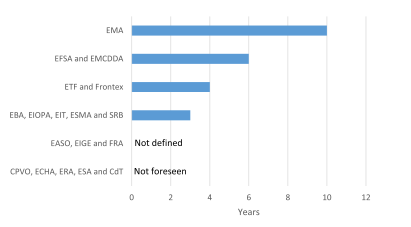
Source: ECA.
Plans to change an agency’s mandate are sometimes used to justify postponing an evaluation, reducing its scope or simply replacing it with a Commission impact assessment. EASA, for instance, limited the scope of its 2018 evaluation to the planning process, arguing that the Commission’s revision of its founding regulation included an impact assessment, although the founding regulation clearly stipulated a full evaluation.
31With the exception of the agencies under the remit of DG EMPL and the European supervisory authorities, the performance of each agency is evaluated individually. Where several agencies work in the same policy area, an alternative approach would be to use cross-cutting performance evaluations (or fitness checks) to assess the coherence and relevance of their activities and their contributions to policy implementation. The USA and Australia follow this practice (see Annex V).
32In the area of research, the Commission has never comprehensively assessed the coherence of the EIT with the executive agencies operating under Horizon 2020, which provide research grants. The executive agencies are evaluated separately and more frequently (every three years).
Agencies are exposed to risks of inadequate human and financial resources
33Adequate human and financial resourcing is indispensable for any entity to achieve its objectives. Most agencies are mainly financed from the EU budget. Eight agencies (EUIPO, CPVO, CdT, EMA, EASA, ECHA, ESMA and, since 2019, ERA) are fully or partially financed by fees or prices charged for the services they provide. The SRB is fully financed by contributions from industry, while the EBA, EIOPA and ESMA are partially financed by contributions from national competent authorities. Box 4 explains the decision-making on the annual budget and the establishment plan of the agencies.
Box 4
Agency budgets and establishment plans
- For all agencies except the three fully self-financed agencies (EUIPO, CPVO and SRB):
The Commission subsidy to the agency is part of the general budget of the EU, and is therefore proposed by the Commission and adopted by the budgetary authority (the European Parliament and the Council). The Commission also proposes, and the budgetary authority (i.e. the European Parliament and the Council) adopts, the establishment plan of each agency for the coming year.
In addition, each agency’s management board (or its equivalent) adopts both the agency’s budget (statement of expenditure and revenue) and its establishment plan. - The budgets and establishment plans of the three fully self-financed agencies are approved by the management board (or its equivalent) or the budget committee of the respective agency, on a proposal of the Executive Director or the President/Chair.
During the last decade, many agencies have received additional tasks from the legislator or the Commission through a variety of instruments:
- a revision of their founding regulations;
- the adoption of new legislation (e.g. ACER, ECHA, EMA, eu-LISA, Frontex);
- signature by the agency of service-level agreements or delegation agreements with the Commission (EEA, Frontex, Europol, EASO, etc.).
We found that, when the Commission assigns new tasks to agencies, it usually proposes only limited additional human resources. Exceptions are Frontex and, to a lesser extent, EASO, which are operating in priority areas. Moreover, a 2013 interinstitutional agreement brought in a generally applicable 5 % staff reduction for all EU institutions and agencies over five years. As newly created agencies were not affected and existing agencies were permitted to receive additional posts for new tasks, the total number of posts in agencies nevertheless increased by 13.7 % between 2013 and 20176.
36The revenue of most partially self-financing agencies (EMA, EASA, etc.) will usually grow in proportion to their workload, but their staff numbers are controlled by the Commission and do not necessarily follow. For instance, EMA’s fee-related workload increased by 31 % from 2014 to 2018, but its staff numbers decreased7. ECHA faces particular challenges because it has no recurrent revenue and its fee income is difficult to forecast.
37Even where posts are available, several agencies have had problems recruiting and retaining staff. Frontex recently received a large number of new posts, but has been struggling to recruit all the necessary personnel and recorded high vacancy rates in 2018 and 2019. EASO has always had difficulty attracting staff, and its vacancy rates are consistently high. GSA is struggling to recruit staff with the necessary technical expertise. Lower remuneration packages in certain Member States are a particular obstacle to recruitment.
38Our survey of stakeholders showed a clear link between adequate resources and the performance of agencies. Almost half of the respondents disagreed with the statement “The agency has sufficient human resources”, but we noted big differences between agencies. More than 75 % of ACER and ENISA stakeholders disagreed or strongly disagreed, versus less than 25 % of SRB, EUIPO, Frontex and EFCA stakeholders. While a majority of respondents think that most agencies have successfully fulfilled their mandate, the opinions were clearly split for four agencies where we identified resource shortages (ACER and ENISA) or recruitment difficulties (EASO and Frontex) (see the detailed survey results in Annex III).
39To compensate for a shortage of posts or national experts, the agencies are increasingly outsourcing core tasks to private contractors, on whom they may then become dependent. All in all, the agencies employed some 1 500 IT consultants and interim staff in 2018. This involves risk if there are too few qualified staff to supervise the work of contractors. Examples are EASO, eu-LISA, EMA and GSA. Given the complex legal framework for the use of external staff, which varies to some degree between different Member States, there are also risks in terms of litigation and reputational damage. We noted these risks at BEREC Office, CPVO, EASO, ESMA, EUIPO, the EBA, EIOPA, EIGE, EMCDDA and the SRB8.
Box 5
Examples of agencies that are dependent on external contractors for critical functions
EASO depends on the cooperation of Member States and the secondment of national experts. As few national experts are made available, interim staff accounted for 43 % of all experts deployed in Greece in 2018, and 59 % of those in Italy.
eu-LISA outsources most work on sensitive IT projects that are part of its core business to a limited number of contractors.
EMA was tasked by Parliament and the Council with implementing two new regulations requiring the development and roll-out of two pan-European IT systems. Because of a shortage of internal experts, the agency used consultants, thus forfeiting full control over project development and implementation.
Following a call for competitive dialogue, in 2016 GSA awarded the contract for Galileo operations and services to the same private joint venture which had been providing them since 2010 under an agreement with European Space Agency. The current contract could run until as late as 2026.
In recent years, the management boards of some agencies have highlighted the risks of limited resources. For example, in 2019 the Europol board reported that the estimated annual budget of €123.7 million per year until 2027 “[…] is insufficient for Europol to fully perform its mission, in particular with regards to the necessary information management developments and the provision of continued high quality operational support to Member States”9. Other examples include ACER, EEA and EMA (see Box 6).
Box 6
Resource shortages at ACER lead to a restrictive interpretation of its mandate
In its consolidated annual activity report (CAAR) for 2018, ACER published a long list of tasks that it had deprioritised owing to employee shortages. The agency stressed that it had insufficient market surveillance staff to properly discharge its mandate (in particular monitoring of the wholesale market under REMIT).
Our stakeholder survey confirmed that ACER had lowered the bar in its surveillance of energy markets.
The annual planning process is long and does not suit rapidly changing environments
41In line with Commission instructions, the agencies produce annual single programming documents (SPDs), which combine an annual work programme with a three-year rolling plan. Each SPD is prepared under the responsibility of the agency executive director and adopted by the management board, account being taken of comments received from the Commission. In addition, many agencies still plan strategically for a longer (often five-year) period, as required by their basic regulation.
Box 7
Frontex faces a recurrently low implementation of budget for return operations
More than 10 % of Frontex’s budget is earmarked for migrant return operations (€53.8 million in 2018). From 2016 to 2018, the planned budget was consistently more than was needed. The number of actual returns (200 000) has constantly lagged behind the number of return decisions (500 000). Member States also have the option of implementing returns at national level with financial support from the Asylum, Migration and Integration Fund (AMIF), which is managed by Frontex’s partner DG HOME.
The difference between Frontex’s total initial budget and actual spending was 10.3 % in 2016, 8.9 % in 2017 and 11.3 % in 2018.
The annual planning cycle leading to adoption of the SPD is very long, with the first version drafted some 18 months before the start of the planning period. It is particularly challenging for agencies operating in a very volatile environment (such as EASO, Frontex and the SRB) (Box 7) to plan their budget and operations so far ahead. Certain other agencies (such as eu-LISA) face similar problems owing to legal uncertainties when new legislation grants them additional tasks (Box 8). Despite these particular cases, all agencies can benefit from a shorter planning cycle.
Box 8
eu-LISA: a case study on the challenges of a new agency
In 2011, eu-LISA was created and made responsible for the operational management of large-scale IT systems in the area of freedom, security and justice. In the ensuing years, eu-LISA has been entrusted with an ever-increasing number of large-scale IT systems, under the objective of exploiting synergies between the various systems.
As the regulations set short deadlines for systems to become operational, eu-LISA needs to start preparing well before their adoption. As adoption is often delayed, however, some budgets have been made available even before finalisation of the corresponding legal basis. This complicates eu-LISA’s planning, particularly because the Commission requires all agencies to submit their draft SPDs in January of the year before the start of the planning period, and necessitates creative budgetary solutions.
The annual and multiannual planning and budget cycles usually take each agency’s previous year’s tasks, budget and resources as a starting point. Traditionally, there has been only a limited reassessment of the annual needs and potential savings. Agencies have not been obliged to re-justify thoroughly the resources needed for each of the planned activities. The Commission expects that use of the SPD as set out in the new Framework Financial Regulation and a related Commission communication from April 2020 will allow a more thorough review of evolving needs. This should then also feed into the needs assessment (increase/decrease and/or redeployment of resources) in preparation for a future multiannual financial framework (MFF). As these developments partly occurred after the completion of our audit work and the likely impact will only become evident as from 2021, we have not assessed whether the new framework has already improved and strengthened the assessment of the agencies’ annual budgetary needs.
The potential of agencies as centres for sharing expertise and networking is not fully exploited
The composition of management boards does not always allow efficient decision-making
44Whereas executive agencies are led by a leaner steering committee, usually consisting of five members representing Commission DGs, agencies have many management board members representing a variety of interests – often including, inter alia, Member States, the Commission, civil society and industry. Their more complex governance structure is aimed at bringing together different interests and finding common ground for an “EU” solution. In this sense, agencies can act like centres of expertise and networking.
45An agency’s management board is its highest internal governance body (although the exact term – “board of supervisors”, “administrative committee”, etc. – may vary from one agency to another). It has a supervisory role with general responsibility for strategy, budgetary and planning matters, the appointment of an executive director and monitoring of the agency's performance.
46Member States can considerably influence the strategy and operations of an agency through their majority on the management board. In particular, if operational and political needs require Member States to cooperate closely in politically sensitive areas, there is some incentive for the Council to transfer competence to an EU agency rather than to the Commission. The board members representing the Member States in the management board do not have a mandate to commit their governments and therefore cannot guarantee the cooperation of their Member States in implementing the decisions taken by the agencies (see also paragraphs 71-74).
47The management boards of most agencies consist of one representative per Member State plus one or more members from the Commission. Seven management boards also include voting members appointed by the Parliament: ACER, ECDC, ECHA, EEA, EMA, EMCDDA and EUIPO.
48Most management boards therefore have 30-35 members, as illustrated in Figure 7. The agencies under the remit of DG EMPL (Cedefop, Eurofound and EU-OSHA) are “tripartite” – each Member State sends one representative of an employers’ organisation, one of a workers’ organisation and one government official. They and the CdT have up to 90 members, making decision-taking difficult and generating considerable administrative costs. EIGE, EIT and (until 2021) EFSA have fewer management board members. The degree of involvement of individual board members at most agencies also varies widely.
Figure 7
Voting members of management boards.
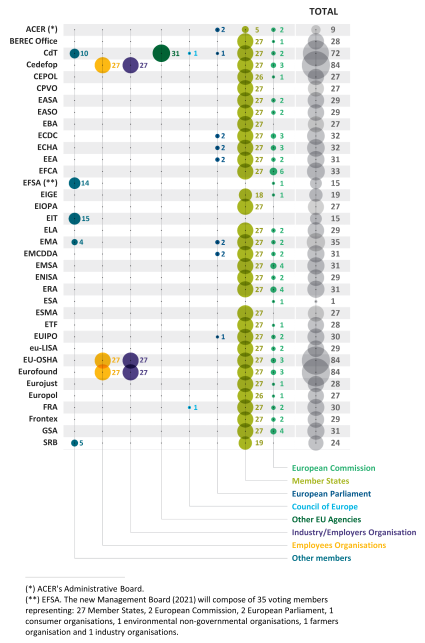
Source: ECA.
As we have pointed out in previous special reports10, while the composition of management boards ensures national views are taken into account, it can also hamper an EU-wide perspective in the agencies’ decision-making (Box 9). However, the Commission’s influence goes in practice far beyond its voting rights, as it is responsible for proposing the budgets and staffing plans of all agencies except those which are fully financed from fees.
Box 9
The Board of Supervisors of the EBA, EIOPA and ESMA
The highest decision-making body of the three European supervisory authorities (ESAs) is the Board of Supervisors. It is composed of the heads of the national competent authorities supervising the financial institutions in each Member State, plus one non-voting representative each from the ECB (for the EBA), the two other ESAs, the Commission and the ESRB.
This composition stimulates cooperation between the European and national supervisors and therefore seems appropriate to deal with the ESAs’ rulemaking responsibilities, but less so for their supervisory roles. The ESAs also have to ensure the consistent application of legally binding EU acts and, where necessary, trigger a breach of Union law procedure (Article 17 EBA Regulation). This mechanism is in practice very rarely used due to national supervisors’ reluctance to sanction their peers. Several survey respondents pointed out that the failure of the breach of law procedure was clearly illustrated by the EBA’s non-adoption of a recommendation in the Danish-Estonian money laundering case.
Budgetary authorities hold agencies accountable for finance and compliance matters, but performance is a secondary concern
50The EU’s budgetary authority (Parliament and Council) is responsible for granting most agencies annual discharge for their accounts. It traditionally focuses on financial and compliance issues and pays only limited attention to the agencies’ performance.
51The Parliament’s sectoral policy committees supervise the operations of the agencies at a high level, mainly through hearings of their executive directors and discussion of their annual reports. The sectoral policy committees also send short opinions to the Budgetary Control Committee as input for the discharge procedure, but the actual collection and analysis of performance information is very limited and concerns only individual agencies.
52The Council and its working parties mainly hold the partner DGs accountable for the agencies’ performance.
Figure 8
Main actors and key documents in the annual performance cycle
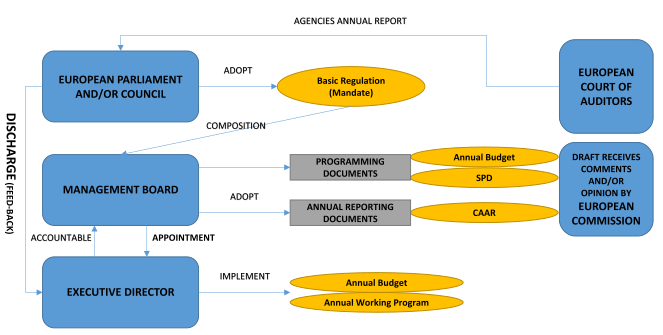
Source: ECA.
Public control over the fully self-financed agencies (EUIPO, CPVO and SRB – the SRB also manages the Single Resolution Fund, which received €7.8 billion in contributions raising its total assets to €33 billion at the end of 2019) is even more limited. Although they discharge a public mandate entrusted to them by EU legislation, these agencies are mainly accountable towards their own members11, who grant them annual discharge, and only informally towards the European Parliament. Moreover, EUIPO in particular has accumulated large surpluses, as its revenue from fees and charges has frequently exceeded its expenditure. We commented on these aspects in opinions we issued in 2019 on the proposals for the financial regulations of CPVO and EUIPO12. Other jurisdictions operate differently to the EU (see Figure 8). For example, the US Congress is the discharge authority for all US self-financing agencies.
Agencies report more on performance aspects, but their contribution to EU policy and cooperation is not clearly measured and communicated to citizens
Agencies regularly provide performance information, but this information is not always relevant
54Agency stakeholders need both qualitative and quantitative performance information, and receive this through the consolidated annual activity report (CAAR) and other documents. As well as reporting annually, many agencies (e.g. EUIPO, ETF, EFSA) produce more regular information in the form of dashboards, quarterly reports, etc. Some of these are for internal use only, but others are published.
55Most agencies have introduced activity-based budgeting, meaning that they allocate resources and/or costs by activity, and a few (EASA, ESMA, ETF, EUIPO, eu-LISA) have made significant progress towards activity-based management, which entails regularly updating scoreboards combining budgetary and performance information (see Annex VI). While EASA and ESMA have fully calculated the cost of the services underlying the fees they charge, the fees of other agencies are laid down in their regulations.
56Agencies also measure performance through key performance indicators (KPIs). In 2015, the Commission issued guidelines on KPIs for directors of agencies13. The indicators used in practice mainly relate to the implementation of an agency’s annual work programme and budget and its human resources management, but they do not allow usually for the assessment of results or of the agency’s efficiency and effectiveness in discharging its mandate.
57Most agencies have also developed operational objectives and associated performance indicators and targets. Most of these indicators measure output rather than results or impact. Several agencies (EASO, EMSA, EFSA, Frontex, etc.) report on more than 100 indicators, many of which are very detailed and specific and give no information about overall performance. The link with policy objectives is often not clearly established in either the SPD or the CAAR.
58A number of more operational and/or business-oriented agencies have more useful indicators, measuring their contribution to the implementation of EU policies. eu-LISA, for example, has result indicators for the availability and response time of its large-scale IT systems. EASA is one of the few agencies with a clear impact indicator: the number of deaths in plane crashes in the EU. EUIPO has indicators assessing the timeliness, quality, and accessibility of the services provided.
59Comparison between years is often difficult, as indicators may change from one year to another and few CAARs mention previous years’ results. At best, output is compared against the agency’s own target in the SPD.
60As the agencies’ activities are so diverse, it is not possible to compare their performance and KPIs. It is also very difficult to compare dissimilar agencies by efficiency. None of the agencies’ reports includes a comparison with similar national or international bodies.
61In our 2019 review14, we found that some agencies also collect information on sustainability, but this information is often piecemeal and incomplete. Sustainability reporting is the practice of measuring, disclosing and being accountable to internal and external stakeholders for organisational performance towards the goal of sustainable development. We found that only one agency, EUIPO, publishes a report of this kind.
There is limited awareness and follow-up in the media about the contribution of agencies to policy and cooperation
62EU agencies have a significant influence on policy and decision-making in areas of vital importance to EU citizens’ daily life. They can also act as frontrunners to solve crisis situations or long-term societal challenges. Apart from agencies’ own limited reporting on performance, the media visibility of agencies’ contribution – positive or negative – is also limited. Very few of the news articles in our data analysis contained any qualitative information on the contribution of agencies to EU policy and cooperation, or their influence on decision-making on behalf of the Member States, industry and the citizens.
63Between January 2018 and July 2019, the main agencies in the news were Europol and Frontex, which featured in more than 40 % of all the articles we analysed (Figure 9). They were followed by EFSA, EASA, EMA and ECDC. Together, these six agencies accounted for two thirds of the articles. They all deal with issues of security and/or safety, which attract most public attention. Some agencies (such as EMA) appeared more or less constantly over the period, while coverage of others was more concentrated and linked to specific incidents and events (see Figure 3 and Figure 4 in Annex IV). For example, the Boeing 737 MAX crashes exponentially increased media exposure of EASA, the glyphosate crisis increased coverage of EFSA, and EUIPO received attention following the Adidas trademark judgment.
Figure 9
News articles grouped by EU agency or other body

Source: Compiled by ECA based on aggregated data in EMM, January 2018 to July 2019.
ECDC published the largest number of news articles about its own activities, followed by EMA and EMSA. The tasks of these three agencies include disseminating public health and safety information. Most other agencies were rarely in the news, even where awareness-raising is part of their mandate. Unlike the agencies dealing with security and border protection (Frontex, Europol), EASO which supports Member states on asylum had a lower presence in the news articles covered by the EMM.
Cooperation between agencies and other national, EU and international bodies generally works well, with some exceptions
The survey results show that some agencies need to improve cooperation
65A majority (80 %) of the stakeholders we surveyed consider that cooperation between agencies and their partners at national, EU or international level generally works well. However, there are clear differences between individual agencies. One third of the respondents think that significant improvements are needed, for example in the following agencies’ relations with some of their partners:
- ENISA and GSA with Member States, other agencies and internationally,
- ERA with the Commission and Member States,
- EMA with the Commission,
- EASA with Member States.
Agencies work closely with Commission partner DGs but have limited involvement in budget negotiations and the revision of legislation
66Most agencies do not have decision-making powers (see Box 10), but some (such as ECDC, ECHA, EFSA, EMA and ERA) produce scientific opinions, which are the basis for Commission decisions. A small number of agencies (e.g. ACER, CPVO, EASA, EUIPO and, in some areas, ECHA) are empowered to take decisions.
Box 10
The Meroni doctrine and the delegation of powers to agencies
The Meroni case-law15 limits the EU’s delegation of powers to an EU agency to clearly defined executive powers which must be entirely supervised by the delegating authority. Furthermore, delegation must be by an “express decision” and necessary for the performance of tasks set out under the Treaties. It cannot involve “discretionary” powers to such an extent as to allow the execution of actual economic policy implying a wide margin of discretion, which brings about an actual transfer of responsibility.
Most agencies do not have discretionary decision-making powers. In the area of health, for instance, the agencies (such as EMA and EFSA) assess risk but risk management is a matter for the Commission, which usually takes formal authorisation decisions.
In recent years, the Meroni doctrine has been clarified, allowing the delegation of some precisely delineated regulatory or intervention powers that are amenable to judicial review. Some agencies with a role in regulating the single market, such as EASA, EUIPO and ESMA, are empowered to take certain decisions based on technical assessments and criteria (specified in legislative, delegated and regulatory acts) without formal approval by the Commission16.
The Commission supervises the activities of the agencies through its presence on management boards, its involvement in the programming and planning cycle (it issues formal opinions on the draft SPDs) and a large number of more regular contacts between partner DGs and “their” agencies. The Commission’s Internal Audit Service (IAS) is the statutory internal auditor of all agencies, except those that are self-financed17. The IAS audits selected topics relevant to these agencies based on individual, multiannual and risk-based strategic audit plans, and reports to the respective executive directors and management boards.
68The involvement of the agencies in the revision of their founding regulations and other key legislation in their area of operation is generally limited. As a result, the Commission does not always make the best use of their knowledge when drafting new legislative proposals.
69The partner DGs negotiate their agencies’ staffing plans and EU contributions with DG BUDG before they are included in the Commission’s draft budget proposal to Parliament and the Council. Agencies do not tend to have direct contact with DG BUDG and receive scant information about the progress of budget negotiations, which can hinder their operational planning.
70Some agencies are chronically under-resourced, whilst others are unable to absorb their budget under the annual programming cycle. For example, based on a political agreement, Frontex received considerable additional resources as from 2017. We found no evidence showing how Frontex’s additional budget and staff needs were established. In the case of EU-OSHA, we outlined previously a tendency of recurring carry overs of a significant percentage of the budget from one financial year to the next18. We note that, in the case of EU-OSHA, cancellation rates for carryovers have been low so far. However, high carryovers in general entail risks in the sound financial management of resources.
Cooperation with Member States is crucial, but does not always run smoothly
71Member States play an active role in the implementation of most agencies’ work programmes. For example:
- Frontex, EASO and eu-LISA provide active support to the Member States which are the main entry points for migrants and asylum seekers into the EU.
- eu-LISA operates the central component of a series of large-scale IT systems in the area of freedom, security and justice, which are connected to national systems19.
- Many agencies, such as EEA, EFSA, EMCDDA, EUIPO and EU-OSHA, work closely with EU expert networks and/or national focal points, which help to implement their work programmes.
- Many agencies (such as CPVO, ECHA (see Box 11), EMA, EFSA and, to a lesser extent, EASA) undertake their scientific tasks in cooperation with Member States.
Box 11
After more than a decade, ECHA is still operating in a context of limited powers
ECHA has faced a number of challenges to fulfil its mandate to promote the use of safe chemicals.
- The registration system is based on industry submissions (see Box 14).
- During the first decade of its existence (2008-2017), ECHA prioritised registration over analysis of the data provided about the declared chemical substances. As many substances have not yet been evaluated in detail, it is still unclear whether they are harmful or not. ECHA’s strategic plan for 2019-2023 offers a new and more ambitious approach to identifying substances that need to be regulated.
- A recent judgment by the CJEU General Court20 annulled a Commission decision authorising the use of a certain substance on the basis of an opinion from ECHA’s scientific committees, on the grounds that there had been insufficient analysis of less harmful alternatives.
- Member States have exclusive competence for enforcing the obligation on companies to register chemicals with ECHA under the REACH Regulation. ECHA has only a coordinating role.
- ECHA’s annual targets for opinions on the approval of active substances in biocides are missed year after year because Member States delay the delivery of their assessment reports.
- The financial and administrative framework in which ECHA operates is more complex than for other agencies, as ECHA has three separate budgets (and staffing plans) under three different regulations, each with a different partner DG. This further limits ECHA’s flexibility to deal with fluctuations in workload.
By assigning responsibilities to an EU agency, Member States retain most control over decision-making while reinforcing European cooperation (see Box 12). In many areas, therefore, agencies play more of a “soft” coordination role, leaving considerable discretionary power to the Member States.
Box 12
Border control and asylum: a tale of two stories21
Frontex and EASO depend heavily on the provision of human (and, for Frontex, technical) resources by Member States. Both agencies struggle to obtain these resources, but Frontex seems to be relatively more successful in this respect.
We showed in our special report 6/2017: “EU response to the refugee crisis: the ‘hotspot’ approach” that EASO needs Member State personnel22 (mainly asylum experts and interpreters), as well as contract staff, to meet its sensitive core function of providing support to Member States. One major obstacle to operational efficiency is the very short deployment period (six to eight weeks) of Member State experts. In 2018, EASO managed two major support operations (in Greece and Italy) involving 478 experts from Member States and associate countries, and 464 contract staff.
In reaction to the unexpected increase in migration flows in 2015, the Commission submitted a proposal to amend the EASO and Frontex regulations in order to increase and better coordinate the support available to front-line Member States. The legislative package for Frontex was adopted in less than a year (and a second package once again expanding Frontex’s responsibilities was adopted in 2019), but there is still no agreement on the Commission proposal to establish an EU asylum authority.
In some areas, Member State bodies continue to function in parallel. For example, companies can choose between applying to protect a trademark or design with national offices (for national protection only) or EUIPO (EU-wide protection). In the health field, Member State authorities may carry out their own risk assessments in areas where the agencies operate (ECDC for disease prevention and control, EFSA for food safety), with no obligation to coordinate their work with the agencies. Legislation has been brought to mitigate this risk by means of information-exchange mechanisms.
74When Member States hold discussions in the Council that involve the expertise of agencies, the agencies themselves generally do not participate but are represented by the Commission.
Potential for closer cooperation between agencies in the same policy area
75Several agencies are active in the same policy area. We identified some overlap between the mandates and/or activities of the following agencies:
- EIGE and FRA (both active in the area of women’s rights);
- EASO and Frontex (both provide cultural mediators to support Member States confronted with large inflows of migrants);
- the agencies under the remit of DG EMPL (Cedefop, Eurofound, EU-OSHA and ELA).
Inter-agency cooperation is especially close in the area of migration. EASO, Frontex, Europol and FRA work together at the “hotspots” in Italy and Greece. In the field of Justice and Home Affairs (JHA), there are regular meetings between nine agencies (CEPOL, EASO, Frontex, EIGE, EMCDDA, eu-LISA, Eurojust, Europol and FRA) and their two partner DGs (HOME and JUST) in the framework of the JHA Agencies Network. Two other agencies, EFCA and EMSA, cooperate with Frontex on coast guard matters. DG SANTE has held regular inter-agency meetings since 2019. As provided in their founding regulations, EBA, EIOPA and ESMA work together within the Joint Committee of the European Supervisory Authorities. In other areas, cooperation is more ad hoc.
77Cooperation between agencies is often formalised in a bilateral “working arrangement” or “memorandum of understanding” (see Box 13). It may also be facilitated by the presence of representatives of other agencies (often as observers) on the management board. For example, the three European supervisory authorities have a seat on each other’s management boards – though they do not always attend. EUIPO and CPVO are also represented on each other’s boards as observers. The Translation Centre has concluded an arrangement with all EU agencies, joint undertakings and EU institutions, all of which are entitled to be represented on the Centre's Management Board.
Box 13
ECHA and EFSA – similar work, not enough cooperation
ECHA and EFSA often deal with the same substances, but there is little information exchange between the two agencies. The systems used by companies to register chemicals with ECHA and submit information electronically are not linked or connected with the EFSA systems.
At EFSA, the procedures for submitting applications and the required information vary widely. There are specific rules in each area for drawing up applications. EFSA has developed guidance documents to help with applications, but there is little cooperation with ECHA in this regard.
In 2017, the two agencies signed a new memorandum of understanding (replacing the previous one, from 2009) on closer cooperation between them.
The agencies also cooperate closely through the EU Agencies Network (EUAN), which was set up to enhance their visibility and identify and promote possible efficiency gains. Its priorities are agreed by the agencies in the form of a five-year strategy and annual work programmes. One important role it has is to ensure efficient communication between agencies and their stakeholders, mainly the EU institutions. Nine sub-networks give shape to its members’ action and interaction and result in tangible deliverables that benefit the EU and its citizens. However, the EUAN does not have any executive power, not all agencies participate in all sub-networks, and cooperation focuses mainly on administrative rather than operational matters.
79One agency, the Translation Centre for the Bodies of the European Union (CdT), has inter-agency cooperation as its rationale. However, not all agencies are obliged by their founding regulations to make use of CdT’s services. There also is some confusion as to the type of services for which the other agencies must or can use CdT. One agency has even developed its own system for dealing with linguistic matters in-house (translation memories), while others may use private external translation providers. In our 2017 annual report on the agencies, we gave our view that CdT’s capacity is not being used to the full, that systems development and running costs are being duplicated and that CdT’s business model and continuity could be at risk.
Some agencies depend on cooperation with industry
80Some agencies also depend on the cooperation of the industry they are supposed to regulate. ECHA’s chemicals registration task, for instance, relies on industry submissions (see Box 14). The regulatory framework provides only limited incentives to ensure that the information provided is reliable and regularly updated.
Box 14
ECHA’s experience shows the weaknesses of a system based on industry submissions
- ECHA is responsible for the mandatory registration or authorisation of chemicals in the EU, based on submissions by industry23. After ECHA staff have made formal completeness checks of the information provided in a self-declaration, the company receives a REACH registration number allowing it to market its chemicals. It can keep this registration number even if it is subsequently shown to have provided incorrect or incomplete information. This arrangement reduces the company’s incentive to provide updates or additional information. A recent study24 has shown that at least 30 % of all registrations could be non-compliant.
- A Commission staff working document on the REACH evaluation stated that “the lack of compliance of companies with their registration obligations is hampering the identification of substances of concern and the consequent ability of authorities to protect the public and the environment”. ECHA and the Commission have adopted a joint action plan to address the lack of compliance in registration files. Content checks will be stepped up and the focus will be shifted towards substance analysis.
Agencies’ outreach efforts at international level remain limited
81Under the Treaty, agencies cannot enter into international agreements that bind the EU (Article 218 TFEU). However, they can enter into cooperation agreements with international counterparts when (1) this is explicitly foreseen in their establishing act, (2) the cooperation agreement does not create binding obligations and (3) they have (de facto or de jure) the approval of their partner DGs25.
82By the nature of their activities, many agencies need to interact with international partners, and their activities have international repercussions. Many agencies also have counterparts in non-EU countries, with similar roles. The Commission, in collaboration with the European External Action Service, establishes “working arrangements” with the agencies to organise their relations with non-EU bodies or countries.
83Agencies working in the area of Justice and Home Affairs (particularly Europol, Eurojust and Frontex) are fully integrated in the external dimension of the Area of Freedom, Security and Justice (AFSJ) and are amongst the internationally most active agencies, having also concluded a series of cooperation agreements with non-EU countries. As examples for other policy areas, EFSA and EMA have established an important international role. Their opinions are crucial for health safety inside and outside the EU. In the aviation sector, EASA is also regularly active in this domain. However, there is no evidence that, overall, the agencies’ potential to support the Commission internationally, particularly on technical matters and the exchange of information, is fully exploited.
Conclusions and recommendations
84We conclude that agencies are playing an increasingly important role in the delivery of EU policies and that the conditions in place have supported their performance. Nevertheless, while acknowledging the responsibility of the legislator, we consider that there is not sufficient flexibility in the set-up and operation of agencies and that the potential for them to cooperate for common policy objectives in the interest of citizens could be further exploited.
85The flexibility of agencies to meet changing policy needs is reflected in their life cycle: their creation, evolution, and potential winding-up. We observe that when the Commission proposes to set up a new agency, it does not always clearly consider the alternatives, including the option of the Commission carrying out the tasks envisaged, the option of intergovernmental cooperation or the option of adjusting the mission of an existing EU agency. Once an agency is operational, its coherence vis-à-vis the other agencies and partner DGs, particularly in the same policy area, is insufficiently assessed over time to allow for adjustment (paragraphs 16-32).
Recommendation 1 – Ensure the relevance, coherence and flexibility of the set-up of agenciesThe Commission should:
- increase the use of cross-cutting evaluations of agencies in the context of the Commission’s fitness checks of the different policy areas. Evaluation results should be used to identify synergies and possible changes, including mergers, and, where appropriate, to prepare legislative proposals in response to changing needs;
- prepare any proposals for new agencies in line with the Better Regulation Agenda, including the consultations provided for therein. The Commission should demonstrate the relevance and coherence of proposed new bodies vis-à-vis existing bodies, taking into account any reservations expressed by the Regulatory Scrutiny Board.
Timeframe for recommendation 1(a): by 2024 in order to feed into the next legislative proposals for the post-2027 MFF.
Timeframe for recommendation 1(b): for any new proposals from September 2020.
86Being flexible also entails that agencies receive adequate resources according to their changing needs. We observe that the agencies especially suffer from limited flexibility in resources, in part because their planning cycle is strictly attached to the EU budgetary procedures. Traditionally, agencies have planned their resources incrementally, based on previous years, even when the environment and the policy require a more thorough review of certain activities (paragraphs 33-43).
Recommendation 2 – Allocate resources to agencies in a more flexible mannerThe agencies should:
- more thoroughly justify their need for resources before each new MFF period, making effective use of their single programming documents and taking account of priorities, possible synergies and economies of scale.
- assess and compare, before each MFF period the requests for resources from all agencies, and propose to allocate resources (increase, decrease and/or redeploy) to agencies by focusing on the priorities and the most pressing needs;
- timely review agencies’ requests to align resources with evolving needs to allow greater flexibility in budgetary planning.
The Commission should:
Timeframe: by 2024.
87EU agencies play an important role in bringing together different interests from Member States to reach common policy solutions for the EU. However, the size of their management boards and discrepancies in the understanding of the role of management board members may hamper efficient decision-making (paragraphs 44-49).
88Agencies’ performance information has, in practice, not been sufficiently linked to their contribution to policy, making it difficult to hold the decision-makers accountable. The new Framework Financial Regulation introduces this link, but its impact is yet to be seen (paragraphs 50-53). Overall, citizens receive little information about the benefits of the agencies (paragraphs 54-64).
Recommendation 3 – Improve governance and reporting on performanceThe agencies should:
- improve the way they report on performance in practice by linking more clearly their performance with their contribution to EU policies.
- monitor the implementation of the revised Commission guidelines (C (2020)2297) on the performance information to be provided by agencies for external scrutiny by the European Parliament, the Council and EU citizens, thereby shifting the focus from reporting on output and activities to contributions to EU policy;
- propose that the legislator review the size of management boards where needed to improve the efficiency of the decision-making process.
The Commission should:
Timeframe for recommendations 3(a) and (b): from 2021.
Timeframe for recommendation 3(c): from September 2020 for new proposals.
89The EU agencies have a network function to share expertise and build up cooperation with national, European and international partners. However, agencies have not yet explored all the possibilities for achieving synergies and economies of scale where they have similar activities (paragraphs 76-80). Moreover, the agencies depend on the necessary support from Member States (paragraphs 72-75). Besides, some agencies operate in policy areas with a strong international dimension, but they sometimes lack support from the Commission to share expertise with non-EU partners in a more flexible way (paragraphs 81-83).
Recommendation 4 – Strengthen the role of agencies as centres for sharing expertise and networkingThe agencies should:
- cooperate more closely with each other to identify good practices on performance, synergies and economies of scale, particularly in shared policy areas.
- monitor that Member States deliver on their legal and political commitments to provide EU agencies with the necessary information, experts and support for the enforcement of agency decisions and policy implementation; and where these commitments are not sufficiently covered by the legal framework, propose that the legislator clearly spell out Member States’ obligations;
- ensure that the technical expertise and other potential of agencies are consistently used to support policy preparation and implementation also at international level and with non-EU partners.
The Commission should:
Timeframe: from 2021.
This Report was adopted by Chamber IV, headed by Mr Alex BRENNINKMEIJER, Member of the Court of Auditors, in Luxembourg on 28 July 2020.
For the Court of Auditors

Klaus-Heiner LEHNE
President
Annexes
Annex I – List of EU agencies and other bodies covered by this report
| Acronym | Full name | Location |
| ACER | European Union Agency for the Cooperation of Energy Regulators | Ljubljana, Slovenia |
| BEREC Office | Agency for Support for the Body of European Regulators for Electronic Communications | Riga, Latvia |
| CdT | Translation Centre for the Bodies of the European Union | Luxembourg, Luxembourg |
| Cedefop | European Centre for the Development of Vocational Training | Thessaloniki, Greece |
| CEPOL | European Union Agency for Law Enforcement Training | Budapest, Hungary |
| CPVO | Community Plant Variety Office | Angers, France |
| EASA | European Aviation Safety Agency | Cologne, Germany |
| EASO | European Asylum Support Office | Valletta, Malta |
| EBA | European Banking Authority | Paris, France |
| ECDC | European Centre for Disease Prevention and Control | Stockholm, Sweden |
| ECHA | European Chemicals Agency | Helsinki, Finland |
| EEA | European Environment Agency | Copenhagen, Denmark |
| EFCA | European Fisheries Control Agency | Vigo, Spain |
| EFSA | European Food Safety Authority | Parma, Italy |
| EIGE | European Institute for Gender Equality | Vilnius, Lithuania |
| EIOPA | European Insurance and Occupational Pensions Authority | Frankfurt, Germany |
| EIT | European Institute of Innovation and Technology | Budapest, Hungary |
| ELA | European Labour Authority | Bratislava, Slovakia |
| EMA | European Medicines Agency | Amsterdam, The Netherlands |
| EMCDDA | European Monitoring Centre for Drugs and Drug Addiction | Lisbon, Portugal |
| EMSA | European Maritime Safety Agency | Lisbon, Portugal |
| ENISA | European Union Agency for Cybersecurity | Athens and Heraklion, Greece |
| EPPO | European Public Prosecutor’s Office | Luxembourg |
| ERA | European Union Agency for Railways | Valenciennes, France |
| ESA | Euratom Supply Agency | Luxembourg, Luxembourg |
| ESMA | European Securities and Markets Authority | Paris, France |
| ETF | European Training Foundation | Turin, Italy |
| EUIPO | European Union Intellectual Property Office | Alicante, Spain |
| eu-LISA | European Union Agency for the operational management of large-scale IT systems in the area of freedom, security and justice | Tallinn, Estonia, Strasbourg, France and Sankt Johann im Pongau, Austria |
| EU-OSHA | European Agency for Safety and Health at Work | Bilbao, Spain |
| Eurofound | European Foundation for the Improvement of Living and Working Conditions | Dublin, Ireland |
| Eurojust | The European Union's Judicial Cooperation Unit | The Hague, The Netherlands |
| Europol | European Union Agency for Law Enforcement Cooperation | The Hague, The Netherlands |
| FRA | European Union Agency for Fundamental Rights | Vienna, Austria |
| Frontex | European Border and Coast Guard Agency | Warsaw, Poland |
| GSA | European Global Navigation Satellite Systems Agency | Prague, Czech Republic |
| SRB | Single Resolution Board | Brussels, Belgium |
Annex II – List of Commission partner DGs of EU agencies and other bodies
| DG | Full name | Agencies |
| CNECT | Communications Networks, Information and Technology | BEREC Office, ENISA |
| DEFIS | Defence Industry and Space | GSA (from 1 January 2020) |
| DGT | Translation | CdT |
| EAC | Education, Youth, Sport and Culture | EIT |
| EMPL | Employment, Social Affairs and Inclusion | Cedefop, ELA, ETF, EU-OSHA, Eurofound |
| ENER | Energy | ACER |
| ENV | Environment | EEA, ECHA |
| FISMA | Financial Stability, Financial Markets and Capital Markets Union | EBA, EIOPA, ESMA, SRB |
| GROW | Internal Market, Industry, Entrepreneurship and SMEs | ECHA, EUIPO, GSA (until 31 December 2019) |
| HOME | Migration and Home Affairs | CEPOL, EASO, Frontex, EMCDDA, eu-LISA, Europol |
| JUST | Justice and Consumers | EIGE, Eurojust, FRA |
| MARE | Maritime Affairs and Fisheries | EFCA |
| MOVE | Mobility and Transport | EASA, EMSA, ERA |
| SANTE | Health and Food Safety | CPVO, ECDC, EFSA, EMA, ECHA (biocides only) |
Annex III – Key data and results of the stakeholder survey
We asked 34 agencies to provide us with a list of stakeholders and made a representative selection including the main categories of stakeholders (national public bodies, industry, EU institutions, NGOs, academics etc.). We invited 2 500 stakeholders to participate in the survey and received around 1 000 replies (response rate 40 %). Almost half the respondents were management board members.
Table 1
Overall results of the stakeholder survey
| Very positive | Positive | Negative | Very negative | No opinion | |
| 1. The composition of the management board is adequate | 25 % | 51 % | 8 % | 1 % | 14 % |
| 2. The Agency effectively involves stakeholders and experts | 30 % | 59 % | 6 % | 1 % | 4 % |
| 3. The accountability arrangements are fit-for-purpose | 20 % | 56 % | 4 % | 0 % | 19 % |
| 4. The Agency has sufficient human resources | 10 % | 37 % | 32 % | 8 % | 13 % |
| 5. The Agency has sufficient financial resources (budget) | 11 % | 33 % | 32 % | 8 % | 16 % |
| 6. The Agency has SMART objectives | 38 % | 42 % | 7 % | 0 % | 12 % |
| 7. The Agency adequately reports on its performance | 53 % | 36 % | 5 % | 1 % | 5 % |
| 8. The evaluation requirements are adequate | 36 % | 40 % | 6 % | 1 % | 17 % |
| 9. Cooperation with the Commission | 29 % | 41 % | 11 % | 0 % | 19 % |
| 10. Cooperation with other Agencies | 28 % | 36 % | 11 % | 1 % | 24 % |
| 11. Cooperation with Member States / national bodies | 34 % | 40 % | 14 % | 0 % | 12 % |
| 12. Cooperation with non-EU bodies | 28 % | 29 % | 8 % | 2 % | 33 % |
| 13. The Agency’s founding regulation is fit-for-purpose | 23 % | 48 % | 17 % | 2 % | 12 % |
| 14. The Agency has reached its operational objectives / fulfils its mission | 24 % | 52 % | 18 % | 1 % | 4 % |
Source: ECA; Sample size = 1 000 replies from stakeholders of 34 agencies and other bodies.
Survey participation


Most relevant survey results


Source: ECA stakeholders survey; sample size = 1 000 replies from stakeholders of 35 agencies and other bodies.

Annex IV – News distribution identified in an analysis using big data techniques
The Europe Media Monitor (EMM) is a fully automatic system operated by the Joint Research Centre (JRC) of the European Commission to analyse publicly accessible online media. It gathers and aggregates about 300 000 news articles per day from a selection of news portals worldwide in up to 70 languages. In cooperation with the JRC, we further analysed the data aggregated in the EMM26 for information on the frequency, geographical distribution and time pattern of news articles relating to all agencies, as well as the network of relationships among agencies and other EU and national entities. This was the ECA’s first exercise in applying big-data techniques to analyse unstructured exogenous data outside EU official documents and databases as supplementary evidence in a performance audit.
Figure 1
Geographical distribution of news articles

Source: Compiled by ECA, based on aggregated data in EMM, January 2018 to July 2019.
Figure 2
Top 20 languages of news articles

Source: Compiled by ECA, based on aggregated data in EMM, January 2018 to July 2019.
Figure 3
Weekly news distribution for EMA
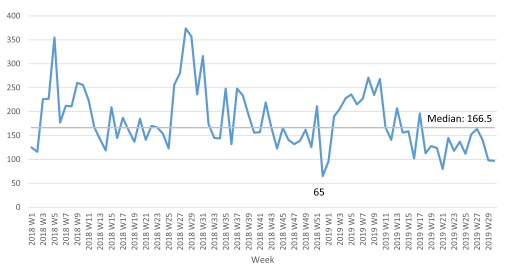
Source: Compiled by ECA, based on aggregated data in EMM, January 2018 to July 2019.
Figure 4
Weekly news distribution for EASA
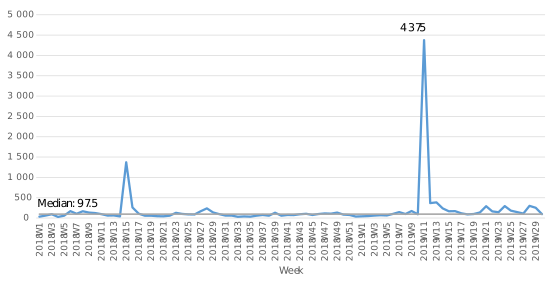
Source: Compiled by ECA, based on aggregated data in EMM, January 2018 to July 2019.
Annex V – The regulatory framework for federal agencies in the United States and Australia
United States
- Common regulation for all agencies. There is (1) a framework regulation: Government Performance and Results Act (GPRA) in 1993 and last GPRA Modernization Act in 2010, and (2) annually updated by June: Circular Nº A-11. Preparation, Submission and Execution of the Budget. Part 6. Federal Performance Framework: Strategic Planning, Annual Performance Plans and Reports.
- Agencies have to report on three different goals/objectives: (1) cross-agency priority goals which are long-term and require inter-agency coordination, (2) agency priority goals, meaning 4 or 5 goals to be achieved over the next two years, and (3) strategic objectives, meaning long-term objectives, outcomes and impacts.
- Three GPRA reporting elements: (1) five-year strategic plans that must contain a mission statement for the agency as well as long-term, results-oriented goals, (2) annual performance plans that establish the performance goals for the fiscal year and describe how these goals are to be met and how they can be verified, and (3) annual performance reports that review the agency’s success or failure in meeting its targeted performance goals (results are offered by programme).
- Regarding performance information, the discharge procedure by the Congress is based on: (1) the annual report of the Government Accountability Office (GAO); (2) the annual report submitted by the Office of Management and Budget (OMB)27 to the Senate, the House of Representatives and the GAO. This report determines whether the agency programmes or activities meet performance goals and objectives, and identifies unmet goals (an action plan is then designed to correct the deviations); and (3) the consolidation by the agency of the annual performance plan and annual performance report as part of the Congressional Budget Justification.
Australia
- Common regulation for all agencies: Public Governance, Performance and Accountability Act 2013 (PGPA Act), Chapter 2. Commonwealth entities and the Commonwealth, Part 2-3. Planning, performance and accountability, Division 3. Performance of Commonwealth entities.
- Explain and report differences in the achievement of objectives. The accountable authority must: (1) cause records to be kept that properly record and explain the entity’s performance in achieving its purposes; (2) measure and assess the performance of the entity; (3) prepare annual performance statements for the entity as soon as practicable after the end of each reporting period for the entity; and (4) include the annual performance statements in the annual report that is tabled in the Parliament.
- Audit of the performance statements. The Auditor-General has the possibility to examine and report on the entity’s annual performance statements. The report must be submitted to the Parliament for discussion.
Annex VI – Activity-based budgeting/costing/management
Activity-based budgeting (ABB) means the “organisation of the budget appropriations and resources by purpose so as to allow people to see what policies are pursued, and within them, what activities make up the policies, how much money is spent on each of them, and how many people work on them” (European Commission, EU Budget Glossary).
The activity-based costing (ABC) method means the definition of costs, the cost allocation method and the allocation to different activities. ABC is a costing methodology that identifies activities in an organisation and assigns the cost of each activity with resources to all products and services according to actual consumption.
The ABC system implies the calculation of full cost not only by activity but also by “specific service”. Partly and fully self-financing agencies charge fees to their clients to recover the cost of the different services provided.
ABB is the budget element and ABC the economic element of the broader activity-based management (ABM) concept, which relates mainly to operational activities. ABM should provide the agencies with the tools to plan, monitor, report on and evaluate their activities. In this regard, objectives, indicators, inputs (in terms of human and financial resources) and key actions need to be defined, ex ante, to set out how the intended results are to be achieved, how progress towards these intended results can be measured, and what resources are required to produce these results (European Commission, Analytical Fiche No 21).
In addition to objectives, activities and budgetary and output indicators, implementation of the ABM system depends on: (a) a clear correspondence between objectives, activities and indicators, (b) the definition of results and impact indicators, and (c) the continuous monitoring of actual values for the decision-making process.
The application of systematic ABB and ABM systems by the agencies to plan, monitor and evaluate activities is required by the Common Approach (see paragraph 40).
Annex VII – List of ECA special reports published during the period 2017-2019 in relation to agencies and other bodies
| SR No | Title | Agencies and other bodies |
| 01/2017 | More efforts needed to implement the Natura 2000 network to its full potential | EEA |
| 05/2017 | Youth unemployment – have EU policies made a difference? | Eurofound |
| 06/2017 | EU response to the refugee crisis: the ‘hotspot’ approach | EASO, Europol, Frontex, FRA |
| 08/2017 | EU fisheries controls: more efforts needed | EFCA |
| 09/2017 | EU support to fight human trafficking in South/South-East Asia | Europol, Frontex |
| 12/2017 | Implementing the Drinking Water Directive: water quality and access to it improved in Bulgaria, Hungary and Romania, but investment needs remain substantial | EEA |
| 13/2017 | A single European rail traffic management system: will the political choice ever become reality? | ERA, INEA |
| 18/2017 | Single European Sky: a changed culture but not a single sky | EASA |
| 23/2017 | Single Resolution Board: Work on a challenging Banking Union task started, but still a long way to go | SRB |
| 34/2017 | Combating Food Waste: an opportunity for the EU to improve the resource-efficiency of the food supply chain | EEA |
| 01/2018 | Joint Assistance to Support Projects in European Regions (JASPERS) - time for better targeting | EMSA, Eurofound, EASA |
| 02/2018 | The operational efficiency of the ECB's crisis management for banks | SRB, EBA, ESMA |
| 05/2018 | Renewable energy for sustainable rural development: significant potential synergies, but mostly unrealised | EEA |
| 13/2018 | Tackling radicalisation that leads to terrorism: the Commission addressed the needs of Member States, but with some shortfalls in coordination and evaluation | Eurojust, Europol |
| 16/2018 | Ex-post review of EU legislation: a well-established system, but incomplete | EEA, EMA |
| 19/2018 | A European high-speed rail network: not a reality but an ineffective patchwork | EEA, ERA, INEA |
| 23/2018 | Air pollution: Our health still insufficiently protected | EEA |
| 24/2018 | Demonstrating carbon capture and storage and innovative renewables at commercial scale in the EU: intended progress not achieved in the past decade | EEA |
| 25/2018 | Floods directive: progress in assessing risks, while planning and implementation need to improve | EEA |
| 28/2018 | The majority of simplification measures brought into Horizon 2020 have made life easier for beneficiaries, but opportunities to improve still exist | REA, EASME, EIT |
| 29/2018 | EIOPA made an important contribution to supervision and stability in the insurance sector, but significant challenges remain | EIOPA, EBA, ESMA |
| 33/2018 | Combating desertification in the EU: a growing threat in need of more action | EEA |
| 35/2018 | Transparency of EU funds implemented by NGO's: more effort needed | EACEA, EASME, ERCEA, REA |
| 01/2019 | Fighting fraud in EU spending: action needed | EPPO |
| 02/2019 | Chemical hazards in our food: EU food safety policy protects us but faces challenges | EFSA, EMA |
| 10/2019 | EU-wide stress tests for banks: unparalleled amount of information on banks provided but greater coordination and focus on risks needed | EBA |
| 11/2019 | The EU’s regulation for the modernisation of air traffic management has added value – but the funding was largely unnecessary | Eurocontrol, INEA |
| 19/2019 | INEA: benefits delivered but CEF shortcomings to be addressed | INEA |
| 20/2019 | EU information systems supporting border control - a strong tool, but more focus needed on timely and complete data | Frontex, CEPOL, eu-LISA |
| 24/2019 | Asylum, relocation and return of migrants: Time to step up action to address disparities between objectives and results | EASO, Europol, Frontex |
Source: ECA.
Annex VIII – The composition of the budget of EU agencies and other bodies (2018)

Source: ECA.
Acronyms and abbreviations
ABB: Activity-based budgeting
ABC: Activity-based costing
ABM: Activity-based management
AMIF: Asylum, Migration and Integration Fund
AWP: Annual work programme
CAAR: Consolidated annual activity report
CONT: Budgetary Control Committee (European Parliament)
DG CNECT: Directorate General for Communications Networks, Information and Technology
DGT: Directorate General for Translation
DG DEFIS: Directorate General for Defence Industry and Space
DG EAC: Directorate General for Education, Youth, Sport and Culture
DG EMPL: Directorate General for Employment, Social Affairs and Inclusion
DG ENER: Directorate General for Energy
DG ENV: Directorate General for Environment
DG FISMA: Directorate General for Financial Stability, Financial Markets and Capital Markets Union
DG GROW: Directorate General for Internal Market, Industry, Entrepreneurship and SMEs
DG HOME: Directorate General for Migration and Home Affairs
DG JUST: Directorate General for Justice and Consumers
DG MARE: Directorate General for Maritime Affairs and Fisheries
DG MOVE: Directorate General for Mobility and Transport
DG SANTE: Directorate General for Health and Food Safety
EMM: Europe Media Monitor
ETIAS: European Travel Information and Authorisation System
JHA: Justice and Home Affairs
JRC: Joint Research Centre of the European Commission
KPI: Key performance indicator
MFF: Multiannual financial framework
REFIT: Regulatory Fitness and Performance programme
REMIT: Regulation (EU) No 1227/2011 of the European Parliament and of the Council on wholesale energy market integrity and transparency
RSB: Regulatory Scrutiny Board
SIS: Schengen Information System
SMEs: Small and medium-sized enterprises
SPD: Single programming document
TFEU: Treaty on the Functioning of the European Union
Glossary
Centre of expertise and networking: A term we use to describe the role played by a decentralised agency in a given policy area, in that the decentralised agency can act like a centre to promote the sharing of expertise, as well as to bring together interests from Member States to reach common policy solutions and enhance cooperation with other European and international partners.
Coherence: The agency’s tasks are logically consistent with the tasks of other agencies and EU services, and therefore make sense being part of a unified and functional EU administration that serves clearly identifiable policy objectives.
Common Approach: A set of guiding principles rectified by the EU in 2012 with the aim of making decentralised agencies more coherent, effective and accountable.
Cross-cutting evaluation: Evaluation of the performance of multiple agencies and parent DGs operating in the same policy area with mutually supporting actions. The aim is to identify potential synergies and economies of scale, and to overcome risks such as overlaps, policy fragmentation, disproportionality and “mission creep”.
Delegation agreement: Agreement defining the activities entrusted by the Commission to the agencies for the implementation of the policy, the relations between the Commission and the agencies as well as the rules that need to be followed.
Discharge procedure: Decision by the European Parliament releasing the Commission from its responsibility for managing a given budget and closing it on the basis of a recommendation from the Council and the annual report of the European Court of Auditors.
EU Agencies Network: A network of decentralised agencies set up by the EU institutions and the Member States to carry out specific legal, technical or scientific tasks.
Evaluation: An evidence-based judgement of the extent to which an existing intervention is 1) effective, 2) efficient, 3) relevant given the current needs, 4) coherent both internally and with other EU intervention, and 5) has achieved EU added value.
Executive board: A steering group in a decentralised agency that oversees the preparation and implementation of management board decisions.
Impact assessment: An assessment that examines whether there is a need for EU action and analyses the possible impacts of available solutions.
Legislator: The European Parliament and the Council.
Management board: A decentralised agency’s integral governance body. It has a supervisory role with general responsibility for budgetary and planning matters, the appointment of the executive director, and the monitoring of the agency’s performance.
Multiannual financial framework (MFF): A long-term budget of the EU covering seven years. The current MFF covers 2014-2020. It sets the limits on how much the EU will spend on different areas of activity. It is used by the EU to support its political priorities and to ensure that it meets the commitments it has made to its citizens.
Relevance: The agency’s tasks are appropriate to meet the policy objectives.
Review clause: A legal provision that sets out the circumstances under which the agency’s tasks should be reviewed and adjusted.
Service-level agreement: The agreement between the end user and the service provider.
Single programming document: A standard document to be prepared by all decentralised agencies and reviewed by the Commission that contains both budgetary as well as operational planning for an agency, and thereby constitutes a guidance of the agency’ work and its resource allocation.
Sunset clause: A legal provision that sets out the circumstances under which the agency’s tasks can be terminated.
Audit team
The ECA’s special reports set out the results of its audits of EU policies and programmes, or of management-related topics from specific budgetary areas. The ECA selects and designs these audit tasks to be of maximum impact by considering the risks to performance or compliance, the level of income or spending involved, forthcoming developments and political and public interest.
This performance audit was carried out by Audit Chamber IV Regulation of markets and competitive economy, headed by ECA Member Alex Brenninkmeijer. The audit was led by ECA Member Alex Brenninkmeijer, supported by Di Hai, Private Office Attaché; Friedemann Zippel, Principal Manager; Eddy Struyvelt, Head of Task; Joaquín Hernández Fernández, Arunas Juozulynas, Sevdalina Todorova, Julio Cesar Santin Santos, Benedicte Hemelaer, Christine Becker and Janis Gaisonoks, Auditors. Data scientists Claudia Albanese, Zsolt Varga and Emmanuele Fossati carried out the big data project. Thomas Everett provided linguistic support.

Endnotes
1 These staff figures include officials, temporary and contract staff and seconded national experts.
2 For reasons of space we use abbreviations/acronyms to refer to all agencies. The full names are given in Annex I.
3 Commission Staff Working Document (SWD(2017) 350).
4 European Commission, “White Paper on European governance”, COM(2001) 428 final, and Better Regulation Guidelines, 2015.
5 European Commission, “Evaluation of the EU agencies under the remit of DG Employment: Eurofound, Cedefop, ETF and EU-OSHA”, March 2018.
6 ECA, Rapid Case Review on the implementation of the 5 % reduction of staff costs, 2017.
7 EMA, CAAR 2018, emphasis of matter paragraph.
8 See also ECA’s 2018 annual report on agencies.
9 Analysis and assessment of the Europol 2018 Consolidated Annual Activity Report.
10 E.g. special report 10/2019: “EU-wide stress tests for banks: unparalleled amount of information on banks provided but greater coordination and focus on risks needed”.
11 The Budget Committee in the EUIPO; the Board in its plenary session for the SRB; the Administrative Council for the CPVO.
12 ECA opinions 1/2019 and 3/2019.
13 SWD(2015) 62 final, 13.3.2015.
14 Review 07/2019: Reporting on sustainability – A stocktake of EU institutions and agencies.
15 Cases 9/56 and 10/56, Meroni & Co, Industrie Metallurgiche v High Authority, 1957-58, ECR 133.
16 Case C-270/12, United Kingdom v Parliament and Council, 2014.
17 CPVO, EUIPO, and SRB.
18 ECA 2018 Annual Report on EU agencies, para 3.14.8.
19 See also ECA special report 20/2019: “EU information systems supporting border control - a strong tool, but more focus needed on timely and complete data”.
20 Judgment of 7 March 2019, in case T-837/16.
21 See also ECA special report 24/2019, Asylum, relocation and return of migrants: Time to step up action to address disparities between objectives and results.
22 Article 15 of the EASO Regulation (EU) No 439/2010.
23 Regulation (EC) No 1907/2006 of the European Parliament and of the Council on the Registration, Evaluation, Authorisation and Restriction of Chemicals (REACH) (OJ L 396, 30.12.2006, p. 1).
24 Bund für Umwelt und Naturschutz Deutschland e.V., Hintergrund und Erläuterungen zur REACH-Registrierung: Großunternehmen verstoßen gegen das EU-Chemikalienrecht und gefährden damit Mensch und Umwelt, 20 May 2019.
25 See also Merijn Chamon and Valerie Demedts, Constitutional limits to the EU agencies’ external relations in The External Dimension of EU Agencies and Bodies (2019).
26 For a more detailed description of the Europe Media Monitor (EMM) service see: https://ec.europa.eu/jrc/en/scientific-tool/europe-media-monitor-newsbrief.
27 The Office of Management and Budget (OMB) is the business division of the Executive Office of the President of the United States that administers the United States federal budget and oversees the performance of federal agencies.
28 Commission Delegated Regulation (EU) 2019/715 of 18 December 2018 on the framework financial regulation for the bodies set up under the TFEU and Euratom Treaty and referred to in Article 70 of Regulation (EU, Euratom) 2018/1046 of the European Parliament and of the Council. (OJ L 122, 10.5.2019, p. 1–38).
29 See pp. 54-56 of the Impact Assessment: https://eur-lex.europa.eu/legal-content/EN/TXT/PDF/?uri=CELEX:52012SC0166&from=EN
30 Regulation (EU) 2019/1381 of 20 June 2019 on the transparency and sustainability of the EU risk assessment in the food chain and amending Regulations (EC) No 178/2002 and eight other pieces of sectorial legislation.
31 See also ECA special report 24/2019, Asylum, relocation and return of migrants: Time to step up action to address disparities between objectives and results.
32 The current one – 2018-2022 – includes victims of crime and access to justice; equality and discrimination based on any ground; information society and, in particular, respect for private life and protection of personal data; judicial cooperation, except in criminal matters; migration, borders, asylum and integration of refugees and migrants; racism, xenophobia and related intolerance; rights of the child; integration and social inclusion of Roma.
33 (Frontex) Regulation (EU) 2016/1624 of the European Parliament and of the Council, of 14 September 2016. (EMSA) Regulation (EU) 2016/1625 of the European Parliament and of the Council, of 14 September 2016; (EFCA) Regulation (EU) 2016/1626 of the European Parliament and of the Council, of 14 September 2016.
34 Regulation (EU) No 439/2010 of the European Parliament and of the Council of 19 May 2010 establishing the European Asylum Support Office.
35 Figure as of 31 December 2019.
36 Draft General Budget of the European Union for the financial year 2020 (Working Document Part III – Bodies set up by the EU having legal personality and public-private partnership).
37 With the exception of the two fully self-financed agencies, all decentralised agencies are subject to discharge for the implementation of their budgets by the European Parliament on the recommendation of the Council.
Timeline
| Event | Date |
|---|---|
| Adoption of Audit Planning Memorandum (APM) / Start of audit | 26.2.2019 |
| Official sending of draft report to the European Commission (or other auditee) |
30.4.2020 |
| Adoption of the final report after the adversarial procedure | 28.7.2020 |
| Official replies of the European Commission received in all languages | 25.8.2020 |
| Official replies of the EU Agencies Network (EUAN) received in all languages | 3.8.2020 |
| Official replies of the European Agency for Safety and Health at Work (EU-OSHA) received in all languages | 29.7.2020 |
| Official replies of the European Asylum Support Office (EASO) received in all languages | 28.8.2020 |
| Official replies of the European Border and Coast Guard Agency (Frontex) received in all languages | 24.7.2020 |
| Official replies of the European Food Safety Authority (EFSA) received in all languages | 5.7.2020 |
| Official replies of the European Union Intellectual Property Office (EUIPO) received in all languages | 3.8.2020 |
| Official replies of the Single Resolution Board (SRB) received in all languages | 27.7.2020 |
Contact
EUROPEAN COURT OF AUDITORS
12, rue Alcide De Gasperi
1615 Luxembourg
LUXEMBOURG
Tel. +352 4398-1
Enquiries: eca.europa.eu/en/Pages/ContactForm.aspx
Website: eca.europa.eu
Twitter: @EUAuditors
More information on the European Union is available on the internet (http://europa.eu).
Luxembourg: Publications Office of the European Union, 2020
| ISBN 978-92-847-5160-0 | ISSN 1977-5679 | doi:10.2865/36103 | QJ-AB-20-019-EN-N | |
| HTML | ISBN 978-92-847-5171-6 | ISSN 1977-5679 | doi:10.2865/99021 | QJ-AB-20-019-EN-Q |
COPYRIGHT
© European Union, 2020.
The reuse policy of the European Court of Auditors (ECA) is implemented by the Decision of the European Court of Auditors No 6-2019 on the open data policy and the reuse of documents.
Unless otherwise indicated (e.g. in individual copyright notices), the ECA’s content owned by the EU is licensed under the Creative Commons Attribution 4.0 International (CC BY 4.0) licence. This means that reuse is allowed, provided appropriate credit is given and changes are indicated. The reuser must not distort the original meaning or message of the documents. The ECA shall not be liable for any consequences of reuse.
You are required to clear additional rights if a specific content depicts identifiable private individuals, f. ex. as on pictures of the ECA’s staff or includes third-party works. Where permission is obtained, such permission shall cancel the above-mentioned general permission and shall clearly indicate any restrictions on use.
To use or reproduce content that is not owned by the EU, you may need to seek permission directly from the copyright holders:
Figures 3 and 5: Icons made by Pixel perfect from https://flaticon.com.
Software or documents covered by industrial property rights, such as patents, trademarks, registered designs, logos and names, are excluded from the ECA’s reuse policy and are not licensed to you.
The European Union’s family of institutional Web Sites, within the europa.eu domain, provides links to third-party sites. Since the ECA does not control them, you are encouraged to review their privacy and copyright policies.
Use of European Court of Auditors’ logo
The European Court of Auditors logo must not be used without the European Court of Auditors’ prior consent.
GETTING IN TOUCH WITH THE EU
In person
All over the European Union there are hundreds of Europe Direct Information Centres. You can find the address of the centre nearest you at: https://europa.eu/european-union/contact_en
On the phone or by e-mail
Europe Direct is a service that your questions about the European Union. You can contact this service
- by freephone: 00 800 6 7 8 9 10 11 (certain operators may charge for these calls),
- at the following standard number: +32 22999696 or
- by electronic mail via: https://europa.eu/european-union/contact_en
FINDING INFORMATION ABOUT THE EU
Online
Information about the European Union in all the official languages of the EU is available on the Europa website at: https://europa.eu/european-union/index_en
EU Publications
You can download or order free and priced EU publications at: https://op.europa.eu/en/web/general-publications/publications. Multiple copies of free publications may be obtained by contacting Europe Direct or your local information centre (see https://europa.eu/european-union/contact_en)
EU law and related documents
For access to legal information from the EU, including all EU law since 1952 in all the official language versions, go to EUR-Lex at: http://eur-lex.europa.eu/homepage.html?locale=en
Open data from the EU
The EU Open Data Portal (http://data.europa.eu/euodp/en/data) provides access to datasets from the EU. Data can be downloaded and reused for free, both for commercial and non-commercial purposes.