
Support to mitigate Unemployment Risks in an Emergency (SURE) SURE financing contributed to preserving jobs during the COVID‑19 crisis, but its full impact is not known
About the report:The economic impact of the COVID‑19 pandemic put millions of jobs at risk. Against this background, the EU put in place a temporary instrument, SURE (Support to mitigate Unemployment Risks in an Emergency). SURE provided up to €100 billion in loans to Member States under favourable terms for new, or the extension of existing, job retention schemes. We conclude that the Commission reacted quickly to the challenge, reflecting the emergency context. While there are indications that SURE funding reached millions of people, the lack of comprehensive Member State data limits the Commission’s ability to assess how many jobs were preserved. We recommend that the Commission should evaluate the experience of SURE to learn lessons for future crises.
ECA special report pursuant to Article 287(4), second subparagraph, TFEU.
 |
Executive summary
I The COVID‑19 pandemic caused a severe shock to the European economy with significant disruption to labour market, putting millions of jobs at risk. Against this background, the EU put in place a temporary instrument, SURE (Support to mitigate Unemployment Risks in an Emergency) to help Member States in dealing with the impact of the pandemic on their labour markets. In particular, the instrument was designed to support Member States in the implementation of new or the extension of existing job retention schemes. The Council chose to expand the scope of the scheme initially proposed by the Commission so that SURE could also be used to support health-related measures.
II Unlike traditional social policy support funded from the EU budget, SURE provides long-term loans to Member States under favourable financial terms. The Commission manages the instrument and can borrow up to €100 billion on the capital markets. By August 2022, the Council had approved €93.3 billion of financial assistance to 19 Member States, of which nearly €92 billion (98 %) had been disbursed. The period of availability ends on 31 December 2022, although the Council can decide to extend this period, based on a Commission proposal.
III We carried out an audit of SURE because of its importance in cushioning the impact of the COVID‑19 pandemic. Moreover, the financial support from SURE up to €100 billion is significant. We assessed whether the instrument was efficient and effective mitigating the unemployment risk in the EU.
IV Overall, we conclude that the Commission reacted quickly and efficiently to the challenge of helping Member States preserve employment. It was able to get EU support to the Member States more rapidly than is the case under standard funding procedures. The SURE framework reflected the emergency context and limited the financial risk to the EU budget. While there are some indications at aggregate level that SURE support reached millions of people, the lack of comprehensive Member State data limits the Commission’s ability to assess the results achieved by SURE.
V The Commission proposed a new, innovative regulation with Council approval following in a timely manner, only two months after the designation of COVID‑19 as a pandemic. SURE support enabled Member States to create or extend existing job retention schemes but, given the very different circumstances of each national labour market, the approaches taken across the EU varied significantly.
VI SURE funding is based on loans, not grants. Member States’ demand for these loans was in line with the budget proposed by the Commission of €100 billion. One of the unique features of SURE is that all Member States have provided guarantees, up to 25 % of all loans paid under SURE, all of which are due to be repaid by 2050. These guarantees serve as a buffer to protect EU budget, as, in the event of default, they might be called upon before the Commission’s own resources.
VII SURE is a crisis-response instrument where the rapid disbursement of funds is key. Most Member States received their first disbursement less than one month after their request. As job retention schemes are prone to misuse, the SURE regulation requires that the loan agreements with Member States include provisions about controls and audits, to minimise the risk of fraud and irregularity. The Commission launched an ad hoc survey on national audit and control systems at the beginning of 2022, when most of the funding had already been disbursed to Member States. All Member States except one reported cases of irregularities and alleged fraud. However, as at September 2022, as it was not aware of any major irregularities or fraud with respect to its own responsibilities under the legislation, the Commission had not launched any specific investigations in this matter.
VIII There are indications at aggregate level that SURE reached millions of employees and self-employed individuals during the most severe period of the crisis, and, together with other policy support measures, contributed to mitigating the unemployment risks. However, the design of the instrument does not make it possible to identify separately the impact of SURE, in terms of outputs and results, within the national schemes. The effect is that the Commission cannot assess the results of SURE in each Member State. For example, the lack of comprehensive Member State data means that the number of people and businesses supported by SURE – the potential contribution of the instrument in mitigating the unemployment risks – cannot be fully assessed. Member State data on health-related measures reported to the Commission is more limited. An evaluation is not mandatory in the SURE regulation.
IX We recommend that the Commission carry out a comprehensive evaluation of SURE, with a view to learning lessons for potential future crisis instruments.
Introduction
Background
01 During the COVID‑19 pandemic, EU Member States took a number of public health measures to limit the spread of the coronavirus. These measures, together with the economic uncertainty brought by the pandemic and supply chain disruption caused by border and factory closures, resulted in a significant decline in both production and consumption in the EU. In the early stages of the pandemic, these measures included lockdowns which led to the temporary closure of various sectors of the EU economy, such as tourism and hospitality1.
02 The resulting economic contraction, felt particularly strongly in the EU’s southern Member States, put millions of jobs at risk. The European Centre for the Development of Vocational Training (CEDEFOP) estimated in 2020 that about 45 million jobs, 23 % of the workforce, in the EU‑27 labour market faced a very high risk of COVID‑19 disruption, and that another 22 % of the EU workforce – mostly medium to lower-skilled workers in the service sector – was exposed to some significant risk2.
03 Against this background, and on a temporary basis, the EU put in place SURE (Support to mitigate Unemployment Risks in an Emergency) to help Member States in dealing with the impact of the pandemic on their labour markets. The instrument supports Member States in the implementation of new or extended job retention measures. These schemes provide public income support for the hours not worked for businesses experiencing economic difficulties. Job retention instruments include short-time, furlough and wage subsidy schemes.
About SURE
04 The primary objective of SURE is to provide financial assistance to Member States which are experiencing, or are seriously threatened with, a severe economic disturbance. In financing job retention schemes, SURE aims ultimately at reducing the incidence of unemployment and loss of income (see Figure 1). It supports existing jobs; it does not finance unemployment schemes.
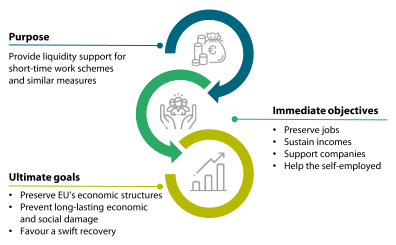
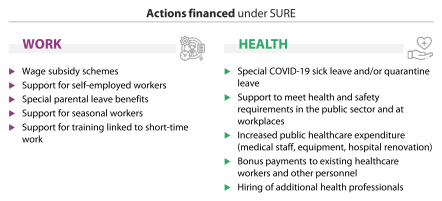
05 The Commission’s initial legislative proposal for SURE was limited to the employment objective3. When adopting the SURE regulation in May 2020, the Council decided to extend its scope to support health-related measures (see Figure 2).
Source: ECA based on the Commission.
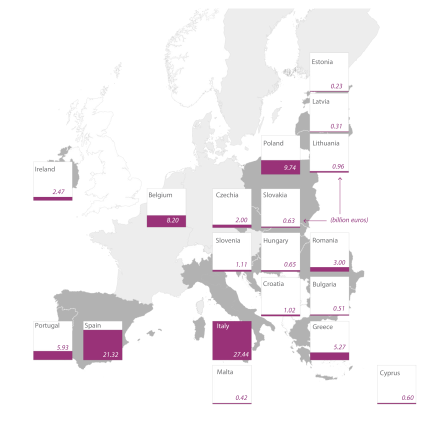
06 SURE provides loans to Member States and is financed by borrowing. The instrument is managed by the Commission, covering borrowing operations, and administration and disbursement of the loans. The Directorate-General for Economic and Financial Affairs (DG ECFIN), as lead DG, coordinated the set-up and the implementation of the instrument, in close collaboration with the Directorate-General for Employment, Social Affairs & Inclusion (DG EMPL) and the Directorate-General for Budget (DG BUDG) (see Table 1).
| DG ECFIN | DG EMPL | DG BUDG |
|---|---|---|
|
|
|
Source: ECA.
07 SURE is a temporary instrument. Its availability ends on 31 December 2022, unless the Council, on a proposal from the Commission, decides to extend it.
Financial envelope
08 Under the regulation, the Commission can borrow up to €100 billion on the capital markets to finance SURE support4. Each Member State wishing to benefit from SURE support sends a request to the Commission. The Commission assesses each request and, if it complies with the eligibility conditions of the regulation, proposes that the Council approve the SURE financial assistance. This decision takes the form of a Council implementing decision for a back-to-back loan (a loan issued on the same terms the Commission received on the capital markets) representing financial assistance to the Member State concerned.
09 To finance the instrument, the Commission issued bonds on the capital markets. The bonds issued by the Commission had various maturities, ranging from five to 30 years. There was strong investor interest in the SURE bonds.
10 Moreover, and for the first time, the Commission issued the bonds under the SURE instrument as social bonds (see Box 1).
Social bonds and the SURE social bond framework
Social bonds are defined as instruments that raise funds for new and existing projects with positive social outcomes.
The SURE social bond framework is aligned with the Social Bond Principles established by the International Capital Markets Association, a self-regulatory organisation and trade association for participants in the capital markets. Under this framework, the Commission is required to publish reports, based on data provided by the Member States, on the allocation of SURE proceeds, type of expenditure and impact of SURE financial assistance.
Audit scope and approach
11 We assessed whether SURE was an efficient and effective response to mitigate unemployment risks in the EU from the COVID‑19 pandemic and implemented efficiently by the Commission. In particular, we examined whether:
- setting-up the instrument was timely;
- appropriate arrangements were put in place to limit the financial risk to the EU budget through SURE;
- the legislative framework for SURE and its implementation reflected the crisis situation while minimising the risk of fraud and irregularity;
- the Commission developed a robust framework for monitoring the implementation of national job retention schemes financed by SURE and evaluating their impact; and
- SURE was effective in helping Member States to protect jobs.
12 The time period covered was from April 2020, when the Commission proposed the SURE regulation to the end of the audit fieldwork in September 2022. The focus of the audit was the Commission. Assessments of the implementation of SURE at individual Member State level and of the Commission’s management of the borrowing operations were outside the audit scope.
13 We obtained data and information from the main Commission DGs responsible for SURE, as well as Eurostat. We consulted Eurofound (the EU agency for improving working conditions) and the Centre for European Policy Studies (CEPS, an EU think‑tank).
14 As part of the our audit work we:
- reviewed existing EU legislation, Commission guidance and exchange of information with Member States and other relevant documents;
- interviewed representatives of the Commission, CEPS and Eurofound;
- analysed the processes for applying and reporting on SURE for a sample of requests for financial assistance; and
- examined Member States’ replies to the Commission’s survey in early 2022 to assess the risk of irregularities and fraud.
15 We carried out an audit of SURE because of its reported importance in cushioning the impact of the COVID‑19 pandemic’s impact and preventing unemployment from rising as sharply as was initially feared. Moreover, the financial support from SURE of up to €100 billion is significant.
Observations
The SURE instrument was a timely response to mitigate the risk of unemployment during the COVID‑19 pandemic
16 We examined whether the instrument was a timely response to mitigate the risk of unemployment during the COVID‑19 pandemic, analysing in particular the timeline of the processes involved from the date that the pandemic was declared. We also examined whether the Commission appropriately assessed the expected level of demand for SURE loans to set the financial envelope and the Commission’s estimate of the hypothetical financial savings for Member States achieved through SURE.
The EU introduced SURE quickly
17 The World Health Organisation declared the pandemic on 11 March 2020. On 2 April, less than one month later, the Commission submitted its proposal for a SURE regulation to the Council. At this point, the Commission had already started negotiations with the Member States on their commitment to provide joint guarantees for part of the borrowing.
18 Two months after the designation of COVID‑19 as a pandemic, on 19 May 2020, the Council adopted the regulation, with some modifications such as extending the scope of the financial assistance under SURE to also include health-related measures (see paragraph 05).
19 SURE is unique, making like-for-like comparisons difficult. However, while it took, on average, six months between Commission proposal and Council adoption for amendments to the Common Provisions Regulation5 in response to previous crises, the SURE regulation was adopted within two months. This was instrumental in having the first loans disbursed to Member States early during the COVID‑19 crisis.
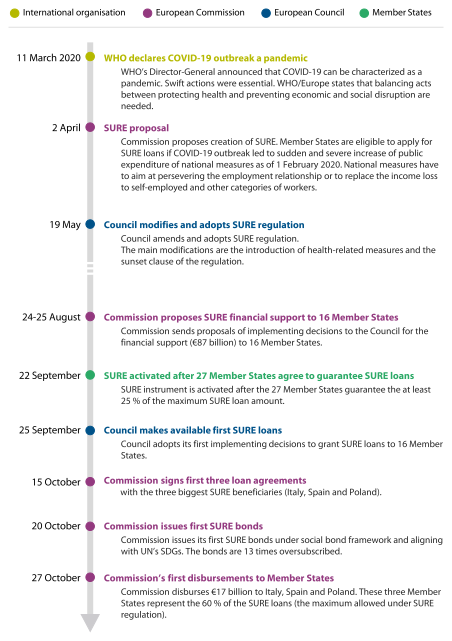
20 Following adoption of the regulation in May 2020, the Commission raised funding on the capital markets and disbursed the first loans to Member States in October of the same year (see Figure 3).
Figure 3 – The period from pandemic declaration to first disbursement under SURE was short
Source: ECA based on Commission documents.
Member States’ demands for SURE funding were in line with the Commission’s estimate
21 SURE provides financial assistance to Member States facing disruption to the labour market as a result of the COVID‑19 pandemic. In order to gauge the expected level of demand for SURE loans, at the end of March 2020, the Commission prepared three scenarios, taking into account the potential length of lockdowns, their scope and the number of countries requesting loans. This led to estimated financing needs for job retention schemes between €50 billion and €100 billion. The Commission chose to proceed on the basis of the scenario with the highest financing needs (€100 billion), given the uncertainty about the full of impact of the COVID‑19 pandemic prevailing at the time.
22 The Commission’s estimate was sufficient to satisfy the EU-wide demand for financial support from SURE, although the Council had included health-related measures in the scope of the regulation. Eight Member States (Denmark, Germany, France, Luxembourg, Netherlands, Austria, Finland and Sweden) chose not to make use of SURE. All of these Member States already had nationally funded job retention schemes in place.
23 By August 2022, the Council had approved a total of €93.3 billion of financial assistance to 19 Member States. Of this total, nearly €92 billion (98 %) had been disbursed by August 2022 (see Figure 4).
Figure 4 – SURE disbursement amounts (€91.8 billion, August 2022)
Source: ECA based on the Commission SURE disbursement data.
24 Nearly half of the support was provided to two Member States, Italy and Spain. Only two Member States, Poland and Romania, where spending on measures eligible for SURE support was lower than forecast, did not ask for the disbursement of all loans available.
The Commission estimates that Member States potentially saved around €8 billion through SURE
25 One reason for the high level of Member State demand for SURE support is the possibility of accessing funding at relatively low cost. The Commission estimated that thanks to the EU’s AAA credit rating, the financial assistance provided under SURE has led to a saving of €8.5 billion in interest payments for Member States compared to what they would have hypothetically paid if they had borrowed the same amount on the capital market themselves6.
26 We verified that the estimated interest savings reflect the size of the loans and the difference between the credit rating of the EU and that of individual Member States. They are concentrated in five of the benefiting Member States (Italy, Spain, Romania, Poland and Greece), ranging between €0.5 billion and €3.8 billion, and accounting for almost 86 % of the total estimated savings.
The SURE instrument entails a limited financial risk to the EU budget
27 Based on the provisions and rules in the SURE regulation and guarantee agreements with Member States, we analysed whether arrangements were put in place to limit the financial risk to the EU budget.
Member States guaranteed 25 % of all loans under SURE
28 Although SURE funding is based on loans, not grants, there remains a risk to the EU budget if one or several Member States default on their loan repayments. This is why a key element of SURE was that all Member States agreed to provide irrevocable on-demand guarantees, in proportion to their relative share of the EU’s total gross national income, covering 25 % of the SURE financial envelope. The remainder is guaranteed by the EU budget.
29 The Member State guarantees were designed to act as a buffer to protect the EU budget. If Member States fail to make a repayment on time, the Commission can hold all of the other Member States liable. In case of any defaults, under the legislation the Commission “is expected to examine the scope” for using the EU budget to repay outstanding debts7. However, it also has the option of first drawing on Member States guarantees. The Commission told us that this was likely to be their preferred course of action. In the event that the whole Member State guarantee buffer of €25 billion is exhausted, the remaining debt will be repaid by the EU budget. These arrangements provide a guarantee to investors that there is very limited risk of the EU defaulting on its debts owing to the EU’s AAA credit rating (see paragraph 25).
Additional prudential rules further limit the financial risk to the EU budget
30 In addition, the SURE regulation includes two main mechanisms (referred to as “prudential rules”) to mitigate the maximum yearly exposure and for each Member State8:
- the total yearly amount repayable is limited to €10 billion, 10 % of the total funding available under SURE. The Commission issued bonds with different maturities to achieve this goal; and
- not more than 60 % of the total funding available can be granted to any three Member States.
In our view these prudential rules further limit the financial risk to the EU budget in case of a Member State default.
31 SURE provides funding to Member States through loans. The repayment is due between 2025 and 2050, with an average maturity of 14.5 years9. Figure 5 gives a breakdown by country of the different maturity dates and illustrates the operation of the prudential rules. For example, between 2025 and 2050, there are three years when the maximum amount of €10 billion of loans are due for repayment. Unlike some previous crises, many Member States were in need of support at the same time. Member States sent their requests for funds in total and with their preferred loan maturity. The Commission accordingly programmed different SURE loans with different maturities.
Figure 5 – SURE loan maturities and repayment schedule per Member State

Source: ECA based on Commission data on SURE loan maturities and repayment schedules.
The Commission put in place a flexible framework for SURE which did not follow the standard funding arrangements
32 We assessed whether the governance framework for SURE reflected the emergency context. We also analysed the processes that the Commission put in place for requesting and granting financial assistance under SURE, up to disbursement to Member States, and corroborated our analysis based on a sample of cases. We finally assessed whether the Commission took the first steps to assess the risk of fraud and irregularities in the implementation of the job retention schemes financed by SURE at the level of the Member States.
The SURE framework reflects the emergency context
33 SURE is a crisis response instrument, designed to provide temporary and repayable financial assistance to Member States. Accordingly, the SURE framework – comprising the regulation itself together with the choices made by the Commission in putting it into operation – is deliberately simpler than the Commission’s standard funding procedures.
34 For example, the SURE regulation did not require the Commission to carry out an analysis of the scope and design of the existing or planned national job retention schemes when assessing Member State requests for financial assistance. As these schemes varied significantly (in terms of the size, sector and turnover of companies supported, the groups of workers eligible, the level and duration of the scheme, and the inclusion of a ban on dismissals) across Member States, such an analysis would have significantly delayed the disbursement of loans.
The conditions set in the SURE regulation were broad and the Commission assessed them in close contact with Member States
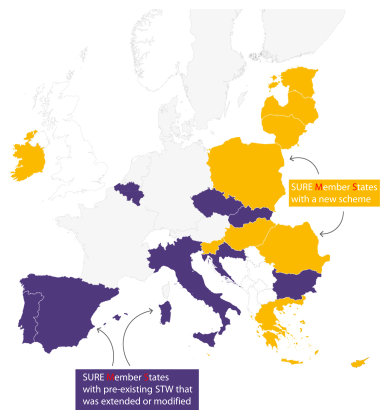
35 Eleven of the 19 Member States in receipt of SURE funds allocated the financial assistance to create new job retention schemes, and eight to extend or modify existing schemes (see Figure 6).
Figure 6 – New short-time work schemes and extensions of pre-existing ones financed by SURE
Source: ECA based on Eurofound.
36 The SURE regulation10 set two main conditions for using the instrument:
- a sudden and steep rise in public expenditure directly related to job retention schemes (the triggering condition);
- SURE support has to be used for job retention schemes (i.e. short-term work schemes or similar measures) or for health-related measures (the eligibility condition).
37 Based on our review of a sample of 31 cases (including health-related measures), we found that the Commission adequately assessed whether these two conditions for using SURE were fulfilled.
38 The eligibility conditions set in the regulation were broad, giving Member States considerable latitude in deciding where to target the EU funding. This made the Commission’s job of assessing requests for support less onerous. The Commission’s checks were therefore limited to confirming that the measures for which funds were requested would help people keep their jobs in the context of COVID‑19. However, the legislation did not require the Commission to assess the cost-effectiveness of measures. The legislation states that the SURE instrument “shall complement the national measures … by providing financial assistance”11. The Commission considered that this requirement was guaranteed by the conditions attached to the instrument and that there was no need to assess the complementarity of SURE support with other national measures in the Member States.
39 The Commission, with a view to facilitating the rapid disbursement of funds, also maintained close bilateral contacts with Member States during the assessment process of the proposed schemes in order to, for example:
- explain the conditions for using the instrument (in particular through bilateral meetings at technical level before the submission by Member States of the formal request for assistance). For example, at times the Commission had to clarify to Member States that certain national measures were not eligible for support under SURE (see Box 2);
- obtain additional clarifications, where necessary, in relation to the information submitted by the Member States.
National measures not eligible for SURE
- Support to the unemployed (e.g. benefits or active labour market policies)
- Support to the inactive (e.g. students, pensioners)
- Liquidity support and grants for businesses, not related to employment (e.g. electricity/water costs, subsidies for rents, one-off measures for SMEs to avoid bankruptcies)
- Reduction in indirect labour costs of firms without any requirement to maintain employment (e.g. across-the-board reduction in social security contributions)
- Direct income support to employees (e.g. reduction in tax obligations of employees as these measures do not directly protect employment and prevent job losses)
- Deferrals of firms’ tax liabilities, such as postponement of the payment of social security contributions, as these measures are not public expenditure
Source: ECA based on Commission documents.
40 In cases where the Commission noted a lower uptake of SURE funds compared to what had been planned, the Commission was active in engaging in discussions with the national authorities to help them make use of the available financing – such as the adoption of additional eligible measures, or the extension of existing ones.
The scope of the SURE instrument was extended by the Council to finance health-related measures, reducing its primary focus on employment
41 The SURE regulation recognises that employment is its primary aim. Including the financing of health-related measures (examples of which are in Figure 2) reduces the primary focus of keeping people in employment. While health-related measures are eligible, they must remain “ancillary”12.
42 Informal Commission guidance, discussed and agreed at an August 2020 Council working party, was that the share of total SURE spending on health-related measures in a Member State should not exceed 15 %. Overall, this ceiling was complied with, as spending by Member States on health-related measures accounted for around 5 % of the total SURE budget.
43 Ultimately, however, the Commission, supported by the Council, interpreted the regulation term “ancillary” as meaning that the proportion of SURE spending on health-related measures in each Member State should not exceed 50 %. Of the seven Member States which allocated SURE funding to health-related measures, four kept the proportion of this spending to less than 15 %. Portugal used 23 % of its SURE loans on health-related measures and Hungary and Romania almost 50 %. The remaining twelve Member States did not make use of this facility.
The Commission disbursed funds to Member States rapidly
44 The Commission carried out its assessment of Member States’ requests rapidly. As a result, 13 of the 19 Member States requesting SURE funding received the first disbursement in less than one month from the request for funds, and five Member States within a further month. The other Member State asked to receive the funds later, five months after request.
The SURE loan agreements included provisions regarding the risk of fraud and irregularity but the legal framework did not require assessment of the robustness of Member States’ control systems
45 Crisis-response measures, such the job retention schemes financed by SURE, are particularly prone to potential irregularities and misuse, as has been pointed out by the Commission funded network European Platform tackling undeclared work13 and several reports by Supreme audit institutions14.
46 The SURE regulation requires that the loan agreement with each Member State includes provisions regarding checks and audits, to minimise the risk of fraud and irregularity, as required in the financial regulation15. The Commission has systems designed to cover the absence of fraud and irregularities between the EU and Member States. The Member States are responsible for the proper use of funds at the national level, to prevent irregularities and fraud and potentially to recover misused funds from recipients. The legal framework does not require the Commission to assess the robustness of the Member States’ control systems governing the implementation of the national measures supported by EU funds. In line with the legal framework for agreeing loans, the Commission focused on the responsibilities of the EU as lender, and the Member States as borrowers. For example, as an ex post control, the Commission’s checks cover whether the Member State measures supported by SURE are consistent with those in the Council implementing decisions. We note that the use of loans as a mechanism to provide funding means that the legal responsibilities of the Commission relating to fraud and irregularity are less extensive than when it provides Cohesion policy grant funding.
47 In January 2022, in response to our audit, and in order to acquire more information about the operation of the loan agreements on the ground, the Commission carried out an ad hoc survey on audit and control systems to SURE beneficiary Member States. At this time, around 95 % of the loans had already been disbursed. In their responses to the survey, the Member States reported that, for the measures supported by SURE, they were using the audit and control systems in place prior to the pandemic. With one exception, all Member States reported that they had detected instances of irregularities or fraud. In all such cases, the Member State concerned carried out an investigation. This led to legal action to recover improperly used funds in 13 Member States16. If the Commission has serious doubts concerning the Member State use of SURE funds, it has the option of launching investigations. At September 2022, the Commission had not undertaken any investigations on the basis that it was not aware of any major irregularities or fraud with respect to its own responsibilities under the legislation as set out in the previous paragraph. The use of loans means that potential irregularities in national schemes limits the financial risk to the EU budget. Nevertheless, there remains a reputational risk for the EU if the measures financially supported by the EU budget are perceived as being prone to fraud.
SURE loans helped to finance the national job retentions schemes to contain the rise in unemployment during the COVID‑19 crisis
48 We examined whether SURE met its overall objective of financing national schemes designed to support workers in the Member States during the crisis and mitigating the unemployment risks. The design of the instrument does not make it possible to identify the impact of SURE separately within these schemes. We analysed data from Eurostat and Eurofound as well as information from the Commission and a comparative IMF study.
49 One of the main ways in which national governments sought to combat a potential rise in unemployment was through the use of job retention schemes, which were eligible for SURE support (see Box 3). These schemes and similar measures allowed employers who experienced temporary drops in demand or production (in particular during the lockdown phases of the pandemic) to reduce their employees’ hours instead of laying them off. In this way employees were able to keep their employment while maintaining income levels.
The use of job retention schemes during the pandemic
The budgets of job retention schemes in the EU during the pandemic were unprecedented. According to Eurofound data, between March and September 2020, over 40 million workers and close to four million employers in the EU made use of employment protection schemes and measures. This means that more than 20 % of the EU workforce benefited from short-time working or temporary unemployment allowances. At the peak of the financial and economic crisis in 2009, fewer than 1.8 million workers were covered by employment protection schemes. Expenditure on these national schemes in the first wave of the pandemic was almost 10 times higher than during the whole of the 2008–2010 financial crisis17.
50 In 2021 Eurofound18 published a study comparing the impact on unemployment after the financial crisis of 2008 and the COVID‑19 crisis. This study found that the increase in unemployment rates in the first year of the COVID‑19 crisis in the Member States benefiting from SURE was lower than during the financial crisis of 2008‑2010. While the pandemic led to a significant drop in economic activity, this was not translated into an equivalent reduction in employment rates, which fell by a relatively small amount. While the fall in gross domestic production was matched by a significant reduction in hours worked, there was no corresponding large increase in unemployment19. According to Eurofound, between Q2 2019 and Q2 2020, while the share of workers employed but not working more than doubled to 17 %, employment in the EU declined by only 2.4 %.
51 The EU approach can be compared with that of the United States. According to a 2022 IMF study20, in the US the spike in unemployment caused by COVID‑19 was largely driven by temporarily laid off workers: in the second quarter of 2020, workers that were temporarily laid off accounted for more than 70 % of the newly unemployed. Over the whole of 2020, US employment fell by 6.2 % and the unemployment rate increased by 4.4 percentage points, compared to 1.4 % and 0.4 percentage points respectively in the EU.
The impact of SURE cannot be fully assessed because of limitations in the monitoring data and the lack of an ex-post evaluation
52 We assessed whether the Commission developed a robust framework for the monitoring and reporting the implementation of SURE. To that end, we analysed the monitoring processes of the Commission, from data collection from Member States to the publication of the bi‑annual reports on the use of the financial assistance. We also assessed whether the Commission has planned for an evaluation of the instrument in accordance with its internal rules.
Monitoring and reporting requirements focus on the use of the financial assistance rather than the results achieved
53 The monitoring and reporting requirements for the Commission and Member States in the SURE regulation focus mainly on the use of the financial assistance and outputs, rather than on what has been achieved through the national job retention schemes supported by SURE in terms of results.
54 The Commission’s financial monitoring, in addition to checking whether the measures reported were in line with those adopted by the Council Implementing Decision, focused on the way in which loan was used and the total expenditure of the measures funded under SURE. This allowed the Commission to proactively engage in discussions with the national authorities where there was a lower uptake of SURE funds compared to planned (see paragraph 40).
55 The Commission estimates that, across the 19 Member States using the instrument, SURE supported around 31.5 million people and 2.5 million firms in 2020. The Member States where most people were supported were Italy (10.8 million), Spain (5.7 million) and Poland (3.6 million). Over a million people were also supported in five other Member States: Greece, Czechia, Belgium, Portugal and Romania. In August 2022, the Commission estimated that around nine million people in 2021 were benefiting from job retention schemes financed by SURE21.
56 However, the data reported by the Member States on outputs, such as the number of employees and firms, covered, was generally based on estimates, was not always comprehensive, as was reported in SURE bi‑annual reports, and sometimes varied significantly. This data formed the basis of the reports submitted by the Commission to the European Parliament and the Council (see Box 4).
Examples of limitations in the monitoring data
As regards the data reported by Member States we noted, based on the information provided by SURE bi‑annual reports:
- variations in the data reported by several Member States over time;
- overlaps between the number of recipients of support across different measures;
- for 2020, four Member States did not report on the sectoral coverage of SURE, and two did not report on the size of the firms benefiting from the support;
- for 2021, one Member State did not report either the workers covered by SURE, nor the firms supported.
57 Over time, Member States provided more data. However, this increased data availability also led to significant variations between data reported in different bi‑annual reports. For example, the number of people benefiting from the support in 2021 was reported as 5 million, 3 million and 9 million in the second, third and fourth bi‑annual reports respectively.
58 The Commission’s checks on the output data reported by Member States were limited and focused on broad consistency with previous submissions as well as the cost of the measures, using various available labour market data sources (e.g. Eurostat). They covered only an assessment of whether the information provided by the Member State on the number of beneficiaries of SURE funds (in terms of employees, self-employed or firms, and by sector) seemed to be “plausible”.
59 In addition, Member States generally provided the information at aggregate level. The lack of detailed data on the outputs and results of the national job retention schemes means that it is not possible to identify the main beneficiaries of the national measures financed by SURE22. While the COVID‑19 pandemic resulted in a major shock to the labour market, not all sectors, companies and groups of workers were hit in the same way. Employees with less secure jobs, self-employed individuals and vulnerable workforce groups (such as women, older employees, non-natives, disabled and the less educated) were more likely to be affected by social distancing measures and other restrictions, severely disrupting their labour prospects23.
60 The Commission did not ask for any data from Member States on what was achieved with the health-related measures on the basis that they had very different scope and objectives (see paragraphs 41-43). These measures can be financed by a number of different EU and national funding instruments and are typically implemented in a decentralised manner by a large number of different authorities and bodies, leading to a risk of double funding. Overall, health-related measures account for around €3.2 billion of the total SURE financial envelope, and vary significantly in terms of their nature and scope.
The Commission’s bi‑annual reports on the use of the SURE financial assistance can only provide broad estimates of results
61 By end of September 2022, the Commission, in line with the regulation24, had published four bi‑annual reports on the use of the SURE financial assistance. These reports are the basis for keeping the European Parliament, the Council and other stakeholders informed. These reports include information about the implementation of the financial assistance (for example, the amounts remaining to be paid, repayment schedules) and on the extent to which the exceptional occurrences justifying SURE continued to be in place.
62 The SURE regulation does not require the Commission to report on the results nor effectiveness of the instrument, but the social bond framework requires impact reporting (see Box 1). In order to comply with this requirement, the bi‑annual reports also include information on results achieved through the job retention schemes financed by SURE (see Box 5).
Reporting on the results of SURE
According to the Commission, policy support measures, including those supported by SURE, effectively prevented around 1.5 million people from becoming unemployed in 2020 in the SURE beneficiary Member States25.
This estimate is based on a standard econometric model which compares historical labour market data with actual Member State data. Like all models, it is a simulation.
According to the Commission, this figure should be interpreted with caution as it is difficult to assess what would have happened in the labour market in the absence of SURE, and employment rates are influenced by a very wide range of factors.
The Commission has not evaluated the SURE instrument
63 According to the financial regulation, the “Interinstitutional Agreement on Better Law-Making” and the “Better Regulation Guidelines”, the Commission is expected to evaluate the performance of EU programmes in relation to effectiveness, efficiency, relevance, coherence and EU added value26. These evaluations should critically and objectively assess whether an EU instrument was fit for purpose and delivered its intended objectives at minimum cost based on robust evidence of both successes and shortcomings27. Moreover, in the framework of “the European Pillar of Social Rights Action Plan”, the Commission committed to evaluate the experience of SURE28. The SURE regulation, however, does not specifically require the Commission to evaluate the performance of the instrument.
64 For initiatives proposed as a matter of urgency during the COVID‑19 pandemic for which public consultation and impact assessment were not carried out, the Commission had specified in April 2021 that it would “set out clearly how and when the act will subsequently be evaluated”29 in a staff working document published no later than three months after the legislative proposal. As the SURE regulation was adopted in May 2020, this was not done for SURE.
Conclusions and recommendation
65 The COVID‑19 pandemic caused a severe shock to the European economy, with significant disruption to the labour market, putting millions of jobs at risk. Overall, we conclude that the Commission reacted quickly to the challenge of helping Member States preserve employment, getting EU support to the Member States seven months after the pandemic had been declared, more rapidly than is the case under standard funding procedures. The governance framework reflected the emergency context and temporary Support to mitigate Unemployment Risks in an Emergency (SURE) was designed in such a way to limit the financial risk to the EU budget. While there are some indications at aggregate level that SURE support reached millions of people, the design of the instrument – where the EU provided loan financing to support national schemes – and the lack of comprehensive Member State data limit the Commission’s ability to assess the results achieved by SURE.
66 SURE was set up and launched in an emergency context, when restrictive measures to limit the spread of the coronavirus were being implemented and when Member States were facing a sudden and severe increase in public expenditure. Against this background, the Commission proposed a new, innovative regulation with Council approval following in a timely manner, only two months after the designation of COVID‑19 as a pandemic. Most Member States, 19, chose to use the instrument, with nearly a half of the total €100 billion support going to Italy and Spain. SURE support enabled Member States to create or extend existing job retention schemes. In general, new job retention schemes were created in eastern EU Member States but, given the very different circumstances of each national labour market, the approaches taken across the EU varied significantly. The Commission estimated that Member States with a credit rating weaker than the EU’s have together saved around €8.5 billion in interest compared to what they would have paid had they chosen to take out the loans themselves (see paragraphs 17-26).
67 The structure of SURE support was novel, and limited the risk to the EU budget. Funding is based on loans, not grants and all Member States (including those choosing not to make use of SURE) have provided irrevocable on-demand guarantees, up to 25 % of all loans paid under the instrument, all of which are due to be repaid by 2050. These guarantees serve as a buffer to protect the EU budget, as, in the event of default, the Member States’ guarantees may be called upon before the Commission’s own resources. Furthermore, there are prudential rules in place to mitigate the exposure per year and per Member State. Overall, there has been a strong demand for SURE loans, with nearly €92 billion disbursed by August 2022 (see paragraphs 27-31).
68 SURE is a crisis response instrument where the rapid disbursement of funds is a priority. The Commission’s procedures in SURE were simpler than normal Commission interventions. For example, the SURE regulation is short in length but broad regarding the triggering and eligibility conditions, giving Member States considerable latitude in deciding where to target the EU funding. As a consequence, there was no Commission check on whether the national measures supported by SURE were cost-effective or complemented other schemes. Extending the scope of the SURE instrument to finance health-related measures has reduced its primary focus on employment. Ultimately, the Commission, supported by the Council, accepted that three of the 19 Member States used more than 15 % of their SURE loans on health-related measures (see paragraphs 32-43).
69 The Commission disbursed the funding to Member States quickly: most Member States received their first disbursement less than one month after their request. Job retention schemes are prone to misuse, and the SURE regulation requires that the loan agreements with Member States include provisions regarding systems of controls and audits, to minimise the risk of fraud and irregularity. The Commission launched an ad hoc survey on audit and control systems in Member States at the beginning of 2022, when most of the funding had already been disbursed. All Member States except one reported cases of irregularities and alleged fraud, leading to the recovery of improperly-used funds in 13 Member States. At September 2022, as it was not aware of any major irregularities or fraud with respect to its own responsibilities under the legislation, the Commission had not launched any specific investigations in this respect (see paragraphs 44-47).
70 There are indications at aggregate level that SURE reached millions of employees and self-employed individuals during the most severe period of the crisis, and, together with other policy support measures, contributed to mitigating the unemployment risks. However, the design of the instrument does not make it possible to identify separately the impact of SURE, in terms of outputs and results, within the national schemes. The effect is that the Commission cannot assess the results of SURE in each Member State. For example, the lack of comprehensive Member State data means that the number of people and businesses supported by SURE – the potential contribution of the instrument in mitigating the unemployment risks – cannot be fully assessed. There is also little monitoring data on health-related measures on the basis that they had very different scope and objectives. An evaluation is not mandatory in the SURE regulation (see paragraphs 48-64).
Recommendation – Evaluate SURE
With a view to learning lessons for potential future emergency instruments, and in line with its commitment in the European Pillar of Social Rights Action Plan, the Commission should evaluate the experience of SURE. Such an evaluation should include: the extent to which SURE and the national measures it supported added value (for all SURE objectives, including the health-related measures); whether and how SURE complemented national measures; and whether the SURE framework was effective in minimising the risk of irregularities and fraud, given the cases reported by Member States.
Target implementation date: By end of Q3 of 2024.
This Report was adopted by Chamber II, headed by Mrs Annemie Turtelboom, Member of the Court of Auditors, in Luxembourg at its meeting of 9 November 2022.
For the Court of Auditors

Tony Murphy
President
Abbreviations
CEPS: Centre for European Policy Studies
DG BUDG: Directorate-General for Budget
DG ECFIN: Directorate-General for Economic and Financial Affairs
DG EMPL: Directorate-General for Employment, Social Affairs and Inclusion
Eurofound: European Foundation for the Improvement of Living and Working Conditions
SURE: Support to mitigate Unemployment Risks in an Emergency
Glossary
Eurofound: European Foundation for the Improvement of Living and Working Conditions, an EU agency that provides information, advice and expertise in the field of EU social policy on the basis of comparative information, research and analysis.
Health-related measures: Measures aiming at reducing occupational hazards and ensuring the protection of workers and the self‐employed in the workplace, and, where appropriate, some other health‐related measures.
Short-time work scheme: Public programme that, in certain circumstances, allows businesses experiencing economic difficulties to temporarily reduce the hours worked by their employees, who are provided with public income support for the hours not worked.
Similar measures to short-time work schemes: Labour market measures other than short-time work schemes which protect employment by means of subsidising income support for employees and the self-employed.
Replies of the Commission
Audit team
The ECA’s special reports set out the results of its audits of EU policies and programmes, or of management-related topics from specific budgetary areas. The ECA selects and designs these audit tasks to be of maximum impact by considering the risks to performance or compliance, the level of income or spending involved, forthcoming developments and political and public interest.
This performance audit was carried out by Audit Chamber II Investment for cohesion, growth and inclusion spending areas, headed by ECA Member Annemie Turtelboom. The audit was led by ECA Member Iliana Ivanova, supported by James Verity, Head of Private Office and Ivan Genchev, Private Office Attaché; Pietro Puricella, Principal Manager; Jussi Bright, Head of Task; Fernando Pascual Gil, Andras Augustin Feher, Zeljko Mimica and Cristina Jianu, Auditors.
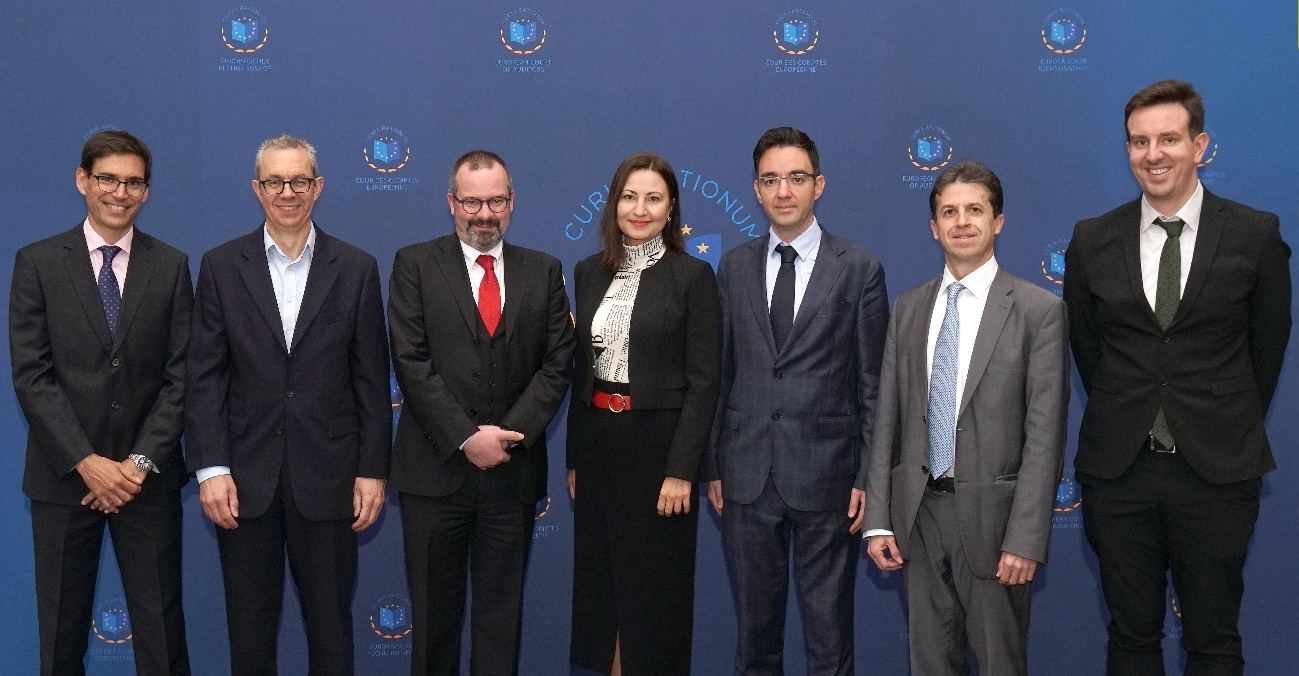
From left to right: Fernando Pascual Gil, James Verity, Jussi Bright, Iliana Ivanova, Ivan Genchev, Pietro Puricella, Zeljko Mimica.
Endnotes
1 Marcus, J. S. et al.: The impact of COVID‑19 on the Internal Market, European Parliament, 2021.
2 Pouliakas, K.; Branka, J.: EU jobs at highest risk of COVID‑19 social distancing: Is the pandemic exacerbating the labour market divide?, No 1, CEDEFOP working paper, 2020.
3 Commission proposal for a Council regulation for SURE, COM(2020) 139.
4 Article 5 of Regulation (EU) No 2020/672.
5 For Common Provisions Regulations relating to the 2007‑2013 and 2014‑2020 programme periods: Council Regulation (EU) No 1083/2006 and Regulation (EU) No 1303/2013 respectively.
6 SURE: Two Years On: fourth bi‑annual report, COM(2022) 483.
7 Article 11(5) of Regulation (EU) No 2020/672.
8 Article 9 of Regulation (EU) No 2020/672.
9 SURE: Two Years On: fourth bi‑annual report, COM(2022) 483.
10 Article 3 of Regulation (EU) No 2020/672.
11 Article 2 of Regulation (EU) No 2020/672.
12 Article 1.2 of Regulation (EU) No 2020/672.
13 COVID‑19: combating fraud in short-term financial support schemes, European Platform tackling undeclared work, May 2021.
14 The Supreme audit institutions of Croatia (2021),Ireland (2021), Latvia (2020).
15 Article 13.1 of Regulation (EU) No 2020/672 as required by article 220(5) of the Regulation (EU) No 2018/1046.
16 SURE at 18 months: third bi‑annual report, COM(2022) 128.
17 COVID‑19: Implications for employment and working life, COVID‑19 series, Eurofound, Publications Office of the European Union, Luxembourg, 2021.
18 Monitoring convergence in the European Union: Looking backwards to move forward - Upward convergence through crises, Eurofound, Challenges and prospects in the EU series, 2021.
19 Commission report on labour market and wage developments in Europe, December 2021, p. 45.
20 European Labor Markets and the COVID‑19 Pandemic: Fallout and the Path Ahead, International Monetary Fund, March 2022.
21 SURE: Two Years On: fourth bi‑annual report, COM(2022) 483.
22 COVID‑19: Implications for employment and working life, COVID‑19 series, Eurofound, Publications Office of the European Union, Luxembourg, 2021.
23 EU jobs at highest risk of COVID‑19 social distancing, CEDEFOP, 2020.
24 Article 14.1 of Regulation (EU) No 2020/672.
25 SURE: Two Years On: fourth bi‑annual report, COM(2022) 483.
26 Article 34 of the Regulation (EU, Euratom) 2018/1046. Paragraph I.3 of Interinstitutional Agreement between the European Parliament, the Council of the European Union and the European Commission on Better Law-Making, 12.05.2016, p. 1. SWD(2021) 305, Better Regulation Guidelines, 3.11.2021, p. 23.
27 Commission communication on Better regulation: Joining forces to make better laws, COM(2021) 219, pp. 16-17. SWD(2021) 305, Better Regulation Guidelines, 3.11.2021, p. 23.
28 The European Pillar of Social Rights Action Plan, 2021, p. 18.
29 Commission communication on Better regulation: Joining forces to make better laws, COM(2021) 219, pp. 13-14.
Contact
EUROPEAN COURT OF AUDITORS
12, rue Alcide De Gasperi
1615 Luxembourg
LUXEMBOURG
Tel. +352 4398-1
Enquiries: eca.europa.eu/en/Pages/ContactForm.aspx
Website: eca.europa.eu
Twitter: @EUAuditors
More information on the European Union is available on the internet (https://europa.eu).
Luxembourg: Publications Office of the European Union, 2022
| ISBN 978-92-847-9174-3 | ISSN 1977-5679 | doi:10.2865/47711 | QJ-AB-22-026-EN-N | |
| HTML | ISBN 978-92-847-9195-8 | ISSN 1977-5679 | doi:10.2865/8860 | QJ-AB-22-026-EN-Q |
COPYRIGHT
© European Union, 2022
The reuse policy of the European Court of Auditors (ECA) is set out in ECA Decision No 6-2019 on the open data policy and the reuse of documents.
Unless otherwise indicated (e.g. in individual copyright notices), ECA content owned by the EU is licensed under the Creative Commons Attribution 4.0 International (CC BY 4.0) licence. As a general rule, therefore, reuse is authorised provided appropriate credit is given and any changes are indicated. Those reusing ECA content must not distort the original meaning or message. The ECA shall not be liable for any consequences of reuse.
Additional permission must be obtained if specific content depicts identifiable private individuals, e.g. in pictures of ECA staff, or includes third-party works.
Where such permission is obtained, it shall cancel and replace the above-mentioned general permission and shall clearly state any restrictions on use.
To use or reproduce content that is not owned by the EU, it may be necessary to seek permission directly from the copyright holders.
Icons Figure 1 and 2: For these figures resources from Flaticon.com have been used. © Freepik Company S.L. All rights reserved.
Software or documents covered by industrial property rights, such as patents, trademarks, registered designs, logos and names, are excluded from the ECA’s reuse policy.
The European Union’s family of institutional websites, within the europa.eu domain, provides links to third-party sites. Since the ECA has no control over these, you are encouraged to review their privacy and copyright policies.
Use of the ECA logo
The ECA logo must not be used without the ECA’s prior consent.
GETTING IN TOUCH WITH THE EU
In person
All over the European Union there are hundreds of Europe Direct centres. You can find the address of the centre nearest you online (european-union.europa.eu/contact-eu/meet-us_en).
On the phone or in writing
Europe Direct is a service that answers your questions about the European Union. You can contact this service:
- by freephone: 00 800 6 7 8 9 10 11 (certain operators may charge for these calls),
- at the following standard number: +32 22999696,
- via the following form: european-union.europa.eu/contact-eu/write-us_en.
FINDING INFORMATION ABOUT THE EU
Online
Information about the European Union in all the official languages of the EU is available on the Europa website (european-union.europa.eu).
EU publications
You can view or order EU publications at op.europa.eu/en/publications. Multiple copies of free publications can be obtained by contacting Europe Direct or your local documentation centre (european-union.europa.eu/contact-eu/meet-us_en).
EU law and related documents
For access to legal information from the EU, including all EU law since 1951 in all the official language versions, go to EUR-Lex (eur-lex.europa.eu).
EU open data
The portal data.europa.eu provides access to open datasets from the EU institutions, bodies and agencies. These can be downloaded and reused for free, for both commercial and non-commercial purposes. The portal also provides access to a wealth of datasets from European countries.