

The Commission’s assessment of national recovery and resilience plans Overall appropriate but implementation risks remain
About the report:In February 2021, the European Parliament and the Council adopted the regulation establishing the Recovery and Resilience Facility, whose purpose is to mitigate the economic and social impact of the COVID-19 pandemic. To benefit from the EU financial support, Member States have to submit national recovery and resilience plans. We examined the Commission’s assessment of these national plans and found that it was overall appropriate given the complexity of the process and the time constraints. However, we identified a number of weaknesses in the process and risks for the successful implementation of the plans. We make several recommendations to improve the Commission’s procedures for future assessments and limit the risks and challenges that might affect the implementation of the plans.
ECA special report pursuant to Article 287(4), second subparagraph, TFEU.
 |
Executive summary
I In July 2020, in response to the COVID‑19 pandemic, the European Council agreed a more than €800 billion recovery fund – NextGenerationEU. Its centrepiece is the Recovery and Resilience Facility amounting to up to €723.8 billion (in current prices) in total. The purpose of the Recovery and Resilience Facility is to mitigate the economic and social impact of the pandemic and make EU economies and societies more sustainable and resilient for the future, with a specific focus on the green and digital transition.
II To benefit from the support under the Recovery and Resilience Facility, Member States submitted their draft national recovery and resilience plans to the Commission. The Commission is responsible for assessing the recovery and resilience plans based on criteria stipulated in the Recovery and Resilience Facility Regulation and for providing guidance and support to Member States in that respect.
III This audit is the first in a series of ECA audits on the Recovery and Resilience Facility. We selected a sample of six Member States and examined the appropriateness of the Commission’s assessment of the recovery and resilience plans, and verified whether the assessment process and guidance to Member States was managed effectively, ensured that the recovery and resilience plans are relevant to address the objectives of the Recovery and Resilience Facility and that they are compliant with the conditions defined in the Recovery and Resilience Facility regulation. This audit could feed into any future assessment of the Commission, particularly in relation to the submission of amended recovery and resilience plans, and it highlights the risks and challenges that might affect their implementation.
IV We conclude that the Commission’s assessment of the recovery and resilience plans was overall appropriate given the complexity of the process and the time constraints. However, we identified a number of weaknesses in the process and risks for the successful implementation of the Recovery and Resilience Facility.
V The Commission’s assessment was based on comprehensive internal guidelines and checklists but assessors used them not systematically or uniformly for the qualitative assessment. The key documents supporting the Commission’s final assessment were available but not always easily traceable. The Commission provided support to the Member States when they drafted the recovery and resilience plans and issued guidance documents. However, a more active role of the Commission in promoting exchange of good practice between Member States would have facilitated the process.
VI Regarding the policy objectives of the Recovery and Resilience Facility, we conclude that the Commission’s assessment verified that the recovery and resilience plans are likely to contribute to all six pillars and thereby the policy areas relevant to the Facility, but the extent varies and the impact remains to be seen in practice. Some important aspects of the country specific recommendations remained unaddressed across the Member States, in particular those of 2019, representing recurrent structural changes.
VII As for the compliance with key conditions of the Facility, the Commission’s assessment led to the result that none of the measures in our audit sample is likely to do significant harm to the environment. However, measures to mitigate the environmental impact have not been systematically included in form of a milestone or target in the recovery and resilience plans, and measures incompliant with the “do no significant harm” principle may be financed outside the Facility. The Commission’s assessment of the estimated costs reflected a lack of information for certain measures. The disbursement profiles were a result of negotiations rather than a reflection of the underlying costs. It also verified that the sampled measures contributed to the green and digital transition, where relevant.
VIII The Commission’s assessment improved the quality of the milestones and targets, but some of them lacked clarity or did not cover all key stages of implementation of a measure. We also noted that the milestones and targets are generally limited to measure output rather than impact and that the approach in setting milestones and targets was not always harmonized across Member States.
IX The Commission’s assessment of the monitoring and control arrangements proposed by Member States correctly identified gaps and deficiencies requiring additional measures. However, the assessment was to some extent based on the description of systems which were yet to be set up. We also note that some Member States decided not to use the Commission’s data-mining and risk scoring tool, which may both decrease its overall usefulness and increase the risk of non-detection of fraud and double-funding in the Member State concerned.
X Based on these findings, we recommend that the Commission:
- improves assessment procedures and documentation;
- promotes exchange of good practices amongst Member States;
- follows-up on the contribution of the implemented measures to the country-specific recommendations;
- improves transparency and monitoring of the “do no significant harm” principle;
- ensures clear verification mechanisms of milestones and targets and their adequate definition;
- verifies compliance with the specific milestones for monitoring and control and encourages the use of the Commission’s data-mining and risk scoring tool.
Introduction
The Recovery and Resilience Facility
01 In July 2020, in response to the COVID‑19 pandemic, the European Council agreed a more than €800 billion (in current prices) temporary recovery instrument – NextGenerationEU. Its centrepiece is the Recovery and Resilience Facility (RRF). Amounting to a maximum of €723.8 billion in total (in current prices) of which up to €338.0 billion in grants and up to €385.8 billion in loans, it is equivalent to about two thirds of the new multiannual financial framework 2021-2027 by value and is the largest EU instrument to date.
02 The purpose of the RRF is to mitigate the economic and social impact of the COVID‑19 pandemic and make European economies and societies more sustainable, resilient and better prepared for the challenges and opportunities of the green and digital transitions. It will finance investments and reforms in policy areas of EU-wide relevance, structured into six pillars1 (see Figure 1).

Source: ECA based on the RRF Regulation.
Photos: ©Depositphotos.
03 The financial contribution per Member State is established in accordance with an allocation key set out in Annexes I to III of the RRF Regulation. According to the RRF regulation, the RRF is a performance-based instrument, and Member States will receive funding based on the achievement of qualitative milestones and quantitative targets.
Recovery and resilience plans
04 To benefit from RRF support, Member States submitted their draft national recovery and resilience plans (RRPs) to the Commission from mid-October 2020 onward and the final RRPs from the moment the RRF Regulation entered into force on 12 February 20212, in accordance with certain criteria and conditions. RRPs consist of a set of measures, either investments or reforms, grouped into thematic components (e.g. climate friendly mobility or digitalisation of education).
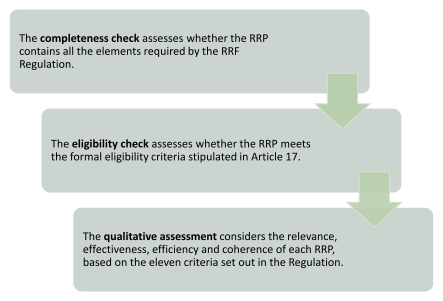
05 The Commission’s assessment of the RRPs is based on 11 criteria, as stipulated in Article 19(3) of the RRF Regulation (see Table 1).
| Category | Criteria |
|---|---|
| Relevance | Criterion 1 – contribute to all six pillars; |
| Criterion 2 – effectively address the challenges identified in the European Semester, in particular the 2019 and 2020 country-specific recommendations (CSRs); | |
| Criterion 3 – contribute to strengthening growth potential, job creation and resilience; | |
| Criterion 4 – contain only measures that comply with the “do no significant harm” principle (DNSH); | |
| Criterion 5 – contribute to the green transition (minimum 37 % of the total estimated cost for climate spending); | |
| Criterion 6 – contribute to the digital transition (minimum 20 % of the total estimated cost); | |
| Effectiveness | Criterion 7 – through its measures the RRP will have a lasting impact; |
| Criterion 8 – provide arrangements to monitor their implementation, including milestones, targets and related indicators; | |
| Efficiency | Criterion 9 – provide a reasonable and plausible justification of their total estimated costs; |
| Criterion 10 – provide control systems and arrangements that prevent, detect and correct corruption, fraud, irregularities, conflict of interest and double funding; | |
| Coherence | Criterion 11 – contain measures that represent coherent actions. |
Source: ECA based on the RRF Regulation.
06 In line with the assessment guidelines3, the Commission can generally rate each criteria as either ‘A’, ‘B’ or ‘C’, with ‘A’ being the highest and ‘C’ the lowest rating. For two out of the 11 criteria, the “do no significant harm” principle (DNSH) and the control systems, only ‘A’ or ‘C’ rating is possible (an overview of the rating is provided in Annex I).
07 For an RRP to receive a positive assessment, it must at least achieve the following final ratings:
- an ‘A’ for criterion 2 (CSRs), criterion 3 (growth potential, job creation and resilience), criterion 5 (green) and criterion 6 (digital);
- a majority of ‘A’s for the other seven criteria;
- no ‘Cs’.
08 RRPs may be assessed on several occasions. In addition to the Commission’s initial assessment which is covered by this audit, RRP will be assessed when an update, revision or amendment is submitted by the Member State, specifically:
- when a Member State updates its plan following the update of the maximum financial contribution for the non-repayable support in June 2022; or
- asks for an amendment of the originally submitted RRP on the basis that the RRP including relevant milestones and targets is no longer achievable, either partially or totally, because of objective circumstances (Article 21 (1) RRF Regulation); or
- requests RRF loan support. Member States may request loan support at the time of the submission of a RRP, or at a different moment in time until 31 August 2023. In the latter case, the request shall be accompanied by a revised RRP, including additional milestones and targets (Article 14 (2) RRF Regulation).
Roles and responsibilities in the process of preparation and assessment of the RRPs
Member States
09 The Member States are responsible for preparing the national RRPs in accordance with Article 18(4) of the RRF Regulation. Member States have to cooperate with the Commission during the preparation and assessment of their RRPs and provide the Commission with any additional information requested.
10 Member States may also amend or revise their RRPs at a later stage, in case the RRPs are no longer achievable or should include additional milestones and targets for the use of loan support (see paragraph 08).
The Commission
11 The Commission is responsible for assessing RRPs in close cooperation with Member States. It provides guidance and support to Member States, to ensure compliance with the different criteria and conditions set out in the RRF Regulation.
12 The assessment process is based on a continuous dialogue, which already starts before the official submission of the RRPs. After submission of the RRP, the Commission has two months to, together with the Member State, solve remaining issues and request further information or changes, before finalising its assessment and issuing its official proposal for a Council decision. The Member States concerned and the Commission may agree to extend this deadline for assessment by a reasonable period if necessary4.
13 After the Council approval, the Commission concludes an operational arrangement with each Member State including detailed and technical aspects of implementation, such as the timeline, additional interim steps to the milestones and targets, and arrangements for providing access to the underlying data.
The Council
14 Based on the Commission’s proposal, the Council should approve the assessment of the RRP in a Council Implementing Decision within four weeks5. Amended and revised plans (see paragraph 08) should also be adopted by the Council.
15 For Council Implementing Decisions adopted by 31 December 2021, the Member State could request a pre-financing of 13 %. All subsequent payments are based on the progress reported by the Member State (and assessed by the Commission) in implementing the RRP. For disbursement, the Commission shall provide its preliminary assessment to the Economic and Financial Committee and ask for its opinion. The Commission shall take the opinion into account for its assessment, as stipulated in Article 24(4) of the RRF Regulation.
State of play of submission and assessment of the recovery and resilience plans by 1 June 2022
16 By 1 June 2022, all Member States but the Netherlands had officially submitted their RRPs. The Commission had assessed 25 of the RRPs positively, with the ratings reported in Figure 2, while the assessment for Hungary was still ongoing at the time of the audit (see Annex II).

Source: ECA based on Commission Staff Working Documents.
Audit scope and approach
17 This audit responds to the ECA’s priority to address the EU’s response to the COVID‑19 pandemic across various policy dimensions, including economic governance, by examining whether the largest EU instrument to date was set on the right track. The audit will provide an insight to stakeholders about the assessment of the recovery and resilience plans (RRPs). It aims to feed into any necessary future amendments of the assessment process, particularly in relation to the submission of amended or revised RRPs. Although this report focuses primarily on the Commission’s assessment work, it also highlights the risks and challenges that might affect the implementation of RRPs.
18 This audit is the first in a series of audits we plan on the NextGenerationEU and the Recovery and Resilience Facility (RRF). It does not cover the Commission’s proposal for amending the RRF Regulation as regards REPowerEU chapters in the RRPs6. We set out to examine the appropriateness of the Commission’s assessment of the RRPs by assessing whether:
- the Commission’s internal procedures were clear and were applied, guidance to the Member States was sufficient and followed, and support for the Member States was effective;
- the Commission’s assessment ensured that:
- the RRPs contribute adequately to the six pillars and to effectively addressing all or a significant subset of challenges identified in the CSRs;
- the measures in the RRPs comply with the key conditions stipulated in the RRF Regulation (green and digital, DNSH, costs);
- the milestones and targets are clear and realistic;
- the proposed monitoring and control arrangements are appropriate.
19 Our audit criteria derive from:
- regulatory requirements (in particular the RRF Regulation);
- the Commission’s internal rules and procedures (e.g. instructions and guidelines).
20 Our assessment is based on a sample of six Member States: the four with the largest grant allocation in absolute terms (Germany, Spain, France and Italy) and the two with the largest grant allocation relative to their 2020 gross domestic product (Greece and Croatia). The six RRPs are different in various respects. Annex III presents some of their characteristics. In addition, we made a judgement sample and selected seven measures in each of the six Member States in our sample on the basis of materiality (highest cost) and from the following thematic areas: ‘transport’, ‘green’, ‘digital’, ‘health’ and ‘other’ for investments, and ‘fiscal’ and ‘social’ for reforms. The 42 sampled measures are presented in Annex IV. We also carried out a general analysis of the milestones and targets in the six sampled RRPs with the objective of getting some insight on the nature and timely distribution of milestones and targets as well as the Member States’ approach in defining them.
21 For these six Member States, we examined the Commission’s assessment process, from the initial submission of draft RRPs to their final assessments and proposal for a Council Implementing Decision, based on 8 out of 11 assessment criteria (1, 2, 4‑6, 8‑10; see Table 1). The audit therefore covered the period from October 2020 (when first draft RRPs were submitted) to June 2022. The audit did not cover the Council’s approval process of the proposal for a Council Implementing Decision.
22 We analysed the documentation provided by the Commission, including relevant correspondence with the six Member States during the assessment process. We also interviewed staff from the Commission and the relevant national authorities. In addition, we discussed the main observations of the report with a panel of experts.
Observations
Internal procedures and support to Member States were adequate but not always traceable and were subject to time constraints
23 The novelty and complexity of the recovery and resilience plans (RRPs) requires adequate internal procedures for the Commission as well as appropriate support to Member States in preparing their RRPs. We examined whether the Commission had:
- managed its internal procedures effectively to mobilise its in-house knowledge and ensure consistent and transparent application of its internal guidelines;
- provided clear and timely guidance and support to Member States.
The Commission’s internal procedure was adequate but not always traceable
24 The political governance of the RRF takes the form of a high-level steering board, chaired by the President of the European Commission and composed of the three Executive Vice-Presidents, the Commissioner for Economy, the Secretary-General, the Head of the new Recovery and Resilience Task Force (RECOVER) and the Director-General for Economic and Financial Affairs (DG ECFIN). The steering board oversees all steps, from early engagement with Member States on draft RRPs to implementation of the final RRPs and fulfilment of their milestones and targets. It reports regularly to the College of Commissioners on its discussions. The College is responsible for approving the proposal for a Council Implementing Decision.
25 The RECOVER task force was established on 16 August 2020 within the Secretariat-General and is jointly with DG ECFIN responsible for steering the RRF’s implementation and for coordinating it with the European Semester. RECOVER and DG ECFIN are also responsible for involving the other policy DGs at all stages of the process as necessary.
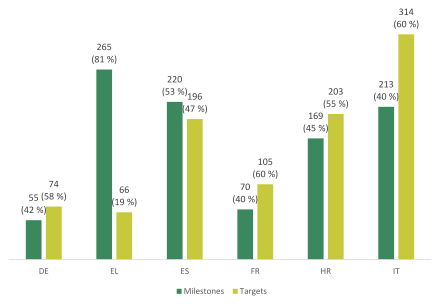
26 For this purpose, RECOVER and DG ECFIN held weekly coordination meetings and regularly engaged with other DGs through ‘country teams’. These country teams build on existing European Semester teams, but also include specialists from all relevant DGs to provide the required expertise on the different policy areas covered by RRPs.
27 Interactions with the Member States are managed by 27 negotiating teams consisting of the (Deputy) Heads of the relevant country units in RECOVER/DG ECFIN as well as selected members of the country teams from policy DGs, depending on the expertise needed. They are responsible, in particular, for analysing (draft) RRPs, preparing assessments and implementing acts related to the RRPs and payment requests, and monitoring implementation progress. Generally, two Director-level lead negotiators, one each for DG ECFIN and RECOVER, oversee the country team’s work.
28 Finally, joint RECOVER-DG ECFIN horizontal teams were set up to deal with general aspects linked to green transition (including DNSH), digital transformation, costing, and milestones/targets. They provided guidance on evaluating the most important areas under their responsibility.
29 Combining representatives from the RECOVER/DG ECFIN country units and the policy DG’s country teams in the negotiating teams ensured that the assessment was based on staff expertise in the different policy areas as well as on geographical aspects. Our analysis of the Commission’s assessment of the sampled measures (see paragraph 20) confirmed the involvement of all relevant DGs in the process.
30 The assessment process included several stages (see Figure 3).
Source: ECA based on the Commission internal guidelines on the RRP assessment.
31 To facilitate the assessment and the discussion with Member States, the Commission developed general internal guidelines and checklists. For economic and social impact, milestones and targets, costs and DNSH these general internal guidelines were complemented by more detailed technical guidelines.
32 Internal guidelines and checklist standardise the assessment process and contribute to an equal treatment of different RRPs. The internal guidelines and checklists provided a comprehensive set of considerations for the assessors in the country teams to conduct and document their assessments. However, the use of the checklists was only mandatory for the completeness and eligibility assessment. As a result, they were not systematically or uniformly used for the qualitative assessment of the 11 assessment criteria. At times, the assessors had provided only minimal information, while at others they had drafted notes or other working documents without any standard structure.
33 Although our audit of sampled measures confirmed that key documents resulting from the Commission’s work and supporting its final assessments were available and recorded, the documentation leading to the conclusions in the Staff Working Documents (SWDs) was not always easily traceable.
The Commission’s guidance and support to Member States was adequate but subject to time constraints
34 The Commission was responsible for providing Member States with the necessary guidance and support while they were preparing their RRPs. It provided such assistance already from an early stage through guidance documents and discussions, while the RRF Regulation was still under discussion by the co-legislators.
35 The Commission adopted several guidance documents to assist Member States in drafting their RRPs:
- general guidance to Member States’ RRPs adopted on 17 September 2020, which was amended and replaced by a new version on 22 January 2021; and
- technical guidance on the application of the DNSH criterion7, published on 12 February 2021.
In addition, these documents were complemented by self-assessment checklists for national control systems.
36 Due to the tight timeframe for drafting the RRPs and for drafting and adopting the RRF Regulation, the Commission partly had to develop its guidance documents before the legal text was finalized, and in parallel with Member States preparing their RRPs. For this, the Commission published two versions of its main guidance document on RRP drafting (see paragraph 35). This, in some cases, led to Member States having to adjust their RRPs during the process. This was in particular the case for the DNSH guidance, which was adopted at the same time as the RRF Regulation, and required Member States to complete a DNSH checklist for each reform and investment in their RRPs.
37 We found that RRP assessments were largely based on continuous dialogue between the Commission and the Member States, consisting of bilateral meetings, communication, and exchanges of information. To further facilitate such information sharing, the Commission also established an online question and answer platform on the RRF, providing Member States with additional explanations and guidance. During our interviews, Member State authorities confirmed the usefulness of this support.
38 Article 18(5) of the RRF Regulation also stipulates that Member States may request the Commission to organise an exchange of good practice with other Member States. We welcomed this possibility in our opinion on the proposal for a regulation establishing the RRF8. According to the Commission, only one Member State (outside of our audit sample) has formally requested such an exchange but subsequently withdrew it.
39 However, most Member State authorities we interviewed would have welcomed more interaction with the other Member States during the RRP negotiation process. Some Member States organised informal bilateral meetings on their own initiative but an active role of the Commission to foster synergies amongst RRPs of Member States would have facilitated the process and encouraged the inclusion of cross-country projects in the RRPs.
Recovery and resilience plans are likely to contribute to the six pillars but gaps remain in addressing country-specific recommendations
The Commission’s assessment verified that the recovery and resilience plans contribute to the six pillars but the extent of the contribution varies
40 We examined how the Commission had assessed whether recovery and resilience plans (RRPs) contribute appropriately to all six pillars in line with the criteria set out in the RRF Regulation (see Box 1).
Elements for the assessment of RRP’s contribution to the six pillars
- the RRP contributes in a comprehensive and adequately balanced manner to all six pillars …, considering the specific challenges of the Member State concerned and taking into account the financial contribution of the Member State concerned and the requested loan support.
Source: Annex V, section 2.1 of the RRF Regulation.
41 The Commission assessed RRPs’ contribution to the six pillars based on a detailed mapping, assessing for each component whether it contributed significantly or at least partly to each pillar (see Annex IV). It concluded that all sampled RRPs contributed in a comprehensive and adequately balanced manner to all six pillars and granted an ‘A’ rating in this area for all of them.
42 The Commission’s mapping confirmed that all six pillars were addressed by at least one of the components for all RRPs in our sample. The Commission’s mapping was carried out at the level of components with individual measures being considered to determine the (main) pillars the component contributes to. We note however that not all measures in a component contribute directly to the pillar in question.
43 Many components included in the RRPs address more than one pillar and the causal connection between the components and pillars, and thereby the extent to which components are likely to contribute, varies. In general the link between components and pillars is closer for the more specific pillars like “Digital” and “Green” than for the broader and more general pillars like “Smart, sustainable and inclusive growth” and ”Social and territorial cohesion”.
44 Moreover, as each component includes reforms which may have no cost, it is difficult to determine, which proportion of funds is contributing to each of the six pillars. Consequently, from a financial perspective, it is unclear whether the six pillars are addressed in an “adequately balanced manner” as requested by the RRF Regulation. In addition, the Regulation does not provide a definition of what actually constitutes an “adequately balanced” response in this context.
The recovery and resilience plans address country-specific recommendations, but gaps remain
45 The European Semester, introduced in 2011, is the EU’s cycle of economic, fiscal, labour and social policy coordination. In this context, the Commission analyses economic and social developments in the Member States and the challenges facing them. To tackle these challenges, the Council each year issues CSRs to every Member State, based on proposals by the Commission, which are the main output of the European Semester. Whereas in the past the policy coordination under the European Semester and the implementation of CSRs were not linked to any financial allocations, this has changed with the inclusion of measures adressing CSRs in the RRPs.
46 The RRF Regulation requires that RRPs contain measures addressing all or a significant subset of 2019 and 2020 CSRs. In its assessment, the Commission takes into account four elements (see Box 2).
Criteria for the assessment of RRP’s contribution to addressing the 2019 and 2020 CSRs
- the RRP is expected to contribute to effectively addressing all or a significant subset of challenges identified in the relevant CSRs…, taking into account the financial contribution of the Member State concerned and the requested loan support…;
- the RRP represents a comprehensive and adequate response to the economic and social situation of the Member State concerned;
- the challenges addressed by the RRP are considered as significant to boost the growth potential of the economy of the Member State concerned in a sustainable manner;
- following the completion of the proposed reforms and investments, the related challenges would be expected to have been resolved or addressed in a manner that significantly contributes to their resolution.
Source: Annex V, section 2.2 of the RRF Regulation.
47 We checked whether the Commission assessment ensured that measures included in the sampled Member States’ RRPs contribute to addressing the relevant CSRs, and interviewed Member State authorities to gain more information on the process of introducing CSR-relevant measures in their RRPs.
48 During the assessment of the draft RRPs, the Commission identified gaps for some elements of the CSRs and asked Member States to propose additional measures. This has been more successful in some cases (e.g. assessment of the quality of public expenditure in France, spending review in Italy or judiciary and anti-corruption measures in Croatia) than in others, as some subparts of CSRs (mostly those of 2019) remained unaddressed in the final RRPs.
49 For the submitted RRPs, the Commission carried out a mapping exercise included in its SWD showing the extent to which CSRs had been sufficiently addressed and identifying those which had not. Like for the six pillars, this exercise was carried out for components (sets of measures, see paragraph 04), with individual measures being considered where relevant. For the six sampled Member States, the Commission’s assessment concluded that all 2019 and 2020 CSRs had either partially (with remaining gaps) or fully (without any remaining gap) been addressed, and all final RRPs in our sample were therefore granted an ‘A’. Table 2 gives an overview of the remaining gaps identified by the Commission.
Table 2 – Gaps in addressing the 2019 and 2020 CSRs, as identified by the Commission
| Member State | Gaps identified in the RRPs |
|---|---|
| Germany |
|
| Greece | No gap has been identified. |
| Spain |
|
| France |
|
| Croatia | No gap has been identified. |
| Italy | Tax evasion (CSR 2019.1.4) – a comprehensive reform of personal income taxes is mentioned in the RRP, but is not included as a measure and thus not associated to milestones or targets. |
Source: ECA based on Commission Staff Working Documents.
50 Our own mapping exercise carried out at measure level arrived at broadly the same result for the CSRs as the Commission’s. The main differences concern Italy for which we identified additional gaps for some elements of the CSRs (reforms of the cadastral and the pension system, as well parts of the financial sector reform), which were not included in the Commission’s SWD (see Table 3).
Table 3 – ECA’s assessment of the extent to which sampled RRPs address CSRs for 2019 and 2020
| CSRs | 2019 | 2020 | ||||||||||
|---|---|---|---|---|---|---|---|---|---|---|---|---|
| Member State | DE | EL | ES | FR | HR | IT | DE | EL | ES | FR | HR | IT |
| Category | ||||||||||||
| Substantially addressed | 0 | 2 | 2 | 1 | 4 | 3 | 2 | 4 | 3 | 3 | 4 | 4 |
| Substantially addressed apart from minor elements | 0 | 0 | 0 | 2 | 0 | 0 | 0 | 0 | 1 | 1 | 0 | 0 |
| Partially addressed, with one or more subparts not addressed | 2 | 0 | 2 | 1 | 0 | 1 | 0 | 0 | 0 | 0 | 0 | 0 |
| Not addressed | 0 | 0 | 0 | 0 | 0 | 1 | 0 | 0 | 0 | 0 | 0 | 0 |
| Total number CSRs | 2 | 2 | 4 | 4 | 4 | 5 | 2 | 4 | 4 | 4 | 4 | 4 |
Note: Due to the activation of the Stability and Growth Pact’s “general escape clause” in the context of the COVID‑19 pandemic, the 2019 CSRs on compliance with the Stability and Growth Pact and the 2020 CSRs to make sufficient progress towards their medium-term budgetary objectives, were no longer relevant and thus not considered a gap.
Source: ECA based on Commission Staff Working Documents.
51 We found that the 2020 CSRs were generally covered in the sampled RRPs. However, there are still some remaining gaps concerning certain elements of the CSRs, for example, the health care system (Spain) or investments and regulatory environment (France), which are planned to be addressed outside the RRF. It was however not always clear why these were not included in the RRPs instead, in particular in the case of important cross-border measures (e.g. the electricity interconnections between Spain and France), which by definition would be well suited to the RRF.
52 Most of the gaps identified concern the 2019 CSRs, which in large parts represent recurring structural challenges Member States have been facing for years. For example, the German RRP does not include any measure to strengthen competition in business services and regulated professions, which has been included in the CSRs for Germany since 2011. In addition, various RRPs did not address the elements of CSRs related to sustainability of pensions (Germany, France, Italy and partially Spain) or taxation (Germany and Italy).
53 Overall, we consider that the Commission’s assessment resulted in RRPs contributing to most of the 2019 and 2020 CSRs. However, some important elements of the CSRs remained unaddressed across the Member States in our audit sample, largely related to recurring structural challenges Member States have been facing for years. Furthermore, the assessment of what constitutes a “significant subset” of CSRs having been adressed has neither been defined in the RRF Regulation nor by the Commission. The assessment therefore remains to some extent judgemental, especially in cases where the Commission identified several and/or serious gaps.
Assessment of key conditions within the Recovery and Resilience Facility was appropriate but not entirely transparent
54 To evaluate whether the Commission’s assessment of the “do no significant harm” principle (DNSH), green and digital tagging and cost estimates was appropriate, we selected seven measures in each of the six Member States in our sample (see paragraph 20).
55 For the measures sampled, we examined whether the Commission had appropriately assessed whether:
- any measure included in the recovery and resilience plan (RRP) does significant harm to environmental objectives within the meaning of Article 17 of the Taxonomy Regulation9 (compliance with the DNSH principle);
- the implementation of the envisaged measures is expected to effectively contribute to the green and digital transition, including the tagging of measures and the coefficients applied;
- the estimated costs were reasonable, plausible, commensurate with expected economic and social benefits and not covered by other EU funding.
The Commission’s assessments acknowledged compliance with the “do no significant harm” principle, but milestones or targets for compensating measures were not systematically included
56 For an RRP to be approved, all measures must comply with the DNSH principle (see Box 3).
Criteria for the assessment of compliance of measures with the DNSH principle
- no measure for the implementation of reforms and investments projects included in the RRP does significant harm to environmental objectives (the principle of “do no significant harm”).
Source: Annex V, section 2.4 of the RRF Regulation.
57 The Commission issued a technical guidance on the application of the DNSH principle when assessing RRPs (see paragraph 35 and 36). It required Member States to provide a DNSH checklist for each measure in their RRPs.
58 The Commission then assessed the measures submitted and their corresponding DNSH checklists and provided additional feedback or stipulated conditions that were included in the final set of milestones and targets agreed in the Council Implementing Decision. For the sampled measures we found that the Commission had:
- ensured that checklists addressed the environmental objectives;
- requested further information when necessary, given feedback and suggested changes or the exclusion of certain measures, including with regard to the wording for specific measures and the corresponding milestones or targets;
- correctly requested for various RRPs the exclusion of certain parts of measures it considered incompliant with the DNSH principle. These were subsequently removed from the RRPs. However, in some cases they may be financed outside the RRF instead, which contradict the concept of the DNSH principle;
- ensured, for measures likely to have an environmental impact, that the checklists completed by Member States provided explanation on how significant harm would be avoided. This includes suggesting mitigating measures.
59 We note, however, that the Commission’s assessment documentation of the DNSH checklists was spread across multiple working papers and lacked a summary list showing all DNSH assessments for every measure to back up its overall conclusion in the SWD and its final assessment.
60 In addition, the nature and scale of the impact of potentially harmful measures was not quantified in the checklist or in any other form. This made it difficult to assess whether the explanations provided and the mitigating measures suggested were sufficient to ensure compliance with the DNSH principle.
61 Furthermore, in those cases where mitigating measures were needed to grant a positive DNSH assessment, the mitigating measures have not systematically been included in form of a milestone or target in the RRPs. Consequently, their fulfilment is not a payment condition and there is no legal basis to impose or follow-up their implementation.
The Commission verified the sampled measures’ contribution to the green and digital transitions
62 The Commission’s assessment on whether the RRPs contribute to the green and digital transition was based on several elements (see Box 4).
Criteria for the assessment of RRPs’ contribution to the green and digital transitions
Green transition
- the implementation of the envisaged measures is expected to effectively contribute to the green transition…thereby contributing to the achievement of the Union 2030 climate targets while complying with the objective of EU climate neutrality by 2050;
- Member States apply a methodology consisting of assigning a specific weighting to the support provided, which reflects the extent to which such support makes a contribution to climate objectives;
- the implementation of the envisaged measures is expected to have a lasting impact.
Digital transition
- the implementation of the envisaged measures is expected to significantly contribute to the digital transformation of economic or social sectors;
- the implementation of the envisaged measures is expected to significantly contribute to address the challenges resulting from digital transition;
- Member States apply a methodology consisting of assigning a specific weighting to the support provided, which reflects the extent to which such support makes a contribution to digital objectives;
- the implementation of the envisaged measures is expected to have a lasting impact.
Source: Annex V, sections 2.5 and 2.6 of the RRF Regulation.
63 We verified the Commission’s assessment for our sample of 42 measures (see paragraph 20). For these measures we checked whether the Commission’s assessment of the intervention fields and coefficients (100 % for full contribution to green/digital transition, 40 % for partial contribution or 0 % for no contribution), was in line with the RRF Regulation and the final tags assigned to measures appropriate.
64 We found that:
- the Commission had carried out a detailed assessment of the intervention fields and coefficients applied by Member States for different measures. In particular, the DGs for Energy, Climate Action, Competition, Regional and Urban Policy and the Joint Research Centre, as well as horizontal green and digital teams, had been consulted for different measures in the sample;
- for several of the measures sampled, the Commission had given Member States feedback during the drafting phase on whether they had used incorrect intervention fields or whether it required a further breakdown of measures (into either separate measures or sub-measures) with different coefficients. In all cases, the Member States had made the required changes in their draft RRPs and the Commission considered the final versions compliant in this respect;
- for some types of measures, the RRF Regulation did not provide intervention fields or green coefficients. However, to ensure a consistent assessment, the Commission provided additional internal guidance on how to treat such measures (e.g. those relating to electric and hybrid cars) in line with the Taxonomy Regulation;
- the Commission had reported the final list of measures contributing to the green and digital transitions in its SWD for each Member State.
65 It remains however to be seen to what extent the measures included in the RRPs will contribute to the EU climate objectives in practice. For example, in one of our recent reports, we concluded that the climate contribution of key sub-sectors such as rail transport, electricity and biomass in relation to the EU budget was overestimated, and the reported spending was not always relevant to climate action10.
The rating for the estimated costs reflected a lack of information for certain measures
66 The assessment of estimated costs in the RRPs is of particular relevance as, different from other EU instruments, RRF funding is solely based on the achievement of milestones and targets instead of reimbursement of costs. Consequently, the estimated costs of measures included in the RRPs are only assessed at the time the Commission assesses the RRP and have no impact on the actual disbursement of funds during the implementation of the RRF.
67 The Commission had to assess the estimated total cost of each RRP according to the assessment criteria stipulated in the RRF Regulation (see Box 5).
Assessment criteria for the estimated total costs of the RRPs
- the Member State provided sufficient information and evidence that the amount of the estimated total costs of the RRP:
- is appropriate (reasonable);
- is in line with the nature and the type of the envisaged reforms and investments (plausible);
- to be financed under the Facility is not covered by existing or planned Union financing;
- the amount of the estimated total costs of the RRP is commensurate to the expected social and economic impact of the envisaged measures included on the Member State concerned.
Source: Annex V, section 2.9 of the RRF Regulation.
68 In line with the RRF Regulation, the Commission assessed the estimated total costs on the basis of the criteria mentioned in Box 5. The RRF Regulation does not specify how these four criteria should be consolidated into an overall rating for costs. However, the Commission developed a rating system for each of the four criteria as well as for the consolidated overall rating.
69 To date, all RRPs have been rated ‘B’ for costing. We noted that the requirement to achieve an ‘A’ rating on each of the criteria as well as for the RRP as a whole were relatively ambitious and relatively low for a ‘C’ rating, making it unlikely that anything other than a ‘B’ rating would be given. As a result, despite differences in the frequency and severity of shortcomings identified by the Commission in the Member States in our sample, they were all granted the same rating (‘B’). These shortcoming range from a lack of information for some measures at the planning stage to underlying assumptions not being fully plausible for every single measure (see Annex VI). In addition, as certain investments are innovative, their costing in the RRPs is largely based on professional judgement rather than historical data.
70 For the 42 measures sampled (see paragraph 20), we checked the costing information provided by the Member States, the additional information on costs requested by the Commission, the Commissions’ own internal working papers on the assessment of estimated total costs, and Commission’s conclusions on costing in the SWDs.
71 Member States produced information sheets for each measure, indicating costing information such as underlying cost assumptions, reference costs such as historical or comparative data, and information on whether the RRF funding is additional to the support provided under other EU programmes and instruments, and does not cover the same costs.
72 The Commission requested further information when necessary, in particular regarding the methodology and the underlying assumptions. For the sampled measures, we found that they obtained information to verify the estimated costs. For those cases, where the Commission, did not obtain sufficient information, it reflected this in its assessments and ratings. During this process, relevant DGs (including for Energy, for Mobility and Transport and for Employment, Social Affairs and Inclusion) were consulted when needed, in line with the internal guidelines on the costing assessment. We consider that the ‘B’ rating correctly reflects the lack of information in some areas and identified shortcomings related to costing.
Disbursement profile was a result of negotiations rather than a reflection of costs of underlying milestones and targets
73 The amount paid in a specific instalment is not necessarily based on the estimated costs for achieving the milestones and targets included in the payment request, but rather a result of the negotiations with the Member State in question. These negotiations take into account the proportion of milestones and targets as well as their relative importance.
74 In the EU-27, the total number of instalments (for non-repayable support) ranges from four (Cyprus) to ten (Belgium, Croatia, Italy, Portugal, Romania, Slovakia and Slovenia) with the number of milestones and targets to be achieved for each instalment ranging from two (Czechia - seventh instalment) to 114 (Portugal - ninth instalment).
75 However, being the result of a negotiation, the process for determining the disbursement profiles lacked transparency. Although not necessarily an issue for the assessment of the RRPs, this will be problematic during the RRF implementation given that any partial achievement of milestones and targets would need to be reflected in the payment to the Member State in question. The fact that the payment amount in each instalment is the result of a negotiation rather than reflecting underlying costs, will make it difficult to determine which reduction would be appropriate. At the time of the audit, the Commission had not yet defined a methodology for calculating the partial reduction or of payments.
76 In practice, for the six sampled Member States we note a significant heterogeneity in disbursement profiles in terms of both the proportion of total funding in each instalment and the number of milestones and targets to be achieved for each instalment (Figure 4).
Figure 4 – Payment profile and underlying milestones and targets, for the six sampled Member States

Source: ECA based on the annexes to Council Implementing Decisions.
The Commission’s assessment improved the quality of milestones and targets, but some important issues remained unaddressed
77 In line with the RRF Regulation, milestones and targets should measure the progress towards the achievement of a reform or an investment, with milestones being qualitative achievements and targets being quantitative achievements. The achievement of milestones and targets are the basis for the payment requests submitted by Member States, making them a key element in the implementation of the RRF.
78 In accordance with the RRF Regulation and the guidance to Member States11, the Commission had to assess milestones and targets as part of criterion 8 “arrangements to monitor their implementation, including milestones, targets and related indicators” (see Box 6).
Sub-criterion for the assessment of milestones and targets
- the proposed milestones and targets are clear and realistic and the proposed indicators for those milestones and targets are relevant, acceptable and robust.
Source: Annex V, section 2.8 of the RRF Regulation.
The Commission’s assessment process was comprehensive
79 We audited the Commission’s assessment of milestones and targets on the basis of a sample of 42 measures in six RRPS. For these measures, we assessed whether the final milestones and targets agreed in the Council implementing decision met the above criteria. In addition, we carried out a more general analysis of the milestones and targets in the six sampled RRPs, with the objective of getting some insight on the nature and timely distribution of milestones and targets as well as the Member States’ approach in defining them.
80 For the 42 sampled measures we conclude that overall the assessment process of the sampled milestones and targets was comprehensive, following a series of exchanges between the Commission and Member States. In particular, the Commission had requested clarifications in the descriptions of milestones and targets, which had led to clearer descriptions of intended deliverables, and in some cases suggested more precise wording. Furthermore, the Commission required the number of milestones and targets to be lowered to make certain RRPs more manageable and in other cases required more granular milestones and targets to cover different stages of, in particular, large measures.
81 However, the documentation trail is generally fragmented and the analyses are contained in multiple working papers of the Commission for different components of the RRPs. In addition, there was no overview of all draft milestones and targets during the negotiations. The Commission applied a qualitative assessment of each RRP against the standards of the RRF Regulation and not a comparative assessment, which would have facilitated identifying best practices across Member States.
Certain milestones and targets lack clarity
82 In our audit, we focused on the clarity of milestones and targets, as a prerequisite for measuring the progress of measures and justifying the disbursement of funds. In our general analysis of milestones and targets, we found that all six RRPs included milestones and targets lacking clarity (see some examples in Table 4). The absence of clear milestones and targets implies the risk that these milestones and targets are difficult to assess and the related risk that the initially aimed at objective was not fulfilled.
Table 4 – Examples of milestones and targets lacking clarity
| Member State | Measure | Relevant milestone or target | Description of milestone or target | Verification mechanism |
|---|---|---|---|---|
| France | C3.I7 Strengthening the resilience of electricity grids | Beginning of projects (Milestone) |
Beginning of the projects on the electricity grids in rural areas. | Summary document with a description of the projects, the state of advancement of the work and the location. |
| Germany | 2.1.1 Reform: Innovative data policy for Germany | Start of projects (Milestone) |
All projects and activities of the measure have started. Wherever relevant, selection procedures have been completed and selected projects have started. | N/A (Operational arrangement not published at the time of the audit) |
| Greece | 14 - 4.3. Improve the efficiency of the justice system – 16575 Accelerating the administration of justice | Justice Police Operational (Milestone) |
Operationalisation of the judicial police in all its competences, both at central administration level and at regional level within the courts. | Report by the Ministry of Justice, including: (a) Organigrams both at the central administrative level and at the regional level, per court; (b) a written confirmation of the completion of all staffing actions and the procurement, installation and operationality of all relevant infrastructure. |
| Spain | Investment 2 (C24.I2) - Boosting culture across the territory | Boosting cultural and creative initiatives (Target) |
Boost cultural activity of profit and non-profit organisations in non-urban areas (at least 400 initiatives). | (a) list of actions including a name and a brief description; (b) official reference of the award resolution proving the project or action has been funded; (c) the entities that have received funding; (d) the region; and (e) the type of action. |
Source: ECA based on the annexes to Council Implementing Decisions and operational arrangements.
Coverage of key stages of implementation in milestones and targets is in some cases incomplete
83 The Commission’s internal practical guidance requires that milestones and targets should reflect the key stages in implementation of the measure in question (start – interim – final). In our general analysis of milestones and targets we noted that the average number of milestone/target ranged from 1.7 per measure in Croatia to 3.2 in Germany (see Table 5).
Table 5 – Average number of milestones and targets per measure
| Member State (1) |
Total number of measures (2) |
Total number of milestones and targets (3) |
Average number of milestones and targets per measure (3:2) |
|---|---|---|---|
| Spain | 212 | 416 | 2.0 |
| Italy | 190 | 527 | 2.8 |
| France | 92 | 175 | 1.9 |
| Germany | 40 | 129 | 3.2 |
| Greece | 175 | 330 | 1.9 |
| Croatia | 222 | 372 | 1.7 |
Source: ECA based on the annexes to Council Implementing Decisions.
84 Covering key stages of implementation is particularly relevant for investments, which are often complex and implemented over a longer period and therefore require sequential milestones and targets to monitor their progress. However, in our general analysis of milestones and targets in the six sampled RRPs, we found investments including only one milestone or target (see some examples in Table 6).
Table 6 – Examples of investments including only one milestone or target
| Investment | Milestone or target | Timeframe | Description of the milestone or target |
|---|---|---|---|
| C2.I4 Biodiversity (France) |
Number of projects supported in the fields of ecological restoration and protected areas | By Q4 2022 | Number of projects related to ecological restoration, and preservation of biodiversity in protected areas. |
| C1.4. R1- I4 Reporting control system for road passenger and freight transport (Croatia) |
Establishment of a well-functioning reporting control system for road passenger and freight | By Q4 2024 | A well-functioning reporting control system for road passenger and freight transport shall be put in place, which shall connect data from the Tachograph Central Processing System (SOTAH) and the national records of tachograph cards and related records under the responsibility of the Ministry of the Sea, Transport and Infrastructure. |
Source: ECA based on the annexes to Council Implementing Decisions.
Milestones and targets for certain measures indicate that they will be completed after 31 August 2026
85 The RRF was designed as a response to the COVID‑19 pandemic and it is therefore important that the RRF is implemented within a reasonable timeframe. The Commission states on its website, that “Member States present plans on reforms and investments to be implement by 2026…”12. The RRF Regulation further specifies that:
- the RRP shall be duly reasoned and substantiated. It shall in particular set out the following elements: … envisaged milestones, targets and an indicative timetable for the implementation of the reforms, and investments to be completed by 31 August 2026 (Article 18 (4i)), and
- the Commission proposal…shall also lay down…. the time limit, which should be no later than 31 August 2026, by which the final milestones and targets for both investment projects and reforms must be completed (Article 20 (5d)).
86 However, some of the measures in the sampled RRPs include an initial or intermediary milestone or target in the last months before the end of the RRF implementation period. This may result in the investment not being completed by 31 August 2026 (see Table 7), which is not compliant with the RRF Regulation (see paragraph 85).
Table 7 – Examples of milestones and targets indicating implementation beyond 2026
| Measure | Relevant milestone or target | Timeframe | Description of milestone or target |
|---|---|---|---|
| Investment C1.2. R1-I3 Hydrogen use and new technologies (Croatia) |
Public tender launched for additional hydrogen capacity (Milestone) | By Q2 2026 | Public tender launched for construction of installation that would install 20MW of hydrogen power production capacity, by electrolysis. |
| Investment 1.2.5 Support for purchases of buses with alternative propulsion (Germany) |
Orders of buses with alternative propulsion (Target) | By Q3 2026 | At least 2 800 buses with alternative propulsion have been ordered with support from the scheme. |
Source: ECA based on the annexes to Council Implementing Decisions.
Commission’s guidance gives preference to indicators measuring output rather than impact
87 The Commission’s guidance to Member States13 states that:
- milestones and targets …can reflect different stages of the implementation of reforms and investments, either based on input indicators ... or preferably output indicators;
- impact indicators…should be avoided given the unpredictability of such indicators and their dependence on other factors outside the control of the Member State.
88 In line with the guidance, most milestones and targets included in the six RRPs in our audit sample are output-oriented (e.g. number of buildings renovated/kilometres of railways renovated/charging stations installed). However, at least half of the sampled RRPs included measures with input indicators, generally referring to spending of a certain amount of funds (e.g. Germany, Spain and France).
89 Impact indicators have by definition a longer time horizon, which may not be well suited to the limited timeframe for implementing the RRF. We note however, that avoiding impact indicators, focusing on output indicators and even including input indicators for milestones and targets will considerably limit the possibility of measuring the performance of measures and ultimately their impact on the rather general EU policy objectives of the RRF.
Approach to defining milestones and targets differs across Member States
90 A lack of harmonized approach in setting milestones and targets affects comparability across Member States and poses a risk in terms of equal treatment. Although the Commission encouraged a harmonized approach, in particular through providing guidance and examples of reforms and investments, they did not carry out a comparative analysis of the different plans on the basis that the situation differs in each Member State. In our general analysis of milestones and targets, we found differences across RRPs in setting milestones and targets, which are illustrated in the following paragraphs.
Distinction between milestones and targets not always clear
91 In the six RRPs sampled, the total number of milestones and targets ranges from 129 in Germany to 527 in Italy and the ratio of milestones to targets ranges from 2:3 in France and Italy to 4:1 in Greece (see Figure 5).
Figure 5 – Number and ratio of milestones to targets in the six Member States in our sample (grants and loans)
Source: ECA based on the annexes to Council Implementing Decisions.
92 Whilst the total number of milestones and targets is largely determined by the funds allocated and the scope of the RRP, the difference in the ratio of milestones to targets may also indicate a different approach in defining milestones and targets and the distinction between the two across Member States. Whereas in most RRPs the completion of an investment was generally measured in form of a quantifiable target (number of houses renovated, areas reforested, etc.), in particularly the Greek plan frequently included a non-quantifiable milestone in form of completion report instead. These milestones were however sometimes quantified in the description section in the Council Implementing Decision or the “verification mechanism” described in the operational arrangement.
93 Article 2 (4) of the RRF Regulation defines milestones as being qualitative achievements and targets as being quantitative achievements. Deviating from this distinction poses the following risks:
- in those cases where milestones were quantified in the description/verification mechanism, there is some legal uncertainty regarding the extent to which such quantification forms part of the payment condition due to the fact that milestones are by definition not quantified and their achievement is measured through a qualitative indicator;
- in those cases where a milestone has been included for a quantifiable achievement and there is no quantification in the description/verification mechanism, it might be challenging to determine the extent to which it has been successfully implemented. In addition, including non-quantified milestones (e.g. presentation of a completion report) instead of a quantified target (e.g. renovation of a certain number of houses) poses a risk in terms of equal treatment as the latter may be more difficult to achieve.
Milestones in cross-border projects not necessarily harmonized
94 Cross-border projects play a specific role in terms of a harmonized approach. Because they are by definition similar, they would particularly benefit from a harmonized approach. However, cross-border projects did not necessarily result in setting similar milestones and targets (see Table 8).
Table 8 – Examples of different milestones and targets for the same cross border project
| Measure | Milestones | Targets |
|---|---|---|
| IPCEI project on hydrogen Investment: 1.1.1 – Hydrogen projects within the framework of IPCEIs (Germany) |
|
|
| IPCEI project on hydrogen Investment: C4.I2 – Develop decarbonised hydrogen (France) |
|
|
Source: ECA based on the annexes to Council Implementing Decisions.
Differences in the definition of milestones and targets
95 Furthermore, we noted a lack of a harmonized approach in defining milestones and targets. The shortcomings identified in terms of measures being implemented beyond August 2026 and measures with input indicators did not occur to the same extent in all sampled RRPs:
- milestones and targets indicating that the respective measure will be implemented beyond 2026 were included in some RRPs (e.g. Greece and Croatia) but not in others (e.g. Spain);
- similarly, input indicators were considerably more frequent in some RRPs (e.g. Germany and Spain).
96 Although we agree with the Commission, that the specific circumstances in each Member State need to be taken into account in the assessment, we note a lack of comparative analysis.
The Commission’s assessment of monitoring and control arrangements was comprehensive but partly based on systems not yet in place
97 To assess the Commission’s role in promoting the adoption of an appropriate monitoring and control framework in the Member States, we examined whether it had appropriately assessed:
- the monitoring and implementation arrangements proposed by Member States in their recovery and resilience plans (RRPs);
- the audit and control arrangements proposed by Member States for preventing and detecting corruption, fraud, conflicts of interests and double-funding.
The Commission’s assessment of Member States’ monitoring and implementation arrangements was comprehensive, but partly based on systems not yet in place
98 The RRF Regulation14 requires the Commission to assess, based on a set of elements, the arrangements proposed by the Member States for effective monitoring and implementation of their RRPs (Box 7).
Elements for assessing Member States’ monitoring arrangements and implementation requirements
- a structure is tasked within the Member State with: (i) the implementation of the RRP; (ii) the monitoring of progress on milestones and targets; and (iii) the reporting;
- the overall arrangements proposed by the Member States in terms of organisation (including provision to ensure sufficient staff allocation) of the implementation of the reforms and investments, are credible.
Source: Annex V, section 2.8 of the RRF Regulation.
99 We checked whether the Commission had assessed the sampled Member States’ monitoring and implementation arrangements, in particular their structures, the roles and responsibilities of their different bodies, and the capacity required.
100 Structures for monitoring and implementing of RRPs in the six sampled Member States vary significantly, depending on the complexity of Member State’s structure, and on whether it relies on existing systems and bodies (Germany,France, Croatia) or needs to introduce new ones (Greece, Spain, Italy). Annex VII summarises the systems proposed by the six sampled Member States.
101 We found that the Commission’s assessment, as documented in the SWDs, sufficiently described sampled Member States’ structures and systems for implementation, monitoring and reporting, as well as their organisational arrangements and roles and responsibilities, and outlined the outstanding risks. The Commission’s assessment concluded that the monitoring and implementation arrangements proposed by the Member States were adequate and therefore granted an ‘A’ rating15.
102 To mitigate the risks to effective RRP monitoring and implementation detected for some Member States during the assessment, the Commission proposed specific milestones to be achieved before the first payment (with the exception of pre-financing) to five of the six Member States in the sample. These were introduced in the annexes to Council Implementing Decisions (see Annex VIII). Example for these specific milestones are “to perform a workload analysis for the institutions involved in implementation to mitigate capacity concerns” (Croatia) or “to undertake important public administration reforms… in order to set up coordination structures, monitoring systems and enforcement mechanisms, and provide staff and assistance for monitoring and implementation” (Italy).
103 Although we generally agree with the Commission’s assessment, it was partly based on systems not yet in place at the time of the assessment. This poses risks, in particular in cases where the outstanding elements are important. Not having a fully functional monitoring system in place implies the risk that milestones or targets in reality may not have been achieved until these milestones are fulfilled.
104 Furthermore, the fact that the monitoring systems or implementing bodies were partly not yet in place at the time the RRPs were approved also limited the Commission’s assessment of their administrative capacity. In some cases the Commission relied on Member States’ confirmation that they had sufficient capacity to implement and monitor the RRP effectively (for example, Germany and France), while in others it expressed concerns about the administrative capacity of the national implementing bodies (for example, Croatia).
105 In some of our recent opinions16, we noted that Member States need to have sufficient time and appropriate administrative capacity to absorb EU funds. Some of the Member States with the lowest absorption in the 2014-2020 programming period will receive a substantial support from the RRF in the coming years (see Annex IX). In our Annual Report for 202017, we also highlighted that the level of administrative resources needed to manage the substantial increase of funds may not be sufficient. In particular for those Member States where a high share of public investments are already financed by the EU, this may increase the risk that they may not be able to spend the funding available to them and deliver value for money.
The Commission’s assessment of audit and control arrangements was adequate, but often conditional upon requirements still to be fulfilled
106 In line with the RRF Regulation, the Commission has to ensure that Member States have put in place the appropriate control systems to protect the EU’s financial interests (see Box 8)18. The RRF’s audit and control setup relies mainly on the corresponding systems of each Member State. Member States need to submit sufficient information on the control systems they will put in place, in particular to ensure compliance with key principles of sound financial management.
Criteria for assessing Member States’ control arrangements
- the internal control system described in the RRP is based on robust processes and structures, and identifies clear actors (bodies/entities) and their roles and responsibilities; it ensures appropriate segregation of relevant functions;
- the control system and other relevant arrangements, including for the collection and making available of data on final recipients described in the RRP, in particular to prevent, detect and correct corruption, fraud and conflicts of interests when using the funds provided under the RRF are adequate;
- the arrangements described in the RRP to avoid double funding from the RRF and other EU programmes are adequate; and
- the actors (bodies/entities) responsible for controls have the legal empowerment and administrative capacity to exercise their foreseen roles and tasks.
Source: Annex V, section 2.10 of the RRF Regulation.
107 We checked whether the Commission had assessed the Member States’ control arrangements, in particular the clarity of their structures, the roles and responsibilities of their different bodies, the systems and processes planned and the capacity required.
108 The Commission drafted guidance for Member States19 and provided a self-assessment checklist. We found that:
- the Commission had addressed important aspects of the control systems of the six sampled Member States and used a comprehensive internal checklist to verify the compliance with all the criteria of the RRF Regulation (see Box 8). For the RRPs in our sample, we found an appropriate analysis and a sufficiently detailed documentation supporting the assessment;
- it had consulted the relevant DGs with regard to control arrangements in these Member States (e.g. DG for Budget, DG for Employment, Social Affairs and Inclusion, DG for Regional and Urban Policy).
109 The Commission gave an ‘A’ rating to all six Member States in the sample whilst flagging, where relevant, gaps or deficiencies requiring additional measures to be implemented before the first payment (see Annex VIII). The specific milestones consisted in, for example, specifying the roles and responsibilities of the different audit and control bodies (for example, in France),the scope of their mandate (for example, in Greece), or the adoption or amendment of audit bodies’ strategies in order to setup dedicated units in charge of the RRF (for example, in Croatia). Similarly to the monitoring and implementation system (see paragraph 103), this poses a risk as the Commission was not yet able to assess the systems in place at the time of the assessment.
110 Furthermore, not all Member States will make use of the Commission’s data-mining and risk-scoring tool for identifying projects, beneficiaries and contractors at risk of fraud, conflict of interest and irregularities under the RRF. Five of the Member States in our audit sample (Greece, Spain, France, Croatia and Italy) will use the Commission’s data mining and risk scoring tool, whose importance we highlighted in a previous audit20. The use of the tool was not compulsory, as decided by the Council, and therefore not required for a positive assessment of a Member State’s control systems. However, a common data-mining and risk-scoring tool is a key element in protecting the EU’s financial interests and, more specifically, in preventing fraud, conflicts of interest and double funding, and in increasing transparency and accountability.
111 Although the Commission’s assessment of the Member States’ control systems was comprehensive, the fact that specific milestones were needed indicates that both the Commission and the Member States acknowledged that the controls systems in the sampled Member States at the time of the assessment were partly not yet in place. Therefore the ‘A’ rating for all RRPs in this area is at least partly explained by the fact that the RRF Regulation only allowed for either an ‘A’ (adequate) or a ‘C’ (insufficient) rating with a ‘C’ resulting in the rejection of the RRP as a whole. Not having a fully functional control system in place implies the risk that the financial interests of the EU are not sufficiently protected until these milestones are fulfilled.
Conclusions and recommendations
112 We conclude that the Commission’s assessment of recovery and resilience plans was overall appropriate given the complexity of the process and the time constraints. However, we identified a number of weaknesses, risks and areas for future attention such as e.g. payment profiles being the result of negotiations, milestones and targets lacking clarity or monitoring and control systems not yet fully in place at the time of the assessment (see subsequent paragraphs).
113 We found that the Commission managed the assessment process effectively. The organizational set-up and the shared responsibility within the Commission ensured the involvement of all relevant actors. The assessment followed comprehensive internal guidelines and checklists, but assessors used them not systematically or uniformly for the qualitative assessment. The key documents resulting from the Commission’s work and supporting its final assessment were available and recorded but not always easily traceable (paragraphs 24‑33).
Recommendation 1 – Improve assessment procedures and documentation
The Commission should:
- further improve the procedure in future assessments to ensure all steps of the process are followed and qualitative parts of the assessment are fully considered;
- ensure that the documentation of the final assessment and the reasons leading to it are well documented and key documents easily traceable to increase the transparency and efficiency of the process.
Target implementation date: for any future assessments.
114 The Commission provided support to the Member States throughout the drafting phase of the recovery and resilience plans and issued guidance documents to facilitate the process. Due to the limited time available, the guidance were prepared in parallel with recovery and resilience plans, requiring in some cases adjustments to the recovery and resilience plans throughout the process. The Commission also provided training sessions and an on-line question and answer platform, which facilitated sharing of information. The Commission had a limited role in promoting exchange of good practice between Member States, which would have facilitated the assessment process and encouraged the inclusion of cross-country projects in the RRPs (paragraphs 34‑39).
Recommendation 2 – Promote exchange of good practices amongst Member States
To promote the exchange of good practices amongst Member States during the implementation of the recovery and resilience plans, the Commission should proactively facilitate exchanges of views between Member States’ authorities on matters of common concern.
Target implementation date: during the implementation of the recovery and resilience plans.
115 The Commission’s assessment acknowledged that the recovery and resilience plans addressed the key policy objectives of the Recovery and Resilience Facility, including the six pillars, after a mapping carried out at the level of components, but not including an analysis of all individual measures (see paragraphs 40‑44). The extent to which components are likely to contribute varies and the impact remains to be seen in practice.
116 We found that the Commission’s assessment led to the recovery and resilience plans generally addressing the 2019 and 2020 country-specific recommendations and the related challenges identified in the European Semester framework. However, some important aspects of country-specific recommendations remained unaddressed in the coverage of in particular the 2019 country-specific recommendations. In more general terms, the assessment of what constitutes a “significant subset” of country-specific recommendations remains to some extent judgemental (paragraphs 45‑53).
Recommendation 3 – Follow-up on the contribution of the implemented measures to the country-specific recommendations
During the implementation of the recovery and resilience plans, the Commission should:
- align the progress reporting on the Recovery and Resilience Facility with the reporting in the context of the European Semester to ensure that all country-specific recommendations, including those not directly addressed in the recovery and resilience plans, are adequately followed-up;
- in the existing European Semester reporting framework, provide information on the extent to which the Recovery and Resilience Facility is contributing to the implementation of country-specific recommendations.
Target implementation date: as from 2022.
117 The Commission’s assessment led to the result that adopted recovery and resilience plans included only measures that complied with the “do no significant harm” principle, or accompanied by mitigation measures if they are likely to have an environmental impact, as observed for the measures in our sample. However, the documentation lacked a summary list to back the Commission’s overall conclusion in its final assessment. Moreover, for those measures likely to have an environmental impact, the impact was in many cases not quantified. Also, mitigating measures have not been systematically included with a milestone or target in the recovery and resilience plans. Consequently, their fulfilment is not a payment conditions and there is no legal basis to impose or follow-up their implementation. Finally, measures incompliant with the “do no significant harm” principle may be financed outside the Recovery and Resilience Facility, which contradicts the concept of the ‘do no significant harm’ principle (paragraphs 56‑ 60).
Recommendation 4 – Improve transparency and monitoring of the “do no significant harm” principle
The Commission should:
- ask Member States to provide, whenever relevant, a quantitative estimate of the environmental impact of measures for future self-assessments of the “do no significant harm” principle and if provided, take this into account in the assessment;
Target implementation date: for any future assessment.
- include mitigating measures in milestones and targets, where they are considered relevant for the positive assessment of the measure with regard to the “do no significant harm” principle, and check the fulfilment of the conditions included in these milestones and targets during the implementation.
Target implementation date: for any future assessment and as from 2022.
118 The Commission’s assessment of the estimated total costs of the recovery and resilience plans was appropriate. In all cases, the ‘B’ rating reflected the unprecedented nature of some measures and, consequently, the lack of information available for them. Furthermore, the methodology used to determine the amount to be paid in a specific instalment lacks transparency as it is based on negotiated terms with Member States. The frequency and severity of shortcomings identified by the Commission varies across sampled Member States, in spite of the fact that they were granted the same rating (‘B’). In addition, at the time of the audit, the Commission had not yet defined a methodology for calculating the suspension or partial reduction of payments (see paragraphs 66‑76).
119 The Commission’s assessment contributed to improving the quality of milestones and targets. Our audit work nevertheless showed that a number of milestones and targets are not sufficiently clear, do not cover key stages of implementation or indicate that certain measures might not be completed by end August 2026. We also noted a lack of comparability across Member States because of a non-harmonised approach in setting milestones and targets. In addition, as recommended by the Commission, the milestones and targets are generally output or even input related rather than measuring impact. The shortcomings we identified in terms of milestones and targets (see previous subsections) did not occur to the same extent in all sampled recovery and resilience plans (paragraphs 77‑96).
Recommendation 5 – Ensure clear verification mechanisms of milestones and targets and their adequate definition
The Commission should:
- include clear verification mechanisms in the operational arrangement for milestones and targets to allow for an unambiguous assessment of their fulfilment;
Target implementation date: mid-2023.
- ensure that milestones and targets are adequately defined, in particular that they are sufficiently clear, reflect key stages of implementation and are defined consistently across Member States, while respecting the specificities of each recovery and resilience plan.
Target implementation date: for any future assessment.
120 The Commission assessment of Member States’ proposed monitoring and control arrangements was comprehensive and identified a number of weaknesses, mainly related to insufficient administrative capacity to implement and monitor the recovery and resilience plans and control structures that were only partly in place at the time of the assessment. These weaknesses have been addressed by including specific milestones agreed with the respective Member States which have to be implemented before the first payment from the Commission can be made. Therefore, the Commission’s assessment was to some extent based on a commitment rather than on the systems actually in place at the time (paragraphs 98‑112).
121 We also note that the decision of some Member States not to use the Commission’s data-mining and risk scoring tool may both decrease its overall usefulness and increase the risk of non-detection of fraud and double-funding in the Member State concerned (paragraph 110).
Recommendation 6 – Verify compliance with the specific milestones for monitoring and control and encourage the use of Commission’s data-mining and risk scoring tool
The Commission should:
- closely scrutinise the satisfactory fulfilment and timely implementation of the specific milestones related to monitoring and control systems;
- encourage all Member States to use the Commission’s data-mining and risk scoring tool.
Target implementation date: end 2023.
This Report was adopted by the Court of Auditors in Luxembourg on 21 July 2022.
For the Court of Auditors

Klaus-Heiner Lehne
President
Annexes
Annex I – Assessment criteria and rating for the recovery and resilience plans
| Category | Criteria | Possible rating | Required minimum rating |
|---|---|---|---|
| Relevance | Criterion 1 – contribute to all six pillars; | A – to a large extent B – to a moderate extent C – to a small extent |
B* |
| Criterion 2 – effectively address the challenges identified in the European Semester, in particular the 2019 and 2020 CSRs; | A – effectively addresses all or a significant subset of CSRs B – partially addresses all or a significant subset of CSRs C – does not address any challenges identified in the CSRs |
A | |
| Criterion 3 – contribute to strengthening growth potential, job creation and resilience; | A – high expected impact B – medium expected impact C – low expected impact |
A | |
| Criterion 4 – contain only measures that comply with the “do no significant harm” principle; | A – no measure does significant harm C – one or more measure does significant harm |
A | |
| Criterion 5 – contribute to the green transition (minimum 37 % of the total estimated cost); | A – to a large extent B – to a moderate extent C – to a small extent |
A | |
| Criterion 6 – contribute to the digital transition (minimum 20 % of the total estimated cost); | A | ||
| Effectiveness | Criterion 7 – through its measures the RRP will have a lasting impact; | B* | |
| Criterion 8 – provide arrangements to monitor their implementation, including milestones, targets and related indicators; | A – adequate arrangements B – minimum arrangements C – insufficient arrangements |
B* | |
| Efficiency | Criterion 9 – provide a reasonable and plausible justification of their total estimated costs; | A – to a high extent B – to a medium extent C – to a low extent |
B* |
| Criterion 10 – provide control systems and arrangements that prevent, detect and correct corruption, fraud, irregularities, conflict of interest and double funding; | A – adequate arrangements C – insufficient arrangements |
A | |
| Coherence | Criterion 11 – contain measures that represent coherent actions. | A – to a high extent B – to a medium extent C – to a low extent |
B* |
*Additional requirement: majority of As for the seven criteria 1, 4 and 7-11.
Note: For criteria 4 and 10, only ‘A’ or ‘C’ rating is possible.
Source: ECA based on the RRF Regulation.
Annex II – State of play of submission and assessment of the recovery and resilience plans, by 1 June 2022
| Member State | RRP submitted by the Member State | RRP approved by the Commission | Council Implementing Decision adopted by the Council | Pre-financing disbursed | Operational arrangement signed | First payment request submitted to the Commission | First payment disbursed by the Commission |
|---|---|---|---|---|---|---|---|
| Austria | 1 May 2021 | 21 June 2021 | 7 July 2021 | 28 September 2021 | |||
| Belgium | 1 May 2021 | 23 June 2021 | 6 July 2021 | 3 August 2021 | |||
| Bulgaria | 15 October 2021 | 7 April 2022 | 4 May 2022 | ||||
| Croatia | 15 May 2021 | 8 July 2021 | 20 July 2021 | 28 September 2021 | 9 February 2022 | 15 March 2022 | |
| Cyprus | 17 May 2021 | 8 July 2021 | 20 July 2021 | 9 September 2021 | |||
| Czechia | 2 June 2021 | 19 July 2021 | 31 August 2021 | 28 September 2021 | |||
| Denmark | 30 April 2021 | 17 June 2021 | 6 July 2021 | 2 September 2021 | |||
| Estonia | 18 June 2021 | 5 October 2021 | 29 October 2021 | 17 December 2021 | 22 March 2022 | ||
| Finland | 27 May 2021 | 4 October 2021 | 29 October 2021 | 21 January 2022 | |||
| France | 29 April 2021 | 23 June 2021 | 6 July 2021 | 19 August 2021 | 25 November 2021 | 26 November 2021 | 4 March 2022 |
| Germany | 28 April 2021 | 22 June 2021 | 6 July 2021 | 26 August 2021 | |||
| Greece | 28 April 2021 | 17 June 2021 | 6 July 2021 | 9 August 2021 | 21 December 2021 | 29 December 2021 | 8 April 2022 |
| Hungary | 12 May 2021 | ||||||
| Ireland | 28 May 2021 | 16 July 2021 | 31 August 2021 | ||||
| Italy | 1 May 2021 | 22 June 2021 | 6 July 2021 | 13 August 2021 | 22 December 2021 | 30 December 2021 | 13 April 2022 |
| Latvia | 30 April 2021 | 22 June 2021 | 6 July 2021 | 10 September 2021 | 16 February 2022 | ||
| Lithuania | 15 May 2021 | 2 July 2021 | 20 July 2021 | 17 August 2021 | 5 May 2022 | ||
| Luxembourg | 30 April 2021 | 18 June 2021 | 6 July 2021 | 3 August 2021 | |||
| Malta | 13 July 2021 | 16 September 2021 | 28 September 2021 | 17 December 2021 | |||
| Netherlands | |||||||
| Poland | 3 May 2021 | 1 June 2022 | |||||
| Portugal | 22 April 2021 | 16 June 2021 | 6 July 2021 | 3 August 2021 | 18 January 2022 | 25 January 2022 | 9 May 2022 |
| Romania | 31 May 2021 | 27 September 2021 | 29 October 2021 | 2 December 2021 | 1 June 2022 | ||
| Slovakia | 29 April 2021 | 21 June 2021 | 9 July 2021 | 13 October 2021 | 16 December 2021 | 29 April 2022 | |
| Slovenia | 1 May 2021 | 1 July 2021 | 20 July 2021 | 17 September 2021 | 31 March 2022 | ||
| Spain | 30 April 2021 | 16 June 2021 | 6 July 2021 | 17 August 2021 | 9 November 2021 | 12 November 2021 | 27 December 2021 |
| Sweden | 28 May 2021 | 29 March 2022 | 4 May 2022 |
Source: ECA based on Commission Recovery and Resilience Scoreboard (https://ec.europa.eu/economy_finance/recovery-and-resilience-scoreboard/index.html) and the official Recovery and Resilience Facility website (https://ec.europa.eu/info/business-economy-euro/recovery-coronavirus/recovery-and-resilience-facility_en#national-recovery-and-resilience-plans).
Annex III – Overview of the main features of the recovery and resilience plans for the six Member States in the audit sample
| Member State | RRF allocation (grants and loans, € billion) | Number of components | Total number of measures (reforms – investments) | Total number of indicators (milestones – targets) | Disbursement profile |
|---|---|---|---|---|---|
| Croatia | 6.3 | 5 + 1 initiative | 222 (76-146) |
372 (166-206) |
Milestones frontloaded and targets backloaded. |
| France | 39.4 | 9 | 91 (21-70) |
175 (70-105) |
Both milestones and targets frontloaded. |
| Germany | 25.6 | 10 | 40 (15-25) |
129 (55-74) |
Milestones frontloaded and targets backloaded. |
| Greece | 30.5 | 18 | 175 (67-108) |
331 (266-65) |
Both milestones and targets backloaded. |
| Italy | 191.5 | 16 | 190 (58-132) |
527 (213-314) |
Milestones frontloaded and targets backloaded. |
| Spain | 69.5 | 30 | 212 (102-110) |
416 (221-195) |
Milestones frontloaded and targets backloaded. |
Note: The term “frontloaded” implies that most of the milestones or targets is planned to be completed in the first three years of the implementation of the RRF, while the term “backloaded” means that their implementation will take place in the last three years of the RRF implementation period.
Source: ECA based on the annexes to Council Implementing Decisions.
Annex IV – The measures we selected in the six sampled Member States
| Policy area | Germany | Greece | Spain | France | Croatia | Italy |
|---|---|---|---|---|---|---|
| Investments | ||||||
| Transport | C1.2.I3: Support for the replacement of the private vehicle fleet (1.2.3) | C.4.6.I2 (ID 16628): Central Greece Highway E-65: Trikala- Egnatia Section | C.1.I1: Low-emission areas and transformation of urban and metropolitan transport | C.3.I1: Support to the railway sector | C1.4. R5-I2: Research, development and production of new mobility vehicles and supporting infrastructure | M2C2.I4: Sustainable local transport, cycle paths and rolling stock renewal | Green | C1.3.I3: Building renovation: federal funding for energy-efficient buildings (1.3.3) | C1.2.I1 (ID: 16872): Energy renovation on residential buildings | C2.I1: Rehabilitation programme for economic and social recovery in residential environments | C1.I3: Thermal renovation of public buildings | C6.1. R1-I1: Energy renovation of buildings | M2C3.I3: Strengthening of the Ecobonus and Sismabonus until 110 % for energy efficiency and building safety |
| Digital | C2.2.I1: Vehicle manufacturer/supply industry investment programme (2.2.1) | C2.2.I1 (ID 16778): Digitisation of archives and related services | C13.I3: Digitalisation and Innovation | C9.I1: Catching up on technical standards for digital health | C1.2. R1-I1: Revitalising, building and digitising the energy system and supporting infrastructure to decarbonise the energy sector | M1C2.I1: Transition 4.0 |
| Health | C5.1.I1: Programme to future-proof hospitals (5.1.2) | C.3.3.I1 (ID 16795): Health Infrastructure | C18.I1: Investment plan for high-tech equipment in the National Health System | C9.I2: Modernisation and restructuring of hospitals and health care supply | C5.1. R2-I1: Procurement of equipment for prevention, diagnosis and treatment of cancer patients | M6.C1.I1: Proximity networks, facilities and telemedicine for territorial healthcare assistance |
| Other | C1.1.I1: Hydrogen projects within the framework of IPCEIs (1.1.1) | C 1.4.I3 (ID 16846): Urban Wastewater and Sludge Management Infrastructures from Wastewater Treatment | C9.I1: Renewable hydrogen, a country project | C4.I2: Develop decarbonised hydrogen | C1.3. R1-I1: Public Wastewater Development Program | M2C2.I3: Promotion of hydrogen production, distribution and end-uses |
| Reforms | ||||||
| Fiscal policy / public administration | C6.1.R2: Digitalisation of the administration – implementation of the Online Access Act (6.1.2) | C4.1.R1 (ID 16610): Promoting the acceleration of VAT refunds | C29.R1: Public spending review and evaluation process | C7.R5: Assessment of the quality of public expenditure | C.2.7. R1: Improving fiscal planning and reporting | M1C1.R13 Reform of the spending review framework |
| Labour market / education | C3.1.R1: Education platform (3.1.2) | C3.2.R1 (ID: 16913): A New Strategy for Lifelong Skilling: Modernising and Upgrading Greece’s Upskilling and Reskilling System | C23.R6: Permanent mechanism for internal flexibility, job stability and reskilling of workers in transition | C8.R4: Reform of the unemployment insurance | C4.1. R1: Development and implementation of new targeted active employment policy measures for the needs of green and digital labour market transition | M5C1.R1: The Active Labour Market Policies (ALMPs) and Vocational Training |
Source: ECA.
Annex V – Six pillars and components of the recovery and resilience plans assessed by the Commission as significantly contributing to them, for the six Member States in the audit sample
| Member State | Green transition | Digital transformation | Smart, sustainable & inclusive growth | Social and territorial cohesion | Health, and economic, social and institutional resilience | Policies for the next generation |
|---|---|---|---|---|---|---|
| Germany |
|
|
|
|
|
|
| Greece |
|
|
|
|
|
|
| Spain |
|
|
|
|
|
|
| France |
|
|
|
|
|
|
| Croatia |
|
|
|
|
|
|
| Italy |
|
|
|
|
|
|
Source: ECA based on Commission Staff Working Documents.
Annex VI – Overview of shortcomings identified by the Commission in relation to estimated total costs of the recovery and resilience plans, for six Member States in the audit sample
| Member State | Reasons for a “B” rating for costing |
|---|---|
| Germany |
|
| Greece |
|
| Spain |
|
| France |
|
| Croatia |
|
| Italy |
|
Source: ECA based on Commission Staff Working Documents.
Annex VII – Overview of monitoring and implementation structures in Member States, for the six Member States in the audit sample
| Member State | Coordinating body | Description of the systems in the Staff Working Documents |
|---|---|---|
| Croatia | Central Coordinating Body under the Ministry of Finance |
Multi-level governance, monitoring and implementation structure:
|
| France | General Secretariat of European Affairs |
|
| Germany | Federal Ministry of Finance |
|
| Greece | Recovery and Resilience Facility Coordination Agency |
|
| Italy | Central coordination structure at the Ministry of Economy and Finance |
A number of coordinating structures are to be created for the monitoring and implementation of the RRP:
|
| Spain | Secretariat-General for European Funds within the Ministry of Finance |
|
Source: ECA based on Commission Staff Working Documents.
Annex VIII – Overview of specific milestones related to implementation, monitoring and control systems, for the six sampled Member States
| Member State | Specific milestones |
|---|---|
| Germany |
|
| Greece |
|
| Spain |
|
| France |
|
| Croatia |
|
| Italy |
|
Source: ECA based on Commission Staff Working Documents.
Annex IX – The maximum financial contribution from the Recovery and Resilience Facility compared to the absorption rate and allocations in the European Structural and Investment Funds
Abbreviations
CSR: Country specific recommendation
DG ECFIN: Directorate-General for Economic and Financial Affairs
DNSH: “Do no significant harm” principle
RECOVER: Secretariat General Recovery and Resilience Task Force
RRF: Recovery and Resilience Facility
RRP: Recovery and Resilience Plans
SWD: Commission Staff Working Document
Glossary
Commission’s data-mining and risk scoring system: Data-mining and risk-scoring tool developed by the Commission to support managing authorities in the administration and management of the European Structural and Investment Funds and the Common Agricultural Policy funds.
Country-specific recommendation: Annual guidance which the Commission issues, as part of the European Semester, to individual Member States on their macroeconomic, budgetary and structural policies.
Digitalisation: The shift towards incorporating and using digital technology and digitised information to make processes and tasks simpler, faster, more efficient and/or more economic.
Do no significant harm: Principle that investment measures should have no major detrimental environmental impact.
European Semester: Annual cycle which provides a framework for coordinating the economic policies of EU Member States and monitoring progress.
NextGenerationEU: Funding package to help EU Member States recover from the economic and social impact of the COVID‑19 pandemic.
Recovery and Resilience Facility: The EU’s financial support mechanism to mitigate the economic and social impact of the COVID-19 pandemic and green and digital transformation.
Recovery and resilience plan: Document setting out Member State’s intended reforms and investments under the Recovery and Resilience Facility.
Staff working document: A non-binding Commission document produced for discussion, either internally or outside the institution.
Replies of the Commission
Audit team
The ECA’s special reports set out the results of its audits of EU policies and programmes, or of management-related topics from specific budgetary areas. The ECA selects and designs these audit tasks to be of maximum impact by considering the risks to performance or compliance, the level of income or spending involved, forthcoming developments and political and public interest.
This performance audit was carried out by Audit Chamber IV Regulation of markets and competitive economy, headed by ECA Member Mihails Kozlovs. The audit was led by ECA Member Ivana Maletić, supported by Sandra Diering, Head of Private Office and Tea Japunčić, Private Office Attaché; Sabine Hiernaux-Fritsch, Principal Manager; Giuseppe Diana, Head of Task; Daniela Hristova, Marion Schiefele and Jacques Sciberras, Auditors. Michael Pyper provided linguistic support.

Endnotes
1 Article 3 of the Regulation (EU) 2021/241 on the Recovery and Resilience Facility.
3 Annex V of Regulation (EU) 2021/241.
4 Article 19 (1) of Regulation (EU) 2021/241.
5 Article 20 of Regulation (EU) 2021/241.
6 Commission’s proposal for amending the RRF Regulation as regards REPowerEU chapters in the RRPs, COM(2022) 231.
7 Commission technical guidance on the application of “do no significant harm” under the Recovery and Resilience Facility Regulation”, C(2021) 1054.
8 Opinion 06/2020 (pursuant to Article 287(4) and 322(1)(a), TFEU) concerning the proposal for a regulation of the European Parliament and of the Council establishing a Recovery and Resilience Facility (COM(2020) 408), paragraph 38.
9 Regulation (EU) 2020/852 on the establishment of a framework to facilitate sustainable investment.
10 Special report 09/2022: “Climate spending in the 2014-2020 EU budget: Not as high as reported”.
11 Commission guidance to Member States Recovery and resilience plans, SWD(2021) 12, PART 1/2.
12 Recovery and Resilience Facility – From Plans to Payments website.
13 Commission guidance to Member States Recovery and resilience plans, SWD(2021) 12, Part 1/2, page 34.
14 Article 19(3) (h) of Regulation (EU) 2021/241.
15 According to Annex V of Regulation (EU) 2021/241, section 2.8, this part could be rated with an ‘A’ (adequate arrangements), a ‘B’ (minimum arrangements) or a ‘C’ (insufficient arrangements).
16 Opinion 04/2020 regarding the proposed REACT-EU regulation and Common Provisions Regulation governing the ESI funds, 14 July 2020; and opinion 06/2020 (pursuant to Article 287(4) and 322(1)(a), TFEU) concerning the proposal for a regulation of the European Parliament and of the Council establishing a Recovery and Resilience Facility (COM(2020) 408).
17 2020 annual report, Chapter 2.
18 Article 19(3) (j) of Regulation (EU) 2021/241.
19 Commission guidance to Member States Recovery and resilience plans, SWD(2021) 12, PART 1/2.
20 Special report 01/2019: “Fighting fraud in EU spending: action needed”.
Contact
EUROPEAN COURT OF AUDITORS
12, rue Alcide De Gasperi
1615 Luxembourg
LUXEMBOURG
Tel. +352 4398-1
Enquiries: eca.europa.eu/en/Pages/ContactForm.aspx
Website: eca.europa.eu
Twitter: @EUAuditors
More information on the European Union is available on the internet (https://europa.eu).
Luxembourg: Publications Office of the European Union, 2022
| ISBN 978-92-847-8698-5 | ISSN 1977-5679 | doi:10.2865/815 | QJ-AB-22-019-EN-N | |
| HTML | ISBN 978-92-847-8695-4 | ISSN 1977-5679 | doi:10.2865/607606 | QJ-AB-22-019-EN-Q |
COPYRIGHT
© European Union, 2022
The reuse policy of the European Court of Auditors (ECA) is set out in ECA Decision No 6-2019 on the open data policy and the reuse of documents.
Unless otherwise indicated (e.g. in individual copyright notices), ECA content owned by the EU is licensed under the Creative Commons Attribution 4.0 International (CC BY 4.0) licence. As a general rule, therefore, reuse is authorised provided appropriate credit is given and any changes are indicated. Those reusing ECA content must not distort the original meaning or message. The ECA shall not be liable for any consequences of reuse.
Additional permission must be obtained if specific content depicts identifiable private individuals, e.g. in pictures of ECA staff, or includes third-party works.
Where such permission is obtained, it shall cancel and replace the above-mentioned general permission and shall clearly state any restrictions on use.
To use or reproduce content that is not owned by the EU, it may be necessary to seek permission directly from the copyright holders:
Photos Figure 1: © Depositphotos.
Software or documents covered by industrial property rights, such as patents, trademarks, registered designs, logos and names, are excluded from the ECA’s reuse policy.
The European Union’s family of institutional websites, within the europa.eu domain, provides links to third-party sites. Since the ECA has no control over these, you are encouraged to review their privacy and copyright policies.
Use of the ECA logo
The ECA logo must not be used without the ECA’s prior consent.
GETTING IN TOUCH WITH THE EU
In person
All over the European Union there are hundreds of Europe Direct centres. You can find the address of the centre nearest you online (european-union.europa.eu/contact-eu/meet-us_en).
On the phone or in writing
Europe Direct is a service that answers your questions about the European Union. You can contact this service:
- by freephone: 00 800 6 7 8 9 10 11 (certain operators may charge for these calls),
- at the following standard number: +32 22999696,
- via the following form: european-union.europa.eu/contact-eu/write-us_en.
FINDING INFORMATION ABOUT THE EU
Online
Information about the European Union in all the official languages of the EU is available on the Europa website (european-union.europa.eu).
EU publications
You can view or order EU publications at op.europa.eu/en/publications. Multiple copies of free publications can be obtained by contacting Europe Direct or your local documentation centre (european-union.europa.eu/contact-eu/meet-us_en).
EU law and related documents
For access to legal information from the EU, including all EU law since 1951 in all the official language versions, go to EUR-Lex (eur-lex.europa.eu).
EU open data
The portal data.europa.eu provides access to open datasets from the EU institutions, bodies and agencies. These can be downloaded and reused for free, for both commercial and non-commercial purposes. The portal also provides access to a wealth of datasets from European countries.