

Verification of Gross National Income for financing the EU budget Risks in data compilation well covered overall, but scope for increased prioritisation of actions
About the report:The Gross National Income (GNI)-based own resource is the main source of financing for the EU budget. To ensure that Member States pay the correct amount of national contributions, the Commission checks the quality of their GNI data in multi-annual verification cycles.
We examined the most recently completed GNI verification cycle (2016-2019) to assess whether the Commission had managed it effectively and efficiently. We found that, overall, the Commission was effective in identifying high-risk issues, but did not address all of them in a timely manner.
We make recommendations to the Commission aimed in particular at increasing prioritisation of high-risk issues and further improving the efficiency of the verification cycle.
ECA special report pursuant to Article 287(4), second subparagraph, TFEU.
 |
Executive summary
I The Gross National Income (GNI)-based own resource is the main source of financing for the EU budget, totalling €116 billion in 2021. The Commission calculates this own resource as a percentage of Member States’ annual GNI, a macroeconomic indicator used to measure a nation’s economic wealth.
II The Commission uses GNI forecasts to calculate Member States’ contributions and revises them when more precise data becomes available. Any adjustment of the data for a given Member State affects the other Member States' contributions. EU legislation therefore requires the Commission to verify the sources and methods used by Member States to compile their GNI data. The verifications, which are carried out by the Statistical Office of the European Union (Eurostat), must ensure that Member States pay fair and predictable GNI-based contributions into the EU budget, and the verification process itself should be cost-effective.
III Eurostat organises its verifications in multiannual cycles, so the processes are inherently long. They comprise a detailed analysis of the GNI data reported by Member States to ensure comparability, reliability and exhaustiveness and, ultimately, the accuracy of the amounts paid into the EU budget. The longer the process and the greater the number of issues identified by Eurostat, the lower the predictability of Member States’ contributions. This could make it difficult for Member States to pay any additional amounts.
IV We examined the most recently completed GNI verification cycle (2016-2019) to assess whether the Commission had managed it effectively and efficiently. We analysed whether the Commission had effectively identified and mitigated the highest risks to the comparability, reliability and exhaustiveness of GNI data. We also considered whether the GNI verification cycle and related communication had been timely and efficient. We conducted the audit at this time in order to examine a completed cycle encompassing changes to the Commission’s verification approach. We expect our work to help the Commission improve its verification approach for the next cycle starting in 2025.
V We collected our audit evidence via desk reviews of relevant documentation, two surveys, and interviews with the Commission and with Member States' National Statistical Institutes. To assess Eurostat's efficiency, we examined its verification files for six Member States (Ireland, Spain, France, Malta, Netherlands and Poland).
VI Our conclusion was that, overall, Eurostat was effective in identifying high-risk issues, but did not address all of them in a timely manner.
VII We found that Eurostat’s risk assessment was generally well designed and that it identified the high-risk issues for all Member States. However, there is scope for increased prioritisation of work on the issues with the highest potential impact. Overall, Eurostat provided adequate support to the National Statistical Institutes in their efforts to tackle high-risk issues. It launched several initiatives to address the issue of globalisation, but did not react to the issue in a timely manner.
VIII Overall, the verification cycle was completed as planned in 2019, and the Commission provided Member States with timely information on adjustments to their contributions resulting from GNI verifications. However, many issues were still open at the end of the cycle, which could affect Member States’ future contributions. We found that Eurostat checked many issues that proved to have a low impact on GNI and that there were inefficiencies in relation to the tools used by Eurostat for documenting its verifications.
IX As a result of our audit, we make recommendations to help the Commission, through Eurostat:
- increase prioritisation of high-risk issues;
- improve the timeliness of the support provided to Member States and better justify decisions to limit the period of application for reservations; and
- further improve the efficiency of the verification cycle.
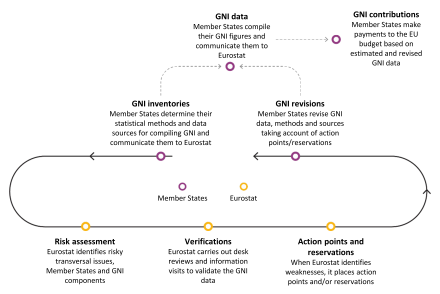
Introduction
The EU budget and the GNI-based own resource
01 The Gross National Income (GNI)-based own resource is the main source of financing for the EU budget. It is calculated on the basis of GNI, a macroeconomic indicator used to measure a nation’s economic wealth. It is the “residual” source of EU financing (“balancing item”). This means it ensures that there is sufficient revenue to cover budget expenditure once all other revenue sources have been taken into account. It is calculated as a percentage of Member States’ annual GNI, known as the uniform call rate. For example, the call rate applied for the financial year 2021 was 0.84 %. To ensure comparability among Member States, GNI compilation must comply with the European System of National and Regional Accounts (ESA 2010)1.
02 Originally, the GNI-based own resource only had to be collected if the other own resources did not fully cover expenditure. Over the years, however, it has become the largest revenue source for the EU budget (see Figure 1). The GNI-based contributions made by the Member States for 2021 are shown in Annex I.

Note: This figure does not include the budget revenue associated with the launch of the NextGenerationEU recovery instrument, due to its exceptional and temporary nature.
Source: ECA, based on the consolidated annual accounts of the EU for the financial year 2021 (p. 144), budget revenue.
03 The GNI-based own resource has tripled in absolute value since the late 1990s, from approximately €40 billion to around €120 billion. The percentage of total EU revenue it represents has almost doubled in that time, from 40 % to 71 % in 2020, and accounted for 63 % in 2021, mainly due to the introduction of a new own resource based on the non-recycled plastics packaging waste (see Figure 2). The increase over the years was notably due to the accession of new Member States, the progressive growth of the budget and the fact that revenue from the other own resources did not increase at the same pace as expenditure. While it may represent a smaller share of total EU revenue in the near future due to the introduction of new own resources, the GNI-based own resource will nonetheless remain the primary source of EU revenue.
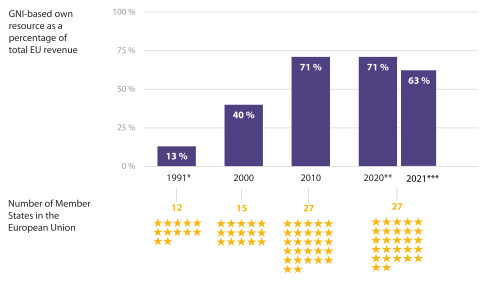
Notes:
*The baseline used here was 1991 as the GNI-based own resource was exceptionally low in 1990.
**The percentage for 2020 was based on total EU revenue, excluding revenue relating to the UK’s withdrawal from the EU.
***The percentage for 2021 was calculated excluding budget revenue associated with the NextGenerationEU recovery instrument.
Source: ECA, based on the annual accounts of the EU – financial years 1991, 2000, 2010, 2020 and 2021.
04 The management of this own resource involves two main processes, both linked with the use of statistics for calculating the Member States’ GNI-based contributions. First, the annual budgeting process, based on forecast GNI data, and second, the verification of actual GNI data as reported annually by the Member States (see Annex II).
05 The Commission’s Directorate-General for Budget (DG BUDG) is responsible for the annual budgeting process. The Statistical Office of the European Union (Eurostat) is responsible for verifying GNI data, on both an annual and a multiannual basis. According to the GNI Regulation2, Eurostat should verify the comparability, reliability and exhaustiveness of the data, while taking into account the cost-effectiveness principle. This principle (previously referred to as the cost-benefit principle) involves a judgment on the potential size and significance of specific transactions from the GNI compilation. The aim is to avoid committing disproportionate resources to calculating insignificant items3. The term “transactions” is commonly used in national accounts (see Box 1).
Transactions in national accounts
Transaction: an economic flow; in most cases, an interaction between economic entities by mutual agreement.
Example: a purchase of goods from a company constitutes a transaction that must be recorded in national accounts.
Calculation and transfer of the GNI-based own resource to the EU budget
06 Each May, DG BUDG calculates the Member States’ contributions using GNI forecasts provided by the Commission’s Directorate-General for Economic and Financial Affairs (DG ECFIN) and requests payment in 12 monthly instalments. It recalculates the contributions the following February, using updated data based on Eurostat’s verifications. In March of the following year, DG BUDG collects the amounts due from Member States that underpaid and distributes them among Member States that overpaid, in proportion to their updated share of the total EU GNI4.
07 GNI data is based on estimates, which are refined over several years before reaching the expected level of precision. The EU rules for calculating own resources therefore allow for the estimates for a given financial year “N” to be revised up until 30 November of the year “N + 4”. The revision period can be extended if the Commission or a Member State considers that the quality of GNI data needs improving5. This is achieved by placing “reservations” on GNI data.
08 As the GNI-based own resource is a balancing item, the overstatement or understatement of GNI data for a particular Member State does not affect the total amount collected as EU revenue. However, it does decrease or increase contributions from the other Member States, until the problem is detected and corrected. The longer GNI data is kept open for revision, and the more reservations are placed, the lower the predictability of Member States’ contributions.
09 In the past, making available large amounts on short notice for the GNI-based own resource proved to create problems for Member States. In 2014, for example, revisions of GNI data led to an unprecedented level of adjustments to Member States’ contributions, amounting to almost €10 billion, with the impact greater for some Member States than for others. The UK had to pay €2.1 billion to the EU budget on top of its usual contribution (21 % of its total budgeted national contribution of that year).
Verification of Member States’ GNI data
10 The Member States’ National Statistical Institutes (NSIs) are responsible for compiling GNI data6. They provide Eurostat with a “GNI inventory” detailing the sources and methods used to produce GNI and its components (see Box 2) in accordance with ESA 2010.
GNI components
GNI component: any element of GNI
Example: compensation of employees (one of the main GNI components), defined as total remuneration in cash or in kind for work done during the accounting period, payable by an employer to an employee. May be broken down into:
- wages and salaries, and
- employers' social contributions.
11 Eurostat’s verification entails the examination of the GNI data used for own resource purposes. This includes the following two main sub-processes:
- the annual verification of GNI data and changes to sources and methods reported by Member States in GNI questionnaires and reports on quality; and
- the multiannual verification (“verification cycle”) of the statistical sources and methods used to calculate GNI, which are described in Member States’ GNI inventories.
12 Eurostat is assisted in its verifications by the GNI Expert Group. This is a group of representatives of all the Member States chaired by a representative of the Commission. It advises the Commission on, and expresses its views regarding, the comparability, reliability and exhaustiveness of GNI calculations. It also examines matters concerning the implementation of the GNI Regulation and issues annual opinions on the appropriateness of the GNI data submitted by the Member States for own resources purposes. Until 2019, the activities of the GNI Expert Group were carried out by the GNI Committee.
Annual verification
13 Every year, Eurostat checks the national accounts data reported by the Member States in the GNI questionnaires, which are tables with GNI data for several years. The checks cover, among others, formal and numerical correctness, consistency of data over time and with published figures. Eurostat also checks changes to the sources and methods used to compile GNI described in the reports on quality. Its annual verification is the basis for the GNI Expert Group’s formal opinion on the use of data for the purpose of calculating own resources.
Multiannual verification
14 Eurostat’s multiannual verification is focused on the GNI inventories, which are comprehensive documents describing the statistical sources and methods used for compiling GNI data over several years. This work includes a detailed and standardised analysis of GNI compilation procedures in order to ensure the comparability, reliability and exhaustiveness of the data. For this purpose, Eurostat conducts verification cycles lasting several years (usually four or five years). The results of the multiannual verification feed into the Expert Group’s annual opinion on the quality of GNI data.
15 Eurostat started the latest completed multiannual verification cycle, the 2016‑2019 cycle, in 2016. It finalised its work before the end of 2019 for all Member States except France, for which the verifications were finalised in 2021, due to the late submission of its GNI inventory7. DG BUDG formally closed the verification cycle in April 2020. The verifications carried out during the 2016‑2019 cycle covered the sources and methods used by the Member States to compile their GNI data from 2010 onwards.
16 The GNI data remains open following the placement of reservations (see paragraph 07) until the issues identified by Eurostat’s verifications are solved. This may take several years, in many cases going beyond the formal closure of the verification cycle and thus affecting the predictability of Member States’ contributions. This highlights the importance of effectively targeting verifications to the most important issues and closing the verification cycle as quickly as possible.
17 In 2013, we published a special report8 concerning our performance audit on the previous verification cycle, the 2007-2012 cycle. The report concluded that the multiannual verification cycle was only partially effective as Eurostat did not plan and prioritise its work appropriately, and did not apply a consistent approach to all Member States. Following our recommendations, and in order to apply the cost-effectiveness principle, Eurostat made two main changes to its verification approach for the 2016-2019 cycle:
- a risk assessment exercise to prioritise its verifications;
- a materiality threshold to target its verifications and place reservations only in case of issues with a significant impact.
18 The 2016-2019 verification cycle began with the submission of GNI inventories at the end of March 2016. It was marked by the introduction of a new accounting framework (ESA 2010), which included several changes compared to the previous one (ESA 959) and therefore required additional efforts from Eurostat to scrutinise implementation in the Member States.
19 The following stages of the verification cycle comprised the risk assessment and verifications through desk checks using a GNI Inventory Assessment Questionnaire (GIAQ), as well as information visits to Member States. The verifications resulted in the placement of action points and reservations, which have an impact on the GNI data. Figure 3 shows an overview of the main elements of the 2016-2019 verification cycle, while its indicative timeline is presented in Annex III.
Figure 3 – Overview of the main elements of the 2016-2019 verification cycle
Source: ECA, based on Eurostat documents describing its verification approach.
20 Eurostat’s risk assessment had three main outputs:
- a list of high-risk transversal issues (see Annex IV) for verification in all Member States through “cross-country comparisons”, including issues such as globalisation (see Box 3), exports and imports and financial services;
- a risk rating for each Member State to determine verification order and scope;
- a pool of specific GNI compilation areas prone to high risk from which to choose the areas for direct verification in each Member State in order to follow the verification trail from a selected GNI component to the source data and review the calculation of the key underlying figures.
The challenge of globalisation in national accounts
One of the transversal issues identified by Eurostat concerns the recording of globalisation in national accounts, which is a major challenge for statisticians. Globalisation refers to the increasing integration of economies around the world, particularly through the movement of goods, services and capital across borders.
21 As a result of its verification work, the Commission places action points (set by Eurostat) and reservations (set by DG BUDG, based on a technical proposal from Eurostat). Action points addressed to NSIs concern issues requiring possible methodological changes or correction of compilation errors (action points “A”), or clarification, correction or supplementation of the information contained in the GNI inventory (action points “B”).
22 Eurostat converts action points “A” into reservations when it considers that they may have a material impact (above 0.1 % of GNI) and have not been addressed by the Member States before the deadline. This usually takes place at the end of the verification cycle.
23 Reservations allow Member States to revise their GNI data after the four-year cut-off point (see paragraph 07). There are two main types of reservations:
- general reservations, which cover the compilation of all GNI components for a Member State;
- specific reservations, which concern an aspect of the GNI calculation (transaction-specific reservations), or issues requiring a comparative analysis of the solutions adopted by Member States (transversal reservations). The Commission also uses process-specific reservations to keep GNI data open beyond the four-year cut-off point, until it completes its multiannual verifications.
24 Both action points and reservations may lead to revisions to Member States’ GNI data. Revisions are made to increase the accuracy of data when data sources provide new information and/or to introduce methodological improvements10. Every few years, countries carry out major revisions of their national accounts known as benchmark revisions, to incorporate new data sources and major changes in statistical methods11.
25 Benchmark revisions have an impact on the data reported for GNI, GDP (Gross Domestic Product) and several other macroeconomic indicators for many years. A Harmonised European Revision Policy was introduced in 2012 to ensure coordinated and consistent revisions across statistical domains, countries and the EU. This includes the recommendation to carry out coordinated benchmark revisions every five years, starting with 2014. The next coordinated benchmark revision should take place in 2024.
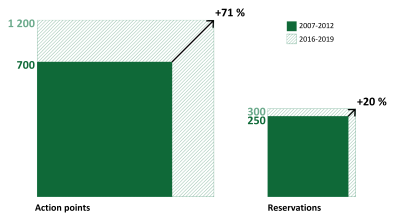
26 Eurostat’s verifications have an impact on the timing of the benchmark revisions, which in turn have an impact on the start of the next verification cycle, because it is based on the updated GNI inventories following these revisions. Member States usually need the relevant information concerning action points placed by Eurostat at least one year before carrying out benchmark revisions, in order to take them into account when compiling the national accounts. The timely placement of action points depends on the timeliness of Member States’ submission of GNI inventories, as well as on the efficiency of the verification cycle.
Audit scope and approach
27 This performance audit covers the 2016-2019 verification cycle concerning GNI data for own resource purposes. We selected this topic because the GNI-based own resource is the largest source of EU revenue and it is important to ensure that Member States’ contributions to this resource are fair and predictable, in line with the cost-effectiveness principle.
28 We conducted the audit at this time in order to examine a completed cycle encompassing the two major changes to the Commission’s verification approach (risk assessment and materiality threshold). We expect our work to help the Commission improve its verification approach for the next cycle starting in 2025.
29 Our main audit question was whether the Commission had managed the 2016-2019 verification cycle effectively and efficiently. In the first part of this report, we examine the effectiveness of the Commission’s risk assessment and its actions to mitigate the highest risks to the comparability, reliability and exhaustiveness of GNI data. In the second part, we assess whether the verification cycle and communication of its results were timely and efficient.
30 The audit covered the Commission’s management and control systems for verifying and assessing the GNI data provided by Member States for own resource purposes. In particular, we examined the appropriateness of the verification model established by Eurostat for the 2016-2019 verification cycle. We conducted the audit at Commission level, focusing on Eurostat’s activities in relation to the 2016-2019 verification cycle up to January 2022.
31 We collected the audit evidence through desk reviews of the relevant documentation (procedures, guidance, verification files etc.). We reviewed Eurostat’s verification files for a sample of six Member States (Ireland, Spain, France, Malta, Netherlands and Poland). We selected these countries for diversity in: size of GNI-based contributions; number of reservations and action points; risk categories identified by Eurostat (low, medium and high); Eurostat officers responsible for the verifications; and geographical distribution.
32 We also interviewed representatives of DG BUDG and the Eurostat unit responsible for verifications, other units involved in related activities concerning national accounts and statistical experts from the NSIs of the six selected Member States.
33 We complemented the above sources of evidence with a survey addressed to the 28 NSIs (26 respondents, 93 % response rate) and to the 28 national authorities responsible for making available own resources to the EU budget in all Member States (10 respondents, 36 % response rate). The surveys aimed to obtain their views on how the Commission manages the verification cycle and the process for communicating budgetary adjustments following revisions to GNI data.
34 We did not directly assess the quality of the sources and methods used to compile GNI. However, we consulted two independent experts on specific issues, such as the potential impact of action points on GNI, and reviewed several publications on topics related to national accounts (in particular globalisation and the use of a materiality threshold for checking the quality of statistical data).
35 Where we do not specifically state that we are referring to the six selected Member States, the findings concern all Member States covered by the 2016-2019 verification cycle.
Observations
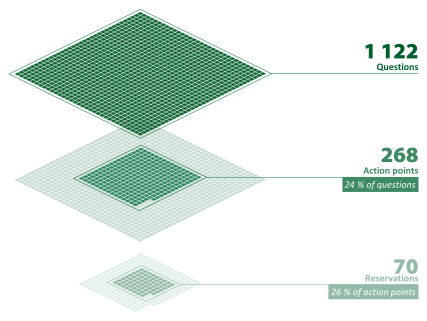
The Commission was effective in identifying high-risk issues for GNI data compilation, but there is scope for increased prioritisation of their verification
Eurostat’s risk assessment process effectively identified high-risk issues
36 In order to be effective, Eurostat verifications (and consequently NSI efforts to improve GNI figures) should target the issues most likely to have a significant impact (“high-risk issues”). This allows them to be addressed as a matter of priority. To this end, our 2013 report recommended that Eurostat introduce a risk assessment model for prioritising the issues to be checked12.
37 We examined Eurostat’s risk assessment model and the way it was applied for the 2016-2019 verification cycle to identify high-risk transversal issues, Member States and GNI components.
38 We found that Eurostat had designed and implemented a structured and formalised risk assessment procedure for the 2016-2019 verification cycle using relevant risk-assessment criteria. These encompassed the specific risks relating to Member States’ compilation of their national accounts and the relative size of the GNI components concerned, in line with our recommendation. The criteria used to identify transversal issues and select areas subject to direct verifications took into account both the likelihood and the impact of the risks.
39 Following its planning, at the beginning of the verification cycle in 2016, Eurostat identified 18 high-risk transversal issues (see Annex IV). It also assigned Member States to three risk categories (seven high-risk, nine medium-risk and 12 low-risk), which determined the minimum number of direct verifications in each Member State. Eurostat also carried out and updated the risk assessment resulting in the selection of areas for direct verification.
40 To test the completeness of the list of high-risk transversal issues identified by Eurostat, we compared the GNI data for the years 2010-2019 published at national level with the GNI data for own resource purposes. We selected these years as this was the period covered by the 2016-2019 verification cycle. This comparison allowed us to determine whether the Member States had found significant issues (requiring revision of their GNI data) not identified by Eurostat’s risk assessment. We did not find any such cases.
41 Eurostat presented its risk assessment model to the GNI Committee, together with the list of transversal issues identified and the risk ratings of the Member States. The GNI Committee agreed with the application of this model and with its results. After the completion of the verification cycle, almost all (96 %) of the NSI respondents to our survey considered that Eurostat had properly identified most or all high-risk transversal issues.
42 The facts above (paragraphs 40 and 41) indicate that Eurostat covered all relevant high-risk issues in its assessment. The appropriate identification of risky areas provided a good basis for the planning and prioritisation of Eurostat’s verifications and for mitigating the risks effectively.
Eurostat did not make full use of risk assessment results to prioritise its verifications for the highest-risk issues
43 We examined whether Eurostat had carried out its verifications in line with the results of its risk assessment, and whether it had prioritised higher-risk issues as planned. We expected Eurostat to carry out verifications for higher-risk issues (or Member States) before those for lower-risk issues (or Member States). We also expected to find more work carried out during the cycle for high-risk issues than for medium- or low-risk issues. Such an approach would allow Member States more time to address riskier issues before closure of the verification cycle. This could potentially reduce the number of reservations on these issues, making Member States’ contributions to the EU budget more predictable.
Prioritisation of transversal issues
44 In 2017, Eurostat used information gathered through its initial verifications to reassess the risk level and estimate the potential impact of the 18 transversal issues identified in 2016 (see paragraph 39). Following this analysis, Eurostat removed two issues from the list and reduced the work planned for three issues considered to have a reduced risk level. Eurostat confirmed the previous high priority level for the remaining 13 issues, with four rated “very high” and nine “high” in terms of potential impact.
45 Eurostat carried out the cross-country comparisons for the high-risk transversal issues as planned, analysing GNI inventories and in some cases sending questionnaires to the NSIs. For the three lower-priority issues, Eurostat limited its verifications to analysing information from the GNI inventories and prepared fewer progress reports than for the other issues. There was no specific prioritisation among the remaining 13 transversal issues, even though Eurostat considered that four were higher-risk than the others.
46 We analysed the impact of the action points “A” placed by Eurostat for transversal issues concerning the six Member States covered by this audit, to check if Eurostat’s assessment of the potential impact had materialised in these Member States. We also took into account the action points that were transformed into reservations, when information on their impact was available. The action points we analysed account for one quarter of the total number of action points “A” placed for transversal issues, offering an indication of the importance of these issues.
47 We found that Eurostat had placed action points “A” for 14 of the 18 transversal issues. Our analysis showed that the high or very high potential impact expected by Eurostat materialised for just one transversal issue (dwelling services), which had an average impact of 0.39 % of GNI in the six Member States. The action points placed for the remaining 13 issues identified as “high-risk” had a relatively small impact (average impact 0.08 % of GNI). Furthermore, 27 % of the NSI respondents to our survey noted that some transversal issues were not relevant to all Member States or only had a minor impact on their GNI data. Some of these issues were subject to specific or transversal reservations, so may yet result in a significant impact on completion of the ongoing work.
48 While it is difficult to estimate the potential impact of a specific issue before the verification work starts, Eurostat is better placed to assess the impact during the cycle, as more information becomes available from GNI inventory analysis. However, this information did not lead to further prioritisation of the work.
Prioritisation based on Member States’ risk level
49 As noted in paragraph 20, Eurostat planned to prioritise its verifications based on Member States’ risk level. It planned to achieve this within the portfolio of Member States allocated to each desk officer. We thus expected Eurostat to focus its verifications on high-risk and medium-risk Member States in the first part of the verification cycle, leaving the verifications for low risk Member States for the later part of the cycle (see Annex III).
50 We analysed the order in which the desk officers placed action points resulting from their verifications to determine if they prioritised higher-risk Member States. The placement of action points is a key moment in the verification cycle because this is when Eurostat notifies Member States of the issues identified and they may start working on addressing these issues. We excluded action points placed for transversal issues, as some could have been placed later in the verification cycle due to the need to compare the different methodologies used by Member States.
51 We found that desk officers had carried out the verifications for three of the seven high-risk Member States early in the verification cycle, before other lower-risk Member States in their portfolio. As regards the other four, we found that:
- for two high-risk Member States, the desk officers had started to place action points after doing so for other Member States (one low-risk and one high-risk);
- for one high-risk Member State, the desk officer had simultaneously carried out verifications for a low-risk Member State, reducing the time allocated to the high-risk country;
- for the remaining high-risk Member State, the desk officer had started to place action points relatively late in the verification cycle (June 2017), despite having no other Member States in their portfolio.
52 Overall, the desk officers had prioritised verifications for medium-risk Member States over those for low-risk countries. However, we identified one case where the desk officer had to check three Member States (one low-risk and two medium-risk) and prioritised the verifications for the low-risk Member State.
53 We found that around a quarter of the transaction-specific reservations placed by Eurostat at the end of the verification cycle concerned the four high-risk Member States that had not been effectively prioritised (see paragraph 51). While some methodological issues may be inherently complex and require reservations even if prioritised, identifying them at an earlier stage would have given high-risk Member States a better chance of addressing them before closure of the cycle.
Prioritisation through direct verifications
54 As noted in paragraph 20, Eurostat planned to select the areas for direct verification from a pool of specific GNI compilation areas prone to high risk, as identified by its risk assessment model. Eurostat reserved the right to modify the composition of the pool resulting from the risk assessment model based on a qualitative reflection. The risk assessment procedure set out the minimum number of direct verifications as follows:
- low-risk Member States: one;
- medium-risk Member States: three;
- high-risk Member States: four.
55 We checked whether Eurostat had applied the risk assessment model to determine the pool of areas for direct verification, selected areas from the pool (or provided justification if not), and carried out at least the minimum number of direct verifications required for each risk category.
56 We found that Eurostat had applied the risk assessment model to determine the pool of areas for direct verification, as planned. However, for eight of the 28 Member States, Eurostat’s desk officers had decided to carry out direct verifications for areas not selected in the risk assessment files, to achieve the minimum number of verifications. While the procedure does allow for qualitative reflection, the justification for this decision was not documented. This hinders Eurostat’s overview of the desk officers’ reasons for modifying the risk assessment results and its analysis of the potential for improving the model by making some of these reasons into risk criteria.
57 Eurostat carried out at least the minimum number of direct verifications required by the risk level for each Member State. This shows that Eurostat covered the risky areas well and allocated more time and resources for direct verifications in higher-risk Member States, as planned. For 11 of the 28 Member States, Eurostat carried out more direct verifications than the minimum number required, selecting between one and four additional areas for verification.
Prioritisation of action points
58 Eurostat did not establish or indicate the level of priority to be given by NSIs to the riskier action points that could have a higher impact, for example by asking NSIs to start the work sooner or setting earlier deadlines. It was up to each NSI to decide the order in which to address the action points, based on the deadlines it agreed with Eurostat.
59 With no indications from Eurostat on priority issues, NSIs may decide to allocate their resources to action points that are easier to address, putting off those that are more complex and require more significant methodological changes. According to Eurostat, it is plausible to assume that the action points transformed into reservations concern more complex and/or larger issues than the points that could be more quickly addressed and closed, and will therefore lead to larger revisions.
Eurostat provided adequate support to Member States for addressing high-risk issues, but did not react to the issue of globalisation in a timely manner
Support and guidance for the National Statistical Institutes
60 To enable Member States to address high-risk issues in a timely manner, Eurostat should provide adequate support and guidance to the NSIs.
61 We found that, overall, Eurostat had effectively supported the NSIs in their efforts to tackle the transversal issues. This was most notably by: setting up sub-groups to clarify methodological aspects within the GNI Expert Group; coordinating work on developing guidelines with other units within Eurostat and with international organisations; organising a workshop; and launching a pilot exercise to analyse the activities of multinational enterprises (MNEs). It prepared progress and final reports with information on the work it carried out to address these issues and the solutions adopted by different NSIs.
62 The NSI respondents to our survey appreciated Eurostat’s support, guidance and the information it provided during the verification cycle. All NSIs reported either good or excellent cooperation with Eurostat and 88 % of the NSIs agreed that Eurostat had provided adequate and timely guidance in most cases. In addition, all NSIs agreed that Eurostat had provided sufficient information on the scope and progress of its verifications.
63 Two NSIs emphasised that Eurostat had provided guidance on daily allowances after placing the reservation rather than before, which was also the case for margins on trading financial assets. The NSIs also suggested that Eurostat provides clearer and/or more practical guidance, organises more bilateral meetings between desk officers and NSIs and provides more technical support.
Eurostat’s response to the challenges of globalisation
64 Globalisation means that firms organise their activities on an international basis and relocate their operations or assets to benefit from advantageous tax regimes. It is challenging for Eurostat and the NSIs to correctly account for these activities in the GNI calculations, as each NSI can only see the economic activities of organisations operating in their jurisdiction.
65 We checked whether Eurostat had reacted in a timely manner to this issue, and whether its approach (providing guidance and support to the NSIs, and ultimately placing a reservation) had been effective in obtaining reasonable assurance concerning the appropriateness of the national accounts systems set up to measure the impact of globalisation on GNI.
66 We found that the issues related to the measurement of MNE activities in national accounts preceded the start of the 2016-2019 GNI verification cycle, and could have been addressed by Eurostat sooner. There were several indications as early as 2011 that globalisation and the related changes in accounting frameworks would have a significant impact on national accounts, requiring more in-depth analysis to identify practical solutions such as MNE profiling coordinated at EU level (see Box 4).
Indications that the issue of globalisation required practical solutions
- The 2008 System of National Accounts (international statistical framework) and ESA 2010 introduced new rules on recording globalised business models.
- The United Nations Economic Commission for Europe noted in 2011 that new surveys should target MNEs to enable direct measurement of their transactions.
- The Commission’s expert group of Directors of Macroeconomic Statistics noted in 2012 and 2014 that available guidance failed to address research and development in MNEs and that globalisation and MNEs posed new problems to national accounts, requiring solutions such as profiling.
- In 2014, changes in the VAT regime and the abolition of some tax minimisation schemes in the EU triggered rapid business model changes for some MNEs.
67 Although Eurostat identified the risk related to globalisation and had already provided support to Member States regarding some aspects of globalisation, it did not have a system in place to help Member States detect relocation of MNE activities and ensure effective cooperation between Member States to facilitate MNE profiling before 2016.
68 In July 2016, Ireland reported an increase of 24 % (€39 billion) in the GNI data for 2015 compared to 2014, due to the relocation of assets of a few large MNEs. Eurostat examined the methodology underlying the GNI data reported by Ireland and the GNI Committee validated this data.
69 Following the identification of the issue in Ireland, Eurostat started to address the issue of MNE activities more practically. It set up new working groups on the topic, and launched information-gathering exercises and a pilot exercise (see paragraph 60), to help ascertain the reliability of the recording of globalisation issues in GNI data and the inherent problems. Eurostat also proposed the introduction of an Early Warning System to detect MNE restructuring. Had it launched these initiatives earlier, this would have enabled NSIs to gather relevant information from MNEs at an early stage.
70 At the end of the verification cycle, Eurostat concluded that all Member States needed to carry out further work on globalisation-related issues. The Commission placed a transversal reservation for this purpose, with a September 2022 deadline. This is the most important of the five transversal reservations set at the end of the 2016‑2019 verification cycle (see Annex V), due to its complexity and wide scope. While the other four transversal reservations apply to GNI data from 2010 onwards, the Commission decided to limit the application of the transversal reservation on globalisation to the years from 2018 onwards.
71 Limiting the period of application of this reservation weakens the comparability, reliability and exhaustiveness of Member States’ GNI data reported for 2010 to 201713. Some Member States may not have properly accounted for this phenomenon in their national accounts before 2018, whereas others (such as Ireland) have reported reliable data for that period.
72 The Commission (Eurostat and DG BUDG) justified the period limitation by referring to the practical difficulty of obtaining the required information from MNEs for earlier years. It considered that the budgetary uncertainty created by a long outstanding GNI reservation was not proportionate to the potential impact on GNI14. While applying the cost-effectiveness principle is justified when deciding on the scope of a reservation, this should be based on adequate information concerning the potential impact of the issue at stake. The Commission stated that their decision took into account the conclusion of Eurostat’s MNE pilot exercise, which did not identify major distortions to GNI. However, the pilot exercise concerned a small sample of MNEs and only one year (2016). This does not provide sufficient evidence concerning the years preceding 2018.
73 There are several indications that globalisation had a significant impact on national accounts before 2018, which could have caused changes in GNI. For example, three Member States reported to Eurostat in 2017 that since 2010 they had observed specific cases of relocation by companies with substantial assets (more than €100 million) to or from their country. One Member State provided information in September 2021 about the significant revisions to its GNI data in the context of three GNI reservations, including the reservation concerning globalisation (which was partially implemented at the time). The combined impact of these three reservations ranged from −2.0 % (2010) to 16.3 % of GNI (2012) between 2010 and 2019.
74 In the 2020 annual report, we recommended that if the impact of lifting the above reservation differed significantly between Member States, the Commission should reassess the quality of GNI data for previous years, with a view to informing the budgetary authority of the possible implications of the resulting revised statistics for the revenue budget since 2010. The Commission did not accept this recommendation because it considered that the timing of the reservation on globalisation, i.e. for the years 2018 onwards, was appropriate.
75 Almost half of the NSIs that replied to our survey considered that the scope of the transversal reservation on globalisation did not ensure comparability, reliability and exhaustiveness of Member States’ GNI data. Some of the reasons given for this concerned the complexity and specific nature of this issue (more relevant for countries with tax-competitive regimes), the small number of MNEs covered, and the fact that the reservation does not cover the years before 2018, which could reduce the comparability of Member States’ GNI estimates.
The GNI verification cycle was completed as planned, but some weaknesses affected its efficiency
Overall, the Commission completed verifications as planned and communicated their results in a timely manner
76 The predictability of GNI-based contributions depends on the timeliness of the verification cycle and how quickly the Commission informs Member States of its results (adjustments to paid contributions) compared to the payment deadline for contributions. We checked whether Eurostat had completed the GNI verification cycle as planned (in 2019) and whether DG BUDG had informed Member States about the adjustments to their GNI-based contributions in a timely manner, allowing effective budget planning.
77 Despite the high number of methodological issues resulting from the introduction of a new accounting framework (ESA 2010), Eurostat completed the planned verifications for the 2016-2019 cycle on time, except for France. This was due to the late submission of the French GNI inventory (see paragraph 15). However, there are still open issues in the form of reservations that extend the verifications beyond the official completion of the verification cycle (see paragraphs 07 and 08).
78 As a result of its verifications, the Commission placed around 1 200 action points and 300 reservations, an increase on the previous verification cycle (see Figure 4). The reservations concern over ten years of GNI data and may have a significant impact on the Member States’ future contributions. Member States should address all these reservations at the latest in September 2022. Eurostat lifted most reservations concerning the previous verification cycle (generally with an impact on data from 2002 to 2010) by 2017.
Figure 4 – Evolution of action points and reservations between two consecutive verification cycles
Source: ECA, based on Eurostat’s final report on the 2016-2019 verification cycle, information visit reports from the 2007-2012 verification cycle, and ECA special report 11/2013.
79 As regards communication, we found that DG BUDG had informed Member States of the adjustments to the GNI-based contributions in a timely manner, largely because amendments to the relevant EU legislation allowed more time for payment.
80 In 2016, an amendment to the EU Regulation for making available the amounts for own resources15 (“MAR”) allowed more time between the date when DG BUDG informed Member States of the amounts payable (1 February each year) and the date these amounts had to be made available (1 June of the same year). A new amendment to the MAR was adopted in April 202216. It again extended the deadline for making available the adjustments to GNI-based own resources, from June of each year to March of the following year. We supported this change, as it further reduced budgetary uncertainty for Member States while being neutral as regards the EU budget17.
81 The replies to the survey we sent to the national authorities responsible for making available own resources to the EU budget confirm that, taking into account the 2022 change to the MAR, the information provided by the Commission on adjustments is timely and sufficient to allow effective budgetary planning at national level (according to 9 out of the 10 national authorities that responded).
Eurostat checked many issues that proved to have a low impact on GNI
82 To improve efficiency, a materiality threshold can be used to target verifications on issues likely to have a high impact on GNI. Eurostat introduced a materiality threshold of 0.1 % of GNI for the 2016-2019 verification cycle. It considered that issues with an impact below that threshold did not require further action. We examined the basis for Eurostat setting the materiality threshold at 0.1 % of GNI and the extent to which it was reflected in its verifications.
Level of materiality threshold
83 Eurostat did not base the 0.1 % materiality threshold on any particular model or reference from international statistical practices. Our literature review and NSI survey showed that the concept of materiality is not widely used in statistics. The application of a threshold is justified by the unique nature of the GNI verification cycle. The latter must provide assurance on the quality of statistical data in view of its financial impact on Member States’ contributions to the EU budget. The proposed level of materiality was presented to the GNI Committee, which agreed with its application as a means to ensure the application of the cost-effectiveness principle (see paragraphs 05 and 17).
84 Eurostat’s choice of 0.1 % of GNI for the materiality threshold indicates a high level of scrutiny of GNI data and a low tolerance for any inaccuracies or methodological weaknesses that may be detected during the verification cycle. The literature we reviewed18 highlights the fact that national accounts are a highly complex set of economic statistics. As they combine a vast number of internal and external data sources covering various aspects of the economy to derive GNI and other key indicators, it is difficult to ensure a very high level of precision. The Organisation for Economic Co-operation and Development textbook on national accounts19 specifies that “it would be an illusion to think that the degree of precision regarding GDP levels is less than several percentage points”. For some GNI components, the implicit margin of deviation (measurement error) in the estimated figures can be much higher than 0.1 %.
85 Ineconomies that have a relatively small GNI compared to the EU average, but are exposed to the global economy, the 0.1 % threshold effectively means that almost any financial transaction or activity carried out by large international companies would be material. For example, in Malta the materiality threshold was €13 million in 2019, while for Germany it was almost 300 times higher (€3.6 billion). The effort required to investigate issues above materiality may therefore be disproportionate to the resources available in some Member States.
86 In their replies to our survey, 85 % of NSIs considered that 0.1 % was a suitable materiality threshold, while 11 % found it too low. However, 39 % of the respondents stated that the verification cycle was partially efficient (35 %) or not efficient (4 %). The reason most commonly given for the reply “partially efficient” (90 % of cases) was that Eurostat’s verifications covered too many issues with a low impact on GNI.
Application of materiality threshold
87 We expected Eurostat to apply the materiality threshold wherever there was sufficient information to carry out a reasonable assessment of potential impact on GNI. This would eliminate detailed checks on issues that might turn out to be immaterial.
88 According to Eurostat’s procedures, the materiality threshold should be taken into account at several stages in the verification cycle. Member States are not required to take action if they demonstrate that the impact of an issue is not material (see Table 1):
| Stage in verification cycle | Action taken if NSI demonstrates immateriality |
|---|---|
| Drawing up GNI inventory | The description of the relevant point may be omitted from the inventory if its share of less than 0.1 % of the Member State’s GNI is indicated and justified. |
| Identifying deficiencies in GNI compilation | Further investigations are not required. |
| Placing action points/reservations | No action point or reservation is placed. |
| Closing/lifting action points/reservations | The action point or reservation may be closed/lifted without rectifying the deficiency. |
Source: ECA, based on Eurostat’s documents concerning the application of the materiality threshold.
89 We found that, when drawing up their GNI inventories, NSIs generally opted to present a full description of GNI components irrespective of materiality. As GNI inventories are used by a wide range of stakeholders (including Eurostat) with different interests in the information presented, this is a reasonable approach to address their needs.
90 When analysing the GNI inventories to identify deficiencies and asking for clarifications from NSIs, Eurostat desk officers did not consider materiality unless the NSIs explicitly provided this information. For the six Member States we selected, the desk officers asked the NSIs more than 1 100 questions to clarify certain aspects following their analysis of the GNI inventories. Most of these questions were clarified before becoming action points, either because the NSIs provided the required information or because they proved that the issue was immaterial. The remaining questions (around one quarter) became action points, some of which were transformed into reservations (see Figure 5).
Figure 5 – Action points and reservations as proportion of Eurostat questions (six selected Member States)
Source: ECA, based on Eurostat’s GNI Inventory Assessment Questionnaires for the six Member States selected and databases of action points and reservations.
91 Regarding the action points we examined, the desk officers did not assess the potential impact on GNI by using existing information from the GNI inventory (such as the materiality of the GNI component concerned), public information or other documents or reports available in Eurostat. Eurostat’s verification procedures did not require desk officers to systematically collect preliminary information from NSIs on the expected impact of action points. Of the six Member States we selected, only Netherlands provided this type of preliminary information for all action points, while other NSIs did so in a very limited number of cases. This may be due to the fact that it is difficult to unequivocally prove the impact of an action point before the underlying methodological issue has been solved.
92 To see whether these preliminary estimates of potential impact were reliable, we collected the most recent information available on the final estimates for the six Member States. Among the action points for which the NSIs had predicted an immaterial impact, 75 % did in fact have a final impact below the materiality threshold. This indicates that the preliminary estimates offered a high degree of reliability. Where Eurostat received such estimates, the desk officers continued their verifications and asked for additional information until they considered that the methodological issue had been sufficiently addressed and the NSIs had provided all the information on the final impact on GNI.
93 For the six Member States we analysed, Eurostat mostly applied the materiality threshold at the final stage of its verifications on action points, to decide whether the NSIs should revise their GNI data to address the weaknesses identified. This approach affected the efficiency of the verification cycle as both Eurostat and the NSIs dedicated resources to solving issues that were unlikely to be material according to preliminary information.
94 We analysed 15 action points in greater depth with the support of independent experts. We noted that the information available to Eurostat when placing action points (or shortly afterwards) would have allowed the desk officers to decide whether to follow up the issue. This information was either publicly available, presented in the GNI inventories or provided by the NSIs shortly after the action points were placed. Box 5 presents examples of action points where such information was readily available and for which the impact was unlikely to be significant.
Significant impact unlikely for some action points: two examples
Ireland – estimation of tips
Eurostat placed an action point concerning the estimation of tips, as it was based on outdated information on tipping behaviour (20 % of total salaries in the accommodation and catering industries).

- The estimated amount was approximately €400 million in 2010, while the materiality threshold for Ireland was €140 million in the same year.
- Even if changes in tipping behaviour over five years had resulted in a 25 % revision of this estimate (+/−€100 million), the impact on GNI would have been immaterial.
Eurostat closed this action point two and a half years after it was placed, when the Irish NSI improved the corresponding compilation procedure and recorded an impact on GNI of 0.006 %.
Malta – estimation of household construction on own account
Eurostat placed an action point concerning the estimation of construction work carried out by households on their own account.

- The estimated amount was €4.5 million, while the materiality threshold for Malta was €9.4 million in 2015.
- Addressing the action point could have only resulted in a downwards revision of the GNI component concerned. Even a 100 % correction (−€4.5 million) would have been immaterial.
Eurostat closed this action point a year and a half after it was placed, when the Maltese NSI revised the corresponding compilation procedure and recorded an impact on GNI of −0.01 %.
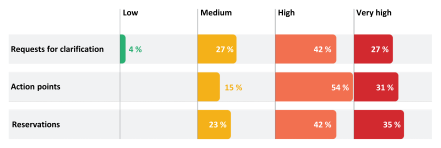
95 In our survey, most NSIs rated the workload related to Eurostat’s requests for clarifications, action points and reservations as high or very high (see Figure 6).
Figure 6 – NSI assessment of workload related to verification cycle
Source: ECA survey addressed to the NSIs.
Final impact of action points and reservations
96 Information on the final impact of action points and reservations would allow Eurostat to assess the efficiency of its verification approach and take management decisions in this area. This could involve fine-tuning the risk assessment or the way the materiality threshold is applied. We found that Eurostat had not compiled an overview of the impact of action points on GNI. Information on the impact of reservations was provided for a limited number of cases in an overview file containing details of all the reservations.
97 We analysed the available information on the impact of the 130 action points “A” placed for the six Member States selected, and the time needed to address them. Our analysis showed that the 106 action points for which the final impact was known had a median impact of 0.02 % of GNI, and 75 % were immaterial. More than half of the 130 action points took at least two years to close, and 24 were still open at the time of the audit in the form of reservations. This indicates that they required significant work from the NSIs. Figure 7 shows the impact of the 106 action points for which this information was available at the time of the audit, and the time needed to address them.
Figure 7 – Impact of action points and time taken to address them (six selected Member States)
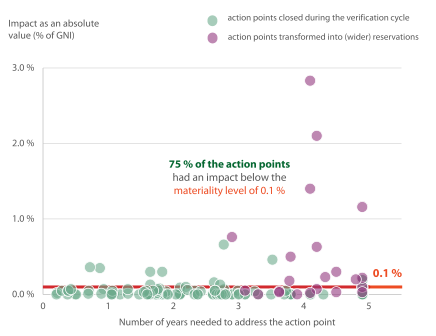
Notes:
The highest annual impact as an absolute value (irrespective of sign) was taken into consideration for this analysis. For action points that were transformed into reservations, we presented the impact and number of years needed to address the corresponding reservation, including cases where the scope of the reservation was wider than the action point. Where the corresponding reservations were not lifted by January 2022 (the cut-off date of our audit), the number of years was calculated based on this reference date.
Source: ECA, based on information from Eurostat’s verification files, correspondence with the NSIs, Member States’ reports on work done on action points and reports on quality.
98 Eurostat keeps a list of issues found to be immaterial during the verification cycles (resulting from questions, action points or reservations). It requires Member States to review this list in each verification cycle by checking, for each issue, whether the potential impact is still below the materiality threshold. This may represent an additional burden for NSIs, as they have to update information concerning issues previously considered immaterial. In April 2022, following our audit, Eurostat took steps to reduce the number of issues on this list and simplify the process of removing issues in future verification cycles.
99 Our analysis of the impact of the 39 reservations lifted by the end of 2021 (out of the total of 300 reservations) shows that 41 % had an immaterial impact and their median impact was 0.15 %. This indicates that reservations tend to address issues with a slightly higher impact than the action points that were closed during the verification cycle.
Inefficiencies in the verification cycle in relation to the documentation tools used
100 We analysed the tools used by Eurostat for documenting its verifications to assess whether they facilitated the verification cycle and the review of its outcome to improve efficiency and limit the administrative burden.
101 We found that the NSIs had presented the key information for Eurostat’s analysis in several types of document, using Microsoft Word and Excel templates. Eurostat’s desk officers documented verifications in Word and Excel files and emailed NSIs regarding questions, action points and reservations, and to follow up on the NSIs’ work.
102 The sheer number of documents and tools created a complex system requiring desk officers to keep track of and update all relevant information for the countries or issues for which they were responsible. This system made it difficult for reviewers, internal/external auditors and other Eurostat staff to find and analyse the relevant information without consulting the desk officers. Despite the use of templates to ensure a consistent approach, we found several differences in how the NSIs submitted the relevant information and Eurostat’s desk officers documented their work (see Box 6). This jeopardises the efficiency and consistency of Eurostat’s internal review.
Differences in presentation of information in GNI inventories and in documentation of Eurostat’s work
GNI inventories
While Member States’ GNI inventories generally followed the template provided by Eurostat, the information disclosed was not always clear due to:
- insufficient and/or inconsistent paragraph/table numbering;
- lack of numerical information to show the compilation steps for GNI components;
- absence of units of measurement.
GNI Inventory Assessment Questionnaires
The desk officers used different practices to document their work, for example their replies to questions from the template varied in terms of detail.
Other tools supporting verification work
For the six Member States we selected, the desk officers used basic log files to track relevant communication with the NSIs, as required by Eurostat procedures. For four of the six, the desk officers prepared additional overview files that facilitated follow-up and review of relevant information (list of action points, deadlines, status, etc.). The NSIs did not have access to these files, so had to duplicate some of this work.
103 Eurostat’s desk officers had to clarify several issues with the NSIs that would have been unnecessary with a more standardised tool supported by an integrated IT system, customised for GNI verifications. Another disadvantage of the tools used by Eurostat is that they offered limited possibilities in terms of automatic checks and reminders to follow up action points. We noted that Eurostat’s desk officers had no common approach to sending reminders to NSIs, which could have improved timeliness as deadlines were not always respected.
104 Inefficiencies in relation to documentation tools affect the timeliness of the verification work, as time is needed to perform manual checks, send reminders, find relevant information when reviewing action points etc. This may lead to delays in addressing action points and making the necessary revisions to the GNI data.
Conclusions and recommendations
105 The 2016-2019 Gross National Income (GNI) verification cycle was marked by the introduction of a new accounting framework for national accounts (ESA 2010) and a significant change in Eurostat’s verification approach. For the first time, this approach was based on a formalised risk assessment and entailed the application of a materiality threshold. These changes helped Eurostat to identify and mitigate the risks for the compilation of GNI data by focusing its verifications on the most important issues. However, Eurostat did not make full use of these new elements of the verification cycle to better target Eurostat’s and the National Statistical Institutes (NSIs)’ efforts to addressing higher-risk issues in a timely manner.
106 We found that Eurostat’s risk assessment was well designed and that it identified the high-risk issues affecting GNI compilation. However, Eurostat did not make full use of the results to prioritise verifications for transversal issues and high-risk Member States. Eurostat carried out direct verifications according to the risk level for each Member State, but there were cases where the desk officers did not document the justification for verification of areas not resulting from the risk assessment. Eurostat did not establish the priority level of action points based on risk and indicate this level to the NSIs. This increases the risk of methodological issues with a higher impact being addressed after lower‑impact issues, affecting the predictability of Member States’ contributions to the EU budget (see paragraphs 36-59).
Recommendation 1 – Increase prioritisation of high-risk issues
The Commission, through Eurostat, should:
- when there are many transversal issues to be addressed, prioritise work addressing transversal issues most likely to have a very high impact in most Member States, tackling issues with a lower potential impact later in the verification cycle or in future cycles;
- systematically prioritise verifications for high-risk Member States by ensuring that they are carried out as early as possible in the verification cycle;
- better document the reasons for selecting areas for direct verification in cases involving qualitative reflection, and analyse these reasons to determine whether any additional relevant criteria should be included in the existing risk assessment;
- in cooperation with the National Statistical Institutes, analyse ways to improve the prioritisation of work on action points, taking into account their risk level.
Target implementation date: 2025 (start of the verification cycle following the 2020‑2024 cycle)
107 Overall, Eurostat adequately supported the NSIs in their efforts to tackle high-risk transversal issues, although in two cases the necessary guidance was delayed. The high-risk issue of globalisation was the most important transversal issue for the 2016-2019 verification cycle. Eurostat launched several initiatives in the area of globalisation. However, it did not react in a timely manner to this emerging issue and limited the period of application of the corresponding transversal reservation without sufficient evidence of its potential impact. There is therefore no reasonable assurance concerning the impact of globalisation on GNI data before 2018. In relation to this issue, we recommended in the 2020 annual report that if the impact of lifting the reservation on globalisation differed significantly between Member States, the Commission should reassess the quality of GNI data for previous years (see paragraphs 60-75).
Recommendation 2 – Improve the timeliness of the support provided to Member States and better justify decisions to limit the period of application for reservations
The Commission, through Eurostat, should:
- respond quickly when a new high-risk issue is identified by providing timely guidance and support to the National Statistical Institutes;
- where a decision has to be made to limit the period of application for future reservations, carry out a sound cost-effectiveness analysis based on sufficient quantitative and/or qualitative information and the specific risk in each Member State concerned.
Target implementation date: 2025 (start of the verification cycle following the 2020‑2024 cycle)
108 Overall, the verification cycle was completed as planned in 2019. The Commission provided Member States with timely information on adjustments resulting from the GNI verifications, taking into account the recent legislative changes extending the deadline for making available contributions to the EU budget. This allows more effective budgetary planning at national level (see paragraphs 76-81).
109 However, many issues were still open at the end of the cycle in the form of reservations, which could affect Member States’ future contributions. Although Eurostat aimed to target its verifications by using a materiality threshold, it checked many issues that proved to have a low impact on GNI. There is scope for better use of available information on potential impact in order to close such issues at an earlier stage. Furthermore, there were inefficiencies in the verification cycle in relation to the tools used for documenting the verifications (see paragraphs 82-104).
Recommendation 3 – Further improve the efficiency of the verification cycle
The Commission, through Eurostat, should:
- analyse the appropriateness of the current level of materiality threshold based on the experience of placing and closing/lifting action points and reservations for the 2016‑2019 verification cycle;
- in cooperation with the National Statistical Institutes, analyse ways to better integrate the concept of materiality, including the potential impact on GNI where relevant, in the work on action points. This should be applied as early as possible in the verification process to close the action points;
- analyse the possibility of improving existing tools or introducing new IT tools to allow integrated real-time follow-up of all relevant information on GNI inventories, verifications that have been planned and completed, action points and reservations (for use by Eurostat desk officers and management, as well as staff of National Statistical Institutes where appropriate).
Target implementation date: 2025 (start of the verification cycle following the 2020‑2024 cycle)
This Report was adopted by Chamber V, headed by Mr Jan Gregor, Member of the Court of Auditors, in Luxembourg at its meeting of 26 October 2022.
For the Court of Auditors

Tony Murphy
President
Annexes
Annex I – Member States' GNI-based contributions to the 2021 EU budget (in billion euros)
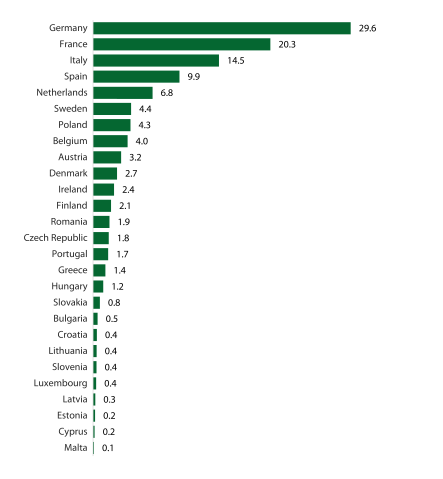
Source: ECA, based on the consolidated annual accounts of the EU for the financial year 2021, Table 3 of Annex A: Revenue.
Annex II – Key processes in the calculation of the GNI-based own resource
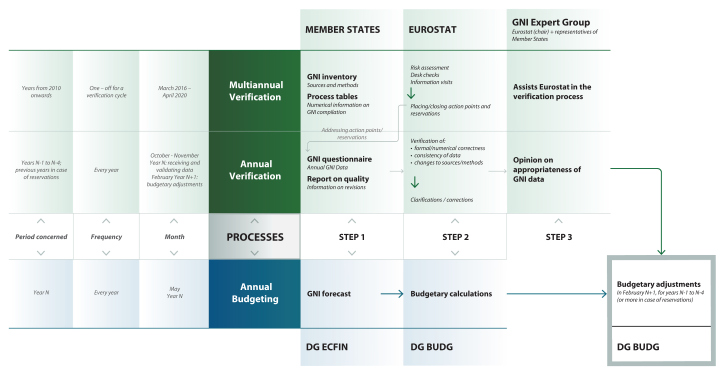
Source: ECA, based on internal Eurostat documents describing its verification approach, Regulation (EU) 2019/516 and Regulation (EU, Euratom) No 609/2014.
Annex III – Indicative timeline for Eurostat’s 2016-2019 verification cycle
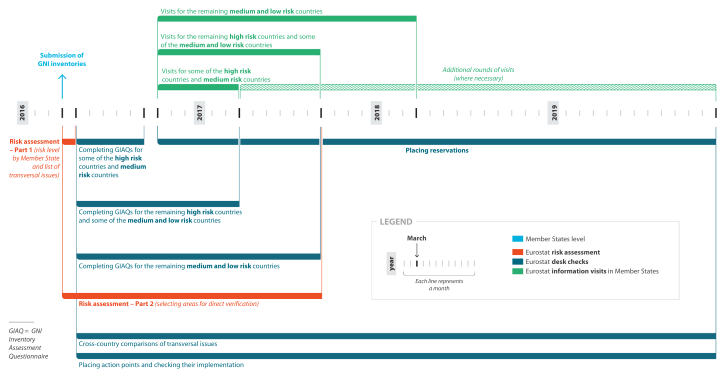
Source: ECA, based on Eurostat documents describing its verification approach.
Annex IV – List of high-risk transversal issues
| Ref. | Transversal issue | Description (objective of Eurostat’s verification) |
|---|---|---|
| High-risk transversal issues | ||
| A | Exhaustiveness | |
| A1 | Absence and misreporting | Analyse the Member States' approach on significant deficiencies in the coverage of unreported or misreported transactions. Covers the following issues: producer should have registered (underground producer); producer is not obliged to register; registered legal person not included in statistics; registered entrepreneur not included in statistics; misreporting by producer. |
| A2 | Statistical deficiencies | Check Member States' compliance regarding sources and methods described in GNI inventories and detect potential issues needing further consideration for data that is incomplete, not collected or not directly observable, and data that is incorrectly handled, processed or compiled by statisticians. |
| A3 | VAT fraud | Check correct recording of VAT fraud adjustment in GDP/GNI, compare and assess Member States' practices, particularly regarding use of the proposed method or alternative approach based on Decision No 98/527/EC and GNI Committee recommendations on VAT fraud. Includes identification/comparison of problem areas when estimating theoretical VAT and actual VAT receipts, consistency of scope and amounts of taxes recorded when estimating different variables in output and expenditure approaches, and the issue of non-collected taxes (analysis excludes missing trader fraud). |
| A4 | Use of tax audit information | Identify/compare problem areas when using tax audit data for exhaustiveness purposes; identify cases where Member States did not investigate tax audit data as required in Commission Decision 94/168 and cases where additional ways of using tax audit information should be further investigated in addition to the ways currently in use. |
| A5 | Illegal activities | Investigate whether Member States estimate the relevant types of illegal economic activities in national accounts (mainly prostitution, production and trafficking of drugs, and smuggling) in accordance with GNI Committee recommendations. |
| B | Balancing of GDP | Assess correctness of balancing solutions applied by Member States. |
| C | Dwelling services | Ensure that estimates of dwelling services (market and imputed rents for housing) in Member States’ national accounts are comparable, reliable and exhaustive. Estimates are checked against the principles of Commission Regulation 1722/2005 on dwelling services and GNI Committee recommendations on cooperative dwellings. |
| D | Financial services, including Financial Intermediation Services Indirectly Measured (FISIM) | Check sources and methods, as well as compliance with ESA 2010 for the treatment of output, its allocation and intermediate consumption (NACE Rev. 2 Section K: Financial and insurance activities). |
| E | Cross-check of statistical and administrative data sources | Identify the extent to which administrative sources are used by Member States for estimating or cross-checking GDP/GNI data, as well as advantages and disadvantages when using survey data or administrative data. |
| F | Global production, balance of payments | |
| F1 | Exports and imports of goods and services | Check whether measurement of transactions on exports and imports of goods and services complies with ESA 2010 sources and methods as described in the GNI inventories. |
| F2 | Cross-border flows of labour income | Check measurement of compensation of employees in Member States received from/paid to rest of world. |
| F3 | Cross-border flows of property income | Check compliance of Member States with ESA 2010 requirements regarding this issue. Previous verification cycle indicated some deficiencies in availability of data sources, discrepancies between different statistical domains (balance of payments and national accounts) and some cases of non-compliance with ESA 95. |
| F4 | Taxes and subsidies to/from the EU | Check taxes on production and imports collected by Member States on behalf of the EU institutions as traditional own resource of the EU budget and subsidies granted directly by the EU to resident producer units. |
| F5 | Special Purpose Entities (SPEs) | Ensure correct and comparable treatment of SPEs in national accounts. Where relevant, findings of previous verification cycle were checked and confirmed. |
| F6 | Global production and relocation of MNEs | Following the significant upward revision of Irish GDP and GNI in July 2016, check whether similar multinational entities (MNEs) also exist in other Member States and examine how these are treated in GDP/GNI estimates. Could lead to redistribution of Gross Value Added and GNI across Member States. |
| F7 | Euro banknotes for the Eurozone Member States | Assess whether it is possible to obtain administrative data on interest paid or received associated with intra-Eurosystem "technical" assets or liability positions to cross-check with values sent by Member States. |
| G | Changes between ESA 95 and ESA 2010 | |
| G1 | Research and Development (Transition item 1) | Analyse handling of research and development in national accounts according to ESA 2010, and calculation of the research and development transition item from ESA 95 to ESA 2010. |
| G2 | Weapon systems (Transition item 4) | Analyse the correct recording of weapon systems, including the estimate of the respective transition item from ESA 95 to ESA 2010. |
Annex V – Transversal reservations
| Name of reservation | Related transversal issue(s) | Brief description | Applicable since | Deadline |
|---|---|---|---|---|
| Globalisation | Special purpose entities (F5) Global production and relocation of MNEs (F6) |
Member States are requested to further scrutinise the recording in their national accounts of globalisation related issues as provided in ESA 2010. These additional scrutiny efforts should in particular focus on the following aspects of the activities of MNEs: - issues of missing or double-counted units, treatment of branches and special purpose entities; - application of the economic ownership principle for recording production of goods and services; - recording and valuation of intra-group transactions; - application of the economic ownership principle for intellectual property assets; - cross-border property income flows. |
2018 | Sept-22 |
| Margins on trading financial assets | Financial Services (D) | Member States should ensure that output from financial services in acquiring and disposing of financial assets and liabilities in financial markets is included in their national accounts, and that it is valued in accordance with the ESA 2010, i.e. as a margin between buying and selling prices. Furthermore, Member States should ensure that this output is adequately allocated to uses. To this purpose, Member States should develop or modify (where appropriate) their methods for estimating these flows in line with the upcoming guidance from the Working Group on External Statistics. This concerns also those Member States that during the 2016-2019 GNI verification cycle introduced revisions to their national accounts in order to address the issue of margins on trading financial assets and liabilities. |
2010 | Sept-22 |
| Missing trader VAT fraud | Exports and imports of goods and services (F1) | Missing trader VAT fraud is a type of VAT fraud where a trader collects VAT from the client and then goes missing without paying the VAT owed to the treasury. An ad hoc cross-country comparison on how missing trader VAT fraud is taken into account in the compilation of national accounts demonstrated that different statistical approaches are currently adopted by the different Member States. It is therefore necessary to further work on this issue, in view of improving GNI comparability across Member States. Member States should further investigate the existence of missing trader VAT fraud (acquisition fraud and carousel fraud in particular) and, where necessary, make linked statistical adjustments to the national accounts data for the years 2010 onwards. |
2010 | Sept-21 |
| Reinvested earnings on foreign direct investment | Cross-border flows of property income (F3) | Member States should review sources and methods used in the compilation of reinvested earnings (RIE) on foreign direct investment (FDI) and align the estimates to ESA 2010, if applicable. ESA 2010 (paragraph 4.64) defines RIE on FDI as equal to net operating surplus of the foreign direct investment enterprise plus property income and current transfers receivable minus property income, current transfers and taxes on income payable. |
2010 | Sept-21 |
| Recording of daily allowances | Exhaustiveness (A) | During the verification of the Member States’ GNI Inventories, differences were identified regarding the recording of daily allowances received by employees on business trips. Most Member States record them as intermediate consumption, while some Member States allocate them fully or partly to wages and salaries. The different interpretations adopted by different Member States require further discussions. The recording of daily allowances in government finance statistics is also under discussion. Eurostat considers it necessary to keep the issue open until final guidance on the appropriate recording is available. Depending on this, some Member States may need to revise their recording or to demonstrate that the issue is non-material in their country. |
2010 | Sept-22 |
Abbreviations
DG BUDG: European Commission Directorate-General for Budget
ESA: European System of Accounts
Eurostat: Statistical Office of the European Union
GDP: gross domestic product
GIAQ: GNI Inventory Assessment Questionnaire
GNI: gross national income
MNE: multinational enterprise
NSI: national statistical institute
VAT: value added tax
Glossary
Benchmark revision: Changes made to national accounts in order to incorporate new data sources and major changes in statistical methodology.
Cross-country comparison: Detailed comparative analysis of the solutions adopted by Member States to address an issue common to all of them.
GNI Committee: Body, composed of Member States’ representatives and chaired by a representative of the Commission, which existed until 2019 and assisted the Commission in its GNI verification work and the exercise of its implementing powers.
GNI Expert Group: Body, composed of Member States’ representatives and chaired by a representative of the Commission, which took over some duties from the GNI Committee in 2019.
GNI inventory: List of procedures, statistics and other elements used to calculate GNI.
GNI Inventory Assessment Questionnaire: Checklist used by Eurostat to ensure consistency in the information it uses to assess the reliability, comparability and exhaustiveness of Member States’ GDP and GNI estimates.
GNI process table: Means of presenting numerical information on each stage of the GNI compilation process, from statistical sources to the final national accounts.
GNI questionnaire: Annual questionnaire submitted to Eurostat with Member States’ GNI data for the preceding year and any changes made to the figures for years before that.
GNI reservation: Point on which the Commission has notified a Member State that changes are needed to the methodology it uses to compile its GNI figures. Reservations differ from action points in that the GNI data concerned can be revised after the legislative four-year cut-off point.
GNI verification cycle: Verification of the statistical sources and methods used to calculate GNI over a given period.
Gross domestic product: A standard measure of a country's wealth, based on the total value of goods and services produced there (usually during one year).
Gross national income: A standard measure of a country's wealth, based on income from domestic sources and abroad.
Materiality threshold: Limit used by Eurostat to decide on the significance of compliance or quality issues detected during its GNI verifications.
National accounts: Set of statistics providing information about a country’s economic activity.
Transversal issue: Aspect of national accounts which Eurostat considers problematic in all Member States.
Transversal reservation: GNI reservation concerning a cross-cutting issue and requiring a comparative analysis of the solutions adopted by Member States.
Replies of the Commission
Audit team
The ECA’s special reports set out the results of its audits of EU policies and programmes, or of management-related topics from specific budgetary areas. The ECA selects and designs these audit tasks to be of maximum impact by considering the risks to performance or compliance, the level of income or spending involved, forthcoming developments and political and public interest.
This performance audit was carried out by Audit Chamber V Financing and administration of the EU, headed by ECA Member Jan Gregor. The audit was led by ECA Member Marek Opioła, supported by Kinga Wisniewska-Danek, Head of Private Office, and Bernard Witkos, Private Office Attaché; Alberto Gasperoni, Principal Manager; Diana Voinea, Head of Task; Mircea-Cristian Martinescu and Anthony Balbi, Auditors. Alexandra Mazilu and Jesús Nieto Muñoz provided graphical support.
From left to right: Alberto Gasperoni, Kinga Wisniewska-Danek, Marek Opioła, Diana Voinea, Bernard Witkos, Anthony Balbi.
Endnotes
1 Regulation (EU) No 549/2013.
2 Article 5 of Regulation (EU) 2019/516.
3 Article 5(2)(b) of Regulation (EC, Euratom) No 1287/2003.
4 Article 10b(5) of Regulation (EU, Euratom) No 609/2014.
5 Article 10b(4) of Regulation (EU, Euratom) No 609/2014.
6 Article 2(2) of Regulation (EU) 2019/516.
7 2018, 2019 and 2020 annual reports, paragraphs 4.18, 3.21 and 3.9 respectively.
8 Special report 11/2013: “Getting the Gross National Income (GNI) data right: a more structured and better-focused approach would improve the effectiveness of the Commission’s verification”.
11 “A Harmonised European Revision Policy for Macroeconomic Statistics”, Committee on Monetary, Financial and Balance of Payments Statistics.
12 Special report 11/2013, recommendation 4.
13 2020 annual report, paragraph 3.11.
14 European Commission, Note for the file, GNI reservation on Globalisation, 24.9.2020.
15 Regulation (EU, Euratom) 2016/804.
16 Regulation (EU, Euratom) 2022/615.
17 Opinion 2/2021, paragraph 13.
18 Key studies and papers reviewed include: Understanding National Accounts, OECD, 2006 and 2014; Independent review of UK economic statistics, C. Bean, 2015; Documentation of statistics for National Accounts 2020, Statistics Denmark; Quality Dimensions of the Australian National Accounts, Australian Bureau of Statistics, 2007; Assessing Accuracy and Reliability: A Note Based on Approaches Used in National Accounts and Balance of Payments Statistics, IMF working paper, 2002; Statistical quality by design: certification, rules and culture, Statistics Netherlands, 2018.
19 Understanding National Accounts, Organisation for Economic Co-operation and Development, 2014.
Contact
EUROPEAN COURT OF AUDITORS
12, rue Alcide De Gasperi
1615 Luxembourg
LUXEMBOURG
Tel. +352 4398-1
Enquiries: eca.europa.eu/en/Pages/ContactForm.aspx
Website: eca.europa.eu
Twitter: @EUAuditors
More information on the European Union is available on the internet (https://europa.eu).
Luxembourg: Publications Office of the European Union, 2022
| ISBN 978-92-847-9088-3 | ISSN 1977-5679 | doi:10.2865/810479 | QJ-AB-22-024-EN-N | |
| HTML | ISBN 978-92-847-9093-7 | ISSN 1977-5679 | doi:10.2865/86331 | QJ-AB-22-024-EN-Q |
COPYRIGHT
© European Union, 2022
The reuse policy of the European Court of Auditors (ECA) is set out in ECA Decision No 6-2019 on the open data policy and the reuse of documents.
Unless otherwise indicated (e.g. in individual copyright notices), ECA content owned by the EU is licensed under the Creative Commons Attribution 4.0 International (CC BY 4.0) licence. As a general rule, therefore, reuse is authorised provided appropriate credit is given and any changes are indicated. Those reusing ECA content must not distort the original meaning or message. The ECA shall not be liable for any consequences of reuse.
Additional permission must be obtained if specific content depicts identifiable private individuals, e.g. in pictures of ECA staff, or includes third-party works.
Where such permission is obtained, it shall cancel and replace the above-mentioned general permission and shall clearly state any restrictions on use.
To use or reproduce content that is not owned by the EU, it may be necessary to seek permission directly from the copyright holders.
Icons Box 5: For this box resources from Flaticon.com have been used. © Freepik Company S.L. All rights reserved.
Software or documents covered by industrial property rights, such as patents, trademarks, registered designs, logos and names, are excluded from the ECA’s reuse policy.
The European Union’s family of institutional websites, within the europa.eu domain, provides links to third-party sites. Since the ECA has no control over these, you are encouraged to review their privacy and copyright policies.
Use of the ECA logo
The ECA logo must not be used without the ECA’s prior consent.
GETTING IN TOUCH WITH THE EU
In person
All over the European Union there are hundreds of Europe Direct centres. You can find the address of the centre nearest you online (european-union.europa.eu/contact-eu/meet-us_en).
On the phone or in writing
Europe Direct is a service that answers your questions about the European Union. You can contact this service:
- by freephone: 00 800 6 7 8 9 10 11 (certain operators may charge for these calls),
- at the following standard number: +32 22999696,
- via the following form: european-union.europa.eu/contact-eu/write-us_en.
FINDING INFORMATION ABOUT THE EU
Online
Information about the European Union in all the official languages of the EU is available on the Europa website (european-union.europa.eu).
EU publications
You can view or order EU publications at op.europa.eu/en/publications. Multiple copies of free publications can be obtained by contacting Europe Direct or your local documentation centre (european-union.europa.eu/contact-eu/meet-us_en).
EU law and related documents
For access to legal information from the EU, including all EU law since 1951 in all the official language versions, go to EUR-Lex (eur-lex.europa.eu).
EU open data
The portal data.europa.eu provides access to open datasets from the EU institutions, bodies and agencies. These can be downloaded and reused for free, for both commercial and non-commercial purposes. The portal also provides access to a wealth of datasets from European countries.