 Special Report
EU-funded loan guarantee instruments: positive results but better targeting of beneficiaries and coordination with national schemes needed
About the report: This report examines whether EU loan guarantees have supported smaller businesses’ growth and innovation by enabling them to access finance. We found that the Loan Guarantee Facility has helped beneficiary companies grow more in terms of total assets, sales, wage bills and productivity. However, the InnovFin SME Guarantee Facility lacked focus on companies carrying out innovation activities with a high potential for excellence. In addition, for both many businesses were not actually in need of a guarantee. Although evaluation activities have improved, several weaknesses remain. We make a number of recommendations to the European Commission to improve targeting the guarantees on viable businesses lacking access to finance and on more innovative businesses. We also emphasise the importance of cost-effectiveness, since similar instruments already exist in the Member States.
 |
Executive summary
About loan guarantees for small and medium-sized enterprises
IFor almost 20 years, the EU has helped European small and medium-sized enterprises access debt financing by providing loan guarantees. The guarantees are provided to financial intermediaries, which are expected to increase their lending to viable businesses that would otherwise experience difficulties in obtaining loans. To help these enterprises, the EU provides funds for two centrally managed guarantee instruments and, under cohesion policy, it co-finances similar instruments put in place by national or regional authorities. In addition, Member States have their own nationally or regionally funded guarantee instruments.
How we conducted our audit
IIWe focused on the two centrally managed instruments currently in operation: the InnovFin SME Guarantee Facility for research- and innovation-driven companies and the Loan Guarantee Facility. Over the 2014-2020 period, the EU budget is expected to provide 1.78 billion euro (and up to 3.13 billion euro when the top-up from the European Fund for Strategic Investments is included) to cover both potential losses on loans and the costs of running these instruments which it has delegated to the European Investment Fund.
IIIWe analysed whether the EU loan guarantees supported smaller businesses’ growth and innovation by enabling them to access finance.
IVOur auditors visited financial intermediaries of the Loan Guarantee Facility (in the Czech Republic, Romania and the United Kingdom) and of the InnovFin SME Guarantee (in Germany and Sweden) as well as commercial banks and government bodies in Greece. They also conducted an analysis of a random sample of 50 loans covered by the two instruments and telephone interviews with a sample of 46 beneficiary companies of the InnovFin SME Guarantee Facility.
What we found
VCompared to the past, the guarantee instruments commenced operations quickly. While available EU funding increased substantially, the assessment of market needs carried out did not cover all instruments and did not show how they should respond to these needs and the Commission has so far provided only limited evidence as to the effectiveness of previous loan guarantee instruments. Although the evaluation arrangements for the current instruments have improved, several weaknesses remain, such as a lack of data for evaluating the effect on innovation activity, and limited scope for scrutinising the schemes through academic research. The Commission also had limited supporting evidence when entering the fee-negotiation process with the European Investment Fund.
VIThe main aim of the Loan Guarantee Facility and its predecessors has been to foster growth. Econometric evidence shows that the loan guarantees delivered what they were designed to do. They helped beneficiary companies grow more in terms of total assets, sales, employee numbers and productivity. The effects were higher for businesses that would potentially have struggled to obtain a loan without the guarantee. This has important implications for targeting beneficiaries under the schemes.
VIIHowever, for both current and previous instruments, we observed that in our sample a significant share of beneficiary companies would not have struggled to get access to finance and thus were not in need of a guaranteed loan. Lending to companies that did have access to finance was particularly pronounced at private financial intermediaries under the InnovFin SME Guarantee Facility. Businesses having access to finance also do benefit from the guarantee, for example in the form of a lower interest rate. But the interest rate reduction is limited and comes at a cost. Moreover, by supporting businesses having access to commercial loans, the EU instruments risk competing with the private sector.
VIIIThe InnovFin SME Guarantee Facility is intended to focus on companies carrying out research and innovation with a high potential for excellence. However, two thirds of the companies in our sample either only made standard product or process developments, or carried out no innovation at all. Again, we observed a stark divide between private and public intermediaries: public ones do much better in focusing on businesses in knowledge-intensive sectors, in other words those more likely to innovate. This is an area where Europe lags behind.
What we recommend
IXWe make a number of recommendations to improve the targeting of the instruments on "viable businesses lacking access to finance". In the case of the InnovFin SME Guarantee Facility these businesses should be more innovative.
XAs there are various EU-funded guarantee instruments and as they have increased in size, we recommend that the Commission produces an evaluation of the effectiveness of the previous and current guarantee instruments and an ex ante evaluation of the possible successor instruments including a thorough and comprehensive analysis of market needs and cost-effectiveness. The evaluation should also identify how the centrally managed instruments can best respond to market needs by ensuring coordination with national and regional funded instruments co-financed from the EU’s Structural Funds, as well as similar instruments funded exclusively by national or regional authorities.
XIWe also recommend that the Commission improves its evaluation system.
Introduction
Instruments for improving access to finance for smaller businesses
01Small and medium-sized enterprises1 (SMEs, referred to hereafter also as ’smaller businesses’) are often hailed as an important driving force of Europe’s growth, innovation and competitiveness, as well as a key factor in social integration. However, there is a view that banks and financial markets do not satisfactorily meet the financial needs of the smaller businesses, thus limiting their investment and growth. The main rationale for loan guarantees is to address this situation by inducing lenders to offer increased levels of credit on better conditions. By providing a guarantee, a third party commits to pay all or part of the debt of a borrower when the latter cannot pay it himself.
02The European Commission considers that financial instruments, consisting primarily of loans and guarantees, are “a smart way to finance the real economy and boost growth and employment”2. Financial instruments are therefore used in different parts of the EU budget:
- centrally managed financial instruments are financed from various budgetary areas such as research; enterprise and industry; education and culture. The Commission is directly involved in designing and developing these instruments, their investment strategy and their EU contribution. The decision to set up these instruments is taken by the budgetary authorities (the European Parliament and the Council) on the basis of a Commission proposal;
- shared management3 financial instruments, used in the area of cohesion policy, are financed mainly under the European Regional Development Fund, and to a lesser extent under the European Social Fund (the first two being hereafter referred to as ‘Structural Funds’), the European Agricultural Fund for Rural Development and the European Fisheries Fund. In the 2014-2020 programme period financial instruments can also be financed under the Cohesion Fund. Each instrument must be implemented within the framework of an operational programme managed by a managing authority. The managing authority is responsible for designing the financial instrument and deciding on its financial size.
In the 2014-2020 period, the two main centrally managed instruments the Commission uses to support access to debt finance of European smaller businesses are:
- the Loan Guarantee Facility under the Programme for the Competitiveness of Enterprises and Small and Medium-sized Enterprises4; and
- the InnovFin SME Guarantee Facility under the Horizon 2020 programme5.
The two instruments differ in their policy objectives. The Loan Guarantee Facility aims to support smaller businesses facing difficulties in accessing debt financing due to perceived high risk or lack of sufficient available collateral6. The InnovFin SME Guarantee Facility aims to support businesses that are innovation- and/or research-and-development-driven, while having fewer than 500 employees.
05The two instruments were preceded by:
- the SME Guarantee Facility implemented in the 1998-2013 period7, which had a similar objective and financial design to the Loan Guarantee Facility; and
- the Risk-Sharing Instrument8 launched as a pilot project in 2012, which was similar to the InnovFin SME Guarantee Facility.
Operational set-up
06The European Commission has overall responsibility for these centrally managed guarantee instruments. This includes the submission of the programme proposal, annual work programmes and reports on implementation and evaluation. However, the implementation is entrusted to the European Investment Fund (EIF) for an agreed remuneration as laid down in the delegation agreement.
07The EIF selects financial intermediaries (such as commercial banks, national promotional institutions or mutual guarantee institutions) and signs guarantee agreements with them in its own name. The intermediaries either lend directly to businesses or issue guarantees to other financial intermediaries providing loans to businesses. When a business defaults on a loan, the EIF repays part of the loss to the intermediary as set out in the guarantee agreement.
08The EIF maintains the list of loans that the intermediaries have chosen to include under the guarantee, and monitors intermediaries’ compliance with the guarantee agreements. The EIF also regularly reports to the Commission on the progress in implementing the instruments.
Financial arrangements
09The EIF partially guarantees loans that intermediaries provide to small businesses (the loan portfolio). The aim is to encourage financial intermediaries to expand their lending to smaller businesses. The guarantee agreements between the EIF and the intermediaries therefore stipulate that the intermediaries have to increase their lending above a pre-set threshold. The threshold is set at the level that the intermediary would have reached without the guarantee agreement or at zero where it did not provide loans of this type in the past. Under the InnovFin SME Guarantee Facility, there is no threshold applicable.
10The two instruments differ in the credit risk coverage. In both cases, the EIF compensates the financial intermediaries up to a maximum of half of the losses they incur on the individual loans in their portfolios (i.e. guarantee rate of maximum 50 %). However, under the Loan Guarantee Facility, the total amount of compensation is contractually capped (for guarantee agreements signed up to 31 December 2016 the cap rates range from 4 % to 20 % of the guaranteed loan portfolio amount). The loss above the cap is borne in full by the intermediary. In other words, for each loan defaulted on, the EIF reimburses the loss at the guarantee rate until the cap amount is reached which in turn is reimbursed by the Commission (referred to as the EU contribution). The cap set for each intermediary limits the risk to the EU budget. By contrast, under the InnovFin SME Guarantee Facility, there is no such cap and the EIF is obliged to cover all losses at the contracted guarantee rate, usually close to 50 % (see Figure 1).
Figure 1
Credit risk coverage under the two instruments

Note: The figure illustrates the situation where actual losses are higher than the expected losses.
Source: ECA.
To limit the amount of losses to be covered by the guarantee under the InnovFin SME Guarantee Facility, the intermediaries have to commit to maintaining a minimum level of loan quality in their portfolios. This level is defined in terms of (i) a minimum credit rating of the borrowers and (ii) other portfolio characteristics. Furthermore, whereas the partial guarantees under the Loan Guarantee Facility are provided free of charge, the intermediary is charged a guarantee fee at a rate of 0.5 % or 0.8 % per annum (depending on the size of the borrower) on the outstanding guaranteed amount under the InnovFin SME Guarantee Facility.
12Since there is no cap under the InnovFin SME Guarantee Facility, the Commission and the EIF agreed to share the associated risks with the EIF being entitled to an agreed risk fee.
EU funds involved
13The EU resources made available to centrally managed loan guarantee instruments addressing smaller businesses have increased over time, as shown in Table 1.
| Instrument and period | EU contribution (see paragraph 10) |
Guaranteed amounts | Sum of the intermediaries’ loan portfolios covered by the guarantee (max. portfolio amount) (see paragraph 9) |
|---|---|---|---|
| Previous instruments | |||
| SME Guarantee Facility 1998-2000 | 0.14 | 2.40 | 6.17 |
| SME Guarantee Facility 2001-2006 | 0.27 | 4.68 | 10.22 |
| SME Guarantee Facility 2007-2013 | 0.64 | 7.34 | 14.40 |
| Risk-Sharing Instrument 2012-2013 | 0.27 | 1.13 | 3.18 |
| Current instruments (1) | |||
Loan Guarantee Facility 2014-2020
|
6.71 | 13.67 (expected lending to businesses is 18.90(2)) |
|
|
0.72 | 7.31 | 14.89 (expected lending to businesses is 20.59 |
InnovFin SME Guarantee Facility 2014-2020
|
4.08 | 8.65 (= expected lending to businesses) |
|
|
1.06 | 4.76 | 9.53 (= expected lending to businesses) |
| Total current instruments
|
10.79 | 22.32 (expected lending to businesses is 27.55) |
|
|
1.78 | 12.07 | 24.42 (expected lending to businesses is 30.12) |
(1)For the previous instruments, the date until which guarantee agreements could be signed has passed. For the current instruments guarantee agreements can be signed until 30.6.2021 under the Loan Guarantee Facility and 30.6.2022 under the InnovFin SME Guarantee Facility. Therefore, for the situation as of 31.12.2016, the amounts guaranteed and the portfolio of loans concern the guarantee agreements signed as of that date.
(2)Expected lending to businesses is higher than the maximum portfolio amount, since the EU guarantee is provided also to guarantee institutions that themselves guarantee again part of the loans provided by financial intermediaries.
Source: ECA on the basis of: Commission information for instruments till 2006, the EU budget for the amount of the EU contribution for instruments from 2007 onwards, EIF reporting for the situation as of 31.12.2016 and Commission calculation for the situation expected once the EU contribution is fully used.
14Over the 2014-2020 period, the EU budget is thus expected to provide 1.78 billion euro to cover both future losses on the guaranteed portfolio and the costs of managing the instruments. As of 31 December 2016, the average expected loss in relation to the guarantee agreements already signed was 9 %9 (or 0.98 billion euro). This was higher than under the predecessor SME Guarantee Facilities (the average expected loss rate was 5.4 % for the 1998-2000 period, 5.1 % for the 2001-2006 period and 6.8 % for the 2007-2013 period).
15Under the 1998-2000 SME Guarantee Facility, 52 % of financial intermediaries incurred losses corresponding to 90 % or more of the expected loss on their portfolio. Under the 2001-2006 Facility this was the case for 53 % of financial intermediaries. It is too early to provide similar data for the 2007-2013 SME Guarantee Facility.
16For the current instruments (see Table 1), as of 31 December 2016, the loan portfolio (22.32 billion euro) of the contracted intermediaries was guaranteed for an amount of 10.79 billion euro, or at a rate of nearly 50 %. The total expected amount of lending to businesses was 27.55 billion euro.
17In 2015 the European Fund for Strategic Investments (EFSI)10 was established. In 2016 the Commission, the European Investment Bank (EIB) and the EIF decided to make part of EFSI’s budgetary resources available to top up the EU contribution for the two centrally managed instruments. The Loan Guarantee Facility will be topped up with 0.55 billion euro and the InnovFin SME Guarantee Facility will be topped up with 0.88 billion euro. Therefore total EU resources will increase from 1.78 billion euro (see Table 1) to 3.13 billion euro. The delegation agreements between the Commission and the EIF were in the process of being amended as at July 2017.
18Under shared management the EU also provided substantial resources for financial instruments (see paragraph 2). As of 31 March 2017, the EU’s actual contribution to guarantee instruments over the 2007-2013 period stood at 2.5 billion euro, with the amount of loans provided estimated at 18 billion euro at least11. The amount of the EU’s contribution allocated to all types of financial instruments under shared management for the 2014-2020 period was estimated by the Commission to be significantly higher than for the 2007-2013 period. But the latest available data (as of 31 December 2015) does not yet allow the amounts relating to guarantee instruments to be identified.
19Over the 2007-2013 period, the relative weight of the EU (co-)financed guarantee amounts remained small in comparison to the total amount of guarantees issued in Member States (see Annex I for further details). However, due to the increase in budgetary resources for these guarantee instruments in the 2014-2020 period (see paragraphs 13 and 17 to 18) the share is expected to increase. Moreover, over the 2007-2013 period, average annual EU-guaranteed lending represented less than 0.5 % of total bank lending to SMEs (albeit with significant variations between Member States) (see Annex II for further details).
Audit approach
20The audit aimed to assess whether EU loan guarantees supported smaller businesses’ growth and innovation by improving their access to finance. To that end, we looked at:
- whether the current guarantee instruments had been set up appropriately;
- whether the beneficiaries would have struggled to obtain a loan without a guarantee;
- whether the guarantee instruments met their objectives or reached their intended recipients; and
- whether the Commission’s evaluation system provided evidence of the effectiveness of the guarantee instruments.
To analyse long-term results and the evaluation system, we focused primarily on the loan guarantee instruments that were in place in the 2001-2013 period. For all other aspects, we focused on the Loan Guarantee Facility and the InnovFin SME Guarantee Facility.
22The audit criteria were derived from the regulations establishing these instruments, the corresponding preparatory documents, the Court’s previous reports relevant to the subject, the Commission’s internal rules and procedures, and academic literature. The criteria are explained further in the different sections of this report.
23Audit evidence was collected on the basis of:
- a review of relevant documentation;
- an analysis of a random sample of 50 loans covered by the current two guarantee instruments, including visits to three financial intermediaries of the Loan Guarantee Facility (in the Czech Republic, Romania and the United Kingdom) and two of the InnovFin SME Guarantee Facility (in Germany and Sweden);
- telephone interviews with a random sample of 46 final beneficiaries of the InnovFin SME Guarantee Facility (covering seven financial intermediaries in the Czech Republic, Spain, France, Italy and Luxembourg);
- visits to two commercial banks and government bodies in Greece;
- an econometric study of the long-term effects of the predecessors of the Loan Guarantee Facility on beneficiary companies in France;
- an analysis of EIF and Commission data on guarantees, as well as on grant schemes oriented towards smaller businesses in the Horizon 2020 programme; and
- interviews with Commission and EIF staff.
Obserservations
The set-up of the guarantee instruments suffered from weaknesses
24When setting up a financial instrument, the Commission needs to consider, amongst other things, the following elements: (i) the market needs and the size of the instrument (i.e. the amount of the EU contribution to be made available) and (ii) the cost of managing the instrument.
25Once the instrument is established it should commence operations quickly to make optimal use of the implementation period.
26We therefore examined:
- whether the size of the instruments was decided based on a proper assessment of market needs;
- whether the Commission’s negotiation with the EIF on costs and fees was evidence-based;
- whether the instruments had commenced operations without delay.
The size of the instruments was not based on a comprehensive and up-to-date assessment of market needs
27Since the EU funds a large number of financial instruments which operate alongside nationally or regionally funded instruments, analysing market needs is crucial to ensuring the effectiveness of the instruments.
28The impact assessments and ex ante evaluations carried out by the Commission before launching a new generation of financial instruments should provide information on market needs, and should allow conclusions to be drawn as to the amount of support required to address these needs. We therefore examined these assessments/evaluations for the guarantee instruments.
29For both programmes within which the two centrally managed instruments are embedded (i.e. Programme for the Competitiveness of Enterprises and Small and Medium-sized Enterprises and Horizon 2020), assessments were carried out in 2011 and 2013 respectively. However, for the financial instruments under the Horizon 2020 programme (including the InnovFin SME Guarantee Facility), the specific assessment was carried out after the legislative proposal for the programme had already been issued and an indicative budget amount had already been discussed between the European Commission, the European Parliament and the Council.
30Both assessments made an analysis of the market needs (i.e. the financing gap). Due to lack of complete data, an accurate quantification of this gap was difficult, and was therefore based on a number of estimations and assumptions (see Box 1). As a result, the number of SMEs considered to suffer from a lack of access to finance (2 to 3.5 million out of around 23 million) and not attributable to fundamental weaknesses but rather to the lack/insufficiency of collateral (assumed to be 20 %) was expressed as a range (from 0.4 to 0.7 million SMEs). The 2013 assessment did not update the figures on the financing gap used in the 2011 assessment.
Box 1
Quantification of the market needs: estimations and assumptions
Due to the absence of data, a number of aspects needed to be estimated, such as:
- (i) SMEs that had had applications for bank financing rejected or only partially accepted and (ii) SMEs that did not apply because of possible rejection. These were estimated on the basis of a survey and such SMEs are not considered to be covered by existing EU-funded or nationally funded instruments. According to survey data12, the share of SMEs that considered access to finance to be a problem fell from 17 % in 2009 to 10 % in 2016. There was, however, a significant divergence across countries;
- share of rejections that refers to potentially worthy banking transactions. It was based on some industry sources and studies.
Examples of assumptions made in the assessments:
- The financing gap was considered to be underestimated as, for example, it was assumed that each year new SMEs enter the market. However, there was no underlying quantification of those joining the SME group and those leaving the SME group;
- Public support for loan guarantees at Member State level was expected to fall, thus increasing the gap. With hindsight this assumption does not appear to be correct as, according to available data13, the level of guarantees issued in the years 2010 to 2015 was higher than in all years from 2000 to 2008. The year 2009 was a record year;
- Loan guarantee instruments under shared management were expected to increase but not to fully compensate the expected reduction of support provided by Member States. According to Commission data, the EU’s contribution to shared management financial instruments of all types in the 2014-2020 period is expected to be significantly higher (around 75 %) than its contribution in the 2007-2013 period (see paragraph 18).
The 2011 assessment and, in particular, the underlying study14 carried out on behalf of the Commission, included a detailed analysis of various options (different financial instruments and different budgets) and assessed their impact. The 2013 assessment did not have the same level of options and information on impact. In particular, although a much higher EU contribution was to be made available to the InnovFin SME Guarantee Facility compared with its equivalent in the previous period (see Table 1), there was no assessment of the impact on the financing gap and of the absorption capacity15 also taking into account the combined impact of all other EU-financed guarantee instruments taken together.
32The EU contribution available for the two centrally managed instruments is not allocated by Member State, region or sector. The instruments, in line with their legal base, are demand-driven with financial intermediaries responding to the EIF’s call for expression of interest. While market needs and thus the possible impact of guarantees vary across Member States, the financing gap analysis for the two instruments was carried out at EU level only. The 2011 and 2013 assessments did not draw on available information about market needs in a number of Member States and regions. Indeed, between 2006 and 2008, under the JEREMIE Initiative16 (Joint European Resources for Micro to Medium Enterprises) the EIF had produced a “gap analysis” at national level for 19 Member States at their request. Also, in 2012 a study was carried out for the Commission to provide an overview of loan, guarantee and equity schemes supported by national resources in the EU Member States. An update was carried out in 2014 but due to limitations in the scope established for the studies, the overviews for each Member State are not complete.
33The 2011 assessment expected that the highest catalytic effect would be achieved in Member States that joined the EU from 2004 onwards. However, on the basis of the guarantee agreements signed between the EIF and financial intermediaries under the two instruments up to the end of 2016, approximately three quarters of the expected loans will be generated in four Member States that joined the EU before 2004. For the majority of the Member States that joined the EU from 2004 onwards, the impact of the two instruments in terms of filling the financing gap is lower than for these main beneficiary Member States.
34EFSI (see paragraph 17) will significantly top up the two instruments. We already pointed out in our Opinion No 2/201617 that for EFSI there had been no assessment and analysis of the causes of the gap and the market needs and how to best address them.
35With regard to the instruments co-financed from the Structural Funds a previous Special Report18 highlighted the fact that for the 2007-2013 period, market needs had not always been properly assessed by the responsible authorities in the Member States. This led to a significant number of financial instruments being oversized.
The level of costs and fees had not been sufficiently substantiated
36The EIF receives an administrative fee as remuneration for the services provided and a performance fee to incentivise the achievement of specific targets. The maximum total amount of administrative and performance fees chargeable by the EIF during the lifetime of each facility will be 6 % of the EU’s contribution. This fee stood at 9 % for the instruments of the 1998-2000 and 2001-2006 period, and the Commission succeeded in reducing it to 6 % thereafter.
37The Commission also (i) pays to the EIF a fee for the treasury management19 of the amounts paid from the EU budget to both instruments and (ii) reimburses the EIF for certain other unforeseen management costs based on documentary evidence. The combined ceiling for these costs is 1 % of the EU’s contribution for the Loan Guarantee Facility and 1.5 % of its contribution for the InnovFin SME Guarantee Facility.
38The maximum amount of management costs and fees payable for the two instruments over their lifetime is 129.7 million euro, as detailed in Table 2. Costs will increase once the top-up of the contribution by EFSI is formalised by amendments to the delegation agreements (see paragraph 17).
| Loan Guarantee Facility | InnovFin SME Guarantee Facility | TOTAL | |
|---|---|---|---|
| EU contribution | 717.00 | 1 060.00 | 1 777.00 |
| Total management costs and fees of which | 50.18 | 79.50 | 129.68 |
|
20.07 | 29.68 | 49.75 |
|
22.94 | 33.92 | 56.86 |
|
7.17 | 15.90 | 23.07 |
| EU contribution net of costs and fees | 666.82 | 980.50 | 1 647.32 |
Source: ECA on the basis of EU budgetary information and the delegation agreements between the Commission and the EIF.
39The annual20 management costs and fees for the two instruments will be around 6.5 million euro (not taking into account the EFSI top-up). While the EIF is mainly publicly owned21, with the EU holding 29.81 % of the share capital, it is nevertheless important to ensure that the fees are appropriate.
40Therefore, before entering the negotiation phase with the EIF, the Commission should be aware of data on costs (i) incurred by the EIF for running previous loan guarantee instruments, (ii) incurred by national guarantee institutions for running loan guarantee instruments and (iii) charged by the EIF to other bodies from whom it received a management mandate (such as the EIB or national authorities). We examined whether such data had been obtained.
41We found that the Commission did not have at its disposal detailed information of the actual costs of previously run schemes. It had limited information on the fees paid by other bodies which had mandated the EIF to run financial instruments on their behalf and limited work was done to compare its costs with those incurred by a sample of nationally run guarantee instruments.
42As a matter of comparison, for guarantee instruments co-financed from the Structural Funds the ceiling imposed, by the relevant regulations, on the management costs and fees is higher than the 6 % charged for the centrally managed instruments. However, the actual costs stayed below the ceiling. According to indicative data on the implementation of guarantee instruments co-financed from the Structural Funds22 over the 2007-2013 period the annual average23 management costs and fees are currently in the same range as those paid by the Commission for the two instruments audited.
43In addition to the above-mentioned fees, for the InnovFin SME Guarantee Facility, the EIF is entitled to receive a risk fee as compensation for sharing part of the risk for this instrument (see paragraph 12 and Figure 1).
44The risk associated with the EIF exposure depends on the risk profile of the underlying portfolio and the amount of the EU contribution, the latter being paid in annual instalments and in advance of the actual approval of the guarantees. Until 2022, loans can be included under the InnovFin SME Guarantee Facility, so the risk profile of the portfolio can keep changing.
45Financial intermediaries must pay a guarantee fee (see paragraph 11) which is an income for the Facility. The EU contribution will only be used for paying the risk fees when the guarantee fee is insufficient to cover the full amount of the risk fee that the EIF is entitled to.
46The risk fee is set at 1.25 % per annum on 80 % of the outstanding guaranteed amount (as the EU’s contribution is expected to correspond to 20 % of the total guaranteed amount to all intermediaries taken together). The maximum total amount of risk fee chargeable by the EIF during the lifetime of the Facility is 10 % of the EU’s contribution (i.e. 106 million euro).
47There is a risk that the fee may overcompensate the EIF for the risk actually taken. This is because the fee is paid on 80 % of the outstanding guaranteed amount even when the paid-in EU contribution exceeds 20 % of the guaranteed amount (in other words, when the actual exposure of the EIF is less than 80 %). Nevertheless there is no mechanism for reviewing the risk fee paid to the EIF up until 2022. For instance, in the 2014-2015 period, the EU contribution exceeded the outstanding guaranteed amount, so the EIF assumed no risk, yet it received approximately 0.5 million euro in risk fees.
Quick start into the implementation phase
48Our past audits have shown that bringing financial instruments into operation is a key challenge, with delays putting the achievement of objectives at risk24. We examined therefore whether these time delays had been avoided.
49The Loan Guarantee Facility was essentially a continuation of the previous SME Guarantee Facility, which facilitated it becoming operational quickly. But the rapid start of the InnovFin SME Guarantee Facility, which in some respects was a novel instrument, was a significant achievement.
50For both instruments, the agreements between the Commission and the EIF were signed by July 2014. By the end of 2014, the EIF had already signed guarantee agreements with six intermediaries with an expected lending volume of almost 1.4 billion euro. By the end of 2016 the rate of implementation (in terms of EU contribution used) was 80 %. At the same date the financial intermediaries had provided loans corresponding to around 27 % of their expected loan volume.
Loan guarantee instruments did not sufficiently focus on businesses struggling to obtain a loan
51Lenders usually charge higher interest rates and fees commensurate with the higher risk profile borrowers. However, they may also be reluctant to charge high interest and assume risks above a certain level and choose instead to restrict lending activity. Consequently, viable projects may not be financed by banks as deemed to be too risky, particularly when borrowers do not have any means of signalling their creditworthiness and/or the validity of their project’s prospects25. For the purposes of this report, viable businesses that are not in a position to get a loan from commercial lenders are referred to as “viable businesses lacking access to finance”.
52The fact that there are borrowers with viable projects who are unable to access finance is the key rationale behind the EU’s financing of loan guarantee instruments. This rationale is stated in the preparatory documents and respective regulations establishing the two Facilities examined. In particular, it is stated that “the Loan Guarantee Facility shall (…) reduce the particular difficulties that viable SMEs face in accessing finance, either due to their perceived high risk or their lack of sufficient available collateral”26. For the InnovFin SME Guarantee Facility, the Horizon 2020 regulation27 refers to the fact that “established innovative companies – both large and small – cannot obtain loans for higher-risk research and innovation activities” and that “the innovations required to achieve policy goals are proving too risky, typically, for the market to bear (…)”. Also, the provision of the Financial Regulation that “financial instruments shall not be aimed at replacing (…) private funding”28 implies a focus on "viable businesses lacking access to finance".
53These instruments are thus not designed as general subsidies intended to reduce the interest costs of smaller businesses in general, or of those that are innovative, but to improve access to finance for companies that would not get a loan from commercial lenders.
54We therefore examined:
- whether the companies benefitting from the loan guarantees had difficulties with access to finance;
- whether the Commission made effective use of measures to improve targeting of "viable businesses lacking access to finance"; and
- whether the instruments had been successfully taken up in Member States with financial difficulties.
Weaknesses in targeting those viable businesses that lack access to finance
55Based on our loan sample (96 businesses) covering the two instruments, we found that only 40 % of the loans were provided to businesses that would otherwise have struggled to obtain financing from a commercial lender. This level is not significantly different from the 43 %29 we found in our previous audit of the SME Guarantee Facility30 (the predecessor to the Loan Guarantee Facility), which had very similar objectives and, to a large extent, relied on similar intermediaries.
56Under the InnovFin SME Guarantee Facility, 35 % of businesses would have struggled to obtain a commercial loan without the EU guarantee. But even among this subgroup of innovative businesses, some had access to venture capital financing or could have obtained a commercial loan by providing personal guarantees.
57We also compared the behaviour of public and private intermediaries in targeting the intended beneficiaries31 by using indirect indicators which are linked to the degree of financial constraint:
- age and company size, as younger and smaller businesses tend to be more financially constrained32; and
- the loan as a proportion of a company’s total assets to measure the financial importance of the loan as a source of financing in the company’s capital structure.
These indicators reveal a striking difference between the behaviour of public versus private intermediaries under the InnovFin SME Guarantee Facility. Public intermediaries consistently performed better than private ones in targeting the businesses more likely to genuinely need a guarantee. For instance, businesses less than five years old represented 35 % of the loan portfolio of public intermediaries, compared to 16 % of private ones. Similarly, public intermediaries were more likely to provide a relatively substantial amount of financing to the beneficiaries: more than half of the loans provided by them represented more than 10% of the relevant borrower’s assets, whereas this was the case only for a quarter of the loans provided by private intermediaries33.
59The fact that private intermediaries under the InnovFin SME Guarantee Facility have focused more on companies having access to commercial loans is linked to how the instrument was set up. The Horizon 2020 regulation indicates that the Facility is aimed at improving access to debt financing but does not contain an explicit requirement to focus on "viable businesses lacking access to finance". The agreement between the Commission and the EIF states that the purpose of the Facility is only “to incentivise (…) intermediaries to extend directly or indirectly debt financing (…)”. The agreements between the EIF and the intermediaries do not specify that the intermediaries should focus on businesses encountering difficulties accessing commercial loans. While public intermediaries are more likely to focus on such businesses due to their policy objectives, private intermediaries do not have such a motivation and the guarantee agreement with the EIF does not require them to do so. Indeed, a private intermediary that we visited was not even aware of the fact that the focus should be on viable businesses that are denied credit (see paragraph 52).
60Companies with sufficient access to finance can still benefit from the guarantee for example by getting loans for a longer duration or for larger amounts. In addition, under the InnovFin SME Guarantee Facility, intermediaries are able to reduce the interest rate below the market rate. The saving on interest is proportional to the riskiness of the borrower. However, since businesses having access to commercial loans tend to be lower-risk, the saving is marginal. The average saving we observed in our sample was between 0.3 % and 0.4 %, i.e. no more than 1 000 euro annually on a loan of 250 000 euro (median value under the InnovFin SME Guarantee Facility).
While successful with one measure to better target "viable businesses lacking access to finance", the Commission has not yet explored some other possible measures in particular for the InnovFin SME Guarantee Facility
61We already observed that under the previous SME Guarantee Facility a substantial share of beneficiaries were businesses having access to commercial loans and we recommended that “appropriate measures to minimise deadweight should be envisaged, drawing inter alia on best practices already in place at certain intermediaries“34. In its reply to the recommendation, the Commission agreed “that appropriate measures to minimise deadweight should be envisaged in any successor programme”35.
62In its legislative proposal for the current Loan Guarantee Facility the Commission introduced a 150 000-euro ceiling for the loans eligible for guarantees. Borrowers requesting lower amounts were considered to have more difficulties in accessing finance.
63While this ceiling was approved the legislators introduced an exception. Larger loans can still be guaranteed under the Loan Guarantee Facility if it can be demonstrated that the beneficiary is ineligible for a guarantee under the InnovFin SME Guarantee Facility36. An intermediary willing to approve a loan above the ceiling must first check that the borrower is not able to meet any of the 14 innovation eligibility criteria under the InnovFin SME Guarantee Facility (see paragraph 89). As this is a relatively cumbersome process and its rationale is difficult to understand, most financial intermediaries keep their guaranteed loans below the ceiling.
64The ceiling did therefore result in the Loan Guarantee Facility being refocused on generally riskier, smaller and younger businesses. This is illustrated by several portfolio statistics:
- the average size of a loan decreased, with the share of loans above 150 000 euro falling from 37 % under the previous Facility to 15.8 % under the Loan Guarantee Facility; and
- the share of loans to micro-businesses (i.e. with fewer than 10 employees) increased to 82 % compared to 74 % under the previous Facility.
Nevertheless, larger loans continue to be guaranteed, sometimes even by circumventing the rules. One intermediary of the Loan Guarantee Facility (out of the three that we audited) bypassed the ceiling on several occasions by guaranteeing multiple loans to a single company on the same date. The EIF observed this practice and requested additional information for one case on the basis of which it accepted that there was adequate commercial rationale for this specific case. Such loans represented more than 10 % of the intermediary’s guaranteed loan portfolio.
66Well-crafted eligibility criteria can be another means of ensuring that the guarantees are taken up by viable businesses lacking access to finance (see Box 2 for an example). For the Loan Guarantee Facility, such eligibility criteria are set in the guarantee agreements with the financial intermediaries. However, for the InnovFin SME Guarantee Facility the Commission did not impose such criteria in its delegation agreement with the EIF (see paragraph 59). Nevertheless, we note that out of the 14 eligibility criteria in place to assess the innovative character of a business (of which one has to be fulfilled) two relate to younger businesses. But these two criteria were used only by a minority of businesses that benefitted from a guaranteed loan under the InnovFin SME Guarantee (20 % as of 31.12.2016).
Box 2
Example of eligibility criteria in use elsewhere that could be replicated for the InnovFin SME Guarantee Facility
The US Small Business Administration loan programme requires lenders to justify the use of the guarantee by proving the borrower’s inability to obtain the funds from alternative conventional sources without the guarantee. This includes taking account of the business owner’s available personal assets.
Charging interest rates that are above the average market level is an alternative approach for public intermediaries to ensure that mostly "viable businesses lacking access to finance" apply for the guarantee. Indeed businesses not lacking access to finance can obtain loans at market rate and are therefore discouraged from applying for a more expensive guaranteed loan. Such a pricing policy, as applied by some national promotional institutions, is however not used under the InnovFin SME Guarantee Facility.
68The Commission’s set-up for monitoring the guarantee instruments does not make it possible to verify on a periodical basis whether the intermediaries are targeting "viable businesses lacking access to finance". For the Loan Guarantee Facility, the monitoring indicator is: share of businesses that consider that they would not have obtained financing without the guarantee. However, the data needed to ascertain this is to be collected by survey only twice during the lifetime of the Facility. A similar indicator was used to evaluate the predecessor Facility, but the sample size was too small to draw any conclusions at the level of individual intermediaries. For the InnovFin SME Guarantee Facility, no such indicator is used.
69Academic literature offers a number of alternative indicators (see Box 3) that could provide timelier indications of the share of businesses having access to commercial loans at the level of individual intermediaries. As these indicators rely on data that typically comes from the loan files, the necessary data could be collected from the intermediaries. However, the Commission has not tested the applicability of alternative indicators to date.
Box 3
Examples of alternative indicators
- Indicator of investment constraints: based on an “a priori classification” scheme that attributes a degree of financial constraints to each firm using a set of variables derived from its balance sheet and profit and loss accounts and their interrelations within some investment/financing scenarios37.
- Indicator of financial constraints: used to determine firms that can be considered credit-constrained, using a model that links companies’ financial figures with the answers they give in the EU survey on small and medium-sized enterprises’ access to finance38.
- Existing national indicators, such as turnover and credit rating provided by the Banque de France for each company filing yearly accounts.
- Specific prediction model developed on the basis of the surveys carried out as part of earlier evaluations or academic studies39.
Uptake of the instruments was slow in Member States in financial difficulties
70Cyclical downturns, particularly financial crises, usually increase the lending gap (i.e. the financing needed but not available) for smaller businesses40. That is why improving access to finance for smaller businesses was an important element of the 2008 European Economic Recovery Plan41 and why the Commission and three Member States benefitting from EU financial assistance (Latvia, Greece and Portugal) agreed to implement various measures to this end.
71The national budgets of the three Member States in question were severely strained. Their governments could not bolster their national guarantee schemes and the level of government-supported guarantee activity declined sharply. As EU schemes are meant to complement the Member States’ efforts42, we assessed whether, in these countries, the EU’s centrally managed guarantee instruments and similar instruments co-financed from the Structural Funds had been taken up successfully.
72We found that the EU centrally managed guarantee instruments were significantly less successful in terms of uptake in these Member States than the instruments co-financed from the Structural Funds. Although the predecessor to the Loan Guarantee Facility existed at the time the crisis occurred, among these three Member States, the EIF signed a contract only with one financial intermediary in Latvia in 2009. The uptake of the predecessor to the InnovFin SME Guarantee Facility, which had existed since late 2012, was satisfactory in Portugal, but not in the other two Member States.
73The Structural Funds co-financed guarantees and “funded risk-sharing financial instruments”. Both of these instruments aimed at closing the lending gap for smaller businesses, but only the latter instrument provides both credit risk coverage and liquidity to intermediaries. The disadvantage of a “funded risk-sharing financial instrument” is that loans to smaller businesses need to be financed either in full or in part from public funds43, meaning that fewer businesses can be supported. We found that instruments in which public funds were used to finance at least half of loans were more successful in disbursing money to businesses, because the provision of liquidity compensated for the liquidity constraints of commercial banks. This explains why, as instruments not offering liquidity to commercial banks, centrally managed EU loan guarantees were not taken up to a satisfactory degree in the Member States in question.
74However, even for financial instruments co-financed from the Structural Funds, disbursements to businesses did not take place at the time of greatest stress, but rather thereafter. In Latvia, only 16 % of the amount envisaged for “funded risk-sharing financial instruments” under the EIF-run scheme44 was disbursed to smaller businesses between 2009 and 2012. Disbursements from financial instruments to smaller businesses in Greece were also delayed and accelerated only towards the end of the availability period in 2015-2016.
75Slow disbursements to smaller businesses from financial instruments co-financed from the Structural Funds contrast with the achievements of the Institute for Growth in Greece. This was a non-bank financial institute established by the Greek State and the German development bank Kreditanstalt für Wiederaufbau as a one-off measure to provide loans to smaller businesses. It had capital of 200 million euro, which it managed to convert to loans in less than one year. According to the commercial banks in Greece that we interviewed, the main reason for the quick disbursement was that implementation was subject to much simpler rules than those for instruments under the Structural Funds.
76The Commission did react to difficulties in uptake. In particular in 2011, the Commission allowed financial instruments under the Structural Funds to also be used for working capital financing, something which had previously been allowed only under exceptional circumstances. This has had a positive effect on disbursements to smaller businesses and was justified by the circumstances at the time.
77However, the history of loan guarantees shows that such changes are not reversed once these specific circumstances no longer apply. This then results in a general "relaxing of eligibility ". For instance, while the predecessors to the Loan Guarantee Facility initially focused on investment loans, working capital financing has now become common. The predecessor to the InnovFin SME Guarantee Facility only supported loans with a minimum two-year maturity. The InnovFin SME Guarantee Facility also supports loans with annual maturity, including credit lines. While such changes undeniably increase the uptake of the schemes, they also increase the risk that the instrument will not effectively achieve public policy objectives or will end up competing with the private sector (see Box 4).
Box 4
Situations where EU guarantees support a financial product not suitable for their policy objectives
The aim of the InnovFin SME Guarantee Facility is to support business innovation activity. Annually revolving credit lines or loans with annual maturity are eligible. However, these types of loan do not provide the required stability to support a medium-term project, which innovation typically is.
Working capital loans are eligible under EU loan guarantees. Parts of these guarantees were financed from EFSI resources and should contribute to the achievement of its overall objective of mobilising investment. However, such loans do not always lead to new investments. A fifth of the companies we interviewed that benefitted from the InnovFin SME Guarantee Facility were unable to identify the link between the loan and an investment, or to say how the loan would contribute to the development of their business.
EU loan guarantees should support businesses that lack access to debt finance. Using a guaranteed loan to refinance an existing loan is therefore not allowed. However, in the case of working capital loans, this is impossible to control. In our audit, we came across one such loan with a value of 74 000 euro.
Objectives partially achieved
78The two guarantee instruments have differing objectives. Therefore, this section addresses them separately. We examined:
- whether the predecessors of the Loan Guarantee Facility fostered business growth;
- whether the InnovFin SME Guarantee Facility focused on supporting businesses engaging in research and innovation activities with a high potential for excellence.
The predecessors to the Loan Guarantee Facility helped businesses to grow
79The growth of businesses can manifest itself in job creation, increased productivity and a higher rate of survival. To observe the effect of a guarantee, it is not enough, for instance, to compare the number of employees in a given company before it benefitted from the guarantee with the number a few years later, as other factors might have contributed45. Instead, an assessment of the effects should be based on comparing what happened to businesses benefitting from the guarantees to what would have happened without such support.
80As part of this audit, we commissioned a counterfactual impact evaluation study of the long-term effects of EU loan guarantees in one Member State, France46. The EU contribution to the French intermediaries, whose portfolios were analysed in the study, represented more than 25 % of the total budget of the SME Guarantee Facilities which operated in the 2001-2013 period. The study compared a number of outcome variables47 for the smaller businesses that benefitted from EU loan guarantees in the 2002-2012 period with businesses that did not (the ‘comparison group’). The effects were estimated annually for the 10-year period after the year in which the loan was received. Annex III provides more details on the methodology.
81The results of the study are positive in relation to all analysed outcome variables. Beneficiary companies grew more than the comparison group in terms of total assets, sales and the wage bill. After an initial decline in productivity, they also became more productive than the comparison group. The initial decline in productivity is consistent with the fact that it takes time for investments to become fully productive. While the loans boosted assets almost immediately, the effect on sales and the wage bill took an additional 2-3 years to materialise. The guaranteed loans put the companies further into debt, but the additional debt did not make them more vulnerable. Indeed, beneficiary companies were actually less likely to cease trading than the comparison group (see Figure 2).
Figure 2
Effect of guaranteed loans on smaller businesses

Source: ECA, on the basis of the “Final report: Long-term effects of loan portfolio guarantees on SMEs’ performance”, by Bertoni, Colombo and Quas (2016, publication forthcoming).
Although positive results are an achievement, the overall effects observed for smaller French businesses are more modest than those estimated in two other studies analysing loan guarantee instruments in France or elsewhere using a similar methodology (see Table 3).
| Study | Focus | Effect on employment | Effect on sales |
|---|---|---|---|
| Bertoni, Colombo and Quas (2016) | EU loan guarantees provided to smaller French businesses in the 2002-2012 period | 7.9 % in year 4 | 6.7 % in year 4 |
| Lelarge, C., Sraer, D. and Thesmar, D. (2010)48 | French guarantee scheme for start-up businesses mainly in the 1995-2000 period | 16 % in year 6 | -- |
| Asdrubali and Signore (2015)49 | EU loan guarantees provided to smaller businesses in Central, Eastern and South-Eastern European countries in the 2005-2007 period | 17.3 % in year 5 | 19.6 % in year 5 |
In 2005, the Commission assumed that creating/maintaining one job under the SME Guarantee Facility would cost 1 330 euro50. Assuming that wage-bill growth, as established by the counterfactual study, reflects employment growth only, we calculated that each job created/maintained as a result of EU guarantees provided to smaller French businesses actually cost 8 000 - 11 000 euro, i.e. seven times more than the estimate.
84The study also confirmed that better targeting can make the instrument more effective. In particular, guaranteed loans had a greater effect on smaller and younger companies, i.e. companies which, according to academic literature, are more likely to be financially constrained. Guaranteed loans also had a greater effect where the amount of the public contribution on each euro of guaranteed loans, i.e. the expected loss, was higher (see Table 4).
| Sales | Wage bill | Assets | |
|---|---|---|---|
| Size Effect larger for smaller companies (i.e. with sales below 370 000 euro): |
+ 2.7pp | + 4.4pp | + 5.7pp |
| Age Effect greater for younger companies (i.e. less than 7 years old): |
- | + 2.3pp | - |
| Public contribution 1 percentage point increase in the public contribution on each euro of guaranteed loan increased the effect by: |
+ 2.7pp | + 3.9pp | + 4.6pp |
Note: pp = percentage point.
Source: Bertoni et al. (2016).
85In our previous audit of the SME Guarantee Facility, we observed that “the results of the guarantee could be achieved also with funding from national budgets. (…) Given (the large share) of borrowers whose businesses are usually local, the need for EU intervention is not sufficiently demonstrated”51. The Commission accepted the related recommendation and stated that this had already been “taken into account in the discussions and planning for the next generation of financial instruments, where ‘ensuring EU added value’ is one of the key principles that must be respected by all proposed instruments”52.
86Our previous conclusion that EU added value could not be demonstrated remains valid for the Loan Guarantee Facility for the following two reasons. First, in its legislative proposal regarding the Loan Guarantee Facility, the Commission stated that the “successor will focus more on guarantees supporting cross-border and multi-country lending, as well as securitisation, in line with a recommendation by the European Court of Auditors to maximize EU added value”53. However, the legislators did not translate this into the regulation governing the Facility. And, at the time of our audit, cross-border or multi-country guarantees under the Loan Guarantee Facility were limited. Securitisation operations hadn't taken place either. Even under the previous 2007-2013 SME Guarantee Facility securitisation operations had little success as only two operations were signed. One explanation for this is the limited activity on the securitisation market since 200854.
87Second, the demonstration, catalytic and capacity-building effect55 put forward as an argument of EU added value, in particular for Member States that joined the EU from 2004 onwards (see also paragraph 33) is decreasing in importance. This is because the use of EU-funded financial instruments has increased significantly over the last years (see paragraphs 13 and 17 to 18) leading to an increase in the expertise of Member States in implementing such instruments. This, in turn, reduces the need for EU guarantee instruments56. Moreover, Member States can use the Structural Funds to finance their own national instruments (see paragraphs 72 to 74).
The InnovFin SME Guarantee Facility did not sufficiently focus on research and innovation with a high potential for excellence
88The InnovFin SME Guarantee Facility is governed by the Horizon 2020 regulation. It is an overarching regulation governing various interventions be it in the form of grants, guarantees or equity financing. As overarching regulation it addresses all types of innovation. However, for the InnovFin SME Guarantee Facility the regulation specifies that the focus should be on supporting businesses “engaged in research and innovation activities (…) with a high potential for excellence”57. Such activities involve risky investments.
89As the Horizon 2020 regulation did not provide any further definition of “risky investments in (…) research and innovation with a high potential for excellence”, the Commission defined 14 innovation eligibility criteria (see Annex IV). A company wanting to benefit from a guaranteed loan needs to satisfy one of these criteria. The criteria encompass a wide range of possible characteristics of businesses, such as a whether it has a certain level of research and innovation expenditure, won an innovation prize, obtained a research or innovation grant or loan, registered technology rights, is growing rapidly or is receiving investment from a venture capital fund or business angel.
90Two of the three most often used criteria are broad in nature:
- criterion used in 27 % of cases (figures as at the end of 2016): beneficiary “intends to (…) invest in producing, developing or implementing new or substantially improved products, processes or services that are innovative and where there is a risk of technological or industrial failure (…)”;
- criterion used in 12 % of cases: beneficiary operating in a market for less than seven years and “research and innovation costs represent at least 5 % of its total operating costs in at least one of the three years preceding beneficiary's application”.
Based on our loan sample, we examined whether the focus specified in the regulation had been achieved. We classified companies into three groups: (i) no innovation (15 % of our sample), (ii) standard product or process development (50 % of our sample) and (iii) high-risk innovation (35 % of our sample). Box 5 gives examples of projects and companies for each category. Innovations resulting from standard product or process development are understood as being new to the company only (i.e. the products or processes may already exist on the market)58. High-risk innovation goes beyond this, and we found only 35 % of companies to be in this category. Even here, however, the innovation activity of only a few companies stood out.
92Thus, 65 % of the companies in our sample reflected a broad definition of innovation, even though the focus was to be on the narrower concept of innovation with a high potential for excellence (see paragraph 88).
Box 5
Examples of projects and companies benefitting from the InnovFin SME Guarantee Facility
No innovation
- An online retailer of children’s clothing used the guaranteed loan to finance the expansion of stock.
- A restaurant under a franchise licence used the loan to finance the expansion of the restaurant area by 25 %.
Standard product or process development
- The loan was used to finance the development of a smartphone app providing information on meeting rooms (people, equipment and whether occupied). A number of similar tools already exist.
- A company producing theatrical equipment used the loan purely as working capital financing. The company focuses on developing products of its own that are similar to ones already on the market.
High-risk innovation
- The loan was used to finance the construction of a bio-gas station for municipal waste. Although such stations operate in neighbouring countries, it was a novel project in the country concerned, which made it a higher-risk investment.
- The loan was used in connection with the development of a 3D-printed cooling system as an integral part of metal moulds for plastic production. Similar applications are used by other companies, but the complexity and state-of-the-art nature of the project made it a higher-risk investment.
- The loan was used to invest in equipment to produce a new type of chromatography product for use by the pharmaceutical industry. The product offered the same performance as an existing solution, but at lower cost. The product was based on the research outputs of a project financed under the seventh Framework Programme for Research and Technological Development.
To track the innovation performance of companies receiving support, the Commission uses the indicator “percentage of participating SMEs introducing innovations new to the company or the market”. This indicator does not single out high-risk innovation with a high potential for excellence and thus reflects a broader definition of innovation59. Moreover, the Commission sets a relatively modest target value of 50 % for the share of businesses introducing innovations new to the company or the market. Given that approximately half of European companies carry out some innovation activity in a broad sense, reaching this target cannot be considered an achievement60. The Commission would most probably still reach the target even if it were to simply distribute the funding randomly between companies.
94We also compared the InnovFin SME Guarantee Facility with other support schemes aimed at innovative smaller businesses and assessed the performance of individual intermediaries in targeting knowledge-intensive businesses61. We used the knowledge intensity of the relevant company’s main industry62 as this is a good proxy for the probability of the company carrying out research and innovation with a high potential for excellence. Indeed, companies active in high-tech industry or knowledge-intensive services are more likely to innovate. Therefore, if the Facility focuses on innovation effectively, then the beneficiary companies will inevitably be concentrated in innovation-intensive sectors. Focusing on high-technology industry and knowledge-intensive services is also important from a policy perspective (see Box 6).
Box 6
The importance of knowledge and technology-intensive sectors
Innovation can occur in a company in any industry. But in order to happen, it often needs specific inputs, i.e. research and development activity and/or workforce with third-level education. These are the two criteria used by Eurostat to classify economic sectors by technology- and knowledge-intensity.
According to the Commission, Europe suffers from low productivity and declining competitiveness due to an innovation gap. Europe historically has a strong science base, but its position is weak when it comes to translating scientific discoveries into products63. This is not a general problem affecting European industry as a whole. Europe's top research and development investors are in the medium-tech sector, e.g. automobiles. The main problem, however, is that there is less activity in high-tech sectors, such as pharmaceuticals, biotechnology and information and communications technology64. Hence, more knowledge and technology-intensive sectors merit greater attention not only because Europe lags behind in high-tech sectors, but also because businesses in more technology- and knowledge-intensive sectors are more likely to innovate65.
We found that the current InnovFin SME Guarantee Facility supported knowledge-intensive businesses more than its predecessor, the Risk-Sharing Instrument. The increasing role of public intermediaries contributed to a greater focus on knowledge-intensive businesses. The share of such businesses in the portfolios of public intermediaries under the InnovFin SME Guarantee Facility (76 %) is very similar to the share achieved under the Horizon 2020 grant schemes, which are oriented towards smaller businesses. By contrast, private intermediaries focus much less on knowledge-intensive businesses (41 %) thereby reducing the overall share for the Facility as a whole (see Figure 3).
Figure 3
Knowledge intensity of businesses supported by the InnovFin SME Guarantee Facility and smaller business schemes under the Horizon 2020 programme

Note: Knowledge- and technology-intensive sectors include high-technology and medium-high-technology industry and knowledge-intensive services as defined in the relevant Eurostat guideline.
Source: ECA, on the basis of data provided by the EIF and the Commission.
The Commission’s evaluation system provided only limited evidence of the instruments’ effectiveness
96The European Commission has financed loan guarantee instruments for smaller businesses since the late 1990s. The focus of these guarantees has evolved over time, but the main objective has remained the same: to enhance access to finance for smaller businesses and to support entrepreneurship and innovation in order to sustainably promote the development of smaller businesses and employment growth across the EU. For each instrument, the relevant regulation stipulated deadlines for interim and/or final evaluations and their content. Among other things, the evaluations were expected to address the question "How effective has EU intervention (i.e. loan guarantees) been?" Therefore, we examined:
- whether previous evaluations have demonstrated the effectiveness of loan guarantee instruments; and
- whether existing arrangements for evaluating the current instruments are appropriate.
Previous evaluations failed to provide robust evidence of the effectiveness of the instruments
97In the 18 years since EU loan guarantee instruments were first introduced, the Commission has presented three interim and two final evaluations. However, none of these evaluations has provided robust evidence in relation to the impact of the guarantees. Typically, the evaluations welcomed the total lending guaranteed or the number of smaller businesses supported. However, such indicators do not measure effectiveness or welfare benefit66 appropriately.
98The evaluations relied mostly on qualitative methods such as interviews and surveys; quantitative methods were neglected. Moreover, they did not demonstrate that the changes observed at beneficiaries were due to the guarantees rather than other contributory factors. Surveys were used to compensate for the lack of completeness of data, but they were not designed to attribute the observed changes to the guarantee instrument. As companies were only surveyed several years after having received a guaranteed loan, the risk concerning reliability increased.
99There are two additional reasons for the absence of robust evaluations. First, the evaluations were carried out too early, with the final evaluation conducted just over half way through the programme cycle. Second, the evaluations took a very narrow view, focusing only on the current programme, thus not evaluating the effects of previous, broadly similar programmes.
Data collection to support future evaluations improved but shortcomings remain
100The methodology for an impact evaluation can most easily be developed and put in place at the design phase of a new programme. Data collection requirements must be considered from the start rather than after the programme has been operating for many years67.
101The EIF and the Commission have recently taken some steps to improve the evaluation process. First, the Commission now plans to conduct the final evaluations much later in the programme cycle. Second, EIF and Commission staff published a research paper in 2015 evaluating the economic impact of loan guarantees provided to smaller businesses in Central and Eastern Europe in 2005-200768. The Commission intends to use this as a blueprint for evaluating the effects of the guarantees on the performance of smaller businesses. Lastly, the EIF is now also in a better position to identify beneficiaries by using the existing external databases with time-series of financial data on firms, which can be used for a more quantitative analysis.
102At the time of our audit, the Commission had already prepared the terms of reference for an interim evaluation of the current guarantee instruments, which is expected to be completed by end of 2017. However, it has not yet done any work on the methodology for the final evaluation. For instance, it has not yet established (i) how to evaluate whether the InnovFin SME Guarantee Facility indeed increases innovation activity, which is its main objective, and (ii) how to isolate its effects from those of other programmes69. Incomplete data is also likely to affect the evaluation of that Facility.
103The blueprint provided by Asdrubali and Signore (2015) compared the effect of the EU guarantee instruments against all other possible financing sources, including other guarantees financed by national or other EU instruments such as the Structural Funds. Although debt instruments differ to some extent (e.g. “capped” vs “uncapped”, or focusing on a subset of smaller businesses), they often work as close substitutes for commercial banks or businesses looking for finance, and pursue very similar objectives. Analysing as many instruments together as possible would partially alleviate the main limitation of the blueprint methodology. However, at the time of our audit, no steps had been taken in this direction.
104Furthermore, the evaluation gap could be filled by more academic research. However, while the principle of transparency70 requires the publication of each grant award unless it is paid to a natural person, this does not apply to beneficiaries of guarantees. This implies that researchers external to the EIF do not have access to data on beneficiaries. Other public institutions dealing with similarly confidential data have introduced specific procedures for providing access71 for justified research, offering access through a "safe centre"72 or through partnering between an outside researcher and organisation’s staff73.
105Up until now, the focus has primarily been on assessing the effects on the demand side, i.e. demonstrating the programme’s effect on the performance of smaller businesses. There has been much less analysis of (i) the effect on the supply side, such as the extent to which guarantees increase the credit supply above the level that would be achieved by the intermediary without the guarantees; (ii) how the benefits of the subsidy implicit in the guarantee instruments are effectively split between the suppliers and beneficiaries74, and (iii) how guarantees affect competition between banks. Although the EIF often has access to appropriate data, this data is not captured for evaluation purposes. When we carried out such a supply analysis for the Czech Republic, where five large banks had started to cooperate with the EIF over a period of three years, we were able to identify a clear, positive impact on the availability of credit for only one of the banks.
Conclusions and recommendations
106Under different policy areas the EU budget provides resources for loan guarantee instruments aimed at smaller businesses, which operate alongside nationally funded guarantee instruments. Our overall conclusions are that the financial size of the guarantee instruments was set without a comprehensive analysis of market needs, and that too many beneficiary companies are not in real need of a guaranteed loan. Nevertheless, those that received a guaranteed loan did grow. However, the degree of innovatory activities supported by one of the instruments was quite modest, and not in line with the focus and ambition for excellence stated in the regulation. Finally, the Commission has not yet provided sufficient evidence of the impact of the instruments and their cost-effectiveness. The Commission should address most of our recommendations below when preparing the ex ante evaluations for possible successor instruments under the forthcoming multiannual financial framework.
Set-up of the guarantee instruments
107The EU budget funds centrally managed guarantee instruments alongside instruments under shared management. While the EU-funded instruments all increased in size compared to the previous 2007-2013 period, the assessments of market needs carried out did not cover all instruments and did not show how the instruments should collectively respond to these needs with a view to avoiding overlaps and competition between them (see paragraphs 27 to 35).
108The two current centrally managed instruments commenced operations without delay. Based on the guarantee agreements that had been signed by the end of 2016, approximately three quarters of the expected loans will be concentrated in those four Member States where the number of smaller businesses in need of access to finance is highest (see paragraphs 33 and 48 to 50).
109Implementing financial instruments comes at a cost. However, the Commission had limited supporting evidence when entering the fee-negotiation process with the EIF (see paragraphs 36 to 47).
Recommendation 1 – Assessing market needs and obtaining data on management costs
The Commission should:
- Assess the market needs and how the various EU guarantee instruments can best respond to these needs alongside nationally/regionally funded instruments, thereby ensuring EU added value.
Target implementation date: before submitting proposals for the establishment of new guarantee instruments under the forthcoming multiannual financial framework.
- Obtain and analyse relevant data on the management costs of guarantee schemes, such as actual costs incurred by the EIF or costs incurred by nationally run schemes, as an input to strengthen its base for negotiation with the EIF and to ensure an appropriate level of the fees.
Target implementation date: before negotiating with the EIF new mandates under the forthcoming multiannual financial framework.
Access to finance
110Loan guarantee instruments were designed to help those businesses with viable projects having difficulties in obtaining debt financing. However, we have seen that 60 % of the businesses in our sample would have been able to obtain a commercial loan without using these instruments. The proportion of such businesses in receipt of support is slightly higher for the InnovFin SME Guarantee Facility where it reaches 65 %. Moreover, we observed that under the InnovFin SME Guarantee Facility private intermediaries had a larger share of such businesses in their portfolios. In fact, the Commission, in its delegation agreement with the EIF did not specify that innovative "viable businesses lacking access to finance" were the target group for the instrument (see paragraphs 55 to 59). Businesses having access to commercial loans can also derive benefits from the guarantee such as a reduced interest rate under the InnovFin SME Guarantee Facility (see paragraph 60).
111While reducing the maximum size of loans eligible under the Loan Guarantee Facility has increased the share of support going to "viable businesses lacking access to finance", the Commission has only partially explored some other possible measures to address the situation. In addition, the current monitoring arrangements do not provide periodical information on the achieved share of "viable businesses lacking access to finance" (see paragraphs 61 to 69).
112Access to finance became an even more important issue during the financial crisis, particularly in hard-hit Member States which obtained macro-financial assistance. However, the EU’s centrally managed guarantee instruments proved to be of limited help in these countries, mainly because they were not designed to provide liquidity to the intermediaries. While financial instruments co-financed from the Structural Funds were also used, disbursements to smaller businesses mainly took place after, and not during the period of maximum stress (see paragraphs 70 to 77).
Recommendation 2 - Targeting businesses that need a guarantee
The Commission should:
- Include in the legislative proposal for a possible successor instrument to the InnovFin SME Guarantee Facility specific provisions to target viable innovative businesses lacking sufficient access to finance and ensure non replacement of private sector funding.
Target implementation date: when submitting a proposal for the establishment of a possible successor instrument under the forthcoming multiannual financial framework.
- Introduce mechanisms to reduce the share of supported businesses that could have obtained commercial loans without EU support. It should assess the costs and benefits of possible measures to achieve such a reduction.
Target implementation date: before implementing possible successor instruments under the forthcoming multiannual financial framework.
- Annually monitor the financial intermediaries’ share of businesses having access to commercial loans without EU support and take corrective action whenever this share is too high. This monitoring should be done on the basis of available information by financial intermediaries, thus not imposing any additional administrative burden on businesses.
Target implementation date: when implementing possible successor instruments under the forthcoming multiannual financial framework.
Achieving objectives
113The predecessors to the Loan Guarantee Facility were aimed at fostering growth. The available econometric evidence confirms the instruments' success in this regard. Beneficiary companies grew more than the comparison group in terms of their total assets, sales, the wage bill and productivity. The studies also show that the effects were higher for those businesses that would potentially struggle to obtain a loan without the guarantee (see paragraphs 79 to 87).
114The InnovFin SME Guarantee Facility was designed to focus on supporting research and innovation with a high potential for excellence. However, the Horizon 2020 regulation did not define this term. Two thirds of the companies in our sample either innovated only through standard product or process development, or carried out no innovation at all. The innovation eligibility criteria set have not been able to eliminate such companies from being supported. The innovation target for the instrument is very modest, as the Commission considers it a success if merely half of all companies innovate regardless of their degree of innovation. As in the case of access to finance, we observed a large divide between private and public intermediaries, with the latter being much more successful at targeting businesses in more knowledge-intensive sectors (see paragraphs 88 to 95).
Recommendation 3 – Targeting high-risk innovation
The Commission should:
- Include in the legislative proposal for a possible successor instrument a clear definition of the type of innovation supported and establish the size of the instrument accordingly.
Target implementation date: when submitting a proposal for the establishment of a possible successor instrument under the forthcoming multiannual financial framework.
- Review the innovation eligibility criteria to ensure that any successor instrument predominantly supports companies engaging in activities with a high potential for excellence requiring risky investments.
Target implementation date: before implementing a possible successor instrument under the forthcoming multiannual financial framework.
Evaluation system
115Despite an 18-year history of EU loan guarantees, the Commission has so far provided only limited evidence of the results achieved. The reasons for this situation are: incomplete data, premature evaluations and inadequate measurement. With regard to future evaluations, the Commission has not yet considered how (i) to carry out a comprehensive evaluation of the various EU guarantee instruments in place and (ii) to assess the effect on the supply side and on competition between banks. The evaluation gap could be filled by more academic research, but this is hindered by restrictive confidentiality rules (see paragraphs 97 to 105).
Recommendation 4 –Improving the evaluation system
The Commission should:
- Perform a comprehensive ex-post evaluation of the predecessor to the Loan Guarantee Facility focusing whether the guarantees were effective in general.
Target implementation date: by the end of 2019.
- Develop a methodology for analysing the effect of guarantees on the loan supply, competition between banks and business innovation activity and for analysing the split of implicit subsidy between supplier and beneficiary.
Target implementation date: by the end of 2019.
- In addition to separate final evaluations for each of the two centrally managed guarantee instruments, present one combined evaluation assessing their relative performance and, as far as possible, providing a comparison with similar EU debt instruments used in the past or concurrently.
Target implementation date: when the next final evaluations are due.
- Devise a system allowing researchers to obtain access to data on the beneficiaries of the guarantees.
Target implementation date: by the end of 2018.
This Report was adopted by Chamber IV, headed by Mr Baudilio TOMÉ MUGURUZA, Member of the Court of Auditors, in Luxembourg at its meeting of 7 November 2017.
For the Court of Auditors

Klaus-Heiner LEHNE
President
Annexes
Annex I
Respective weight of guarantee instruments
The figure below provides, for the period 2007-2013, an overview by Member State of the weight of overall guarantee amounts for each Member State. Because of a lack of data, we made a number of estimations and assumptions (see notes below the figure). While the data are therefore not completely accurate, the figure still provides a reasonable picture of the order of magnitude. Member States for which we did not have data on nationally funded guarantees are not included in this figure.
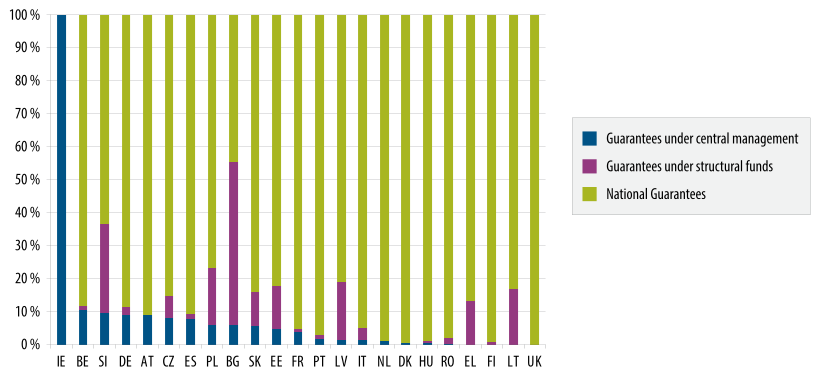
Notes:
- Data for ‘national guarantees’ from the European Mutual Guarantee Association (AECM) is not complete. It collects data from its member organisations, but not all guarantee institutions are member of this organisation. Data for some Member States (such as Germany or Italy) are therefore underestimated.
- As stated in the report of Economisti Associati et al. (see footnote 14), the level of public support is difficult to assess as in some cases public intervention takes the form of a sovereign guarantee. When this is the case, the value of public support is only known if and when a default occurs and public resources are called upon for the repayment of loans.
- As several national guarantee institutions reporting data to either OECD or AECM also manage guarantee instruments co-financed by the EU under shared management, some amounts may have been accounted for twice.
- Data for "guarantees under Structural Funds" were estimated on the basis of the EU contribution, assuming that it represents 50 % of the guaranteed amount. This leads to an underestimation for a number of Member States (as the percentage can go up to 80).
Source: ECA, on the basis of:
- for ‘national guarantees’: data from AECM for the years 2009-2013 (http://AECM.eu), data from the OECD for a number of countries for the years 2007-2013 (http://stats.oecd.org);
- for ‘guarantees under Structural Funds’: Commission report ‘Summary of data on the progress made in financing and implementing financial engineering instruments reported by the managing authorities in accordance with Article 67(2)(j) of Council Regulation (EC) No 1083/2006’, Programming period 2007-2013, situation as at 31 December 2015;
- for ‘guarantees under central management’: EIF operational reports as of 31.12.2016.
Annex II
Share of SME lending guaranteed by EU-funded instruments on total SME lending
The figure below provides an estimate for the period 2007-2013 by Member State of the annual average share of SME lending guaranteed by EU-funded instruments (central and shared management). Data on total SME lending was not available for some Member States, so they are not included in the figure.
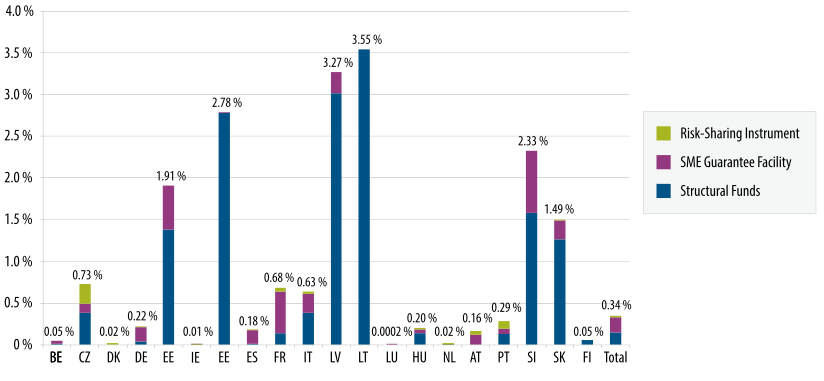
Notes:
- Data for total new lending for SMEs as such is not available. Therefore we used as proxy loans other than revolving loans and overdrafts, convenience and extended credit card debt – up to and including 1 million euro.
- Individual loans guaranteed by EU instruments can exceed 1 million euro. Due to the proxy mentioned in note (1), we excluded all loans above 1 million euro guaranteed under the SME Guarantee Facility and the Risk-Sharing Instrument. For loans guaranteed under Structural Funds this was not possible as there was no aggregate data on individual loan amounts. This may have resulted in an overestimation.
- We estimated the loans guaranteed under Structural Funds at Member State level as only the total loan amount for all Member States taken together was available.
Source: ECA, on the basis of:
- for ‘Structural Funds’: Commission report ‘Summary of data on the progress made in financing and implementing financial engineering instruments reported by the managing authorities in accordance with Article 67(2)(j) of Council Regulation (EC) No 1083/2006’, Programming period 2007-2013, situation as at 31 December 2015;
- for the ‘SME Guarantee Facility’ and the ‘Risk-Sharing Instrument’: EIF loan data as of 31.12.2016;
- for ‘total SME lending’: European Central Bank statistical data warehouse (http://sdw.ecb.europa.eu) and for some countries (CZ, DK and HU) data from the OECD (http://stats.oecd.org).
Annex III
Methodology of the econometric study
01The study analysed outcomes for more than 57 000 companies in France that benefitted from EU loan guarantee instruments in the 2002-2012 period. The financial data for these companies was obtained from existing databases of firms’ time-series financial data. To estimate the effect, the study compared the beneficiary companies with a comparison group of companies that did not benefit from the guarantees. These companies were drawn from a sample of 0.5 million companies in France using a two-step matching procedure to ensure that the companies in the comparison group exhibit similar characteristics to the beneficiary companies in terms of region, age, industry and each analysed variable before the loan was granted.
02By comparing the performance of the two groups of companies, the study estimated the conditional average treatment effect of the guaranteed loan on the companies. The study also included several tests to verify the robustness of the results, for instance as a consequence of non-parallel growth or selection bias due to data availability.
03A theoretical limitation of the study lies in the fact that the model estimated the joint economic effect of the guarantees and underlying loans, without the possibility of disentangling the two effects. Consequently, the impact measured is that of obtaining an EU-guaranteed loan as opposed to any other possible financing source, including national public guarantee schemes.
Annex IV
Innovation eligibility criteria
01The InnovFin SME Guarantee Final Recipient is an SME or a Small Mid-cap that intends to use the InnovFin SME Guarantee Final Recipient Transaction to invest in producing or developing or implementing new or substantially improved (i) products, processes or services, or (ii) production or delivery methods, or (iii) organisational or process innovation including business models that are innovative and where there is a risk of technological or industrial or business failure as evidenced by an evaluation carried out by an external expert, or
02The InnovFin SME Guarantee Final Recipient is a "fast-growing enterprise", which is an SME or a Small Mid-cap operating in a market for less than 12 years following its first commercial sale and with an average annualised endogenous growth in employees or in turnover greater than 20 % a year, over a three-year period, and with ten or more employees at the beginning of the observation period, or
03The InnovFin SME Guarantee Final Recipient is an SME or a Small Mid-cap that has been operating in a market for less than 7 years following its first commercial sale and its research and innovation costs represent at least 5 % of its total operating costs in at least one of the three years preceding InnovFin SME Guarantee Final Recipient's application for the InnovFin SME Guarantee Final Recipient Transaction, or in the case of an enterprise (and particularly a start-up) without any financial history, according to its current financial statements, or
04The InnovFin SME Guarantee Final Recipient is an SME or a Small Mid-cap that shall have a significant innovation potential or be an "research and innovation-intensive enterprise", by satisfying at least one of the following conditions:
- The InnovFin SME Guarantee Final Recipient's research and innovation annual expenses are equal or exceed 20 % of the InnovFin SME Guarantee Final Recipient Transaction amount as per InnovFin SME Guarantee Final Recipient's latest statutory financial statements, under the condition that the InnovFin SME Guarantee Final Recipient's business plan indicates an increase of its research and innovation expenses at least equal to the InnovFin SME Guarantee Financial Recipient Transaction amount; or
- The InnovFin SME Guarantee Final Recipient undertakes to spend an amount at least equal to 80 % of the InnovFin SME Guarantee Final Recipient Transaction amount on research and innovation activities as indicated in its business plan and the remainder on costs necessary to enable such activities; or
- The InnovFin SME Guarantee Final Recipient has been formally awarded grants, loans or guarantees from European research and innovation support schemes or through their funding instruments or regional, national research or innovation support schemes over the last thirty-six (36) months, under the condition that the InnovFin SME Guarantee Final Recipient Transaction is not covering the same expense; or
- The InnovFin SME Guarantee Final Recipient has been awarded over the last twenty-four (24) months an research and development or Innovation prize provided by an EU institution or an EU body; or
- The InnovFin SME Guarantee Final Recipient has registered at least one technology right (such as patent, utility model, design right, topography of semiconductor products, supplementary protection certificate for medicinal products or other products for which such supplementary protection certificates may be obtained, plant breeder's certificate or software copyright) in the last twenty-four (24) months, and the InnovFin SME Guarantee Final Recipient Transaction purpose is to enable, directly or indirectly, the use of this technology right; or
- The InnovFin SME Guarantee Final Recipient is an early stage SME and has received an investment over the last twenty-four (24) months from a venture capital investor or from a business angel being a member of a business angels network; or such venture capital investor or business angel is a shareholder of the InnovFin SME Guarantee Final Recipient at the time of the InnovFin SME Guarantee Final Recipient's application for the InnovFin SME Guarantee Final Recipient Transaction; or
- The InnovFin SME Guarantee Final Recipient requires a risk finance investment which, based on a business plan prepared in view of entering a new product or geographical market, is higher than 50 % of its average annual turnover in the preceding 5 years; or
- The InnovFin SME Guarantee Final Recipient's research and innovation costs represent at least 10 % of its total operating costs in at least one of the three years preceding InnovFin SME Guarantee Final Recipient's application for the InnovFin SME Guarantee Final Recipient Transaction, or in the case of an enterprise without any financial history, as per its current financial statements; or
- The InnovFin SME Guarantee Final Recipient is a Small Mid-cap and its research and innovation costs represent:
- Either, at least 15 % of its total operating costs in at least one of the three years preceding the InnovFin SME Guarantee Final Recipient's application for the InnovFin SME Guarantee Final Recipient Transaction
- Or, at least 10 % per year of its total operating costs in the three years preceding the InnovFin SME Guarantee Final Recipient's application for the InnovFin SME Guarantee Final Recipient Transaction; or
- The InnovFin SME Guarantee Final Recipient has incurred research and innovation expenses qualified in the past 36 months by competent national or regional bodies or institutions as part of general support measures approved by the European Commission and designed to incentivize companies to invest in research and innovation, provided that i) such body or institution is independent of the InnovFin SME Guarantee Financial (Sub-) lntermediary and the InnovFin SME Guarantee Final Recipient and ii) the InnovFin SME Guarantee Final Recipient Transaction covers incremental expenditure as indicated in the InnovFin SME Guarantee Final Recipient's business plan and iii) the InnovFin SME Guarantee Final Recipient Transaction is not covering the same eligible costs already supported by aforementioned measures; or
- The InnovFin SME Guarantee Final Recipient has been designated in the past 36 months as an innovative company by an EU or national or regional institution or body, provided that in each case
- the designation is based on the publicly available criteria where such criteria:
- shall not be limited to or otherwise favour any particular industry or sector, and
- shall reflect at least one of the criteria referred to in article 5.2 except article 5.2.(d).4), or shall reflect the substance of at least one of these criteria but shall not be less stringent; and
- the body or institution is independent of the InnovFin SME Guarantee Financial (Sub-) Intermediary and the InnovFin SME Guarantee Final Recipient; and
- the InnovFin SME Guarantee Final Recipient Transaction covers incremental expenditure as indicated in the InnovFin SME Guarantee Final Recipient's business plan.
- the designation is based on the publicly available criteria where such criteria:
Glossary
The credit rating of a borrower is the rating given by the lender after having assessed the borrower’s creditworthiness.
Cohesion policy in the 2007-2013 programme period covered the European Regional Development Fund and the European Social Fund (i.e. the two Structural Funds) and the Cohesion Fund. The aim is to reinforce economic and social cohesion within the European Union by redressing the main regional imbalances and by improving employment and job opportunities. In the 2014-2020 programme period, the coordination between cohesion policy and the other policies contributing to regional development, namely rural development and fisheries and maritime policy, was improved by the establishment of common provisions for the European Structural and Investment Funds.
The Commission has to carry out an ex ante evaluation for financial instruments addressing amongst other things the needs to be met, the proportionality of the intervention with regard to the size of the identified funding gap, the added value of Union involvement and synergies with other new and existing financial instruments. These aspects may also be included in the impact assessments that the Commission carries out on initiatives expected to have significant economic, social or environmental impacts.
The purpose of the "funded risk-sharing financial instrument" (in the 2007-2013 period) was to provide funding to a financial intermediary to support new lending and to share the risk of the new loans.
Innovation, according to Eurostat’s definition is the implementation of a new or significantly improved product (good or service) or process, a new marketing method or a new organisational method in business practices, workplace organisation or external relations. The minimum requirement for an innovation is that the product, process, marketing method or organisational method must be new (or significantly improved) to the firm.
The EU’s multiannual financial framework lays down the maximum annual amounts which the EU may spend in different political fields over a period of at least 5 years. The multiannual financial framework is not the budget of the EU but provides a framework for financial programming and budgetary discipline.
Securitisation is a process by which a lender pools and repackages assets (here: a portfolio of loans), to organise them into different risk categories and to trade these new instruments (i.e. the securities).
Endnotes
1 Defined as businesses which employ fewer than 250 people and which have an annual turnover not exceeding 50 million euro, or a balance sheet total not exceeding 43 million euro.
2 COM(2014) 686 final of 30.10.2014 “Report from the Commission to the European Parliament and the Council on financial instruments supported by the general budget according to Art.140.8 of the Financial Regulation as at 31 December 2013”.
3 The Commission acts in cooperation with Member States.
4 Regulation (EU) No 1287/2013 of the European Parliament and of the Council of 11 December 2013 establishing a Programme for the Competitiveness of Enterprises and small and medium-sized enterprises (COSME) (2014-2020) and repealing Decision No 1639/2006/EC (OJ L 347 of 20.12.2013).
5 Regulation (EU) No 1291/2013 of the European Parliament and of the Council of 11 December 2013 establishing Horizon 2020 - the Framework Programme for Research and Innovation (2014-2020) and repealing Decision No 1982/2006/EC (OJ L 347 of 20.12.2013).
6 An asset pledged by a borrower to secure a loan. The lender can seize the asset when the borrower defaults on the loan.
7 First under the "Growth and Employment Initiative" (1998-2000), then under the "Multi-Annual Programme for Enterprise and Entrepreneurship for SMEs" (2001-2006) and then under the "Competitiveness and Innovation Framework Programme" (2007-2013).
8 Under the “Seventh EU Framework Programme for Research and Technological Development”.
9 The expected loss is established by the EIF for each guarantee agreement. For the agreements signed till end 2016 the rates vary between 4 % and 20 %.
10 Regulation (EU) 2015/1017 of the European Parliament and of the Council of 25 June 2015 on the European Fund for Strategic Investments, the European Investment Advisory Hub and the European Investment Project Portal and amending Regulations (EU) No 1291/2013 and (EU) No 1316/2013 — the European Fund for Strategic Investments(OJ L 169, 1.7.2015, p. 1).
11 Commission report “Summary of data on the progress made in financing and implementing financial engineering instruments reported by the managing authorities in accordance with Article 67(2)(j) of Council Regulation (EC) No 1083/2006”, Programming period 2007-2013, situation as at 31 March 2017. Note that nearly 83 % of loan recipients are SMEs, 17 % are individuals and 0.11 % are large companies. Data for SMEs only is not available.
12 Surveys on the Access to Finance of Enterprises in the euro area conducted on behalf of the European Central Bank and the European Commission since 2009.
13 2016 report of AECM – Facts and Figures, Member statistics 2014-2015. It needs to be noted that this data does not provide a full picture as it is limited to the guarantees issued by AECM member organisations and which increased over the years.
14 Study carried out by Economisti Associati in collaboration with EIM Business & Policy Research, The Evaluation Partnership, Centre for Strategy and Evaluation Services, and Centre for European Policy Studies.
15 It refers to the ability to find financial intermediaries willing to operate the guarantee instrument, and to the ability of financial intermediaries to approve loans for a sufficient number of businesses targeted by the guarantee instruments.
16 Initiative launched by the Commission and the EIB Group.
17 Opinion No 2/2016 ”EFSI: an early proposal to extend and expand” (paragraphs 21 to 22) (OJ C 465 of 13.12.2016).
18 ECA Special Report No 19/2016 ”Implementing the EU budget through financial instruments – lessons to be learnt from the 2007-2013 programme period”, paragraphs 46 to 54 (http://eca.europa.eu).
19 For the InnovFin SMEG Guarantee, the EIF transfers the fee to the EIB which does the actual treasury management.
20 Considering a lifetime of 21 years.
21 The European Union holds 28.1 % of the share capital while the EIB holds 59.9 %. The capital of the EIB is hold by the 28 Member States of the European Union.
22 Source: see footnote 11. Data is indicative as for an important number of guarantee funds no fees or zero fees had been reported.
23 However, there are significant variations in the costs and fees amongst countries and financial instruments. See ECA Special Report No 19/2016, paragraphs 109 to 131.
24 For instance: ECA Special Report No 2/2012 ”Financial instruments for SMEs co-financed by the European Regional Development Fund”, paragraph 88; ECA Special Report No 19/2016, paragraph 93; ECA Special Report No 5/2015 ”Are financial instruments a successful and promising tool in the rural development area?”, paragraph 68 (http://eca.europa.eu).
25 For example, “a borrower’s willingness to supply collateral of the required quality and amount can be construed as a signal of its creditworthiness”. Source: Sebastian Schich, Byuoung-Hwan Kim, “Guarantee Arrangements for Financial Promises: How Widely Should the Safety Net be Cast?” OECD Journal: Financial Market Trends, Volume 2011 – Issue 1.
26 Regulation (EU) No 1287/2013.
27 Regulation (EU) No 1291/2013, Annex I, Part II, Section 2.3.
28 Article 140(2)(b) of Regulation (EU, Euratom) No 966/2012 of the European Parliament and of the Council of 25 October 2012 on the financial rules applicable to the general budget of the Union and repealing Council Regulation (EC, Euratom) No 1605/2002 (OJ L 298, 26.10.2012, p: 1).
29 Based on a sample of 181 loans provided by nine intermediaries.
30 ECA Special Report No 4/2011 ”The audit of the SME Guarantee Facility”, paragraph 103 (http://eca.europa.eu).
31 Basis: total number of businesses having obtained a loan under either of the two current instruments as of 30.6.2016.
32 See for example: Ferrando et al., “Assessing the financial and financing conditions of firms in Europe: the financial module in CompNet”, ECB Working Paper Series No 1836, 2015 (p. 10).
33 Major differences also persist if a lower threshold is used.
34 ECA Special Report No 4/2011, recommendation 5.
35 ECA Special Report No 4/2011, reply of the Commission to paragraph 103.
36 The InnovFin SME Guarantee Facility is eligible for loans between 25 000 euro and 7.5 million euro.
37 Ferrando and Ruggieri, “Financial Constraints and Productivity: Evidence from Euro Area Companies”, ECB Working Paper Series No 1823, 2015.
38 Ferrando et al., “Assessing the financial and financing conditions of firms in Europe: the financial module in CompNet”, ECB Working Paper Series No 1836, 2015.
39 Reint Gropp, Christian Gruendl and Andre Guettler, “The Impact of public guarantees on bank risk taking – Evidence from a natural experiment”, ECB Working Paper Series No 1272, December 2010.
40 "Credit Guarantee Schemes for SME lending in Central, Eastern and South-Eastern Europe", A report by the Vienna Initiative Working Group on Credit Guarantee Schemes, 2014.
41 COM(2008) 800 final of 26.11.2008 “A European Economic Recovery Plan”.
42 Recitals 3, 11 and 27 of Decision No 1639/2006/EC of the European Parliament and of the Council of 24 October 2006 establishing the Competitiveness and Innovation Programme (CIP) (OJ L 310, 9.11.2006, p. 15), Recital 1, Article 8.1 and Article 17.1 of Regulation No 1287/2013 establishing the programme for Competitiveness of Enterprises and SMEs (COSME), Recitals 2, 20, 21 and 22 of Decision No 1982/2006/EC of the European Parliament and of the Council of 18 December 2006 concerning the Seventh Framework Programme for Research and Technological Development (OJ L 412, 30.12.2006, p. 1).
43 Under the guarantees, leverage (in terms of loan volume induced by public funding) is typically higher because the public budget only covers provisions for future losses.
44 The scheme was implemented under the Joint European Resources for Micro to Medium Enterprises (JEREMIE).
45 This was already one of our concerns in our previous work on the SME Guarantee Facility; see ECA Special Report No 4/2011.
46 The study was prepared by a research team from the Politecnico di Milano School of Management and Emlyon Business School: Bertoni, Colombo and Quas (2016), “Final report: Long-term effects of loan portfolio guarantees on SMEs’ performance”, (forthcoming).
47 The wage bill (the total costs of the employees in a company used as a proxy for employment), sales, total assets, solvency ratio (shareholder funds divided by total assets), current ratio (current assets divided by current liabilities), return on assets (earnings before tax, divided by total assets), total factor productivity and survival probability.
48 Lelarge, C., Sraer, D. and Thesmar, D., “Entrepreneurship and credit constraints: Evidence from a French loan guarantee program”, International differences in entrepreneurship, University of Chicago Press, 2010, (pp. 243-273).
49 Asdrubali Pierfederico, Signore Simone, “The Economic Impact of EU Guarantees on Credit to SMEs, Evidence from CESEE Countries”, EIF Research & Market Analysis, Working Paper 2015/29.
50 SEC(2005) 433 of 6.4.2005 “Annex to the Proposal for a Decision of the European Parliament and of the Council establishing a Competitiveness and Innovation Framework Programme (2007-2013)”.
51 ECA Special Report No 4/2011, paragraph 104.
52 Idem, the Commission’s reply to recommendation No 6.
53 COM(2011) 834 final of 31.11. 2011 “Proposal for a Regulation of the European Parliament and of the Council establishing a Programme for the Competitiveness of Enterprises and small and medium-sized enterprises (2014 - 2020)”.
54 Synthesis evaluation report by the EIB’s Operations Evaluations Division, “EIF’s SME Securitisation Activities, 2004 – 2015”, March 2017.
55 It refers to the ability of EU intervention to influence policy developments in the Member States and to transfer expertise from the EU and the EIF to authorities and/or financial institutions in the Member States.
56 See also the “Final Evaluation of the Entrepreneurship and Innovation Programme” which states that “once an approach has been established and adopted more widely, the Financial Instruments should move on”, Centre for Strategy & Evaluation Services LLP, April 2011.
57 Regulation (EU) No 1291/2013, Annex 1, p. 144.
58 See Eurostat’s glossary (http://ec.europa.eu/eurostat/statistics-explained): “innovations should be new to the enterprise concerned: for product innovations, they do not necessarily have to be new to the market and, for process innovations, the enterprise does not necessarily have to be the first one to have introduced the process”.
59 Note that the 2011 assessment by Economisti Associati et al. (see footnote 14) considered a narrower definition of innovation to be more meaningful. The narrower definition would encompass the newness of products from a market perspective or the contribution of new products/projects to sales.
60 The “2012 Community Innovation Survey” reported that 52.8 % of enterprises had “innovation activity” between 2008 and 2010; the “2014 Community Innovation Survey” reported a level of 48.9 % between 2010 and 2012 and 49.1 % between 2012 and 2014.
61 Basis: total number of businesses having obtained a loan as of 30.6.2016.
62 Based on Eurostat’s aggregation matrix of industry codes used for compiling statistics on high-tech industry and knowledge-intensive services.
63 SEC(2011) 1427 final of 30.11.2011 “Impact Assessment accompanying the Communication from the Commission ‘Horizon 2020 – The Framework Programme for Research and Innovation’”.
64 European Commission: Issue papers for the High-Level Group on maximising the impact of EU research and innovation programmes, 2017.
65 Based on the results of the ‘2014 Community Innovation Survey’.
66 This point is stressed by Bosworth, Barry, Andrew S. Carron, and Elisabeth Rhyne, "The Economics of Federal Credit Programs", Washington DC: Brookings Institution, 1987.
67 Center for Global Development, “When will we ever learn? – Improving lives through impact evaluation “, Report by the evaluation gap working group, 2006.
68 Asdrubali, Pierfederico and Signore, Simone, "The Economic Impact of EU Guarantees on Credit to SMEs Evidence from CESEE Countries", EIF Research & Market Analysis, Working Paper 2015/29.
69 Such an evaluation requires specific data as can be seen, for instance, in Bondonio, Biagi and Stancik, "Counterfactual Impact Evaluation of Public Funding of Innovation, Investment and R&D", Joint Research Centre Technical Reports, 2016.
70 Article 128.3 of Regulation (EU, Euratom) No 966/2012.
71 As, for example, can be granted in France by the statistical confidentiality committee of the French National Institute of Statistics and Economic Studies.
72 Eurostat.
73 For instance, as used by some central banks.
74 Economic theory shows that the economic benefits of any subsidy are split between supplier and users, regardless of the legal entitlement.
1 Asdrubali, Pierfederico and Signore, Simone, "The Economic Impact of EU Guarantees on Credit to SMEs Evidence from CESEE Countries", EIF Research & Market Analysis, Working Paper 2015/29.
2 http://ec.europa.eu/eurostat/documents/2995521/7706167/4-26102016-AP-EN.pdf/20f0c515-ed43-45c3-ad6a-ca0b26b36de5
3 Press release in Latvian: http://www.fm.gov.lv/lv/aktualitates/nozares_zinas/altum/55763-altum-un-eiropas-investiciju-fonds-paraksta-sadarbibas-ligumu-jauna-garantiju-programma-uznemejiem-bus-pieejami-15-miljoni-eiro and product description in English: http://www.baltic-course.com/eng/good_for_business/?doc=133532
4 Press releases: http://www.eif.org/what_we_do/guarantees/news/2016/efsi_cosme_easi_eurobank.htm; http://www.eif.org/what_we_do/guarantees/news/2017/efsi_cosme_greece.htm https://www.nbg.gr/en/business/co-funded-loans/subsidized-loans/cosme
5 http://www.vf.dk/saadan-goer-vi/etableringslaan.aspx https://www.fi-compass.eu/sites/default/files/publications/presentation_20161125_brussels_eafrd_rolf_kjaergaard.pdf
6 Oslo Manual ISBN 92-64-01308-3
7 Asdrubali, Pierfederico and Signore, Simone, "The Economic Impact of EU Guarantees on Credit to SMEs Evidence from CESEE Countries", EIF Research & Market Analysis, Working Paper 2015/29.
8 Interim Evaluation of Horizon 2020's Financial Instruments, Final Report, written by The Centre for Strategy & Evaluation Services LLP (CSES)
9 Asdrubali, Pierfederico and Signore, Simone, "The Economic Impact of EU Guarantees on Credit to SMEs Evidence from CESEE Countries", EIF Research & Market Analysis, Working Paper 2015/29.
| Event | Date |
|---|---|
| Adoption of Audit Planning Memorandum (APM) / Start of audit | 15.3.2016 |
| Official sending of draft report to Commission (or other auditee) | 24.7.2017 |
| Adoption of the final report after the adversarial procedure | 7.11.2017 |
| Commission’s (or other auditee’s) official replies received in all languages | 24.11.2017 |
Audit team
The ECA’s special reports set out the results of its audits of EU policies and programmes or management topics related to specific budgetary areas. The ECA selects and designs these audit tasks to be of maximum impact by considering the risks to performance or compliance, the level of income or spending involved, forthcoming developments and political and public interest.
This report was produced by Audit Chamber IV – headed by ECA Member Baudilio Tomé Muguruza - which has a focus in the areas of regulation of markets and competitive economy. The audit was led by ECA Member Neven Mates. He was supported in the preparation of the report by Georgios Karakatsanis, head of the Croatian private office, Marko Mrkalj, attaché; Marion Colonerus, principal manager; Josef Jindra, head of task. The audit team consisted of Jiri Benes, Christian Detry, Andras Augustin Feher, Ezio Guglielmi and Martin Puc.

Contact
EUROPEAN COURT OF AUDITORS
12, rue Alcide De Gasperi
1615 Luxembourg
LUXEMBOURG
Tel. +352 4398-1
Enquiries: eca.europa.eu/en/Pages/ContactForm.aspx
Website: eca.europa.eu
Twitter: @EUAuditors
More information on the European Union is available on the internet (http://europa.eu).
Luxembourg: Publications Office of the European Union, 2017
| ISBN 978-92-872-8622-2 | ISSN 1977-5679 | doi:10.2865/88262 | QJ-AB-17-020-EN-N | |
| HTML | ISBN 978-92-872-8637-6 | ISSN 1977-5679 | doi:10.2865/477173 | QJ-AB-17-020-EN-Q |
© European Union, 2017.
Reproduction is authorised provided the source is acknowledged.
For any use or reproduction of photos or other material that is not under the European Union copyright, permission must be sought directly from the copyright holders.
GETTING IN TOUCH WITH THE EU
In person
All over the European Union there are hundreds of Europe Direct Information Centres. You can find the address of the centre nearest you at: http://europa.eu/contact
On the phone or by e-mail
Europe Direct is a service that answers your questions about the European Union. You can contact this service
- by freephone: 00 800 6 7 8 9 10 11 (certain operators may charge for these calls),
- at the following standard number: +32 22999696 or
- by electronic mail via: http://europa.eu/contact
FINDING INFORMATION ABOUT THE EU
Online
Information about the European Union in all the official languages of the EU is available on the Europa website at: http://europa.eu
EU Publications
You can download or order free and priced EU publications from EU Bookshop at: http://bookshop.europa.eu. Multiple copies of free publications may be obtained by contacting Europe Direct or your local information centre (see http://europa.eu/contact)
EU law and related documents
For access to legal information from the EU, including all EU law since 1951 in all the official language versions, go to EUR-Lex at: http://eur-lex.europa.eu
Open data from the EU
The EU Open Data Portal (http://data.europa.eu/euodp/en/data) provides access to datasets from the EU. Data can be downloaded and reused for free, both for commercial and non-commercial purposes.