

Intermodal freight transport EU still far from getting freight off the road
About the report:Intermodal freight transport consists of transporting goods in a single loading unit (such as container) using a combination of modes of transport: road, rail, waterways or air. It can optimise the relative strengths of each transport mode in terms of flexibility, speed, costs and environmental performance. For the period 2014‑2020, the total EU funding committed to projects supporting intermodality stood at around € 1.1 billion.
The Commission set targets at EU level for the increased use of rail and inland waterways. The targets were unrealistic and member states had own targets not aligned to them. Overall, we concluded that intermodal freight transport can still not compete on equal grounds with road transport due to regulatory and infrastructure barriers. We made a number of recommendations to increase the effectiveness of the EU support in the area.
ECA special report pursuant to Article 287(4), second subparagraph, TFEU.
 |
Executive summary
I Intermodal freight transport consists of transporting goods in a single loading unit (such as a container) using a combination of modes of transport: road, rail, waterways or air. It has the potential to optimise the relative strengths of each of the modes in terms of flexibility, speed, costs and environmental performance. For the period 2014‑2020, total EU funding through the European Regional and Development Fund (ERDF), the Cohesion Fund (CF) and the Connecting Europe Facility (CEF) committed to projects supporting intermodality stood at around €1.1 billion.
II We decided to carry out this audit to inform policymakers and stakeholders on the effectiveness of the EU's regulatory and financial support for intermodal freight transport since 2014. To this end, we assessed whether the EU targets on intermodality, within the broader EU strategy for greening freight transport, were well designed and monitored. We also assessed whether the EU legal framework supported intermodal freight transport appropriately and whether the EU infrastructure network was fit for intermodality needs. We carried out our audit in seven member states and examined a sample of 16 projects that had received EU funding until 2020.
III Overall, we concluded that the EU’s regulatory and financial support on intermodal freight transport was not sufficiently effective as there was still no level playing field for intermodal freight transport in the EU due to regulatory and infrastructure barriers. This means that intermodal freight transport can still not compete on equal grounds with road transport. We found that the Commission did not have a dedicated EU strategy on intermodality. Instead, intermodality was part of broader strategies on greening freight transport and modal shift.
IV The Commission did not set quantitative targets for the share of intermodal freight and set unrealistic EU targets for 2030 and 2050 for the increased use of rail and inland waterways for the transport of freight. These targets were not based on robust simulations of how much modal shift could be achieved. We also found that the member states set their target for increasing rail freight without aligning it with the EU one and at an even more ambitious level. The Commission’s monitoring of the achievement of the EU targets was significantly hampered by a lack of data from member states.
V Market regulation is a key factor in sustaining policy choices. However, the provisions of the Combined Transport Directive – the only piece of EU legislation specific to intermodal transport – are outdated. The Commission made several attempts to revise the directive, but did not succeed in obtaining member state agreement. There are also EU regulatory provisions, particularly those governing road transport, which partially counteract the aim of rendering intermodality attractive. Lastly, the Commission took steps to simplify State aid rules for schemes aimed at a modal shift away from road involving rail, inland waterways or multimodal transport.
VI We found that one of the factors dissuading logistics operators from opting for intermodality was the lack of easily‑accessible information on intermodal terminals and on real‑time network capacities. Moreover, while appropriate infrastructure is another key factor to enable intermodal transport, the Commission lacks an overview of the current terminals and of the terminals that still have to be built or upgraded to meet industry needs. The Commission's 2021 proposal for revising the regulation on the Trans‑European Network for Transport (TEN‑T) has the potential to improve the situation: member states would have to assess the needs for terminal infrastructure and the Commission could adopt implementing acts to set deadlines and conditions for the implementation of sections of the network. Finally, member states’ delays in ensuring the compliance of linear infrastructure (such as railway tracks or inland waterways) with the technical requirements for the TEN‑T network hampers the competitiveness of intermodal transport.
VII The implementation of EU‑funded intermodality projects was delayed in a number of cases in our sample. In particular, a specific feature found in some intermodal projects, namely a complex ownership structure for terminals, contributed to delays in their implementation. Moreover, the EU funding provided to intermodal infrastructure projects through the Connecting Europe Facility, the European Regional Development Fund and the Cohesion Fund during the 2014‑2020 period was not linked to achieving specific results in terms of modal shift. Finally, we found that the monitoring of these projects focused on outputs, rather than results and impacts.
VIII We recommend that the Commission:
- set targets regarding the modal share along the Core Network Corridors and report on them;
- prepare regulatory changes to improve the competitiveness of intermodal transport;
- lay the groundwork for a coordinated assessment by member states of intermodal terminal needs;
- assess the modal shift potential in cost‑benefit analyses for EU‑funded projects.
Introduction
Intermodal transport optimises the relative strengths of different transport modes
01 Intermodal freight transport consists of transporting goods in a single loading unit (such as a container, a swap body or a semi‑trailer), without separate handling, using a combination of modes of transport1: road, rail, waterways or air. It is thus a specific form of multimodal transport. As there is no separate handling due to the use of a single loading unit, intermodal freight transport has lower handling costs than multimodal transport.
02 Figure 1 shows an intermodal journey, moving the same loading unit from the first port of entry into the EU to the final destination of the goods.
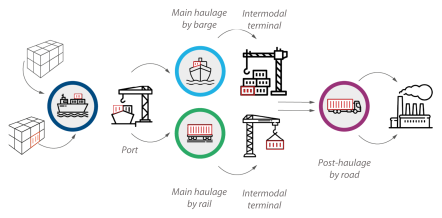
03 Road transport is the most flexible mode for transporting freight, as it provides a door‑to‑door journey. For many types of goods, it is also often the fastest and cheapest way of delivering goods, even over long distances. On average, and in the absence of support measures, intermodal freight transport is 56 % more expensive than the road‑only alternative2 (see Figure 2).
Figure 2 – Cost comparison between intermodal and road‑only freight transport
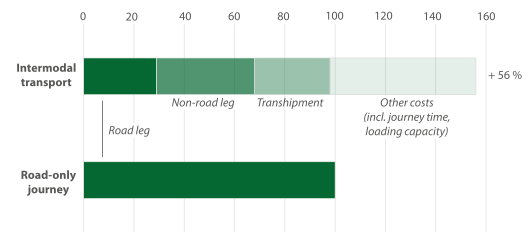
Note: The intermodal cost calculation is based on a medium to long rail/road journey.
Source: ECA, based on Commission’s data.
04 In contrast to road, other modes of transport, such as rail or inland waterways, are slower and less flexible. They also require specific infrastructure, which cannot be replicated at each shipping location. On the positive side, these modes offer a better safety and environmental performance and can reduce pressure on congested roads. Intermodality is about taking advantage of the relative strengths of different transport modes.
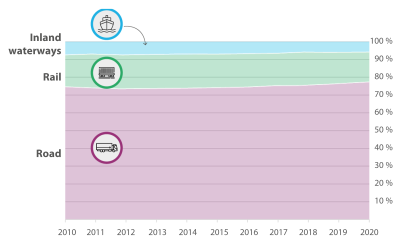
05 Figure 3 shows the evolution from 2010 to 2020 of the relative share of each mode of transport for inland freight (i.e. excluding air and maritime freight). In 2010, rail and inland waterways represented around 25 % of the total, and by 2020, their share had further decreased to below 23 % by 2020.
Figure 3 – Modal split of EU inland freight transport (% of total tonne‑kilometres)
Source: ECA, based on Eurostat (online data code: tran_hv_frmod).
Increasing intermodality is one way to decarbonise transport
06 Greenhouse gas emissions are considered a major cause of climate change. Currently, the transport sector accounts for almost a quarter of greenhouse gas emissions in Europe. Nearly three quarters of this amount (72 % in 2019) is due to road transport. Trucks and lorries carrying freight on roads are responsible for around a quarter of road transport emissions3. Figure 4 illustrates the environmental performance of each mode of transport as at 2018, in terms of greenhouse gas (CO2) emissions in grammes per tonne‑kilometre.
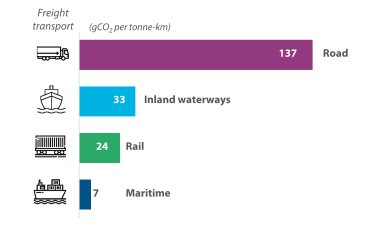
Source: ECA, based on European Environment Agency data as at 2018.
07 A modal shift in transport away from roads and an increased use of intermodal transport can play a key role in making freight transport in Europe more environmentally friendly. In a 2011 White Paper, the Roadmap to a Single European Transport Area4, the Commission set a target for reducing greenhouse gas emissions from the transport sector for the first time, aiming for a 60 % reduction by 2050 compared with 1990 figures. However, contrary to other economic sectors, CO2 emissions from the transport sector did not decrease, but increased by 24 % between 1990 and 20195. While the efficiency of heavy‑duty vehicle transport (vehicles and logistics) improved during this period, increases in demand for freight transport outpaced these efficiency gains6.
08 In 2019, in its latest strategic document tackling climate and environmental-related challenges, “The European Green Deal”7, the Commission called for an even greater reduction in greenhouse gas emissions from transport (namely 90 % by 2050), so that the EU becomes a climate‑neutral economy by 2050 in line with the Paris Agreement on climate change.
09 Subsequently, in 2020, the Commission published its Sustainable and Smart Mobility Strategy8 calling for a substantial modal shift to rail, inland waterways or short‑sea shipping. Short‑sea shipping refers to the movement of cargo by sea between ports situated in geographical Europe, or between those ports and ports situated in non‑European countries with a coastline on the enclosed seas bordering Europe.
EU regulatory framework relevant for intermodal freight transport and responsibilities for policy implementation
10 At the beginning of the 1990s, the member states decided to establish an EU‑wide transport infrastructure policy. The Commission, and particularly its Directorate‑General for Mobility and Transport (DG MOVE), is responsible for the design, implementation and enforcement of this policy. The main legal act as regards the Europe‑wide network for road, rail, inland waterway, sea and air transport of passengers and goods is the Trans‑European Transport Network (TEN‑T) regulation9, the current version of which was adopted in 2013 (see Box 1).
Trans‑European Transport Network
The Trans‑European Transport Network (TEN‑T) identifies a “core network” of transport infrastructures, including nine Core Network Corridors, as well as two horizontal priorities (the European Rail Traffic Management System (ERTMS) and “motorways of the sea”). These are to be completed by 2030. Complementary to this, it defined a “comprehensive network”, to be developed by 2050. The latter aims to ensure the accessibility and connectivity of all regions in the EU, including remote, insular and outermost regions.
The maps of the TEN‑T network as included in the 2013 TEN‑T regulation indicate the linear infrastructure (i.e. rail, road and inland waterways), the ports, and the location where nodes and terminals are or should be situated (for example where there may be a transfer from rail to road or to an inland port). Furthermore, the TEN‑T regulation contains a list of technical parameters with which transport infrastructure within the core network must comply by 2030.
In line with the TEN‑T regulation, the Commission has nominated a European Coordinator for each of the nine network corridors, as well as for the two horizontal priorities. These coordinators draw up and update corridor work plans, including an analysis of the investments required (list of projects), and annually report on progress.
In 2021, the Commission proposed a revision10 of the TEN‑T regulation, followed by another proposal11 in 2022 after the beginning of the Russian war of aggression against Ukraine. Some of the changes proposed have the potential to further support intermodal transport.
11 Next to the TEN‑T regulation addressing infrastructure aspects, there are other legal acts regulating the transport market that are particularly relevant for intermodal freight transport:
- The Combined Transport Directive12 from 1992 is the only EU legislative act specific to intermodal freight transport. Combined transport is a type of intermodal transport but with limitations on the type of transport unit allowed and a maximum length for the road leg. The directive covers all cross‑border intermodal transport flows unless they cross a border with a non‑EU country. Flows that are purely national are not yet within its scope. The directive provides regulatory and financial incentives such as exemptions from vehicle taxes for combined transport operations.
- Other legal acts, in particular for road transport, can have an impact on the competitiveness of intermodal transport. For example, the Eurovignette Directive13 regulates the charges that can be imposed on road vehicles in order to account for the external costs of road transport.
12 Member states remain responsible for the transposition of transport‑related EU directives (such as the Eurovignette directive or the Combined Transport directive) and the implementation of EU regulations. Member states decide on their national transport policy, which may be set out in national transport plans. Hence, they decide which infrastructure projects (e.g. intermodal terminals or railway tracks) should take priority for implementation. Funding for these projects comes primarily from national/regional budgets.
EU funding for intermodal infrastructure projects
13 During the 2014‑2020 period, the EU financed national and regional transport infrastructure projects through the following two main sources:
- the European Regional Development Fund (ERDF) and the Cohesion Fund (CF), whose management is shared between the Commission and the member states. The Commission’s Directorate‑General for Regional and Urban Policy (DG REGIO) approves the multiannual programmes including funding priorities, designed by member states, and monitors their implementation. National or regional managing authorities are then responsible for the selection and implementation of specific projects co‑funded by the ERDF and the CF.
- The Connecting Europe Facility (CEF), which is managed directly by the Commission (DG MOVE). It delegated the responsibility for awarding grants and monitoring their implementation to the European Climate, Infrastructure and Environment Executive Agency (CINEA).
14 For the 2014‑2020 period there was no requirement for project promoters or authorities to use a specific reporting code for projects supporting intermodal freight transport, but such codes existed for the individual transport modes and for the broader category of multimodal transport. Therefore, we had to estimate the amount of EU funding provided under the ERDF/CF and CEF in the period. As at 1 July 2021, the amount committed to such projects stood at €1 118 million (CEF €514 million; ERDF €175 million; CF €429 million).
15 For the 2021‑2027 period, these three instruments will remain available. Moroever, for the period from 2021 to 2026, the Recovery and Resilience Facility14 provides additional financial support to mitigate the social and economic impact of the COVID‑19 pandemic. The Facility has a budget of €724 billion (current prices). It can be used by member states to fund reforms and infrastructure projects, including in the field of transport. The exact allocation of the fund and the targets to be met for the disbursement of the EU contribution are detailed in the national Recovery and Resilience Plans. Annex I includes an overview of the projects we identified as supporting intermodality in the plans of a selected number of member states.
Audit scope and approach
16 This report assesses the effectiveness of the EU's regulatory and financial support for intermodal freight transport since 2014. To this end, we examined whether:
- the targets for intermodal transport, in the pursuit of greening freight transport, were well designed and monitored;
- the EU legal framework supported intermodal freight transport appropriately to enable it to become more competitive;
- the EU infrastructure network was fit for intermodality needs.
17 We examined evidence from a range of sources:
- we analysed the EU transport strategies, the relevant legislative framework and policy documents, as well as published reports from other Supreme Audit Institutions, research bodies, industry associations and academics on intermodal freight transport;
- for a sample of six member states (Germany, Spain, France, Italy, the Netherlands and Poland) we analysed national transport strategies and legislative and policy documents;
- we interviewed staff from relevant Directorates‑General at the Commission and from CINEA, as well as representatives of national bodies;
- we met industry associations of shippers and logistics operators at European and national level, as well as staff from the International Transport Forum at the Organisation for Economic Co‑operation and Development (OECD); and
- for a sample of seven member states (the six mentioned above, plus Croatia) we analysed a sample of 16 projects that received financing from the EU budget in the period 2014‑2020 (see Annex II). We visited some of these projects and carried out a desk review for others.
18 Figure 5 provides an overview of the countries and the sample of projects supporting freight intermodality that were subject to our audit.

19 We selected the member states based on the materiality of the ERDF/CF and CEF funding allocated to intermodal infrastructure projects in each country and the volume of cross‑country freight flows. With the selected countries, we cover three key trade flows, which overlap with sections of the TEN‑T corridors: the Rhine‑Alpine corridor (stretching from Belgium and the Netherlands to Italy), the North Sea‑Baltic corridor (between Poland and Germany), and the Atlantic and Mediterranean corridors (connecting Germany to Spain via France).
20 Our sample of projects covers various combinations of transport modes and types of support for intermodality (such as logistics platforms or last‑mile connections) and implementation stages (i.e. both on‑going and closed projects). Taken together, the committed EU funding for these projects amounts to €403 million and covers 36 % of the relevant population (see paragraph 14).
21 Our audit covers the period since the adoption of the Commission’s Roadmap to a Single European Transport Area in 2011 (see paragraph 07) and focuses in particular on the investments supported by the EU in the period from 2014 to 2020.
22 This report complements our series of reports addressing certain aspects related to intermodal transport. Our first such report was issued in 2013 and focused on the broader category of multimodal transport in the EU15. Annex III provides an overview of all our reports relevant to intermodal transport.
23 This report is meant to contribute to the discussions on future proposals for legislative acts, which aim to increase the competitiveness of intermodal transport and ensure the necessary investments to make it fit for future challenges. We decided to carry out this audit as decarbonisation of transport is at the core of the EU goal to reduce greenhouse gas emissions, as laid out in the European Green Deal. Intermodal freight transport is a key tool in that effort.
Observations
The targets for intermodality, in the pursuit of greening freight transport, were neither effectively set out nor specifically monitored
24 An EU strategy towards achieving modal shift in freight transport should be based on robust assumptions and should set out ambitious but realistic targets for the various levels of governance involved. Monitoring is necessary to allow policy makers and stakeholders to check whether policy implementation is "on track" and to generate information that can be used to evaluate whether it has achieved its objectives16.
25 Therefore, we examined whether the Commission had:
- defined realistic intermodality and modal shift targets for freight in its strategies;
- ensured the member states’ adherence to these targets;
- monitored the contribution of intermodal freight transport to its modal shift objectives.
The Commission lacks targets for intermodality, while the targets for greening freight transport were unrealistic both in 2011 and 2020
26 Increasing the use of modes of transport that generate lower CO2 emissions in their operations, i.e. rail and waterborne transport, is essential for achieving a more sustainable transport policy. This means both a significant shift in transport volumes between modes and increased use of intermodal transport. Such a change requires a combination of regulatory measures, funding and operational actions at both EU and national level. We found that the Commission did not have a dedicated EU strategy on intermodality. Instead, intermodality was part of broader strategies on greening freight transport and modal shift.
27 These strategies, the 2011 Roadmap to a Single European Transport Area and the 2020 Sustainable and Smart Mobility Strategy, specify quantitative targets for the increased use of rail and inland waterways. However, they quantify them in a different manner (see Figure 6):
- In 2011, the target was expressed in terms of the share of road freight travelling over 300 km that should shift to other modes; and
- In 2020, the targets for rail and inland waterways were expressed in terms of the increase in traffic (including short‑sea shipping).
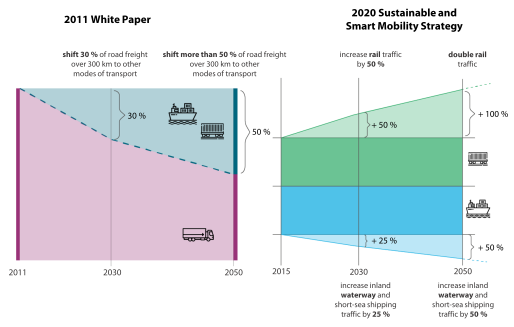
28 Neither document set specific EU targets for the share of intermodal freight transport. Nevertheless, a large proportion of the additional rail and waterborne volumes is expected to be intermodal in order to achieve the targets mentioned in Figure 6, as the first and last legs of the journey for most goods still require the use of road transport.
29 Our analysis showed that the Commission targets were not based on robust simulations of how much modal shift could realistically be achieved considering existing long‑term infrastructure constraints for rail and inland waterways and regulatory barriers affecting the competitiveness of intermodal freight transport. For example:
- the impact assessment for the 2011 White Paper assumed that trains with a maximum length of 1 500 metres would be allowed on the network (contrary to the current 740‑metre requirement in the TEN-T regulation);
- the impact assessment underlying the 2020 Strategy referred to an investment gap of €100 billion per year for the 2021‑2030 period which would need to be closed for its projections to become reality. However, the Commission did not specify how it would ensure that member states made the necessary funding available in good time.
30 Moreover, the Commission’s estimates of the traffic volumes needed for rail and waterborne transport in order to achieve the targets were overly optimistic. As an example, in the 2011 White Paper, the Commission estimated that rail freight traffic would increase by 60 % between 2005 and 2030 and by 87 % between 2005 and 2050. This forecast is unlikely to become reality in the absence of new policies, given that rail freight traffic grew by merely 8 % in the last decade (from 2010 to 2019)17.
31 Compared to the rail freight traffic growth estimated in the 2011 White Paper, the 2020 Strategy set out lower volume targets for 2030 and higher targets for 2050. Since there was only a limited increase in the rail share from 2010 to 2019, the yearly growth rates required to achieve the 2020 Strategy targets are now even more ambitious than in 2011 (see Figure 7).
Figure 7 – Comparison of rail targets with reality (freight volumes in tonne‑kilometre, 2005 volumes = 100)
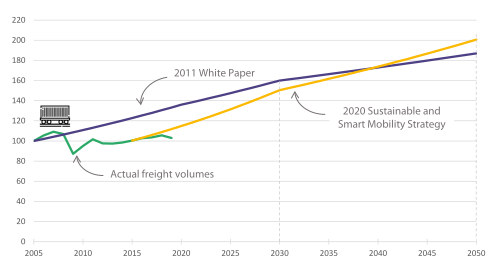
Source: ECA, based on Commission estimates and data from the EU Statistical Pocketbook.
32 For the inland waterways targets, similar considerations apply. Compared to the 2011 White Paper, the 2020 Sustainable and Smart Mobility Stategy reduced the relevant 2030 volume target, while the 2050 target remained stable. As a result, the yearly growth required in order to achieve the 2050 target is now greater than it was in 2011 (see Figure 8).
Figure 8 – Comparison of inland waterways targets with reality (freight volumes in tonne‑kilometre, 2005 volumes = 100)
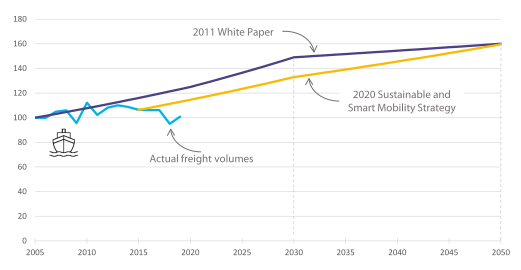
Source: ECA, based on Commission estimates and data from the EU Statistical Pocketbook.
Member states set even more ambitious targets, which were not aligned with the non‑binding EU targets
33 EU targets can only be achieved if member states’ efforts are aligned to these targets. Therefore, we assessed whether:
- the targets at EU level were broken down into binding objectives and targets at member state level; and
- the Commission verified the coherence between national and EU objectives and targets.
34 The EU targets set by the 2011 White Paper and the 2020 Strategy are non‑binding for member states. We found that the Commission did not agree these EU targets with the member states, nor did it agree on the resulting implications for them. In fact, the Council conclusions on both strategic documents show that member states had reservations on these targets (see Box 2). Finally, they were not broken down into geographic sub‑targets at either member state or corridor level.
Extracts from Council conclusions on the Commission’s strategic documents
Regarding the 2011 White Paper, certain member states “expressed doubts regarding the appropriateness of certain wide‑ranging proposals”18 such as the targets for the shift from road to other modes of transport.
Regarding the 2020 Strategy, the Council conclusions remained vague on the degree of national effort, stating that “efforts to achieve the emission reduction targets should be delivered collectively in the most cost‑effective manner possible, with all member states participating in those efforts, taking into account considerations of fairness and solidarity and member states’ different starting points and specific national circumstances”19.
35 Our analysis showed that all six member states covered by our audit set national targets for increasing the use of rail. For three of them, the relevant national strategies and modal shift targets were published before the 2020 EU strategy, while for the other three they were published shortly thereafter. Where EU and member state targets were comparable (four of the sampled member states, i.e. Germany, Spain, France and Italy), we found that the national targets were even more ambitious than those of the Commission in terms of the required yearly growth rate (see Figure 9). Moreover, two of the audited member states, i.e. Germany and the Netherlands, for which inland waterways was most relevant, also set objectives in relation to inland waterways. Finally, none of the member states except Poland had targets for the share of intermodal transport.
Figure 9 – Comparison of EU and national rail freight targets in terms of yearly growth rates

Note: * The strategy formulation does not allow a required growth rate to be derived for the entire rail freight market.
Source: ECA, based on analysis of EU and national strategies.
36 We found that in all six cases examined, the member states had defined their modal shift targets on the basis of their own analyses and policy considerations. While the national strategies referred to the EU policy documents, their targets were not aligned with the EU targets. In some cases, the national targets were defined against different baselines (for example, France set a target for the increase in freight traffic, while Spain set a target for the share of rail in freight transport). This means that the Commission cannot assess during implementation whether the concerted efforts of the member states are enough to achieve the overall EU modal shift targets.
37 Finally, we also verified the extent to which the Commission analysed national policy documents as regards aspects related to modal shift and intermodality and provided comments on them. In our desk review, we looked at national transport plans, national energy and climate plans, national recovery and resilience plans, and the 2014‑2020 partnership agreements for cohesion policy funds (see Annex IV). In some instances, the Commission provided comments on issues related to intermodality, but we found no evidence of consistent checks to ensure the coherence of the national modal shift strategies and targets with those set at EU level.
38 From our sample, we identified the Netherlands as a good example on how to pursue a modal shift objective with specific and measurable targets for the increase in the share of intermodal flows, and how to break them down along the main national freight corridors. This strategy is also linked with funding for intermodal infrastructure projects (see Box 3).
The Dutch approach to operationalising modal shift targets
In June 2019, the Dutch Ministry of Infrastructure and Water Management published the Mobility Strategy 2040.
The strategy was accompanied by several other policy documents, including the Freight Transport Agenda, which contains an action plan to break down the modal shift targets of the Mobility Strategy into measurable objectives. The plan focuses on the two main national freight corridors, towards East (port of Rotterdam via the Arnhem‑Nijmegen region to Germany) and Southeast (port of Rotterdam via the Venlo region to Germany), and sets objectives for rail freight volumes and modal shift.
At the beginning of 2020, economic operators, academics and authorities further broke down these goals to an operational target of shifting 2,000 twenty‑foot equivalent units (TEUs) per day from road to inland waterway transport on the two corridors.
In addition, the Ministry launched an incentive scheme to support sustainable modal shift, by funding projects that have to deliver individual TEU targets.
The Commission’s monitoring is hampered by a lack of data on intermodal transport from member states
39 The Commission follows actual developments in the overall modal share for freight via statistics on freight volumes produced by Eurostat (see Box 4).
Eurostat indicators for intermodal transport
Based on data collected for each mode of transport (see Statistical Pocketbook20), Eurostat produces five indicators21 for intermodal transport. They focus on what is called the unitisation rate, i.e. the amount of freight, separated by mode of transport, travelling in intermodal transport units. In parallel, Eurostat also calculates a measure of the modal shift potential, capturing the share of containers travelling by road for distances greater than 300 kilometres.
However, the indicators do not allow intermodal traffic flows to be consistently tracked and compared across different modes of transport, as there are differences in the way data are collected (e.g. flows are measured in tonnes‑kilometre for rail transport, but in tonnes for maritime transport).
40 The Combined Transport Directive requires the Commission, assisted by the member states, to prepare a report every two years for the Council, amongst others, on the economic development of combined transport and on the definition of further promotion measures, where necessary22. In spite of this requirement, only two such reports were published, in 1997 and 2002 respectively. This is due to the fact that member states did not provide the Commission with the relevant data.
41 To counter the lack of data from member states, the Commission took several initiatives to strengthen the data collection requirements. However, these initiatives were not embraced by member states due to the cost and administrative burden involved and ultimately were not implemented. In parallel, the Commission contracted external consultants to carry out a comprehensive market study23. The study was published in 2015 and updated in 2017. It highlighted “the very poor quality and depth of data on freight moved by combined transport services, which at present prevents any forensic analysis of existing activity, or the opportunities to enhance and expand that activity”.
EU rules are lacking or counterproductive, inhibiting the attractiveness of intermodal transport
42 The EU and member state legal frameworks may include provisions that incentivise or hinder intermodal transport. In 2020, the Commission recognised that in order “to support the greening of cargo operations in Europe, the existing framework for intermodal transport need[ed] a substantial revamp and [to] be turned into an effective tool”24. We therefore examined whether:
- the EU regulatory framework regarding transport supports intermodal freight transport appropriately to enable it to become more competitive;
- projects funded via national or EU funds harness all opportunities provided by the EU State aid framework.
Some EU legal provisions are outdated while others reduce the incentives for intermodality
43 The Combined Transport Directive currently in use dates back to 1992 (see paragraph 11). The Commission identified the need for a revision as early as 1998, when it issued a new legislative proposal. As the co‑legislators did not give their approval, it issued a second proposal of revision nearly 20 years later in 2017. The Commission withdrew this proposal in 2020, as the amendments proposed by the co‑legislators partially thwarted the initial purpose and an agreement was not forthcoming. In spring 2022, the Commission carried out a public consultation, with the aim of issuing yet another proposal for revision in 2023.
44 The stakeholders and national authorities we interviewed confirmed that the current version of the directive is outdated and does not effectively promote intermodal transport in the EU. The main issues highlighted, which the Commission already tried to address in its earlier proposal, were the following:
- the minimum threshold of 100 km for the non‑road leg, which excludes from the application of the directive those services that connect ports to their immediate hinterland;
- the requirement for a paper document stamped by the rail or port authorities throughout the journey, instead of a digitalised workflow.
45 Stakeholders pointed out the high degree of disparity in the transposition of the provisions by member states as a factor creating uncertainty for logistics operators on how to organise cross‑border journeys. As an example, road journeys between the places where goods are loaded and the nearest suitable railway station are covered by the directive. However, according to a Commission study25, only six member states defined criteria for identifying the nearest suitable railway station. Moreover, these criteria were different from one member state to another.
46 In addition to the limitations of the directive, the competitiveness of intermodal transport in comparison with road‑only solutions is also affected by the performance of the individual modes of transport constituting the intermodal chain. Annex V provides an overview of the main regulatory barriers to seamless rail, inland waterway and short‑sea shipping journeys, also reported upon by the Commission26.
47 Rail was the mode of transport for which stakeholders expressed the most concerns due to issues linked to capacity management and interoperability likely to persist in the absence of new EU legislative action (e.g. on the planning of slots for rail freight or priority rules for passenger versus freight trains). These issues negatively affect the performance of freight trains across the EU in terms of speed, punctuality and reliability, potentially leading economic operators to choose alternative modes of transport for their freight. Figure 10 presents the status of rail performance in the six selected member states.
Figure 10 – Rail freight performance in the member states visited
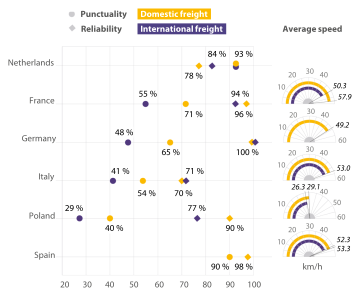
Note: Germany (for international freight) and the Netherlands (for both domestic and international freight) do not report data on speed; Spain does not report on punctuality and reliability for international freight.
Source: ECA, based on 2018 data from the Commission’s 2020 Rail Market Monitoring report.
48 In addition to the above, we identified three legal acts, specific to road transport, with exemptions or flexibility provisions that reduce the incentives for intermodality: the Eurovignette Directive, the Weights and Dimensions Directive and one regulation from Mobility Package I.
49 First, under the Eurovignette Directive, heavy goods vehicles should be charged by using distance‑based tolls in line with the “polluter pays” principle. However, member states can still decide in duly justified cases to exempt certain sections of the road infrastructure from distance‑based tolls and to instead use a time‑based vignette system (e.g. valid for a month) or collect no tolls at all. This should be compared with the rail transport, for which every service is subject to track access charges for the entire journey.
50 Second, the 1996 Weights and Dimensions Directive27 sets the maximum dimensions and weights of certain categories of road vehicles (including freight vehicles and trailers weighing more than 3.5 tonnes). It includes an incentive for combined transport operations as it allows additional length and weight for vehicles involved in the road legs of combined transport journeys. This generates larger economies of scale and accounts for the larger weight of intermodal loading units.
51 However, the directive also allows member states to increase the maximum weight allowed in national transport operations, regardless of the intermodal nature of the service. At the time of the audit, eleven member states made use of this option, i.e. they extended the weight allowance envisaged for intermodal transport to other road‑only journeys, practically neutralising the directive’s benefit to intermodality.
52 Moreover, we note that there have been calls by stakeholders to amend the directive to allow for longer and heavier intermodal loading units to be transported by road, in order to increase economies of scale. If authorised for road transport, it will likely prove impossible for such units to be transported as part of an intermodal journey given the existing limitations of the rail network (which already faces challenges linked to the P400 gauge implementation, see paragraph 81).
53 Third, Regulation (EU) 2020/105528, adopted as part of Mobility Package I, introduced provisions for cabotage services (i.e. the provision of road haulage services within a member state by a carrier established in another member state). Combined transport operations do not fall under cabotage limitations thanks to a provision of the Combined Transport Directive. As a result, hauliers are allowed to organise the road leg of a combined transport operation with their own lorries or through a known counterparty, even if the road leg takes place in another member state.
54 According to a Commission’s ex post evaluation29, stakeholders perceived this provision as the most beneficial of all incentives provided by the directive. However, to avoid misuse of the directive’s provisions, with hauliers keeping a continuous presence in the host member state to operate beyond the context of combined transport, the new regulation also allows member states to apply cabotage restrictions to the road legs of a combined transport operation, provided these road legs do not cross a border. At the time of the audit, Denmark, Finland and Sweden had already notified the Commission of their intention to use the derogation.
The Commission has taken steps to simplify State aid rules but EU‑funded projects do not harness all the opportunities provided
55 Ad hoc subsidies provided to individual projects as well as subsidy schemes are subject to the EU State aid framework if they meet the conditions of the notion of aid as defined in the Treaty30. In 2016, we reported on how State aid rules were complied with in cohesion policy31.
56 Two main types of aid are relevant for intermodal projects:
- aid for investments in infrastructure, which has the aim of creating infrastructure while avoiding competition distortions; and
- aid for incentivising modal shift, which can include both aid for investments in infrastructure as well as operating aid.
57 When these subsidies are subject to the EU State aid framework, member states must notify them to the Commission, which then must assess whether there is aid and if so, whether the aid is compatible with the internal market. Mandatory notification is not required in those cases where aid for investments in infrastructure is covered by a so‑called block exemption.
58 In fact, under the latest General Block Exemption Regulation32, if certain conditions apply, investments (i) for the construction, replacement or upgrade of maritime or inland port infrastructures, (ii) for infrastructure to access the port are allowed and exempt from notification. At the time of the audit, similar clauses did not exist for intermodal terminals outside ports, but they may be exempted as well if they are considered aid for local infrastructures.
59 To avoid distorting the level playing field between infrastructure operators, State aid rules either require the subsidised infrastructure to be made available to users on market terms or, in case of the intention to apply reduced user fees, a Commission assessment and approval of the relevant aid scheme for incentivising modal shift. We noted a good practice in Germany where, under such a scheme funded by the national budget, the federal authorities provide direct grants to private companies for the construction or extension of combined transport terminals, with the explicit aim of reducing the cost of transhipment for final users (see Box 5).
The German scheme for funding transhipment facilities
Since 2002, Germany has been implementing a scheme enabling project beneficiaries to receive a grant of up to 80 % of the eligible costs incurred in the construction of a terminal.
The scheme allows terminal owners to reduce charges for using the infrastructure. In order to minimise any distortion of competition, alongside other requirements at the selection stage, the German authorities monitor cost reductions to ensure they do not exceed a specified amount per loading unit. The maximum threshold is calculated as the estimated cost reduction necessary to put combined transport on a par with road transport.
Moreover, the authorities require the terminal operators to provide yearly information on several indicators such as the amount of loading units, a forecast of expected traffic and the trend in loading fees. This information is analysed to identify potential market distortions and taken into account in the assessment of new applications.
60 With regard to the ERDF/CF projects co‑funding terminal infrastructure in our sample, we found that the national authorities did not assess, when evaluating the project applications, whether the envisaged terminal charges would be low enough to foster modal shift or a larger grant to cover the capital investments would be required. To enable to pass on to users the benefits of the grant, by lowering charges, the grant would need to be given under a subsidy scheme for incentivising modal shift approved by the Commission. Therefore, while the projects aimed to improve infrastructure, their design did not consider the possibility of lowering charges under a notified State aid scheme.
61 With regard to the CEF projects in our sample (i.e. where grants do not fall under the State aid framework and therefore do not require any notification to set charges at a level that would foster modal shift), we did not find any requirement for project promoters to include in their project application an assessment of the impact of the grant on the level of charges and on the potential modal shift generated in turn by the project.
62 Alongside with ad hoc subsidies to intermodal terminal infrastructure, member states also set up national schemes with the aim of incentivising modal shift and compensating for the inherently higher costs of transhipment. These schemes, which are subject to approval by the Commission, can be different in nature, for example:
- they can subsidise operational costs such as the reduction of rail access charges for combined transport trains (we found such schemes for example in Germany and the Netherlands);
- they can provide a subsidy for increased modal shift operations (see Box 6 for one such example in Italy).
The Italian Marebonus scheme
The current version of the Marebonus scheme launched in 2017 provides financial support to shipping companies for the start‑up of new services (with a yearly envelope between €19.5 and €25 million from 2021 to 2026). To be eligible, applicants have to present a three‑year plan, backed by committed economic operators, for the establishment of new or improved multimodal freight services.
The subsidy provides a maximum of 10 euro cents per transported unit (container, semitrailer or vehicle) multiplied by the number of kilometres of road avoided by choosing maritime transport. The shipping companies are obliged to transfer at least 70 % of the subsidy to clients that have shipped at least 150 units in a year, and 80 % to clients that have shipped at least 4 000 units.
The Ministry responsible estimated that the scheme resulted in 113 000 units being subtracted from road transport in 2019, i.e. up to 1 % of freight traffic travelling on Italian roads (measured in tonne‑kilometre).
63 In December 2022, the Council adopted a regulation33 to simplify the State aid rules related to incentivising modal shift. It will enable the Commission to adopt regulations exempting from prior notification and hence from prior assessment by the Commission State aid for rail, inland waterway and multimodal transport in line with the relevant article of the Treaty34.
The EU infrastructure network is not yet fit for intermodality needs, but the TEN‑T revision is an opportunity to improve the situation
64 If economic operators are to opt for alternatives to road-only transport, they need interoperable physical infrastructure to be in place. One key component of such infrastructure is transhipment terminals, either inland platforms or maritime ports able to handle freight loading units, i.e. to transfer them from one transport mode to another.
65 Alongside well‑located and accessible terminals, a competitive intermodal journey requires each mode of transport involved to be efficient on its own. Moreover, transport undertakings should be in a position to swiftly identify fall‑back options in case one mode cannot be used (e.g. water level too low in an inland waterway), in order to guarantee a reliable intermodal journey and avoid a reverse modal shift towards road transport, which is inherently more flexible.
66 We assessed whether:
- logistics operators had readily accessible information on the existing intermodal terminals and on network capacities, enabling them to plan an efficient journey;
- the Commission had an overview of the needs for terminal infrastructure;
- there was sufficient progress in enhancing linear infrastructure to stimulate intermodal transport; and
- EU‑funded projects were used to enhance modal shift.
Difficult‑to‑access information on existing intermodal terminals prevents operators from offering their clients the best possible intermodal journey
67 We found that electronic information on aspects such as terminal location and services, as well as on real‑time terminal capacity, was not readily accessible for a large part of the network. This dissuades logistics operators from opting for intermodality as it takes longer and costs more to retrieve the information needed to design new intermodal journeys for their freight.
68 In 2015, the Commission launched an expert group, the Digital Transport and Logistics Forum, to address this issue. The group was tasked with drawing up technical recommendations on how to structure information flows, both from businesses to public administrations and between businesses, and is expected to issue its recommendations by the end of 2022. However, in the meantime, member states have started to develop their own national solutions to advance the digitalisation of the logistics chain, with different governance and variations in the type of information collected. We found that the Commission did not have a complete overview of member states’ actions in the field of national digital platforms.
69 The Commission also tried to address the lack of accessible terminal information for rail transport by launching a website in 2015 that terminal operators could use along with other tools to publish updated information on their facilities as required by the applicable EU legislation35. However, operators only provided limited data. In fact, they have no obligation to provide data to this specific website, even if they are beneficiaries of EU funding. In 2020 the Commission transferred ownership of the website to the industry (an association of railway Infrastructure Managers and Allocation Bodies), while continuing to financially support the development of the portal.
70 To date, the website has provided the location of more than 10 000 rail freight facilities in the EU, the European Economic Area and elsewhere (including Türkiye and the United Kingdom). However, for most facilities, the information is limited to the name and contact details of the facility owner with a link to the terminal website. Thus, there is no information on the terminal loading technology and infrastructure characteristics (such as the layout of the tracks), access conditions, digital capabilities or service charges. Similarly, no real‑time information on the capacity available in the terminals is displayed. Given the above, we found that the website is currently of limited use.
71 At national level, we found that in two of the six member states we visited (Germany and the Netherlands) a digital map addressed at logistics operators existed detailing the location of the intermodal terminals on their territory.
The Commission lacks an overview on the needs for terminals
72 We found that the Commission did not have an overview of the current terminals and of the terminals that still needed to be built or upgraded based on market demand, i.e. to provide logistics operators with the appropriate infrastructure to allow them to offer intermodal transport solutions to their clients.
73 The 2013 TEN‑T regulation does not require an analysis (i) of the appropriateness of the existing intermodal terminals for current and potential traffic freight flows and (ii) on the need for future terminals. In 2020, the International Union of Railways (UIC) carried out an analysis on the location of the existing terminals, which showed significant differences in terminal density across the EU (see Figure 11).

Source: ECA, based on International Union for Railways, 2020 Report on Combined Transport in Europe.
74 The 2013 TEN‑T regulation does also not require the collection of information on the digitalisation of terminal infrastructure. The level of digitalisation is important for logistics operators to share information efficiently along the logistics chain, avoiding delays due to insufficient terminal capacity or unavailability of transhipment services. The lack of information prevents the Commission from carrying out an in‑depth assessment of the infrastructure’s readiness to handle intermodal freight flows effectively. Among the corridors crossing the member states we visited, only the Scandinavian‑Mediterranean corridor tracks the presence of digital systems in terminals.
75 The Commission has taken action to remedy the situation by including relevant provisions regarding both terminal location and digitalisation in its 2021 proposal revising the TEN‑T regulation. This proposal is still going through the legislative process. Member states will have to carry out a transport market study, to be shared with the Commission, to identify the main traffic flows and existing intermodal terminals, and to assess the need for new terminals. The study must be accompanied by an action plan for the development of a multimodal freight terminal network.
76 The Commission has also included a new provision in the Common Provisions Regulation for the period 2021‑202736. The regulation governs amongst others the ERDF and CF. Contrary to the more general requirement, under the 2014‑2020 period, to present transport plans37, the new regulation requires member states that include transport investments in their programmes to present a multimodal map of existing and planned infrastructures, including terminal locations. As the Commission decided not to provide the member states with any guidance on this task, the plans submitted by the member states vary widely, rendering any horizontal analysis at EU level difficult and cumbersome.
Member states’ delays in ensuring the compliance of linear infrastructure with technical requirements hampers the competitiveness of intermodality
77 While the needs with regard to linear infrastructure and technical requirements (track gauge, loading gauge, line speed etc.) are assessed and lists of projects drawn up at EU level (see Box 1), decisions on if and when these projects will eventually be implemented fall within the remit of the member states.
78 In the 2021 proposal revising the TEN‑T regulation, the Commission included new provisions aimed at enhancing the Commission’s role in ensuring the development of the network corridors. In particular, for each Corridor Work Plan, the Commission can adopt implementing acts that are binding for the member states concerned. This should allow specific deadlines and conditions to be set for the development of the corridors. The proposal also provides the Commission with the option of adopting implementing acts for specific sections of the corridors, in particular complex cross‑border sections, or for specific transport infrastructure requirements.
79 While there has been progress over the last few years in terms of infrastructure development and compliance with technical parameters, interoperability issues and bottlenecks remain. The latest Commission biennial progress report38 on the implementation of the TEN‑T (covering the years 2018‑2019) showed that, while the majority of the technical parameters monitored (ten out of 14) had a compliance rate above 75 %, performance was far worse for two parameters that are particularly important for intermodality. These concern the possibility of operating freight trains:
- with a total length over 740 metres, to harness economies of scale; and
- with a P400 gauge, to accommodate the largest type of containers. Although there is no requirement for a rail loading gauge above P400, a standard of measurement for semi‑trailers loaded on a pocket wagon, the indicator is nevertheless monitored.
80 The stakeholders we consulted highlighted the fact that the operation of 740‑metre trains would be one of the improvements with the highest cost‑effectiveness for intermodal transport in the effort to compete with road transport. This was also underlined in the 2010 Rotterdam Ministerial Declaration39. However, a train length of 740 metres is theoretically achievable on just 53 % of these corridors. Moreover, as reported by the Commission, this rate is likely to be overstated40. As an example, certain rail sections can be labelled as technically compliant with a train length of 740 metres, although trains of this length can only be operated there at limited times. Moreover, a large number of terminals do not yet provide transhipment tracks for 740‑metre‑long trains, requiring time‑consuming shunting procedures.
81 Another positive element of the Commission’s proposal revising the TEN‑T regulation is the new requirement for freight lines to comply with the P400 rail gauge, in order to accommodate the largest type of containers. While this feature strongly benefits intermodality, only 40 % of the core network corridors are currently compliant. Out of the six member states we visited, compliance with the P400 standard was particularly limited in Spain (6 %), France (25 %), Poland (36 %) and Italy (43 %)41. Full implementation of the proposal will therefore require significant investments and prioritisation exercises by the member states.
82 Finally, we note that multiple bottlenecks may be present across modes of transport on the same axis. Moreover, even compliant sections can become bottlenecks due to unforeseen external circumstances (extreme water levels, accidents, etc.). Box 7 provides some examples for the Rhine‑Alpine corridor.
Examples of factors limiting intermodal journeys along the Rhine‑Alpine corridor
The Rhine‑Alpine Corridor connects the North Sea ports in Belgium and the Netherlands with the Mediterranean port of Genoa, running through Switzerland. It is the corridor with the largest share of non‑road transport in the EU: around 50 % of the annual freight volumes along the corridor (i.e. 138 billion tonne‑kilometres) travel on water, while rail has a share of 16 %. Road transport accounts for the remaining 34 %42. Regulations in Switzerland that restrict freight traffic on roads contribute to this situation.
Container transport accounts for 9 % of the total freight transported on the river Rhine between Basel and the German‑Dutch border. From 2009 to 2017, this volume grew by 27 % (from 13.3 million tonnes to 16.9 million tonnes)43. To increase the river capacity, a project to bring the navigable channel depth from 1.90 m to 2.10 m was included as priority project in the German transport plan44. The project is still in its early planning phase and an envisaged date for completion has not been set yet.
Moreover, as experienced also in 2022, droughts and resulting low water levels can severely affect the navigability of different river sections. In 2018, a severe drought caused container traffic to drop by 13 %.
Rail transport could also be an option to further shift freight away from road along the corridor or a fall‑back option in case of droughts. However, the rail network along the Rhine in Germany and France has currently not enough capacity for this to happen. Moreover, in 2018, scheduled construction works to upgrade the network on the German side led to the collapse of a tunnel, creating an additional traffic bottleneck. Works to increase capacity are currently undergoing on the same section, with an envisaged target completion date of 204145.
EU‑funded projects did not systematically estimate the results on modal shift, nor are such results monitored in the long term
83 In the 2014‑2020 period, the ERDF/CF and the CEF have provided support to intermodality mainly by funding infrastructure projects, such as transhipment terminals (see Picture 1) or linear transport infrastructure (railway tracks, last‑mile road connections, etc.). To ensure that EU‑funded projects effectively and sustainably contribute to a modal shift of freight traffic away from roads, this should be planned for and long‑term impacts should be monitored. Therefore, we assessed planning and monitoring for our sampled projects.
Picture 1 – The construction of loading cranes in an EU‑cofunded intermodal terminal in Poland

Source: ECA.
84 Once applicants submit their project proposals, CINEA (for the CEF) or the relevant managing authority (for the ERDF/CF) carries out a selection process to identify which projects to retain for funding. The template for applications under CEF requires beneficiaries to describe the expected positive and negative impacts on modal shift. Based on our sample of projects supporting intermodality, we found that only nine of the 15 project applications included a section on the envisaged modal shift results following project implementation (e.g. the number of tonnes estimated to shift from road to rail thanks to the project). Although modal‑shift is one of the main expected benefits for intermodal projects, there was no requirement to do a quantified estimate of modal‑shift in the applications and none of the grant agreements included the corresponding modal‑shift target as an objective to be achieved.
85 As we reported in the past, the implementation of transport projects often incurs delays46. For the 16 projects in our sample we found that implementation was significantly delayed in a number of cases:
- At the time of the audit, 10 projects should have been completed according to their initial plans. Only six of them were. Four achieved their envisaged outputs, while two were finalised with a reduced scope leading to a possible risk of imbalance between built supply and demand for the terminal services (see Table 1).
- Fourteen projects incurred delays, with an average delay of 21 months. These were due to several factors including lengthy planning procedures and the impact of the COVID‑19 pandemic. As 10 projects (nine of which were delayed) were not finalised at the end of our audit, we were not in a position to assess the achievement of their objectives.
Table 1 – Implementation delays for the six completed projects in our sample
| Objective of the project | Completed as planned? | Delay (in months) |
|---|---|---|
| New intermodal terminal in the Port of Rijeka (Croatia): construction of a railway tracks and re‑construction of a marshalling yard. | Yes With lower costs than estimated due to savings after the procurement of the works. |
12 |
| Upgrade of Port of Rijeka (Croatia) infrastructure: extension of the quay wall, reconstruction of the cargo section of the railway station, and construction of a marshalling yard. | Yes | 21 |
| Construction of a rail‑road‑terminal in Badajoz (Spain) and a surrounding logistics area. | No, scope reduction The rail‑road terminal was built with the planned operating capacity, while the area of the logistics platform was decreased by 58 % compared to plans. This implies a risk of insufficient demand for the terminal. To address this risk, the beneficiary started a new project, co‑funded by the ERDF, to complete the logistics platform area. The project is expected to be finalised by September 2023. |
24 |
| Improvement of the existing road and rail connections in the outer Port of Gdansk (Poland). | Yes | 5 |
| Purchase of sub‑container platforms for the operation of intermodal connections in Poznan (Poland). | Yes | - |
| Upgrade of the berths and of handling and storage facilities for road vehicles, in the ports of Rostock (Germany) and Hanko (Finland) – Baltic Motorway of the Sea. | No, scope reduction The new space intended for handling and storage in the Port of Rostock could not be acquired. However, the berths were upgraded as originally planned allowing for more capacity. This implies a risk of a new bottleneck if the existing handling and storage facility proves to be insufficient. |
9 |
Source: ECA.
86 Compared to projects involving a single mode of transport, intermodal projects require more coordination, as the owners of the different infrastructures to be connected can differ and may include both public and private entities, each with their own priorities and planning processes. These challenges contributed to delays in implementation as shown by the examples in Box 8.
Examples of coordination challenges
- The port of Trieste is the Italian port with the highest share of containers transported in and out of the port by rail (52 % in 2020). The EU (via CEF) funded the upgrade of the rail infrastructure in the port shunting area (see Picture 2) and the deployment of freight‑related IT solutions. The port authority and the national rail infrastructure manager each own a section of the rail infrastructure. In the course of implementation, the two bodies decided to join forces resulting in a design change to make operations more efficient. This has contributed to the delays for this project.
- The EU (via CEF) funded the upgrade of the intermodal transport facilities at a trimodal freight terminal at the port of Rotterdam, which is the largest EU port in terms of tonnes handled. Private shareholders from different countries own the terminal. The action has been delayed by two years due to (i) planned changes in the terminal ownership structure, which occurred after funding approval and have not yet been implemented and (ii) the COVID‑19 crisis and permitting issues. At the time of the audit, the final decision on the expansion was on hold pending agreement from the shareholders.

87 As regards CEF and the ERDF/CF, we found that CINEA and the managing authorities monitored project outputs, but hardly ever collected data on the results and impacts of the infrastructure (e.g. on the number of tonnes actually shifted from road to less-polluting modes of transport). Moreover, ex‑post evaluations were not systematically carried out to assess results and impacts. Notwithstanding the time needed for results and impacts to materialise, this hindered the identification of good practices and common challenges in funding intermodal projects, and corroborates previous ECA findings47.
Conclusions and recommendations
88 Overall, we conclude that the EU’s regulatory and financial support on intermodal freight transport was not sufficiently effective as there is still no level playing field in the EU for intermodal freight transport compared to road transport. This is due to (i) weaknesses in the design and monitoring of the EU targets for intermodal transport, within the context of greening freight transport; (ii) regulatory provisions that counteract the aim of incentivising intermodal transport; and (iii) challenges in the development of terminals and linear infrastructure. The competitiveness of intermodal freight transport in the EU can only be increased if these issues are addressed urgently.
89 We found that the Commission did not have a dedicated EU strategy on intermodality. Instead, intermodality was part of broader strategies on greening freight transport and modal shift, namely the 2011 Roadmap to a Single European Transport Area and the 2020 Sustainable and Smart Mobility Strategy. These included targets aimed at increasing the share of sustainable modes of transport but there were no targets for intermodal transport. Furthermore, these EU targets are still unrealistic, as the underlying assumptions were not based on robust simulations of how much modal shift could be realistically achieved considering (i) existing long‑term infrastructure constraints for rail and inland waterways and (ii) regulatory barriers affecting the competitiveness of intermodal transport (see paragraphs 26-32).
90 Moreover, the targets set at EU level were not agreed with the member states and were not broken down into enforceable targets at national or corridor level. Member states developed their own modal shift strategies and set their own targets, which were not aligned with their EU equivalents and were even more ambitious. The Commission did not consistently monitor the coherence of such strategies with the EU targets, due partially to the diversity of the national targets and the timelines for achieving them (see paragraphs 33-38).
91 Lastly, the Commission’s monitoring of the contribution of intermodality to achieving the EU targets for greening freight transport was significantly hampered by a lack of data from member states (see paragraphs 39-41).
Recommendation 1 – Set targets regarding the modal share along the Core Network Corridors and report on them
The Commission should:
- specify, in close cooperation with the member states concerned, targets per Core Network Corridor regarding the modal share of freight traffic flows, including intermodal flows;
- require the European Coordinators to report on the achievement of these targets and identify the investment needed to comply with them;
- improve the collection of national data on intermodal freight transport, in collaboration with EUROSTAT and the national statistical offices, notably by assessing the need for data provision requirements to be included in a legislative act.
Target implementation date: by end of 2024 for (a) and (b), by end of 2026 for (c).
92 Market regulation is a key factor in sustaining policy choices. However, the provisions of the Combined Transport Directive – the only piece of EU legislation specific to intermodal transport – are outdated. Moreover, the transposition of some provisions varied between member states, creating uncertainty for logistics operators. The Commission made several attempts to revise the Directive, but did not succeed in obtaining member state agreement (see paragraphs 43-45).
93 Existing exemptions or options in the EU legal framework concerning road transport counteract other provisions aimed at incentivising intermodality. Moreover, as regards the EU regulatory framework specific to rail transport there are concerns linked to capacity management and interoperability which are likely to persist in the absence of new legislative action (see paragraphs 46-54).
94 The Commission took steps to further simplify the EU framework for State aid, which is applicable in case subsidies given fulfill the notion of aid as set out in the Treaty. In 2022, the Council adopted a regulation to pave the way for exempting measures resulting in a modal shift away from road transport from this procedure. The exemptions would apply to rail, inland waterway and multimodal transport (see paragraphs 55-63).
95 The lack of (i) publicly available information on existing intermodal terminals and the services offered there, and (ii) real‑time information on network capacities are factors preventing shippers and logistics operators from offering their clients the best possible intermodal journeys. While the Commission is working on the elaboration of common technical standards regarding the digitalisation of information flows, member states are already developing their own logistical platforms, with variations in the type of information collected. Moreover, an attempt by the Commission to build in 2015 an EU website with information on rail terminals produced limited results, as terminal operators submitted only limited data (see paragraphs 67‑71).
Recommendation 2 – Prepare regulatory changes to improve the competitiveness of intermodal transport
The Commission should prepare the revision of the regulatory framework for:
- rail to remove the existing regulatory obstacles so that it can be a competitive alternative to road-only transport. In particular, provisions are needed on capacity management to better suit the needs of freight services, and to regulate technical and operational standards that are currently national;
- both combined transport, enlarging its scope to intermodal transport, and road‑only transport. These revisions should aim to reduce the diversity of implementation by member states, include provisions on the digitalisation of information flows, and reinforce the incentives for intermodal transport in comparison with road-only transport.
Target implementation date: by end of 2024.
96 We found that the Commission had no overview of the current terminals and of the terminals that still had to be built or upgraded to meet industry needs. We also found that the non‑compliance of sections of the Trans‑European Network for Transport (TEN‑T) with specific technical requirements, such as the possibility to run 740‑metre‑long trains, continued to limit the potential for further increases in intermodal transport (see paragraphs 72-82).
97 The Commission's 2021 proposal for revising the TEN‑T regulation has the potential to improve the situation: member states would have to assess the needs for terminal infrastructure (market study) and the Commission could adopt implementing acts to set deadlines and conditions for the implementation of sections of the network (see paragraphs 72-82).
Recommendation 3 – Lay the groundwork for a coordinated assessment by member states of intermodal terminal needs
As a further step to the 2021 proposal for the revision of the TEN‑T regulation, the Commission should provide member states with clear guidelines on (i) how to perform the market study and (ii) how to draw up a terminal development plan, with particular regard to cross‑border aspects and along the Core Network Corridors.
Target implementation date: 12 months after entry into force of the new TEN‑T regulation.
98 The implementation of transport projects often incurs delays: this was the case for 14 of the 16 sampled projects supporting intermodality. Alongside other causes (such as lengthy planning procedures and the impact of the COVID‑19 pandemic), we found that a specific characteristic of intermodal projects, namely the need to coordinate different public and private actors, contributed to these delays (see paragraphs 83- 87).
99 Promoters of projects supporting intermodality that received funding either from the Commission through the Connecting Europe Facility or from the managing authorities through the European Regional Development Fund or the Cohesion Fund during the 2014‑2020 period were not required to estimate specific results in terms of modal shift in their project applications. Although some promoters in our sample did provide such estimates, these were not included as targets in the grant agreements. The monitoring of EU‑funded intermodal projects focuses on outputs, rather than results and impacts. As a result, and notwithstanding the time needed for results and impacts to materialise, good practices and challenges in funding intermodal projects cannot be systematically identified (see paragraphs 83-87).
100 While the EU provides grants to intermodal terminal infrastructure to reduce the owner’s investment cost, we found that for our sampled projects, there was no requirement to include in the project application an assessment of the suitability of the grant for the envisaged level of charges and the potential modal shift generated by the project. This is a lost opportunity to render intermodal freight services more competitive (see paragraphs 55- 61).
Recommendation 4 – Assess the modal shift potential in cost-benefit analyses for EU‑funded projects
To further stimulate modal shift with EU-funded projects, the Commission should:
- require beneficiaries of projects funded by the Connecting Europe Facility (direct management) and targeting a modal shift (in particular terminal or port infrastructure) to include in the cost‑benefit analysis that is already a mandatory part of grant applications a quantified estimate of the project’s potential to generate modal shift and the level of charges at which a modal shift would be induced;
- for projects under shared management, promote the concepts under (a) to managing authorities, in particular when designing operational programmes, and to the monitoring committees of the programmes.
Target implementation date: by end 2023.
This Report was adopted by Chamber II, headed by Mrs Annemie Turtelboom, Member of the Court of Auditors, in Luxembourg at its meeting of 15 February 2023.
For the Court of Auditors

Tony Murphy
President
Annexes
Annex I – Main reforms and investments related to intermodality in the Recovery and Resilience Plans of the member states selected for the audit
| Member state | Description of the (R)eform or (I)nvestment | (R)/ (I) |
Budget (million euros) | Deadline |
|---|---|---|---|---|
| France | Review of the Mobility law and update of the financial and operational programming of State investments in transport infrastructure | R | n.a. | Q4/2023 |
| Renovation and modernisation of waterways, including locks and dams (100 projects) | I | 1001 | Q4/2024 | |
| Renovation of a total of 330 km of freight lines | I | 40 | Q4/2025 | |
| Germany | We have not identified reforms / investments directly contributing to intermodality in the National Recovery and Resilience Plan. | |||
| Italy | Simplification of the strategic planning processes in ports | R | n.a. | Q4/2022 |
| The digitalisation of the logistic chain network of ports and freight terminals | I | 47 | Q2/2024 | |
| 663 km of high‑speed rail lines for passengers / freight built ready for operation | I | 14 750 | Q2/2026 | |
| ERTMS ready for operation on 4 800 km of the rail network | I | 2 970 | Q2/2026 | |
| The Netherlands | Deployment of the European Rail Traffic Management System (ERTMS); 130 base transceiver stations (GSM‑Rail masts); delivery of the adapted systems to users; and operational Central Safety System | I | 149 | Q4/2024 |
| Development of a basic data infrastructure and achievement of 30 % digital readiness in the Dutch logistics sector | I | 36 | Q4/2025 | |
| Spain | Adoption and publication of the Indicative Rail Strategy including actions on intermodality and boosting rail freight | R | n.a. | Q4/2022 |
| 1 400 km of rail lines upgraded on the TEN‑T core network corridors, including renewal of tracks, electrification, ERTMS | I | 2 988 | Q2/2026 | |
| 900 km on the comprehensive rail network upgraded and interoperable mainly in relation to TEN‑T | I | 1 010 | Q2/2026 | |
| Intermodal terminals and logistics infrastructure | I | 802 | Q2/2026 | |
| Sustainable and digital transport, incl. ERTMS | I | 447 | Q2/2026 | |
| Poland | Amendment of the Rail Transport Act to compensate infrastructure managers for the reduction of access charges | R | n.a. | Q4/2022 |
| Extension of the road tolling system to an additional 1400 km of highways and expressways to enhance the competitiveness of the railway sector | R | n.a. | Q1/2023 | |
| Increase in operational terminal handling capacity of at least 5 %, based on an installed capacity of 9.1 million TEU/year (baseline 2020) | I | 175 | Q2/2026 | |
| Modernisation of 478 km of railways lines, 200 km of which on the core TEN‑T network | I | 1 731 | Q2/2026 | |
| ERTMS deployment: installation of 35 automated control points, upgrade of 45 level crossings and installation of 180 ERTMS on‑board units | I | 341 | Q2/2026 | |
1 The budget of 100 million is not only earmarked for the 100 projects on dams and locks, but includes also investments in charging stations open to the public and lanes reserved for public transport.
Source: ECA.
Annex II – List of EU cofunded projects sampled for the audit
A - List of CEF cofunded projects visited and reviewed during the audit
| Member state | Project title and description | Type of support to intermodality | Start date | Date of completion (planned vs. actual1) | Total eligible cost (euros) (planned vs. actual) | EU co-funding rate | EU co-funding committed (euros) (planned vs. actual) |
|---|---|---|---|---|---|---|---|
| Croatia | Port of Rijeka multimodal platform development and interconnection to the Adriatic Gate container terminal | Infrastructure of terminals | 16.7.2015 | 31.12.2019 31.12.2020 |
35 556 000 34 545 179 |
85 % | 30 222 600 29 363 402 |
| Upgrade of the Rijeka Port infrastructure – Zagreb Pier container terminal | Infrastructure of terminals | 1.10.2016 | 31.12.2020 30.9.2022 |
31 587 125 | 85 % | 26 849 056 | |
| Germany / Finland | Development of port capacity for integrated Baltic Motorways of the Sea link(s) (Rostock – Hanko) | Improvement of port capacity (MoS) | 7.2.2017 | 31.12.2019 30.9.2020 |
21 219 901 19 569 902 |
22.72 % 22.53 % |
4 821 370 4 408 870 |
| France | Port of Le Havre – Works for improvement of river access to Port 2000 | Improvement of port capacity | 1.4.2019 | 30.11.2023 31.12.2024 |
125 000 000 | 20 % | 24 900 000 |
| Automated combined transport terminal in Calais enabling the modal shift of all types of semi‑trailers from road to rail | Construction of a rail‑road terminal for semitrailers | 1.11.2018 | 31.12.2023 | 31 219 307 | 22.47 % | 7 015 401 | |
| Italy | Upgrade of the railway infrastructures of the Port of Trieste | Upgrade of the rail infrastructure in the port shunting area | 10.4.2018 | 31.12.2023 31.12.2024 |
32 700 000 | 20 % | 6 540 000 |
| The Netherlands | Upgrade of the combined transport Rotterdam World Gateway terminal | Upgrade of the combined transport Rotterdam World Gateway terminal | 25.10.2018 | 31.12.2022 31.12.2024 |
27 945 000 | 20 % | 5 589 000 |
| Poland | Improving rail access to the port of Gdansk | Improvement of rail access to the port | 1.9.2016 | 31.12.2020 31.12.2022 |
141 509 434 132 774 644 |
81.75 % | 115 683 962 108 543 272 |
| Extension and modernisation of road and railway network in the outer port | Improvement of rail / road access to the port | 16.2.2016 | 31.12.2020 30.6.2021 |
28 765 560 | 85 % | 24 450 726 | |
| Spain | Intermodal Logistics Platform in Southwestern Europe (Badajoz) | Construction of an intermodal rail‑road terminal | 14.4.2014 | 15.9.2020 15.9.2022 |
35 766 385 24 244 401 |
21.18 % | 7 576 522 5 272 125 |
1 Actual completion date as reflected in latest grant agreement.
Source: Data provided by DG MOVE / CINEA / managing authorities and ECA’s own analysis.
B - List of ERDF / CF cofunded projects visited and reviewed during the audit
| Member state | Project title and description | Type of support to intermodality | Start date | Date of completion (planned vs. actual) | Total eligible cost (euros) (planned vs. actual) | EU co-funding rate | EU co-funding committed (euros) (planned vs. actual) |
|---|---|---|---|---|---|---|---|
| Italy | Construction of a bypass road of approx. 6.3 km in length, including tunnels, linking the Port of Salerno with the TEN‑T core network (Scan-Med corridor) – phase II of a major project | Construction of a bypass road to access the port of Salerno | 27.12.2006 | 30.6.2019 31.12.2022 |
60 567 974 | 75 % | 45 425 981 |
| Poland | Modernisation of a rail access line to the Port of Gdansk of approx. 11 km in length, including the upgrade of bridges and crossings – phase II of a major project | Improvement of rail access to the port | 27.10.2015 | 31.10.2017 30.9.2023 |
43 810 890 39 682 750 |
85 % | 35 048 712 33 730 388 |
| Modernisation of road access to the Port of Szczecin to improve the port’s accessibility1 | Improvement of road access to the port | 23.7.2020 | 31.3.2023 30.6.2023 |
42 985 038 | 85 % | 36 537 283 | |
| Purchase of intermodal equipment by a private terminal operator | Support infrastructure of intermodal terminals (rail‑road) | 23.1.2017 | 30.9.2019 | 18 387 568 | 50 % | 9 189 284 | |
| Construction works for the preparation of storage area, purchase and installation of gantry cranes, reach stackers and traffic management systems | Support infrastructure of intermodal terminals (rail‑road) | 1.10.2019 | 31.12.2021 31.3.2023 |
13 801 021 | 62 % | 8 533 357 | |
| Spain | Deployment of the first phase of the Antequera logistics area | Construction of an intermodal terminal and the surrounding logistics area | 1.1.2019 | 31.12.2022 31.12.2023 |
41 530 092 | 63 % | 26 174 279 |
1 The project was identified as relevant for intermodality by the managing authority. The Commission considers it a road‑only project.
Source: Data provided by managing authorities and ECA’s own analysis.
Annex III – Previous ECA special reports and reviews relevant to intermodal transport
Review 09/2018: “Towards a successful transport sector in the EU: challenges to be addressed (Landscape review)”.
Special report 13/2017: “A single European rail traffic management system: will the political choice ever become reality?”.
Special report 23/2016: “Maritime transport in the EU: in troubled waters — much ineffective and unsustainable investment”.
Special report 08/2016: “Rail freight transport in the EU: still not on the right track”.
Special report 01/2015: “Inland Waterway Transport in Europe: No significant improvements in modal share and navigability conditions since 2001”.
Special report 03/2013: “Have the Marco Polo Programmes been effective in shifting traffic off the road?”.
Special report 08/2010: “Improving transport performance on Trans-European rail axes: Have EU rail infrastructure investments been effective?”.
Annex IV – Our analysis of four Commission assessment procedures
| Types of assessment | Legal basis | Findings |
|---|---|---|
| National transport plans | Regulation (EU) 1315/2013 | Article 49 of the TEN‑T regulation requires member states to send their national transport plans and programmes to the Commission for information. However, this does not take place systematically, as the Commission does not actively ask for submission. Moreover, member states are not obliged to draw up national transport plans or to follow a common methodology if they do so. Hence, there is no obligation to include objectives regarding modal shift. The six sampled member states did develop this type of strategy. However, we found no evidence of specific comments raised by the Commission on modal shift objectives in these plans and their alignment with the European objectives. |
| National Energy and Climate Plans | Regulation (EU) 2018/1999 | Article 9 of the regulation requires member states to submit an integrated National Energy and Climate Plan to the Commission. Member states must take due account of the Commission’s comments or publish their reasons for not doing so. There is no requirement to include modal shift measures in these plans. Out of the sampled member states, only Italy explicitly included such measures. Nevertheless, the Commission’s assessment of the plan did not include an analysis of their expected results in relation to the EU objectives. The Commission considered the national plans when building the baseline scenario at the basis of the European Green Deal. However, this scenario does not have specific projections on intermodal transport and modal shift. |
| Recovery and Resilience Plans (see paragraph 15) | Regulation (EU) 2021/241 | Article 18 of the regulation requires member states to send their Recovery and Resilience Plans to the Commission for assessment. In the event of a positive assessment, the Commission prepares an implementing decision to be approved by the Council. Member states are not obliged to include transport objectives in their plans, but the plans must contribute to addressing all or a significant subset of challenges identified in the relevant country‑specific recommendations or in other documents (e.g. Country Reports) adopted in the context of the European Semester. Out of the member states we visited, Poland (2019) and Spain (2020) had received country‑specific recommendations related to modal shift. The Commission verified that both member states had included relevant reforms and measures in their plans. We observed however, that the Commission did not comment on the German plan, which did not include any measures related to intermodality, although the 2020 Country Report stressed weaknesses regarding the navigability and transport efficiency of several inland waterways. The report highlighted the fact that an efficient modal shift from road to rail and inland waterway could not be ensured with the road sector holding the biggest share of freight transport. |
| Partnership Agreements | Common Provisions Regulation (EU) 1303/2013 | Partnership Agreements provide the basis for the strategic direction of the programmes managed by the member states in the context of cohesion policy. Article 14 of the Common Provisions Regulation required the member states to send the Agreement to the Commission for approval. As part of this approval procedure, the Commission verified the existence of a national transport plan, with sections on the different modes of transport. During the negotiations with the member states for the 2014‑2020 period, the Commission invited all sampled member states for which investments in transport could be supported mainly via the CF (Spain, Croatia, Italy and Poland) to prioritise investments in sustainable transport, including intermodality. We note, however, that in the case of Poland the Commission’s influence was limited notwithstanding its reiterated comments. While the Polish authorities increased the funding allocated for rail in the Operational Programme for Infrastructure and Environment, the allocation for road was still double that for rail. |
Source: ECA.
Annex V – Types of operational barriers identified by mode of transport
| Mode of transport | Barrier | Description and impact |
|---|---|---|
| Rail | Lack of interoperability standards for intermodal loading units | Rail infrastructure managers are free to consider certain types of intermodal loading units as “exceptional transport”, thus requiring ad hoc authorisation procedures for operation on certain sections of the rail network. |
| Rail | Lack of a minimum guaranteed capacity for freight in the allocation and management of the rail paths | Infrastructure managers mostly give requests for paths for the provision of freight rail services a lower priority than the equivalent requests for passenger services. Hence, capacity for freight services risks ending up being limited during specific timeslots. |
| Rail | Low flexibility when booking train paths | Train paths can either be reserved long time in advance (around a year) or, if the need arises, at short notice via ad hoc requests. According to a Commission report1, freight traffic accounts for the majority of ad hoc requests (72 % in 2018). While freight demand is very volatile, to avoid the risk of not receiving ad hoc paths of suitable quality, railway undertakings end up booking paths in advance, only to then cancel them if they are not needed, leading to sub‑optimal path allocation. Stakeholders consider this lack of flexibility in scheduling transport services a significant disadvantage compared to other modes of transport, such as road. |
| Rail | Insufficient coordination in cross‑border path allocation | Notwithstanding the coordination mechanisms in place between infrastructure managers, each of them remains responsible for allocating a given train path within its network. If a train requires an ad hoc path for a cross‑border journey, for example following a travel disruption, it risks receiving a series of paths that do not connect in a timely fashion. Stakeholders highlighted this situation as recurrent, requiring freight trains to stop (sometimes even for days) while waiting for the next available path to continue their journey. This in turn negatively affects the reliability of freight services, leading customers to choose other solutions for the transport of their goods. |
| Rail | Disproportionate penalisation of freight services due to maintenance schedules | The vast majority of maintenance interventions on the rail network are scheduled at night to provide the least amount of disruption. This is the timeslot when most of the freight rail services are scheduled, as network capacity is higher due to passenger trains following a reduced timetable. As a consequence, rail freight is affected significantly more than passenger transport by scheduled maintenance works on the network. |
| Rail | Existence of provisions that require trains to stop at the borders | Operational provisions exist requiring trains to stop at the borders to accommodate changes in the legislation applicable to the member state they are about to enter. One example is Directive 2007/59/EC2 on the certification of train drivers, requiring locomotive drivers to possess a B1 level of competency in the language of every country in which they drive a train. This requirement is often met by replacing the driver at the border and can cause cancellations of services if the train needs to take an alternative route in a different member state than planned. Other national rules, such as those on how to test brakes or set the train composition, also cause delays (which, according to a case study3 by the European Union Agency for Railways on the Rail Freight Corridor 7, may last up to 25 hours). This needs to be compared with the situation for road transport where, within the Schengen area, hauliers are not required to stop at the borders except in case of extraordinary checks. | `
| Short‑sea shipping | Reporting obligations for ships even when calling at intra‑EU ports | Goods entering and leaving maritime ports, even if the service only involves EU ports, are currently subject to reporting obligations that are not applicable to inland transport. Examples of such obligations include arrival notifications, declaration of goods transported and security communications. |
| Inland waterways | Insufficient coordination at locks | Even in the absence of formal timetables and specific priority rules there is a growing tendency to prioritise the passage of passenger vessels over freight vessels at locks. |
1 Commission Staff Working Document accompanying the Seventh monitoring report on the development of the rail market, SWD(2021) 1, p. 113.
2 Directive 2007/59/EC on the certification of train drivers.
3 European Union Agency for Railways, Full Impact Assessment. TSI OPE Revision, 24.10.2018.
Source: ECA.
Abbreviations
CEF: Connecting Europe Facility
CF: Cohesion Fund
CINEA: European Climate, Infrastructure and Environment Executive Agency
DG MOVE: Directorate‑General for Mobility and Transport
DG REGIO: Directorate‑General for Regional and Urban Policy
ERDF: European Regional Development Fund
ERTMS: European Rail Traffic Management System
OECD: Organisation for Economic Co‑operation and Development
TEN-T: Trans‑European Transport Network
TEU: Twenty-foot equivalent unit
TFEU: Treaty on the Functioning of the European Union
Glossary
Beneficiary: Natural or legal person receiving a grant or loan from the EU budget.
Cohesion Fund: EU fund for reducing economic and social disparities in the EU by funding investments in member states where the gross national income per inhabitant is less than 90 % of the EU average.
Common provisions regulation: Regulation setting out the rules that apply to all five of the European Structural and Investment Funds.
Connecting Europe Facility: EU instrument providing financial support for the creation of sustainable interconnected infrastructure in the energy, transport, and information and communication technology sectors.
Country-specific recommendation: Annual guidance which the Commission submits to the Council for approval and then issues, as part of the European Semester, to individual member states on their macroeconomic, budgetary and structural policies.
Digitalisation: The shift towards incorporating and using digital technology and digitised information to make processes and tasks simpler, faster, more efficient and/or more economic.
Direct management: Management of an EU fund or programme by the Commission alone, in contrast to shared management or indirect management.
Economic operator: Any natural or legal person that provides a product or service in exchange for payment.
European Green Deal: EU growth strategy adopted in 2019, aiming to make the EU climate‑neutral by 2050.
European Rail Traffic Management System: An initiative to introduce a single set of EU‑wide standards for train control and command systems, thereby ensuring cross‑border interoperability.
European Regional Development Fund: EU fund that strengthens economic and social cohesion in the EU by financing investments that reduce imbalances between regions.
European Semester: Annual cycle which provides a framework for coordinating the economic policies of EU member states and monitoring progress.
Ex post evaluation: An independent assessment of the effectiveness, efficiency, coherence, relevance and EU added value of a completed project or programme.
Managing authority: The national, regional or local authority (public or private) designated by a member state to manage an EU-funded programme.
Modal shift: Switch from one transport mode to another.
Monitoring: Systematically observing and checking progress, partly by means of indicators, towards the achievement of an objective.
Operational programme: Framework for implementing EU‑funded cohesion projects in a set period, reflecting the priorities and objectives laid down in partnership agreements between the Commission and individual member states.
Paris Agreement: International accord signed in 2015 to limit global warming to less than 2°C, with every effort to limit it to 1.5°C.
Partnership Agreement: An agreement between the Commission and a member state or third country/‑ies in the context of an EU spending programme, setting out, for example, strategic plans, investment priorities or the terms of trade or development aid provision.
Polluter pays principle: Principle requiring those causing, or likely to cause, pollution to bear the cost of measures to prevent, control or remedy it.
Recovery and Resilience Facility: The EU’s financial support mechanism to mitigate the economic and social impact of the COVID‑19 pandemic and stimulate recovery, while promoting green and digital transformation.
Shared management: A method of spending the EU budget in which, in contrast to direct management, the Commission delegates to the member state while retaining ultimate responsibility.
State aid: Direct or indirect government support for a business or an organisation, putting it at an advantage over its competitors.
Replies of the Commission
Audit team
The ECA’s special reports set out the results of its audits of EU policies and programmes, or of management-related topics from specific budgetary areas. The ECA selects and designs these audit tasks to be of maximum impact by considering the risks to performance or compliance, the level of income or spending involved, forthcoming developments and political and public interest.
This performance audit was carried out by Audit Chamber II Investment for cohesion, growth and inclusion spending areas, headed by ECA Member Annemie Turtelboom. The audit was led by ECA Member Annemie Turtelboom, supported by Paul Sime, Head of member’s office and Celil Ishik, Attaché of member’s office; Marion Colonerus and Niels‑Erik Brokopp, Principal Managers; Guido Fara, Head of Task; Manja Ernst, Deputy Head of Task; and Tomasz Kapera, Annabelle Miller and Laurence Szwajkajzer, Auditors.

From left to right: Marion Colonerus, Paul Sime, Manja Ernst, Tomasz Kapera, Annemie Turtelboom, Guido Fara, Niels‑Erik Brokopp, Celil Ishik, Laurence Szwajkajzer.
Endnotes
1 Eurostat, United Nations and International Transport Forum at the OECD, Glossary for transport statistics, 2019.
2 Commission impact assessment regarding the Combined Transport Directive proposal, SWD(2017) 362.
3 Directorate-General for Mobility and Transport (European Commission), EU transport in figures. Statistical pocketbook 2021, 2021.
4 Commission White Paper, COM(2011) 144.
5 European Environment Agency, Greenhouse gas emissions from transport in Europe, 18.11.2021.
6 European Environment Agency, Briefing No 15/2022, Reducing greenhouse gas emissions from heavy-duty vehicles in Europe, 7.9.2022.
7 Commission communication on the European Green Deal, COM(2019) 640.
8 Commission communication on Sustainable and Smart Mobility Strategy, COM(2020) 789.
9 Regulation (EU) No 1315/2013.
10 Commission proposal of December 2021, COM(2021) 812.
11 Commission proposal of July 2022, COM(2022) 384.
12 Council Directive 92/106/EEC.
14 Regulation (EU) No 2021/241.
15 Special report 03/2013: “Have the Marco Polo Programmes been effective in shifting traffic off the road?”.
16 European Commission, Better Regulation Tool # 43, Monitoring Arrangements and Indicators, 2021.
17 Directorate‑General for Mobility and Transport (European Commission), EU transport in figures. Statistical pocketbook 2021, 2021.
18 Council of the EU, Presidency’s Synthesis of Member States’ views,11255/11, 2011.
19 Council of the EU, Council conclusions on the Commission's Sustainable and Smart Mobility Strategy, 8824/21, 2021.
20 Directorate-General for Mobility and Transport (European Commission), EU transport in figures. Statistical pocketbook 2021, 2021.
21 Eurostat, Intermodal transport - unitisation in freight transport (tran_im).
22 Article 5 of Council Directive 92/106/EEC.
23 European Commission, Analysis of the EU Combined Transport. Final Report, January 2015.
24 European Commission, Commission’s communication on Sustainable and Smart Mobility Strategy, COM(2020) 789.
25 European Commission, Analysis of the EU combined transport, 2015.
26 See as an example: the Commission’s 2021 Rail Market Monitoring report.
27 Council Directive 96/53/EC.
28 Regulation (EU) No 2020/1055.
29 European Commission, REFIT ex-post evaluation of Combined Transport Directive 92/106/EEC, SWD(2016) 140, 20.4.2016.
30 Article 107 of the Treaty on the Functioning of the European Union.
31 Special report 24/2016: “More efforts needed to raise awareness of and enforce compliance with State aid rules in cohesion policy”.
32 Articles 56b and 56c of Commission Regulation (EU) No 651/2014.
33 Council Regulation (EU) No 2022/2586.
34 Article 93 of the Treaty on the Functioning of the European Union.
35 Directive (EU) 2012/34/EU and Commission’s Implementing Regulation (EU) No 2017/2177.
36 Enabling condition 3.1, Annex IV of Regulation (EU) No 2021/1060.
37 Ex‑ante conditionalities 7.1, 7.2 and 7.3, Annex XI of Regulation (EU) No 1303/2013.
38 European Commission, Progress report on the implementation of the trans‑European transport network in 2018 and 2019, COM(2021) 818, 14.12.2021.
39 Rotterdam Declaration of Ministers on Rail Freight Corridors, 14.6.2010.
40 Commission Progress report, ibid.
41 European Commission, Comparative evaluation of transhipment technologies for intermodal transport and their cost, 2022.
42 European Commission, Study on the Rhine‑Alpine TEN‑T Core Network Corridor 2020.
43 Central Commission for the Navigation of the Rhine (CCNR) Market Observation. Annual Report 2022.
44 Projektinformationssystem (PRINS) zum Bundesverkehrswegeplan 2030, W 25 Abladeoptimierung der Fahrinnen am Mittelrhein.
45 Deutsche Bahn, Ausbau- und Neubaustrecke Karlsruhe–Basel, October 2022.
46 Among others special report 08/2016: “Rail freight transport in the EU: still not on the right track”, special report 23/2016: “Maritime transport in the EU: in troubled waters — much ineffective and unsustainable investment” and review 09/2018: “Towards a successful transport sector in the EU: challenges to be addressed (Landscape review)”.
47 Among others review 05/2021: “The EU framework for large transport infrastructure projects: an international comparison”, special report 10/2020: “EU transport infrastructures: more speed needed in megaproject implementation to deliver network effects on time” and special report 19/2019: “INEA: benefits delivered but CEF shortcomings to be addressed”.
Contact
EUROPEAN COURT OF AUDITORS
12, rue Alcide De Gasperi
1615 Luxembourg
LUXEMBOURG
Tel. +352 4398-1
Enquiries: eca.europa.eu/en/Pages/ContactForm.aspx
Website: eca.europa.eu
Twitter: @EUAuditors
More information on the European Union is available on the internet (https://europa.eu).
Luxembourg: Publications Office of the European Union, 2023
| ISBN 978-92-847-9636-6 | ISSN 1977-5679 | doi:10.2865/86233 | QJ-AB-23-007-EN-N | |
| HTML | ISBN 978-92-847-9662-5 | ISSN 1977-5679 | doi:10.2865/750527 | QJ-AB-23-007-EN-Q |
COPYRIGHT
© European Union, 2023
The reuse policy of the European Court of Auditors (ECA) is set out in ECA Decision No 6-2019 on the open data policy and the reuse of documents.
Unless otherwise indicated (e.g. in individual copyright notices), ECA content owned by the EU is licensed under the Creative Commons Attribution 4.0 International (CC BY 4.0) licence. As a general rule, therefore, reuse is authorised provided appropriate credit is given and any changes are indicated. Those reusing ECA content must not distort the original meaning or message. The ECA shall not be liable for any consequences of reuse.
Additional permission must be obtained if specific content depicts identifiable private individuals, e.g. in pictures of ECA staff, or includes third-party works.
Where such permission is obtained, it shall cancel and replace the above-mentioned general permission and shall clearly state any restrictions on use.
To use or reproduce content that is not owned by the EU, it may be necessary to seek permission directly from the copyright holders:
- Figures 1 and 6 – Icons: these figures have been designed using resources from https://flaticon.com. © Freepik Company S.L. All rights reserved.
Software or documents covered by industrial property rights, such as patents, trademarks, registered designs, logos and names, are excluded from the ECA’s reuse policy.
The European Union’s family of institutional websites, within the europa.eu domain, provides links to third-party sites. Since the ECA has no control over these, you are encouraged to review their privacy and copyright policies.
Use of the ECA logo
The ECA logo must not be used without the ECA’s prior consent.
GETTING IN TOUCH WITH THE EU
In person
All over the European Union there are hundreds of Europe Direct centres. You can find the address of the centre nearest you online (european-union.europa.eu/contact-eu/meet-us_en).
On the phone or in writing
Europe Direct is a service that answers your questions about the European Union. You can contact this service:
- by freephone: 00 800 6 7 8 9 10 11 (certain operators may charge for these calls),
- at the following standard number: +32 22999696,
- via the following form: european-union.europa.eu/contact-eu/write-us_en.
FINDING INFORMATION ABOUT THE EU
Online
Information about the European Union in all the official languages of the EU is available on the Europa website (european-union.europa.eu).
EU publications
You can view or order EU publications at op.europa.eu/en/publications. Multiple copies of free publications can be obtained by contacting Europe Direct or your local documentation centre (european-union.europa.eu/contact-eu/meet-us_en).
EU law and related documents
For access to legal information from the EU, including all EU law since 1951 in all the official language versions, go to EUR-Lex (eur-lex.europa.eu).
EU open data
The portal data.europa.eu provides access to open datasets from the EU institutions, bodies and agencies. These can be downloaded and reused for free, for both commercial and non-commercial purposes. The portal also provides access to a wealth of datasets from European countries.