 Special Report
EU requirements for national budgetary frameworks: need to further strengthen them and to better monitor their application
About the report:
This report assesses whether the Commission’s post-crisis action to strengthen the EU Member States’ budgetary frameworks achieved the intended results. The EU’s legislative action provided impetus; however, the legal framework leaves room for improvement and the Commission has so far only limited assurance that Member States properly apply the EU requirements. Besides, there is a risk of divergences between the Commission’s and the Independent Fiscal Institutions’ assessment of compliance of national annual and medium-term fiscal plans with EU fiscal rules, which could reduce the effectiveness of the EU fiscal framework. Finally, the effectiveness of the European Fiscal Board is limited by its current institutional set-up and the fact that the Commission can ignore its advice without providing appropriate explanation.
ECA special report pursuant to Article 287(4), second subparagraph, TFEU.
 |
Executive summary
ISeeking to remedy the root causes of the financial crisis, the Commission saw the need to complement the rules-based fiscal framework with binding national provisions. It therefore proposed three legislative acts to strengthen national budgetary frameworks (i.e. the way budgetary policies are conducted). Two of these three acts have been adopted (in 2011, as part of the ‘Six-Pack’, and in 2013, as part of the ‘Two-Pack’), while the legislative process for a proposal for a directive from 2017 is still ongoing. Moreover, an intergovernmental Treaty on Stability, Coordination and Governance in the Economic and Monetary Union was signed in 2012 by 25 Member States.
IIThe legislative acts required Member States, among other things, to set up independent fiscal institutions, have in place national fiscal rules and introduce multi-annual rule-based budgetary frameworks. Well-designed independent fiscal institutions are associated with better compliance with fiscal rules and with accurate and less biased macroeconomic and budgetary forecasts, while medium-term budgetary frameworks are more generally recognised as contributing to stronger fiscal performance, as they show whether and how current policy decisions and future programmes fit within sustainable medium-term budget allocations.
IIIThe audit was aimed at assessing whether the Commission’s actions to strengthen the EU Member States’ budgetary frameworks had achieved the intended results. To this end, we examined whether:
- the EU legal requirements on national budgetary frameworks were effective;
- the national budgetary frameworks were strengthened through appropriate and clear interaction between the Commission, the independent fiscal institutions and the European Fiscal Board;
- the Commission assessed appropriately how the EU legal requirements have been implemented and applied in the Member States.
The EU’s legislative action provided impetus to strengthen national budgetary frameworks. However, the legal framework leaves room for improvement. When compared to international standards and best practices, the requirements are softer in several respects, particularly those regarding medium-term budgetary frameworks and independent fiscal institutions. The Directive proposed by the Commission in 2017 addresses some – but not all – of the weaknesses we observed.
VIndependent fiscal institutions assess compliance with national fiscal rules. Moreover, as well as the Commission, some independent national fiscal institutions also assess the Member Sates’ compliance with EU fiscal rules, either because they are obliged to do so by their own legal basis or because they chose to do so on a voluntary basis. The Commission’s use of its discretionary powers as well as other factors imply a risk of inconsistency between Commission’s and independent fiscal institutions’ assessment of compliance with EU fiscal rules. Should the risk materialise, the effectiveness of the EU fiscal framework would be reduced.
VIThe ‘Five Presidents’ report’ published in 2015 proposed setting up a European Fiscal Board, which would provide a public and independent performance assessment, at European level, of national budgets and their execution against EU fiscal objectives. The Commission established it by means of a Decision in the same year. The set-up and mandate of the European Fiscal Board fell short of the tasks envisaged in this report. Moreover, the current institutional set-up leaves room for improvement regarding its independence. Finally, the Commission can ignore the proposals and recommendations issued by the European Fiscal Board without providing appropriate explanation.
VIIThe Commission has so far only limited assurance that the EU requirements for national budgetary frameworks are properly implemented and applied. Indeed, the assessment of the compliance of national laws with the requirements of Directive 2011/85 has not yet been completed. The assessments of the application of the EU legal framework have either not yet been carried out or came at too early a stage of implementation to be meaningful.
VIIIWe recommend that the Commission:
- strengthen cooperation with the independent fiscal institutions in order to minimise divergences between the Commission's and the independent fiscal institutions' assessments of compliance with EU fiscal rules;
- review requirements for national budgetary frameworks also taking into account international standards and best practices;
- strengthen the European Fiscal Board;
- address pending compliance issues and enhance assurance on the functioning of national budgetary frameworks.
Introduction
Background
01As the outbreak of the sovereign debt crisis in 2009 threatened the stability of the euro area, the EU legislators adopted several legislative acts to improve the EU’s fiscal governance. The aim was to enhance the implementation of the Stability and Growth Pact (SGP) and to strengthen the national budgetary frameworks (NBFs)1 (see Box 1 for the components of NBFs).
Box 1
National budgetary frameworks
NBFs are the arrangements, procedures, rules and institutions underlying budgetary policies.
Components of the NBFs

Source: ECA.
There is broad consensus in the economic literature that multi-annual, rule-based budgetary frameworks are associated with stronger fiscal performance2, as they show how current policy decisions and future programmes fit within sustainable medium-term budget allocations. Credible medium-term budgetary frameworks (MTBFs) can also help governments in reconciling requirements for fiscal sustainability with the possible use of fiscal policies to cushion the effects of economic and financial shocks3.
03Under the Treaty on the Functioning of the European Union (TFEU), Member States keep their sovereignty with regard to budgetary policies. Nevertheless, coordination of the policies is needed to avoid negative spill-overs and threats to monetary stability in the euro area. The Commission considered that for this coordination to be successful, EU budgetary goals must be embedded within national budgetary policies4. In 2005, “the Council considered that domestic governance arrangements should complement the EU framework”5. However, at that time, no all-encompassing analysis was provided of (i) weaknesses in the then-existing EU framework or (ii) the future coordination of the two governance arrangements. In October 2009, the Council of the EU (the “Council”) again concluded that NBFs should be strengthened to support long-term fiscal sustainability6.
04Since 2006, the Commission has been collecting, through surveys of relevant national authorities, qualitative information and data on the main elements of NBFs (i.e. numerical fiscal rules, independent fiscal institutions (IFIs) and MTBFs). This information feeds into the Commission’s Fiscal Governance Database and is used to calculate indices on the strength and quality of these elements.
Legal framework
05The first step, as a result of political discussions, in developing a common legal framework was the adoption of Directive 2011/857, one of six legislative measures known as the ‘Six-Pack’. Directive 2011/85 lays down minimum requirements for the NBFs (for an overview of relevant legal acts and the history of their approval, see Annex I):
- Member States’ fiscal planning should be based on realistic macroeconomic and budgetary forecasts provided by a designated institution;
- Member States should have specific fiscal rules, compliance with which is to be monitored by independent bodies;
- Member States should have a credible and effective MTBF that includes a minimum three-year fiscal planning horizon and
- Member States should have comprehensive, consistent and transparent systems for budgetary accounting and statistical reporting.
The second step was the inter-governmental Treaty on Stability, Coordination and Governance in the Economic and Monetary Union (TSCG), signed in March 2012, and in particular, the Fiscal Compact (Title III), complemented by a Commission Communication setting out seven common principles8 in June 2012 (the “Commission’s common principles”). The contracting parties bound by the Fiscal Compact (all 19 euro-area Member States, Bulgaria, Denmark and Romania) are required to enshrine in national legislation a structural balanced-budget rule and to set up an automatic correction mechanism, as well as an IFI (see Box 2).
Box 2
Concepts explained
Structural balance: The actual budget balance net of the cyclical component and one-off and other temporary measures. The structural balance gives a measure of the underlying trend in the budget balance.
Balanced budget rule: The budgetary position of the general government must be balanced or in surplus. In both the SGP and the TSCG, this rule is deemed to be complied with if the annual structural balance of the general government is at its medium-term budgetary objective (MTO). The SGP specifies -1 % of Gross Domestic Product (GDP) as the lower limit of the structural balance for the euro area Member States, which the Fiscal Compact tightens further to -0.5 % (except for Member States with low debt and low sustainability risk).
Automatic correction mechanism: An obligation to implement corrective measures that is automatically triggered in the event of significant observed deviations from the medium-term budgetary objective or the adjustment path towards it.
Well-designed IFIs are generally seen as being associated with better fiscal performance9, better compliance with fiscal rules10 and more accurate and less biased macroeconomic and budgetary forecasts11.
08The third step was the adoption of Regulation 473/201312, which forms part of the Two-Pack and was meant, among other things, to incorporate into EU law the provisions of the TSCG for the euro-area Member States.
09Finally, the Commission submitted a proposal for a Directive to the Council in December 2017 with the aim of incorporating the substance of the TSCG into EU law13 (the “2017 draft Directive”). At the time of writing this report, the adoption process at the Council was on hold pending the Commission’s assessment of the Six- and Two-Packs, which is due by the end of 201914. The European Parliament has not yet issued its opinion on the proposal either.
10In 2015, the Commission established the European Fiscal Board (EFB) by means of a Decision (the “EFB Decision”)15. This was based on a recommendation made in the ‘Five Presidents’ report’16 to create an advisory EFB to strengthen the EU governance framework, among other things by coordinating and complementing the national IFIs and by providing public and independent performance assessment of budgets and their execution against EU fiscal objectives.
Audit scope and approach
11Between 2016 and 2018, we examined both the corrective17 and the preventive arm18 of the SGP, as well as the macroeconomic imbalance procedure19. In order to complete our picture of the EU economic governance, we decided to carry out an audit on arrangements related to fiscal stability.
12The audit was aimed at assessing whether the Commission’s actions to strengthen the budgetary framework of EU Member States, with reference to the three key components of (i) the fiscal rules and correction mechanism, (ii) MTBFs and (iii) IFIs (see Box 1), had achieved the intended results. To this end, we examined whether:
- the EU legal requirements on NBFs were effective;
- the NBFs were strengthened through appropriate and clear interaction between the Commission, the IFIs and the EFB and
- the Commission assessed appropriately how the EU legal requirements have been implemented and applied in the Member States.
We focused on the cases of the eight Member States in our audit sample (Greece, Spain, France, Italy, Latvia, Luxembourg, Portugal and the Netherlands)20. Nevertheless, our analysis also addressed, where necessary, the cases of other Member States. We also analysed the role and position of the EFB in the EU fiscal framework.
14We derived our audit criteria from various sources: (i) legal documents; (ii) Commission documents and benchmarks; and (iii) documents issued and standards developed by different EU Institutions, other international organisations or researchers. Further details are provided in the relevant sections of this report.
15We collected our audit evidence based on:
- a review of relevant Commission and EFB documentation;
- a review of publications, guidelines and standards from international organisations (the IMF, the OECD, the World Bank) as well as relevant independent institutes and academic literature;
- an online survey of IFIs in the EU to which 31 IFIs from 26 Member States21 responded;
- interviews with staff from the Directorate-General for Economic and Financial Affairs (DG ECFIN);
- interviews with staff from relevant Ministries, IFIs, Central Banks and think tanks in our sample of eight Member States to obtain feedback on the EU requirements and their application.
This special report is intended to contribute to the discussions at the European Parliament and the Council on the 2017 draft Directive on strengthening fiscal responsibility and the medium-term budgetary orientation in the Member States as proposed by the Commission.
Observations
The EU legal requirements provided impetus for improving national budgetary frameworks but leave room for improvement
17As expected, the EU legislative actions (see paragraphs 05 to 10) provided an impetus to strengthening NBFs in EU Member States. As Figure 1 illustrates, the number of national fiscal rules and IFIs have increased significantly following the adoption of Directive 2011/85.
Figure 1
National fiscal rules and IFIs in the EU Member States

Note: In 2011 (red line), Directive 2011/85 was adopted.
Source: ECA based on Commission’s data.
However, the different elements of NBFs are currently governed by a fragmented legal framework (see Figure 2). These different elements are: (i) the numerical fiscal rules, (ii) the correction mechanism, (iii) the MTBFs, (iv) the IFIs, and (v) the budgetary procedures.
Figure 2
Fragmentation of legal framework
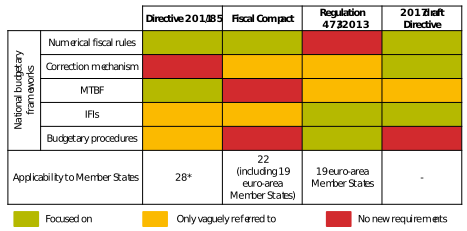
Source: ECA, * Some provisions are not applicable for the United Kingdom.
Various acts of different legal nature (EU law and Intergovernmental Treaty) coexist:
- their degree of enforceability varies (the Court of Justice of the EU can only rule on the transposition of the TSCG; in relation to the application of the TSCG, the EU institutions do not have any power to ensure that the national legislation transposing it is enforced);
- while certain provisions are enshrined in regulations, which are directly applicable, others are set out in a directive, which Member States are given time to transpose and are free to decide how to apply, resulting in greater heterogeneity of national frameworks;
- the degree of applicability to certain Member States varies, in particular depending on whether they are in the euro area.
The Commission drafted Directive 2011/85 within a very short period of time (three months). It emphasised that Directive 2011/85 should be regarded as a set of “minimum requirements”, rather than as representing best practice, or even the desirable features for an MTBF. It stated that embedding best practices into the EU legal framework “would not have been compatible with the considerable differences across Member States' administrative and institutional structures”22.
21As mentioned in paragraph 09, the 2017 draft Directive was meant to incorporate the substance of the TSCG into EU law. The Commission did not opt for a word-by-word transposition but for what it calls a “teleological approach”, i.e. incorporation focusing on the Fiscal Compact's underlying objective: convergence to prudent levels of public debt. In practice, the 2017 draft Directive requires, among other things, an MTO in terms of a structural balance that ensures compliance with the debt-to-GDP ceiling enshrined in the TFEU, but without setting any numerical ceiling.
22The European Central Bank (ECB) stated in an opinion that “the provisions of this Directive deviate substantially from those of the Fiscal Compact, which may lead to a weakening of the rules of the Fiscal Compact”23. In addition, it should be noted that the 2017 draft Directive was proposed before carrying out the review of the suitability of Directive 2011/85 (the “suitability review”) or the assessment on the functioning of the Two-Pack.
23We assessed whether requirements in the current legal framework were appropriate and whether the 2017 draft Directive addressed any identified shortcomings. We did this for the following three aspects:
- correction mechanism;
- medium-term budgetary frameworks;
- independent fiscal institutions.
Shortcomings in the provisions on the correction mechanism
24Directive 2011/85 introduced for the first time the concept of a correction mechanism, referred to as “the consequences in the event of non-compliance”. Beyond this, however, it did not lay down specific requirements regarding its design and application.
25The TSCG requires an automatic triggering of the correction mechanism in case of significant observed deviations from the MTO. It does not directly lay down specific requirements on the design and application of the mechanism, but tasked the Commission with producing common principles, which Member States should apply in designing national correction mechanisms. The Commission issued these principles in June 2012.
26Despite being endorsed at a political level24, the principles are not binding as they were published in a Commission Communication and thus have no legal effect other than serving as a basis for the mechanisms the contracting parties were to put in place. As regards the activation of the correction mechanism (principle 3), the Commission has suggested that the correction mechanism’s trigger points could rely on either EU-level criteria, country-specific criteria, or both. However, two-thirds of Member States opted to mirror the EU-level criteria rather than having specific national ones. As a result, for these Member States, national correction mechanisms are unlikely to be triggered earlier than the EU correction mechanism under the preventive arm of the SGP.
27Regulation 473/2013 lays down certain requirements, including the requirement that independent bodies should provide, where appropriate, assessments regarding the triggering and implementation of correction mechanisms. However, it does not fully reflect the Commission’s common principles, which had been issued half a year after the Commission’s proposal for Regulation 473/2013. For example, it does not indicate that:
- the correction should be consistent with any recommendations made by the Commission to the Member State concerned under the SGP in terms of size and timeline (principle 2);
- activation triggers may comprise EU-driven or country-specific criteria (principle 3);
- larger deviations from the MTO or the adjustment path towards it should lead to larger corrections (principle 4).
The 2017 draft Directive likewise does not fully reflect the Commission’s common principles. For example, it omits to mention that the correction mechanism’s trigger points may rely on either EU-level criteria, country-specific criteria, or both.
29Lastly, as highlighted by the ECB, the 2017 draft Directive does not define the term “significant observed deviation”, i.e. the circumstances under which the mechanism is to be activated, and does not contain any further guidance regarding its scope. The requirement to take into account the nature and size of a deviation is vague, and may result in correction measures that are very broad and lacking in substance25.
Shortcomings in the provisions on medium-term budgetary frameworks
30We compared the requirements set by Directive 2011/85 with the standards and best practices recommended by the IMF, the OECD and the World Bank at the time Directive 2011/85 was drafted. Three of these standards and best practices were not taken up in Directive 2011/85 (see Table 1, lines in bold). Compared with the latest IMF/OECD standards and best practices, Directive 2011/85 falls short in respect of two more issues. Thus, in total, 5 out of the 13 standards and best practices were not reflected in Directive 2011/85. This is despite the fact that, at the time Directive 2011/85 was drafted, the Commission’s views on these issues (see Annex II) were in line with those of international bodies.
Table 1 – Differences between IMF/OECD standards and best practices and Directive 2011/85 requirements
| MTBF Characteristics | IMF/OECD | Directive 2011/85 |
|---|---|---|
| At least 3-year MTBF framework | ✔ | ✔ |
| Comprehensive coverage of general government | ✔ | ✔ |
| Full alignment with government's fiscal policy objectives and macroeconomic forecasts | ✔ | ✔ |
| Projections of future revenue and expenditure at current policies distinct from fiscal impact of new policy measures | ✔ | ✔ |
| Estimated cost of tax expenditure | ✔ | ✔ |
| Budget preparation process for capital and recurrent spending fully integrated | ✔ | ✔ |
| Reliable forward estimates of spending in out-years26 | ✔ | ✔ |
| Assessment of long-term sustainability of public finance | ✔ | ✔ |
| A single process for preparing MTBF and annual budget, and fully integrated documentation | ✔ | ✘ |
| Forward-looking expenditure controls (carryovers, multiyear expenditure commitments, buffers, etc.) | ✔ | ✘ |
| Monitoring and accountability mechanisms | ✔ | ✘ |
| Indicative ceilings for out-years | ✔ | ✘ |
| Spending estimates for out-years rolled over from one MTBF to the next | ✔ | ✘ |
Note: ✔: included, ✔: partially included, ✘: not included
Source: ECA based on OECD (2004), ‘The Legal Framework for Budget Systems’; IMF (2007), ‘Manual on Fiscal Transparency’; IMF (2010), Lienert, I. and Fainboim, I., ‘Reforming Budget Systems Laws’.
According to an IMF paper, the lack of integration between medium-term expenditure planning and the budgeting process makes medium-term planning ineffective in constraining fiscal policy27. However, while article 10 of Directive 2011/85 requires annual budget legislation to be consistent with provisions of the MTBF or duly explain any departure, there is no requirement for an integrated medium-term expenditure planning and budgeting process28. Moreover, it does not require that budget documentation include projections and outturns of revenues, expenditures and financing over the medium term on the same basis as the annual budget29.
32Also, according to an IMF paper, four types of forward-looking control mechanisms are important: (i) controls over the accumulation, stock, or drawdown of carryovers, (ii) regular monitoring of consistency of updated medium-term expenditure projections with approved medium-term plans, (iii) sufficient margins between expenditure commitments and expenditure plans to absorb unexpected events without requiring reprioritisation of policies, and (iv) firm controls on ministries’ and agencies’ ability to enter into multi-year expenditure commitments. However, Directive 2011/85 does not provide for the establishment of forward-looking expenditure controls to ensure compliance with the medium-term plans even as external conditions change.
33Lastly, Directive 2011/85 does not contain any provision addressing the need for national authorities to report budgetary outturns on a comparable basis with multi-year plans, and to comprehensively and transparently reconcile any deviation between multi-year plans and expenditure outcomes. Moreover, there is no specific provision requiring governments or those involved in budgetary implementation to be held accountable for any unjustified deviations from multi-year plans.
34The 2017 draft Directive introduces the requirement for a binding medium-term expenditure rule set out at the beginning of the legislature. Such a rule would provide more stability for budgetary planning and strengthen the link between budget and MTBF. However, it might put fiscal stability at risk if the growth of expenditure deviates from the potential output30 growth. The 2017 draft Directive did not address any of the other shortcomings31 indicated in Table 1.
Shortcomings in the provisions on the independent fiscal institutions
35Regulation 473/2013, which is binding for the euro-area Member States, defines the functions that IFIs should assume, as well as features and principles. The latter are in line with the Commission’s common principles. They were added in the course of the legislative process as the principles were adopted after the Commission made its proposal for a regulation.
36We compared the provisions on IFIs with the international standards and best practices of the IMF32 and the OECD33. We observed that EU law lacks requirements with regard to (i) the number and length of the terms of the IFI board members, (ii) IFIs’ human resources policies, (iii) the establishment of the IFIs’ budgets, and (iv) the need for external review. This resulted in heterogeneous IFIs being established, as illustrated by Annex III and also highlighted in a Commission discussion paper34.
37As far back as 2004, the Commission35 highlighted the importance of both macroeconomic and budgetary forecasts being either produced or assessed by an independent institution in order to reduce and possibly eliminate their optimism bias36. This was also later confirmed by IMF37 and OECD38 papers. Despite the Commission’s proposal to include both, Regulation 473/2013, in its adopted form, requires only macroeconomic forecasts to be either produced or endorsed by the IFIs, but not the budgetary forecasts (i.e. projected budgeted revenue and expenditure).
38The 2017 Commission discussion paper (see paragraph 36) took the view, among other things, that IFIs could be given a more extensive role in producing or endorsing budgetary forecasts, given their role in relation to macroeconomic forecasts. IFIs and other stakeholders we met also emphasised this limitation with regard to the budgetary forecasts.
39In 2016, the Network of EU IFIs, a platform for exchanging views and expertise and pooling resources, proposed a list of minimum standards for IFIs similar to the OECD’s principles, as well as the establishment of “an effective system for their safeguarding”39. However, the 2017 draft Directive does not address these issues: in terms of standards, the only new requirement in the 2017 draft Directive is for Member States to ensure that IFIs comply with the principles for IFIs set in Regulation 473/2013.
40The Network of EU IFIs, while welcoming this new requirement, asked for the “conditions spelled out in the [2017 draft Directive]” to “be complemented with a clearer definition of minimum standards and an effective system for their safeguarding”40. The Network of EU IFIs even suggested in this statement that the “proposal could additionally oblige Members States to ensure an ambitious implementation of this principle in national legislation by fixing the procedure and minimum requirements”. In January 2019, the Network of EU IFIs reiterated its call for “the development and incorporation possibly into EU legislation of adequate standards for the design and operative capacity of IFIs”.
41Lastly, we acknowledge that the 2017 draft Directive envisaged a wider role for IFIs by charging them (i) to critically assess both ex-ante and ex-post the adequacy of the MTO and the medium-term net expenditure path, (ii) to call for the activation of the correction mechanism and (iii) to monitor its application and outcome. Moreover, the 2017 draft Directive aimed to introduce in EU law the ‘comply-or-explain’ principle.
Inconsistent assessment and weak design create risks for independent fiscal institutions and the European Fiscal Board
42EU legislation requires Member States to have in place national fiscal rules and assigns distinct monitoring roles to the Commission and to the IFIs. While the Commission assesses compliance of draft budgetary plans with EU fiscal rules, IFIs assess compliance with national fiscal rules. However, the EU law does not provide for a ‘two-tier’ governance structure, where the Commission, for its monitoring role, would rely on the work done by the national IFIs.
43The EFB was set up with the aim of strengthening the current economic governance framework (see paragraph 10). Its tasks consist among other things in providing an evaluation of the implementation of the EU fiscal framework and the appropriateness of the actual fiscal stance at euro-area and national level.
44We therefore assessed whether:
- there was consistency between the Commission and the IFIs in assessing compliance with EU fiscal rules;
- the EFB was in a position to provide independent opinions.
Risk of inconsistency between Commission’s and independent fiscal institutions’ assessments on compliance with EU fiscal rules
45EU law is not prescriptive regarding national fiscal rules (e.g. with regard to number, type and design features) but stipulates that they should effectively promote compliance with the reference values on deficit and debt set in accordance with obligations from the TFEU. In practice, the parties to the Fiscal Compact (see paragraph 06) adopted national fiscal rules closely linked to those of the preventive arm of the SGP.
46The TSCG, as the preventive arm of the SGP, requires a budgetary position that is “balanced or in surplus”, meaning a structural balance equal to or greater than the MTO, or in line with the adjustment path towards it. Moreover, progress towards, and fulfilment of, the MTO must be evaluated based on an analysis of compliance with the expenditure benchmark of the SGP, i.e. expenditure should not grow faster than the potential output (Annex IV compares the rules of the SGP preventive arm with those of the TSCG).
47Moreover, in some Member States (e.g. Italy and Portugal), IFIs are mandated to assess compliance with EU fiscal rules. Some IFIs without such mandate (e.g. France’s) do this on a voluntary basis. Our survey of IFIs showed that half of them monitored compliance with EU numerical fiscal rules.
48The IFIs we surveyed considered that their assessment of compliance with EU fiscal rules did not lead to a duplication of roles with the Commission but rather was complementary, as it may foster national ownership of EU fiscal rules. Our interviews with the IFIs confirmed their replies. However, IFIs that only monitor compliance with national fiscal rules are not in favour of also monitoring compliance with the EU fiscal rules. One of the reasons they gave for this was reputational risk in the event of diverging assessments.
49When the Commission and IFIs both assess compliance with EU fiscal rules, they may indeed come to different conclusions. One reason is that the Commission, as we have already observed in our special report 18/2018, made extensive use of its margin of discretion41 when assessing compliance with the EU fiscal rules (i.e. compliance with the adjustment path towards the MTO).
50Also, the Regulation establishing the SGP allows for a relatively large margin of deviation from a Member State’s annual benchmark42 by allowing a number of factors to be considered in the assessment of compliance with fiscal rules. Examples of such factors are:
- the implementation of major structural reforms;
- unusual events;
- the need for public investment;
- unspecified “other factors”.
Thus, even when a Member State significantly deviates from its required fiscal adjustments (i.e. reduction in government deficit), the Commission might eventually conclude not to take any action and consider the Member State compliant with the EU fiscal rules.
52These issues were also mentioned by IFIs, in their replies to our ECA survey, as weaknesses, which might affect their work. About 40 % of the responding IFIs considered that these issues may potentially result in their assessment of compliance with the MTO or the adjustment path towards it differing from the Commission’s (see Figure 3).
Figure 3
Replies to ECA survey of IFIs

Source: ECA survey.
Other reasons for divergences (see paragraph 49) are IFIs using their own (i) methodology for calculating the potential output and/or (ii) assumptions and datasets. However, the Commission has enhanced its cooperation with IFIs, by explaining its own methodology to help prevent such divergences.
54Lastly, the Commission’s conclusions on Member States’ compliance with EU fiscal rules may take into account discussions between the Commission and that country’s government, in which the IFIs do not take part.
55The risk of inconsistency between the conclusions reached by IFIs and by the Commission has already been mentioned by the EFB43 and confirmed by our survey. Indeed, 20 % of the IFIs indicated that they had already experienced such differences. Box 3 provides examples of differing conclusions.
Box 3
Commission and IFI assessments with different conclusions – Examples
In its fiscal assessment report of November 2016, the Irish IFI (the Irish Fiscal Advisory Council - IFAC) mentioned that Ireland’s 2017 draft budgetary plan showed “non-compliance with the budgetary rule requirements of the domestic Fiscal Responsibility Act and EU preventive arm for 2016 and 2017”44. The Commission, however, considered it broadly compliant with the provisions of the SGP.
The French IFI (the Haut Conseil des finances publiques – HCFP), in its assessment of the French draft budgetary plan in September 2018, stressed that “the structural adjustments planned for 2018 (0.1 percentage point of GDP) and 2019 (0.3 percentage point of GDP), which will be submitted to the Commission for assessment, do not comply with the rules of the preventive arm of the SGP”. However, the Commission's opinion on this draft budgetary plan was less clear-cut as France was assessed as “at risk of non-compliance”.
Establishing the European Fiscal Board was a good step, but there is room for strengthening its role and independence
56The ‘Five Presidents’ report’ envisaged the following tasks for the EFB:
- to coordinate the network of national fiscal councils and conform to the same standard of independence;
- to advise on but not implement policy. Enforcing the rules should remain the task of the Commission, which should be able to deviate from the views of the EFB provided that it has justifiable reasons and explains them;
- to form an economic, rather than a legal, judgement on the appropriate fiscal stance, both at national and euro-area level, against the backdrop of EU fiscal rules. This should be done on the basis of the rules set in the SGP;
- to be able to issue opinions when it considers this necessary, including in particular, in connection with the assessment of stability programmes and presentation of the annual draft budgetary plans, and the execution of national budgets;
- to provide an ex-post evaluation of how the governance framework was implemented.
However, in the EFB Decision, the Commission left out most of the national dimension of these tasks. In particular, it did not task the EFB with issuing opinions on national stability or convergence programmes, draft budgetary plans or the execution of national budgets. Moreover, rather than coordinating the IFIs, it stated that the EFB should merely cooperate with them. We note that IFIs themselves argued against coordination by the EFB because they saw it as going against the goal of increasing national ownership and damaging their independence.
58In a speech in November 2015, the President of the Eurogroup considered that there were “merits in having a big European sister of the national fiscal councils, placed outside the Commission to provide independent assessments of the national draft budgets, on the basis of which the Commission gives its (political) opinion”.
59Furthermore, the ‘Five Presidents’ report’ had called for the EFB to “conform to the same standard of independence” as national IFIs as set in Regulation 473/2013.
60Article 4 of the EFB Decision states that the members of the Board shall act independently. However, the EFB's independence is limited by its weak statutory regime and scarce resources45:
- the Chair and the four members of the Board are appointed by the Commission. Their mandate is part-time, short (three years) and renewable once, and there is no provision for their removal (such as removal only in the event of incapacity or serious misconduct);
- since they were established by a Commission Decision, the Commission can amend the rules governing the EFB;
- the EFB has no financial independence, as it does not have its own budget and cannot freely manage its human resources. Its budget falls under the “Euro and Social Dialogue” budget of the cabinet of the Vice-President of the Commission and covers the salaries of the members (who have the status of special advisors) and the costs of their business trips. The Secretariat of the EFB is a unit of the Commission’s Secretariat-General. As such, its expenses (business trips, invitation of experts, organisation of workshops, etc.) are covered by the operational budget of the Secretariat-General;
- the EFB is attached to and located in the premises of the Secretariat General of the Commission, and its website is also hosted by the Commission.
The above mentioned factors result in a weak institutional set-up, as also pointed out by the ECB: “the creation of the European Fiscal Board on the basis of a Commission decision within its organisational structure is not in line with the standards established for its counterparts at the national level”46. The same issue was raised by the IMF47.
62Moreover, whereas the ‘Five Presidents’ report’ stipulates that the EFB “should be able to issue opinions when it considers it necessary”, the EFB Decision only makes reference to the publication of an annual report. It does not explicitly mention the option of the EFB publishing assessments in real time or issuing public opinions, which in any case is hampered by its limited resources.
63In practice, the EFB publishes two types of regular reports (1) the EFB’s assessment of the fiscal stance appropriate for the euro area published in June and (2) an annual report, published at the end of the year. In addition, the EFB has recently published an assessment of EU fiscal rules48.
64Our assessment of the four reports issued in 2017 and 2018 is that they are of good analytical quality. This was confirmed by stakeholders we met in the sampled Member States and by our survey of the IFIs. Indeed, 87 % of IFIs assessed the quality of the analysis in the EFB reports as ‘good ’, with 10 % describing it as ‘average’ and only 3 % as ‘poor’.
65In the annual report, the EFB provides an evaluation of the implementation of the Union fiscal framework. It also issues, in a dedicated section, proposals for the future evolution of the Union fiscal framework. However, while the annual reports also contained an evaluation of selected efficiency aspects regarding IFIs, such as their application of the ‘comply-or-explain’ principle and whether their right to access information was guaranteed, the dedicated section on proposals did not include anything on how to improve the IFIs’ situation.
66Moreover, the EFB Decision does not specify how the EFB’s proposals would feed into the Commission’s internal decision-making process. In fact, the Commission can ignore the EFB’s proposals issued without providing any reason since, contrary to what was proposed in the ‘Five Presidents’ report’, it is not bound by the ‘comply-or-explain’ principle. This issue has been pointed out both by the ECB49 and by the European Ombudsman50.
67In his reply to the European Ombudsman, the Vice-President of the European Commission explained that a strict parallel cannot be drawn between the EFB and national IFIs. National IFIs are watchdogs for monitoring whether national policies are compliant with the fiscal rules. The EFB does not monitor the EU budget or its implementation - it is an independent advisory body of the Commission. This is why the Vice-President of the European Commission argued that the ‘comply-or-explain’ principle does not apply in this context.
68The quality of the analysis and the critical views expressed by the EFB indicate that, despite being embedded within the Commission, it has been able to form independent opinions. However, this independence relies solely on the EFB’s current membership rather than its institutional set-up. Our survey showed that the IFIs’ perception of the EFB’s independence was mixed: 53 % of them consider the EFB to have ‘limited independence’, whereas 47 % consider it to be ‘fully independent’.
The Commission so far has only limited assurance that national budgetary frameworks are properly implemented and applied
69The initial requirements for Member States’ budgetary frameworks were not set out in a regulation, but took the form of a directive. Consequently, implementing these requirements takes longer and Member States have discretion as regards how to do so.
70However, the Commission stated in the report “public finances in EMU 2011” (published in 2012)51 that the choice of a directive “responded to the need to achieve balance in Member States' requirements”.
71We assessed whether:
- the Commission was able to reach timely conclusions on the compliance of national legislation with EU requirements;
- the Commission’s assessment provided meaningful insights into the implementation and application of NBFs.
Delays in concluding on the compliance of national legislation with EU requirements due to factors not all under the Commission’s control
72The deadline for transposing Directive 2011/85 was 31 December 2013. Member States had to notify their national implementing measures to the Commission. Member States issued 323 national implementing measures, but only 67 of them (20 %) were notified in time (see Figure 4). In fact, Member States had to simultaneously incorporate into national law not only the requirements of Directive 2011/85, but also those stemming from Regulation 473/2013 and the Fiscal Compact.
Figure 4
Notification of national implementing measures per year

Source: ECA.
Since not all Member States had transposed Directive 2011/85 by the deadline, shortly thereafter, the Commission opened 17 infringement procedures for ’failure-to-notify’ national implementing measures. As Table 2 shows, the majority of these cases (14) were closed within 1 year, which is the Commission’s benchmark52. Due to long law adoption processes in Slovenia and Czechia, these countries only finished transposing Directive 2011/85 in 2018 and 2019 respectively. This inevitably delayed the start of the compliance assessment process for all 17 Member States subject to infringement procedures.
Table 2 – State of play of the infringement procedures on non-communication (June 2019)
| Opening of infringement procedure for “failure to notify” 27 January 2014 | BE, BG, CZ, DK, DE, EE, EL, HR, IT, CY, LT, LU, MT, AT, SI, FI, UK | |
| Closed in July 2014 | BE, DK, DE, EE, HR, IT, CY, LT, AT, FI, UK | WITHIN BENCHMARK |
| Closed in November 2014 | EL, LU, MT | |
| Closed in July 2015 | BG | TWO MONTHS BEYOND BENCHMARK |
| Referral to the Court of Justice of the EU in July 2017 | SI | LONG DELAYS |
| Ongoing | CZ | |
Source: ECA.
The Commission did not complete the compliance assessments, consisting of a transposition check and conformity check, within its own benchmark period53 and the performance targets set in DG ECFIN’s Annual Management Plans for the 2014-2017 period were only partially achieved.
75As a result of its transposition and conformity checks, in August 2016, the Commission started EU ‘pilot procedures’ for 11 Member States, in April 2017 for another 7, and again in July 2019 for another 7 Member States. This was a first step to try to resolve transposition problems and thus avoid formal infringement proceedings, if possible. For the three remaining Member States, as of September 2019, the Commission had not yet decided whether to start ‘pilot procedures’.
76The sequencing of the EU ‘pilot procedures’ (see Table 3) was not dictated by an implementation plan but rather by operational reasons, i.e. by the availability of Member States to carry out the EU ‘pilot dialogues’ with the Commission in English for the first wave and by the Commission’s level of internal preparedness for the second and third waves. As a result, some euro-area Member States with high general government debt, i.e. those for which achieving a sound fiscal position is more important, were not assessed as a matter of priority (see Figure 5).
77In 2014 (by which time transposition by the Member States was supposed to have been completed), the seven euro-area Member States for which the Commission has started in 2019 a ‘pilot procedure’ (see Figure 5, third column) accounted for 77 % of euro-area GDP (66 % of the combined GDP of all EU Member States excluding the United Kingdom and 56 % of the combined GDP of all EU Member States including the United Kingdom) and for 77 % of euro-area public debt (72 % of combined public debt of all EU Member States excluding the United Kingdom and 60 % of the combined public debt of all EU Member States including the United Kingdom).
Figure 5
Breakdown of the Member States by waves of EU pilots

Source: ECA.
The 18 EU pilot cases started under the first and second waves were closed with considerable delays, and lasted on average more than 65 weeks, well above the Commission’s 20-week benchmark. In 3 of the 18 cases, we noticed particularly large time gaps in communication (nearly a year, or more) where the Commission had been waiting for the Member States to implement the required measures. These three procedures were eventually closed within two years of being started. In one case, the Commission rejected the replies of the Member State (Belgium). In total, the Commission closed eleven Member States’ ‘pilot procedures’ with a positive compliance assessment. For another seven cases the Commission rejected the Member States’ replies. By September 2019, four of those seven cases were closed. The Commission is continuing its informal exchanges with the other Member States (see Table 3) but has not yet started any infringement procedures54.
Table 3 – Duration and status of EU pilots

* Duration calculated until 30 September 2019.
Source: ECA.
The Commission had to start 17 ‘failure-to-notify’ infringement procedures (see paragraph 73) and Member States had to introduce an additional 102 national implementing measures as a result of the Commission’s compliance checks during the 2015-2019 period (see Figure 4). This suggests, with the benefit of hindsight, that the Commission underestimated the challenges Member States faced in transposing Directive 2011/85 and did not take proactive measures to help them do so on time. In order to help Member States apply EU law correctly, the Commission often deploys an array of ‘compliance promoting tools’ at different stages in the policy cycle55. However, it did so to a limited extent in the case of Directive 2011/85.
80The Commission did provide guidance on NBFs to Member States: as well as the exchanges during the EU ‘pilot procedures’, there were also mostly informal exchanges (e.g. by emails, phone calls or bilateral meetings) with for example reviews of draft Member State legislation transposing Directive 2011/85. This was confirmed by the stakeholders we met, as well as our survey of IFIs (see Figure 6). It is noteworthy that the Commission provided less support and guidance to ensure effective application of the NBFs than it did to ensure Member States’ compliance with EU requirements.
Figure 6
Reply to the ECA survey on provision of guidance and support by the Commission

Source: ECA survey.
Commission assessments to date are of limited informative value, either due to timing or mandate considerations
81We analysed the Commission’s assessments pursuant to Directive 2011/85, the TSCG and Regulation 473/2013.
Assessment of the application of Directive 2011/85
82After assessing compliance of the national transposing measures, the Commission is required to monitor and assess the application of Directive 2011/85.
83The Commission has not yet started assessing the application of Directive 2011/85 in a structured and systematic manner. It plans to do so56 once it finishes assessing all Member States’ transposition of the requirements of Directive 2011/85 into national legislation (see Table 3).
84As of October 2019, the Commission had not yet put in place a strategy setting out the methodology, criteria, milestones and deliverables from Member States, in order to ensure appropriate and timely monitoring of the application of Directive 2011/85.
85In some cases, despite implementing Directive 2011/85, Member States (for example Italy and Spain) do not show improvements in their fiscal performance in line with the requirements of the SGP. However, the Commission has not yet exercised its monitoring powers57 by carrying out an assessment focused on the operational performance of key elements of the NBFs. Such an approach is used, for example, by the IMF in its Fiscal Transparency Evaluation.
86Alternatively, it may also use the Public Expenditure and Financial Accountability (PEFA) methodology. The Commission itself, through the Directorate-General for International Cooperation and Development (DG DEVCO), developed the PEFA methodology together with the IMF and the World Bank. Therefore, it would have, in-house, the knowledge needed to carry out PEFA assessments.
87In addition to the assessment of compliance and application, Directive 2011/85 required the Commission to carry out a suitability review by mid-December 2018.
88The requirement to carry out a suitability review was not specifically included in the Commission’s initial proposal, but was added in the course of the legislative process. Moreover, despite MTBFs being a central element of NBFs and of Directive 2011/85, the scope of the suitability review does not explicitly include them. However, we take note of the Commission’s intention to include MTBFs in the scope of this review.
89Despite the December 2018 deadline, as of October 2019, the Commission had not yet published its suitability review of Directive 2011/85.
90However, based on an economic study, the Commission concluded in January 2019 that “national ownership of EU fiscal rules has been strengthened in recent years thanks to stronger national fiscal frameworks being created, following legislative initiatives put forward at the EU level”58. The study looked at econometric evidence showing a link between the MTBFs’ quality (measured by the MTBF index, see paragraph 04) and the cyclically-adjusted primary balance. This strong link is interpreted as showing a positive effect on fiscal discipline, as a result of national ownership.
91The MTBF index assesses the quality of the NBFs on the basis of 11 criteria (see Table 4). One of the requirements of Directive 2011/85 is not covered by any criterion, and six of the criteria used do not correspond to requirements of Directive 2011/85 but to other features, which the Commission considers desirable.
Table 4 – Comparison between Directive 2011/85 requirements on MTBFs and MTBF index criteria for both old and new (fine-tuned) methodology

Note: ✘: not included.
Source: ECA.
However, this analysis, while valuable, cannot be regarded as a review of the suitability of Directive 2011/85 concerning requirements on MTBFs, for the following reasons:
- the MTBF index used in this analysis is based on the Fiscal Governance Database (see paragraph 04), which is mainly fed with information provided by national authorities, rather than information from an autonomous assessment by the Commission of the functioning of the NBFs;
- the criteria used for scoring the index and Directive 2011/85 requirements are only partially overlapping (see paragraph 91);
- an improvement in the MTBF index may just reflect the enactment of a budgetary reform, even if it is not yet operational, i.e. the index may just capture the conformity of its design rather than its actual functioning (see Box 4);
- the MTBF index spans the period 2006-2015. However, 2015 predates the start of the EU ‘pilot procedures’, meaning that the index could not possibly reflect the Commission’s assessment of either the transposition or application of Directive 2011/85;
- the MTBF index shows an improvement (increase in the score) for euro-area Member States either in 2011 or earlier years with the exception of France, Germany, Finland (slight increases in 2012, 2013 and 2015 respectively) and Luxembourg (2014). However, improvements that occurred in 2011 and earlier years cannot be regarded as reflecting the impact of Directive 2011/85, which entered into force only on 13 December 2011. Member States under a financial assistance programme (Cyprus, Greece, Ireland, Latvia, Spain and Portugal) also saw improvements, as did a Member State in the process of joining the euro (Lithuania). However, the Commission’s analysis, while recognising the role played by financial assistance programmes, does not disentangle the impact of Directive 2011/85 from the impact of the obligations under the financial assistance programme or of the Member State’s drive to join the euro area.
Box 4
Examples of an increasing score of the MBTF index linked to the enactment and not the actual functioning of budgetary reforms
We found that the Commission had upgraded the MTBF index of some of the Member States in our sample (Italy, Latvia and Luxembourg) immediately after they had enacted budgetary reforms (in 2009, 2013 and 2014 respectively), even though the application of these reforms (and hence their effect) was gradual and was not completed by 2015.
In the case of Italy, a new accounting law was passed in 2009, but several secondary legislative acts were needed and were approved over time. The implementation process is still ongoing (according to reports from the Ministry of Finance).
In the case of Luxembourg and Latvia, in the course of the EU ‘pilot procedures’, the Commission identified gaps between the enacted reform and the requirements of Directive 2011/85. These delayed the conclusion of the ‘pilot procedures’. National authorities had to fill those gaps through legislative or administrative amendments, which took place – and hence took effect – only after the cut-off date for the econometric analysis.
Assessment of the Fiscal Compact
93The TSCG requires the Commission to present “in due time” a report assessing the compliance with the Fiscal Compact of the national provisions adopted by Member States (see paragraph 06). Based on information provided by the Member States, the Commission issued its report on 22 February 201759. In line with its mandate, the Commission's assessment focuses on the legal compliance of the national provisions. It did not receive any mandate to assess the effective application of the new national rules transposing the Fiscal Compact.
94The main conclusions that can be drawn from the report are that:
- all Member States have put in place a binding balanced budget rule, although only some at a constitutional level;
- Member States differ in their definition of exceptional circumstances allowing a temporary deviation from their MTO;
- Member States differ in the extent to which the correction mechanism is automatic and in the scope of the required corrective action;
- legal provisions were adopted in all Member States to set up IFIs although the Commission had some concerns regarding the independence safeguards of some of them;
- many Member States had not yet integrated the ‘comply-or-explain’ principle into their legal framework (i.e. a government has to justify when it does not comply with the assessments of the IFI), but they committed to apply it appropriately.
The Commission’s overall assessment was positive, even though the transposition of the Fiscal Compact was slow and incomplete. In fact, the Commission’s positive assessment of 16 Member States’ compliance was conditional upon their implementation of commitments they had made. As pointed out by the ECB60, however, commitments are “not an adequate substitute for legal provisions, as they are not enforceable”. The Commission’s assessment was thus not complete and, by accepting commitments, it weakened the requirements.
Assessment of the implementation of Regulation 473/2013
96The Commission in November 2014 carried out a first assessment of the application of Regulation 473/2013, in the context of the review of the economic governance covering the Six-Pack and Two-Pack legislative acts. However, the assessment was inconclusive, as it came too soon after the entry into force of Regulation 473/2013. The next assessment is due by the end of 2019.
97The Commission also monitors developments of national legislation on NBFs and their application through the European Semester61, albeit to a limited extent: it assesses whether the Member States’ budget positions are approaching their MTOs (see paragraph 46), but does not evaluate in detail the functioning of the underlying NBFs. Figure 7 provides further details on the various steps.
Figure 7
The Commission’s assessment of the NBFs at the different steps of the European Semester

Source: ECA.
Conclusions and recommendations
98We looked at whether the Commission’s actions to strengthen the budgetary frameworks of the EU Member States achieved the results intended. We conclude that by proposing Directive 2011/85 and Regulation 437/2013, which have been adopted, and the 2017 draft Directive, for which the legislative process is still ongoing, the Commission contributed to fostering improvements in national budgetary frameworks (paragraph 17).
99However, the Commission has not clarified how it will minimise possible divergences between the independent fiscal institutions’ and the Commission’s assessments of compliance with EU fiscal rules in cases where both the Commission and national independent fiscal institutions assess the compliance with EU fiscal rules.
100There have been instances where the Commission and an independent fiscal institution have come to different conclusions. One reason for this is that, in assessing compliance, the Commission makes full use of the discretion granted to it by EU law, and its power to interpret this discretion. This applies particularly to the “exceptional circumstances” accepted as justification for softening the adjustment requirements for Member States that have not yet reached their medium-term budgetary objectives (paragraphs 45 to 55).
Recommendation 1 – Compliance assessments by the Commission and the independent fiscal institutionsTo ensure that independent fiscal institutions can fulfil their role effectively, and in order to minimise divergence between the independent fiscal institutions’ and the Commission’s assessments of compliance with EU fiscal rules, the Commission should strengthen cooperation with the independent fiscal institutions.
Timeframe: 2020 onwards.
101A number of requirements in the EU legal framework concerning medium-term budgetary frameworks and independent fiscal institutions fall short of the international standards and best practice set by the IMF and the OECD, and often despite the views expressed in economic papers published by the Commission itself. The 2017 draft Directive, if approved, would only partially correct those weaknesses (paragraphs 18 to 41).
Recommendation 2 – Review requirements for national budgetary frameworksTo further strengthen budgetary frameworks, the Commission should review the requirements for medium-term budgetary frameworks and independent fiscal institutions, also taking into account international standards and best practice, and propose actions as appropriate to improve their scope and effectiveness. The Commission should base this on the observations made in this report, as well as on the results of its suitability review and its assessment of the compliance and application of Directive 2011/85 and Regulation 473/2013.
Timeframe: within one year of the publication of the Commission’s assessment of the Six- and Two-Packs (which include Directive 2011/85 and Regulation 473/2013).
102The effectiveness of the European Fiscal Board is limited by its current institutional set-up. Moreover, the ‘comply-or-explain’ principle does not apply to the Commission (paragraphs 56 to 68).
Recommendation 3 – Strengthen the European Fiscal BoardTo further strengthen enforcement of the EU fiscal rules and independent assessment of the Commission’s work with respect to the national dimension, the Commission should:
- review the mandate as well as the institutional set-up of the European Fiscal Board and publish Commission’s conclusions, including justifications in case no changes will be proposed;
- apply the “comply-or-explain” principle whereby the Commission should publicly justify instances when it does not comply with assessments of the European Fiscal Board.
Timeframe: within one year of the publication of the Commission’s assessment of the Six- and Two-Packs (which include Directive 2011/85 and Regulation 473/2013).
103The Commission has not yet completed its assessment of the compliance of national legislation with the requirements of Directive 2011/85, which included transposition and conformity checks (paragraphs 72 to 80).
104The Commission’s assessments on the application of the EU legal framework (Directive 2011/85 and Regulation 473/2013) have either not yet been carried out or came at too early a stage of implementation to be meaningful (paragraphs 84 to 92 and 96).
105The Commission’s current monitoring of the developments on national budgetary frameworks is, amongst other things, based on the Fiscal Governance Database. It is fed with information provided by the Member States, which mainly focuses on institutional set-up rather than on actual functioning (paragraph 92).
Recommendation 4 – Strengthen enforcement of national budgetary frameworksTo assess whether the objectives set in the legal acts (Directive 2011/85 and Regulation 473/2013) were achieved, and considering that eight to six years have passed since their adoption, the Commission should:
- finalise without further delay the compliance assessment;
- carry out and publish as soon as possible a comprehensive suitability review of Directive 2011/85;
- revise the Fiscal Governance Database questionnaires or identify another suitable tool to request on a regular basis comprehensive information on the actual functioning of the national budgetary frameworks;
- on a regular basis, monitor the functioning of the national budgetary frameworks, through a structured methodology focusing on the operational performance of key elements of the national budgetary frameworks. The Commission should follow up any significant weakness identified.
Timeframe for (a): by mid-2020, (b): by end-2019, (c): by end-2020, and (d): 2021 onwards.
This Report was adopted by Chamber IV, headed by Mr Brenninkmeijer, Member of the Court of Auditors, in Luxembourg on 15 October 2019.
For the Court of Auditors
Klaus-Heiner Lehne
President
Annexes
Annex I – Timeline of relevant legal basis and publications

Source: ECA.
Annex II – Commission’s view on the medium-term budgetary framework
(i) A single process for preparing MTBF and annual budget, and fully integrated documentation.
01The Commission had acknowledged already in 2011 the problem that “while Stability and Convergence Programmes (SCPs) are already presented from a multi-annual perspective, these policy documents have remained of limited policy relevance in the domestic debate surrounding the discussion of budgetary strategies, despite the fact that Member States are supposed to draft their budget in accordance with their SCP commitments”62. Also in its 2012 interim progress report on the implementation of Directive 2011/85 the Commission referred to the integration of MTBF within the annual budget cycle, as well as to fully integrated documentation as key features “to be carefully considered”63.
(ii) Forward-looking expenditure controls that ensure compliance with the medium-term plans.
02With regard to carryover arrangements the Commission pointed out the need to set limits to unspent appropriations that can be carried over in the next budget year(s), otherwise “such arrangements may somewhat diminish the stringency and predictive power of the framework”64. Furthermore, the Commission regards “defining appropriate contingency reserves and related access rules” as a necessary feature for a multi-annual framework65.
(iii) Accountability mechanism66.
03It is noted also that lack of provisions concerning the monitoring of multi-annual budgetary implementation is not consistent with the Commission’s position on key requirements for MTBFs. Indeed, since 2006 the Commission’s methodology for the calculation of the MTBF index considers “monitoring and enforcement of multiannual budgetary targets” one of the five dimensions for assessing the quality of MTBF in the Member States67. Moreover, the Commission acknowledged already back in 2007 that lack of monitoring is a weakness across Member States68. Furthermore, the Commission reiterated in 2010 that analysis of departures from the envisaged fiscal path, as well as monitoring and corrective mechanisms are key elements in the design of MTBFs69.
Annex III – Heterogeneity of independent fiscal institutions
| Members of the Board | Human resources | Set-up of the IFI | Budget of the IFI | External review | |||||||
|---|---|---|---|---|---|---|---|---|---|---|---|
| Number | Length of the term (years) | Renewable term | Number (FTE*) | Management have full freedom to hire and dismiss staff | Stand-alone or attached | Source | Amount in 2017 (million EUR) | ||||
| France | High Council of Public Finances | 11 | 5 | YES | Once | 3/4 | YES | Attached to the National Audit Office | Sub-program in the National Audit Office's budget | 0.8 | n/a |
| Greece | Hellenic Fiscal Council | 5 | 4/6 | YES | Once | 13 | NO | Stand-alone | Quarterly transfers from the State Budget | 1.1 | Technical evaluation every 4 years |
| Italy | Parliamentary Budget Office (UPB) | 3 | 6 | NO | n/a | 24 | YES | Attached to the Parliament | Funding equally provided by the two Houses of Parliament | 6 | n/a |
| Latvia | Fiscal Discipline Council | 6 | 6 | YES | Twice | 2 | NO | Stand-alone | Sub-programme in the Ministry of Finance's budget | 0.19 | n/a |
| Luxembourg | National Council of Public Finance | 7 | 4 | YES | No limit specified | 2 | NO | Attached to the Ministry of Finance | Sub-program in the Ministry of Finance's budget | 0.1 | n/a |
| National Institute of statistics and economic studies (STATEC) | n/a | n/a | n/a | n/a | 160 | YES | Attached to the Ministry of Economy | Sub-program in the Ministry of Economy's budget | 22.7 | n/a | |
| Netherlands | Netherlands Bureau for Economic Policy Analysis (CPB) | 3 | 7 | NO | n/a | 117 | YES | Attached to the Ministry of Economic Affairs | 80 % lump-sum funding from Ministry of Economic Affairs 20 % project-based funding from Ministries | 15.4 | Peer review by academics and by clients about every 5 years |
| Advisory Division of the Council of State | 22 | Life | n/a | n/a | 3 | YES | Attached to the Council of State | Own chapter in the State Budget | 0.32 | n/a | |
| Portugal | Public Finance Council (CFP) | 5 | 7 | NO | n/a | 18 | YES | Stand-alone | Annual transfer from the State Budget | 2.6 | OECD review conducted in 2019 |
| YES for non-executive members | Once | ||||||||||
| Spain | Independent Authority for Fiscal Responsibility (AiReF) | 4 | 6 | NO | n/a | 35 | YES | Attached to Ministry of Finance | Budget from State General Budget Law + fee charged to public entities for the AiReF supervision. | 5.07 | OECD review conducted in 2017 |
* FTE: Full-time equivalent.
Source: ECA based on Commission’s data.
Annex IV – The fiscal rules in the preventive arm of the Stability and Growth Pact and in the Fiscal Compact
| Preventive arm of the Stability and Growth Pact | Fiscal Compact | |
|---|---|---|
| Objective | Requirement of a close to balance or in surplus budgetary position, meaning a structural balance at or above the MTO | The budgetary position of the general government of a contracting party shall be balanced or in surplus (i.e. structural balance ≥ MTO) |
| Specification | Country specific MTO with a limit of - 1 % of GDP for euro-area Member States | Country specific MTO, as defined in the SGP, with a limit of -0.5 % of GDP for euro-area Member States (or -1 % if the Debt-to-GDP ratio “is significantly below 60 % and where risks in terms of long-term sustainability of public finances are low”) |
| Expenditure benchmark: expenditure net of discretionary measures should grow ≤ medium-term potential GDP | ||
| Adjustment path | 0.5 % of GDP as a benchmark (more in good times, less in bad times) | The contracting parties shall ensure rapid convergence towards their respective MTO. The timeframe for such convergence will be proposed by the Commission taking into consideration country-specific sustainability risks. |
| Possible temporary deviations from the MTO or the adjustment path towards it in case of: | The contracting parties may temporarily deviate from their respective MTO or the adjustment path towards it only in "exceptional circumstances". | |
|
||
|
|
|
|
|
|
| Enforcement specification | Procedure for correcting significant deviation | An automatic correction mechanism (on the basis of common principles to be proposed by the Commission) |
| Overall assessment | Vade Mecum on the SGP (2018 Edition, p. 23): “compliance with the requirements of the preventive arm is assessed using a two-pillar approach. The assessment of the structural balance, which constitutes one pillar, is complemented by an analysis of the growth rate of an expenditure aggregate net of discretionary revenue measures, which constitutes the other pillar.” | TSCG, Article 3.1(b) “Progress towards, and respect of, the medium-term objective shall be evaluated on the basis of an overall assessment with the structural balance as a reference, including an analysis of expenditure net of discretionary revenue measures, in line with the revised Stability and Growth Pact.” |
Acronyms and abbreviations
Council: Council of the EU
CSR: Country-specific recommendation
DG ECFIN: Commission Directorate‐General for Economic and Financial Affairs
ECB: European Central Bank
Ecofin Council: Economic and Financial Affairs Council
EFB: European Fiscal Board
GDP: Gross Domestic Product
IFI: Independent fiscal institutions
IMF: International Monetary Fund
MTBF: Medium-term budgetary framework
MTO: Medium-term budgetary objective
NBF: National budgetary framework
OECD: Organisation for Economic Co-operation and Development
PEFA: Public Expenditure and Financial Accountability
SGP: Stability and Growth Pact
TFEU: Treaty on the Functioning of the European Union
TSCG: Treaty on Stability, Coordination and Governance in the Economic and Monetary Union
Glossary
Application: The action of bringing EU and national laws into force.
Automatic correction mechanism: An obligation to implement corrective measures that is automatically triggered in the event of significant observed deviations from the medium-term budgetary objective or the adjustment path towards it.
Balanced budget rule: The budgetary position of the general government must be balanced or in surplus. In both the Stability and Growth Pact and the Treaty on Stability, Coordination and Governance in the Economic and Monetary Union, this rule is deemed to be complied with if the annual structural balance of the general government is at its medium-term budgetary objective.
Compliance assessment: An evaluation of transposition and conformity of the implementation at national level of an EU directive.
Conformity check: An initial verification of whether all the necessary directive provisions have been covered by the national implementing measures.
Corrective arm of the Stability and Growth Pact: The excessive deficit procedure started by the Council upon recommendation by the Commission against any EU Member State that exceeds the budgetary deficit ceiling imposed by the EU's Stability and Growth Pact Regulation. The procedure entails several steps, potentially culminating in sanctions, to encourage a Member State to get its budget deficit under control, and is a requirement for the smooth functioning of Economic and Monetary Union.
European Fiscal Board (EFB): An advisory body to the Commission that is responsible for evaluating the implementation of EU fiscal rules, proposing changes to the fiscal framework and performing economic assessments.
Draft budgetary plan: A document that euro-area governments have to submit annually to the Commission to serve as a basis for fiscal policy coordination.
Economic Policy Committee (EPC): An advisory body to the Ecofin Council and the Commission that helps foster consensus on economic policy (including jobs and growth) and the sustainability of public finances.
European Semester: The annual cycle that provides a framework for the coordination of the economic policies of EU Member States and for monitoring progress, in particular fiscal policies as determined by the Stability and Growth Pact.
EU Network of IFIs: A Commission-facilitated group set up in 2013, of EU national independent fiscal institutions and the European Fiscal Board, chaired by the Commission.
EU ‘pilot procedure’: An informal dialogue between the Commission and a Member State on potential non-compliance with EU law, prior to the start of a formal infringement procedure.
Expenditure rule: A long-lasting limit on absolute spending or on the spending growth rate.
Fiscal Compact: An agreement to strengthen budgetary discipline entered into by 22 contracting parties, out of the 25 that signed the intergovernmental Treaty on Stability, Coordination and Governance in the Economic and Monetary Union.
Fiscal Governance Database: A Commission tool containing information on the main elements of Member States’ fiscal governance frameworks, namely national fiscal rules, independent fiscal institutions and medium-term budgetary frameworks.
Fiscal performance: The maintenance of budgetary discipline to foster macroeconomic stability and sustainable growth.
Fiscal rule: A permanent constraint on fiscal policy, often expressed as a numerical ceiling or target in proportion to gross domestic product on a fiscal performance indicator.
Independent fiscal institution (IFI): A public body, which promotes sound fiscal policy and sustainable public finances through performing a variety of tasks, including macroeconomic and budgetary forecasting and fiscal compliance assessments.
Macroeconomic imbalance procedure (MIP): The macroeconomic imbalance procedure aims to identify, prevent and address the emergence of potentially harmful macroeconomic imbalances that could adversely affect economic stability in a particular Member State, the euro area, or the EU as a whole.
Medium-term budgetary framework (MTBF): Fiscal arrangements extending the horizon for fiscal policymaking beyond the annual budgetary calendar.
Medium-term budgetary objective (MTO): A country-specific fiscal policy target set in the Stability and Growth Pact, which is for most Member States - 1 % of Gross Domestic Product and for euro-area Member States somewhat tighter, - 0.5 % of Gross Domestic Product, unless they have a low debt ratio.
National budgetary framework: Arrangements, procedures, rules and institutions underlying budgetary policies.
Network of EU IFIs: A platform established in 2015 for an exchange of views and expertise, as well as for pooling resources. Open to all independent fiscal oversight bodies operating in the EU, chaired by one of the IFIs.
Potential output: A theoretical concept of the level of output (Gross Domestic Product) in at a given moment that is consistent with stable inflation. It grows in time at a rate that is not necessarily constant. Both the level and the growth rate cannot be measured directly, but have to be estimated.
Preventive arm of the Stability and Growth Pact: The main objective of the preventive arm, as set in Council Regulation 1466/97 was to ensure that Member States rapidly converged towards a close-to-balance or surplus budget position, which would then allow them to deal with normal cyclical fluctuations without breaching the 3 % limit on headline deficit.
Primary balance: The budget balance net of interest payments on general government debt.
Six-Pack: An EU economic governance package of six legislative measures (five Regulations and Directive 2011/85) adopted in November 2011.
Stability and convergence programmes: Under the Stability and Growth Pact, Member States are obliged to submit a document annually setting out their fiscal plans for the next three years. Used by the Commission and finance ministers to assess whether countries are on track to reach their medium-term budgetary objective. Euro-area countries submit “stability programmes”, while Member States that have not adopted the euro produce “convergence programmes”.
Stability and Growth Pact (SGP): A set of rules adopted in 1997 designed to safeguard stability in the economic and monetary union by ensuring that Member States pursue sound public finances and coordinate their fiscal policies.
Structural balance: The actual budget balance net of the cyclical component and one‑off and other temporary measures. The structural balance gives a measure of the underlying trend in the budget balance.
Treaty on Stability, Coordination and Governance in the Economic and Monetary Union: An intergovernmental treaty, adopted in 2012, which lays down rules fostering budgetary discipline and economic policy coordination among contracting parties, and improving governance of the euro area.
Transposition: Adoption, publication and entry into force of national provisions in application of an EU directive by the deadline set.
Transposition check: An assessment of the accuracy/compatibility of national implementing measures with the directive’s provisions.
Two-Pack: An EU package of two legislative measures (Regulations 472 and 473) adopted in May 2013, aimed at strengthening economic governance in the euro area.
Audit team
The ECA’s special reports set out the results of its audits of EU policies and programmes, or of management-related topics from specific budgetary areas. The ECA selects and designs these audit tasks to be of maximum impact by considering the risks to performance or compliance, the level of income or spending involved, forthcoming developments and political and public interest.
This performance audit was carried out by Audit Chamber IV Regulation of markets and competitive economy, headed by ECA Member Alex Brenninkmeijer. The audit was led by ECA Member Neven Mates until the end of his mandate (July 2019) and thereafter by ECA Member Mihails Kozlovs, supported by Edite Dzalbe, Head of Private Office and Laura Graudina, Private Office Attaché; Marko Mrkalj, Private Office Attaché; Marion Colonerus, Principal Manager; Stefano Sturaro, Head of Task; Giuseppe Diana, Efstathios Efstathiou and Maëlle Bourque, Auditors. Michael Pyper provided linguistic support.

From left to right: Stefano Sturaro, Marion Colonerus, Mihails Kozlovs, Maëlle Bourque, Giuseppe Diana, Efstathios Efstathiou.
Endnotes
1 European Council (2010), ‘Report by the Task Force to the European Council on strengthening economic governance in the EU’.
2 For example: Debrun, X. and al. (2008), ‘Tied to the mast? National fiscal rules in the European Union’, economic policy 23/54, pp. 299-362.
3 IMF (2013), ‘Reassessing the role and modalities of fiscal policy in advanced economies’, policy paper.
4 See for example European Commission (2004), ‘Report on public finances in EMU 2004’.
5 Council of the EU (2005), ‘Ecofin Council report to the European Council of 22-23 March 2005 on improving the implementation of the Stability and Growth Pact’.
6 Council of the EU (2009), ‘2967th Economic and Financial Affairs Council conclusions on fiscal exit strategy’.
7 Council Directive 2011/85/EU of 8 November 2011 on requirements for budgetary frameworks of the Member States, OJ L 306, 23 November 2011 (referred to in this document as Directive 2011/85).
8 European Commission (2012), COM(2012) 342 final, ‘Communication from the Commission, Common principles on national fiscal correction mechanisms’.
9 Debrun, X. and Kinda, T. (2014), ‘Strengthening post-crisis fiscal credibility: Fiscal Councils on the rise — A new dataset’, IMF working paper 14/58.
10 Beetsma, R. and al. (2018), ‘The rise of independent fiscal institutions: recent trends and performance’, IMF working paper 18/68.
11 Jonung, L. and Larch, M. (2006), ‘Improving fiscal policy in the EU: the case for independent forecasts’, economic policy 21/47, pp. 492-534.
IMF (2013), ‘Case studies of fiscal councils — functions and impact’.
12 Regulation (EU) No 473/2013 of the European Parliament and of the Council of 21 May 2013 on common provisions for monitoring and assessing draft budgetary plans and ensuring the correction of excessive deficit of the Member States in the euro area, OJ L 140, 17 May 2013 (referred to in this document as Regulation 473/2013).
13 European Commission (2017), COM(2017) 824 final, ‘Proposal for a Council Directive laying down provisions for strengthening fiscal responsibility and the medium-term budgetary orientation in the Member States’, p. 3.
14 Economic and Financial Committee (2019), ‘Draft supplementary EFC findings on the transposition of the Fiscal Compact’, ecfin.cef.cpe(2019)1812588.
15 Commission Decision (EU) 2015/1937 of 21 October 2015 establishing an independent advisory European Fiscal Board; and Commission Decision (EU) 2016/221 of 12 February 2016 amending Decision (EU) 2015/1937 establishing an independent advisory European Fiscal Board.
16 Juncker, J.-C., Tusk, D., Dijsselbloem, J., Draghi, M. and Schulz, M. (2015), ‘The Five Presidents’ report: Completing Europe's Economic and Monetary Union’.
17 ECA special report 10/2016 ‘Further improvements needed to ensure effective implementation of the excessive deficit procedure’ (http://eca.europa.eu).
18 ECA special report 18/2018 ‘Is the main objective of the preventive arm of the Stability and Growth Pact delivered?’ (http://eca.europa.eu).
19 ECA special report 03/2018 ‘Audit of the Macroeconomic Imbalance Procedure (MIP)’ (http://eca.europa.eu).
20 These were euro-area Member States selected either because they had high debt, because their budgetary frameworks had shown significant improvement or because they had had an IFI in place for a long time.
21 In 5 of the 28 Member States, 2 institutions share the tasks of an IFI.
22 European Commission (2012), ‘Report on public finances in EMU 2011’, p. 101.
23 ECB (2018), CON/2018/25.
24 European Commission (2017), C(2017) 1201 final, ‘Report from the Commission presented under Article 8 of the Treaty on Stability, Coordination and Governance in the Economic and Monetary Union’, p. 3.
25 ECB (2018), CON/2018/25.
26 Any year beyond the current budget/fiscal year.
27 IMF (2013), Cangiano, G. et al., ‘Public Financial Management and its emerging architecture’, p. 161.
28 OECD (2004), ‘The Legal Framework for Budget Systems’, Box III.4; IMF (2010), Lienert, I. and Fainboim, I., ‘Reforming Budget Systems Laws’, Box 4 and pp. 12-13; IMF (2013), Cangiano, G. et al., ‘Public Financial Management and its emerging architecture’, p. 156; IMF (2014), ‘Fiscal transparency code’, Principles 2.1.3, 2.3.1 and 2.3.2; World Bank (2013), ‘Beyond the annual budget. The global experience with medium term expenditure frameworks’, pp. 58-59.
29 IMF (2014), ‘Fiscal transparency code’, Principle 2.1.3.
30 The potential output is a theoretical concept of the level of output (GDP) at a given moment that is consistent with stable inflation. It grows in time at a rate that is not necessarily constant. Both the level and the growth rate cannot be measured directly, but have to be estimated.
31 The IMF and the OECD updated their standards and best practices for good budgetary governance in 2014 and 2015 respectively to incorporate lessons learnt from the economic and financial crisis. However, the Commission did not reflect this update in the 2017 draft Directive.
32 IMF (2013), ‘The functions and impact of fiscal councils’: “This paper provides the most comprehensive survey of fiscal councils available so far” and also builds on other papers including the OECD’s 2012 draft principles and Kopits, G. (2011), ‘Independent fiscal institutions: Developing good practices’, pp. 35-52.
33 OECD principles were already available in 2012 and were adopted in 2014. See OECD (2014), ‘Recommendation on Principles for IFIs’.
34 European Commission (2017), Jankovics, L. and Sherwood, M., ‘Independent fiscal institutions in the EU Member States: The early years’, discussion paper 067.
35 European Commission (2004), Jonung, L. and Larch, M., ‘Improving fiscal policy in the EU: the case for independent forecasts’.
36 Optimism bias is the practice of overestimating growth in output and revenue while underestimating non-discretionary expenditure.
37 IMF (2007), ‘Code of good practices on fiscal transparency’, Principle 4.3.4.
38 OECD (2014), ‘Recommendation on Principles for IFIs’, Principle 3.3.
39 Network of EU IFIs (2016), ‘Defining and enforcing minimum standards for IFIs’.
40 Network of EU IFIs (2018), Statement by the Network of EU IFIs in response to the Proposal for a Council Directive laying down provisions for strengthening fiscal responsibility and the medium-term budgetary orientation in Member States.
41 In 2015, the Commission published an interpretative Communication on its margin of interpretation, "Making the best use of the flexibility within the existing rules of the Stability and Growth Pact" COM(2015)12 final. This was subsequently reflected in the commonly agreed position of November 2015 endorsed by the Council in February 2016.
42 To achieve fast convergence towards the MTO, the benchmark set by the SGP is that Member States should adjust their structural budgetary positions at a rate of 0.5 % of GDP per year.
43 EFB (2018), Annual report 2018, p. 42.
44 Irish Fiscal Advisory Council (2016), ‘Fiscal assessment report’, p. 67.
45 The EFB consists of a Board and a Secretariat (staffed by a Head of Secretariat and dedicated supporting staff currently limited to five economists and one assistant).
46 ECB (2015), ‘Economic Bulletin’, Issue 7, Box 5: The creation of a European Fiscal Board.
47 IMF (2016), ‘2016 Article IV consultation – euro-area policies’, IMF country report 16/219, p. 20.
48 The EFB also published one statement in support of the Danish Fiscal Council in March 2018.
49 ECB (2015), ‘Economic Bulletin’, Issue 7, Box 5: The creation of a European Fiscal Board.
50 European Ombudsman (2016), ‘Letter from the European Ombudsman to the President of the European Commission regarding Transparency of the European Fiscal Board’.
51 European Commission (2012), ‘Report on public finances in EMU 2011’, p. 101.
52 ECA (2018), Landscape review: ‘Putting EU law into practice: The European Commission’s oversight responsibilities under Article 17.1 of the Treaty on European Union’, Box 4.
53 Transposition checks should be finalised within 6 months of the transposition deadline or from the national implementing measure notification date and conformity checks within 16 to 24 months of the date of the communication of the national transposition measures.
54 When an EU pilot has been used in a given case but is no longer likely to produce the expected results in a timely manner, the Commission should proceed with a formal infringement.
55 Implementation plans, guidelines, explanatory documents, networks, expert groups, workshops, package meetings, scoreboards serve as ‘compliance promoting tools’.
56 Some aspects of the application assessment were already included in the transposition assessment.
57 European Commission (2012), ‘Report on public finances in EMU 2011’, p. 101.
58 European Commission (2019), ‘Report on public finances in EMU 2018’, p. 138.
59 European Commission (2017), C(2017) 1201 final, ‘Report from the Commission presented under Article 8 of the Treaty on Stability, Coordination and Governance in the Economic and Monetary Union’.
60 ECB (2017), ‘Economic Bulletin 4’, Box 8: The fiscal compact: the Commission’s review and the way forward.
61 The annual EU cycle of economic policy coordination also covering fiscal policies as determined by the SGP.
62 European Commission (2012), ‘Report on public finances in EMU 2011’, p. 105.
63 European Commission (2012), COM(2012) 761 final, ‘Report from the Commission to the European Parliament and the Council, Interim Progress Report on the implementation of Council Directive 2011/85/EU on requirements for budgetary frameworks of the Member States’, p. 6.
64 European Commission (2015), Sherwood, M., ‘Medium-Term Budgetary Frameworks in the Member States’, discussion paper 021, p. 6.
65 European Commission (2012), ‘Fiscal frameworks in the European Union: May 2012 update on priority countries (Addendum to occasional paper 91)’, occasional paper 113, p. 15.
66 IMF (2010), Lienert, I. and Fainboim, I., ‘Reforming Budget Systems Laws’, Box 3 and Box 4.
67 European Commission (2007), ‘Report on public finances in EMU 2007’, Box III.4.1; European Commission (2015), Sherwood, M., ‘Medium-Term Budgetary Frameworks in the Member States’, discussion paper 021, Box A1.1.
68 European Commission (2007), ‘Report on public finances in EMU 2007’, p. 158.
69 European Commission (2010), ‘Report on public finances in EMU 2010’, Box II.3.3.
Timeline
| Event | Date |
|---|---|
| Adoption of Audit Planning Memorandum (APM) / Start of audit | 13.12.2018 |
| Official sending of draft report to Commission (or other auditee) | 18.7.2019 |
| Adoption of the final report after the adversarial procedure | 15.10.2019 |
| Commission’s (or other auditee’s) official replies received in all languages | 22.11.2019 |
Contact
EUROPEAN COURT OF AUDITORS
12, rue Alcide De Gasperi
1615 Luxembourg
LUXEMBOURG
Tel. +352 4398-1
Enquiries: eca.europa.eu/en/Pages/ContactForm.aspx
Website: eca.europa.eu
Twitter: @EUAuditors
More information on the European Union is available on the internet (http://europa.eu).
Luxembourg: Publications Office of the European Union, 2019
| ISBN 978-92-847-3924-0 | ISSN 1977-5679 | doi:10.2865/871421 | QJ-AB-19-018-EN-N | |
| HTML | ISBN 978-92-847-3894-6 | ISSN 1977-5679 | doi:10.2865/482842 | QJ-AB-19-018-EN-Q |
© European Union, 2019.
Reuse is authorised provided the source is acknowledged.
For any use or reproduction of photos or other material that is not under the copyright of the European Union, permission must be sought directly from the copyright holders.
GETTING IN TOUCH WITH THE EU
In person
All over the European Union there are hundreds of Europe Direct Information Centres. You can find the address of the centre nearest you at: https://europa.eu/european-union/contact_en
On the phone or by e-mail
Europe Direct is a service that your questions about the European Union. You can contact this service
- by freephone: 00 800 6 7 8 9 10 11 (certain operators may charge for these calls),
- at the following standard number: +32 22999696 or
- by electronic mail via: https://europa.eu/european-union/contact_en
FINDING INFORMATION ABOUT THE EU
Online
Information about the European Union in all the official languages of the EU is available on the Europa website at: https://europa.eu/european-union/index_en
EU Publications
You can download or order free and priced EU publications at: https://op.europa.eu/en/web/general-publications/publications. Multiple copies of free publications may be obtained by contacting Europe Direct or your local information centre (see https://europa.eu/european-union/contact_en)
EU law and related documents
For access to legal information from the EU, including all EU law since 1952 in all the official language versions, go to EUR-Lex at: http://eur-lex.europa.eu/homepage.html?locale=en
Open data from the EU
The EU Open Data Portal (http://data.europa.eu/euodp/en/data) provides access to datasets from the EU. Data can be downloaded and reused for free, both for commercial and non-commercial purposes.