 Special Report
EU development aid to Kenya
About the report:
In this audit, we looked at the use of development aid provided to Kenya through the European Development Funds (EDFs), the country’s main source of EU funding. Kenya received €435 million from the EDF for the period 2014-2020. We examined the process for allocating aid from the EDFs and found that it did not allow aid to be linked to countries’ performance, governance and commitment to structural reforms. We found that aid was spread across many areas and that the Commission had not explained how and why the supported sectors would most assist Kenya in reducing poverty. Although the audited projects generally delivered their expected outputs and outcomes, their impact on the country’s overall development was not yet demonstrated. We recommend reconsidering the approach for allocating aid to ACP countries based on our work on Kenya. We also recommend prioritising certain sectors in Kenya while paying particular attention to focusing aid to achieve results.
ECA special report pursuant to Article 287(4), second subparagraph, TFEU.
 |
Executive summary
IThis audit focused on the effectiveness of development aid provided to Kenya through the European Development Fund, the country’s main source of EU funding. The report also uses the example of Kenya to assess the methodology for allocating EU development aid and to help in designing new actions in the next Multiannual Financial Framework.
IIAccording to the Treaty on the Functioning of the European Union, the primary objective of development aid is reducing and, in the long term, eradicating poverty. We examined whether the Commission and the European External Action Service had effectively targeted European Development Fund support where it could contribute most to reducing poverty in Kenya. We found that the EEAS and the Commission have not always demonstrated that they made the optimal choices to achieve this goal.
IIIThe legal framework does not allow for aid allocation and distribution of aid between ACP countries to be linked to specific conditions regarding beneficiary countries’ performance, governance, and commitment to structural reforms or controlling corruption. The Commission and the European External Action Service allocated some 90 % of Kenya’s funding using a formula, without conducting their own specific assessment of the country’s development obstacles and objectives. Nor did country allocations take into account grants or loans from other donors.
IVKenya’s 11th European Development Fund allocation was €435 million, equivalent to around 0.6 % of the country’s tax revenue. This amount covered only a small fraction of Kenya’s development needs and was spread across many areas. The 2014‑2020 EU-Kenya National Indicative Programme did not contain an explanation of how and why the selected sectors would assist Kenya to reduce poverty more than other sectors.
VSeveral economies that have experienced considerable development strides have undergone a transformation – from agricultural to industrial. This has not happened in Kenya: agriculture still contributes one third of the country’s GDP, while manufacturing represents only 10 %, the same as 40 years ago. Moreover, according to UN projections, Kenya’s population will increase from the current figure of 48 million to about 85 million by 2050. The country’s urbanisation rate is also rising rapidly. This means there is increasing demand for job opportunities, especially in and around cities and among young people.
VIThe largest allocation of 11th European Development Fund funding, €190 million (44 % of the total), increased to €228.5 million following the mid-term review, went to the ‟Food security and resilience to climate shocks” focal sector. A significant share of EU support in this sector went to communities in arid and semi/arid land regions and to smallholder farmers, with the aim of giving them food security and higher income. This support is likely to improve the living standard of those communities, but does not help progress towards the commercialisation of farming and the expansion of agro-processing.
VIIAlthough EU support for energy and transport infrastructure is a positive thing in itself, the total amount (€175 million) is not enough to achieve the very ambitious objectives set in the National Indicative Programme. Considering the perception of widespread corruption in Kenya, we found the EU’s direct support for the fight against corruption to be limited.
VIIIWe examined a sample of actions in Kenya, covering 53 % of the expenditure incurred under the 10th European Development Fund. Although these projects generally delivered their expected outputs and outcomes, their impact on the country’s overall development has not yet been demonstrated.
IXBased on the example of Kenya, we recommend that the Commission and the European External Action Service:
- examine the EU’s method for allocating funding between African, Caribbean and Pacific countries, involving the Parliament, the Council and Member States as appropriate;
- introduce specific conditions which establish a clear link between financial allocations and the country’s past performance and the government’s commitment to structural reforms, including rule of law;
- assess whether and explain how the amounts allocated to and within each focal sector in Kenya are likely to reach a sufficient critical mass to achieve significant results;
- prioritise sectors in Kenya with the potential to attract foreign direct investment, create jobs and grow exports, and actions supporting the rule of law, including the fight against corruption.
Introduction
Kenya
01Kenya has the second largest economy in the East African region after Ethiopia, accounting for 19 % of regional output1, and the fourth largest economy in sub-Saharan Africa. Since 2014, the World Bank has ranked Kenya as a lower middle-income country. The graphs in Annex I illustrate human development in Kenya.
02Kenya’s population has increased from 8 million in 1960 to around 47 million in 2016. According to UN projections, Kenya’s population will reach about 85 million by 20502. Figure 1 illustrates this population growth.
Figure 1
Kenya’s increasing population
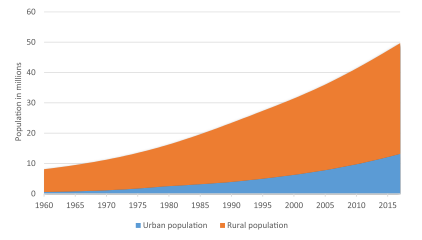
Source: ECA, based on data of the World Bank.
About 75 % of Kenyans live in rural areas. However, since 2000, the urban population has more than doubled. The number of people living in Kenya’s cities is expected to exceed 22 million by 2030 and reach about 40 million (almost half of the expected population) by 20503. More than a third of the urban population lives in the major cities of Nairobi and Mombasa.
04Over 20 % of Kenya’s population suffers from undernourishment. This is less than 25 years ago, when that figure was around 35 %. In 2016, 36 % of the population was below the poverty line, meaning they were living on less than $1.90 per day4. This figure has decreased since 2005, when it was 43 %. National statistics define poverty as living on less than €30 per month in rural areas and €60 per month in urban areas. Based on this definition, 56 % of Kenya’s poor live in arid and semi-arid lands (ASAL) counties5.
05Kenya’s real GDP growth has averaged over 5 % for the last decade. However, the growth has been below the region’s average from 2003 to 20186. According to the last World Bank specific study on Kenya’s economy, if the Kenyan economy had grown as fast as its peers in Sub-Saharan Africa over the period 2004‑2014, the average Kenyan’s income would have been 15 % higher by 2014 than in 2003. If the economy had matched the growth of its Asian peers, Kenya’s income per capita would have been 45 % higher7.
06Domestic consumption, spurred by population growth, has contributed most to GDP growth8. Another driver has been public investment9. Kenya’s trade balance, including with the EU Member States, has been consistently negative. Table 1 shows Kenya’s main macroeconomic indicators, and Annex II includes tables and graphs characterising the country’s economy.
Table 1
Macroeconomic indicators (percentage)
| 2016 | 2017(e) | 2018(p) | 2019(p) | |
| Real GDP growth | 5.8 | 4.9 | 5.3 | 5.9 |
| Real GDP per capita growth | 3.2 | 2.6 | 2.8 | 3.2 |
| Consumer Price Index (CPI) inflation | 6.3 | 8.0 | 6.4 | 5.5 |
| Budget balance ( % of GDP) | − 8.2 | − 9.3 | − 7.8 | − 6.6 |
| Current account ( % of GDP) | − 5.2 | − 6.1 | − 5.6 | − 5.2 |
Source: ECA, based on AfDB 2018 African Economic Outlook (e: estimates, p: predictions).
According to the Commission10, Kenya is the leading economy in the region, but progress towards the Millennium Development Goals has been incomplete. The effects of recurrent severe droughts illustrate the fragility of the country’s socioeconomic development. Boosting competitiveness, targeted investment for more jobs, and addressing vulnerabilities and continuing the reform process are key economic priorities.
Development aid
08Article 208 of the Treaty on the Functioning of the European Union (TFEU) states that the primary objective of EU development cooperation policy is the reduction and, in the long term, the eradication of poverty. Art. 21(2)(d) of the Treaty on the European Union includes among the objectives of the EU external action to “foster the sustainable economic, social and environmental development of developing countries, with the primary aim of eradicating poverty”.
09The OECD defines official development assistance (ODA) in terms of its main objective, which is “the promotion of the economic development and welfare of developing countries”11. Development aid is meant to reduce poverty which includes helping the beneficiary country to make its economy more competitive, thereby creating jobs.
10In 2011, the Commission adopted a new strategic document, the Agenda for Change12, with the aim of increasing the impact and effectiveness of EU development policy. It declares inclusive and sustainable economic growth for human development to be one of its two priorities (alongside good governance), calling it crucial for long-term poverty reduction.
EU development aid to Kenya
11The Cotonou Agreement, signed in June 2000 for a period of 20 years13, provides the main legal framework for the EU’s development aid to African, Caribbean and Pacific (ACP) countries and the EU’s overseas countries and territories. The European Development Fund (EDF) is the main source of funding under the Cotonou Agreement for these countries, including Kenya. The EDF is made up of contributions from EU Member States but is outside the EU budget. Each EDF financial period generally lasts five to seven years.
12Under the 11th EDF, 75 ACP countries received funding. There are 80 ACP countries, but Cuba, Equatorial Guinea and Sudan were not eligible for aid, because they have not signed the Cotonou Agreement or ratified its amendments. Bahamas did not want EDF funds, while South Africa is subject to different arrangements under the agreement so does not qualify for EDF funding.
13A Council Regulation14 provides the general framework for EDF programming and implementation. It aims to ensure consistency with other areas of EU action, including relevant development policy principles and frameworks, such as the European Consensus on Development and the Agenda for Change. There is also an internal agreement between the EU Member States within the Council, governing, among other things, the contribution payable by each Member State, which is determined using an ‟allocation key”.
14Because the EDF is intergovernmental, the European Parliament has a more limited role than it has for other development cooperation instruments financed by the EU budget. For example, it does not play any role in the establishment of the EDF budget and its rules, or in the allocation of resources; these tasks remain the responsibility of the EU Member States.
15The EDF Committee, consisting of representatives of the EU Member States, is involved in programming the EDF and monitoring its implementation: it gives its opinion on Country and Regional Strategy Papers under the Cotonou Agreement.
16An important step in EDF programming is the joint signature of the National Indicative Programmes (NIPs), by the European Commission and the partner country. An NIP is a joint strategy setting the priorities for EU action over the EDF period it covers. Spending under Kenya’s NIPs for the 10th EDF (2008‑2013) and 11th EDF (2014‑2020) amounted to €392 million and €435 million respectively. For the 11th EDF, this was equivalent to around 0.6 % of Kenya’s tax revenue.
17NIPs identify three sectors per country on which EU aid should focus. Based on the NIPs, the European Commission manages specific programmes and projects. The EEAS works with the Commission throughout the cycle of programming, planning and implementation of development aid. The ACP countries are responsible for setting the objectives and priorities on which their NIPs are based, choosing projects and concluding contracts.
18In addition to Kenya’s allocation of EDF country-specific funding (its “bilateral envelope”), the EU provides the country with funding under the EDF Regional Indicative Programme for Eastern Africa, Southern Africa and the Indian Ocean (2014‑2020), the EU Emergency Trust Fund for Africa and EU Humanitarian aid. The total amount involved represents approximately 16 % of Kenya’s EDF bilateral envelope. There was also funding from the DCI thematic budget lines amounting to €45 million over the period 2014‑2020.
Audit scope and approach
19Our audit focuses on the effectiveness of bilateral development aid provided to Kenya through the EDF. It does not cover other instruments such as humanitarian aid or the EDF regional programme listed in paragraph 18. Discussions are currently ongoing about a successor to the Cotonou Agreement, which expired in February 2020. However, as of 1 March 2020, transitional measures will extend the application of the Cotonou Agreement until December 2020. This audit uses the example of Kenya to assess the methodology for allocating funding, both between the different ACP countries and between sectors in each country. Our assessment of project results can help improve the design of new actions in the next Multiannual Financial Framework.
20Our main audit question was whether the Commission and EEAS had effectively targeted EDF funding where it could contribute most to reducing poverty in Kenya. To answer this question, we examined:
- whether the Commission and the EEAS had decided the overall amount of 11th EDF funding (2014-2020) to Kenya based on a sound analysis;
- whether the Commission had selected focal sectors within Kenya under the 11th EDF where aid can do most to reduce poverty;
- whether EU aid under the 10th EDF already delivered to Kenya had been effective.
We based our observations on the following sources of audit evidence:
- a review of documentation on policies, procedures and actions relating to EU development aid for Kenya;
- interviews with staff from the Commission’s Directorate-General for International Cooperation and Development (DG DEVCO) and the EEAS;
- interviews in Kenya with staff from the EU Delegation and Kenyan government ministries;
- interviews in Kenya with a selection, made with the assistance of the EU delegation, of representatives from the private sector, with other donors and with stakeholders, including academics, economists, international organisations and non-governmental organisations (see list of meetings in Annex III);
- visits to EU-funded activities in the field, covering 53 % (by value) of actions funded under the 10th EDF in Kenya.
We examined the programming of the 11th EDF (2014‑2020). To establish a country-specific context for our assessments, we examined Kenya’s economic and human development trends, identifying the country’s areas of potential and the main problems hindering its economic development and sustainable poverty reduction. We also examined the experiences of other countries.
23We examined the results of projects financed under the 10th EDF (2008‑2013), because at the time of our audit, results were not yet available for projects funded under the 11th EDF. The focal sectors selected under the 10th EDF were similar to those under the 11th EDF. Table 2 shows the projects covered by the audit.
Table 2
Audit coverage
| Amount audited from 10th EDF |
Audit coverage as % of sector |
10th EDF funding per sector |
||
| Infrastructure | Merille-Marsabit Road | 88.2 | 49 % | 178.6 |
| Tourist Roads (Galana River Bridge) | 13.0 | 7 % | ||
| Urban Roads | 31.0 | 17 % | ||
| Total audited Infrastructure | 132.2 | 74 % | ||
| Agriculture and Rural Development | Kenya cereal enhancement programme | 27.1 | 16 % | 167.2 |
| Agricultural Productivity Research Project | 4.0 | 2 % | ||
| Increased Productivity and Profitability and Good Agricultural Practice in ASAL areas | 9.5 | 6 % | ||
| Drought Contingency Fund Project | 9.7 | 6 % | ||
| ASAL Drought Management | 11.8 | 7 % | ||
| Livelihood support projects in the ASAL areas | 1.7 | 1 % | ||
| Total audited Agriculture | 63.8 | 38 % | ||
| Governance, Trade and Cooperation | Standards and Market Access Programme (SMAP) | 12.1 | 27 % | 45.6 |
| Total audited Governance | 12.1 | 27 % | ||
| Total 10th EDF |
208.1 | 53 % | 391.4 |
Source: ECA.
For these projects, we assessed whether the results of EU aid to Kenya could be demonstrated in terms of15:
- outputs: what is produced or accomplished with the resources (inputs, activities and processes) allocated to an intervention (e.g. roads built),
- outcomes: changes arising from an intervention (e.g. improved access to an area due to construction of a road),
- impacts: longer-term socio-economic consequences that can be observed after an intervention has been completed.
Observations
The Commission and the EEAS allocated funding to Kenya in line with the Agenda for Change but the process did not include a specific assessment of the country’s development obstacles and objectives
25The role of international development aid is to assist beneficiary countries’ own efforts to develop. As the Agenda for Change recognises, EU development assistance should be allocated according to country needs, capacities, commitments, performance and potential impact of EU aid16. This requires a comprehensive analysis of the country’s needs and commitment to development and change.
26We therefore assessed whether the Commission and the EEAS, when deciding the overall amount of 11th EDF funding (2014‑2020), had carried out a sound assessment of Kenya’s needs, capacity to use or “absorb” aid, commitment to reform and past performance. We also assessed whether they had taken into account EU Member States’ and other donors’ contributions to Kenya, including direct support by EU Member States.
The Commission allocated 90 % of EDF funds to Kenya using a standardised approach applied to all ACP countries
27In principle, all ACP countries are eligible for funding under the Cotonou agreement (see paragraph 11). Under the 11th EDF, the first step in the allocation procedure was therefore to distribute the total EDF funding (€15 billion) between the 75 eligible countries. There were three main steps in deciding country allocations: a) a formula using a spreadsheet with comparable and up-to-date country data, b) a qualitative adjustment and c) further adjustments following a meeting of the EDF Committee:
- The formula was based on five indicators: population; gross national income per capita; Human Asset Index; Economic Vulnerability Index; and Worldwide Governance Indicators, out of which the last three are composite indicators. All the indicators were normalised to range from 1 to 6 (except population, which ranged from 0 to 6.3). The five indicators were then multiplied together.
- The Commission then applied a qualitative adjustment to take account of aspects that could not easily be quantified through the formula, particularly potential impact. These adjustments amounted to 7.5 % of the initial total.
- An exchange of views between Member States took place at the EDF Committee Meeting in September 2013, resulting in further adjustments of 3 % of the initial total. These adjustments reflected various concerns, such as changes compared with the previous EDF and the political and security context.
The Cotonou agreement called for country allocations to “be based on standard, objective and transparent needs and performance criteria”. The formula used by the Commission for the 11th EDF allocations complied with this requirement by using common indicators that are available for all ACP countries (see paragraph 27 (a)). While these indicators illustrate the scale of different countries’ needs, they say nothing about what these needs actually are, or the funding gap that needs to be closed in order to address them.
29Three of these indicators (Gross NationaI Income, Human Asset Index and Economic Vulnerability Index) are used as criteria to classify countries as least developed. This means that these scores are similar for most least developed countries (LDCs). The main indicators used to consider potential impact, the Worldwide Governance Indicators, also do not show a large variation between countries.
30The Commission and the EEAS established Kenya’s financial allocation without conducting their own specific assessment of the country’s development obstacles and objectives. Also, country allocations did not take into account the amounts or objectives of grants or loans from other countries or organisations.
31We also found that the allocation process does not allow for aid allocation to be linked to specific conditions regarding beneficiary country’s performance, governance, commitment to structural reforms or control of corruption. For example, although Kenya has remained in the bottom 21 % of countries ranked in the Transparency International Corruption Perception Index, we found no evidence that this had made the EU attach additional conditions to the country’s EDF funding. Kenya has continued to receive a similar level of funding as it did under the previous EDF. Annex IV, which is an extract of the Transparency International Global Corruption Barometer Africa 2019 Citizens’ Views and Experiences of Corruption, describes the problem of corruption in Kenya.
32The formula yielded an initial allocation of €395 million to Kenya. This amount was increased to €435 million due to the scale of the challenge of reducing poverty, the country’s importance for regional integration and stability, and the government’s willingness to devolve power to the regions. As the EDF Committee Meeting made no further changes, the final allocation amounted to €435 million.
Countries with large populations such as Kenya received proportionally less funding
33As the Commission allocated 90 % of funds purely through the formula, we examined its implications more thoroughly. We found that, in line with its aim, the Commission had allocated more funds to the poorest countries under the 11th EDF than under the 10th EDF. The share of the total allocation received by LDCs and low income countries (LICs) under the 11th EDF was 85 %, compared with 80 % under the 10th EDF.
34When the allocation formula was developed, one criterion for assessing its suitability was how closely it replicated the previous EDF allocations (see Annex V). Such replication was partly achieved by reducing the impact of the population indicator in the formula, which resulted in significantly less aid per person for countries with larger populations. For example, Ethiopia (85 million people) and the Democratic Republic of the Congo (68 million people) received less than €8 per person in EU aid, while countries with smaller populations, such as Gambia (1.8 million people) and Guinea-Bissau (1.5 million people), received over €100 per person. Kenya, with a relatively large population of 42 million at the time of the allocation, received €9 per person. Figure 2 shows the allocations resulting from the formula before the qualitative adjustment.
Figure 2
11th EDF aid per person for LDCs and LICs
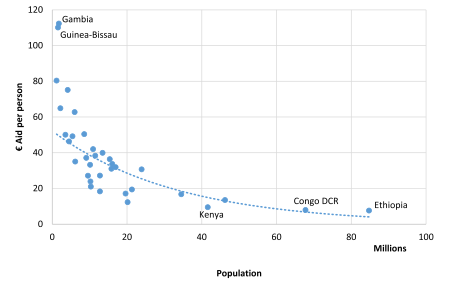
Source: ECA, based on DG DEVCO’s allocation spreadsheet (excluding countries with populations of less than 1 million to avoid distortions17).
The reason why countries with larger populations received significantly less aid per person was that the indicator for population was both capped at 40 million people18 and based not on the country’s total population, but rather its square root. Box 1 describes how the formula reduces the impact of population.
Box 1
How the formula reduces the impact of population
An LDC with 80 million people would logically have 20 times the needs of an LDC with 4 million people (assuming they had the same scores for the other indicators). However, because of the population cap of 40 million, and the use of the square root of the population, it would receive only three times the funding.
| Country A | Country B | |
| Population (million) | 80 | 4 |
| Population cap | 40 | n/a |
| Square root | √40 | √4 |
| Result | = 6.3 | = 2 |
Although population was just one of the five equally weighted indicators in the 11th EDF allocation formula, it had a significant impact on the allocation of resources between LDCs. If the Commission had not capped the population, bigger countries would have received most of the funding.
The programming of the 11th EDF does not sufficiently demonstrate that aid is channelled to where it can do most to reduce poverty
37Aid should be focused on addressing the problems that most hinder the beneficiary country’s development. To be effective, aid must (together with other contributions) reach a critical mass (i.e. human and financial resources sufficient to generate significant results)19, but a country (or sector, or project) should not receive more money than it can absorb.
38The Agenda for Change and the instructions for the programming of the 11th EDF20, also recognise these principles. The Agenda for Change emphasises that “the EU must seek to target its resources where they are needed most to address poverty reduction and where they could have greatest impact”21. The programming instructions state that sector selection should consider whether the EU support reaches a critical mass in terms of knowledge, human resources or financial resources, in order to generate significant and measurable results22.
39We therefore assessed whether the Commission and the EEAS had selected focal sectors within Kenya under the 11th EDF where: (a) the aid could do most to reduce poverty, and (b) the aid was substantial enough to generate significant results. We also assessed whether the Commission and the EEAS had coordinated effectively with the EU Member States and other donors.
40The Agenda for Change states that inclusive and sustainable economic growth for human development is crucial for long-term poverty reduction and sets it as one of its priorities. Economic development depends on several factors upon which donors can make an impact – governance, regulatory framework, infrastructure, and human, social and financial capital.
The reasoning behind sector selection is not sufficiently clear
41The selection of sectors was a joint exercise by the Commission and the EEAS. It resulted in the approval of a multi-annual indicative programme for each partner country, signed by that country. The focal sectors in the EU-Kenya National Indicative Programme (NIP) for 2014-2020 received the following funding:
- food security and resilience to climate shocks – €190 million (44 %);
- sustainable infrastructure – €175 million (40 %);
- accountability of public institutions – €60 million (14 %);
- support measures (not a focal sector) – €10 million (2 %).
Each of these three focal sectors comprised a wide range of areas. For example, “Food security and resilience to climate shocks” included transformation of smallholder farmers’ practices, land governance, drought emergencies, cash for drought victims, and climate-proof community infrastructure. “Sustainable infrastructure” included transport infrastructure and energy. “Accountability of public institutions” includes elections, public financial management, administration of justice, legal aid, and alternatives to imprisonment. Spreading Kenya’s funding over so many areas increases the risk of it not reaching the necessary critical mass in any single sector to achieve significant results.
43The Commission based its choice of sectors on Kenya’s national development plan (“Vision 2030”) and its implementing programmes, known as Medium Term Plans23. These documents cover a vast number of areas, ranging from social aspects such as sports, housing and gender equality to various economic sectors such as tourism, financial services and trade. The Commission could therefore have chosen many sectors other than the current focal sectors while remaining in line with Vision 2030.
44The Kenyan NIP included reasoning as to why the selected focal sectors were important. However, it lacked a comprehensive evaluation of the poverty reduction potential of other sectors and of the EU’s capacity to address these. Nor did we find evidence of any such assessment beyond the NIP. It was therefore unclear why the Commission and the EEAS considered that supporting the selected sectors rather than others would assist Kenya most in reducing poverty.
45The Commission and the EEAS did not explain the choice made not to support the manufacturing sector directly. Many economies that have experienced a considerable stride in development have undergone a transformation – from agricultural to industrial24. This has not happened in Kenya: agriculture still contributes one third of the country’s GDP, while manufacturing represents only 10 %, the same as 40 years ago25. Manufacturing has great potential to create jobs (including for less educated people), improve Kenya’s trade balance and stimulate other sectors, such as agriculture and natural resource management26.
46The World Bank has characterised Kenya as an entrepreneurial nation, noting that the country has a manufacturing base27. It is therefore likely that systematic action to remove the structural problems in that sector could lead to progressive economic growth. It should also be underlined that expanding the manufacturing sector was later confirmed as one of the stated priorities of the Kenyan president’s latest development master plan, known as the “Big 4 Agenda”. Furthermore, rapid population growth and urbanisation mean increasing demand for job opportunities among young people in and around cities. Failure to meet this demand may create additional social difficulties.
47Another example concerns Kenya’s ICT sector, which grew by 10.9 % in 201728, and the country is known for its capacity for innovative services. Since 2008, together with the private sector, the Kenyan Government has been developing a technology city known as the Konza Technopolis, which will be home to a new university of technology and to ICT, engineering and biotechnology companies. The new city, which still needs extensive infrastructure investment, is planned to become a special economic zone with all local amenities (housing, hospitals, etc.). Innovation and the digital economy have potential to increase high added-value exports and create jobs; this is why developed countries spend public funds to promote these things.
Donor coordination, while extensive, had limited influence on the choice of focal sectors
48In the NIP, the Commission describes some activities aimed at coordinating its action with other donors (i.e. sector donor working groups and joint policy dialogue). The document also contains a matrix showing the sectors where other donors, including non-EU countries, are involved. This matrix is summarised in Figure 3, highlighting the focal sectors of the 11th EDF. However, we found no evidence that coordination with other donors had influenced the Commission’s choice of sectors.
Figure 3
Summary of donor matrix

Source: ECA, based on EU-Kenya NIP 2014-2020.
In addition to this matrix, the Commission carried out joint programming along with nine Member States and the European Investment Bank (EIB) to produce the May 2015 EU Joint Cooperation Strategy in support of Kenya’s Medium-Term Plan 2014‑2017. This first EU Joint Cooperation Strategy showed the planned division of labour to address four priority sectors for EU joint programming for the period 2014‑2017. However, since the strategy exercise follows the implementation period of the five-year Medium Term Plans, this Joint Strategy was not published until May 2015, almost a year after the NIP, and so did not influence the Commission’s choice of focal sectors.
50Eight of the ten Member States with a presence in Kenya are involved in the infrastructure sector, and seven are involved in either energy, transport or both. According to estimates in the 2018‑2022 Joint Strategy29 the total EU/EIB/Member State donor contributions to the infrastructure sector may be as much as €2 353.4 million for the five-year period (€470.68 million per year). This amount also includes the water/sanitation and housing sub-sectors, in which the EU is not involved. Most, if not all, of the funding from other donors will be in the form of a loan.
Actions for growth and productivity increased but sector support primarily focused on smallholder farmers and ASAL regions
51The “Food security and Resilience to climate shocks” focal sector focuses on Kenya’s rural population, supporting action to:
- strengthen the systems established to mitigate the negative consequences of future periods of drought;
- transform the agricultural model of smallholder farmers from subsistence farming to farming as a business;
- develop climate-proof infrastructure and improve land governance to ensure peace and security.
By the end of January 2020, 85 % of the funding allocated to the sector had been contracted. Annex VII gives a more detailed overview of the six actions in the sector. The largest action is “AgriFI”, a €45 million programme which will include a €20 million grant element to businesses and a €10 million blending component with the EIB. It will support the development and uptake of new services to help smallholder farmers add value to and market their produce. The second largest action is “Agri-biz”, a programme worth €43.5 million, of which €20 million will be blended with funding from the African Development Bank (AfDB). The project will also be co-financed by the Food and Agriculture Organization (FAO) and the Danish International Development Agency (DANIDA). The programme’s aim is to support the development of business and employment opportunities for young people and women in rural areas.
53Three projects worth €20 million, €30 million and €30.5 million respectively, come under the Kenyan government’s “Ending Drought Emergencies” strategy. One focuses on support for drought risk management and coordination, one on climate-proofed infrastructures for improved water supply and sanitation in ASAL regions and the third on support for resilient livelihoods and drought risk management. The sector also includes a €16.5 million project supporting the process of transforming the agriculture sector and decentralising land governance. The project’s aim is to strengthen the food security of smallholder farmers and pastoralist communities through improved access to agricultural services and land.
54Only 17 % of Kenyan land is suitable for crop production, and this land is located in areas where 80 % of the population lives. Massive investment in irrigation systems is needed in order to increase arable land area and make existing fields more productive. At the same time, about 87 % of Kenyan farmers work less than 2 hectares of land, and approximately 67 % less than 1 hectare30. Such small farms lack the capacity to obtain credit for investments in production technology (such as machinery or greenhouses) or other large infrastructure.
55The World Bank has reported that Kenya is losing significant income by not adding value to its agricultural commodities31. Agro-processing, which has much potential to increase export earnings and create jobs, relies on stable production. Even if smallholder farmers increase their productivity and start selling part of their yield, they will not be able to provide the stable volumes and quality needed for agro-processing. While some of the 11th EDF projects do focus on integration of smallholder farmers into the value chains, the high number of smallholder farmers per se make the organisation of the agricultural production more inefficient for the agro-processing industry.
Aid for infrastructure is relevant, but the plans are not realistic in light of the available funding
56The ‟Sustainable infrastructure” focal sector in the NIP included two sub-sectors, energy and transport, and declares specific objectives for each:
- develop more efficient and environmentally friendly energy services that are accessible to all;
- develop a more efficient and safe transport system for increased productivity and reduced negative environmental impact.
To achieve these objectives, the NIP set out more than 20 initiatives, including:
- resource-intensive actions such as developing generation, transmission and distribution capacity and decentralised off-grid systems;
- new solar and wind sources;
- energy efficiency programmes for households (cooking and lighting);
- transport networks (e.g. roads, ports, public transport, non-motorised traffic, intermodality).
We consider that addressing infrastructure needs is relevant for Kenya’s development. However, the allocation of €175 million is not enough to implement all the plans listed in the NIP. Kenya’s infrastructure needs are US$3 billion per year for transport and US$2 billion for energy32. We therefore consider that the NIP’s goals are unrealistic and that the allocation to the infrastructure focal sector is insufficient to make a significant impact.
59The NIP included no explanation of how this €175 million of EU aid could help to implement these very ambitious plans. It only stated in general terms that the preferred mode of financing would be blending EU grants with loans from European financial institutions (including the EIB), and that opportunities for public-private-partnership (PPP) would be pursued. The Commission representatives we interviewed also mentioned blending and PPP as ways to achieve critical mass. However, the Commission did not estimate the leverage expected from blending, and we found no analysis showing how the €175 million allocated to this sector would achieve significant results.
60In December 2019, 85 % of the funds in this sector had been contracted or committed (see Annex VII). This support consists of five actions, four of which contain an element of blending. The largest, the €45 million Urban Mobility Programme, aims to improve the sustainability and efficiency of urban mobility in Kenya. A €30 million project will support climate-proofed rural roads in ASAL regions and will be implemented through blending with loans from the Agence française de développement (AFD). For the Mombasa Port project close to €20 million is foreseen for blending with EIB loans and is aimed at increasing capacity and efficiency at the port.
61In the area of energy, €32 million has been dedicated to the Africa Investment Platform to support Kenya’s energy sector. To date, €7 million has been contracted for blending with AFD loans, and an additional €25 million is planned for blending with loans from another financial institution. The aims of the support are to (1) increase sustainable energy production, energy access and energy efficiency through private-sector support and (2) increase the resilience, stability and efficiency of Kenya’s electricity grid. A further €22 million has been provided in support to Kenya’s energy and transport sectors through a grant and technical assistance focusing on improving governance in Kenya’s energy and transport sectors.
62Our interviews with the Commission and the EEAS confirmed that, while the Kenyan government had insisted in particular on including infrastructure as a focal sector, the decision to extend this to include energy was rather the result of EU policy. The Agenda for Change specifies energy as one of the main focus areas for future EU aid.
Aid to the governance sector did not focus directly on the fight against corruption
63The “Accountability of public institutions” sector has been allocated €60 million, targeting three areas: elections, public financial management and justice. The beneficiaries of the activities in this focal sector will also include civil society organisations. By the end of January 2020, 100 % of the actions in this sector had been contracted (see Annex VII).
64The aim of support for elections was to ensure that the 2017 elections improved on previous elections in terms of preparation, polling operations and compliance with the Constitution. A total of €5 million was given to this end.
65The aim of support for the justice system is to make the justice system accessible to more Kenyans. A total of €29 million has been contracted to the project, whose aim is to improve access to justice for poor and marginalised communities through legal aid, and provide alternatives to imprisonment.
66The aim of support for public financial management is to increase its transparency at both central and county level. EU support, in the form of budget support, is planned for several parts of the management cycle, such as budget execution, accounting, audit and oversight. A total of €26 million has been contracted to the action, which contains a budget support component of €23.5 million and a complementary support component of €2.5 million.
67There was no comprehensive analysis, either in the NIP or in any other document, of how the EU had chosen interventions to strengthen the rule of law and so improve governance. For example, we found no reasoning as to why the Commission and the EEAS had selected alternatives to imprisonment and legal aid for poorer people. None of this support focused directly on corruption, even though it has been shown to have a detrimental effect on growth, international trade, market openness, foreign investment inflows, business competitiveness and productivity33. Transparency International’s Corruption Perception Index 2018 ranks Kenya 144th (out of 180 countries), placing it in the bottom 21 %. Almost everyone we interviewed34 from non-governmental organisations in Kenya identified corruption as one of the biggest obstacles to the country’s development.
10th EDF projects generally delivered expected outputs and outcomes, but their impact on Kenya’s overall development was not demonstrated yet
68We examined a sample of actions in Kenya, covering 53 % of expenditure under the 10th EDF (see Table 2 and Annex VI). We assessed whether these actions had achieved their expected outputs, outcomes and impact.
EU support for roads improved access to basic services, but its contribution to economic development was not demonstrated
69The largest project in the infrastructure sector was the Merille-Marsabit road, which received 24.8 % of the agreed aid (€88 million) and was completed in May 2017. The objective of this project was higher sustainable and equitable economic growth. This objective was reflected not only in trade and GDP growth indicators, but also in indicators measuring the Gini co-efficient (a measure of inequality) and poverty head count, employment rate, passenger comfort and road safety.
- In terms of outputs, this project upgraded 122 km of gravel road to paving. This represents 3 % of Kenya’s 3 600 km of international trunk roads. It also upgraded 6 km of urban roads in Marsabit town.
- In terms of outcomes attributable to the improved road surface, it has reduced travel time. Various stakeholders described how the 800 km journey from Moyale to Nairobi used to take three days, with stops in Marsabit and Isiolo and vehicles at risk of becoming stuck in the mud; the journey can now be done in a day. Operating costs have fallen; for example, truck hire and bus fares have fallen by a third. Average daily traffic has increased from 123 vehicles in 2014 to 543 vehicles in January 2020, which although substantially increased remains low35.
Although not measured, county government representatives and some international organisations confirmed improved access to health and education services and agricultural produce. In addition, the regional corridor encompassing this project has been instrumental in advancing food security in the region36. The project thus achieved its social outcomes in the form of improved access to basic services. However, there was not yet any evidence that the road had fostered economic growth.
71The Merille-Marsabit road passes through a sparsely populated area where most people make their living from pastoral livestock farming. This is a traditional lifestyle, where people move often to find suitable areas for their animals and consume relatively few manufactured goods. Due to the unfriendly climate, only limited vegetation grows there and there is very little industry between Marsabit and Merille or around the two cities.
72The Merille-Marsabit road is part of the highway linking the Kenyan capital, Nairobi, to the Ethiopian capital, Addis Ababa, and has the potential to increase trade between the two countries. However, the fact that road use remains relatively low (see paragraph 69 (b)) indicates that the state of the road was not the main barrier to growth in trade. Even if all of the 543 vehicles per day were lorries transporting goods, this would still only represent a fraction of Kenya’s transport volumes. Two major obstacles to trade between Kenya and Ethiopia have been Ethiopia’s absence from binding regional trade agreements and the unstable security situation on the Ethiopian side of the border, making passage through the region unsafe37.
One third of Kenya’s 10th EDF aid supported smallholder farmers in ASAL regions, whose impact on Kenya’s overall economy is small
73The EU provided funding of €110.7 million (32 % of Kenya’s total funding) in ASAL regions, where pastoral and agro-pastoral farming play a dominant role. ASAL counties are home to 51 % of Kenya’s overall population and 56 % of Kenya’s poor, with “poor” people being defined as those living on less than €30 per month in rural areas and €60 per month in urban areas38.
74The Good Agricultural Practice project sought to improve knowledge of conservation agriculture and good agricultural practices among smallholder farmers in arid and semi-arid areas, develop links to markets and increase food security.
- In terms of outputs, 40 000 farmers (0.42 % of all Kenyan farmers) are now employing the new methods.
- In terms of outcomes, the average yields per hectare of cereals and pulses of those farmers practicing these methods have increased by 121 % and 98 % respectively, while production costs have fallen by 22 % for cereals and by 19 % for pulses. Good agricultural practices, once established, are not dependent on new sources of funding to continue delivering results, giving the project a strong element of sustainability.
The National Drought Management Authority (NDMA) implemented projects to improve the drought resilience of ASAL communities.
- In terms of outputs, these projects supported the establishment of preventive tools and enhanced local capacities to manage drought episodes efficiently through 10 strategic preparedness projects in 10 counties.
- In terms of outcomes, these projects reduced the fatal consequences of droughts. According to the NDMA, livestock deaths reported in some counties were significantly lower than the 70 % recorded during the previous drought of 2009‑2011; for example, the counties of Marsabit and Samburu reported livestock deaths of between 20 % and 40 %, while Isiolo County reported zero deaths.
As regards impact, these projects increased food security in ASAL areas and helped Kenya progress on the Global Hunger Index. In 2018, Kenya scored 23.2, down from 28.0 in 2010. However, the agricultural production of smallholder farmers in ASAL areas is mostly used for self-consumption. This may have limited the impact on Kenya’s overall development.
The SMAP project contributed to increased exports of horticultural products
77The Standards and Market Access Programme (SMAP) was aimed at increasing the competitiveness and market access of Kenya’s horticultural products through improved food safety. One example of its outputs was the provision of equipment to the Kenya Plant Health Inspection Service (KEPHIS) for carrying out laboratory analysis. Its outcomes included the removal of French beans from the list of restricted exports to the EU. Another example is a fruit-fly free zone for mango growers, which is in the process of being established.
78We found that the SMAP had contributed to export volumes and to economic development. An investment of €12.1 million (3 % of total funding) supported an institution with a clear and indispensable role in the process of exporting agricultural products. Exports of horticultural products have increased in recent years. While this progress cannot be attributed to SMAP alone, the project did contribute to it. Moreover, the increase in export volumes shows that Kenya’s horticultural products have export potential, and that KEPHIS is helping to realise this potential. Figure 4 shows the increase in export of horticultural products.
Figure 4
Increase in export of horticultural products

Source: ECA, based on KEPHIS.
Conclusions and recommendations
79This audit focused on the effectiveness of bilateral development aid provided to Kenya through the EDF, the country’s main source of EU funding. We examined whether the Commission and EEAS effectively target the EDF where it could most contribute to reducing poverty in Kenya. We conclude that the Commission and the EEAS have not demonstrated that EU aid granted to Kenya was sufficiently based on the country’s specific needs and was channelled to where it could do most to reduce poverty. We also found that the EU-funded actions we examined under the 10th EDF had delivered the expected outputs and outcomes, but the impact on Kenya’s overall development has not yet been demonstrated.
80The funds allocated to Kenya under the 11th EDF amounted to €435 million, which was equivalent to around 0.6 % of Kenya’s tax revenue. The Commission and EEAS allocated some 90 % of the funding to Kenya using a formula, without conducting their own specific assessment of the country’s development obstacles and objectives. Nor did country allocations take into account grants or loans from other donors.
81The allocation of EDF funding took into account World Governance Indicators but the process did not allow for aid to be linked to progress of beneficiary countries’ performance, governance, commitment to structural reforms or controlling corruption. Even though Kenya made little progress in promoting rule of law and fighting corruption during last decades, we found no evidence that this had made the EU attach additional conditions to the country’s EDF funding.
82We found that, in line with its aim, the Commission allocated more funds to the poorest countries under the 11th EDF than it did under the 10th EDF. The share of the total allocation received by least developed countries (LDCs) and low income countries (LICs) was 85 %, compared with 80 % under the 10th EDF.
83However, the allocation formula gave less aid per person to countries with larger populations. This was because the indicator for population was capped at 40 million people and based not on a country’s total population, but rather its square root. If the Commission had not applied this cap, bigger countries would have received most of the funding (see paragraphs 25 to 36).
Recommendation 1 – Reconsider the approach for allocating EU development aidBased on the example of Kenya, the Commission and the EEAS should:
- examine the EU’s method for allocating funding between ACP countries, involving the Parliament, the Council and Member States as appropriate;
- introduce specific conditions to establish a clear link between financial allocations and the country’s past performance and the government’s commitment to structural reforms, including the rule of law.
Timeframe: End of 2022.
84Even though the available funding covered only a small fraction of Kenya’s development needs, the money was spread across many areas including agriculture, drought emergencies, energy and transport infrastructure, elections, public financial management and the justice system. Kenya’s NIP for 2014‑2020 did not include any assessment of whether and how the EDF funds allocated to these areas would reach a sufficient critical mass to achieve significant results. Nor did it explain how supporting the selected sectors would support Kenya more than other sectors reducing poverty (see paragraphs 41 to 44).
Recommendation 2 – Assess critical mass when selecting the focal sectors in KenyaThe Commission and the EEAS should assess whether and explain how the amounts allocated to and within each focal sector are likely to reach a sufficient critical mass to achieve significant results.
Timeframe: End of 2022.
85For example, we found no reasoning as to why the Commission and the EEAS had chosen not to support the manufacturing sector directly. Many economies that have experienced considerable development strides have undergone a transformation – from agricultural to industrial. This has not happened in Kenya: agriculture still contributes one third of the country’s GDP, while manufacturing represents only 10 %, the same as 40 years ago. Another example concerns Kenya’s ICT sector, which grew by 10.9 % in 2017, and the country is known for its capacity for innovative services (see paragraphs 45 to 47).
86The largest allocation of 11th EDF funding, €190 million (44 % of the total), was to the “Food security and resilience to climate shocks” focal sector. Most support in this sector went to ASAL communities and smallholder farmers, with the aim of giving them food security and higher income. This support is likely to improve the living standard of those communities, but does not help progress towards the commercialisation of farming and expansion of agro-processing (see paragraphs 51 to 55).
87The NIP allocated €175 million to the infrastructure sector and listed a number of ambitions, including resource-intensive endeavours such as developing new solar and wind sources and transportation networks (such as roads and ports). Without questioning the importance of these plans, we consider the amount too small to implement all these plans or substantially influence the sector’s development (see paragraphs 56 to 62).
88The “Accountability of public institutions” sector received €60 million, targeting three systems: elections, public financial management and justice. Even though weak rule of law and corruption are considered serious obstacles to Kenya’s development, EU aid is not directly addressing these. We found no explanation as to why funding was aimed at alternatives to imprisonment and legal aid for poorer people rather than at fighting corruption directly (see paragraphs 63 to 67).
89We also examined a sample of actions in Kenya, covering 53 % of expenditure under the 10th EDF, and assessed whether these actions had achieved their expected outputs, outcomes and impact. Although these projects had generally delivered their expected outputs and outcomes, we found no evidence that they had had a visible impact on the country’s overall development (see paragraphs 45 to 78).
Recommendation 3 – Prioritise sustainable economic development and the rule of law in KenyaThe Commission and the EEAS should prioritise sectors with the potential to attract foreign direct investment, create jobs and grow exports, and actions supporting the rule of law, including the fight against corruption.
Timeframe: End of 2022.
This Report was adopted by Chamber III, headed by Mrs Bettina JAKOBSEN, Member of the Court of Auditors, in Luxembourg at its meeting of 16 June 2020.
For the Court of Auditors

Klaus-Heiner Lehne
President
Annexes
Annex I – Human development indicators in Kenya
Figure 5a
Counties’ average contribution to Gross Domestic Product in Kenya 2013-2017

Source: ECA, based on data of the World Bank.
Figure 5b
Human Development Index

Source: ECA, based on Human Development Indices and Indicators: 2018 Statistical Update,UNDP.
Figure 5c
Poverty rates in Kenya

Source: ECA, based on the 2015/2016 Kenya integrated Household Budget Survey.
Figure 5d
Percentage of population on less than US$ 1.90 per day

Source: ECA, based on data of World Bank, World Development Indicators, October 2019, Poverty headcount ratio at $1.90 a day (% of population).
Figure 5e
Kenya’s population by county

Source: ECA, based on the 2015/2016 Kenya integrated Household Budget Survey.
Figure 5f
Undernourishment
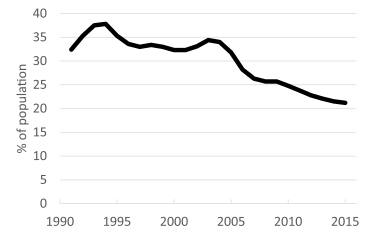
Source: ECA, based on data of the World Bank, World Development Indicators, October 2019.
Annex II – Figures and tables on Kenya’s economy
Figure 6
Share of economic sectors in the GDP from 2006 to 2016

Source: ECA, based on data of the World Bank, World Development Indicators, Share of economic sectors in Kenya’s GDP.
Table 3
GDP per sector (percentage of GDP at current prices)
| 2011 | 2016 | 2017 | |
| Agriculture, forestry, fishing and huntingof which fishing | 29.3 0.8 |
35.6 0.8 |
31.5 0.5 |
| Mining and quarrying of which oil |
1.0 – |
0.9 – |
0.8 – |
| Manufacturing | 13.1 | 10.0 | 8.4 |
| Electricity, gas and water | 2.1 | 2.6 | 2.5 |
| Construction | 4.9 | 5.5 | 5.8 |
| Wholesale and retail trade; repair of vehicles; household goods; restaurants and hotels of which restaurants and hotels |
10.5 1.5 |
8.7 0.8 |
8.4 0.8 |
| Transport, storage and communication | 9.8 | 9.6 | 9.1 |
| Finance, real estate and business services | 15.2 | 14.7 | 14.9 |
| Public administration and defence, security | 4.7 | 4.4 | 4.3 |
| Other services | 9.4 | 7.9 | 14.3 |
| Gross domestic product at basic prices / factor cost | 100.0 | 100.0 | 100.0 |
Source: AfDB 2018 African Economic Outlook.
Table 4
Current account balance (percentage of GDP)
| 2009 | 2014 | 2015 | 2016 | 2017(e) | 2018(p) | 2019(p) | |
| Trade balance Export of goods Import of goods |
− 13.4 12.2 25.6 |
− 17.4 10.1 27.6 |
− 13.1 9.4 22.5 |
− 11.2 8.1 19.3 |
-11.9 7.7 19.6 |
− 11.7 7.0 18.7 |
− 12.3 7.3 19.6 |
| Services | 2.9 | 2.7 | 2.1 | 2.4 | 2.7 | 2.7 | 3.1 |
| Factor (primary) income | − 0.4 | − 1.4 | − 1.1 | − 1.0 | − 1.2 | − 1.0 | − 0.9 |
| Current transfers | 6.2 | 5.7 | 5.4 | 4.6 | 4.3 | 4.4 | 4.9 |
| Current account balance | − 4.6 | − 10.4 | − 6.7 | − 5.2 | -6.1 | − 5.6 | − 5.2 |
Source: ECA, based on AfDB 2018 African Economic Outlook.
Figure 7
EU-Kenya trade

Source: ECA, based on data from European Union, Trade in goods with Kenya, Eurostat.
Figure 8
Unemployment in Kenya and Economic Vulnerability lndex
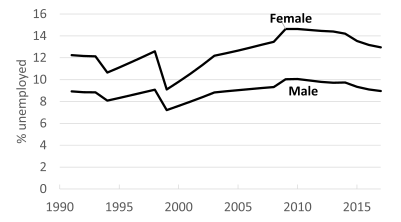
Source: ECA, based on World Bank World Development Indicators, October 2019.
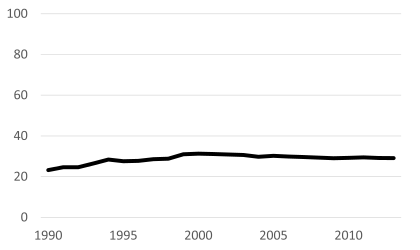
Source: ECA, based on Fondation pour les études et recherches sur le développement international (Ferdi) retrospective economic vulnerability index, 2015 update.
Annex III – List of audit interviews
We met the following organisations during our audit mission to Kenya, 4-14 February 2019:
- German Chamber of Commerce
- French Chambers of Commerce
- German Business Association Kenya
- American Chamber of Commerce
- Ministry of Foreign Affairs
- National Treasury (NAO)
- Ministry of Transport, Infrastructure, Housing and Urban Development
- Ministry of Agriculture
- Ministry of Information, Communication and Technology
- Konza Technopolis Development Authority
- European Investment Bank (EIB)
- Kreditanstalt für Wiederaufbau (KfW)
- African Development Bank (AfDB)
- Agence française de développement (AFD)
- Representatives of Denmark, France, Germany, UK, the Netherlands, Italy and Sweden
- USAID Kenya
- World Bank, regional office
- Food and Agriculture Organization (FAO)
- Kenya Association of Manufacturers
- Kenya Plant Health Inspectorate Service (KEPHIS)
- Visits to roads projects, visits to drought and agriculture projects
- Representatives of Kenya Highways Authority: KENHA
- Representatives of Marsabit, Isiolo and Laikipia Counties
- Representatives of Kenya Wildlife Service (KWS)
- Representatives of Anolei Women’s Cooperative, Loglogo Girls Secondary School, Isiolo Girls High School, Kamboe Primary School, Livestock Vaccination Programme
Furthermore, independent experts from the following organisations participated in a workshop to discuss the relevance of the EU’s choice of focal sectors:
- Critical Mass (cycling awareness group)
- Flone Initiative (supporting women in the transport sector)
- Kenya Alliance of Resident Association
- Kenya Institute for Public Policy Research and Analysis (KIPPRA)
- Kenya National Commission on Human Rights
- Kenya Red Cross Society
- Institute for Development Studies, University of Nairobi
- World Bank
- Amnesty International Kenya
Annex IV – Perception of corruption in Kenya
| 67 % | Think corruption increased in the previous 12 months |
| 45 % | Of public service users paid a bribe in the previous 12 months |
| 71 % | Think their government is doing a bad job of tackling corruption |
| 54 % | Think that ordinary citizens can make a difference in the fight against corruption |
Table 5
Citizens’ views and experiences of corruption
| Bribery rates1 | 2015 | 2019 |
| Overall bribery rate | 37 % | 45 % |
| Public schools | 9 % | 14 % |
| Public clinics and health centers | 11 % | 18 % |
| IDs | 39 % | 38 % |
| Utilities | 20 % | 35 % |
| Police | 49 % | 48 % |
| Has corruption level changed in the previous 12 months? |
2015 | 2019 |
| Increased | 64 % | 67 % |
| Decreased | 18 % | 18 % |
| Stayed the same | 14 % | 10 % |
| Don’t know | 4 % | 5 % |
| Refused to answer | 0 % | 0 % |
| Can ordinary people make a difference in the fight against corruption? |
2015 | 2019 |
| Yes | 58 % | 54 % |
| No | 35 % | 36 % |
| Neither yes nor no | 6 % | 5 % |
| Don’t know/Refused to answer | 2 % | 5 % |
| Corruption by institution2 | 2015 | 2019 |
| President/Prime Minister | 27 % | 36 % |
| Members of Parliament | 45 % | 47 % |
| Government officials | 46 % | 47 % |
| Local government officials | 36 % | 45 % |
| Police | 75 % | 66 % |
| Judges and Magistrates | 33 % | 28 % |
| Religious leaders | 13 % | 12 % |
| NGOs | - | 16 % |
| Business Executives | 38 % | 31 % |
| Traditional leaders | 12 % | 14 % |
| Is the government doing a good or bad job of fighting corruption? | 2015 | 2019 |
| Good | 27 % | 25 % |
| Bad | 70 % | 71 % |
| Don’t know | 3 % | 4 % |
| Refused to answer | 0 % | 0 % |
1 Based on people who used these public services in the previous 12 months
2 Percentage who think that most or all people in these institutions are corrupt
Source: ECA based on “Global corruption barometer Africa 2019 citizens’ views and experiences of corruption”.
Annex V – Comparison of country allocations under the 10th and 11th EDF
Figure 9
11th EDF final allocations compared to 10th EDF final allocations (after approval by MS)

Source: ECA, based on DEVCO’s 11th EDF allocation spreadsheet.
Annex VI – Actions financed under the 10th EDF
| Sub-sector | Description | million euros contracted | % of total allocation |
| Infrastructure | |||
| Road Building | Merille River to Marsabit Road, Rural roads in the Eastern Region of Kenya, missing link roads and non-motorised transport (NMT) facilities in Nairobi, Upgrading of Roads to and within the Mt. Kenya National Park and Aberdare National Park, and Construction of a bridge over Galana River, Tsavo East National Park. | 177.6 | 45.4 % |
| Agriculture and Rural Development | |||
| Development of the Agriculture sector | Agricultural Productivity Research (ASAL), The Sorghum Value Chain Development, Re-introduction and Commercialization of Cassava for Improved Livelihoods through Whole Value Chain Model, Coffee Productivity, Livelihood diversification through sorghum and green gram value chain development, Kenya cereal enhancement programme, and Increased productivity and profitability of smallholder farmers through promotion and up – scaling of GAP and CA in productive Semi-Arid areas. | 46.2 | 11.8 % |
| Drought Risk Management | Samburu Pastoralists Livelihood Improvement, Enhanced Community Resilience to Drought through Innovative Market Based Systems, Improved Community Drought Response and Resilience, The Community Environment Facility II, ASAL Drought Management, Promote and Strengthen Enterprises and Market Systems in Drought-Prone ASAL Areas, Sustainable Livelihoods Through Value Chain Development for Pastoral Communities in Turkana, Index Based Livestock Insurance, Science to inform design of community-level actions and policy decisions, Improving the quality and quantity of ecosystem services, The Water Towers Protection and Climate Change Mitigation and Adaptation Programme, and Independent Fact Finding Mission to the Embobut Forest. | 40.4 | 10.3 % |
| Drought Resistance and Resilience |
Drought Contingency Fund | 9.7 | 2.5 % |
| Institution Building | Technical Assistance to the NDMA, and the Drought Management in the ASAL region | 14.4 | 3.7 % |
| Rural Development | Community Development Initiatives | 19.2 | 4.9 % |
| Governance, Trade and Cooperation | |||
| Support to Devolution | Various projects to support devolution and local economic development | 17.6 | 4.5 % |
| Support to civil society | Strengthening civil society to participate more effectively in democratic governance and reforms, Bridging Divides through Accountable Governance Programme. | 4.0 | 1.0 % |
| Elections | Support to Electoral Reform and the Constitutional Referendum Process | 2.4 | 0.6 % |
| Legal and judicial support | Technical Assistance to Ministry of Justice | 0.9 | 0.2 % |
| Trade and Private Sector Development | Support to Negotiations of Comprehensive EPA, EU Kenya Standard and Market Access Programme (SMAP) - Private sector component of SMAP, KEPHIS component of SMAP, SMAP (KEBS), SMAP (DVS), Technical Assistance to SMAP, Supply of Laboratory Equipment for KEBS, DVS and KEPHIS, Administration Agreement with World Bank. | 14.1 | 3.6 % |
| Technical Cooperation | Technical Assistance Projects to various Government Ministries | 7.4 | 1.9 % |
| Not contracted | 37.4 | 9.6 % | |
| Total | 391.4 | 100.0 % | |
Source: ECA, based on Commission data.
The Merille-Marsabit road (EDF contribution: €88 million representing 22 % of the 10th EDF and 50 % of the ‘Transport infrastructure’ sector) was the last section of the 1 495 km highway linking Nairobi to Addis Ababa in Ethiopia. The objective of this project was higher sustainable and equitable economic growth. This objective was reflected not only in trade and GDP growth indicators, but also the Gini co-efficient (a measure of inequality) and poverty head count, employment rate, passenger comfort and road safety which suggests a stronger social component.
The tourist roads in national parks (EDF contribution: €13 million) focused primarily on increasing the number of visitors to national parks, for instance by the upgrading of access roads in Mount Kenya National Park and Aberdares National Park.
The projects to improve urban roads in Nairobi (EDF contribution €31 million) focused on equitable economic growth through improvement of traffic operations and traffic management within Nairobi city and its outskirts. Beyond the institutions targeted for capacity building, a wide spectrum of social and economic actors are expected to benefit from increased accessibility, reduced transport costs, private sector development and employment opportunities. Examples of indicators used for the project were: GDP growth rate, the Gini coefficient, trade figures, poverty head count, unemployment rate, reduction of pollution and increased comfort and safety.
The objective of the cereal enhancement programme (EDF contribution: €27.1 million) was to support smallholder farmers in graduating from subsistence agriculture to commercial agriculture by improving yields of a number of crops.
The purpose of the Agricultural Productivity project (EDF contribution: €4 million) was to improve the welfare of households in arid and semi-arid land (ASAL) regions by improving productivity, the marketing of produce and income levels. It aimed to reduce the number of pastoral livestock farmers living below the poverty line and reduce the proportion of children with nutrition-related deficiencies.
The actions focusing on Good Agricultural Practice (EDF contribution: €9.5 million) aimed to support smallholders, primarily in subsistence agriculture, in increasing their productivity.
The purpose of the Drought Contingency Fund (EDF contribution €9.7 million) was to speed up the response to drought episodes with a view to protecting Kenya’s existing asset base by creating a funding reserve in advance that could be deployed without waiting for aid pledges to be met. This is expected to improve the drought resilience of ASAL communities and reduce the number of people requiring food assistance.
The objective of the projects under Livelihood Support (EDF contribution €1.7 million) was to promote diversification of livestock farming, facilitate robust markets for livestock and livestock products and consolidate the knowledge base to enhance climate change and market orientation.
The Standards and Market Access Programme (SMAP) (EDF contribution €12.1 million) in the “Accountability of public institutions” sector, aimed to strengthen the legal framework and institutional infrastructure for testing and certification of plant and animal-based products. While one of the project’s aims was to support exports, the stakeholders benefiting from laboratory testing of products also included smallholder farmers.
Annex VII – Actions financed under the 11th EDF
| Sustainable Infrastructure | ||||
| EDF No | Sub-sector | Description | € million contracted | % of total allocation |
| EDF11 | Energy and transport | Support to Kenya Energy and Transport Sectors | 12.8 | 2.9 % |
| Infrastructure | Contribution to the African Investment Facility to support the Kenya Energy and Transport sectors- Mombasa Port |
19.6 | 4.5 % | |
| Transport | Urban Mobility programme | - | 0.0 % | |
| Energy | Contribution to the Africa Investment Platform (AIP) in support of the Energy Sector in Kenya | 7.0 | 1.6 % | |
| Rural roads | Climate proof rural roads, through blending through the African Investment Facility-AFIF (with AFD). | 30.0 | 6.9 % | |
| Total sector | 69.3 | 15.9 % | ||
| Food security and resilience to climate shocks | ||||
| EDF No | Sub-sector | Description | € million contracted |
% of total allocation |
| EDF11 | Development of the Agriculture sector |
Support to the agricultural transformation process and to decentralised land governance |
15.8 | 3.6 % |
| Drought Risk Management | Ending Drought Emergencies: Support to drought risk management and coordination | 29.7 | 6.8 % | |
| Drought Resistance and Resilience | Ending Drought Emergencies: Climate proofed infrastructures for improved water supply and sanitation in ASAL |
19.3 | 4.4 % | |
| Drought Resistance and Resilience | Ending Drought Emergencies:-Support to resilient livelihoods and drought risk management |
30.1 | 6.9 % | |
| Development of the Agriculture sector |
Agri-biz: Decent jobs for Youth and Women in Agricultural Value Chains in Kenya | 23.2 | 5.3 % | |
| Development of the Agriculture sector |
Agri-Fi: Support to productive agriculture | 45.0 | 10.3 % | |
| Total sector | 163.0 | 37.5 % | ||
| Accountability of Public Institutions | ||||
| EDF11 | Electoral assistance | Long Term Elections Assistance Programme (LEAP) | 5.0 | 1.1 % |
| Rule of Law | Programme for Legal Empowerment and Aid Delivery (PLEAD) | 29.1 | 6.7 % | |
| Public Financial Management | Public Accountability and Service Delivery (PASEDE) | 26.0 | 6.0 % | |
| Total sector | 60.1 | 13.8 % | ||
| Support measure | ||||
| EDF11 | Support measure | Support measure | 2.9 | 0.7 % |
| Cooperation and dialogue |
Cooperation and dialogue facility | 5.0 | 1.1 % | |
| Total sector | 7.9 | 1.8 % | ||
| TOTAL | 300.4 | 69.0 % | ||
Source: ECA, based on Commission data.
Glossary
Agenda for Change: The EU’s blueprint for development policy, which introduces a series of key principles and priorities to improve the impact and effectiveness of assistance.
Blending: Combining loans and grants with the purpose of mobilising additional capital.
Development programming: A decision-making process during which the European External Action Service and the Commission establish aid strategies, priorities and allocations.
EU Delegation: A European Commission structure representing the interests of the EU and its citizens in host countries around the world.
European Development Fund: The main instrument with which the EU provides development aid to the African, Caribbean and Pacific States and the overseas countries and territories.
European Investment Bank: The EU’s bank, which is owned by and represents the interests of the EU Member States. It works closely with the other EU institutions to implement EU policy.
Impact indicator: A measurable variable providing information on the long-term consequences of a completed project or programme, which may be socio-economic, environmental or financial.
Input indicator: A measurable variable providing information on the human, financial, physical, administrative and regulatory means used to implement a project or programme.
Millennium Development Goals: Global targets to reduce poverty and its manifestations by 2015. Set by world leaders and major development institutions at the UN Millennium Summit in September 2000.
Outcome indicators: A measurable variable that provides information for evaluating the consequences of outputs for beneficiaries.
Output indicator (also called process indicator): A measurable variable that provides information for evaluating something produced or achieved by a project or programme.
Poverty: The state in which an individual lacks the resources to meet basic subsistence needs and is denied the opportunity to participate in society.
Result: The immediate effect of a project or programme upon its completion, such as the improved employability of course participants or improved accessibility following the construction of a new road.
Sustainability: The ability of a development project to sustain its results for as long as required (i.e. the quality of being sufficiently well established, self-sufficient and/or funded to continue).
List of abbreviations
ACP: African, Caribbean and Pacific States
AFD: Agence française de développement
AfDB: African Development Bank
ASAL: Arid and semi-arid lands
CA: Conservation agriculture
DCI: Development Cooperation Instrument
DEVCO: Directorate-General for Development and Cooperation
DG: Directorate-General of the European Commission
ECHO: Directorate-General for Humanitarian Aid and Civil Protection
EDF: European Development Fund
EEAS: European External Action Service
EIB: European Investment Bank
EVI: Economic vulnerability index
FAO: Food and Agriculture Organization of the United Nations
GAP: Good agricultural practice
GDP: Gross domestic product
HAI: Human asset index
ICT: Information and communication technology
ILO: International Labour Organization
IMF: International Monetary Fund
IPP-GAP: Increased productivity and profitability and good agricultural practices in semi-arid areas
KEBS: Kenya Bureau of Standards
KEPHIS: Kenya Plant Health Inspectorate Service
LDC: Least-developed country
LIC: Low income country
LMIC: Low and middle-income countries
NDMA: National Drought Management Authority
NGO: Non-governmental organisation
NIP: National indicative programme
ODA: Official development assistance
OECD: Organisation for Economic Cooperation and Development
PPP: Public-private partnership
SMAP: Standards and Market Access Programme
TFEU: Treaty on the Functioning of the European Union
UN: United Nations
WGI: Worldwide governance indicators
Replies of the Commission and the European External Action Service
Executive summary
Kenya is a functioning democracy, the largest and most diversified economy in East Africa and a regional hub for transport, finance and trade. It became a lower-middle-income country in 2014, the only one in East Africa together with Sudan. Kenya is a troop contributor to the African Union's peacekeeping mission in Somalia (AMISOM) and it is hosting around 0.5 million refugees from Somalia and South Sudan. Kenya is a strategic country in the wider Horn of Africa with which the EU shares interests, liberal and democratic values, and multilateral agendas. It has the potential to play a stabilising role in the region.
Democracy in Kenya remains fragile and the country is faced with persistent inequalities, ethnic divide and governance issues, such as corruption and electoral violence. These must be addressed, as they can hinder both the prevalence of rule of law and economic development in the country. Following his re-election in 2017, President Uhuru Kenyatta launched an ambitious development plan - his "Big Four" agenda, stepped up the fight against corruption - leading to the arrest of a number of high-profile politicians, and initiated a reconciliation plan with the opposition leader.
In this context, and after having experienced some difficult moments during the 2017 general elections in Kenya, the EU is willing to upgrade its relations with this country. Through its dialogue and cooperation, the EU has already contributed to Kenya’s economic and social progress. The EU is now looking to establish with Kenya a partnership, expanding investments in support of the Big Four agenda; deepening dialogue and cooperation on issues of common interest, such as sustainable, job-creating development, countering terrorism or addressing climate change; and allying on peace and security in the wider region and on multilateral agendas.
With support from the EU cooperation, Kenya has experienced considerable economic, social and institutional progress.
- The proportion of Kenyan living below the international poverty line (USD 1,90 per day in 2011 PPP) has declined from 43,6% in 2005/2006 to 35,6% in 2015/2016. Poverty incidence is among the lowest in East Africa and is lower than the regional average of Sub-Saharan Africa.
- In the latest World Bank ranking on Ease of Doing Business 2020, Kenya's attractiveness to investors has improved another 6 places to position 56 out of 190 economies. The third-time improvement led Kenya from position 92 in 2017, position 80 in 2018 and position 61 in 2019. In 2019, the EU Ambassador led a business meeting with President Kenyatta that gave private sector representatives the opportunity to voice their concerns and call for reforms.
- The European Union has been working relentlessly for gender equality, in particular on the political scene. In 2010, Kenya adopted a new constitution that radically changed the organisation of its political institutions. Key among its provisions were clauses for greater gender representation. The European Union continues to support initiatives that aim to foster gender equality. In 2019, the European Union for example, partially financed the very successful TV reality show ‘Ms President’.
Introduction
Paragraphs 08-10 – Development aid
The EU development policy is to be conducted within the framework of the principles and objectives of the Union’s external action. Article 21 of the Treaty includes among the objectives of the EU external action to (d) foster the sustainable economic, social and environmental development of developing countries, with the primary aim of eradicating poverty. Article 208 of the Treaty on the Functioning of the European Union (TFEU) states that the primary objective of EU development cooperation policy is the reduction and, in the long term, the eradication of poverty.
The Council Regulation (EU) 2015/322 of 2 March 2015 on the implementation of the 11th European Development Fund (EDF), establishing that EDF cooperation should contribute to:
- fostering sustainable and inclusive economic, social and environmental development;
- consolidating and supporting democracy, the rule of law, good governance, human rights and the relevant principles of international law; and
- implementing a rights-based approach encompassing all human rights
Therefore, the EU development cooperation takes into consideration the balance of complex objectives to be sought in development policy.
The Commission and the EEAS consider it important that the EU development aid to Kenya is assessed in the framework of the legal framework of the EU development cooperation
Observations
Paragraphs 25-36 – allocation of EDF in general
Paragraphs 27-32 – The Commission allocated 90 % of EDF funds to Kenya using a standardised approach applied to all ACP countries.
The methodology used to allocate funds to EDF countries is part of the overall programming process and not a separate exercise.
The Commission and the EEAS have allocated funds to Kenya based on the assessment of the country’s needs, capacities and performance articulated through a quantitative and a qualitative analysis in line with the criteria set in the Agenda for Change and the Cotonou Agreement. The Commission and the EEAS recall that establishing each country’s development priorities and estimating (and comparing) funding gaps was outside the objective of the allocation methodology.
Any financial allocation method requires comparable assessments. The specific needs and past performance of Kenya were reflected in the indicators that were chosen for the allocation model. The qualitative adjustment gave an additional opportunity to capture the specific assessment of the country and to adjust the initial allocation up to 25%, and it resulted in a 10% adjustment in the case of Kenya. The Member States reviewed the final assessment and considered it appropriate, as no further adjustment was proposed.
The Commission and the EEAS have assessed and compared countries by using comparable indicators of need (taking into account, inter alia, economic and social/human development trends and the growth path as well as vulnerability and fragility indicators) capacity and performance as requested in the Cotonou Agreement and the Agenda for Change as follows:
- Population (P); Positively correlated: the higher the population, the larger the allocation.
- Gross National Income per capita (GNI p/c), an indicator of need and capacity and a proxy of poverty; Negatively correlated: the higher the GNI per capita, the lower the allocation.
- Human Asset Index (HAI), an indicator of need reflecting the state of human development in a country in close relation with Millennium Development Goals (MDG); Negatively correlated: the higher the HAI per capita, the lower the allocation.
- Economic Vulnerability Index (EVI), an indicator of vulnerability and fragility that measures structural constraints to growth represented by the exposure to and the incidence of exogenous shocks; Positively correlated: the higher the vulnerability, the larger the allocation.
- World Governance Indicators (WGI), an indicator of commitments, performance and impact that aggregates six dimensions of governance: therefore, governance, rule of law and control of corruption are featured in the formula and weaknesses in the rule of law and in control of corruption had a negative impact on Kenya allocation.
As most of the above indicators are composite, Kenya was assessed in many dimensions of needs and performance, and compared on these with the other ACP countries:
- The value produced by the economy per capita;
- Undernourished population;
- Mortality rate for children aged five years or under;
- Gross secondary school enrolment ratio;
- Adult literacy ratio;
- The remoteness of the country;
- Merchandise export concentration and the instability of exports of goods and services;
- Shares of agriculture, forestry and fisheries in the economy and the instability of Agricultural production;
- Share of population in low elevated coastal areas: victims of natural disasters
- Voice and Accountability;
- Political Stability and Absence of Violence; Government Effectiveness;
- Regulatory Quality;
- Rule of Law;
- Control of Corruption.39
Relatively poor performance in rule of law and control of corruption has lowered the allocation to Kenya but they did not reduce it to zero as performance in governance interacts with other criteria of need and capacity. The objective of the allocation was not to exclude countries from future bilateral cooperation based on a single indicator or a subset of indicators. This would not be in line with the Cotonou Agreement. Countries’ commitment to structural change is an undefined criteria that was not foreseen in policy guidance.
In parallel to the allocation process, EU Delegations analysed partner country needs and development objectives as per their National Development Plans. In the case of Kenya, the country development strategy: “Vision 2030” is integrated in the National Indicative Programme (NIP) hence a comprehensive needs assessment for the country was carried out.
Paragraphs 32-36 – Countries with large population such as Kenya received proportionally less funding
The objective of the allocation was to assign more funds to the countries most in need, as established in the Agenda for Change. This objective was achieved with an increase of allocations to least developed countries (LDCs) and low-income countries (LICs) and a reduction of allocations to upper-middle income countries (UMICs) and high-income countries (HICs), as acknowledged by ECA. The objective was not to replicate the 10th EDF allocation, as is demonstrated by the fact that the 11th EDF allocations differed from the 10th EDF ones (see Annex V).
Kenya received proportionally less funding because it is among the five most populated ACP countries. Capping the population is a common practice in aid allocation models, such as the performance-based allocation used by multilateral development banks. This is essential “to avoid that the most populated countries receiving large shares of the total amount of aid”40.
Furthermore, the Commission does not use equalising “aid per capita” as a criterion for aid allocation and does not consider obtaining similar levels of aid per person across all countries to be an ideal benchmark for aid allocation. This approach would also ignore the economies of scale dynamics in official development assistance (ODA).
Paragraphs 37-67 – programming of the 11th EDF in Kenya
Paragraphs 37-40: “Agenda for Change”
The Commission’s programming guidelines indicate that to reach a critical mass when selecting a sector, one needs to consider knowledge, human resources (including capacity for policy dialogue) and financial resources. The Agenda for Change frames the programming by committing to increase resources for i) good governance, human rights and democracy and ii) Inclusive and sustainable economic growth for human development. Under this second priority, the Agenda for Change focuses on social protection, health and education, a stronger business environment and deeper regional integration and sustainable agriculture and energy.
Inclusive and sustainable economic growth is crucial to long-term poverty reduction and growth patterns are as important as growth rates. To this end, the EU aims to encourage more inclusive growth, characterised by people’s ability to participate in, and benefit from, wealth and job creation. The promotion of decent work covering job creation, guarantee of rights at work, social protection and social dialogue is vital.
Paragraphs 41-47 – The reasoning behind sector selection is not sufficiently clear
The Commission and the EEAS selected the focal sectors to support in 2014, based on Kenya’s national development plan (“Vision 2030”) and its implementing programmes known as Medium Term Plan. For the selection of the agriculture and transport subsectors, the Evaluation of the European Union’s Co-operation with Kenya 2006-2012, which had already progressed far at the time of the formulation of the National Indicative Programme (NIP) of the 11th EDF, provided additional reasoning on why support to those areas had a significant poverty reduction potential and effect and should therefore be continued. The European Union adjusted the 11th EDF NIP in 2018 to the Big Four agenda, by re-orienting the first focal sector related to agriculture to “Job creation and resilience”.
Concerning the agriculture sector, Kenya’s biggest comparative advantage could be enhancing agricultural value chains into processing. The Commission wishes to note that this has been the focus of two projects funded form the 11th EDF called Support to productive, adapted and market integrated smallholder agriculture, including a contribution to the Africa Investment Facility (AgriFi) and "Agri-biz: Decent jobs for Youth and Women in Agricultural Value Chains in Kenya" (AgriBiz).
The Commission and the EEAS agree that urbanisation and population growth are main drivers requiring the creation of jobs in and around cities. It should be noted, however, that a significant amount of support was scheduled towards improving urban infrastructure (10th EDF: Missing Links- Nairobi Urban Roads; 11th EDF: Nairobi Urban Mobility Programme), and thus targeted removing one of the main obstacles towards unlocking Nairobi’s full potential for job creation. The Commission would also like to underline that job creation cannot only materialise in manufacturing but also in services. One of Nairobi’s key service sectors is financial services. EU support targeting access to finance in agriculture and energy (an important element in EDF 11 NIP) has a direct beneficial impact on it.
The Commission and the EEAS support business environment reforms through its engagement with the local private sector and the Government of Kenya, promoting transparent and fair procurement processes and investment decisions that provide opportunities for the local manufacturing sector, such as the EDF 10 programme Standards and Market Access Programme (SMAP).
The Commission agrees with the ECA that Kenya’s ICT sector is dynamic and has a significant job creation potential. For this reason, the Commission’s Executive Vice President Margrethe Vestager visited Kenya in early 2020, which was followed up with a joint EU Delegation/UN encounter with Kenya’s ICT Minister. Overall this sector is being given due consideration in the EU’s current pre-programming phase for a successor instrument to the 11th EDF.
Para. 48-50 – Donor coordination had limited influence in the choice of focal sectors
The Commission and the EEAS would like to stress that it is very closely cooperating with other donors in sector working groups. They were thus well aware, as also demonstrated by the NIP’s donor matrix, of the priorities of other donors. Cooperation with other donors has influences the Commission and EEAS choice of focal sectors. While the Commission’s combined National Indicative Programme (NIP), Regional Indicative Programme (RIP) and thematic interventions constituted a comprehensive response and reached substantial amounts, alone they would have faced a risk of falling short of needs, which were too big for any individual development partner. However, the combined effect of efforts by various Development Partners enhanced the impact of each Development Partner.
While it is correct that the Joint Cooperation Strategy published in 2015, as a document, could not influence the programming of the National Indicative Programme of the 11th EDF performed a year earlier, this should not veil the fact that close cooperation between EU Member States and the dynamics resulting in the Joint Cooperation Strategy existed already in 2014. Thus, the formulation of the National Indicative programme of the 11th EDF took into account not only the specific areas in which EU Member States (including Member States’ Development Finance Institutes) as well as the European Investment Bank were active, but also the varied planning horizons. For example, with respect to supporting agriculture, Commission Decision C (2015)7454 final, taken in the framework of the implementation of the 11th EDF, stipulates the continuation of joint policy support in the agricultural sector. This joint policy support in the agricultural sector started during the 10th EDF between EU, Germany and Sweden. This Decision influenced the choice of sectors for 11th EDF.
Para. 51-55 – Aid for agriculture supported food security, but not enough focusing on sector’s growth and productivity
The Commission and the EEAS wish to highlight that several studies prove that the poverty reduction potential of investments in the agriculture sector in Africa is higher than in all other sectors. For instance, the World Bank has estimated that “participation effect of agricultural growth (to poverty reduction) is on average 1.5 to 2 times larger than that of the non-agricultural sectors”41). Following the 2017 Mid-Term Review of the 11th EDF, the sector was reoriented from ‘Food security and resilience to climate shocks’ to ‘Job creation and resilience’ and the allocation to the sector was increased to EUR 228.5 million. Therefore, EU support to Kenya was adjusted precisely to address the issues of job creation for the youth in Kenya, support to the agro-industry and agro-processing. For instance, as of May 2020, the programme AgriFi Kenya provided grants to 14 companies, co-financing business plans targeting 124,545 smallholder farmers, with the target of creating at least additional 10,000 direct jobs.
The Commission also wishes to underline that a large part of NIP funds have been focusing on agriculture growth and productivity. Out of EUR 145,5 million, more than half of the funds allocated to the first focal sector (60%) supported the sector’s growth and productivity (a minimum of EUR 88,5 million through the blending AgriFi programme (EUR 45 million) & the blending AgriBiz programme (EUR 43,5 million). In addition, EUR 36,6 million are still under implementation from 10th EDF, Kenya Cereal Enhancement Programme (KCEP) and Improved Productivity and Profitability and Good Agricultural Practice in ASAL areas (IPP-GAP) that also contribute to growth and productivity in the agriculture sector.
Para. 56-62 – Aid for infrastructure relevant but the plans are not realistic in light of the available funding
The focal sector sustainable infrastructure was selected based on experience gathered during the 10th EDF, the then-ongoing evaluation of the EU Support to Kenya 2006-2012 and strong views held by the partner country government showed that its impact on economic growth was high.
The Commission agrees with the ECA that EUR 175 million is too little compared to the needs in the infrastructure sector. However, the 11th EDF NIP was developed with the knowledge that (a) other EU funds were coming into these areas through thematic and regional programmes42, and that blending would significantly leverage the impact of EU grants; (b) EU Member States’ actions would enhance the EU’s footprint; (c) other Development Partners would also come in with their funding. If the needs for a key sector are too big for a Development Partner on its own, the only way forward is to pool resources, applying one of the Agenda for Change’s main themes, Partnership.
The amount of EU support to energy and transport infrastructure in the National Indicative Programme (EUR 175 million) must be aggregated with funds coming from the EU’s thematic and regional programmes; which multiplied the effect by blending with loans from Development Finance Institutes (DFI). The blending modality, leveraging EU grants with DFI loans, was also foreseen to be the preferred implementing modality in the National Indicative Programme of the 11th.
In addition, the Commission underlines that when considering new funding modalities such as blending and budgetary guarantees, one should consider the financial resources leveraged and not just the grant component used (or funds provisioned in the case of guarantees). The ECA report focuses on the grant component only when addressing blending operations, thus missing the leverage effect of these funds which can reach a factor of ten. It is important to underline this as it is in line with the Addis Ababa Action Agenda and the objective of leveraging private sector funds in order to bridge the currently existing funding gap to reach the Sustainable Development Goals (SDG).
Last but not least, the Commission and the EEAS wish to reiterate that the European Union does not work in isolation and that its funds are complementary to the ones allocated by other donors. To improve synergies, the European Union engaged in a joint programming exercise in Kenya with EU Member States represented in the country and the European Investment Bank.
Para. 63-67 – Aid to the governance sector did not focus directly on fight against corruption
The Commission and the EEAS agree that corruption is one of the biggest obstacles to Kenya’s development, however it is a deeply rooted societal challenge that cannot be tackled head on. Supporting electoral systems to introduce the emergence of issues based politics, promoting access to justice, and increasing transparency of public finances are important aspects to work on to help Kenyan society to transition out of a social contract driven by corruption and patronage to a modern functioning democracy.
With respect to the choice to focus on access to justice for the poor and alternatives to imprisonment, the choice was clearly made in line with the EU policy on justice and human rights. The decision took into account the lack of meaningful access to justice for the poor in the country, the inhuman conditions and the overcrowding in the Kenyan detention and prison facilities, due to the extensive and often abusive resort to pre-trial detention.
The EU’s intervention on justice in Kenya also aimed at enhancing the quality and efficiency of the criminal justice system, including capacity building and organisational development for the Office of the Director of Public Prosecution (ODPP). In principle, strengthening the criminal justice system/chain and, in particular, the ODPP should enable the partner country to upgrade their capacities to investigate and prosecute criminal cases, including corruption cases.
Furthermore, the EU’s support to Kenya focused on public finance management. It has been demonstrated that improvements in public finance management are associated with improvements in perceptions of corruption, after controlling for other factors. Improving controls of public finance management appear to be more important than improving transparency. Therefore, strengthening public finance management - budget execution, accounting, audit and oversight - has an influence on corruption and is a reasonable target of reforms when the objective is to curb corruption.
The European Union also contributed to the fight against corruption through diplomatic activities. EU Ambassadors regularly raised it when meeting counterparts at all levels of the Government of Kenya and in particular on the occasion of the article 8 dialogue. Finally, President Kenyatta’s fight against corruption launched after his re-election in 2018 should be acknowledged.
Last but not least, the Commission and the EEAS would like to underline that corruption is not the only indicator of a country’s commitment to structural reforms. In the latest World Bank ranking on Ease of Doing Business 2020, Kenya's attractiveness to investors has improved another 6 places compared to the previous year, moving to position 56 out of 190 economies, whereas in 2017 the country was in position 92 in 2017.
Paragraphs 68-78 – impact/achievements of the 10th EDF in Kenya
Para. 69-72 – EU support to roads improved access to basic services, but its contribution to economic development is not demonstrated
The Commission considers that EU support to roads improved access to basic services, and that this impact can be traced. The Merille-Marsabit road, built with EU funds, is a good example. The average daily traffic for the period December 2018 to January 2020 was 543 vehicles of all categories in both directions. That is an increase of about 22% from 2017, and by almost 400% since 2014. These data show a very significant impact on what was previously a strongly neglected and remote part of Kenya.
Most of the EU’s project partners acknowledge the strong economic transformative impact of the road. The camel milk factory, which was visited by the ECA, provided further corroborative evidence. The factory has expanded and increased its sales. Milk can now be transported to it from a much wider area, and will provide income to suppliers, precisely due to the EU funded road. This is a good illustration of the economic impact of the road on the region’s population.
The Commission acknowledges that absence of a road is only one of the barriers to trade between Ethiopia and Kenya. Other EU funded activities like the fuller operationalisation of the one stop border post in Moyale (funded through a programme of the Regional Indicative Programme of the 11th EDF ) or Commission initiatives like the current Horn of Africa Initiative (with World Bank and African Development Bank), which aims to overcome adverse effects of regional segregation, are addressing these other obstacles.
Para 73-76 – One third of Kenya’s 10th EDF aid supported smallholder farmers in ASAL regions, whose impact on Kenya’s overall economy is small
The Commission wishes to point out that Kenya’s 10th EDF aid in the agriculture sector had wider objectives than having an impact on Kenya’s overall economy. The Commission considers that the impact of projects should be assessed against their objective at the time of design and approval, which included improving food security, improving drought preparedness and resilience, and contributing to poverty reduction in rural areas, through enhanced productivity and access to markets.
The Commission agrees with the ECA that enhancing agricultural value chains into processing could contribute to increasing export earnings and creating jobs. The Commission wishes to reiterate that integrating smallholder farmers into agro-processing value chains has been the focus of the aforementioned AgriFi and AgriBiz projects.
Conclusions
The Commission and the EEAS consider that EU aid granted to Kenya was based on Kenya’s specific needs and directed primarily toward the EU global objective to reduce poverty as enshrined in the EU treaty. As resources are finite and in the context of development subject to volatility, choices need to be made in the programming phase and adapted during to implementation to care for external and internal shocks. These choices were rational, based on sound analysis and the existing strengths of EU cooperation, while also incorporating new areas and approaches and based on a partnership approach with Kenya whose Government requested and strongly supported the sectors chosen.
The ECA also recognises an impact in terms of building Kenya’s resilience in paragraph 69, 75 and 78 of its report. As a result, the Commission and the EEAS consider that the impact of programmes in terms of social welfare and national resilience should be acknowledged by the ECA. For instance, the series of programmes “Ending Droughts Emergency” aiming at strengthening the resilience of Kenya was so successful that the Government of Kenya decided to take over and finance the National Drought Management Authority (NDMA) from the State budget. The NDMA is now an agency of the Government of Kenya mandated to establish mechanisms which ensure that drought does not result in emergencies and that the impacts of climate change are sufficiently mitigated.
Recommendations
Recommendation 1 – Reconsider the approach for allocating EU development aidDepending on the outcome of the ongoing ordinary legislative procedure for the Neighbourhood, Development and International Cooperation Instrument (NDICI), the legal base proposed by the Commission for the next Multiannual Financial Framework (MFF) 2021-2027, the Commission and the EEAS accept recommendation 1.a) and do not accept recommendation 1.b).
In relation to recommendation 1.a), the Commission and the EEAS would like to highlight that the detailed determination of allocation of funds falls under the competence of the Commission to execute the budget and manage programmes (Article 17 of the Treaty of the EU), on the basis of criteria adopted by the co-legislators for this allocation - see allocation criteria in Article 11(2) of the “Proposal for a Regulation of the European Parliament (EP) and the Council establishing the Neighbourhood, Development and International Cooperation Instrument”, (NDICI)43.
In this setting, the Commission, as it did in the past, will duly inform the concerned EU institutions on the method of allocating funds between third countries, including ACP countries. It should be underlined that, since the Commission has proposed to integrate cooperation with ACP countries in the EU budget, the role of the European Parliament will be enhanced compared to its role under the European Development Fund, concerning in particular the legislative, budgetary and control powers. The exact modalities of the involvement of Member States under the NDICI committee, the Council and the European Parliament in the governance of the NDICI are still to be discussed in the legislative negotiations of the NDICI.
Regarding recommendation 1.b), the Commission and the EEAS do not accept it for two main reasons. Firstly, the Commission and the EEAS consider the meaning of “introducing specific conditions” unclear in the context of allocations, as countries’ performance and commitments were among the criteria used, together with needs and impact, in the allocation of the 11th EDF. Performance criteria included the rule of law and control of corruption as dimensions of governance.
Secondly, the Commission and the EEAS consider that the introduction of the concept of “conditionality” (as implied by the wording of the recommendation) goes beyond the criteria partner countries’ “commitments” or “performance” in the allocation of the future bilateral cooperation (based on a single or subset of indicators). This would not be in line with the Cotonou Agreement or, as regards the future, with the text proposed by the Commission under Article 11(2) of the NDICI, which provides that geographic programmes shall be based on:
“(a) the partners’ needs, established on the basis of specific criteria, taking into account the population, poverty, inequality, human development, economic and environmental vulnerability, and state and societal resilience;
(b) the partners’ capacities to generate and access financial resources and on their absorption capacities;
(c) the partners’ commitments and performance, established on the basis of criteria such as political reform and economic and social development;
(d) the potential impact of Union funding in partner countries and regions”.
The legislative negotiations for the adoption of the NDICI have not been concluded yet and the Commission and the EEAS, pending the outcome of these negotiations, are not in a position to accept this recommendation.
Recommendation 2 – Assess critical mass when selecting the focal sectors in KenyaThe Commission and the EEAS accept recommendation 2, with the understanding that critical mass is considered in terms of knowledge, human resources (including capacity for policy dialogue) and financial resources.
In the 2017 New European Consensus on Development, the EU and the Member States committed to strengthening cooperation by increasing the use of joint programming and joint implementation. In the proposed Neighbourhood, Development and International Cooperation Instrument (NDICI) under the next Multiannual Financial Framework joint programming is the preferred approach. The concept of critical mass will have to be viewed in the context of the joint EU and Member States effort towards a shared objective and not for a single organisation in isolation. Moving forward, the proposed NDICI will increase the capacity of budgetary guarantees, thus enhancing the Commission´s capacity to leverage private sector funds and to attain the critical mass.
Recommendation 3 – Prioritise sustainable economic development and the rule of law in KenyaThe Commission and the EEAS partially accept recommendation 3. The EEAS and the Commission will prioritise sustainable economic development in Kenya, but cannot commit, at the time of the audit, to prioritising rule of law and the sectors with the potential to attract foreign direct investments and grow exports. These sectors may not be where the biggest impact on poverty alleviation will be achieved and might be areas that other development partners may be better placed to support.
The Commission and the EEAS will continue to work with Kenya in the framework of the Lisbon Treaty and support poverty eradication and sustainable development, as also set out in the 2030 Agenda and its sustainable development goals (2030 Agenda) for all EU future international partnerships.
Furthermore, it should be noted that Article 12 of the proposed NDICI establishes that Multiannual indicative programmes (MIPs) shall set out the priority areas selected for Union financing and that these MIPs shall be built on:
“(a) a national or regional strategy in the form of a development plan or a similar document
or (b) a framework document laying down the Union policy towards the concerned partner or partners, including a joint document between the Union and Member States.”
In addition to the prioritisation of sectors according to the partner country’s National Development Plan and the priorities and interests of EU Member States as established by the NDICI, the Commission’s priorities in development cooperation for the next 5-year period include the Green Deal, digital and data technologies, migration partnerships, sustainable growth and jobs and governance, peace and security. In this context, the promotion of sustainable growth and decent jobs creation are among the priorities of EU current and future cooperation.
The Commission and the EEAS wish to underline that even in a low-middle income country like Kenya some funds should still be prioritised to strengthen the resilience of the country and support the poorest (including refugees and host communities). In addition, (i) it is not only the mobilisation of foreign direct investment; which counts but also the mobilisation of domestic resources (such as pension, funds) and of remittances for productive uses; (ii) the fight against marginalisation, inequality and poverty in disadvantaged areas should not be neglected.
Endnotes
1 African Development Bank, 2018 African Economic Outlook: Kenya Country Note, p. 1.
2 World Bank (2010) Demographic transition and growth in Kenya, Wolfgang Fengler.
3 World Bank (2016) Kenya Urbanization Review, p. 25.
4 World Bank Database: https://data.worldbank.org/indicator/SI.POV.DDAY?locations=KE.
5 Kenya National Bureau of Statistics: Kenya Integrated Household Budget Survey 2015/2016, pp. 44, 46 and 49.
6 World Bank Group: 2018 Kenya Ecomomic Update, p. 43 (years 2011 2018). World Bank Group (2016): Kenya Country Economic Memorandum: From Economic Growth to Jobs and Shared Prosperity, p. ix and 2 (years 2003-2014).
7 World Bank Group (2016): Kenya Country Economic Memorandum: From Economic Growth to Jobs and Shared Prosperity, p. ix and 2.
8 African Development Bank, 2018 African Economic Outlook: Country Note Kenya, p. 2.
9 World Bank Group, 2018 Kenya Economic Update, p. 5.
10 EU-Kenya cooperation, National Indicative Programme 2014-2020.
11 https://www.oecd.org/dac/financing-sustainable-development/development-finance-standards/official-development-assistance.htm
12 COM(2011) 637 final: Communication from the Commission to the European Parliament, the Council, the European Economic and Social Committee and the Committee of the Regions, “Increasing the impact of EU Development Policy: an Agenda for Change”.
13 The Cotonou Agreement expired in February 2020.
14 For the 11th EDF, Council Regulation (EU) 2015/322 of 2 March 2015 on the implementation of the 11th European Development Fund.
15 ECA Special Report No 21/2015: “Review of the risks related to a results-oriented approach for EU development and cooperation action”.
16 Agenda for Change, p. 9.
17 Tuvalu, for example, with the smallest LDC population of just 10 000, received €380 per person.
18 The cap applied to four LDC/LICs (Kenya, Tanzania, Congo DRC and Ethiopia) and one LMIC (Nigeria).
19 Instructions for the programming of the 11th European Development Fund (EDF) and the Development Cooperation Instrument (DCI) – 2014 2020, p. 2 of Annex II.
20 Instructions for the programming of the 11th European Development Fund (EDF) and the Development Cooperation Instrument (DCI) – 2014 2020.
21 Agenda for Change, p. 9.
22 Instructions for programming, p. 2 of Annex II.
23 Vision 2030 was adopted on 10.6.2008 and it covers the period 2008 2030. Medium Term Plans are made for five-year periods. The second Medium Term Plan covers 2013 2017, roughly the same period as the 11th EDF.
24 Simone Raudino. Development Aid and Sustainable Economic Growth in Africa. Chapter 3, pp. 79 129. See also Uchenna R. Efobi and Simplice Asongu (Ed.), Financing Sustainable Development in Africa, pp. 421 450. See also: Carol Newman (Ed.), Manufacturing transformation, pp. 1 23.
25 Dianah Ngui, Jacob Chege, and Peter Kimuyu. Kenya’s Industrial Development. Article in “Manufacturing Transformation”. Ed. Carol Newman, p. 80.
26 Carol Newman, etc. (Ed.) Manufacturing transformation, p. 5. See also: Uchenna R. Efobi and Simplice Asongu (Ed.) Financing Sustainable Development in Africa, pp. 428-429.
27 World Bank Group (2016): Kenya Country Economic Memorandum: From Economic Growth to Jobs and Shared Prosperity, pp. xvii and vii.
28 AfDB 2018 African Economic Outlook: Kenya Country Note, p. 9.
29 European Joint Cooperation Strategy with Kenya 2018-2022.
30 World Bank: Kenya Economic Update. Unbundling the Slack in Private Sector Investment. Transforming Agriculture Sector Productivity and Linkages to Poverty Reduction, pp. 30-31.
31 Ibid, p. 31.
32 AfBD 2018 African Economic Outlook: Kenya Coutry Note, pp. 8 and 9.
33 Integrity risks for international businesses in Kenya. Report by U4 Anti-Corruption and Transparency International, pp. 2-5.
34 Including representatives from the EU Delegation in Kenya and from European organisations, such as the European Investment Bank and the German Chamber of Commerce.
35 For comparison, an average of 37 000 vehicles of all types pass through the Sabasaba Junction – Makupa Causeway – Changamwe (~3.2 km) every day. Of these, about 12 000 are heavy trucks. The sections of the road outside the commercial zone, i.e. Miritini – Mazeras – Mariakani (~26 km) see an average of 9 500 vehicles per day, including 4 300 heavy trucks. Source: Mombasa to Mariakani (A109) Road. Preliminary and Detailed Engineering Design. Environmental and Social Impact Assessment (Esia) Report, pp. 153 154.
36 USAID study of Kenya–Ethiopia trade corridor: A pathway to agricultural development, regional economic integration and food security, 2018, p. 1.
37 Ibid, pp. 43 and 22.
38 Kenya National Bureau of Statistics: Kenya Integrated Household Budget Survey 2015/2016, pp. 44, 46 and 49.
39 For the measurement of population and GNI per capita (in current international dollars), the 2012 World Bank figures were used. (Please see https://databank.worldbank.org/reports.aspx?source=world-development-indicators). The other indicators are part of the composite indicators mentioned above: HAI, EVI and WGI. For the allocation process, the 2011 figures for World Bank’s Word Governance Indicators and the 2012 figures for UN DESA EVI and HAI were used. For the detailed current definitions of these indicators, please see http://info.worldbank.org/governance/wgi/, https://www.un.org/development/desa/dpad/least-developed-country-category/evi-indicators-ldc.html, and https://www.un.org/development/desa/dpad/least-developed-country-category/hai-indicators.html.
40 Please see P. Guillaumont and al. “How to take into account vulnerability in Aid allocation Criteria and lack of human capital as well: improving the Performance Based Allocation”, 2017
41 See: Down to Earth: Agriculture and Poverty Reduction in Africa, Luc Christiaensen and Lionel Demery, World Bank, 2007
42 For example, the “Malindi – Lunga Lunga/Horohoro - Bagamoyo Road Project: Phase I” with an EU contribution of EUR 30 million from the Regional Indicative Programme of the 11th European Development Fund and the Lake Turkana Wind Power Project with an EU contribution of EUR 25 million (preferred equity share) from the EU–Africa Infrastructure Trust Fund.
43 The Commission and the EEAS note that the references made in the replies to the proposed Neighbourhood, Development and International Cooperation Instrument (NDICI) are without prejudice to the outcome of the legislative procedure or do not pre-empt the outcome of the ongoing legislative procedure.
Timeline
| Event | Date |
|---|---|
| Adoption of Audit Planning Memorandum (APM) / Start of audit | 16.10.2018 |
| Official sending of draft report to Commission (or other auditee) |
13.3.2020 |
| Adoption of the final report after the adversarial procedure | 16.6.2020 |
| Commission’s (or other auditee’s) official replies received in all languages | 23.7.2020 |
Contact
EUROPEAN COURT OF AUDITORS
12, rue Alcide De Gasperi
1615 Luxembourg
LUXEMBOURG
Tel. +352 4398-1
Enquiries: eca.europa.eu/en/Pages/ContactForm.aspx
Website: eca.europa.eu
Twitter: @EUAuditors
More information on the European Union is available on the internet (http://europa.eu).
Luxembourg: Publications Office of the European Union, 2020
| ISBN 978-92-847-4788-7 | ISSN 1977-5679 | doi:10.2865/73969 | QJ-AB-20-013-EN-N | |
| HTML | ISBN 978-92-847-4825-9 | ISSN 1977-5679 | doi:10.2865/843768 | QJ-AB-20-013-EN-Q |
COPYRIGHT
© European Union, 2020.
The reuse policy of the European Court of Auditors (ECA) is implemented by the Decision of the European Court of Auditors
Unless otherwise indicated (e.g. in individual copyright notices), the ECA’s content owned by the EU is licensed under the Creative Commons Attribution 4.0 International (CC BY 4.0) licence. This means that reuse is allowed, provided appropriate credit is given and changes are indicated. The reuser must not distort the original meaning or message of the documents. The ECA shall not be liable for any consequences of reuse.
You are required to clear additional rights if a specific content depicts identifiable private individuals, f. ex. as on pictures of the ECA’s staff or includes third-party works. Where permission is obtained, such permission shall cancel the above-mentioned general permission and shall clearly indicate any restrictions on use.
To use or reproduce content that is not owned by the EU, you may need to seek permission directly from the copyright holders.
Software or documents covered by industrial property rights, such as patents, trade marks, registered designs, logos and names, are excluded from the ECA’s reuse policy and are not licensed to you.
The European Union’s family of institutional Web Sites, within the europa.eu domain, provides links to third-party sites. Since the ECA does not control them, you are encouraged to review their privacy and copyright policies.
Use of European Court of Auditors’ logo
The European Court of Auditors logo must not be used without the European Court of Auditors’ prior consent.
GETTING IN TOUCH WITH THE EU
In person
All over the European Union there are hundreds of Europe Direct Information Centres. You can find the address of the centre nearest you at: https://europa.eu/european-union/contact_en
On the phone or by e-mail
Europe Direct is a service that your questions about the European Union. You can contact this service
- by freephone: 00 800 6 7 8 9 10 11 (certain operators may charge for these calls),
- at the following standard number: +32 22999696 or
- by electronic mail via: https://europa.eu/european-union/contact_en
FINDING INFORMATION ABOUT THE EU
Online
Information about the European Union in all the official languages of the EU is available on the Europa website at: https://europa.eu/european-union/index_en
EU Publications
You can download or order free and priced EU publications at: https://op.europa.eu/en/web/general-publications/publications. Multiple copies of free publications may be obtained by contacting Europe Direct or your local information centre (see https://europa.eu/european-union/contact_en)
EU law and related documents
For access to legal information from the EU, including all EU law since 1952 in all the official language versions, go to EUR-Lex at: http://eur-lex.europa.eu/homepage.html?locale=en
Open data from the EU
The EU Open Data Portal (http://data.europa.eu/euodp/en/data) provides access to datasets from the EU. Data can be downloaded and reused for free, both for commercial and non-commercial purposes.