

Internal electricity market integration Complex legal architecture, delays, weaknesses in governance and incomplete market surveillance hamper full achievement of the ambitious objective
About the report:Building a fully integrated internal energy market started in 1996 and finalising the project has become even more urgent because of the energy and cost of living crisis currently facing EU citizens.
We assessed whether the Commission’s regulatory approach and the oversight by the EU Agency for the Co-operation of Energy Regulators (ACER) contributed to completing the integration and helping the EU’s internal electricity market to function properly.
Despite certain significant achievements were made over the last ten years, progress with integration was slow and uneven across market segments and regions within the EU. Seven years after the Council’s initial 2014 deadline, none of the binding regulatory guidelines have been fully implemented and various delays piled up, mainly due to the complex legal architecture and weaknesses in the EU‘s governance framework.
ACER is not empowered to ensure consistent enforcement of the rules at national level and its market surveillance is still incomplete, both leading to a limited number of penalties.
We recommend that the Commission streamlines the regulatory and enforcement framework and strengthens ACER’s governance. ACER should enhance its surveillance activities and improve the transparency and accountability of its work.
ECA special report pursuant to Article 287(4), second subparagraph, TFEU.
 |
Executive summary
I Working towards a fully integrated internal energy market has always been an important issue, but has become even more urgent because of the energy and cost of living crisis currently facing EU citizens. A well-functioning internal electricity market contributes to:
- benefiting from the best electricity prices;
- the security of energy supply;
- achieving the green transition.
II Building a fully integrated internal energy market started in 1996, when national energy monopolies were gradually opened up to more competition as foreseen in the first (1996) and second (2003) energy packages. The third energy package followed in 2009. One of the key objectives was to speed up the integration of electricity markets by harmonising trading practices on organised wholesale markets, thus fostering cross-border competition. The package was further complemented by a set of Commission implementing regulations (network codes and guidelines), which were needed to specify harmonised market rules, grid operation and grid connection rules. An important addition to the third electricity package was the Regulation on wholesale energy market integrity and transparency (REMIT), which created a framework for monitoring wholesale energy markets, in order to detect and deter market manipulation.
III We conducted this audit to assess whether action at EU level contributed to the effective, efficient and consistent application of the electricity market regulation, thus helping the internal market for electricity to function properly. The EU Agency for the Co-operation of Energy Regulators (ACER) plays a pivotal role in ensuring smooth operation of EU electricity market through coordinating the national regulatory authorities (NRAs) at EU level. The legal framework does not provide the Agency with enforcement tools, and if it is not properly supported by the Commission in its convergence efforts, it may not be able to achieve its intended goals.
IV In this audit, we assessed whether from 2015 onwards, the Commission’s regulatory approach (use of guidelines) and the monitoring by ACER, contributed to improving the integration and functioning of the EU’s internal electricity market. The audit focused on the Commission’s use of network codes and guidelines to ensure the integration of the electricity market, and Commission’s and ACER’s monitoring of the implementation of network codes and guidelines for electricity markets. The audit also focused on ACER’s surveillance of market abuse and transparency.
V Overall, we found that achieving the internal electricity market was hampered by the Commission’s choice of regulatory tools. These led to the complex legal architecture of cross-border trade rules and to delays in implementation. Weaknesses in the EU‘s governance framework also hampered achieving the internal electricity market. Besides, Commission’s and ACER’s monitoring approach did not trigger sufficient improvement of the functioning of the EU electricity market. In addition, market surveillance to detect and deter market abuse and manipulation was incomplete.
VI Despite certain significant achievements made over the last ten years, progress with the integration of the electricity markets has been slow. The initial 2014 deadline was set in 2009, but we found that by the end of 2021, i.e. seven years later, none of the guidelines had been fully implemented, their level of implementation was mixed across markets and countries, and various delays had piled up. The guidelines were also expected to boost the available cross-border transmission capacities, thus fostering the effectiveness of market coupling. Despite increasing ACER’s coordination efforts between system operators, no substantial progress had been made.
VII The goal of completing the internal electricity market was hampered by insufficient impact assessment, the choice of regulatory tools and weaknesses in the EU‘s governance framework. While necessary to operationalise the rules, the Commission’s network codes and guidelines did not adequately clarify them. They led to complex and delayed harmonisation of cross border trade rules. ACER therefore had a crucial and unique role in seeking binding agreements between NRAs and grid and market operators on technical details (terms, conditions and methodologies needed to implement guidelines). ACER generally took decisions in good time with regard to resolving disagreements on the content of these technical details.
VIII The Commission largely relies on ACER for monitoring the consistent implementation of the network codes and guidelines. However, ACER’s monitoring of their consistent implementation across Member States and its reporting were insufficient. This was particularly due to a lack of information and data, a lack of follow up, absence of a monitoring strategy, limited resources, and poor coordination with the Commission in terms of monitoring. The Commission’s regulatory approach considerably and unnecessarily increased the administrative burden, resource needs and costs for ACER, national regulatory authorities, and system and market operators.
IX Market surveillance, intended to detect and deter market abuse and manipulation, was also incomplete. ACER’s surveillance became fully operational at the end of 2017, but data collection was not comprehensive and the assessment of data collected covered a limited number of types of abusive behaviour. Moreover, ACER allocated insufficient resources for analysing the collected data, which also hampered its assessment. Furthermore, ACER was unable to support investigations into the growing number of potential cross-border market abuse cases. Finally, ACER possessed limited tools to ensure that rules on market surveillance were applied properly at national level. Ultimately, due to the above reasons, ACER’s surveillance has not led to many sanctions.
X ACER also lacked an appropriate governancestructure and the necessary competences to effectively coordinate national authorities’ actions in completing ambitious integration projects. Moreover, ACER’s key transparency and accountability tool – its website – is run ineffectively.
XI We recommend that the Commission should:
- streamline the regulatory framework;
- strengthen the monitoring framework for network guidelines;
- enhance ACER’s governance;
- assess the need for a framework for the consistent application of penalties.
XII We recommend that ACER should:
- review the resources allocated for monitoring the guidelines;
- enhance its surveillance of the wholesale electricity market’s integrity;
- improve the transparency and accountability of its work.
XIII The forthcoming EU measures to reform the electricity markets are an opportunity for the Commission, the European Parliament and the Council to address the weaknesses identified in this audit.
Introduction
Description of the audit area
Policy background
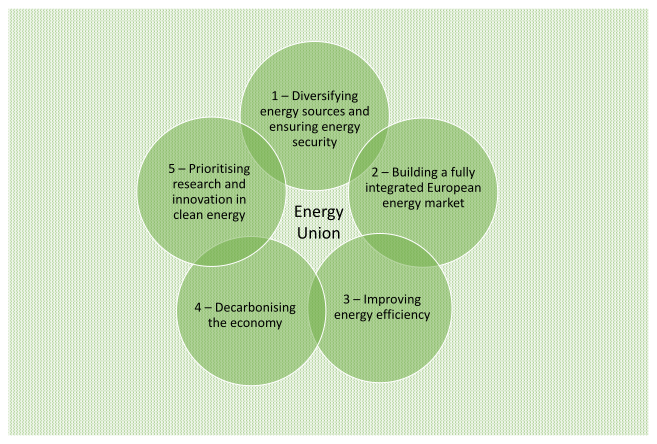
01 In February 2015, the European Commission published the Energy Union Package including 'A Framework Strategy for a Resilient Energy Union with a Forward-Looking Climate Change Policy' and a 'Roadmap for the Energy Union'. The objective of a resilient Energy Union with climate policy at its core, is to provide EU consumers, namely households and businesses, with energy that is secure, sustainable, competitive and affordable.
Figure 1 – The five dimensions of the Energy Union strategy
Source: ECA.
02 Under dimension two, ensuring the functioning of a fully integrated internal electricity market aims to enable the free flow of energy through the EU, by providing adequate infrastructure and without technical or regulatory barriers. Cross-border electricity trading should allow the cheapest produced power to be dispatched to businesses and citizens, wherever that power is located in the EU. Today, the EU does have energy rules that are set at European level, but the reality is that in practice, it has 27 national regulatory frameworks. According to the 2015 EU energy strategy1, an integrated energy market is needed to create more competition and to lead to greater market efficiency.
03 Challenges lie ahead. Achieving the EU’s climate objectives will require more of the EU’s energy needs to be met by renewable energy sources. Their scattered electricity production (through various energy communities and small producers), the intermittent nature of renewables, and the present absence of economically viable storage solutions, create new challenges for managing electricity grids and balancing supply and demand.
04 Achieving the internal electricity market should bring several benefits.
- It should deliver the best overall electricity prices for European consumers, as the cheapest resources across the EU can be used to meet electricity needs.
- It should increase the security of the EU’s energy supply, as Member States will be able to share resources, in the case that unforeseen disruptions occur.
- It should cost-effectively contribute to achieving the objectives of the EU’s green transition, by improving power supply flexibility and ensuring that market players can adjust their positions according to updated power generation forecasts.
05 Despite EU-wide efforts to integrate national markets, retail electricity prices continue to differ greatly between countries. Retail prices are still heavily influenced by Member States, through national taxes and regulated network charges2, rather than though competition. See Figure 2.
Figure 2 – Household electricity prices in the EU in 2021 (€/MWh)

Note: Representing annual average prices for consumption between 2 500 KWh and 4 999 KWh.
Source: European Commission.
06 Moreover, in the second half of 2021 and in the first half of 2022, electricity prices on wholesale markets reached unprecedented peaks across Europe (at the time of finalising this audit). These peaks were driven by high fossil fuels prices, exacerbated both by the war in Ukraine, and by various secondary factors, such as CO2 emission allowances (see Figure 3). Member States that were poorly connected to the EU electricity network and those that relied heavily on gas for power generation were particularly exposed.
Figure 3 – Average annual day ahead electricity prices October 2021 (€/MWh)

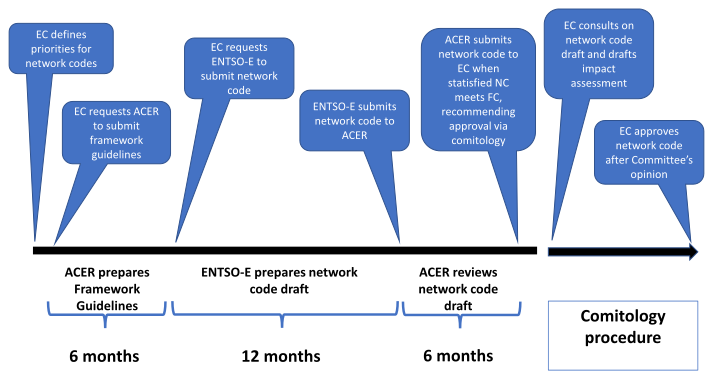
Note: While not part of the EU, Norway and Switzerland also provide data to the ENTSO-E’s Transparency Platform.
Source: ACER – Wholesale Electricity Markets Monitoring 2021.
Wholesale electricity markets
07 In wholesale markets, electricity generators sell electricity to large industrial consumers and electricity suppliers. The suppliers then sell the electricity to final consumers in the retail markets. Depending on the physical delivery day of the trades, wholesale electricity markets are organised around four segments (timeframes): forward, day-ahead, intraday and balancing markets, as detailed in Annex I.
08 In some Member States, electricity is mostly traded on organised power exchanges. On these exchanges, most electricity is traded using standard products in the day-ahead timeframe. However, at the EU level, most power is traded outside organised power exchanges, known as 'over the counter' (OTC) trading.
EU regulatory framework
09 The responsibility for EU energy policy is shared between the EU and its Member States3. Several different EU policy instruments exist, that are designed to integrate EU electricity markets. These include elements of competition policy, instruments to regulate specific players and markets, and measures to provide EU funding for network investments. The overarching legislation in place consists of the Electricity Directive (E‑Directive) and the Electricity Regulation (E-Regulation), which together provide a set of common principles and rules for the integration of national electricity markets, such as harmonising aspects of wholesale markets that have cross-border implications.
10 Moreover, the EU legislator gave the Commission the right to implement the rules laid out in the legislation through the adoption of the Commission’s implementing regulations (network codes and/or guidelines). The guidelines further required binding agreements called terms, conditions and methodologies (TCMs) to be adopted, either between the national regulatory authorities (NRAs), or to be approved by the Agency for the cooperation of energy regulators (ACER).
11 Before the integration of the internal energy market began in 1996, national energy markets were mostly dominated by monopolies. In the first stage of integration, these monopolies were gradually opened up to more competition. This was the focus of the first (1996) and second (2003) energy packages, which comprehensively changed the framework governing EU energy markets. Among other things these packages aimed to introduce the freedom for consumers to purchase electricity from any supplier of their choice by 1 July 2007.
12 In 2009 a third energy package entered into force. It contained further measures to promote the integration of the EU’s internal energy market and it established the ACER and the European Network of Transmission System Operators for Electricity (ENTSO-E). ACER was also tasked with coordinating the NRAs’ action and filling the regulatory gap at EU level where necessary4.
13 The 2011 Regulation on Wholesale Energy Market Integrity and Transparency (REMIT)5 complements the third energy package. It covers issues relating to market integrity, insider information and market abuse, and introduces a legal basis for monitoring wholesale energy markets to detect and deter market manipulation. REMIT provides ACER an important role in this task.
14 The fourth energy package (2019), entitled 'Clean Energy for all Europeans' (CEP), further builds on the existing energy policy framework. It introduces new rules to foster competition on retail electricity markets, to better integrate renewable energy sources into the market, to coordinate electricity resource adequacy at EU level and to manage demand through aggregation and energy storage. It also addresses some of the weaknesses identified in the third energy package, such as gaps in ACER’s competences.
EU energy policy: who does what
15 In the European Commission, the Directorate‑General for Energy (DG ENER) is responsible for developing and implementing European energy policy within the scope of Article 194 TFEU. This includes ensuring the operation of the energy market, ensuring the security of energy supply within the EU, and promoting the interconnection of energy networks. The Commission’s role is to:
- propose policy documents/strategies and legislative measures as required;
- enforce compliance with EU law, by checking that the energy packages are correctly transposed into national law and applied effectively by the Member States;
- adopt network codes and guidelines.
16 ACER is an EU agency, which promotes the completion of the internal electricity and gas markets and coordinates the work of NRAs on issues with cross-border relevance6. ACER’s tasks include: (1) advising the Commission, ENTSO-E and the NRAs on energy market design and the security of supply, (2) detecting and preventing abuse in trading wholesale energy products, and (3) monitoring how for example network codes / guidelines are implemented in the electricity and gas markets. ACER also has executive powers to issue decisions in specific areas. These decisions are directly binding on the NRAs or market participants to whom they are addressed. ACER’s decision-making body, the Board of Regulators, is composed of representatives from each Member State’s NRAs.
17 NRAs are established by the national legislator and must be fully independent of national governments. Among other tasks, NRAs are responsible for ensuring domestic compliance with EU network codes and guidelines. NRAs have enforcement powers within their jurisdiction, can carry out investigations, and impose penalties. They also have a general obligation to promote the internal market for electricity within the EU.
18 Transmission Systems Operators (TSOs), which are national regulated entities, manage the security and stability (balancing markets) of high voltage power systems and interconnectors at national or zonal level, and derive revenue from network tariffs and network congestion income. They cooperate with each other within the framework of the ENTSO–E7, which has to act with a view to establishing a well-functioning and integrated internal market for electricity. ENTSO-E are required to develop and monitor the implementation of network codes and guidelines, platforms and tools to ensure the coordination of the EU’s system operators under both normal and emergency conditions.
19 Nominated Electricity Market Operators (NEMOs) are national entities designated by NRAs to ensure that power exchanges in the EU are interconnected and work properly for the day-ahead and intraday timeframes.
20 Distribution System Operators (DSOs) are national entities responsible for managing and distributing electricity to final consumers. DSOs’ role is expanding to cover the optimisation of local electricity generation and consumption.
21 Market participants have various economic roles and market powers and compete on wholesale or retail electricity markets. These include electricity producers, large final consumers, electricity suppliers, providers of ancillary services to TSOs/DSOs and brokers. Small final consumers, namely households and other consumers with an energy consumption of less than 600 MWh/year, purchase electricity from electricity suppliers (utility companies) on the retail markets.
Latest developments
22 In October 2021, the Commission8 proposed a range of measures to respond to the recent exceptionally high gas and electricity prices in the EU. To protect vulnerable consumers against energy poverty, it proposed measures including price caps and transfer mechanisms. To mitigate the impact of high energy costs on industry, it proposed measures such as amendments to state aid rules. In March 2022, as the situation deteriorated further driven by the war in Ukraine, the Commission proposed an action plan9, which included several measures to reduce the EU’s gas dependence on Russia in the medium term. This was further explained by the Commission’s REPowerEU Plan proposed in May 202210. The ECA recently published an opinion11 on proposed amendments to include REPowerEU in the RRF Regulation.
Audit scope and approach
23 In our special report 16/2015 we concluded that the EU’s objective of completing the internal energy market by 2014 had not been achieved. There was still a long way to go before the third energy package could be deemed to be fully implemented12. This was one of the main reasons why we assessed whether the Commission’s regulatory approach and ACER’s oversight from 2015 had contributed to improving the functioning of the EU’s internal electricity market in this audit. Besides, the ECA never audited REMIT, or network codes and guidelines.
24 Another reason for this audit is the fact that ACER plays a pivotal role in ensuring the smooth operation of the EU electricity market through coordinating the NRAs at EU level. The legal framework does not provide the Agency with enforcement tools, and if it is not properly supported by the Commission in its convergence efforts, it may not be able to achieve its intended goals.
25 The objective of our report is to inform stakeholders and provide recommendations to support policy development and further integration of the electricity market.
26 The main audit question was whether the Commission’s regulatory approach and ACER’s oversight contributed to the integration of the internal electricity market. The main auditees were ACER and the Commission.
27 The audit focused on:
- progress made with integrating the internal electricity market;
- the Commission’s use of network codes and guidelines to ensure the integration of the electricity market;
- the Commission’s and ACER’s monitoring of the implementation of network guidelines for electricity markets;
- ACER’s surveillance of market abuse and transparency (REMIT);
- ACER’s governing structure and competences.
28 We looked at the EU’s actions to integrate the electricity markets, which mainly concerned the wholesale electricity markets (as neither the Commission nor ACER has any major competences in retail markets, and cross-border flows are mainly traded in wholesale markets). In particular, we looked at ACER’s activity in overseeing the implementation of the three main electricity market guidelines: the capacity allocation and congestion management guideline (CACM)13, the forward capacity allocation guideline (FCA)14 and the electricity balancing guideline (EB)15, as well at the implementation of the REMIT Regulation.
29 The audit criteria were derived from the applicable legislation, ACER planning documents, international best practices, including those of international organisations, such as the Organisation for Economic Co-operation and Development (OECD) and the International Renewable Energy Agency (IRENA), and from available evaluations and studies. More information on the criteria used is explained at the start of each section.
30 Audit evidence was collected on the basis of:
- reviews and analyses of all relevant Commission documents and ACER’s operational reporting, internal guidelines, management accountability documentation, and other relevant documents;
- reviews of reports by international organisations (International Energy Agency, International Renewable Energy Agency, OECD), academic research and studies available to identify examples of good practice;
- questionnaires, interviews and meetings with staff and an external expert with relevant expertise in the electricity sector, selected trough a procurement procedure.
31 Our audit covered the period from mid-2015 to end-2021. Therefore, all measures that were taken afterwards to mitigate the effects of the energy crisis were outside of the audit scope.
32 Our audit focused on the third energy package. We did not cover renewable energy targets, energy efficiency, retail markets and energy distribution systems to end consumers, or ACER’s mandated activities under the TEN-E Regulation.
Observations
Slow progress with integrating electricity markets compared to ambitious initial plans
33 The integration of the electricity markets aims to deliver choices for all EU consumers, provide new business opportunities, and remove obstacles to cross-border trade, so as to achieve efficiency gains, competitive prices and higher standards of service to contribute to the security of supply and sustainability. The completion of the internal electricity market was supposed to be achieved by 201416. The legal instruments that the EU used to remove obstacles to cross-border trade are the Electricity Regulation and Directive, as well as subordinate legislation (see paragraphs 09 to 14).
34 For this section we used the following legislative objectives as audit criteria (see specified above):
- Fostering market integration through EU-wide market coupling (i.e. interconnection of power exchanges in Member States);
- Ensuring available capacity of interconnectors for trading at all times.
Both of these should facilitate price convergence in the EU’s electricity wholesale markets.
35 EU legislators tasked the Commission with adopting network codes to harmonise the technical rules for managing the coupling of organised short-term markets (day-ahead, intraday and balancing markets). Market coupling is deemed to accelerate the integration of short-term electricity markets. It allows market prices and traded volumes of electricity to be calculated based on EU-wide electricity supply and cross-border transmission capacity. In addition, a system for allocating future cross-border transmission capacity had to be put in place in order to boost the electricity forward markets. TSOs and NEMOs were responsible for implementing this system through various technical projects under the NRAs’ supervision and ACER’s coordination.
36 Member States have to ensure that the TSOs make the transmission capacities available and invest in interconnectors, in accordance with the objectives of the EU’s integration of electricity markets.
The acceleration of market integration through full markets coupling has not yet been completed
37 Important but slow progress has been made in the last two decades, through the various initiatives for the coupling of European power exchanges (see Annex II). The European Council’s target of completing the integration of energy markets by 2014 had not been met by the end of 2021. In 2015, the Commission restated that the completion of the internal energy market was a key objective, and included it in DG ENER’s 2016-2020 Strategic Plan. However, market coupling was only listed as an objective in DG ENER’s 2020-2024 Strategic Plan, i.e. with a five year delay. The Commission had already adopted the three relevant network guidelines between 2015 and 2017 (see Annex III), but by the end of 2021, according to ACER information, none of the guidelines had been fully implemented in the EU.
38 Progress was uneven across the markets as shown by differences in how efficiently interconnectors were used in the three market segments that were to be coupled (see Figure 4). Moreover, the coupling of short-term markets has delivered social benefits of at least €1 billion17 per year so far, compared to the total gains brought about by the integration of the electricity markets over decades, the value of which was estimated by ACER to be approximately €34 billion per year (for 2021). However, this estimate was based on a scenario without any cross-border trade18.There remains significant scope for the further integration of electricity markets between regions within Europe.
Figure 4 – Efficient use of interconnectors in the EU in the different timeframes in 2020

Note: the indicator is defined as percentage use of available commercial capacity in the ‘right economic direction’, i.e. to transport electricity from low to high-price bidding zones.
Source: ACER market monitoring report 2020, p. 12.
39 Implementation has also been uneven across countries. In day-ahead markets, most of the economic benefits were achieved (about €1 billion per year) due to the voluntary coupling of 19 western power exchanges covering north-west Europe (about three quarters of the EU electricity volume traded on power exchanges) before 2015. As a result of the CACM guideline, progress within the other seven countries consisted of a series of bilateral couplings, spread over 2015-2022. In 2022, all power exchanges were coupled for this time frame. The CACM guideline contributed to more couplings on the intraday markets. However, despite ACER’s efforts, by the end of 2021, the couplings had not been completed, even though the Commission had envisaged that they would be completed by 2018. DG ENER set a new deadline of 2024 in its 2020-2024 Strategic Plan, without providing any explanation for the delays.
40 The integration of balancing markets is weaker than for the other short-term markets. Around ten TCMs that were required by the network guidelines to interconnect balancing markets had not been adopted by the end of 2021. Moreover, by the end of 2021, only two of the four targeted cross-border trading platforms required by the network codes were operational. These markets are important both for enhancing the security of supply, thus preventing blackouts across the EU, and for integrating variable renewable energy sources into the markets (see Annex I).
41 Forward markets are important because they offer both generators and consumers the opportunity to hedge the risk of extreme price fluctuations and potentially allow generators to have a more stable investment outlook. The Commission adopted network guidelines that were not intended to interconnect these markets, but rather only to foster the efficient use of the cross-border interconnection capacity for future trades, via an EU-wide platform for auctioning transmission rights. Progress was partial and uneven across the EU: TSOs did not issue such rights at all intra-EU borders19. In 2022, ACER also reported that the low forward markets’ liquidity limited the opportunities to hedge current price volatility20 and acknowledged weaknesses in the design of this market21.
42 Despite the progress in the day-ahead market coupling initiatives, full cross-border price convergence has not been achieved (see Figure 5). Moreover, the level of divergences in electricity prices between countries has increased sharply since the second half of 2021, due to the global energy prices crisis and the war in Ukraine. One of the key reasons for this is the limited cross-border transmission capacity. The stagnant cross-border trade in electricity in the period after 2015 also reflects the lack of price convergence and the fact that most coupling of day-ahead markets had been achieved prior to the adoption of the CACM guideline in 2015 (see paragraph 39 and Annex II).
Figure 5 – Annual average prices on day-ahead electricity markets (€/MWh) and volumes of cross-border trade in electricity in the EU (TWh)
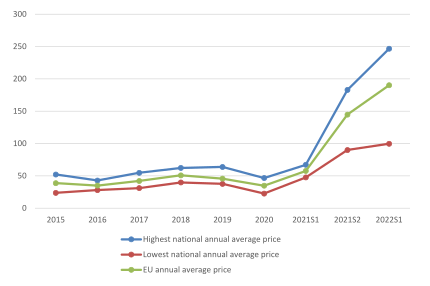

Note: Electricity prices before 2015 not available. Trade volumes for 2021 were not available at the drafting stage of this report.
Source: ECA based on data from Transparency Platform (ENTSO-E), Eurostat.
The available capacity of interconnectors did not increase despite the implementation of network guidelines and ACER’s efforts
43 The TSOs have a legal obligation to make interconnectors’ maximum capacity available to the market22, as this is a precondition for further integration of EU electricity markets and price convergence. Even if markets are coupled, price convergence may not be achieved if there are limitations to cross-border trade due to congestion at electricity grid level. Available capacity can be enhanced and congestion mitigated through:
- better coordination of interconnecting capacity calculation by neighbouring TSOs, resulting in less network congestion;
- investments in interconnectors, resulting in larger installed interconnection capacity.
44 Despite the implementation of the network guidelines, there was no significant progress with the level of available capacities: ACER showed that in 2020, several regions achieved poor compliance with the EU legislator’s target of making at least 70 % of the installed interconnection capacity in each Member State available for cross-border trade by 2025 at the latest (see Table 1). A similar situation was reflected in 201623.
Note: The recast E-regulation introduced an obligation for all TSOs to make at least 70 % of their cross-zonal transmission capacity available to the market, with compliance by the end of 2025 at the latest. Regions listed: Core (Austria, Belgium, France, Netherlands and Germany/Luxembourg, i.e. CWE, and Croatia, Czechia, Hungary, Poland, Romania, Slovakia and Slovenia, i.e. CEE), Italy North (Austria, Italy North, France and Slovenia), SEE (Bulgaria, Greece and Romania), SWE (France, Portugal and Spain).
Source: ACER Market monitoring report 2020, p. 49.
45 This is partially due to the growth in variable renewable energy sources, which was not a strategic objective of electricity market integration, and which may add congestion to domestic grids and interconnectors, increase costs for congestion management, and reduce the transmission capacity available for cross-border trade. ENTSO-E’s Transparency Platform data shows that between 2015 and 2017, TSOs’ costs for remedial actions to remove network congestion increased by around 25 %, from €999 million to €1.27 billion. For example, in Germany, compensation paid by TSOs to renewable energy producers, due to curtailing their production (i.e. the producers were obliged to produce less) accounted for almost half of the total costs24.
46 In 2002, the European Council set a target of 10 % electricity interconnection as a proportion of generation capacity for each Member State, which was to be achieved by 2005. The deadline was extended to 2020, and a new target of 15 % was set for 203025. Despite EU-level measures, the Commission’s annual activity reports show no significant progress made by Member States: 11 Member States had nominal interconnection capacity below the target level in 2011; by 2019 this situation had not improved.
The direction for harmonised cross-border trade rules is set, but the policy framework contains weaknesses
47 A single electricity market and full market integration are only possible with a harmonised framework of cross-border trade rules26. EU co-legislators established this framework through different legal instruments (see paragraphs 09 to 14). The Commission’s network codes and guidelines are EU regulations aimed to specify common market rules, grid operation and connection rules. EU regulations must be binding in their entirety and directly applicable in all Member States27. In this section we will assess the regulatory tools selected to enable further electricity market integration.
48 We used the requirements from relevant EU legal bases (the Treaties, the Electricity Regulation and Directive, eight network codes and guidelines) and the Commission’s 'better regulation toolbox' as audit criteria. We also used the OECD’s best practices on regulatory impact assessments to assess the Commission’s work on the ex ante evaluation of policy options for the integration of electricity markets through network codes and guidelines. Public authorities should integrate impact assessments into the early stages of the policy process to formulate new regulatory proposals, which can assist in promoting policy coherence by making the trade-offs inherent in regulatory proposals transparent28.
49 Over the 2015-2017 period, the Commission adopted four network codes and four guidelines. Three of these guidelines had the largest scope of application as they concerned EU-wide electricity and transmission markets across all time frames (see Annex III).
Reliance on TCMs led to complex and delayed harmonisation of cross-border trade rules
50 The E-Regulation required the Commission to adopt network codes to harmonise cross-border trade rules in electricity. In order to adopt the network codes, ENTSO-E, the Commission and ACER engaged in complex drafting processes and consultations with stakeholders over the 2009-2017 period (see Figure 6) , but despite this, not all of the technical details were discussed. The Commission therefore decided to adopt guidelines (instead of network codes) that required further technical details specifications through TCMs rather than network codes for all market rules, and to delegate the subsequent adoption of decisions on various TCMs to NRAs or ACER.
51 As a result, the regulatory framework for market rules became more complex, and the Commission’s guidelines could not be fully and immediately applied, while there was no time limit by which the guidelines would fully enter into force. This meant that the guidelines shifted a large proportion of the development of the rules to a later stage, allowing for greater flexibility on the one hand, but slowing down or complicating the implementation of the guidelines and overall integration of the markets on the other. Moreover, while TCMs clarified the guidelines, they did not benefit from the same standards of preparatory work, as they lacked ex ante impact assessments.
52 Approval processes for TCMs were complex, lengthy and time-consuming, and created an excessive administrative burden. We found that ACER and NRAs approved 161 TCMs for the four guidelines over the 2016-2021 period; most of these were approved by NRAs. For certain TCMs, amendments needed to be adopted through the same procedure as for the initial approval (35 amendments in total). Some of the amendments also required NRAs’ adoption of operational standards at national level. Moreover, the upcoming revision of the CACM guideline may trigger a new wave of TCM amendments29.
53 The adoption of TCMs began in 2016, and at the end of 2021 we found that there were still 11 TCMs pending approval. Despite ACER’s regular monitoring of the delays and their systematic reporting to the Commission, TSO’s and NRA’s did not meet the deadlines prescribed in the guidelines for the adoption of many TCMs.
54 Among other reasons, the lengthy adoption of TCMs was due to:
- disagreements among NRAs of different Member States pursuing their national interests, or between NRAs and TSOs, compounded by the inefficient decision-making process set out in the guidelines. The Commission reacted to some inefficiencies, but the legislative changes to network guidelines either occurred late (in 2019 or in 2021), or had not yet been initiated;
- cascading effect of the delays. Due to interdependencies between TCMs, some delays in one TCM led to a delayed adoption of subsequent TCMs: e.g. the delayed adoption of TCM on capacity calculation regions postponed the adoption of the proposal for TCM on coordinated capacity calculation.
55 Where the NRAs have not been able to reach agreement, upon their joint request or in the case of EU-wide TCMs (from 2019), ACER must adopt a decision concerning the submitted TCM proposal within six months30. ACER generally adopted the decisions on time. Despite the fact that ACER had to make decisions regarding an increasing number of TCMs, ACER only published two decisions with a two-month delay, out of the 50 decisions adopted over the entire 2016-2021 period.
56 A relatively high number of ACER’s decisions on TCMs were challenged through appeals made to the Board of Appeal. Many of the legal challenges were related to the lack of clarity in term of the procedures, criteria, and competences provided in the guidelines.
Gaps in the Commission’s impact assessment of the implementing regulations undermined the policy framework
57 The Commission consulted stakeholders and drafted impact assessments before the network guidelines were adopted, as required by internal rules31. However, the Commission published the impact assessments towards the end of the consultation process, thus undermining their usefulness. Moreover, the Commission’s impact assessment board did not check the quality of the impact assessment of the CACM and FCA guidelines. Furthermore, the documents did not address certain key aspects of implementation and governance. For example, there was no assessment of implementation burden and costs for relevant players, and no discussion of the implications of the choice of regulatory tools (e.g. TCMs) for the implementation of the guidelines and their subsequent monitoring.
58 We also found that the impact assessments listed certain monitoring indicators for the outcomes of the guidelines but these were not clearly defined and did not have set targets (to measure the ex post impacts of the legislation on the markets and on social welfare). This potentially weakened the monitoring of the rules and led to insufficient ACER guidance on this type of monitoring. ACER progressively developed such indicators (see paragraph 80). The Commission mentioned certain indicators that were not monitored by ACER (e.g. evolution of intraday and balancing service prices). The Commission did not mention certain key indicators for performance monitoring, for example, indicators on the performance of algorithms used by NEMOs to couple electricity exchanges, which were later included in TCMs.
59 Another key aspect that was not fully analysed in the impact assessment on CACM and FCA guidelines, was the choice of the pricing methods for the energy traded on coupled power exchanges and bidding zones. The methods prescribed were not analysed and discussed (e.g. rejection of block orders32), as key technical details were decided by ACER through TCMs at a later stage. However, TCMs are not supported by impact assessments.
60 The current energy crisis shows the lack of preparedness in terms of the rules for pricing methods in crisis situations where the method may lead to excessive profits (see Box 1). One of the crisis measures that the Commission proposed to correct such distortions, is to tax windfall profits but the Commission did not study their effects on competition within the EU’s internal energy markets33.
61 One missing component not analysed in the Commission’s impact assessments that would enable better functioning of the electricity markets, is the flexibility of electricity demand in response to wholesale market prices. This could be obtained using various tools such as demand aggregation, energy storage, remunerated demand curtailment, and coordination between DSOs and TSOs. A recent Commission study34 highlighted the challenges that exist with wholesale market integration with regard to the flexibility of small consumers’ demand. Examples of these challenges are an unclear framework for data aggregation, and data transfers between grid and market operators. Prudent estimates of social benefits from demand flexibility range between €3 and €5 billion per year35.
Gaps in the Commission’s impact assessment of the marginal pricing rule
Article 38 of the CACM guideline adopted the European market practice that the coupling of power exchanges in the day-ahead timeframes must be based on the marginal pricing rule. This rule states that all accepted bids from suppliers must have the same price per bidding zone and time unit, and be remunerated with the highest bid that clears the market in order of merit ('pay as clear' method). In general, this clearing price is set by fossil fuel-based power plants (i.e. coal, oil, or gas). This method is intended to ensure that green generators make a profit, and thus a return on investment, and to increase the supply of energy from renewables and dampen prices (see graph).

Source: ECA based on Next Kraftwerke GmbH.
In 2014, the Commission carried out an ex ante impact assessment of the proposed guideline. This assessment did not include either any analysis of the implications of, or any alternatives to the current price coupling method, in particular with regard to crisis situations where disturbances of input markets (e.g. gas prices) occur. In the second half of 2021, a sharp increase in wholesale electricity prices was observed in all EU markets, due to gas prices reaching record-highs: average day-ahead electricity prices increased by 200 % between April and October 2021 and gas prices increased by 400 %36.
In the long run, no ENTSO-E or Commission scenarios had forecast such electricity price hikes. Slow growth in decarbonised supply may result in a long-term dependency on the volatility of fossil-based generation costs for EU electricity prices. The price volatility may not provide the long-term price signals that investment in generation requires: capital-intensive production from renewables needs certainty in terms of long term revenue, in order to recover mainly fixed costs. The Commission also noticed that 'the market design may need to evolve'37.
There was no explanation regarding how the pricing method would ensure sufficient market-based remuneration for investment in low-carbon energy capacities. Over the last ten years, growing state aid schemes to support investment in green electricity capacities38 showed that market prices did not ensure sufficient market-based remuneration for such investments.
In cases of unexpected price hikes, the pricing method may therefore generate unexpectedly high profits for generators that operate far below the costs of production (e.g. renewables), especially while benefiting from national state aid for green energy. As a result of the 2021-2022 crisis, certain Member States took measures to tax electricity producers’ windfall profits, which may in turn introduce new distortions in the integration of electricity markets.
The EU-level monitoring and reporting on market integration is not conducive to the timely detection of problems
62 Given the flexibility permitted, and the complexity of implementing the network guidelines (explained in the previous section), ongoing and systematic monitoring by ACER and the Commission is a key method of control to ensure coherent and homogenous implementation across Member States and the timely detection of implementation issues. Both the Commission and ACER have legal competences in terms of monitoring the implementation of the network codes and guidelines and their economic effects. We used the legal basis and OECD standards to assess the Commission’s and ACER’s monitoring and reporting framework (see Box 2).
OECD standards for promoting effective compliance
Public authorities’ monitoring of compliance, resulting in better regulatory enforcement, should be predictable through a well-formulated strategy that provides the correct incentives for regulated subjects. The frequency of the monitoring and the resources employed should be proportional to the level of risk. Results of the monitoring should lead to the recognition of shortcomings in the design of the rules and timely adoption of corrective measures (e.g. ACER decisions, recommendations)39.
Public authorities should regularly publish reports on the application and performance of regulatory policy to improve the outcomes of regulation. They should design and assess data collection and information management strategies to ensure that the necessary high-quality information is available for preparing the reports40.
63 Under the current legal setup, ACER has a mandate to monitor the implementation and economic effects of the EU network codes and guidelines, and to report detected implementation problems to the Commission. In this section we will analyse ACER’s monitoring and reporting framework with respect to: the implementation of the legal framework by NRAs, TSOs and NEMOs, and the effects of implementation on market integration41.
64 In addition, as one of our audit criteria, we used the legal requirements stating that ACER must ensure that the public and any interested parties, where appropriate, are provided with objective, reliable and easily accessible information, in particular with regard to the results of its work42.
65 One of ACER’s main tools for assessing the effects of market integration and advising the Commission and the EU legislator is the annual market monitoring reports (MMRs) on the monitoring of wholesale and retail markets in electricity and natural gas, which should identify any barriers to the completion of the internal market and spark remedial action43. Hence, it also serves as an instrument to monitor the effects of the network codes/guidelines on the integration of the electricity market (see also paragraph 63). On this basis, ACER may submit its opinions on potential measures to remove these barriers.
66 The monitoring activities may result in ACER making recommendations to NRAs on how to implement the rules, or to the Commission on amending the network codes and guidelines or taking enforcement measures against Member States in the case of insufficient implementation of the rules. ACER has no enforcement powers but has a general coordinating role for the NRAs in the application and enforcement of EU law.
67 We also checked how the Commission and ACER coordinated their monitoring of the legislation. The Commission has a legal obligation to monitor and enforce the uniform and accurate implementation of the E-Regulation and network codes/guidelines by the Member States. The Commission should ensure that the Treaties and measures adopted by the institutions pursuant to them are applied44. Full implementation and strict enforcement of existing energy legislation and related legislation is the first priority for establishing the Energy Union45. The Commission’s role also includes supporting ACER and following up on ACER’s recommendations.
Significant weaknesses in ACER’s monitoring and reporting framework
68 EU legislation does not specify how ACER should monitor the overall implementation of network codes/guidelines and their effects (e.g. frequency, expected outputs), or how it should report to the Commission. The Commission did not provide for such a reporting framework (e.g. frequency and content of reports). Moreover, ACER did not adopt any specific strategy for monitoring.
69 Starting in 2016, ACER’s annual work programmes have consistently mentioned that monitoring is a critical task. However, the work programmes are not sufficiently explicit in order to clarify how the monitoring and reporting is planned, despite ACER’s obligation to present all expected outputs46. This risks undermining ACER’s accountability and could also hamper stakeholders’ understanding of ACER data needs and involvement in implementation monitoring.
70 We found that ACER used various sources to obtain the information needed to perform monitoring activities, such as:
- regular exchanges with experts from NRAs in ACER’s Electricity Working Group (EWG) and related task forces;
- consultations within the European Stakeholder Committees47, the Florence Forum48, and the Network Code Implementation and Monitoring Group 49;
- ENTSO-E monitoring reports50 and other information published on its website;
- attendance at stakeholders’ progress meetings for implementing the various projects of the network codes/guidelines (with regional or EU coverage);
- questionnaires/surveys sent to NRAs;
- an internet-based tool that allowed NRAs to report and disclose the adoption of TCMs (since 2019)51; this tool was not provided for NEMOs’ or TSOs’ adoption of proposals of TCMs.
71 Some of these communication sources were not fully effective, and hampered ACER’s capacity to obtain timely, comprehensive information, thus affecting ACER’s ability to detect problems. For example, the involvement or presence of national experts in the EWG is voluntary and based on an agreement with the NRAs; smaller NRAs tend to be less active (see Annex VI). ACER staff’s attendance at stakeholders’ progress meetings was sporadic due to insufficient resources52.
72 The information available on ACER’s website does not provide a regular and user-friendly inventory of the projects and TCMs for adoption or implementation, nor does it compare the implementation targets and deadlines with current outcomes.
73 ACER’s public reports on the implementation of the network codes/guidelines are not driven by any explicit risk assessment, nor are they systematic, either in terms of their preparation or the number of reports. In respect of the three market guidelines, which have impacts on the largest range of stakeholders, only one implementation monitoring report (IMR) was published in 2019, which did not cover the guideline on electricity balancing. However, this report neither contains a comprehensive overview of all TCMs, nor a description of the project implementation stage for each Member State. The report is also less clear in respect of the recommendations put forward. In particular, it is unclear which of the recommendations were addressed to the Commission. ACER and the Commission partially followed up on this report in 2021.
74 In the case that the NRAs’ derogation decisions were duly justified, the guidelines allowed for derogations from the general requirements. ACER did not monitor or issue recommendations to NRAs in terms of how to uniformly apply derogations, which may result in derogations becoming a way of circumventing the legal requirements.
75 Given that ACER does not possess enforcement powers, systematic reporting from ACER could have increased both timely public and Commission awareness on shortcomings in the implementation of the network codes/guidelines, fostered peer pressure from NRAs, and guided them in a coordinated way in terms of their own monitoring and enforcement.
ACER’s monitoring and reporting was hampered by limited resources
76 ACER’s electricity department is the key department for monitoring energy market integration (see Annex IV). The main staff increases for the electricity department were approved by the Commission in 2019 and 2020 to cope with the new tasks set out in the CEP. Over the 2016-2020 period, ACER did not make any substantial requests for additional staffing for the department.
77 A very significant proportion of the staff assigned to implementation monitoring was recurrently re-allocated to approve the TCMs, amendments, and TCM appeals. This was partially due to the unexpectedly high number of such procedures.
78 Other electricity department activities also faced limitations in terms of scope due to the lack of resources, for example:
- limitations in the scope of MMRs (see paragraph 80);
- delays and scope limitations in terms of ACER’s reporting on EU network tariff benchmarking.
79 We note that ACER did not amend their annual work programmes to reflect the unexpected changes to workload and allocation of resources (as required by ACER’s Financial Regulation).
ACER’s market monitoring reports are useful, but undermined by difficulties with data collection and lack of follow-up
80 We found that over time ACER has made the MMRs more relevant by including more indicators on market integration, explaining methodologies, and by providing greater analysis of barriers to completing the internal market. We also found that certain areas still need to be analysed (e.g. investments in interconnections, cross-border traded volumes, price convergence for all timeframes). Moreover, seven market barriers identified by ACER were not monitored (e.g. support schemes for renewables). ACER announced that it would not produce a full report in 2022, which risks falling short of fulfilling the legal requirements.
81 ACER faced constraints in developing relevant indicators, as it had difficulties in collecting the data needed (e.g. for MMR 202053). Moreover, there is no coherent EU energy data strategy that could trigger a systematic and comprehensive collection of data on energy markets, either by the Commission or by ACER. In the United States, there is a federal agency in charge of collecting and disseminating data on US energy markets54. Eurostat, DG ENER and ACER publish different data streams with various time series lengths, accessibility, and verification procedures, which prevents the data from being used in a systematic manner.
82 A key platform for gathering and disclosing data on EU wholesale electricity markets is the Transparency Platform, which has been managed by ENTSO-E since 201555. ACER is a key user of this platform. A 2017 Commission study shows that the Transparency Platform has the potential to be a powerful source of comprehensive energy data in the EU, but there are several shortcomings in its current implementation, which are related to the quality and accessibility of data56. The Commission did not follow up on this study. Only in 2018 did ACER sign a cooperation agreement with ENTSO-E on data provision for the monitoring of the Network Guidelines. In 2021, ACER still encountered difficulties in accessing data57.
83 Insufficient information relating to the effects of the network guidelines on the integration and functioning of wholesale markets may affect the accuracy of ACER reporting to NRAs, the Commission and the public, and the timely detection of issues on the implementation of the guidelines and TCMs.
84 One of the key strengths of the MMRs is the formulation of recommendations. Since 2016, MMRs have regularly included recommendations or priorities for greater action in order to integrate wholesale electricity markets. Under the E-regulation, MMR recommendations can be followed by opinions. However, over the 2015-2021 period, ACER did not submit any official opinion either to the Commission or to the European Parliament58.
85 The inclusion of recommendations in MMRs varies across the editions and volumes – there has been no systematic approach. The recommendations often simply reiterate policy objectives; sometimes they are redundant, since they repeat the legal obligations already embedded in EU legislation. Their impact is further weakened by a lack of clarity in terms of to whom the recommendations are addressed, by an absence of clear ideas regarding how to resolve the identified market barriers through EU policy, and by a lack of deadlines. Their impact is also weakened by the lack of follow-up in subsequent MMRs. We noticed such weaknesses in the 2019 and 2020 editions of the MMR.
ACER’s monitoring of TSOs did not result in substantial progress with the interconnection of electricity infrastructure
86 Monitoring is ACER’s main tool for fostering further integration of the power grids, even although monitoring alone does not lead to Member States’ consistent implementation of network codes and guidelines. We examined three monitoring aspects of key importance for fostering the network capacity (as explained at paragraphs 43 to 46):
- regular review of the configuration of the bidding zones;
- monitoring investments in interconnectors;
- regular reporting on the availability of cross-border transmission capacities.
87 Both investments that expand cross-border transmission capacity and the appropriate configuration of bidding zones lead to the sustainable maximisation of capacity availability for trade across all timeframes. This is key for the growth of cross-border trade and the integration of renewables in the internal market. Differences in available cross-zonal capacities across the EU run the risk that market participants may not be on an equal footing with regard to having access to trading opportunities. In particular, TSOs can structurally reduce available cross-zonal capacities in order to resolve intra-zonal network congestion generated by inappropriate bidding zones.
88 ACER monitored the EU bidding zone configuration and provided evidence that the current configuration was not appropriate. However, due to insufficient decision-making powers (the final decision must be made by the Member States based on ENTSO-E’s analysis), methodological flaws, unclear provisions in the CACM Guideline and insufficient evidence (due to a lack of data), such monitoring did not lead to any bidding zone reconfiguration or any request from ACER to carry out a review59 (see Annex V).
89 Through biennial opinions, ACER has been monitoring the cross-border transmission capacity investments in the 10-year network development plans drafted by ENTSO-E. However, we found that in 2019, the implementation of around half of the investment projects with cross-border relevance were subject to delays, in spite of ACER’s monitoring60.
90 Starting with the first MMR in 2012, ACER has also regularly monitored the TSOs’ availability of cross-zonal transmission capacities. The TSOs have the legal obligation to make the maximum capacity of the interconnectors and the transmission networks affecting cross-border flows available to the market. ACER’s monitoring spotted the TSOs’ incorrect calculation of cross-zonal transmission capacity, but was unable to prevent capacities from being unduly reduced (see paragraph 44).
91 In response to weaknesses identified by ACER within the framework, and through the new E-Regulation (2019), the EU legislator adopted a binding target for the minimum interconnecting capacity margin available for trade (i.e. 70 % of installed capacity in each Member State by 2025 at the latest61).
92 As the application of the 70 % requirement was not clear, ACER has taken a number of limited measures to coordinate the TSOs’ and the NRAs’ harmonised calculation of the margin62. Despite the fact that ACER is not legally obliged to monitor it63, and that ENTSO-E disagreed on the calculations:
- ACER issued a recommendation to the NRAs and the TSOs, to clarify the target64;
- as the recommendation was not binding some TSOs and a limited number of NRAs disagreed with the recommendation and decided to take a different approach. ACER also published two monitoring reports on the 70 % target in 2021. ACER did not notice visible improvements in the available cross-zonal capacities.
Weaknesses in the Commission’s monitoring risks non-compliance with the EU cross-border trade rules
93 ACER’s reporting was a key element for the Commission’s monitoring of the implementation. ACER has no legal obligation to detect and report cases of non-compliance with EU cross-border rules. In December 2021, ACER adopted a compliance monitoring framework to coordinate NRAs’ enforcement actions with respect to EU-level entities (such as ENTSO-E) and the TSOs’ obligations with cross-border effects. Therefore, the Commission faced a monitoring gap, as reliance on ACER was not sufficient to monitor the Member States’ compliance with the network codes/guidelines and the E‑Regulation. There was no cooperation agreement or roadmap to clarify monitoring roles and avoid redundancies between ACER and the Commission. Mentioning only ACER and ENTSO-E, the Commission’s impact assessments on network guidelines did not indicate the Commission’s role in the monitoring framework.
94 As an observer, the Commission regularly attended meetings of ACER’s governing bodies and working groups, as well as relevant stakeholders’ meetings, but by the end of 2021, it had not produced its own reports on compliance or conformity checks.
95 In the annual activity reports over the 2016-2020 period, DG ENER monitored few indicators of market integration (price convergence and interconnection target), and no target was set for price convergence. ACER monitored a different price convergence indicator. Moreover, under DG ENER’s new strategic plan for 2020-2024, such indicators will no longer be monitored.
96 The Commission and ACER did not monitor how Member States transposed appropriate and comparable sanctions into domestic law, or how the NRAs enforced network codes/guidelines and other EU laws. The former E-Regulation (2009) did not specify any obligation for Member States to sanction non-compliance with the network codes/guidelines. The Electricity Directive 2009/72/EC provides for penalties for non-compliance 'with its provisions or with any relevant legally binding decisions of the regulatory authority or of ACER, or to propose that a competent court should impose such penalties'65. The recast E‑Regulation (2019) sets out precise rules on the obligation of Member States to lay down rules on the penalties applicable to infringements of network codes adopted pursuant to Article 59, and guidelines adopted pursuant to Article 61.
97 The lack of a clear separation of monitoring roles between the Commission and ACER risks creating inefficiencies in terms of monitoring compliance with EU energy rules. This may undermine the convergence of the NRAs’ practices for monitoring and enforcement of EU electricity market rules and thus hamper progress with regard to integrating regional markets.
Ten years on, the implementation of market surveillance is still incomplete
98 For competition on European wholesale energy markets to be open and fair, it is paramount that prices reflect demand and supply, and are not distorted by insider trading or other forms of market manipulation. Such distortions would shake market participants’ confidence in market integrity and lead some of them to abandon the market altogether, thereby undermining market competition. That would result in higher prices and ultimately translate into higher electricity bills for households and enterprises. Markets should therefore be designed with rules that deter and detect abusive behaviour66.
99 The REMIT Regulation created a framework for monitoring wholesale energy markets, to detect and deter market manipulation. The Commission Implementing Regulation (EU) No 1348/2014 on REMIT data reporting further specified reporting obligations on transactions and fundamental data. We used the Regulation’s requirements as audit criteria for this section, to assess how wholesale electricity markets surveillance was implemented.
100 Market participants have to report all wholesale energy market transactions at EU level to ACER. ACER then screens this information to identify possible market abuses and, where necessary, alerts and coordinates with NRAs, which are responsible for enforcing compliance and imposing sanctions. To ensure that NRAs carry out their activities under REMIT in a coordinated and consistent way, ACER publishes guidance on the application of REMIT, though it is non-binding.
101 Member States are responsible for ensuring that NRAs are granted the powers to enable effective, dissuasive and proportionate penalties to be imposed on any market participants in breach of REMIT67. The Commission should ensure that penalties are legislated for consistently across Member States, in order to prevent regulatory arbitrage by market participants.
Market surveillance only became operational six years after REMIT’s approval, and was hampered by an IT system collapse
102 We found that 2017 was the first full year of transaction reporting. In the second half of 2017, ACER started to regularly use its surveillance software to automatically screen the reported data. Figure 7 illustrates REMIT’s timeline.
103 After just two and a half years of market surveillance activity, the component of the REMIT information system (ARIS) that feeds reported transactions into the ARIS database collapsed, overwhelmed by the increasing number of reported transactions and suffering from chronic underinvestment. Repeated downtimes resulted in the necessary data for market surveillance being unavailable from July 2020 to March 2021. During this period, there was practically no effective market surveillance, and potential cases of market abuse could have gone undetected. Market surveillance gradually resumed in mid-2021, but the backlog for the period from July to December 2020 was assessed using statistical methods, i.e. a lighter form of assessment used for low priority alerts. The outcome of statistical analysis however, is not sufficient to request NRAs to open an investigation.

Data collection is not comprehensive, does not address the main areas of risk, and adds little value to market transparency
104 REMIT requires market participants to report all wholesale energy market transactions to ACER, and to disclose inside information1 and fundamental data1 for the sake of transparency. REMIT also requires ACER to share the data it collects, under certain conditions. We assessed whether the collection of data and information related to transactions carried out in the market was comprehensive, and whether transparency requirements were complied with. We also checked whether ACER shared the data it collected as required and shared non-commercially sensitive collected data for research purposes, which would contribute to fostering transparency.
105 According to figures provided by DG ENER68 and sourced from prominent data providers, over the counter trades (OTC) accounted for 68 % of the electricity volumes traded in 2019 and 74 % of those traded in 2020 (OTC bilateral trading accounted for 44 % in 2019 and 46 % in 2020). The majority of wholesale electricity is therefore traded on the least transparent markets and is therefore more prone to manipulation. We found that ACER does not systematically reconcile REMIT data relating to the annual volumes of electricity traded on power exchanges or over the counter with the data disclosed by DG ENER, meaning that ACER is unable to detect whether the REMIT IT system captures all OTC trading, or to take action on any discrepancies.
106 Data reported to ACER relating to trading outside electricity exchanges are affected by multiple quality issues69. Market participants have the obligation to report data, however, they are not obliged to observe ACER’s non-binding reporting guidance. Therefore, ACER cannot guarantee that data submitted is complete, or of sufficient quality. This prevents ACER from fully processing the data collected. The fact that the largest part of the wholesale electricity market is not fully monitored undermines REMIT’s effectiveness.
107 Transactions related to contracts for balancing services need only be reported at ACER’s request70. To date, ACER has never requested any such information71. However, market manipulation also occurs on the balancing market. In three cases, the UK NRA applied a total of £50 million in sanctions, which accounts for 99.3 % of all final sanctions applied for regulatory breaches in the wholesale electricity market to date (see Annex VII). This lack of data collection translates into a lack of assessment, detracting from the comprehensiveness of ACER’s market surveillance.
108 ACER cannot monitor new ways of trading that have developed in recent years. The REMIT legal framework has not been updated since it was adopted. As a consequence, legal requirements associated with data to be reported are no longer appropriate, something which hampers surveillance exhaustiveness.
109 REMIT requires72 market participants to disclose inside information73 and fundamental data74 for the sake of transparency. The Implementing Regulation specifies75 that disclosure of inside information can either be made on the market participant’s website, which should provide web feeds to enable ACER to collect this information efficiently, or by using inside information platforms (IIPs) run by third parties.
110 ACER must continuously assess the operation and transparency of different categories of marketplace and different ways of trading, and report on them in its annual report of activities under REMIT76. However, the report publication was discontinued in 2017 (reporting work carried out in 2016), as soon as surveillance under REMIT became operational.
111 Instead of its annual report, ACER published information on the operation and transparency of different categories of marketplace and different ways of trading in its REMIT quarterly reports. However, the information disclosed is less detailed. For example, they do not include information on trade volumes or on producers and TSOs’ compliance with disclosure requirements. REMIT quarterly reports do not include recommendations either, as opposed to the practice applied in the annual reports of activities under REMIT that were published in previous years. In addition, ACER published one open letter77 in 2018, reporting the outcome of its analysis of market participants’ publishing activities. ACER concluded that there appeared to be a need for more transparency with regard to the disclosure of inside information.
112 In its guidance on the REMIT application in 2019, and to enhance transparency, ACER proactively recommended the use of IIPs as the most efficient solution78. Since 2020, ACER has kept a register of IIPs that meet the minimum quality requirements for the effective disclosure of inside information79. The list of registered IIPs is published on ACER’s website. However, ACER’s REMIT guidance is not legally binding80. Market participants can therefore still take the less effective step of publishing inside information on their own company website.
113 ACER must share the information it collects with NRAs and other relevant authorities, such as national financial authorities, national competition authorities, and the ESMA81, provided that these authorities meet certain security requirements for data transfer82. ACER currently shares collected data with the ten NRAs83 that meet its secure connection requirements. Work to set up a secure connection with another five is in progress84. Information sharing with other institutions is limited and only takes place on an ad hoc basis. In particular, there is no systematic sharing with DG COMP85, even though REMIT breaches may also violate competition law, for example in the case of capacity withholding. Only two financial regulatory authorities have expressed an interest in REMIT data. The lack of interest in using data prevents the relevant authorities from taking advantage of the available information.
114 ACER must make its commercially non-sensitive trade database available for research purposes, and may decide to publish it in the interest of improving market transparency86. However, due to a lack of resources, ACER87 has not yet published any data and has only shared to a very limited extent. Publishing and sharing the data would increase the transparency of the wholesale electricity market, since it would enable interested third parties to carry out market analyses, which could complement ACER’s own surveillance work.
115 We also noted that ACER was generally unable to extract information that is useful for producing its electricity MMRs from its trade database, due to data quality issues; for example, the volumes of electricity traded in organised market places (OMP) and OTC, and by timeframe. ACER does not use the information it already possesses; instead, it gets the information again from external data providers for a fee. This means that the collected data is currently of little use to ACER itself, DG ENER or third parties, for tasks that go beyond detecting market manipulation. According to ACER, REMIT fees (see paragraph 139) are expected to provide ACER with the resources needed to promote the use of REMIT data, and thus increase its value88.
ACER’s market surveillance is not comprehensive
116 We assessed whether the monitoring of reported transactions to identify cases of market manipulation was comprehensive, which is a prerequisite for effective surveillance. ACER uses a two-step process to monitor trading activity in wholesale energy products (step one is automatic screening and step two is comprised of manual initial assessment and analysis - see Figure 8) to detect and prevent market manipulation and insider trading89 involving specialised surveillance software (SMARTS) and specialised teams.

117 According to surveys on NRAs’ monitoring activities, which have been carried out on a yearly basis since 2016, ACER’s role is important since NRAs can cover only a small proportion of the electricity market, and so rely on ACER to monitor the rest.
118 ACER developed alerts based on identified risky practices which may indicate wrongdoing. In 2017, ACER published an initial list identifying 20 those practices that it deemed necessary for effective monitoring90. The list was updated for the first time in 2021, based on consultations with experts. The current version of ACER’s list contains details of 29 such suspicious practices for continuous markets. ACER’s list also includes details of 15 such practices for auction markets.
119 Based on ACER's risk assessment, the detected practices are supposed to be those with the greatest impact, and the ones which occur most frequently. We found that alerts implemented to detect manipulation cover fewer than half of the high- and medium-risk suspicious practices on ACER's list. This means that more still needs to be done before ACER’s monitoring can be considered adequately effective.
120 Only 5.5 % of ACER’s total staff (108 in 2021, see Table 4) is involved in carrying out this task, which is critical for ACER to be able to fulfil its mandate. A stable but understaffed team (six analysts since 2017, and five in 2019, including two team leaders) was responsible for processing the increasing number of transactions. This considerably increases the average number of high-risk alerts that are manually processed by analysts (see Table 2), with the risk of downgrading the quality and exhaustiveness of surveillance.
121 Given human resources constraints, ACER had to resort to prioritisation: only a fraction of the alerts triggered were manually assessed91. The enhancement of existing alerts and the development of additional alerts (see paragraph 118) was slowed down significantly, thus undermining market surveillance coverage92, and ultimately the effectiveness of REMIT. The number of potential REMIT breaches identified as the result of ACER’s surveillance is currently low (only 20 out of 431 identified cases were detected by ACER over the 2017-2021 period see also Annex VIII), thus limiting ACER’s contribution93.
ACER is not empowered to ensure consistent enforcement of the rules at national level to prevent market abuse
122 We assessed whether ACER possesses the appropriate tools to ensure that REMIT is properly applied at national level, whether it is able to ensure the coordination of and provide support to NRAs in their investigations, and the impact of ACER’s surveillance in terms of the penalties applied for market abuse.
123 Under the current legal framework, ACER does not have the power to carry out investigations, or to enforce rules against market abuse. These duties fall to NRAs, within their national legal frameworks94. ACER notifies NRAs about suspicious behaviours it identifies. Based on their own assessment, the NRAs then decide whether or not to open an investigation. NRAs provide feedback to ACER on cases they decided to dismiss.
124 If required, ACER can also formally ask NRAs to open investigations95; however, it does not have any means to enforce such requests, preventing it from being a fully effective tool. In the audited period, ACER had never used this power.
125 ACER’s role is to ensure that NRAs carry out their tasks under REMIT in a coordinated and consistent way96. To this end, ACER is tasked with producing guidance, although it is not binding97. We found that ACER publishes and regularly updates its guidance on the application of REMIT, which is currently in its sixth edition. ACER also publishes guidance notes providing in-depth information on specific types of abusive practices98. Technical guidance documents are presented to and discussed with representatives from NRAs during regular market monitoring standing committee meetings.
126 Penalties are established by national legislators. REMIT only provides certain general principles; it also requires Member States to notify the Commission about penalty provisions and any amendments99. We found that DG ENER has not taken measures to ensure that penalties are consistent across Member States. As a result, fines can range from thousands to tens of millions of euro (see Annex VII).
127 Given the lax enforcement conditions illustrated above and the significant differences in penalties applied across the Member States, we consider that there is a risk that market participants may exploit loopholes or, even worse, that Member States may compete to provide the most permissive environment for market participants, in terms of penalties and enforcement. This would be detrimental to market integrity.
128 Cross-border transactions rose from 51.5 % of total transactions reported by market participants in 2017, to 69 % in 2021. Suspected cases of cross-border market abuse are also increasing, from 20 cases in 2017 (24 % of total new cases), to 51 cases in 2021 (47 % of total new cases). The backlog of cross-border cases has also grown (see Table 3).
| Year | Total cases of new potential breach | Number of new cross-border cases | Percentage of new cross-border cases | Total cases in stock | Number of cross-border cases in stock | Percentage of cross-border cases in stock |
|---|---|---|---|---|---|---|
| 2017 | 85 | 20 | 24 % | 138 | 54 | 39 % |
| 2018 | 102 | 32 | 31 % | 189 | 60 | 32 % |
| 2019 | 110 | 47 | 43 % | 218 | 85 | 39 % |
| 2020 | 102 | 45 | 44 % | 282 | 113 | 40 % |
| 2021 | 109 | 51 | 47 % | 298 | 123 | 41 % |
Source: ACER.
129 Many NRAs are not suitably equipped to analyse complex markets, or to take multinational dimensions into account100. Due to differing national priorities, cross-border cases with implications on the development of the EU internal market are sometimes deprioritised.
130 ACER cannot provide support, even though it has an overview of cross-border trade, something which in theory constitutes a valuable advantage. According to ACER101, this is due to a lack of resources. Coordination support is indeed limited to organising case meetings (twice per year at most) and discussions during market monitoring standing committee meetings (six per year). ACER can set up and coordinate investigatory groups to respond to breaches that include a cross-border impact. However, ACER’s participation in cross-border investigation teams has been discontinued due to a lack of resources102.
131 The impact of ACER’s activity on detecting market abuse in the wholesale electricity market and having penalties enforced has been low. So far, all but two fines103 imposed for market manipulation either relate to abuses in market sectors not monitored by ACER (see paragraph 107), or to breaches that predate the last quarter of 2017, when ACER began its market surveillance activity (see paragraph 102 and see Annex VII).
ACER regularly signalled budget shortages in order to carry out market surveillance, but did not allocate resources well
132 Under the legal framework, ACER should be given the proper resources to carry out its tasks104. We assessed whether the Commission had provided ACER with appropriate resources, and whether ACER in turn had allocated them properly in order to carry out its mandate.
133 In its programming documents for the 2016-2021 period, ACER had regularly raised concerns that it did not have enough staff or resources, potentially jeopardising its ability to carry out its mandate. Although human and financial resource shortages were identified as a risk for most activities, they were only deemed to be a critical risk for REMIT activities by the Commission and ACER. According to ACER, the lack of human and financial resources were the reasons for deprioritising many REMIT activities and the cause of the ARIS collapse in 2020 (see paragraph 103).
134 An independent study105 commissioned by the European Parliament found that there was a persistent discrepancy between ACER’s budgetary requests and the amount granted by the Commission. The study suggests that the discrepancy is a result of resource needs having been underestimated when new responsibilities were assigned to ACER (for example REMIT), and ACER and the budgetary authorities’ different interpretations of ACER’s mandate.
135 In its opinions on ACER’s draft programming documents for 2017-2021, the Commission recommended that ACER should deal with budgetary constraints by focusing on its legally mandated tasks, by reducing the number of staff members working on support activities, and by increasing the number of staff members assigned to frontline activities.
136 However, we found that over the 2016-2021 period, the size of the corporate service department increased by 47 %, even though ACER had outsourced many horizontal activities106, and this department relied on most of the interim staff hired by ACER. Over the same period, ACER’s staff as a whole grew by 17 %. The size of the two REMIT departments, which are the departments most in need of resources, increased by only 14 % during this period (see Table 4).
| Staff actually hired by ACER | 2016 | 2017 | 2018 | 2019 | 2020 | 2021 | Difference 2021-2016 | % increase |
|---|---|---|---|---|---|---|---|---|
| Director's office | 14 | 13 | 11 | 12 | 13 | 14 | 0 | 0 % |
| Corporate services | 15 | 15 | 17 | 18 | 20 | 22 | 7 | 47 % |
| Electricity | 13 | 14 | 16 | 22 | 25 | 20 | 7 | 54 % |
| Gas | 19 | 15 | 16 | 16 | 14 | 16 | -3 | -16 % |
| REMIT (MIT +MSC) | 29 | 30 | 30 | 29 | 33 | 33 | 4 | 14 % |
| Tot. | 90 | 87 | 90 | 97 | 105 | 105 | 15 | 17 % |
Source: based on data published in ACER programming documents.
137 Moreover, in December 2021, the number of full-time equivalent (FTE) positions allocated to ACER’s strategy delivery and communications team within the director’s office (six FTE positions and two interims) exceeded the number allocated to its market surveillance team (six FTE positions and two trainees). ACER acknowledges that the team responsible for market surveillance is understaffed (see paragraph 120). ACER’s allocation of posts contravenes Article 41(5) of Regulation (EU) 2019/942, which stipulates that the allocation of resources to communication activities must not jeopardise ACER’s core activities.
138 On several occasions, ACER raised warnings about the REMIT IT system being under-resourced. We found that over the years, underfunding has led to problems in several areas (for example, outdated and insufficient infrastructure and software, inadequate user support, and a lack of long-term data storage services).
139 In 2021, ACER managed to successfully implement a Commission Decision107 on collecting fees for funding REMIT activities (“REMIT fees”). This gave ACER an additional revenue stream of €8.8 million. This additional revenue, partially offset by a cut of €2.5 million in the EU budget’s contribution to ACER’s budget, enabled ACER to increase the 2021 budget amount for the REMIT IT system operational expenditure to €6.2 million, i.e. 88 % higher than the 2020 final budget. However, carryovers related to operational expenditure for the REMIT IT system in 2021 were four times higher than in 2020 (€4.0 million in 2021, and €1.1 million in 2020). In summary, albeit the rate of commitment implementation for the REMIT project reached 97.58 %, most of the cash flow generated by REMIT fees in the first year was not spent within the year.
140 In 2020 ACER emphasised the lack of funding as a reason for postponing investments in the REMIT IT system108. Moreover, ACER delayed the implementation of its 2021 budget, justifying this by the uncertainty surrounding the effective collection of REMIT’s fees. This in turn delayed the start of several operational projects until after 30 April 2021, which was the settlement date set for the first instalment of 2021 REMIT fees109. However, two thirds of REMIT fees had been collected by the end of April 2021, and areas where the REMIT IT system needed improvement had been known about for years. This would have called for better planning and quicker action.
ACER’s convergence tools and governance structure do not contribute to its effectiveness and accountability
141 According to the ACER Regulation, ACER’s key mission is to coordinate NRAs’ work to achieve convergent implementation of cross-border trade rules for electricity markets. In this section we assessed ACER’s competences against the EU’s legal framework and EU benchmarks such as similar EU agencies’ and the Commission’s competences. ACER should have the necessary powers to perform its regulatory functions in an efficient, transparent, reasoned and, above all, independent manner110. We also assessed ACER’s governance structure based on the OECD’s recommendations to ensure that the decisions of regulatory agencies are made on an objective, impartial and consistent basis, without any conflict of interest, bias or improper influence111. The OECD also recommends that public organisations and officials should ensure openness in the process of resolving or managing a conflict of interest situation112.
142 The EU’s institutions, bodies, offices and agencies must also conduct their work as openly as possible in order to ensure the participation of civil society and thus promote good governance113. ACER is legally required to transparently communicate about its work to the public and any interested party114. We also assessed ACER’s online transparency against EU benchmarks such as similar EU agencies’ and the Commission’s tools.
ACER’s convergence tools do not allow for full NRA coordination
143 ACER’s power to have access to confidential data was one of the recurrent issues that ACER encountered during its monitoring of activities (e.g. see paragraph 81, 82). The recast ACER Regulation granted ACER the power to issue binding decisions to request information from NRAs, TSOs, ENTSO-E, and NEMOs (Article 3). However, ACER has no powers to impose penalties in the case of non-compliance with such decisions. The Commission does have such powers where Member States provide insufficient information to the Commission115.
144 ACER can and did adopt opinions and recommendations addressed to key actors, such as ENTSO-E and NRAs. The ACER Regulation does not generally provide any obligation for ACER to follow up on these. The addressees (e.g. NRAs, Commission, ENTSO-E) are not required to report to ACER on their compliance with the opinions/recommendations or to explain the reasons for non-compliance. Such an approach (i.e. 'comply or explain') is set out in the ESMA Regulation for ESMA’s recommendations116.
145 Similarly, the ACER Regulation does not oblige ACER to monitor compliance with its binding decisions (e.g. decisions on the adoption of TCMs). ACER does not have the power to enforce these. Moreover, the Commission has never used its enforcement powers for TCMs.
146 In addition, the ACER Regulation does not grant ACER certain supervisory convergence tools that are available to other EU agencies (e.g. EBA, ESMA), for example, peer reviews of NRAs, or investigations of breaches of EU law at its own initiative. Such prerogatives could foster the implementation of ACER’s advisory and regulatory output and the effectiveness of NRAs’ coordination of supervisory practices or ensure better alignment of the ENTSO-E’s work with EU interests.
147 TSOs earn substantial congestion income from the cross-border trade in the day-ahead markets (see paragraph 18). The NRAs must check whether TSOs invest such income in interconnection capacity in accordance with E-Regulation. ACER has no specific mandate to assess the use of congestion income by TSOs, nor to coordinate NRAs’ supervisory practices in this area.
ACER’s governance structure hampers its effectiveness and independence
148 ACER’s Director is required to obtain a favourable opinion for key regulatory outputs (e.g. ACER’s decisions on adoption of TCMs, most best practices, recommendations and opinions) from the Board of Regulators (BoR), which consists of one NRA representative per Member State. The BoR also approves the appointment of ACER’s Director, who submits such regulatory drafts to the BoR for approval. While the BoR is required to act in the sole interest of the EU as a whole, the ACER Regulation has no legislative safeguards to avoid representatives’ involvement in BoR decisions that conflict with specific NRAs’ decisions or national interests (where defended by NRAs in accordance with their legal status). This is because the assessment of national and EU-level welfare net benefits stemming from ACER’s interventions may diverge. As a comparison, some safeguards are embedded in the 2019 revision of the ESMA Regulation117.
149 During the audit, we also noticed weaknesses in the implementation of ACER’s internal rules118 on the management and publication of the declarations of interests for the BoR’s and Administrative Board’s members. More transparency in the decision-making processes of ACER’s boards and working groups could contribute to the public scrutiny of conflicting interests (e.g. publication of minutes and voting results, see Annex IX).
150 As the BoR provides its opinions based on a two-thirds majority, the Commission expressed concern that a small minority could veto the ACER director’s proposals, leading to failed or delayed regulatory initiatives, and that there were recurrent issues with NRAs’ independence from the governments and the adequacy of their resources (a requirement of the E-Directive)119. However, no mitigating reforms were included in the recast ACER Regulation. In 2021, a BoR discussion raised concerns about NRAs’ independence and the delimitation of responsibilities between NRAs and national governments120. Moreover, external expertise at ACER greatly depends on the involvement of NRAs’ experts in the working groups and task forces. NRAs’ experts may also be subject to the afore-mentioned conflicts of interest. However, they are not required to sign any declaration concerning conflicts of interest.
151 Even though significant resources are allocated to delivering on strategy and communications, ACER’s key communications tool – its website – is run ineffectively. For example, essential documents are not easily accessible, or are not published at all. The website lacks the transparency needed for a good governance tool. In certain cases, it does not even comply with regulatory requirements (see Annex IX).
Conclusions and recommendations
152 The ambitious and complex project of achieving the internal electricity market was hampered by the Commission’s choice of regulatory tools, which led to the complex legal architecture of cross-border trade rules and to delays. It was also hampered by weaknesses in the EU‘s governance framework. The Commission’s regulatory approach, as well as the Commission and EU Agency for the Cooperation of Energy Regulators’ (ACER) monitoring approach did not sufficiently contribute to improving the functioning of the EU electricity market. In addition, market surveillance for detecting and deterring market abuse and manipulation was incomplete.
153 Progress on the integration of electricity markets through the coupling of all national electricity markets required by the EU’s network guidelines was slow over the 2015-2021 period. Integration progress was mixed across market timeframes (segments), and had not been finalised by the end of 2021. This was seven years after the initial deadline, even though key coupling projects were started voluntarily before the guidelines were adopted. None of the guidelines were actually fully implemented. There are still untapped economic benefits, stemming from greater price convergence, which is triggered by growth of cross-border trade. The effectiveness of the integration of electricity markets was also hampered by the lack of progress with the available capacity of cross-zonal interconnectors (see paragraph 37 to paragraph 46).
154 The network codes and guidelines adopted by the Commission over the 2015-2017 period were a key step in realising the objectives of the EU legislator to foster cross-border competition on electricity generation and remove regulatory obstacles to cross-border trade. However, the Commission’s regulatory approach, namely choosing the Terms, conditions and methodologies (TCMs) to be adopted byNational regulatory authorities (NRAs) and ACER, led to the overly complex and delayed implementation of most of these rules.
155 Despite ACER’s timely approval of TCMs under its remit, there were delays in the implementation of the codes/guidelines, particularly due to the high number of TCMs, delayed agreements on TCMs by NRAs and Transmission system operators (TSOs) and inefficient approval processes set out in the network guidelines (see paragraph 50 to paragraph 56). In its impact assessment, the Commission did not sufficiently analyse the impacts of the market design and governance put in place, in particular key aspects related to the delegation of regulatory work to NRAs and ACER, and the coherence of market design, e.g. the implications of pricing methods in crisis situations with disturbances on input markets and in view of the growth in renewable energy (see paragraph 57 to paragraph 61).
Recommendation 1 – Streamlining the implementation of the regulatory framework
The Commission should:
- when developing new network codes and guidelines, systematically assess the costs and benefits of setting out their further implementation via the adoption of terms and conditions or methodologies, in particular in light of the administrative burden they could entail for ACER, NRAs and other parties involved;
- reassess the EU rules governing wholesale electricity price formation in view of the current energy crisis and the increase in renewable energy;
- set out rules incentivising demand flexibility.
Target implementation date: as of 2023 for 1(a) and 1(b); 2025 for 1(c).
156 The Commission’s choice to rely on network guidelines and TCMs for the implementation of market rules, strengthened by peer pressure from stakeholders, leaves Member States more implementation leeway than with direct regulation. This in turn required strong monitoring roles for the EU bodies responsible (the Commission and ACER), in making sure there is consistent implementation progress across Member States.
157 ACER and the Commission have a shared responsibility in coordinating NRAs’ uniform enforcement of the network codes/guidelines. ACER monitored the adoption of the TCMs, flagged delays and generally approved TCMs within its remit in good time (see paragraph 54). However, it failed to take stock and report regularly to the Commission and NRAs on the implementation of the requirements of the network guidelines and TCMs, due to the lack of a clear monitoring strategy, and constraints on resources (see paragraphs 68 to 78). ACER’s monitoring of the effects of the market rules was also hampered by insufficient data and did not result in robust recommendations for NRAs. ACER has not provided possible measures to foster market integration by issuing opinions to the Commission and the Parliament (see paragraphs 80 to 85).
158 The Commission and ACER lacked a common framework for monitoring the codes/guidelines (see paragraphs 93 to 97). ACER’s monitoring did not contribute to coordinated enforcement actions by NRAs. Partially due to unclear provisions in the network guidelines or poor-quality or missing data (e.g. Transparency Platform), ACER’s monitoring did not contribute to progress on key implementation aspects, i.e. the review of bidding zones and the maximisation of interconnection capacities (paragraphs 86 to 92). As a result, ACER did not fulfil its potential to foster the timely and convergent enforcement of the guidelines by NRAs and, ultimately, the EU’s electricity market integration.
Recommendation 2 – Enhancing the monitoring framework for network guidelines
- The Commission and ACER should clarify their strategy in respect of monitoring the implementation and effects of the network codes/guidelines, and apply it consistently over time and across Member States.
- With ACER’s support, the Commission should review the weaknesses of the Transparency Platform and the EU’s energy data framework, and if required, adopt corrective legislative measures.
Target implementation date: 2023 for 2(a); 2025 for 2(b).
159 ACER’s monitoring of the integrity of wholesale electricity markets (REMIT) is not exhaustive (see paragraph 117 to paragraph 121). Data collection was not comprehensive, did not address main risk areas (see paragraph 105 to paragraph 108), and the REMIT IT system was hampered by under-investment (see paragraph 103). Moreover, the enforcement of rules against market abuse was inconsistent because of different national approaches and because ACER’s powers and resources are limited. NRAs have a decisive role regarding the most crucial aspects of the enforcement process (see paragraph 123 to paragraph 127), and ACER does not have the means to provide added value in coordinating cross-border investigations, which are becoming more and more frequent (see paragraph 128 to paragraph 130). ACER’s surveillance has not led to many sanctions (see paragraph 131).
160 So far, the greatest emphasis has been placed on collecting good-quality data. This is a key aspect of REMIT, but it is secondary to the Regulation’s main purpose, which is to ensure that market surveillance is carried out (see paragraph 100), and that the resulting data is used to enhance market transparency (see paragraph 113 to paragraph 115).
161 Ten years after it came into force, and despite the progress made, the REMIT Regulation has not yet fully delivered on its potential to prevent market abuse and promote transparency in the wholesale electricity market for the reasons described above. As a result, the EU electricity market risks being distorted by market manipulation, to the detriment of final consumers (see paragraph 102 to paragraph 140).
Recommendation 3 – Enhancing ACER’s surveillance of wholesale markets integrity
In order to improve market surveillance and prevent potential market distortions, ACER should fully implement the REMIT regulation, for example, by completing the data coverage of REMIT market surveillance, enhancing the coverage of abusive behaviours it monitors, and fostering cross-border investigatory cooperation by setting up investigatory groups.
Target implementation date: 2025.
162 Over the 2016-2021 period, ACER repeatedly warned that it was under-resourced, and that this lack of resources would consequently have a negative impact on fulfilling their mandate. Indeed, ACER suffered from structural budget shortages (see paragraph 133 to paragraph 134); however, we also found evidence suggesting that these problems are exacerbated by ACER’s poor allocation of human and financial resources (see paragraph 135 to paragraph 140).
163 In 2021, ACER successfully managed to implement the collection of REMIT fees, which gave it a new revenue stream of €8.8 million. However, most of the cash-flow generated by REMIT fees remained unused in 2021. In future, it will be crucial for ACER to make the best possible use of the substantial additional financial resources at its disposal to promptly address the structural issues.
Recommendation 4 – Speeding up the use of REMIT fees to address shortcomings in ACER’s market surveillance
ACER should speed up the use of additional financial resources received through REMIT fees to address shortcomings in its REMIT activities (for example, obsolete IT system, understaffing). ACER should improve the monitoring of staff needs across departments based on its established priorities.
Target implementation date: by the end of 2023.
164 Despite the Commission’s initiatives to update the ACER Regulation, ACER still faces constraints in terms of the effectiveness of the powers and governance needed to foster NRAs’, TSOs’ and Nominated electricity market operators’ (NEMOs) uniform implementation of the EU electricity market rules (see paragraphs 143 to 150).
Recommendation 5 – Enhancing ACER’s governance
The Commission should evaluate and propose improvements to ACER’s governance by enhancing independence from NRAs and national interests, enforcement powers, and convergence tools.
Target implementation date: 2025.
165 ACER’s key communication tool – its website – is run ineffectively. Key documents for stakeholders and the general public are not easily accessible, or are not published at all. The website lacks the transparency needed for a communication tool. In certain cases, it does not even comply with the regulatory requirements (see paragraph 151).
Recommendation 6 – Improving ACER’s transparency and accountability
ACER should improve the transparency and accountability of its work by facilitating public access to the documents and data contained on its website, ensuring full and timely publication of its decisions and data in accordance with legal requirements, and introducing a clearly defined transparency policy based on best practices.
Target implementation date: By 2024.
166 Penalties are an important tool for ensuring compliance with EU legal requirements. To guarantee a level playing field in the EU, it is essential to ensure that penalties are consistent across Member States.
167 Neither the Commission nor ACER monitored how Member States transposed appropriate and comparable penalties into domestic law, or how the NRAs enforced network codes/guidelines and other EU laws. REMIT only provides for certain general principles, whereas penalties are established by national legislators. We found that the Commission did not act to ensure that penalties were consistent across Member States either for network codes and guidelines, or for REMIT(see paragraphs 96 and 126).
Recommendation 7 – Assessing the need for a framework for the consistent application of penalties
To foster compliance with EU rules and prevent regulatory arbitrage, the Commission should:
- assess whether penalties for breaches of EU rules are legislated for and applied consistently across Member States.
- if warranted, develop a framework setting out minimum common requirements for penalties.
Target implementation date: 2023.
This report was adopted by Chamber IV, headed by Mr Mihails Kozlovs, Member of the Court of Auditors, in Luxembourg at its meeting of 13 December 2022.
For the Court of Auditors

Tony Murphy President
Annexes
Annex I – Wholesale electricity markets
Electricity is a peculiar commodity. Various properties make it necessary to have four types of wholesale electricity market.
- Once produced, electricity cannot be stored economically. In addition, some power stations can only change their output slowly, because they take several hours to start up, which may generate considerable price spikes that are then passed on to consumers. This makes it necessary to have day-ahead markets where production can be planned and traded one day in advance.
- As there is a growing proportion of renewable energy, generation capacity can change rapidly. For example, actual wind and solar output is impossible to predict and can only be known close to real-time. Moreover, since generated electricity cannot be stored, infrastructure outages lead to an immediate drop in supply. This makes it necessary to have markets where planned demand can be adjusted at short notice: the intra-day markets.
- To prevent the risk of blackouts, demand and supply in the grid must always be matched. This makes it necessary to have markets where close to physical delivery time transmission system operators (TSOs) can procure the energy needed to keep the grid in balance: the balancing markets.
- The volatility of spot prices created by the lack of storage makes it important for retailers and producers to hedge their risks on forward markets (this can be years, months, or weeks ahead of the delivery date).
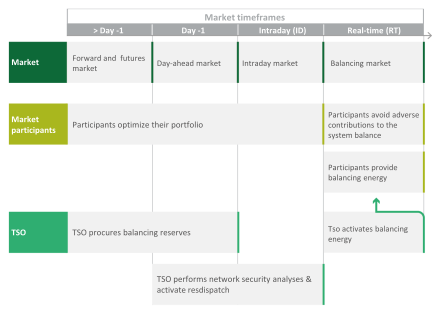
Source: ECA based on Tennet 2019.
As networks have to be operated according to safe capacity limits, transmission system operators allocate the interconnection capacity to trades for delivery between bidding zones. Bidding zones are network areas that should not be affected by structural congestion. Depending on the type of wholesale markets, different allocation methods are used. On the day-ahead markets, transmission system operators sell transmission capacity implicitly, using an algorithm, which matches electricity supply and demand and cross-zonal capacity. On the forward market transmission rights are traded separately from electricity. Transmission system operators can also take remedial action to solve unplanned network congestions (e.g. re-dispatching and countertrading).
Annex II – Main developments in power exchange coupling
Voluntary market coupling:
- 1996-2000: Norwegian and Swedish power spot markets are coupled (Nord Pool – day-ahead, intraday, balancing timeframes); Finland and Denmark join Nord Pool;
- 2006: Belgium, France, Netherlands couple their markets (Trilateral Market Coupling, i.e. TMC);
- 2010: Germany and Luxembourg join TMC (forming Continental Western Europe, i.e. CWE);
- 2012: coupling of Czechia, Hungary and Slovakia;
- 2013: Austria joins CWE ;
- 2014: coupling of CWE, the United Kingdom, Nord Pool, Estonia, Latvia and Lithuania; coupling of Spain and Portugal with CWE; coupling of Hungary with Romania (forming 4M MC);
- 2015: coupling of Italy with France, Austria and Slovenia (forming MRC area with 19 Member States coupled);
- 2015: CWE implements flow-based market coupling.
Mandatory actions (following the adoption of market Guidelines/TCMs):
- 2018: coupling of intraday markets of 15 MSs (CWE plus other continental Member States);
- 2019: other seven Member States join intraday coupling;
- 2020: day-ahead coupling of Italy and Greece;
- 2021: day-ahead coupling of Greece and Bulgaria; day-ahead interim coupling project of 4M MC to MRC; day-ahead coupling of Romania and Bulgaria; intraday coupling of Italy to the other 22 coupled Member States.
Annex III – Overview of the main requirements included in the network guidelines
| Market segment | Commission guideline | Main requirements |
|---|---|---|
| Day-ahead markets Intraday markets |
Commission Regulation (EU) 2015/1222 of 24 July 2015, establishing a guideline on capacity allocation and congestion management (CACM) |
|
| Forward markets | Commission Regulation (EU) 2016/1719 of 26 September 2016, establishing a guideline on forward capacity allocation (FCA) |
|
| Balancing markets | Commission Regulation (EU) 2017/2195 of 23 November 2017, establishing a guideline on electricity balancing (EB) |
|
Source: ECA.
Annex IV – ACER’s organisational chart
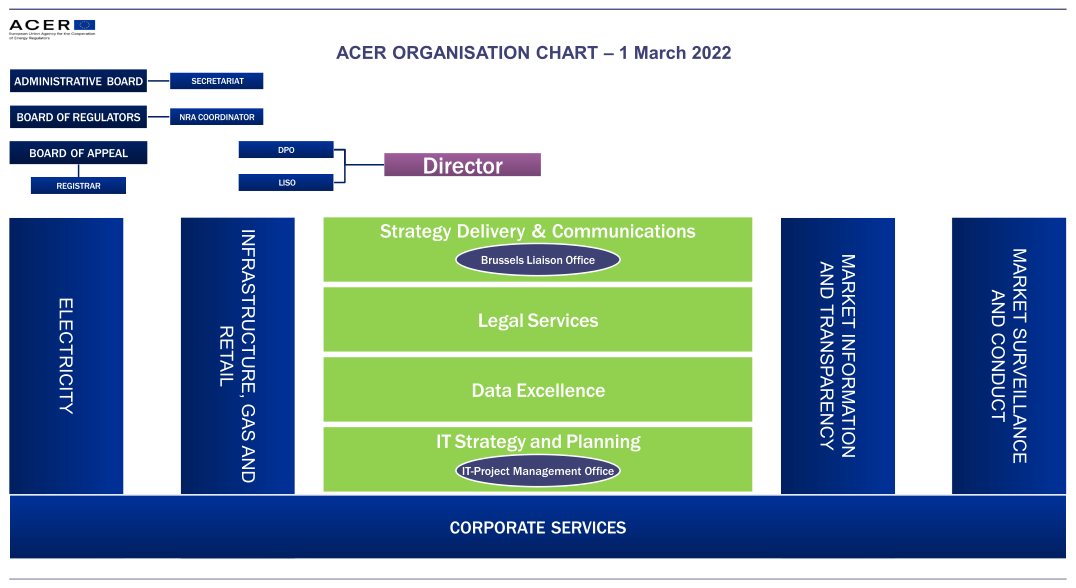
Note: Strategy Delivery & Communications and Legal Services are administratively under the Director, Data Excellence is under MIT and ITSP jointly under MIT and Corporate services.
Annex V – Overview of ACER’s bidding zones monitoring
Bidding zones (BZs) are geographical areas within which market participants are able to trade electricity without having to acquire transmission capacity to enable their transactions. The CACM guideline states that the allocation of capacities to markets participants should be based on the free pricing of transmission congestion at the borders between BZs. Appropriate BZ configuration can boost the transmission capacity made available for trade and ultimately cross-border trade and competition. BZs can be modified by splitting, merging or adjusting the zone borders.
The CACM guideline requires ACER:
- to evaluate the impact of configuration of BZs on market efficiency every three years ('market report'), based on an ENTSO-E technical report;
- to trigger a review of existing bidding zone configurations by respective TSOs in case market inefficiencies are identified.
The CACM guideline does not set out the configuration of BZs, but allows ACER, NRAs, TSOs, and Member States in a capacity calculation region to ask respective TSOs to launch a review of existing BZ configurations. Based on such a review, TSOs will submit a joint proposal, which the respective Member States will decide upon.
ACER provided two market reports (in 2018 and 2021) as required by the CACM guideline. Moreover, ACER led a joint pilot project with ENTSO-E on the assessment and review of BZs (which was launched in 2012 before the adoption of the CACM guideline, and was finalised in 2018).
Despite providing evidence on inefficiencies for three years (2015-2017) as stipulated in the guideline, ACER’s 2018 overall assessment was inconclusive in terms of the need to amend any specific BZ. Following its assessment, ACER did not trigger a review in 2018 and provided generic recommendations for further investigations.
We found two types of cause for the lack of clear conclusions:
- ACER argued that it was due to insufficient data and information, including insufficient evidence provided by ENTSO-E.
- ACER’s assessment was based on the 2018 ENTSO-E review report covering only certain EU regions (requested by ACER in the framework of the pilot project) instead of the ENTSO-E technical report (delivered in October 2018), due to ENTSO-E’s delay with this report (legal deadline exceeded by three months). /li>
Moreover, gaps in the legal framework did not contribute to the clarity of ACER’s arguments and conclusions. The CACM guideline does not define the BZ concept and does not stipulate specific criteria for ACER assessments of BZs. It is unclear whether the market report fully assessed the impact of configuration on market efficiency: ACER did not apply criteria such as market liquidity and market power (even though they are mentioned in the CACM guideline, see Article 33).
ACER carried out a second assessment of BZs in 2021 (covering the 2018-2020 period). It was both inefficient and inconclusive. Indeed, it overlapped with the ongoing review of BZs triggered by the implementation of the E-Regulation launched in 2020 (Article 14). Moreover, ACER reiterated the conclusion that 'so far, bidding zone configurations have not reflected the underlying structural congestions, but rather, most commonly follow national borders'. The report showed that several regions performed poorly in terms of market efficiency. However, once again, the second report did not recommend any changes to configuration, only more detailed studies.
There is no legal requirement for ACER to provide an ex post evaluation of BZ reviews. However, ACER’s market report issued in 2018 as well as the IMR on the CACM and FCA guidelines (2019) provided suggestions for the Commission’s changes to the BZ review process, based on the lessons learnt from the pilot project. ACER suggestions were impactful: the new E-Regulation (Article 14) requires the launch of a review process with more specific characteristics (e.g. clearer steps and deadlines, ACER’s approval of the methodology etc.). However, it remains unclear the extent to which procedures and criteria for the review process defined in the CACM guideline are still applicable, both to this redesigned review and to others in the near future. The CACM guideline has not been amended based on these new requirements under the E-Regulation.
This new review process (triggered by Article 14 of the recast E-Regulation) has been substantially delayed (by more than one year) due to ACER’s additional requests for information, in order to be able to decide on alternative configurations to be considered by the upcoming TSOs’ review of BZs.
Annex VI – NRAs’ participation in the ACER Electricity Working Group (2019-2021)
| Number of meetings held | 26 |
|---|---|
| Austria | 26 |
| Germany | 26 |
| France | 26 |
| Belgium | 25 |
| Spain | 26 |
| Sweden | 26 |
| Portugal | 26 |
| Italy | 26 |
| Netherlands | 26 |
| Poland | 26 |
| Hungary | 20 |
| Denmark | 25 |
| Finland | 25 |
| Czechia | 24 |
| Ireland | 24 |
| Luxemburg | 19 |
| Slovenia | 10 |
| Croatia | 11 |
| Greece | 19 |
| Lithuania | 13 |
| Latvia | 18 |
| Malta | 0 |
| Romania | 17 |
| Estonia | 4 |
| Cyprus | 4 |
| Bulgaria | 0 |
| Slovakia | 10 |
| United Kingdom | 13 |
Source: ACER.
Annex VII – NRAs’ enforcement decisions on REMIT – Wholesale electricity market (status as of 4 June 2022)
| Date of breach | Decision date | NRA, Member State | Market Participant | Type of REMIT breach | Involving Balancing market | Fine | Status |
|---|---|---|---|---|---|---|---|
| October 2016 | 25 April 2022 | CRE (FR) | Electricité de France SA | Article 3 and Article 4 | No | €500 000 | Appeal possible |
| November 2016 | 25 April 2022 | CRE (FR) | EDF Trading Limited | Article 5 | No | €50 000 | Appeal possible |
| June 2019 | 30 September 2021 | BNetzA (DE) | Energi Danmark A/S | Article 5 | No | €200 000 | Final |
| June 2019 | 30 September 2021 | BNetzA (DE) | Optimax Energy GmbH | Article 5 | No | €175 000 | Under appeal |
| March 2019 - September 2020 | 24 August 2021 | OFGEM (UK) | ESB Independent Generation Trading Limited and Carrington Power Limited | Article 5 | Yes | £6 000 000 (approx. €7 million) | Final |
| September 2017 - March 2020 | 16 December 2020 | OFGEM (UK) | EDF Energy (Thermal Generation) Limited | Article 5 | Yes | £6 000 000 (approx. €6.7 million) | Final |
| Winter 2016 | 25 March 2020 | OFGEM (UK) | InterGen (UK) Ltd, Coryton Energy Company Ltd, Rocksavage Power Company Ltd, Spalding Energy Company Ltd | Article 5 | Yes | £37 291 000 (approx. €42.5 million) | Final |
| 18-Mar-19 | September 2019 | MEKH (HU) | MAVIR Magyar Villamosenergia-ipari Átviteli Rendszerirányító Zártkörűen Működő Részvénytársaság | Article 5 | No | HUF 1 000 000 (approx. €3 000) | Final |
| 2015 | 21 December 2018 | Prosecutor/DUR (DK) | Neas Energy A/S | Article 5 | No | DKK 153 000 (approx. €20 400) | Final |
| 2015 | 30 October 2018 | Prosecutor/DUR (DK) | Energi Danmark A/S | Article 5 | No | DKK 1 104 000 (approx. €147 000) | Final |
| 30 November - 23 December 2013 | 24 November 2015 | CNMC (ES) | Iberdrola Generación S.A.U. | Article 5 | No | €25 000 000 | Under appeal |
| Total fines | €82 295 400 |
Source: ECA.
Annex VIII – Total number of new cases of potential REMIT breach per year and per NRA
| Lead NRA | 2017 | 2018 | 2019 | 2020 | 2021 | Total | Cases from ACER Surveillance | Cases from other Notifications |
|---|---|---|---|---|---|---|---|---|
| NRA 1 | 7 | 5 | 10 | 8 | 6 | 36 | 2 | 34 |
| NRA 2 | 1 | 2 | 0 | 0 | 0 | 3 | 3 | |
| NRA 3 | 2 | 3 | 3 | 13 | 6 | 27 | 2 | 25 |
| NRA 4 | 2 | 5 | 0 | 2 | 1 | 10 | 10 | |
| NRA 5 | 9 | 15 | 14 | 13 | 12 | 63 | 4 | 59 |
| NRA 6 | 19 | 13 | 4 | 2 | 12 | 50 | 50 | |
| NRA 7 | 16 | 4 | 7 | 7 | 12 | 46 | 46 | |
| NRA 8 | 2 | 5 | 3 | 6 | 2 | 18 | 18 | |
| NRA 9 | 0 | 1 | 0 | 3 | 0 | 4 | 4 | |
| NRA 10 | 2 | 7 | 3 | 8 | 8 | 28 | 1 | 27 |
| NRA 11 | 2 | 0 | 3 | 6 | 12 | 23 | 2 | 21 |
| NRA 12 | 0 | 0 | 0 | 2 | 0 | 2 | 2 | |
| NRA 13 | 1 | 2 | 4 | 5 | 4 | 16 | 16 | |
| NRA 14 | 7 | 5 | 7 | 10 | 5 | 34 | 1 | 33 |
| NRA 15 | 0 | 1 | 0 | 0 | 0 | 1 | 1 | |
| NRA 16 | 3 | 5 | 14 | 0 | 4 | 26 | 1 | 25 |
| NRA 17 | 3 | 2 | 1 | 5 | 2 | 13 | 13 | |
| NRA 18 | 2 | 4 | 7 | 3 | 7 | 23 | 23 | |
| NRA 19 | 3 | 3 | 1 | 0 | 2 | 9 | 9 | |
| NRA 20 | 0 | 2 | 0 | 0 | 0 | 2 | 2 | |
| NRA 21 | 3 | 15 | 19 | 5 | 1 | 43 | 43 | |
| NRA 22 | 0 | 0 | 0 | 1 | 0 | 1 | 1 | |
| NRA 23 | 0 | 0 | 0 | 2 | 1 | 3 | 3 | |
| NRA 24 | 0 | 2 | 5 | 1 | 1 | 9 | 9 | |
| NRA 25 | 0 | 0 | 2 | 0 | 2 | 4 | 4 | |
| NRA 26 | 0 | 0 | 0 | 0 | 0 | 0 | 0 | |
| NRA 27 | 0 | 0 | 0 | 0 | 0 | 0 | 0 | |
| NRA 28 | 0 | 0 | 0 | 0 | 0 | 0 | 0 | |
| More than 1 lead NRA | 1 | 1 | 3 | 0 | 9 | 14 | 7 | 7 |
| Total (all REMIT breaches) | 85 | 102 | 110 | 102 | 109 | 508 | 20 | 488 |
| Cases from ACER Surveillance | 0 | 2 | 4 | 5 | 9 | 20 | ||
| Cases from other Notifications | 85 | 100 | 106 | 97 | 100 | 488 | ||
| Total (Article 3 and 5 REMIT breaches) | 64 | 82 | 90 | 93 | 102 | 431 | 20 | 411 |
| Cases from ACER Surveillance | 0 | 2 | 4 | 5 | 9 | 20 | ||
| Cases from other Notifications | 64 | 80 | 86 | 88 | 93 | 411 |
Source: ACER.
Annex IX – ACER’s website: an ineffectively run key transparency tool
ACER’s website falls short of expectations when compared to the Commission’s website or those of other EU agencies. For example:
- The website is not user-friendly to consult. Compared to Commission or ESMA websites, the search tool for the whole website is imprecise, and often returns no results when searching for a specific document. As no filtering options are available, external users cannot retrieve batches of documents based on specific criteria. The filtering tool that is supposed to allow external users to search specific NRA notifications related to TCMs does not work122.
- Not all TCMs are publicly available on ACER’s website, and there is no indication as to which versions are in force and which have been superseded.
- The website does not provide details of how to request access from ACER to documents which are not directly accessible.
- ACER does not publish documents about the activities of ACER working groups, task forces or expert groups: for example, minutes or agendas of meetings, list of meeting participants, action plans, deliverables, or reporting. ACER’s internal rules require transparency in respect of meetings with organisations and self-employed individuals123.
- The minutes of the Board of Regulators’ meetings do not document which NRAs voted against specific decisions and opinions, or why.
- Certain documents whose publication is a legal requirement are not published at all124. For example, background documents to Administrative Board or Board of Regulators meetings125. Moreover, some Director’s decisions or AB decisions were not available126, and no official documents were published by the Board of Regulators in 2022127.
- Data for each MMR, for example, is attached to the respective MMR edition, instead of creating a single database that can be searched based on filters, and which can generate time series128.
- ACER does not publish any data from the REMIT database (see paragraph 114) and certain MMR data are not published129 (no justification is publicly available).
Acronyms and abbreviations
ACER: EU Agency for the Cooperation of Energy Regulators
CACM: Guideline on capacity allocation and congestion management
DG COMP: Commission Directorate-General for Competition
DG ENER: Commission Directorate-General for Energy
DSO: Distribution system operator
ENTSO-E: European Network of Transmission System Operators for Electricity
E-Regulation/Directive: Electricity Regulation/Directive
ESMA: European Securities and Markets Authority
EU-DSO: European distribution system operator
IMR: Implementation monitoring report
NEMO: Nominated electricity market operator
NRA: National regulatory authority
OECD: Organisation for Economic Co-operation and Development
REMIT: Regulation on wholesale Energy Market Integrity and Transparency
TCMs: Terms, conditions and methodologies
TSO: Transmission system operator
Glossary
Balancing market: The market for trading the energy needed to balance supply with demand in the electricity grid in real time, managed by transmission system operators.
Bidding zone: The largest geographical area within which market participants are able to exchange energy without having to acquire transmission capacity.
Day-ahead market: The market on which electricity and transmission capacity is traded a day ahead of delivery day.
Forward market: The market on which electricity as well as transmission rights are traded days, weeks or months ahead of delivery.
Interconnector: The physical transmission network link between two bidding zones or countries.
Intraday market: The market on which electricity and transmission capacity are traded on the same day as electricity delivery.
Network congestion: The situation in which electricity supply exceeds grid capacity.
Over the counter: The trade between market participants, bilaterally or via a broker, without the involvement of a power exchange.
Power exchange: The virtual marketplace for trading wholesale electricity according to formal rules.
Terms, conditions and methodologies: The technical specifications that complement network codes and guidelines, and that are necessary for their implementation.
Transmission capacity: The amount of power that can be transported between bidding zones in the power grid.
Transmission system operator: The company responsible for a national high-voltage grid.
Wholesale electricity market: The market on which electricity is traded between generation companies and retail companies, which also involves financial intermediaries, energy traders and large consumers.
Replies of the Commission
Replies of ACER
Audit team
The ECA’s special reports set out the results of its audits of EU policies and programmes, or of management-related topics from specific budgetary areas. The ECA selects and designs these audit tasks to be of maximum impact by considering the risks to performance or compliance, the level of income or spending involved, forthcoming developments and political and public interest.
This performance audit was carried out by Audit Chamber IV Regulation of markets and competitive economy, headed by ECA Member Mihails Kozlovs. The audit was led by ECA Member Mihails Kozlovs, supported by Edite Dzalbe, Head of Private Office and Laura Graudina, Private Office Attaché; Valeria Rota and Juan Ignacio Gonzalez Bastero, Principal Managers; Stefano Sturaro, Head of Task; Adrian Savin, Deputy Head of Task, Marc Hertgen and Satu Levelä-Ylinen, Auditors. Richard Moore and Laura Mcmillan provided linguistic support. Zsolt Varga provided data support.

From left to right: Adrian Savin, Stefano Sturaro, Laura Graudina, Mihails Kozlovs, Edite Dzalbe, Juan Ignacio Gonzalez Bastero.
Endnotes
1 EU energy strategy (2015), p. 3.
2 Report from the Commission to the European Parliament, the Council, the European Economic and Social Committee and the Committee of the Regions '2020 report on the State of the Energy Union pursuant to Regulation (EU) 2018/1999 on Governance of the Energy Union and Climate Action', 14.10.2020 COM(2020) 950 final, p. 10.
4 Regulation (EC) No 713/2009 of the European Parliament and of the Council of 13 July 2009 establishing an Agency for the Cooperation of Energy Regulators.
5 Regulation (EU) No 1227/2011 of the European Parliament and of the Council of 25 October 2011 on wholesale energy market integrity and transparency.
8 COM(2021) 660 final of 13 October 2021: Tackling rising energy prices: a toolbox for action and support.
9 COM(2022) 108 final of 8 March 2022: REPowerEU: Joint European Action for more affordable, secure and sustainable energy.
10 https://ec.europa.eu/commission/presscorner/detail/en/ip_22_3131
11 Opinion 04/2022 – REPower EU.
12 ECA special report 16/2015, paragraphs 113 and 115.
13 Commission Regulation (EU) 2015/1222 of 24 July 2015, establishing a guideline on capacity allocation and congestion management (CACM).
14 Commission Regulation (EU) 2016/1719 of 26 September 2016, establishing a guideline on forward capacity allocation (FCA).
15 Commission Regulation (EU) 2017/2195 of 23 November 2017, establishing a guideline on electricity balancing (EB).
16 Conclusions adopted by the European Council on 4 February 2011.
17 ACER MMR 2013, paragraph 288.
18 ACER’s final assessment of the EU Wholesale Electricity Market Design, April 2022, p. 22.
19 ACER MMR 2020 – electricity wholesale market, p. 53.
20 ACER’s Final Assessment of the EU Wholesale Electricity Market Design (2022), p. 37 and 44.
21 https://www.ceer.eu/documents/104400/-/-/8fca26ef-8791-7da0-1fa2-e64518b4ebf8
22 Article 16.3 of the previous E-Regulation and paragraph 1.7 of Annex I; Article 16.4 of the current E-Regulation.
23 ACER Market monitoring report 2016.
24 https://eepublicdownloads.entsoe.eu/clean-documents/Publications/ENTSO-E general publications/ENTSO-E_PowerFacts_2019.pdf
25 European Council conclusions of 15-16 March 2002 and 23-24 October 2014.
26 Recital 74 of the E-Regulation.
27 Article 288 of TFEU.
28 'OECD Recommendation of the Council on Regulatory Policy and Governance', 2012.
29 https://www.acer.europa.eu/events-and-engagement/news/acer-provides-recommendation-reasoned-amendments-capacity-allocation-and congestion management regulation
30 See, for example, Article 9 (11) of CACM guideline.
31 The Commission’s ‘better regulation toolbox’.
32 'Adapting market design to high shares of variable renewable energy' (IRENA, 2017), section 2.2.
33 REPowerEU: Joint European Action for more affordable, secure and sustainable energy (COM(2022) 108 final).
34 https://op.europa.eu/en/publication-detail/-/publication/38fbccf2-35de-11eb-b27b-01aa75ed71a1/language-en
35 ACER Market monitoring report 2013, paragraph 237.
36 https://documents.acer.europa.eu/en/The_agency/Organisation/Documents/ Energy Prices_Final.pdf
37 'Investment perspectives in electricity markets' (SWD(2015) 142).
38 https://op.europa.eu/en/publication-detail/-/publication/be5268ba-3609-11ec-bd8e-01aa75ed71a1/language-en
39 OECD Best Practice Principles for Regulatory Policy Regulatory Enforcement and Inspections, 2014.
40 'OECD Recommendation of the Council on Regulatory Policy and Governance', 2012.
41 Article 5.1.e of ACER Regulation (EU) 2019/942 and Article 6.6 of the previous ACER Regulation (EC) 713/2009.
42 Article 14(2) of ACER Regulation (EU) 2019/942 and Article 10(2) of former ACER Regulation (EC) 713/2009.
43 Article 11 of the previous E-Regulation and Article 15 of the current E-Regulation.
44 Article 17 TEU.
45 COM(2015) 80 final.
46 Article 32 of Decision 8/2019 of the Administrative Board on the Financial Regulation of ACER.
47 European Stakeholder Committees (ESCs) have been established to inform and consult stakeholders about the requirements included in the electricity network codes/guidelines during the implementation period. Since 2015, ACER and ENTSO-E have co-organised three ESCs, one for each family of codes (market, system operation, grid connection).
48 https://ec.europa.eu/info/events/european-electricity-regulatory-forum-florence-forum_en#past-events
49 https://www.entsoe.eu/network_codes/esc/#network-code-implementation-and-monitoring-group
50 ENTSO-E publishes a yearly report on the implementation of CACM and FCA called 'Market report' (2016-2021) and two reports on the balancing market guideline (2020,2022): https://www.entsoe.eu/network_codes/monitoring/
51 https://surveys.acer.europa.eu/eusurvey/runner/ACERnotification
52 See paragraph 123 of ACER implementation report on CACM/FCA guidelines: Due to lack of resources, ACER could not actively follow all discussions in all capacity calculation regions.
53 MMR – wholesale electricity markets 2020, p. 15 (Table i and ii).
55 In accordance with Commission Regulation (EU) No 543/2013.
56 A review of the ENTSO-E Transparency Platform - Output 1' (2017).
57 ACER report on the result of monitoring the margin available for cross-zonal electricity trade in the EU in the second half of 2020.
58 Article 11(3) of former E-Regulation and article 15(3) of the new E-Regulation.
59 Article 34(7) of the CACM guideline.
61 Article 16 of the recast E-Regulation.
62 ACER Recommendation 1/2019 on the implementation of the minimum margin available for cross-zonal trade; two ACER Reports on the result of monitoring the margin available for cross-zonal electricity trade in the EU (published in 2020 and 2021).
63 Article 15 of the recast E-Regulation only requires TSOs to submit their annual compliance assessments and compliance plans to ACER.
64 ACER Recommendation 1/2019 on the implementation of the minimum margin available for cross-zonal trade pursuant to Article 16(8) of Regulation (EU) 2019/943.
65 Article 37(4)(d) of Directive (EU) 2009/72/EC.
66 Regulation (EU) No 1227/2011, Recitals (1), (2) and (3).
67 Article 18 of REMIT.
68 Quarterly Report on European electricity markets – Q4 2020.
69 REMIT Quarterly Q2/2022;6th REMIT Forum, Presentation slide 86.
70 Article 4 of Commission Implementing Regulation (EU) No 1348/2014.
71 No-action relief letters of 7 January 2015 (ACER-VZ-pp 2015-3), 15 December 2016 (ACER-VZ-MG-mm-up-201 6-662) and 14 December 2017 (ACER-VZ-MG-tl-653). Since 2018, the 'no-action relief letters' were discontinued, although the policy was maintained. It was simply added to the Programming Document (PD), For example, in section 2.10 on p. 115 of the 2019 PD: 'In addition, the Agency will not request the reporting of contracts reportable at request of the Agency according to Article 4(1) of Commission Implementing Regulation (EU) 1348/2014 in 2019'.
72 Article 4 of Regulation (EU) No 1227/2011.
73 Article 2(1) of Regulation (EU) No 1227/2011.
74 i.e. information related to the capacity and use of facilities for production, storage, consumption or transmission of electricity, including planned or unplanned unavailability of these facilities.
75 Article 10 of Commission Implementing Regulation (EU) No 1348/2014.
76 Article 7(3) of Regulation (EU) No 1227/2011.
77 Open Letter on Inside Information disclosure and the use of Inside Information Platforms (IIPs) of 30 May 2018 – ACER-VZ-az-jws-tl-2018-266.
78 ACER Guidance on the application of Regulation (EU) 1227/2011 of the European Parliament and of the Council of 25 October 2011 on wholesale energy market integrity and transparency 6th Edition, Section 4.2.1.
79 https://www.acer-remit.eu/portal/list-inside-platforms
80 Article 16(1) of Regulation (EU) No 1227/2011.
81 Article 10 of Regulation (EU) No 1227/2011.
82 Article 12(1) of Regulation (EU) No 1227/2011.
83 AT, FR, Sl, DK, DE, SE, NL HU, FI, BE.
84 IT, LT, RO, LV, CZ - ACER presentation of 4 March 2021.
85 REMIT Forum 2021 – Special session: 'REMIT data and technology' – REMIT data features – slide 3.
86 Article 12(2) of Regulation (EU) No 1227/2011.
87 ACER Programming Document 2020-2022, p. 79.
88 REMIT Forum 2021, Special session 'REMIT data and technology' – Information Management and Technology, slide 7.
89 2016 REMIT Annual Report, p. 25.
93 ACER market surveillance started in the last quarter of 2017.
94 Article 13 of Regulation (EU) No 1227/2011.
95 Article 16(4) of Regulation (EU) No 1227/2011.
96 Article 16(1) of Regulation (EU) No 1227/2011.
97 Article 16(4) of Regulation (EU) No 1227/2011.
98 Guidance Note 1/2017 - Wash Trades; Guidance Note 1/2018 – Transmission Capacity Hoarding; Guidance Note 1/2019 – Layering and Spoofing.
99 Article 18 of Regulation (EU) No 1227/2011.
100 '1/3 of the NRAs highlighted a lack of resources (funding) which in their view is not consistent with NRA independence principles ' Council of Europeans Regulators Monitoring NRAs Independence Report, April 2021, p. 7.
103 BNETZ (DE NRA) decisions of 30 September 2021 against Energy Denmark A/S (Denmark) for €200 000 and Optimax Energy GmbH (Germany) for €175 000.
104 ACER recast Regulation 942/2019, Recital 37.
105 Budget and staffing needs for the Agency for the Cooperation of Energy Regulators (ACER), PE 658.177, November 2020.
106 Since September 2010, ACER has outsourced its calculations of staff salaries and entitlements to the PMO, and since September 2017, it has outsourced its accounting to DG BUDG. It has also outsourced IT support, maintenance, and development to external contractors [ARIS software and infrastructure] and to the Commission [ABAC, ARES, SYSPER].
107 Commission Decision (EU) 2020/2152 of 17 December 2020.
110 ACER Regulation (EU) 2019/942, recital 33.
111 'OECD Recommendation of the Council on Regulatory Policy and Governance', 2012.
112 'OECD Recommendation of the Council on OECD Guidelines for Managing Conflict of Interest in the Public Service', 2003.
114 Article 14.2 Regulation 942/2019 (Recast ACER Regulation).
115 Article 22 of former E-Regulation and Article 66 of E-Regulation.
116 Regulation (EU) 1095/2010 establishing a European Supervisory Authority (European Securities and Markets Authority), articles 14, 15, 16. Similar provisions can be found in EBA and EIOPA Regulations.
117 For example, NRAs may no longer vote in panels on 'breach of Union law' cases that concern themselves (art. 41 of ESMA Regulation).
118 Decision 02/2015 of ACER Administrative Board.
119 See also Commission Evaluation of the third energy package: SWD(2016) 412 final, Section 7.1.1.
120 https://documents.acer.europa.eu/Official_documents/BoR/Meeting_Docs/A21-BoR-98-02.pdf
121 The net transmission capacity represents the ex ante calculated maximum amount of power that can be transferred through an interconnector in a certain direction, when the reliability margin (i.e. safety factor) is discounted.
122 https://surveys.acer.europa.eu/eusurvey/publication/ACERnotification
123 Director Decision 2017-35 on the publication of information on meetings with organisations or self-employed individuals.
124 Article 14(4) of Regulation (EU) 2019/942 and Article 10(4) of former Regulation (EC) No 713/2009
125 For example, ACER report on Use of Congestion Income 2020.
126 For example, no official Director Decision was published on the establishment of REMIT Committee.
127 https://acer.europa.eu/the-agency/organisation-and-bodies/board-of-regulators/bor-official-documents
128 For example, https://ec.europa.eu/energy/data-analysis/energy-union-indicators/scoreboard_en
129 MMR – wholesale electricity markets 2020, p. 15 (data for Tables i and ii).
Contact
EUROPEAN COURT OF AUDITORS
12, rue Alcide De Gasperi
1615 Luxembourg
LUXEMBOURG
Tel. +352 4398-1
Enquiries: eca.europa.eu/en/Pages/ContactForm.aspx
Website: eca.europa.eu
Twitter: @EUAuditors
More information on the European Union is available on the internet (https://europa.eu).
Luxembourg: Publications Office of the European Union, 2023
| ISBN 978-92-847-9359-4 | ISSN 1977-5679 | doi:10.2865/578602 | QJ-AB-23-003-EN-N | |
| HTML | ISBN 978-92-847-9335-8 | ISSN 1977-5679 | doi:10.2865/63874 | QJ-AB-23-003-EN-Q |
COPYRIGHT
© European Union, 2023
The reuse policy of the European Court of Auditors (ECA) is set out in ECA Decision No 6-2019 on the open data policy and the reuse of documents.
Unless otherwise indicated (e.g. in individual copyright notices), ECA content owned by the EU is licensed under the Creative Commons Attribution 4.0 International (CC BY 4.0) licence. As a general rule, therefore, reuse is authorised provided appropriate credit is given and any changes are indicated. Those reusing ECA content must not distort the original meaning or message. The ECA shall not be liable for any consequences of reuse.
Additional permission must be obtained if specific content depicts identifiable private individuals, e.g. in pictures of ECA staff, or includes third-party works.
Where such permission is obtained, it shall cancel and replace the above-mentioned general permission and shall clearly state any restrictions on use.
To use or reproduce content that is not owned by the EU, it may be necessary to seek permission directly from the copyright holders.
Figure Box 1: © Next Kraftwerke GmbH.
Software or documents covered by industrial property rights, such as patents, trademarks, registered designs, logos and names, are excluded from the ECA’s reuse policy.
The European Union’s family of institutional websites, within the europa.eu domain, provides links to third-party sites. Since the ECA has no control over these, you are encouraged to review their privacy and copyright policies.
Use of the ECA logo
The ECA logo must not be used without the ECA’s prior consent.
GETTING IN TOUCH WITH THE EU
In person
All over the European Union there are hundreds of Europe Direct centres. You can find the address of the centre nearest you online (european-union.europa.eu/contact-eu/meet-us_en).
On the phone or in writing
Europe Direct is a service that answers your questions about the European Union. You can contact this service:
- by freephone: 00 800 6 7 8 9 10 11 (certain operators may charge for these calls),
- at the following standard number: +32 22999696,
- via the following form: european-union.europa.eu/contact-eu/write-us_en.
FINDING INFORMATION ABOUT THE EU
Online
Information about the European Union in all the official languages of the EU is available on the Europa website (european-union.europa.eu).
EU publications
You can view or order EU publications at op.europa.eu/en/publications. Multiple copies of free publications can be obtained by contacting Europe Direct or your local documentation centre (european-union.europa.eu/contact-eu/meet-us_en).
EU law and related documents
For access to legal information from the EU, including all EU law since 1951 in all the official language versions, go to EUR-Lex (eur-lex.europa.eu).
EU open data
The portal data.europa.eu provides access to open datasets from the EU institutions, bodies and agencies. These can be downloaded and reused for free, for both commercial and non-commercial purposes. The portal also provides access to a wealth of datasets from European countries.