
Introducing the 2022 annual reports of the European Court of Auditors
A word on the ‘2022 EU audit in brief’
The ‘2022 EU audit in brief’ provides an overview of our 2022 annual reports on the EU’s general budget and the European Development Fund, in which we present our statement of assurance as to the reliability of the accounts and the legality and regularity of the transactions underlying them. This year, for the first time, through our work we also covered the Recovery and Resilience Facility and provide a separate opinion on the legality and regularity of its expenditure. The EU audit in brief also outlines our key findings regarding revenue and the main areas of spending under the EU budget and the European Development Fund, as well as findings relating to budgetary and financial management.
The full texts of the reports may be found at eca.europa.eu.
The European Court of Auditors (ECA) is the independent external auditor of the EU. We warn of risks, provide assurance, highlight shortcomings and good practice, and offer guidance to EU policymakers and legislators on improving the management of EU policies and programmes. Through our work we ensure that EU citizens know how their money is being spent.
 |
President’s foreword

The annual report is the ECA’s core product. Issuing it takes a concerted effort and a substantial amount of audit and support work. This year, as in previous years, we conclude that the EU accounts present a true and fair view of the EU’s financial position. We give a clean opinion on the reliability of the 2022 accounts. Revenue for 2022 was legal, regular, and free from material error.
The EU’s long-term budget package comprises the 2021-2027 Multi-Annual Financial Framework (MFF), combined with NextGenerationEU (NGEU), a temporary recovery package of additional funds financed through the issue of bonds. The Recovery and Resilience Facility (RRF) accounts for about 90 % of NGEU funding. For the second year in a row, we provide two separate opinions on the legality and regularity of expenditure for 2022: one on the traditional EU budget and one on the RRF.
For 2022, our estimate of the overall level of error in EU budget spending has increased to 4.2 % (2021: 3.0 %). We therefore issue an adverse opinion on expenditure. In the main areas of spending for which we provide a specific assessment, the level of error is material. It has increased substantially in the case of ‘Cohesion, resilience and values’, at 6.4 % (2021: 3.6 %). The level of error for ‘Natural resources’ is 2.2 % (2021: 1.8 %).
As the RRF’s second year of implementation, 2022 saw an increased level of payments and, for us, a more revealing view of how the RRF has been implemented. While progress was slower than expected, 11 member states received 13 grant payments worth a total of €46.9 billion. Additionally, pre-financing amounting to €6.8 billion was cleared. For our audit, we examined 244 out of 274 milestones and all 37 targets associated with the 13 payments made in 2022.
We based our assessment mainly on the condition set by the RRF Regulation for payments, which is that milestones and targets must first be satisfactorily fulfilled, but we also assessed compliance with the key eligibility conditions in the Regulation. We concluded that 15 of the 281 milestones and targets we examined were affected by regularity issues. Either they were not satisfactorily fulfilled or the associated measures were ineligible. Furthermore, our assessment considers the impact of qualitative findings such as cases of weak design in the measures and underlying milestones targets, and weaknesses in the member states’ reporting and control systems. We therefore issue a qualified opinion on RRF expenditure for 2022 based on both quantitative and qualitative criteria.
This qualified opinion represents the result of our annual compliance audit on the regularity of RRF expenditure. Assessing regularity continues to be a challenge, as the appraisal of qualitative achievements requires multiple judgements, leading to a variety of possible interpretations. Furthermore, in our audit work we repeatedly come across milestones or targets that are vaguely defined where it is difficult to assess whether or not they have been achieved.
It is important to note that our compliance audit on the regularity of RRF expenditure is just one aspect of the comprehensive body of work on which we are engaged to assess this new instrument. Firstly, we have already produced a number of audit reports highlighting serious shortcomings and concerns relating to the design and implementation of the RRF. These will be complemented by other audits, both ongoing and planned, on matters such as absorption, control systems, digital transition and green transformation. It is only by combining the results of all of this audit work that we will be in a position to assess the overall performance of the RRF.
As we begin to emerge from what seemed at times to be unrelieved crisis, it is worth mentioning the unprecedented nature of the EU’s response, in terms of instruments and initiatives in all areas of the budget. Member states are currently absorbing funds from several instruments at the same time. While closing programmes from the 2014-2020 period, they must also start on the delayed task of implementing the 2021-2027 MFF. Most member states are now implementing NGEU financing, where a significant amount of money is still to be disbursed.
Pressure on spending increases the pressure on administrative resources and, consequently, the risk of error. Furthermore, unless the implementation rate for shared management funds accelerates significantly in 2024 and 2025, the risk of decommitments later in the MFF cycle will increase exponentially.
Our findings for 2022 show that we must remain vigilant, and that effective checks are needed at all levels to ascertain how EU funds are being spent and whether the intended results are being achieved. We will continue to work with the other EU institutions and the member states to improve the management and supervision of EU funds. As always, our mission is to enhance citizens’ trust by improving accountability and transparency in all areas of the EU’s work so that it can respond effectively to current and future challenges.
Finally, I would like to acknowledge the dedication and expertise of the ECA’s staff. Their commitment and professionalism are central to the production of our annual report and to taking our institution forward.

Tony Murphy
President
Overall results
Key findings
Summary of the 2022 statement of assurance
We issue a clean opinion on the reliability of the 2022 accounts of the European Union.
We also issue a clean opinion on the legality and regularity of revenue for 2022.
We provide two separate opinions on the legality and regularity of expenditure for 2022:
- our opinion on the legality and regularity of EU budget expenditure is adverse;
- our opinion on the legality and regularity of expenditure under the Recovery and Resilience Facility is qualified.
We provide more information on the basis for our opinion on the legality and regularity of expenditure for 2022 in ‘Our statement of assurance’.
- We conclude that the EU accounts present a true and fair view of the EU’s financial position.
- The revenue for 2022 was legal and regular, and free from material error.
- Overall, the estimated level of error in EU budget expenditure was material at 4.2 % (2021: 3.0 %).
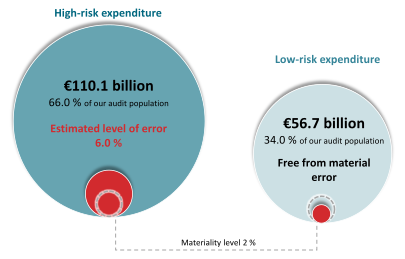
- In our risk assessment, we identify as high-risk the EU expenditure where beneficiaries often have to follow complex rules, when they submit claims for costs they have incurred. The proportion of high-risk expenditure in our audit population further increased and was substantial at 66.0 % (2021: 63.2 %). This year, we estimate the level of error to be 6.0 % (2021: 4.7 %) in this part of our audit population. This error is material and pervasive and we are issuing an adverse opinion on EU budget expenditure.
- For RRF expenditure, in 2022, the Commission made 13 grant payments to member states which included a total of 274 milestones and all 37 targets. We identified quantitative findings in 11 payments. Six of these payments were affected by material error, and we are issuing a qualified opinion on RRF expenditure.
- Commission’s estimate of error (risk at payment), as disclosed in the 2022 Annual Management and Performance Report (AMPR), is 1.9 %, which is significantly below our range. Limitations in the Commission’s and member states’ ex post checks in MFF headings 1, 2 and 6 affect the risk at payment disclosed in the AMPR, and hence the Commission’s risk assessment.
- In 2022, we reported to the European Anti-Fraud Office (OLAF) 14 cases (2021: 15 cases) of suspected fraud that we had identified during our audit of 2021 expenditure, based on which OLAF has already opened two investigations. We reported six of these cases in parallel to the European Public Prosecutor’s Office (EPPO), from which the EPPO has opened three investigations. During our audit of 2022 expenditure, we have identified 14 cases of suspected fraud.
- Outstanding commitments from the EU budget and NGEU grant funding, which represent future debts if they are not decommitted, reached a record level of €453 billion at the end of 2022. This was mainly because of new commitments for NGEU alongside new commitments for the 2021-2027 shared management funds.
- The EU debt increased significantly in 2022 to €344.3 billion by year-end (2021: €236.7 billion), mainly due to new borrowings for NGEU, the European Instrument for temporary Support to mitigate Unemployment Risks (SURE) and Macro-Financial Assistance (MFA). Of these borrowings, only the NGEU instrument carried interest risk to the EU budget. In 2022, net interest paid on the NGEU borrowings amounted to €0.5 billion.
- The EU budget’s exposure, consisting of liabilities related to loans disbursed through several funding instruments and to contingent liabilities, increased from €205 billion in 2021 to €248 billion in 2022. This was mainly due to the additional NGEU and SURE loans provided to member states and the MFA loans provided to Ukraine. In addition, at the end of 2022, there were an additional €126 billion in loans already granted but not yet disbursed. The EU budget’s exposure will therefore continue to rise.
- The EU budget’s exposure to Ukraine more than doubled in 2022 compared to 2021 (from €7 billion to €16 billion). The approval of an additional €18 billion for the MFA+ at the end of 2022 will significantly increase this exposure for future budgets.

The full text of our 2022 annual reports on the EU budget and on the activities funded by the 9th, 10th and 11th European Development Funds can be found on our website (eca.europa.eu).
What we audited
2022 EU budget in figures
The European Parliament and the Council adopt an annual EU budget, within the framework of a longer-term budget agreed for a period of several years (known as the ‘multiannual financial framework’ or MFF). In 2022, EU budget spending totalled €196.0 billion, the equivalent of 2.5 % of the EU member states’ total general government spending and 1.3 % of their gross national income.
In May 2020, the Council of the European Union adopted NGEU, a temporary instrument that was set up in response to the socio-economic impact of the COVID‑19 pandemic and is financed through issuing bonds. The RRF accounts for about 90 % of NGEU funding. In 2022, spending on non-repayable RRF support (grants) amounted to €47.2 billion.
Taking into account RRF spending, payments from the EU in 2022 totalled €243.3 billion.
Where does the money come from?
Total revenue for 2022 was €245.3 billion. The largest share of the EU budget is financed by amounts that member states contribute in proportion to their gross national income (€103.9 billion). Other sources include customs duties (€25.9 billion), a contribution based on value-added tax collected by member states (€19.7 billion), a contribution based on non-recycled plastic packaging waste (€6.3 billion), and other revenue (€6.4 billion). Additional revenue amounted to €83.1 billion in 2022, including €62.2 billion of external assigned revenue for budget guarantees, borrowing and lending operations (NGEU) and €20.9 billion of contributions and refunds arising from EU agreements and programmes.
What is the money spent on?
The EU budget is spent in a wide range of areas, as shown in Figure 1.
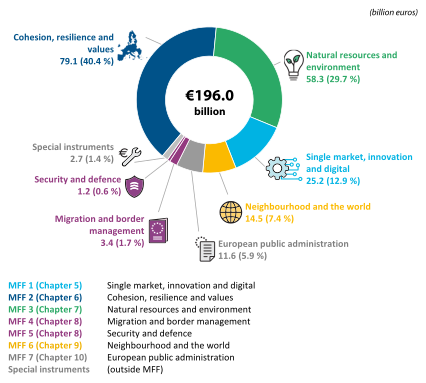
About three quarters of the budget is spent under what is known as 'shared management'. Under this budget implementation method, the member states distribute funds, select projects and manage the EU’s expenditure, while the Commission remains ultimately responsible. This is the case of, for example, ‘Natural resources and environment’ and ‘Cohesion, resilience and values’ MFF headings.
RRF spending finances investments and reforms in policy areas of EU‑wide relevance, structured into six pillars (see Figure 2).
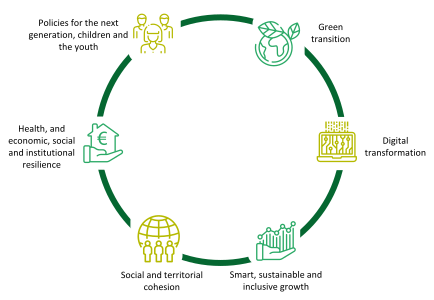
The member states set out these reforms and investments in advance in their national recovery and resilience plans, and the Commission pays them for achieving related milestones and targets.
What did we cover?
Every year, we audit EU revenue and expenditure, examining whether the annual accounts are reliable and whether the underlying income and expenditure transactions comply with EU and national rules. We examine expenditure at the point when final recipients of EU funds have undertaken activities or incurred costs or, in the case of RRF expenditure, at the point when member states request payment for achieving their predefined milestones or targets, and at the point when the Commission has accepted it. In practice, this means that our audit population of transactions covers interim and final payments. We did not examine advances paid in 2022 unless they were also cleared during the year.
In 2022, our audit population for testing revenue amounted to €245.3 billion. Our population for testing expenditure totalled €220.5 billion. We had separate audit populations for EU budget spending (€166.8 billion) and RRF spending (€53.7 billion) to support our respective opinions.
What we found
Our statement of assurance on the EU budget
In accordance with Article 287 of the Treaty on the Functioning of the European Union (TFEU), we provide a statement of assurance to the European Parliament and the Council of the European Union covering the reliability of the EU’s consolidated accounts and the legality and regularity of transactions. This is the central element of our annual report.
The RRF is a temporary instrument delivered and financed in a way that is fundamentally different to EU budget expenditure. Whereas beneficiaries of EU budget spending are paid for having undertaken certain activities or reimbursed for costs incurred, under the RRF member states are paid for the satisfactory achievement of predefined milestones or targets. For RRF, we therefore examined whether predefined milestones or targets were satisfactorily achieved and whether horizontal eligibility conditions were met. We therefore provide two separate opinions on the legality and regularity of expenditure: one for EU budget spending and another for RRF spending.
The EU accounts present a true and fair view
The 2022 EU accounts present fairly, in all material respects, the EU’s financial results and its assets and liabilities at the end of the year, in accordance with international public sector accounting standards.
We can therefore give a clean opinion on the reliability of the accounts, as we have done every year since 2007.
The EU balance sheet includes a liability for pension and other employee benefits amounting to €80.6 billion at the end of 2022 (2021: €122.5 billion). The decrease in the pension liability in 2022 is mainly due to the increase in the nominal discount rate, which is affected by rising global interest rates.
On 1 February 2020, the United Kingdom ceased to be an EU member state. At the balance sheet date, the EU accounts showed a net receivable due from the UK of €23.9 billion (2021: €41.8 billion), based on mutual obligations defined in the withdrawal agreement.
The impact of Russia´s invasion on loans and grants in respect of Ukraine in the EU accounts have been assessed, and appropriately accounted for and disclosed in accordance with the requirement of the accounting rules.
We issue a clean opinion of revenue
We conclude that revenue is free from material error. The systems for managing the revenue we examined were generally effective.
We issue an adverse opinion on EU budget spending
We define error as an amount of money that should not have been paid out of the EU budget. Errors occur when money is not used in accordance with the relevant EU legislation and hence not as the Council and European Parliament intended when adopting that legislation, or when it is not used in accordance with specific national rules.
For EU budget spending, we estimate the level of error to be between 3.1 % and 5.3 %. The mid-point of this range, previously known as the ‘most likely error’, has increased compared to last year, from 3.0 % to 4.2 % – see Figure 3.

More than half of our audit population is again affected by material error
In 2022, high-risk expenditure represented 66.0 % of our audit population, increased from 63.2 % in the previous year. We continued to find that low-risk expenditure was free from material error, but that high-risk expenditure remained affected by material error, therefore the way funds are disbursed has an impact on the risk of error. We estimate the level of error in high-risk expenditure at 6.0 % (2021: 4.7 %) (see Figure 4).
Figure 4 – Breakdown of the 2022 audit population into high-risk and low-risk expenditure
Source: ECA.
The level of error is mainly driven by ‘Cohesion, resilience and values’, followed by ‘Natural resources and environment’, ‘Single market, innovation and digital’ and ‘Neighbourhood and the world’ (see Figure 5).
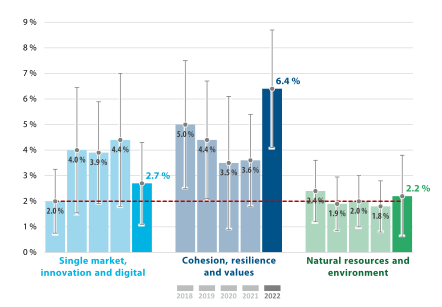
Eligibility errors still contribute most to the estimated level of error for high-risk expenditure. The increase in the estimated level of error for ‘Cohesion, resilience and values’ does not follow a geographical pattern. However, there was an increase in specific errors, such as ineligible costs and non-compliance with public procurement rules.
Comparing our error level estimates with those of the Commission
The AMPR, for which the college of Commissioners has responsibility, summarises key information from the annual activity reports (AARs) on internal control and financial management. It includes the risk at payment, which is the Commission’s estimate of the amount that has been paid without being in accordance with the applicable rules. The Commission’s risk at payment for 2022 is 1.9 %, which is below our estimated level of error of 4.2 % (2021: 3.0 %) and below our range, which is between 3.1 % and 5.3 %.
Like our estimated level of error, the Commission’s estimate does not include RRF expenditure, for which it discloses the control results separately based on a qualitative assessment. In addition, the AAR of each Commission directorate-general (DG) includes a declaration in which the director-general provides assurance that the report presents financial information properly and that the transactions under their responsibility are legal and regular. For this purpose, all DGs provided estimates of the risk at payment in their spending, except for the RRF, for which the Commission assesses the control results based on a combination of the results from member states’ and its own audits and controls.
For each MFF heading where we provide a specific assessment, we have compared the Commission’s risk at payment for 2022 with our estimated level of error. The comparison shows that the Commission’s figures are below our estimates for three policy areas. We found that for ‘Single market, innovation and digital’, the Commission’s estimate of the risk at payment of 1.5 % was in the lower half of our range, below our estimated level of error, for ‘Cohesion, resilience and values’, the Commission’s estimate was 2.6 %, significantly below our range for the estimated level of error and for ‘Natural resources and the environment’, the Commission’s estimate of the risk at payment (1.7 %) was in the lower half of our range, below our estimated level of error.
In the AMPR, the Commission presents its overall risk assessment for 2022 annual expenditure in order to identify and focus action on high-risk areas. The Commission estimates risk to be low for 63 % of expenditure, medium for 12 % and high for 25 %. However, our work revealed limitations in the Commission’s ex post work, which, taken together, affect the robustness of the Commission’s risk assessment.
We issued a qualified opinion on RRF expenditure in 2022
The overall audit evidence from our work shows that 11 out of the 13 RRF payments (and related clearings of pre-financing) were affected by quantitative findings. Six of these payments were affected by material error. We also identified cases of weak design in the milestones or targets and problems with the reliability of information that member states included in their management declaration.
Want to know more? Full information on the main findings can be found in Chapter 1 and Chapter 11 of our 2022 annual report. The full text of our annual report can be found on our website (eca.europa.eu).
A closer look at our results

Budgetary and financial management
EU budget implementation was high for commitments and payments
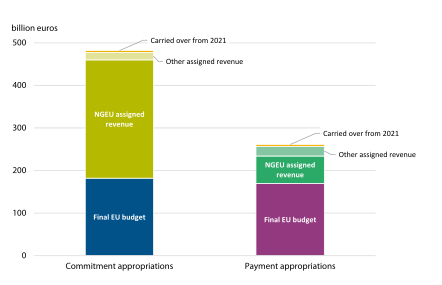
2022 was the second year of the 2021-2027 MFF. Figure 6 shows the overall available EU budget expenditure including NGEU grants.
Figure 6 – Overall 2022 available EU budget expenditure including NGEU grants
Source: ECA, based on the 2022 consolidated annual accounts of the EU.
In 2022, most of the commitment appropriations were used
The budgetary authority approved an initial budget of €169.5 billion for commitment appropriations. During 2022, there were five amendments increasing the budget to €182.2 billion, above the MFF ceiling of €179.8 billion. This was made possible by the use of special instruments, such as the Flexibility Instrument, the Brexit Adjustment reserve, the European Globalisation Adjustment fund and the Solidarity and Emergency Aid Reserve. In the final budget, a total of €179.4 billion was committed during 2022, thus using over 98 % of the available amount.
The final payment appropriations were used almost in full
The initial budget for payment appropriations was set at €170.6 billion, and this was eventually reduced to €170.0 billion. There were additional payment needs resulting from Russia’s war of aggression against Ukraine, as well as high inflation and increasing energy prices. €167.3 billion of the available € 170.0 billion payment appropriations in the EU budget were used. See Figure 7.
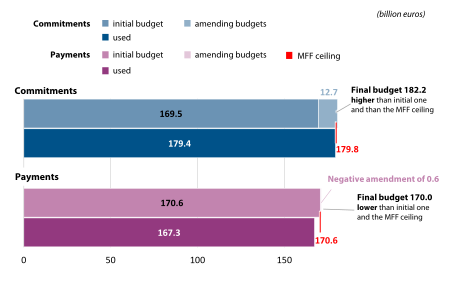
Source: ECA, based on the 2022 consolidated annual accounts of the EU.
Taking into account additional payments from assigned revenue of €71.8, and €4.2 billion of carry-overs from 2021, total payments in 2022 reached €243.3 billion. Utilisation of the budget for payments was thus 93 % of all payment appropriations of €261.3 billion.
The absorption of the 2014-2020 ESIF continued in 2022, albeit more slowly than in 2021 and 2020
Payments from the European Structural and Investment Funds (ESIFs), excluding NGEU resources, amounted to €64.9 billion, which is a lower amount than in 2021 (€75.1 billion) and 2020 (€72.0 billion). At the end of 2022, all payments for the 2014-2020 ESIF operational programmes thus amounted to €396.1 billion, out of the total allocation of €492.6 billion (80.4 %). There are significant differences in member states’ absorption of ESIF (see Figure 8).
Figure 8 – 2014-2020 ESIF absorption levels (excluding NGEU resources)

Note: Amounts ‘to be absorbed’ are payments that member states may still request from the Commission. They do not necessarily represent the full progress of project implementation in member states. Differences are due to rounding.
Source: ECA, based on Commission information.
The Commission committed more resources from the 2021-2027 shared management funds under the Common Provisions Regulation, but late approval of member states’ programmes led to low payments
At the beginning of the new MFF, there was a transition from the 2014-2020 ESIF to the 2021‑2027 shared management funds. For these shared management funds, member states committed €65.4 billion in 2022, i.e. 90 % of available commitment appropriations (in 2021, they committed only 2 % of the available €50.1 billion).
Various EU funding instruments were used as an emergency response
In 2022, various EU funding instruments were used as an emergency response to unexpected events. New flexibility measures were introduced to help member state authorities dealing with the COVID‑19 pandemic, Russia’s war of aggression against Ukraine and the energy crisis. See Figure 9.

Implementation of NGEU accelerated in 2022, but progress was slower than expected
NGEU commitments accelerated in 2022 and increased to €306.0 billion by year end (2021: €143.5 billion). Member states will need to commit the remaining €115.1 billion in 2023, as it will not be possible for them to do this later. In 2022, member states received €47.1 billion in RRF grant payments (2021: €46.4 billion). Although slightly more than in 2021, it was less than €63.0 billion expected by the Commission. However, the payments in 2022 related almost entirely to the fulfilment of milestones and targets while in 2021 mainly to pre-financing. See Figure 10.
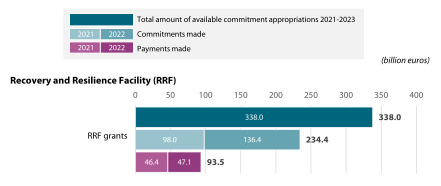
Source: ECA, based on the 2022 consolidated annual accounts of the EU and budgetary implementation reports from the Commission’s accounting system.
Outstanding commitments from the EU budget and NGEU grant funding reached a record €453 billion
Outstanding commitments from the EU budget and NGEU grant funding, which represent future debts if they are not decommitted, reached a record level of €453 billion at the end of 2022. This was mainly a result of an increased commitment of funds during the second year of NGEU implementation, as well as the start of 2021-2027 shared management fund implementation. According to the Commission, after a further increase to some €460 billion in 2023, the outstanding commitments should decrease during 2024 to 2026, especially as there are no new NGEU commitments post 2023. See Figure 11.
Figure 11 – Outstanding commitments by year and funding type (EU budget and NGEU)

Source: ECA, based on the 2022 consolidated annual accounts of the EU and budgetary implementation reports from the Commission’s accounting system.
Risks and challenges
Borrowing costs for EU debt increased significantly
EU debt – namely borrowing from the markets for NGEU, SURE, MFA, EFSM, BOP, and Euratom – increased in 2022 to €344.3 billion by year‑end (2021: €236.7 billion), mainly because of new borrowing for NGEU, SURE and MFA. Figure 12 shows the maturities and effective interest rates of borrowing.
Figure 12 – Maturities and effective interest rates of EU budget borrowing
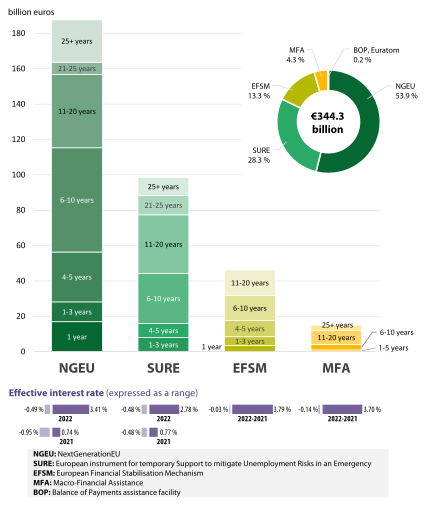
Source: ECA, based on the 2022 consolidated annual accounts of the EU.
Of this borrowing, only the NGEU instrument entailed interest rate risk for the EU budget. In 2022, due to growing market interest rates, the cost of new NGEU funding increased from 0.14 % in the second half of 2021 to 2.60 % in the second half of 2022. In 2022, net interest paid on the NGEU borrowing amounted to €0.5 billion.
Total exposure of the EU budget was higher than in 2021
Total exposure of the EU budget totalled €248.3 billion by the end of 2022, which was an increase from €204.9 billion in 2021. This increase related mainly to the borrowings for the additional RRF and SURE loans of €27.2 billion and €8.7 billion respectively (2021: €18.0 billion and €89.7 billion respectively) made to member states, and the MFA loans to Ukraine of €7.2 billion. Figure 13 provides a breakdown of the exposure by its source types and risk coverage.
Figure 13 – Total exposure of the EU budget at end 2022, by source type and risk coverage
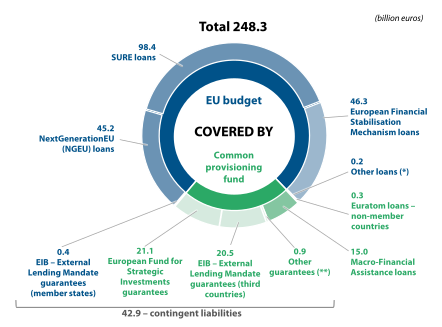
(*) Balance of Payments loans – €0.2 billion, Euratom loans – member states €0.03 billion.
(**) European Fund for Sustainable Development (EFSD) guarantee – €0.4 billion, InvestEU guarantee – €0.3 billion and EFSD+ guarantee – €0.2 billion.
Note: differences are due to rounding.
Source: ECA, based on the 2022 consolidated annual accounts of the EU.
The exposure risk of the EU budget is partially mitigated by guarantees received from member states and by the common provisioning fund. The amounts managed by the Common Provisioning Fund (CPF) increased from €12.3 billion in 2021 to €14.4 billion in 2022.
Russia’s war of aggression against Ukraine increases financial risks to future EU budgets
The EU budget’s exposure to Ukraine more than doubled in 2022 compared to 2021 (from €7 billion to €16 billion). The approval of an additional €18 billion for the MFA+ at the end of 2022 will significantly increase this exposure for future budgets. Furthermore, as the additional €18 billion do not require any provisioning, the risk for future EU budgets increases. Any related losses will have to be covered by future EU budgets or by the budgetary ‘headroom’ between the MFF ceiling and the own resources ceiling. See Figure 14.
Figure 14 – Timeline of approved MFA loans to Ukraine, including provisions

Source: ECA, based on applicable legislation.
Parallel and delayed implementation of several instruments increase the risk of member states losing out on funding
Member states are currently absorbing funds from several instruments at the same time: the remaining ESIF programmes from the 2014-2020 MFF, the 2021-2027 shared-management funds under the Common Provisions Regulation (CPR) and RRF. Alongside all this, they need to pursue measures introduced in connection with Russia’s war of aggression against Ukraine. Most member states only started allocating financial resources from the 2021-2027 CPR shared-management funds to projects from late 2022 due to delays in the approval of the legislation and in turn, of the partnership agreements and programmes. If implementation of the shared management funds is not accelerated significantly in 2024 and 2025, the risk of decommitments later in the period will increase exponentially. See Figure 15.
Figure 15 – Timeline for committing and paying ESIF, RRF and CPR shared management funds

(*) For the EAFRD, a transitional period was introduced for 2021 and 2022 after which it will fall fully under the framework of the CAP strategic plans. This means that the periods for commitments and payments are effectively extended by 2 years for the EAFRD (2022 and 2025 respectively).
Source: ECA, based on applicable legislation.
High inflation affects the EU budget
High inflation affects the EU budget in several ways. As the EU budget is annually adjusted with a fixed 2 % deflator, its purchasing power is reduced by the difference between that figure and the average inflation rate. On the basis of the Commission’s inflation forecast, we estimate that the EU budget could lose nearly 10 % of its purchasing power by 2023. High inflation increases in particular fixed costs, such as administration costs and the costs of financing. It also affects the proportion of revenue from different sources. See Figure 16.

Source: ECA, based on Commission’s Spring 2023 Economic Forecast.
What we recommend
We recommend that the Commission:
- in the light of the high level of outstanding commitments which await payment from future EU budgets identify ways to help member states accelerate the use of EU funds, in particular of shared management funds under the CPR, while respecting sound financial management;
- assess the impact on the EU budget of high inflation over several years and identify tools to mitigate resulting key risks. In this regard, the Commission should protect the EU budget’s ability to meet its legal and contractual commitments, such as rising financing costs;
- in the face of the EU budget’s increasing exposure from borrowing for additional payment needs, such as those triggered by the COVID‑19 pandemic and Russia’s war of aggression against Ukraine as well as from budgetary guarantees, take any appropriate actions needed to ensure that its risk mitigation tools, such as the common provisioning fund, have sufficient capacity, and make public its estimate of total annual exposure.
Want to know more? Full information on our audit of the Budgetary and Financial Management can be found in Chapter 2 of our 2022 annual report.

Getting results from the EU budget
Every year, we analyse a number of aspects relating to the performance and the results achieved by the EU budget, which is implemented by the Commission in cooperation with the member states. This year, our analysis covers:
- results and key messages from our 2022 special reports on performance, as well as related information from the Commission and the budgetary and legislative authorities (European Parliament and Council of the European Union);
- implementation of the recommendations made in our 2019 report on the performance of the EU budget;
- implementation of the recommendations we made in the special reports we published in 2019.
Key messages from our 2022 special reports on performance
Our special reports examine how well the principles of sound financial management have been applied in implementing the EU budget. In 2022, we published 28 special reports addressing many of the challenges the EU is facing across its different spending areas and policies. Our auditees have the right to provide replies to our observations. Our 2022 special reports contained 214 recommendations on a wide range of topics, mainly addressed to the Commission, 91 % of which were fully accepted. They addressed five strategic areas, namely: the EU’s COVID‑19 response; EU competitiveness; resilience and European values; climate change, environment and natural resources; and fiscal policies and public finances (see Table 1).
Table 1 – ECA strategic areas covered by special reports in 2022
 COVID‑19 response COVID‑19 response |
SR 13/2022: Free movement in the EU during the COVID‑19 pandemic SR 18/2022: EU institutions and COVID‑19 SR 19/2022: EU COVID‑19 vaccine procurement SR 21/2022: The Commission’s assessment of national recovery and resilience plans SR 28/2022: Support to mitigate Unemployment Risks in an Emergency (SURE) |
 Competitiveness Competitiveness |
SR 03/2022: 5G roll-out in the EU SR 06/2022: EU intellectual property rights SR 07/2022: SME internationalisation instruments SR 08/2022: ERDF support for SME competitiveness SR 15/2022: Measures to widen participation in Horizon 2020 SR 16/2022: Data in the Common Agricultural Policy SR 23/2022: Synergies between Horizon 2020 and the European Structural and Investment Funds SR 24/2022: e-Government actions targeting businesses |
 Resilience and European values Resilience and European values |
SR 01/2022: EU support for the rule of law in the Western Balkans SR 05/2022: Cybersecurity of EU institutions, bodies and agencies SR 14/2022: The Commission’s response to fraud in the Common Agricultural Policy SR 27/2022: EU support to cross-border cooperation in the neighbouring countries |
 Climate change, environment and natural resources Climate change, environment and natural resources |
SR 02/2022: Energy efficiency in enterprises SR 09/2022: Climate spending in the 2014-2020 EU budget SR 10/2022: LEADER and community-led local development SR 12/2022: Durability in rural development SR 20/2022: EU action to combat illegal fishing SR 22/2022: EU support to coal regions |
 Fiscal policies and public finances Fiscal policies and public finances |
SR 04/2022: Investment funds SR 11/2022: Protecting the EU budget SR 17/2022: External consultants at the European Commission SR 25/2022: Verification of Gross National Income for financing the EU budget SR 26/2022: European statistics |
Source: ECA.
Follow-up of the recommendations made in our report on the performance of the EU budget – status at the end of 2019
Our report on the performance of the EU budget covering the financial year 2019 contained five recommendations which were addressed to and accepted by the Commission. They recommended that the Commission report on the performance of EU spending programmes under a Multiannual Financial Framework for as long as payments are made (fully implemented), further improve the reliability of performance information (implemented in some respects), disseminate lessons learnt from Regulatory Scrutiny Board scrutiny (fully implemented), explain better how targets and indicators are established and improve several aspects of its performance reports (implemented in some respects).
Follow-up of the recommendations made in our 2019 special reports
Every year, we review the extent to which our auditees have taken action in response to our recommendations three years after we made them. This year, we analysed 213 recommendations from 22 of the 25 special reports we published in 2019. Of these, 179 were addressed to the Commission. The remaining 34 recommendations were addressed to the European Parliament, the Council of the European Union and the European Council, the European Union Agency for Asylum, the European Banking Authority and the European Border and Coast Guard Agency (‘Frontex’). We found that:
- the proportion of recommendations fully accepted by our auditees has slightly decreased from 83 % to 79 %;
- the proportion of recommendations implemented in full or in most respects has also slightly decreased from 75 % to 70 %;
- 73 % of recommendations addressed to the Commission have been implemented in full or in most aspects;
- 56 % of recommendations addressed to other auditees have been implemented in full or in most respects;
- the proportion of recommendations implemented on time has decreased from 60 % to 38 % and our auditees cited the COVID‑19 pandemic as the main reason for the delays;
- level of implementation correlates with auditees’ acceptance of audit recommendations.
Want to know more? Full information on our audit of Getting results from the EU budget can be found in Chapter 3 of our 2022 annual report.

Revenue
What we audited
Our audit covered the revenue side of the EU budget, which finances the EU’s expenditure. We examined selected key control systems for managing own resources, and a sample of 65 revenue transactions.
Gross National Income (GNI)-based contributions from member states accounted for 42.3 % of the EU’s revenue in 2022, while the own resource based on value added tax (VAT) accounted for 8.0 %. These contributions are calculated using macroeconomic statistics and estimates provided by member states.
Traditional own resources (TOR), consisting of customs duties on imports collected by member states’ administrations on the EU’s behalf, provided a further 10.6 % of EU revenue.
The non-recycled plastic packaging waste-based own resource provided 2.6 % of EU revenue. It is calculated by applying a uniform rate to the weight of unrecycled plastic packaging waste generated in each member state.
External assigned revenue, which mostly relates to amounts borrowed to provide member states with non-repayable financial support in the context of NGEU, accounted for 25.4 % of EU revenue.
There are also other sources of EU revenue. The most significant of these are contributions and refunds connected with EU agreements and programmes (8.5 % of EU revenue).
What we found
| Amount subject to audit | Affected by material error? |
|---|---|
| €245.3 billion | No – free from material error in 2021 and 2022 |
The overall audit evidence indicates that the level of error in revenue transactions was not material. The systems for managing the revenue we examined were generally effective. However, some of the key internal TOR controls we assessed in certain member states, the management of TOR write‑off cases, and the management of VAT reservations and TOR open points at the Commission were partially effective.
We reported delays in reassessing customs debt write-off cases by the Commission not subject to regulatory time limit, some of which were pending since 2015. We also observed a limited decrease in the number of VAT reservations and TOR open points, as well as weaknesses in their management.
As we stated in our recent special report on GNI, risks in data compilation were well covered overall by the Commission’s verification but there was scope for increased prioritisation of its actions. The special report set out recommendations for improvement in the GNI verification cycle starting in 2025.
We also concluded that the implementation of selected actions in the Commission’s Customs Action Plan, that contribute to reducing the customs gap, have been further delayed. This weakness does not affect our audit opinion on revenue, as it does not concern the transactions underlying the accounts, but rather the risk that TOR are incomplete.
The information on regularity provided in the 2022 annual activity reports published by DG BUDG and Eurostat generally corroborated our findings and conclusions.
What we recommend
We recommend that the Commission:
- review its procedures for managing cases of non-application of the VAT Directive that could impact the EU budget by:
- systematically monitoring the timelines for the various steps of both the infringement procedure and other enforcement actions intended to resolve non-compliance, and taking timely action to avoid excessive delays;
- assessing whether the non-conformity affecting the VAT-based own resource identified in one member state is cross- cutting in nature and may therefore be applied to other member states; and
- taking timely action, and possibly setting cross-cutting reservations that ensure the correct payment of VAT-based national contributions to the EU budget;
- conclude, without delay, the reassessment of requests received from member states (prior to May 2022 that are not subject to regulatory limits) expressing disagreement with the Commission’s initial assessment of TOR write-off cases.

Want to know more? Full information on our audit of EU revenue can be found in Chapter 4 of our 2022 annual report.

Single Market, Innovation and Digital
What we audited
The programmes financed under ‘Single Market, Innovation and Digital’ are diverse and aim to finance projects that contribute to, among other things, research and innovation, the development of trans-European transport networks, communications, energy, digital transformation and the single market, and space policy. The principal programme for research and innovation remains Horizon 2020, as its successor, Horizon Europe, still only accounts for a small proportion of our 2022 audit population. This MFF heading also finances large infrastructure projects such as the Connecting Europe Facility (CEF), the space programmes, such as Galileo, European Geostationary Navigation Overlay Service (EGNOS), and Copernicus, the European Earth Observation Programme. It also includes the InvestEU fund, which, together with Horizon Europe, benefits from additional funding from the NGEU.
For 2022, €17.3 billion was subject to audit in this area. Most spending is managed directly by the Commission (DG Research and Innovation (RTD), DG Defence Industry and Space (DEFIS)), including through executive agencies, and takes the form of grants to public or private beneficiaries participating in projects. The Commission provides pre-financing to beneficiaries upon signature of a grant agreement and later reimburses the EU-funded costs, net of the pre-financing. The space programmes are generally managed indirectly on the basis of delegation and contribution agreements signed between the Commission and dedicated implementing bodies (such as the European Space Agency and the EU Agency for the Space Programme). InvestEU financial instruments are implemented mainly by the European Investment Bank or European Investment Fund, which in turn use financial intermediaries.
What we found
| Amount subject to audit | Affected by material error? | Estimated most likely level of error |
|---|---|---|
| €17.3 billion | Yes | 2.7 % (2021: 4.4 %) |
Overall, we estimate that the level of error in ‘Single market, Innovation and Digital’ is material. In 2022, 43 (34 %) of the 127 transactions we examined were affected by errors.
Horizon 2020 spending remains high risk and is the main source of the errors we detect. We found quantifiable errors relating to ineligible costs in 35 of the 92 research and innovation transactions in the sample. This represents 98 % of our estimated level of error for this heading in 2022.
In the case of other programmes and activities, we detected quantifiable errors in 1 of the 35 transactions in the sample. It concerned an irregularity in the procurement procedure of a CEF project.
The rules for declaring personnel costs under Horizon 2020 remain complex. Of the 35 transactions affected by quantifiable errors in our sample of research transactions, 25 were affected by incorrect application of the methodology for calculating personnel costs. Other errors relating to personnel costs included incorrect calculation of hourly rates, weaknesses in time reporting and breaches of the double ceiling rule. We also found errors relating to ineligible subcontracting and direct costs.
Example: Breach of the double ceiling rule
A beneficiary of a Horizon 2020 project in the Netherlands was also the recipient of two European Regional Development Fund (ERDF) grants whose timescales partly overlapped with that of the Horizon 2020 project audited. Some of the staff involved in the Horizon 2020 project were also involved in implementing one or both of the ERDF projects. When declaring the personnel costs for the Horizon 2020 project audited, the beneficiary did not take account of hours already declared for the ERDF projects and therefore, claimed significantly more hours than the maximum allowed (1 720 hours or corresponding pro-rata for persons not working full time. The surplus hours (i.e. a total of over 1 900 hours for six staff) were ineligible.
One of the strategies for boosting European research is to increase private-sector participation. However, Small and Medium-sized Enterprises (SMEs) and newcomers are prone to error. SMEs represented 11 % of our audit sample (14 out of 127 transactions) but accounted for 29 % of the estimated error rate. Moreover, quantifiable errors found in the cost claims of three private newcomers accounted for almost half of the estimated error rate.
Commission’s procedures for lump sum funding in research
The aim of lump sum funding in research, with payments based on activities performed rather than costs incurred, is to reduce the administrative burden on beneficiaries and consequently the error rate. Lump sums were piloted from 2018 to 2020 under Horizon 2020.
In 2022, we reviewed the Commission’s procedures and guidance on lump sum funded grants in research by examining the relevant Commission documents on lump sum contributions, especially the lump sum decision. We also examined the procedure used to determine the final budget of 10 lump sum funded grants with budgets ranging from €0.5°million to €11 million, focusing on assessments done by external evaluators.
We found that the lump sum decision did not contain the justification required under the Financial Regulation regarding the risk of irregularities and fraud and in this relation, there are no specific rules that require compliance with procurement rules during the implementation of the project. During our review of the 10 lump sum projects selected, we found that the guidance provided by the Commission to expert evaluators does not oblige them to use the required ‘relevant benchmarks’ when assessing project budgets. In addition, there was limited documentation supporting the experts’ assessments of the budgets.
Commission Annual Activity Reports and other governance arrangements
The annual activity reports we examined (DG RTD and DG DEFIS) reflected the information available in the respective DGs and gave a fair assessment of the financial management in relation to the regularity of underlying transactions relating to MFF1 expenditure.
We reviewed the information in the Commission’s 2022 AMPR regarding the estimated risk at payment in the policy areas under MFF1. The Commission calculated an error rate of 1.5 % for MFF1. This percentage is at the lower end of our range of estimated level of error and below materiality.
What we recommend
We recommend that the Commission:
- in the framework of the mid-term evaluation of Horizon Europe, include an evaluation of lump sum funding in order to assess whether certain types of projects (in terms of content, size, etc.) are not suited to lump sum funding, as well as cover the risk of irregularities and fraud;
- prior to the next Horizon Europe calls, assess the appropriateness of using lump sum funded grants for high-budget projects and of fixing a maximum amount for such grants;
- for lump sum grants, ensure that expert evaluations of grant applications, in particular the budget proposals therein, are carried out with due considerations of relevant benchmarks and are properly documented;
- further specify for lump sum grants the requirements defining proper implementation, including the elements of each work package that will trigger payment, as well as provide detailed guidance to those involved in assessing the implementation of projects;
- for lump sum grants, define the scope of its ex post controls, which should include checks on high-risk areas, such as procurement rules, absence of conflict of interest and the use of the resources indicated in the grant agreement.
Want to know more? Full information on our audit of EU expenditure on ‘Single Market, Innovation and Digital’ can be found in Chapter 5 of our 2022 annual report.

Cohesion, resilience and values
What we audited
Spending under this heading focuses on reducing development disparities between the different member states and regions of the EU (subheading 2a) and actions to support and protect EU values, making the EU more resilient to present and future challenges (subheading 2b). Funding takes place for subheading 2a (economic, social and territorial cohesion) through the European Regional Development Fund (ERDF), the Cohesion Fund (CF), the European Social Fund (ESF) and the Connecting Europe Facility (CEF). For subheading 2b (resilience and values) funding is provided through programmes like Erasmus+, a number of smaller schemes and specific instruments created in response to the COVID‑19 pandemic.
The cohesion policy funds (the ERDF, the CF and the ESF) account for the bulk of expenditure, where Commission and member states share the management of the funds. The EU co‑finances multiannual operational programmes (OPs) or actions, from which funding goes to projects. At the Commission, the Directorate‐General for Regional and Urban Policy (DG REGIO) is responsible for implementing the ERDF and the CF, and the Directorate‐General for Employment, Social Affairs and Inclusion (DG EMPL) is responsible for the ESF. EU funding for programmes not under shared management is either managed directly by the Commission DGs or indirectly with the support of partner organisations or other authorities.
We audit expenditure once the Commission has accepted it. For the 2022 annual report, we audited expenditure of €66.9 billion in this area, including €63.5 billion expenditure under subheading 2a and €3.4 billion under subheading 2b (2021: €47.9 billion in total). In line with our approach, this amount included €872 million worth of expenditure from previous programming periods that the Commission had accepted or cleared in 2022.
What we found
| Amount subject to audit | Affected by material error? | Estimated most likely level of error |
|---|---|---|
| € 66.9 billion | Yes | 6.4 % (2021: 3.6 %) |
Overall, we estimate that the level of error for Cohesion, Resilience and Values is material.
In 2022, we tested 260 transactions. We identified and quantified 50 errors and the findings of audit authorities which reported 58 such errors. In addition, we took account of corrections with a total value of €618 million applied by programme authorities. We estimate the level of error for MFF heading 2 to be 6.4 %. The estimated level of error for subheading 2a alone is 6.6 %.
Ineligible costs and project, and infringements of internal market rules (in particular non‑compliance with procurement and state aid rules) contributed most to our estimated level of error.
This year, both our error rate estimate and the number of errors we found were higher than in previous years. These increases do not follow a geographical pattern. However, we identified an increase of specific types of errors, such as ineligible costs and non-compliance with public procurement rules. We also note that we are approaching the end of the eligibility period (31 December 2023), with some absorption pressure. In addition, member states were given considerable flexibility in re-programming funds and declaring expenditure since 2020. During the COVID‑19 period, the effectiveness of the checks and verifications by managing and audit authorities may have been reduced.
Example: Ineligible expenditure for COVID‑19 emergency support due to incomplete declaration of sales income
The objective of an ESF measure audited in Slovakia was to mitigate the impact of the COVID‑19 pandemic on employment and the labour market by providing financial support to employers or self-employed workers. To receive support for 13 workers, this final beneficiary reported a decrease in turnover of 43.5 % in May 2020 compared to May 2019. This decrease, however, was not accurate because it reflected only the decrease in on-site sales. Taking into account sales through other channels, the overall decrease in the company’s turnover was only 9 %. This was below the required 20 % minimum decrease in sales to qualify for the aid. Therefore, we consider the support for the month of May 2020 to be ineligible.
We found that, due to misreporting of income, two other final beneficiaries of the same measure received more support than was provided for under national rules.
We found also ineligible costs in relation to COVID‑19 measures in Greece (which had already partially detected by the Commission), in Italy and another case in Slovakia.
Sound financial management
The EU budget must be implemented in a legal and regular way, in accordance with sound financial management, comprising the principles of economy, efficiency and effectiveness. In our work, we detected 11 cases in Germany, Croatia, Italy, Lithuania and Hungary where these principles had not been respected. For example, in one OP in Italy, the beneficiaries of four operations had correctly declared eligible costs based on standard scales of unit costs determined by the managing authority based on Article 67 of the CPR. However, the amount declared by the managing authority to the Commission had been calculated based on another model, using the Commission’s standard scales of unit costs (pursuant to Article 14(1) of the ESF Regulation). As a result, the amounts certified to the Commission and paid by the EU budget for each operation were between 16 % and 30 % higher than those agreed and paid to the beneficiaries.
Assessment of audit authorities’ work
Managing authorities are the ‘first line of defence’. Their effective control is indispensable to ensure both the compliance of the operations with the legal framework and their performance. Our audit results over the last six years demonstrate that these controls do not yet sufficiently offset the high inherent risk of error in cohesion. Audit authorities are the ‘second line of defence’ verifying, on a sample basis, the regularity of expenditure managing authorities declared to the Commission. They must be functionally independent from the management authorities.
We assessed the work of 24 of 116 audit authorities in 18 member states and the United Kingdom. Our sample comprised 34 assurance packages and one closure package. Except for three cases, the audit authorities had reported to the Commission a residual error rate equal to or below 2 %. Taking account of the additional errors detected by the Commission and of our own audit findings, our work on this year’s sample shows that the residual error rate was above 2 % in 16 of the 34 audited assurance packages.
Measures to fight and report fraud against the EU budget
Under EU law, the Commission and member states must protect the EU budget from fraud and irregularities. To this end, they are required to put in place effective control systems.
We found that the audit authorities explicitly addressed the risk of fraud for 65 % of the audited operations in the 2014-2020 period (145 of 222). This is an improvement on the 38 % we found last year, but still insufficient
We found three cases of ongoing fraud investigations that had not been reported in the Irregularity Management System operated by the OLAF. The programme authorities in the member states were either unaware of the ongoing investigation by the relevant investigation or prosecution body, or they had neglected to fulfil their regulatory obligation to report them.
The Commission’s assurance work and reporting of residual error rate in its annual activity reports
In cohesion, the Commission reports in their AAR residual error rates as a key performance indicator (KPI) on legality and regularity. For the accounting year 2021/2022, DG REGIO reported a KPI of 1.9 % and a ‘maximum rate’ of 2.7 %. The DG EMPL rates were 1.9 % for the KPI and 2.8 % for maximum risk. These KPIs lay for the first time outside the error range estimated by us. Similarly, in the 2022 AMPR, the indicators reported by the Commission are outside our error range.
The Commission’s desk reviews which assess the work of audit authorities have inherent limitations in confirming the residual total error rate. This is demonstrated by the additional errors we detected during our audits.
Closure of the 2007-2013 programme period still ongoing
By the end of 2022, DG REGIO has closed 276 out of 322 OPs for the 2007-2013 period. For a further 44 OPs, DG REGIO has made a pre-closure payment covering only the uncontested amounts, while pending remain to be solved. DG EMPL has closed 101 out of 117 OPs and pre‑closed 13 OPs. Six programmes remain fully open due to pending issues. Since there is no final deadline for the closure in the legal framework, it is not possible to predict how much time will be needed to close all 2007-2013 OPs.

What we recommend
Among other things, we recommend that the Commission:
- strengthen the measures designed to address the recurring errors, specifically in relation to ineligible costs and projects, ensure sufficient coverage of its own audit work for all audit authorities and disseminate the results to reduce the occurrence and impact of irregular spending;
- verify, when closing the 2014-2020 programmes, that only expenditure linked to notified major projects has been accepted;
- plan and implement focused thematic audits on conflicts of interest for the 2021-2027 programmes, based on its own risk assessment and in view of the shortcomings identified;
- carry out specific targeted checks in its 2014-2020 closure audits to ensure that member states have applied the necessary financial correction for errors detected in one accounting year which also affect expenditure in other accounting periods;
- ensure that audit authorities have appropriate methods in place to check the validity and reliability of self-declarations and share good practices;
- plan and implement focused thematic audits on risk awareness of the managing authorities and the use of data mining and risk‑scoring tools for the 2021-2027 programmes, specify minimum requirements for the audit authorities to cover the risk of fraud in their checklists and audit work, and reiterate to member states their obligations regarding fraud reporting;
- advance the date for deployment of the single integrated IT tool for data mining and risk scoring from 2028 to 2025, the first year when a significant amount of 2021-2027 expenditure is expected to be declared. In the meantime, ensure that OLAF, the EPPO and the ECA have access to Arachne.
Want to know more? Full information on our audit of EU expenditure on ‘Cohesion, Resilience and Values’ can be found in Chapter 6 of our 2022 annual report.

Natural resources
What we audited
This spending area covers the common agricultural policy (CAP), the common fisheries policy, and part of EU spending on the environment and climate action.
Agriculture and rural development account for 97 % of EU spending on ‘Natural resources and environment’ and are implemented through the CAP, which has three general objectives:
- viable food production, with a focus on agricultural income, agricultural productivity and price stability;
- the sustainable management of natural resources and climate action, with a focus on greenhouse gas emissions, biodiversity, soil and water;
- balanced territorial development.
While the Commission (DG Agriculture and Rural Development (AGRI)), is ultimately responsible for the CAP, it shares its management with paying agencies in the member states. Since 2015, independent certification bodies in the member states have been providing annual opinions on the legality and regularity of the expenditure of paying agencies.
This MFF heading also covers EU spending on the European Maritime and Fisheries Fund (EMFF), under the responsibility of the Directorate-General for Maritime Affairs and Fisheries (DG MARE), and the LIFE programme for environment and climate action under the responsibility of the Directorates-General for the Environment (DG ENV) and Climate Action (DG CLIMA). For the first time, under the 2021-2027 MFF, the Directorate-General for Energy (DG ENER) is also implementing part of the LIFE programme.
What we found
| Amount subject to audit | Affected by material error? | Estimated most likely level of error |
|---|---|---|
| €58.0 billion | Yes | 2.2 % (2021: 1.8 %) |
Overall, we estimate that the level of error for MFF heading 3 is material.
Of the 218 transactions we examined, 46 (21 %) contained errors. Based on the 32 errors we have quantified, we estimate the level of error for MFF heading 3 to be 2.2 %.
Our results indicate that the level of error was not material for direct payments, representing 66 % of spending under this MFF heading, while it was still material for the other spending areas (rural development, market measures, maritime, fisheries, the environment and climate action), representing 34 % of spending. In addition, we note that the number of small over-declarations of area, for both direct payments and rural development measures, increased from four errors in 2021 to 16 errors in 2022, which may indicate specific weaknesses in some member states’ management of the Land Parcel Identification System.
The majority of the quantified errors we found affected rural development transactions (21). We found seven quantifiable errors in direct payments, two in market measures, and two in non-CAP expenditure. The main source of the estimated level of error was the provision of inaccurate information on areas or animals.
The member state authorities and the Commission had applied corrective measures that directly affected 49 of the transactions we sampled. These measures were relevant to our calculations, as they reduced our estimated level of error for this chapter by 0.9 percentage points. In 19 cases of quantifiable errors, the member state authorities and the Commission had sufficient information to prevent, or to detect and correct, the error before accepting the expenditure. Had the member state authorities and the Commission made proper use of all the information at their disposal, the estimated level of error for this chapter would have been 1.3 percentage points lower.
Direct payments
In the 88 direct payment transactions tested, we found six minor quantifiable errors, which resulted from farmers overstating the eligible area of agricultural land. We also found one major quantifiable error, where the declared agricultural activity had not taken place.
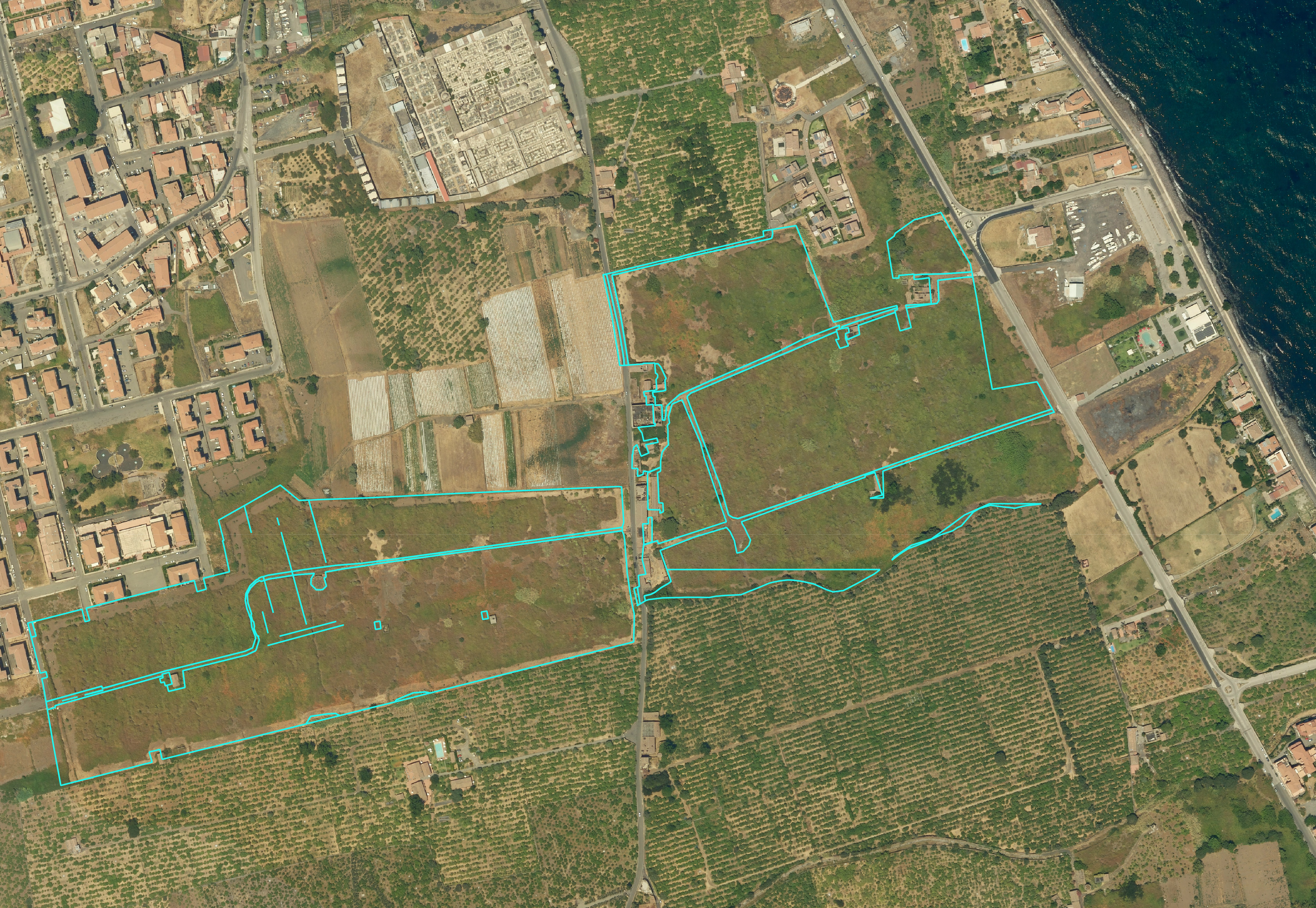
Example of an incorrect declaration of an agricultural activity
A farmer in Italy received direct aid for maintaining a permanent crop (lemon trees) on a large proportion of his holding (highlighted in blue). Overhead photos did not show lines of trees like those on adjacent agricultural parcels. Our on-the-spot visit confirmed that the declared area did not have any lemon trees on it and had not been maintained in an agricultural state for several years. The national authorities did not identify this error.
Rural development, market measures and other payments
We examined:
- 56 rural development payments based on areas or animal numbers declared by farmers, including payments for meeting specific agri-environment-climate commitments, compensation payments for organic farming, and payments to farmers in areas with natural constraints. Of these, 15 contained errors, nine of which were quantifiable errors related to over-declaration of eligible areas;
- 52 rural development payments to investment projects, such as investments in physical assets, farm and business development, and risk management. We quantified errors in eight payments, resulting from beneficiaries having declared expenditure or activities that did not meet the eligibility conditions;
- 14 market measure transactions tested, we found two cases in which paying agencies had reimbursed ineligible costs;
- eight transactions in maritime, fisheries, the environment and climate action areas, and we found two quantifiable errors in direct management transactions.
Coherence checks of member states’ control statistics and payments data
Each year, member states submit data on their checks of aid payments (control statistics) to the Commission, as well as data on the payments made to beneficiaries. These data are the basis on which the Commission reimburses EU funds to the member states. For the financial year 2022, we examined the quality and coherence of the control statistics and payments data reported by six paying agencies selected in our direct payments sample. We found that, despite some inconsistencies, the selected paying agencies’ systems reliably calculated the aid payments, correctly taking into account adjustments resulting from the control data.
Annual activity reports and other governance arrangements
DG AGRI, taking into account the work of the certification bodies and its own audits, calculated the ‘estimated amount at risk at payment’ to be €996 million, i.e. around 1.8 % of total CAP expenditure in 2022. DG AGRI estimated a risk at payment (adjusted error rate) of around 1.3 % for direct payments, 2.7 % for rural development and 2.9 % for market measures.
We also performed a limited review of the regularity information in DG MARE’s annual activity report. We noted that the methodology for the calculation of the final risk at payment (or closure) for DG AGRI and DG MARE was in line with the Commission guidelines.
The Commission’s estimate of risk at payment for ‘Natural resources’ presented in its AMPR is 1.8 %. This lies within the error range estimated by us.
What we recommend
We recommend that, given that agricultural area will be the basis for performance indicators under the CAP 2023-2027, the Commission continue monitoring how accurately member states assess the eligible area in the Land Parcel Identification System.

Want to know more? Full information on our audit of EU expenditure on ‘Natural resources’ can be found in Chapter 7 of our 2022 annual report.

Migration and border management, Security and defence
What we audited
Given the increasing importance of migration and border management in recent years, the European Union established heading 4 of the 2021-2027 MFF specifically for these policy areas.
A significant portion of the spending in this area in 2022 still concerned the completion of projects and schemes outstanding from the 2014-2020 MFF.
The objective of the 2014-2020 Asylum, Migration and Integration Fund (AMIF) was to contribute to the effective management of migration flows and bring about a common EU approach to asylum and immigration. The aim of the Internal Security Fund – Borders and Visa instrument (ISF‑BV) was to contribute to ensuring a high level of security in the EU while facilitating legitimate travel, through a uniform and high level of control of the external borders and the effective processing of Schengen visas.
These 2014-2020 funds have been replaced in the 2021-2027 MFF by, respectively, a new AMIF, and the Instrument for Financial Support for Border Management and Visa Policy (BMVI) of the Integrated Border Management Fund (IBMF). Heading 4 also includes funding for three decentralised agencies, namely the European Border and Coast Guard Agency (Frontex), the European Union Agency for Asylum (EUAA), and the European Union Agency for the Operational Management of Large-Scale IT Systems in the Area of Freedom, Security and Justice (eu‑LISA).
In the 2021-2027 MFF, heading 5 is devoted to security and defence. The ‘security’ component includes the Internal Security Fund (ISF), financial support for the decommissioning of nuclear installations in Bulgaria, Lithuania and Slovakia, and funding for three EU decentralised agencies in the area of security (European Monitoring Centre for Drugs and Drug Addiction (EMCDDA), European Union Agency for Law Enforcement Cooperation (Europol), and European Union Agency for Law Enforcement Training (CEPOL)). The ‘defence’ component includes the European Defence Fund, which supports collaborative defence projects at all stages of research and development.
The management of most AMIF and ISF funding for 2014-2020, and most AMIF, BMVI and ISF funding for 2021-2027 is shared between the member states (or Schengen associated countries) and the Commission’s DG for Migration and Home Affairs (DG HOME). Under this arrangement, member states implement multiannual national programmes that have been approved by the Commission.
What we found
Regularity of transactions
Our examination of transactions shows that the expenditure is affected by eligibility and procurement issues. While we did not audit sufficient transactions to estimate the level of error for these MFF headings, our audit results indicate that it is a high-risk area. The results of transaction testing contribute to our statement of assurance.
Of the 23 transactions we examined, 11 (48 %) were affected by errors. We have quantified nine errors which had an impact on the amounts charged to the EU budget. These errors related to ineligible expenditure (for example, some personnel or equipment costs, value added tax) and public procurement issues.

Examination of elements of internal control systems
For the 2021-2027 AMIF, BMVI and ISF, we assessed the work of six member state audit authorities (Germany, Spain, and Romania for AMIF; Latvia for BMVI; Czechia and Croatia for the ISF). These audit authorities already had a clear picture of the main changes required in the audit strategy, system audits and audits of operations compared with the 2014-2020 programming period. However, as none had finalised the description of their management and control system at the time of our visits, they were not yet able to approve their audit strategy. Overall, we noted that the six audit authorities were making progress in their preparations for the 2021-2027 AMIF, BMVI and ISF, even though their audit strategies had not yet been adopted.
Annual activity reports and other governance arrangements
For the 2022 financial year, we reviewed the AAR of DG HOME. Our analysis focused on whether DG HOME had presented the regularity information in its AAR in accordance with the Commission’s instructions, and whether this information was consistent with the knowledge we had obtained during our audits. We found no information that might contradict our findings. We found that DG HOME’s estimates for risks at payment and at closure were calculated in accordance with internal methodology and correctly reported in the AMPR.
What we recommend
We recommend that the Commission carry out better targeted ex ante checks on the eligibility of expenditure for EU actions, with a specific focus on the potential risks related to, for example, the type of expenditure (e.g. personnel costs, equipment, procurement), or the type of beneficiary. When preparing its risk assessment, the Commission should take into consideration that audit certificates supporting beneficiaries’ payment claims have limitations.
Want to know more? Full information on our audit of EU expenditure for ‘Migration and border management, Security and Defence’ can be found in Chapter 8 of our 2022 annual report.

Neighbourhood and the World
What we audited
The spending area comprises several funding instruments, most notably the Neighbourhood, Development and International Cooperation Instrument – Global Europe (‘NDICI – Global Europe’) and the Instrument for Pre-accession Assistance. It also covers the humanitarian aid budget.
The general objective of NDICI – Global Europe is to uphold and promote EU values, principles and fundamental interests worldwide, and help promote multilateralism and stronger partnerships with non-EU countries. It reflects two major changes, compared to the 2014-2020 MFF, in the way the EU finances external action (foreign policy):
- cooperation with African, Caribbean and Pacific partner countries, previously financed by the European Development Funds, has now been brought under the EU’s general budget;
- such cooperation is now funded under the same instrument as the EU’s neighbourhood policy, while preserving the specific features of both types of support.
The general objective of the Instrument for Pre-accession Assistance is to support beneficiary countries in adopting and implementing the reforms required to align with EU values with a view to membership, thereby contributing to their stability, security and prosperity.
In 2022, payments for ‘Neighbourhood and the world’ amounted to €14.5 billion (pre-financing, interim and final payments) and were disbursed using several instruments and delivery methods. These include works/supply/service contracts, grants, special loans, loan guarantees and financial assistance, budget support and other targeted forms of budgetary aid in non-EU countries.
The main directorates-general and services involved in implementing EU external action are the Directorate-General for Neighbourhood Policy and Enlargement Negotiations (DG NEAR), the Directorate-General for International Partnerships (DG INTPA), the Directorate-General for European Civil Protection and Humanitarian Aid Operations (DG ECHO) and the Service for Foreign Policy Instruments (FPI).
What we found
Our examination of transactions and systems highlighted four areas with scope for improvement. While we did not audit sufficient transactions to estimate the level of error for this MFF heading, our audit results indicate that it is a high-risk area. The results of transaction testing contribute to our statement of assurance.
Of the 72 transactions we examined, 34 (47 %) were affected by errors. We have quantified 25 errors which had a financial impact on the amounts charged to the EU budget. These errors related to ineligible costs, absence of supporting documents, public procurement errors and expenditure not incurred.
We also found 17 cases of non-compliance with legal and financial provisions, which did not have a financial impact on the EU budget. These related to, for example, mandatory procedures not followed, insufficient evidence, unclear allocation of costs and lack of audit trail.
Example: Mandatory risk assessment not conducted
We audited the final payment for a project to deliver and install communication equipment for a government authority in the beneficiary country. The supply contract was signed with a local supplier for a total of €255 492. Upon signing the contract, the Commission made a pre-financing payment of €102 197, representing 40 % of the agreed contract price.
The manual of procedures requires the Commission to carry out risk assessments to ensure that pre-financing payments between of €60 000 and €300 000 are only made without a bank guarantee if the risk is assessed as low. In this case, a risk assessment was required as the pre-financing amount was €102 197. However, the Commission made the payment without conducting any such risk assessment and without obtaining a bank guarantee.
Examination of elements of internal control systems
We visited four EU delegations in non-EU countries (Bosnia and Herzegovina, North Macedonia, Rwanda and Serbia) and examined elements of their internal control systems. We also assessed awareness raising among delegation staff in the areas of fraud prevention, ethics and integrity. We identified some shortcomings in the functioning of the internal control system elements we examined. These shortcomings related to expenditure verifications, fraud prevention training and the Commission’s OPSYS IT system.
Annual activity reports and other governance arrangements
We reviewed DG NEAR’s AAR for the 2022 financial year. We focused on whether DG NEAR had presented the regularity information in its AAR in accordance with the Commission’s instructions and had been consistent in its application of the methodology for estimating future corrections and recoveries. DG NEAR makes use of a study, known as the residual error rate (RER), done by an external contractor, to prepare key figures in its AAR. Our previous annual reports have described limitations of the RER study. We also found that DG NEAR’s 2022 corrective capacity figure was overstated due to undetected errors, namely the inclusion in the calculation of recovery orders relating to unspent pre-financing.
What we recommend
We recommend that the Commission:
- strengthen controls to prevent irregular alteration of proposals at the contracting stage when awarding grants on the basis of a call for proposals.
- carry out risk assessments, as required by the manual of procedures, to ensure that pre-financing payments of between €60 000 and €300 000 are only made without a bank guarantee if the risk is assessed as low.
- establish an appropriate timeframe so that expenditure verification reports issued by contractors for grant contracts are available before processing payments or clearing expenditure.
- enhance controls to exclude recovery orders for unspent pre-financing from the calculation of DG NEAR’s corrective capacity.

Want to know more? Full information on our audit of EU expenditure for ‘Neighbourhood and the World’ can be found in Chapter 9 of our 2022 annual report.

European public administration
What we audited
Our audit covered the administrative expenditure of the EU institutions and bodies: the European Parliament, the Council of the European Union, the Commission, the Court of Justice of the European Union, the ECA, the European External Action Service, the European Economic and Social Committee, the European Committee of the Regions, the European Ombudsman and the European Data Protection Supervisor.
In 2022, the institutions and bodies spent a total of €11.6 billion on administration. This amount comprised spending on human resources and pensions (about 70 % of the total), buildings, equipment, energy, communications and information technology.
An external auditor examines our own financial statements. Each year, we publish the resulting audit opinion and report in the Official Journal of the European Union and on our website.
What we found
| Amount subject to audit | Affected by material error? |
|---|---|
| €11.6 billion | No – free from material error in 2021 and 2022 |
We examined 60 transactions, covering all institutions. As in previous years, we estimate the level of error to be below the materiality threshold.
We did not identify any specific issues concerning the Council of the European Union, the Court of Justice of the European Union, the European Economic and Social Committee, the European Committee of the Regions, the European Ombudsman and the European Data Protection Supervisor. Our external auditor did not report any specific issue based on its work.
In 2022, we examined selected supervisory and control systems of the European Court of Justice and we found no significant issues.

European Parliament
We have detected three quantifiable errors in payments made by the European Parliament to the European political groups and to a European political foundation. The European Parliament’s internal rules which the political groups must follow are inconsistent with the Financial Regulation as they limit competition under public procurement. Furthermore, the political groups did not fully follow these internal rules, as they did not always seek enough tenders. We also detected other cases of non-compliance with procurement procedures.
European Commission
We did not identify any quantifiable errors in the Commission’s payments, but the pension files for two of the eight pension payments we audited did not contain a recent life certificate.
European External Action Service
We found two quantifiable errors in payments made by the European External Action Service. One concerned the absence of a valid underlying contract for security services acquired by an EU Delegation. The other related to child allowances received by a staff member from other sources but not deducted from their pay.
What we recommend
We recommend that the European Parliament’s administration strengthen its guidance of the implementation of budget appropriations by the European political groups, and propose to the Parliament’s Bureau actions to require the political groups to effectively apply the internal rules and to ensure compliance with procurement procedures.
Want to know more? Full information on our audit of EU expenditure for ‘European Public Administration’ can be found in chapter 10 of our 2022 annual report.

Recovery and Resilience Facility
What we audited
The Recovery and Resilience Facility (RRF) supports reforms and investment projects in member states since the start of the COVID‑19 pandemic in February 2020, and will continue to do so until 31 December 2026. It was funded with €723.8 billion in loans (€385.8 billion) and non-repayable financial contributions, referred to as ‘grants’ (€338 billion). Its main objective is to mitigate the economic and social consequences of the COVID‑19 pandemic, while building member states’ economies to be more resilient and better prepared for future challenges, including accelerating their way towards green and digital transition.
The RRF is implemented through direct management by the Commission, which means that the Commission is directly responsible for a programme’s implementation.
The member states were required to draw up their Recovery and Resilience Plans (RRPs) and design appropriate management and control systems. RRPs should comprise a coherent package of public investments and reforms, grouped into components and set appropriate milestones and/or targets.
Disbursements under the RRF are conditional upon member states satisfactorily fulfilling the milestones and targets. Targets or milestones that have previously been satisfactorily fulfilled should not have been reversed and the double funding principle should be complied with. Relevant eligibility conditions must also be complied with.
Before payment is made, the Commission assesses whether milestones and targets underlying the payment request have been satisfactorily fulfilled. If the Commission concludes that a milestone or target has not been satisfactorily fulfilled, payment of all or part of the financial contribution should be suspended for a maximum of six months.
After payment has been made, the Commission carries out ex post audits of milestones and targets. It also carries out related systems’ audits and audits that focus on the protection of the EU’s financial interests.

Member states may request pre-financing which is then cleared proportionally through the subsequent payments. By the end of 2022, all 27 member state RRPs had been approved by the Council and 21 member states had received pre-financing. Member states had submitted 27 payment requests to the Commission and the Commission had made 14 payments (one in 2021 and 13 in 2022). The 13 grant payments and clearings of pre-financing made by the Commission to 11 member states in 2022 concerned the fulfilment of 274 milestones and 37 targets.
Our 2022 audit population totalled €53.7 billion and comprised all 13 grant payments amounting to €46.9 billion and the clearing of the related pre-financing amounting to €6.8 billion. Our audit did not cover the loans part of the RRF. We examined the satisfactory fulfilment of 244 milestones and of all 37 targets, including the Commission’s preliminary assessments. We checked 20 of the targets on the spot in five member states.
What we found
| Amount subject to audit | Affected by material error? |
|---|---|
| €53.7 billion | 2022: the overall effects of our findings are material, but not pervasive |
The overall audit evidence from our work shows that:
- 15 of the 281 milestones and targets were affected by regularity issues. Given the nature of the RRF spending model and considering that the Commission’s payment suspension methodology relies on many judgements to be made, possibly leading to different interpretations, we do not provide an error rate comparable to other EU spending areas. Taking into account these limitations, we estimate the minimum financial impact of these findings to be close to our materiality threshold. These findings related to not satisfactory fulfilment of milestones and targets, the financing of recurring national budgetary expenditure, measures starting before the eligibility period, double funding and the reversal of a measure.;
- there were cases of weak design in the measures and underlying milestones or targets. Unless milestones and targets are clearly defined, their fulfilment is difficult to assess and the initial objective might not be achieved;
- there were problems with the reliability of the information that member states included in their management declarations
- the scope of the Commission’s preliminary assessments and ex post audits does not systematically cover key payment conditions such as compliance with the eligibility period, non substitution of recurring national budgetary expenditure. The ex post audit procedures do not provide for checks to verify whether the audited targets previously assessed as fulfilled were not reversed after the payment;
- the introduction of control milestones means that the relevant member state systems were not fully functional when the plans started to be implemented, thus posing a risk to the regularity of RRF expenditure and the protection of the EU’s financial interests. We also found that control milestones vary significantly in their granularity and requirements, although without any valid justification;
- weaknesses remain in the member states’ reporting and control systems. In addition, we identified a horizontal issue linked to limitations in the availability of data on the beneficial owners of foreign companies. This is because there is no centralised EU database providing complete data on all beneficial owners of companies registered in the EU.
We also reviewed DG Economic and Financial Affairs (ECFIN)’s reporting on the regularity of 2022 RRF expenditure in its Annual Activity Report (AAR) and the way this information is presented in the AMPR. Our findings and conclusions are not in line with the declaration provided by DG ECFIN’s authorising officer.
Example of a milestone that has not been satisfactorily fulfilled
Greek milestone 42 – ‘Charging points for electric vehicles – Entry into force of legal framework’
Description of the milestone in Greece’s Council Implementing Decision:
‘Entry into force of all Ministerial Decisions provisioned in law 4710/ 2020 and signed by the Minister of Environment and Energy; Minister of Infrastructure and Transport, Minister of Interior and Minister of Finance, organising the electric vehicles’ market, with focus on charging services market and provides tax-based incentives for the purchasing of electric vehicles and the installation of charging infrastructure for electric vehicles.’
The primary law provided for the entry into force of twelve ministerial decisions necessary for the organisation of the electric vehicles market. We found that the milestone was not satisfactorily fulfilled as three ministerial decisions (penalties for market players, requirements for charging points in traditional settlements and training of electric vehicle technicians) did not enter into force when the payment was made.
What we recommend
We recommend that the Commission:
- improve preliminary assessments and ex post audits:
- in its preliminary assessments and ex post audits, cover compliance with the eligibility period and the principle of non-substitution of recurring national budgetary expenditure;
- revise its ex post audit procedures so that they provide for checks to verify whether the audited targets previously assessed as fulfilled were not reversed;
- based on experience acquired during RRF implementation, verify that the reviewed RRPs clearly define all milestones and targets and that all key elements of a measure are covered by milestones and targets.
Want to know more? Full information on our audit of the Recovery and Resilience Facility can be found in Chapter 11 of our 2022 annual report.
European Development Funds
What we audited
Launched in 1959, the European Development Funds (EDFs) were the main instruments, outside the EU general budget, by which the EU financed development cooperation aid with African (Sub-Saharan), Caribbean and Pacific (ACP) countries and regions, as well as overseas countries and territories (OCTs) until the end of 2020. The 11th EDF covers the 2014-2020 MFF. The framework governing the EU’s relations with ACP countries and OCTs was a partnership agreement signed in Cotonou on 23 June 2000 for a period of 20 years. The application of its provisions has been extended, currently until 30 June 2023. The primary objective of the EDFs is to reduce and ultimately eradicate poverty, in accordance with the primary objective of development cooperation as laid down in Article 208 of the TFEU. For the 2021-2027 MFF, development cooperation aid with ACP countries and regions is covered by the Neighbourhood, Development and International Cooperation Instrument – Global Europe (‘NDICI-Global Europe’) and cooperation with the OCTs has been incorporated into the Decision on the Overseas Association, including Greenland. However, the 9th, 10th and 11th EDFs themselves have not been incorporated into the EU general budget and continue to be implemented and reported on separately until their closure.
The EDFs are managed almost entirely by the Commission (DG INTPA). A small proportion (5 %) of the 2022 EDF payments was managed by DG ECHO.
For 2022, the total value of expenditure subject to our audit in this area was €3.0 billion. This expenditure relates to the 9th, 10th and 11th EDFs, and was delivered in 78 countries using a wide range of methods such as works, supply and service contracts, grants, budget support, programme estimates and contribution and delegation agreements.
What we found
We found that the accounts were not affected by material misstatements.
Revenue transactions did not contain a material level of error.
Our opinion on expenditure for the 2022 financial year is adverse.
| Amount subject to audit | Affected by material error? | Estimated most likely level of error |
|---|---|---|
| €3.0 billion | Yes | 7.1 % (2021: 4.6 %) |
To audit the regularity of transactions, we examined a sample of 140 transactions (all payments were through DG INTPA) that were representative of the full range of spending from the EDFs. This comprised 27 transactions related to the Emergency Trust Fund for Africa, 98 transactions authorised by 20 EU and 15 transactions approved by Commission headquarters. Where we detected errors in the transactions, we analysed the underlying causes to identify potential weaknesses.
Of the 140 transactions we examined, 57 (40.7 %) contained errors. On the basis of the 48 errors we have quantified, we estimate the level of error to be 7.1 %. The three most common error types were expenditure not incurred (51 %), ineligible expenditure (24 %) and serious failure to respect public procurement rules (16 %).
As in the past, the Commission and its implementing partners committed more errors in transactions relating to programme estimates and grants and to contribution and delegation agreements with beneficiary countries, international organisations and member state agencies than they did with other forms of support (such as those covering works, supply and service contracts). Of the 99 transactions of this type that we examined, 46 contained quantifiable errors, which accounted for 86 % of the estimated level of error.
Example of expenditure not incurred: deficiency in the EU delegations’ control systems for the clearing of pre-financing
In one EU delegation visited this year, we found that six of the nine transactions we audited were affected by the same type of error. The Commission had cleared pre-financing transactions based on the beneficiary’s declared total expenditure of €11 million. Our checks revealed that the actual expenditure for the projects concerned had been €3.8 million. The difference, €7.2 million, comprised commitments which had not yet been spent. We therefore considered that this expenditure was not incurred and therefore not eligible.
The fact that we detected this error in two thirds of the transactions we audited points to a weakness in the functioning of the delegation’s internal control systems for the clearing of pre-financing.
As in previous years, we faced delays in receiving requested documentation from some international organisations and, consequently, in carrying out our work. These organisations provided only limited access to documents (e.g. in read-only format), which hindered the planning, execution and quality control of our audit. These difficulties persisted despite the Commission’s attempts to resolve them through ongoing communication with the international organisations concerned.
DG INTPA’s RER study
In 2022, DG INTPA had its 11th RER study carried out by an external contractor. The purpose of the study is to estimate the rate of those errors that have evaded all DG INTPA management checks to prevent, detect and correct such errors across its entire area of responsibility, in order to conclude on the effectiveness of those checks.
For the 2022 RER study, DG INTPA used a sample size of 480 transactions, as in previous years (some of the sampled transactions had a value higher than the sampling interval; therefore, the final sample size was 407). The study estimated the overall RER at 1.15 % – below the Commission’s 2 % materiality threshold for the seventh year in a row.
The RER study does not constitute an assurance engagement or an audit; it is based on the RER methodology and manual provided by DG INTPA. Our previous annual reports on the EDFs have already described limitations in the studies that may have contributed to the RER’s underestimation.
We reviewed the calculation method used for the 2022 RER study and found that the methodology for extrapolating high-value items was not sufficiently clear. As a result, the external contractor had not correctly extrapolated high-value items (i.e. ones with a value higher than the sampling interval) from the sample. We consider that the RER was underestimated. Our calculation yields an RER of 1.35 %.
Review of the 2022 AAR
The Director-General’s declaration of assurance in the 2022 AAR does not include any reservations. We find the lack of reservations in the 2022 AAR unjustified and consider that it results partly from the limitations of the RER study.
Due to the incorrect extrapolation of high-value items, the error rate for expenditure related to indirect management with third organisations exceeded the 2 % materiality threshold. The Commission should therefore have formulated a reservation for this expenditure category, which accounts for 42.7 % of INTPA´s relevant expenditure.
What we recommend
We recommend that the Commission:
- check that all accounting balances for closed EDFs are cleared and that information in the annual accounts is updated in a timely manner;
- check that pre-financing and invoices are cleared in a timely manner;
- take appropriate measures to improve EU delegations’ control systems so that amounts not yet spent but claimed as incurred costs are identified before making payments or clearing expenditure;
- reiterate to beneficiaries of EU projects that they must abide by contractual conditions relating to VAT eligibility, and carry out the necessary checks to ensure that deductible VAT is not charged to projects;
- take into consideration all available technical and financial information to prevent, or detect and correct, errors before accepting expenditure; and
- improve the methodology used for the RER study so that high-value items are extrapolated correctly, and verify that the contractor applies it properly.
Want to know more? Full information on our audit of EDFs can be found in the 2022 annual report on the activities funded by the 9th, 10th and 11th European Development Funds.
Background information
The European Court of Auditors and its work
The ECA is the independent external auditor of the EU. We are based in Luxembourg and employ around 900 staff of all EU nationalities. Our mission is to contribute to improving EU administration and financial management and to promote accountability and transparency, and act as the independent guardian of the financial interests of EU citizens. Our audit reports and opinions are an essential element in the EU accountability chain. They are used to hold to account those responsible for implementing EU policies and programmes: the Commission, other EU institutions and bodies, and administrations in member states. We warn of risks, provide assurance, indicate shortcomings and good practice, and offer guidance to EU policymakers and legislators on how to improve the management of EU policies and programmes. Through our work, we ensure that Europe’s citizens know how their money is being spent.

Note: As at July 2023.
Our output
We produce:
- annual reports, mainly containing the results of financial and compliance audit work on the EU budget and the European Development Funds, but also on budgetary management and performance aspects;
- special reports, presenting the results of selected audits on specific policy or spending areas, or on budgetary or management issues;
- specific annual reports on the EU’s agencies, decentralised bodies and joint undertakings;
- opinions on new or updated laws with a significant impact on financial management – either at the request of another institution or on our own initiative;
- reviews, providing a description of, or information about, policies, systems, instruments or more focused topics.
Audit approach for our statement of assurance – at a glance
The opinions in our statement of assurance are based on objective evidence obtained from audit testing in accordance with international auditing standards.
As stated in our 2021-2025 strategy, for MFF 2021-2027 we will continue to develop our audit approach and use available data and information, which will allow us to continue providing strong assurance, based on our Treaty mandate and in full accordance with international public-sector audit standards.
Reliability of the accounts
Do the EU annual accounts provide complete and accurate information?
Hundreds of thousands of accounting entries are generated by Commission directorates-general each year, taking information from many different sources (including member states). We check that accounting processes work properly and that the resulting accounting data is complete, correctly recorded and properly presented in the EU’s financial statements. For the audit of the reliability of the accounts, we have applied the attestation approach ever since our first opinion in 1994.
- We evaluate the accounting system to ensure it provides a good basis for producing reliable data.
- We assess key accounting procedures to ensure they function correctly.
- We perform analytical checks of accounting data to ensure it is presented consistently and appears reasonable.
- We directly check a sample of accounting entries to ensure the underlying transactions exist and are accurately recorded.
- We check financial statements to ensure they present the financial situation fairly.
Regularity of transactions
Do the income and expensed payment transactions underlying the EU accounts comply with the rules?
The EU budget involves millions of payments to beneficiaries, both in the EU and in the rest of the world. The bulk of this spending is managed by member states. To obtain the evidence we need, we assess the systems by which income and expensed payments (i.e. final payments and clearing of advances) are administered and checked, and we examine a sample of transactions.
Where the terms of the relevant international auditing standards have been met, we review and re-perform the checks and controls carried out by those responsible for implementing the EU budget. We thus take full account of any corrective measures taken on the basis of these checks.
- We assess the systems for revenue and expenditure to determine their effectiveness in making sure transactions are regular.
- We take statistical samples of transactions to provide a basis for detailed testing by our auditors. We examine the sampled transactions in detail, including at the premises of final recipients (e.g. farmers, research institutes or companies providing publicly procured works or services), to obtain evidence that each underlying event exists, is properly recorded and complies with the rules for making payments.
- We analyse errors and classify them as either quantifiable or not. Transactions are affected by quantifiable error if, based on the rules, the payment should not have been authorised. We extrapolate the quantifiable errors to obtain an estimated level of error for each area in which we make a specific assessment. We then compare the estimated level of error against a materiality threshold of 2 % and assess whether the errors are pervasive.
- Our opinions take account of these assessments and of other relevant information, such as annual activity reports and reports by other external auditors.
- We discuss all our findings both with the authorities in the member states and with the Commission to confirm our facts are correct.
What is our audit approach and methodology for the statement of assurance on the regularity of RRF expenditure?
- We issue a separate opinion on the regularity of the RRF expenditure as part of our statement of assurance on the EU budget. This is because we consider the RRF delivery model to be different and a temporary instrument. With this opinion, we aim to provide reasonable assurance on the payments, and provide detailed information based on this opinion in the statement of assurance (see Figure 17).
- We derive most of our assurance from substantive testing and the assessment of the supervisory and control systems. Our assurance is complemented by the AARs‑AMPR and the reports of the Internal Audit Service.
- Our work conforms to international audit standards and ensures that our audit opinions are supported by sufficient and appropriate audit evidence.


All our products are published in our website at www.eca.europa.eu. More information on the audit process or the statement of assurance can be found in Annex 1.1 of our 2022 annual report.
Contact
EUROPEAN COURT OF AUDITORS
12, rue Alcide De Gasperi
1615 Luxembourg
LUXEMBOURG
Tel. +352 4398-1
Enquiries: eca.europa.eu/en/Pages/ContactForm.aspx
Website: eca.europa.eu
Twitter: @EUAuditors
More information on the European Union is available on the internet (https://europa.eu).
Luxembourg: Publications Office of the European Union, 2023
| ISBN 978-92-849-0895-0 | doi:10.2865/443 | QJ-09-23-357-EN-C | |
| ISBN 978-92-849-0847-9 | doi:10.2865/555603 | QJ-09-23-357-EN-N | |
| HTML | ISBN 978-92-849-0898-1 | doi:10.2865/523877 | QJ-09-23-357-EN-Q |
COPYRIGHT
© European Union, 2023
The reuse policy of the European Court of Auditors (ECA) is set out in ECA Decision No 6-2019 on the open data policy and the reuse of documents.
Unless otherwise indicated (e.g. in individual copyright notices), ECA content owned by the EU is licensed under the Creative Commons Attribution 4.0 International (CC BY 4.0) licence. As a general rule, therefore, reuse is authorised provided appropriate credit is given and any changes are indicated. Those reusing ECA content must not distort the original meaning or message. The ECA shall not be liable for any consequences of reuse.
Additional permission must be obtained if specific content depicts identifiable private individuals, e.g. in pictures of ECA staff, or includes third-party works.
Where such permission is obtained, it shall cancel and replace the above-mentioned general permission and shall clearly state any restrictions on use.
For the following pictures, reuse is authorised provided the copyright holder, the source and, where mentioned, the names of the photographers are indicated:
* and *: © European Union, 2023, source: European Court of Auditors.
To use or reproduce content that is not owned by the EU, it may be necessary to seek permission directly from the copyright holders:
*: figure 2 has been designed using icons from Flaticon.com. © Freepik Company S.L. All rights reserved.
*: table 1 has been designed using icons from Flaticon.com. © Freepik Company S.L. All rights reserved.
*: © Getty Images, 2017 / Miorag Gajic.
*: © stock.adobe.com / Bits and Splits.
*: owned and modified by AGEA - © CGR SpA (Compagnia Generale Ripreseaeree), all rights reserved.
*: © stock.adobe.com / BillionPhotos.com.
*: © depositphotos.com.
*: © stock.adobe.com / bluedesign.
*: © stock.adobe.com / RioPatuca Images.
*: © stock.adobe.com / Andrii Yalanskyi.
*: figure 17 has been designed using icons from Flaticon.com. © Freepik Company S.L. All rights reserved, also the icon of a gear modified by ECA, © stock.adobe.com / Ramziia.
Software or documents covered by industrial property rights, such as patents, trademarks, registered designs, logos and names, are excluded from the ECA’s reuse policy.
The European Union’s family of institutional websites, within the europa.eu domain, provides links to third-party sites. Since the ECA has no control over these, you are encouraged to review their privacy and copyright policies.
Use of the ECA logo
The ECA logo must not be used without the ECA’s prior consent.
GETTING IN TOUCH WITH THE EU
In person
All over the European Union there are hundreds of Europe Direct centres. You can find the address of the centre nearest you online (european-union.europa.eu/contact-eu/meet-us_en).
On the phone or in writing
Europe Direct is a service that answers your questions about the European Union. You can contact this service:
- by freephone: 00 800 6 7 8 9 10 11 (certain operators may charge for these calls),
- at the following standard number: +32 22999696,
- via the following form: european-union.europa.eu/contact-eu/write-us_en.
FINDING INFORMATION ABOUT THE EU
Online
Information about the European Union in all the official languages of the EU is available on the Europa website (european-union.europa.eu).
EU publications
You can view or order EU publications at op.europa.eu/en/publications. Multiple copies of free publications can be obtained by contacting Europe Direct or your local documentation centre (european-union.europa.eu/contact-eu/meet-us_en).
EU law and related documents
For access to legal information from the EU, including all EU law since 1951 in all the official language versions, go to EUR-Lex (eur-lex.europa.eu).
EU open data
The portal data.europa.eu provides access to open datasets from the EU institutions, bodies and agencies. These can be downloaded and reused for free, for both commercial and non-commercial purposes. The portal also provides access to a wealth of datasets from European countries.