 Special Report
Exceptional support for EU milk producers in 2014–2016
Potential to improve future efficiency
About the report:
After peaking in early 2014, the average price received by EU milk producers began to fall. In mid-2016, prices started rising again.
The CAP includes a number of tools for addressing market disturbance. Direct payments play a stabilisation role as they provide a constant source of income for farmers. A ‘safety net’ aims to support prices by temporarily removing surpluses of dairy products from the market. The Commission can also adopt exceptional measures against threats of market disturbance: they did so between 2014 and 2016.
We examined how well the Commission and the relevant authorities in Member States had managed their response to the dairy market disturbance of 2014-2016. Overall, we found that the Commission and the Member States had taken broad measures to help farmers during the market disturbance, but that the analysis they made was generally insufficient to decide on the level of support needed and target it.
ECA special report pursuant to Article 287(4), second subparagraph, TFEU.
 |
Executive summary
IMilk is one of the EU’s top agricultural sectors by value. After peaking in early 2014, the average price received by EU milk producers began to fall. In mid-2016, prices started rising again.
IIThe common agricultural policy includes a number of tools for addressing market disturbance. Direct payments play a stabilisation role as they provide a constant source of income for farmers. A ‘safety net’ aims to support prices by temporarily removing surpluses of dairy products from the market. The Commission can also adopt exceptional measures against threats of market disturbance: they did so between 2014 and 2016.
IIIWe examined how well the European Commission and the relevant authorities in Member States had managed their response to the dairy market disturbance of 2014‑2016. Overall, we found that the Commission and the Member States had taken broad measures to help farmers during the market disturbance, but that the analysis they made was generally insufficient to decide on the level of support needed and target it.
IVIn 2019 we reported on the use of exceptional measures to stabilise farmers’ income in the fruit and vegetable sectors. This report focuses on EU milk producers. While it does not cover the impact of the COVID-19 pandemic, it looks at how the Commission dealt with, and how it can learn lessons from an earlier crisis.
VThe Commission reacted rapidly to the Russian ban. Before the end of 2014, it provided financial support for exceptional measures in the Baltic countries and Finland, which were the most affected by the ban. However, it took longer to address underlying market imbalances, and the measures it adopted in September 2016 providing support for voluntary production reduction involved a degree of deadweight.
VIThe Commission proposed exceptional measures to alleviate farmers’ liquidity issues, but without adequately assessing needs or setting targets. Given the flexibility available to them under shared management, Member States favoured exceptional measures that were simple to deliver and opted for a wide distribution of funds. Efforts to target aid were limited.
VIIAlthough the EU has earmarked a reserve for crises in the agricultural sector, the Commission did not call on this during the market disturbance. The Commission has since proposed changes in order to strengthen the role of the crisis reserve for the future. Since 2018, rural development programmes can support a broader range of risk management tools for farmers suffering a drop in income, including sectorial income stabilisation tools. As of December 2020, we identified two rural development programmes offering support for income stabilisation tools, none of which was operational.
VIIIEvaluations carried out after the market disturbance provided some overall conclusions regarding the exceptional measures at EU level, and the Commission has since taken steps to improve its crisis management procedures. However, it has not adequately assessed the effects of the arrangements made by Member States.
IXWe make a number of recommendations to the Commission to:
- better deal with market imbalances,
- improve budgeting and targeting,
- prepare for future market disturbances.
Introduction
The EU milk sector
01Milk from cows is one of the EU’s top two agricultural sectors by value (€59.3 billion in 2019), accounting for around 14 % of agricultural output1. In 2019, the main milk-producing countries (Germany, France, the United Kingdom, the Netherlands, Poland, Italy and Ireland) accounted for around three quarters of EU milk production by volume (see Figure 1). From 1984 to 2015, the EU operated a system of milk quotas, with which it sought to cap total EU milk production. Since 2009 Member States’ overall quotas had been gradually increasing until the system was abolished on 1 April 2015.
Figure 1
Dairy collection of cow’s milk in 2019

Source: DG Agriculture and Rural Development – Short-term outlook Autumn 2020, Cow milk deliveries (thousand tonnes) – ECA calculation.
In 2019, total milk production in the EU stood at approximately 168 million tonnes2, of which milk producers delivered around 95 %3 to dairies. Milk producers’ deliveries to dairies increased rapidly in 2014 and 2015, and then grew at a slower pace (see Figure 2).
Figure 2
Milk deliveries to dairies

Source: DG Agriculture and Rural Development – Short-term outlook Autumn 2020 – ECA calculation.
From 2013 to 2015, deliveries to dairies increased in all but two Member States. Among the largest producing countries, the increase was above the EU average in Ireland, the United Kingdom, Poland and the Netherlands. Deliveries kept increasing in 2016 – at varying rates – in fifteen Member States, while they decreased in the remaining thirteen, including the United Kingdom and France (see Table 1).
Table 1
Evolution of milk deliveries from 2013 to 2016
| Member State | % change 2015 vs 2013 | % change 2016 vs 2015 |
| Czechia | 25.6 % | -0.1 % |
| Ireland | 18.0 % | 4.1 % |
| Luxembourg | 15.9 % | 8.9 % |
| Belgium | 14.8 % | -2.7 % |
| Hungary | 12.6 % | 0.7 % |
| United Kingdom | 11.0 % | -4.3 % |
| Cyprus | 9.9 % | 16.1 % |
| Latvia | 9.8 % | 0.8 % |
| Poland | 9.6 % | 2.4 % |
| Netherlands | 9.2 % | 7.4 % |
| Portugal | 8.9 % | -4.4 % |
| EU-28 | 7.7 % | 0.4 % |
| Spain | 7.6 % | 1.1 % |
| Lithuania | 7.4 % | -1.5 % |
| Slovenia | 7.1 % | 3.8 % |
| France | 5.9 % | -2.7 % |
| Austria | 5.8 % | -0.2 % |
| Germany | 5.2 % | 0.3 % |
| Denmark | 5.0 % | 1.6 % |
| Finland | 4.7 % | -0.2 % |
| Slovakia | 4.6 % | -4.8 % |
| Italy | 4.3 % | 3.2 % |
| Romania | 4.2 % | 3.6 % |
| Sweden | 2.2 % | -2.4 % |
| Estonia | 2.1 % | -0.8 % |
| Croatia | 1.9 % | -4.6 % |
| Malta | 1.6 % | 3.8 % |
| Greece | -0.7 % | -0.2 % |
| Bulgaria | -4.4 % | 7.3 % |
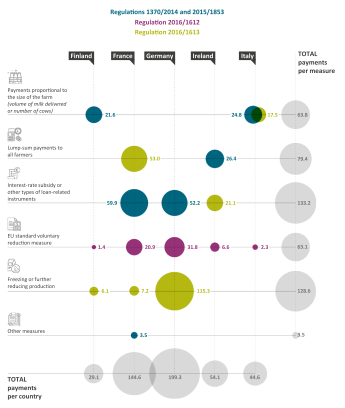
Source: DG Agriculture and Rural Development – Short-term outlook Autumn 2020 – ECA calculation.
In the decade from 2009 to 2019 the consumption of dairy products (i.e. milk and products obtained from milk, such as butter, cheese and milk powder) in the EU increased at an average rate of 0.8 % per year, while EU exports grew at an average rate of 5.5 % per year (see Figure 3) in response to rapidly expanding global demand. After this growth, by 2019 the EU was exporting around 15 % of its production4. During the period 2016-2019, the world’s top three exporters were the EU (27 %), New Zealand (25 %) and the United States (14 %), and international trade in dairy products represented around 9 % of world production5.
Figure 3
Exports of dairy products, 2009-2019

Source: DG Agriculture and Rural Development – EU agricultural outlook 2019-2030 and Short-term outlook Autumn 2020 – ECA calculation. Milk equivalents calculated using the Commission’s coefficients of 6.57 for butter, 3.58 for cheese, 7.57 for SMP, 7.56 for WMP, 7.48 for whey and 0.85 for fresh dairy products.
The 2014-2016 milk market disturbance
05Good weather conditions in 2014 and high milk prices in the preceding years fuelled a significant increase in EU milk production. From 2013 to 2015, milk deliveries to dairies increased by around 8 %, or some 11 million tonnes (see Figure 2), a significant increase when compared to the trend of domestic consumption and the volume of exports (see paragraph 04 and Figure 3). The abolition of EU milk quotas had been announced for 2015 and, as in previous years, some producers paid a fine for exceeding them.
06In May 2014, demand for EU exports of dairy products remained strong6. In August 2014, the Russian Federation banned the import of EU dairy products in response to EU sanctions over Ukraine, and Chinese import growth slowed. Russia had been the biggest export market for EU dairy products – especially cheese – accounting for around 14 % of total exports by value in 20137, and consuming 1.6 % of all EU milk production8. In 2013, China accounted for 7 % by value of EU exports of dairy products, buying mainly skimmed milk powder and whey powder.
07According to a Commission report9, “having observed the historically high prices reached for milk and milk products by the end of 2013 and the beginning of 2014, the milk sector entered a phase of global supply-demand imbalance throughout 2015 and the first half of 2016”.
08Milk prices typically fluctuate within and between years. Prices rise in winter (when milk production is lowest), and fall as production increases through the spring. A twelve-month rolling average of milk prices is therefore a better guide to fluctuation than monthly prices (see Figure 4). Over the period since the 2004 EU enlargement, the annual rolling average price for milk delivered to dairies in the EU had largely remained in a band between 28 and 35 euro cents/kg. Between mid-2013 and 2016, the average monthly price first rose above this band, and then fell to – briefly – a low of around 26 cents.
Figure 4
EU raw milk prices, 2005-2020

Source: Member States’ communications under Article 12(a) of Regulation 2017/1185 – Annex II.4(a) – Amounts weighted by the quantities delivered to dairies. The exceptional support covered in this audit was available in the period highlighted in green – See the Annex.
Prices and fluctuations varied considerably between Member States. At its widest in June 2016, the price gap was 38.1 c/kg between Lithuania (16.9 c/kg) and Cyprus (55.0 c/kg). The price in seven Member States was below 22.5 c/kg, while it was above 36.5 c/kg in four Member States10.
10Annual turnover from milk production increased from 2012 to 2014, and then declined from 2014 until 2016 (see Figure 5). The average turnover for 2013 and 2014 was €53.4 billion, and €44.8 billion for 2015 and 2016 – slightly lower than turnover in 2012.
Figure 5
Value of milk deliveries

Source: DG Eurostat for monthly cow milk deliveries (apro_mk_colm) – Milk Market Observatory for EU historical raw milk prices – ECA calculation.
The Farm Accountancy Data Network (FADN) is the Commission’s main statistical instrument for monitoring the income and business activities of commercial agricultural holdings. It includes several income indicators11, such as farm net value added (FNVA) per annual work unit (AWU) and farm net income. Both indicators declined in 2015-2016 compared to 2012-2013 for EU specialist dairy farmers, the first by around 7 % and the second by around 16 %.
12The dynamics were markedly different across Member States. For instance, when comparing 2015-2016 with 2012-2013, the FNVA/AWU indicator decreased in 14 out of the 25 Member States for which data are available, but increased in the remaining 11. The total range was from a 35 % decrease in the Netherlands to a 110 % increase in Slovakia.
Mechanisms available to deal with fluctuations in prices
13Fluctuations in prices affect producers’ income. The common agricultural policy (CAP) provides mechanisms that mitigate this risk: direct payments, a safety net and exceptional measures.
Direct payments stabilise farm incomes
14Dairy farmers have two main sources of revenue: receipts from the sale of milk, and direct payments from the EU budget. Most direct payments from the EU budget are based on the number of hectares farmed, regardless of production. Fluctuations in the volume of milk produced, or the price paid by dairies, do not affect the amount of direct aid paid to farmers.
15In 19 Member States, in addition to direct payments per hectare, dairy farmers may receive a separate direct payment linked to production, called voluntary coupled support (VCS, see Box 1). Furthermore, they may benefit from rural development measures such as support for farmers in areas with natural constraints on production, and subsidies for various types of investments.
Box 1
Voluntary coupled support in the milk sector
Member States can grant VCS to several sectors and areas of production, as listed in Article 52(2) of Regulation 1307/2013 where specific types of farming or sectors of particular economic, social or environmental importance are facing difficulties. According to the Commission, in 2015:
- close to half of the EU dairy herd benefited from VCS;
- the dairy sector was the second largest recipient of VCS (19.5 % of all VCS allocations, or €794 million in 19 Member States).
As we have previously observed12, direct payments lessen the impact of price and output fluctuations. When used alongside other CAP subsidies, particularly rural development payments for areas facing natural or other specific constraints, they offer significant protection against income variations.
The dairy safety net
17Regulation 1308/2013 – the Common Market Organisation (CMO) Regulation – provides additional tools for stabilising agricultural markets and addressing market disturbance.
18Dairy products can be the object of market intervention measures, commonly known as the ‟safety net”. These measures aim to tackle market imbalances and support prices by temporarily removing surpluses of dairy products from the market, particularly in the months when production is highest. Milk contains water, lactose, fats and proteins. Separating the fat from the proteins produces butter and skimmed milk. The safety net takes the form of public intervention on the market to buy in butter and skimmed milk powder (SMP), as well as public aid for the private storage of butter, SMP and certain types of cheese13.
19Under the CMO regulation public intervention quantities and prices are set by the Council14. In 2013, the Council decided15 that Member States could purchase up to 109 000 tonnes of SMP at the fixed price of €169.80/100 kg, between 1 March and 30 September each year. This price is the same throughout the EU, which makes public intervention more attractive in regions where milk prices are lowest.
20In 2014-2016, the Commission extended the public intervention period to the whole year on the basis of the Article 219 of the CMO Regulation. The Council also increased the 2016 ceiling for quantities of SMP that could be bought at the fixed price to 350 000 tonnes. These quantities corresponded to the protein content of around 3.8 million tonnes of milk, i.e. 2.5 % of EU milk production. In 2015, the Commission introduced additional measures to encourage operators to store higher quantities of SMP, by providing higher private storage support rates for a longer period of one year.
21As the market price for butter had been above the buying-in price set for safety-net intervention since 2009, there was no public intervention during 2014-2016. The market price for SMP fell below the buying-in price in the second half of 2015 – for the first time since 2009 – and in 2016 336 000 tonnes of SMP were removed from the market in 14 Member States.
22The Commission sold more than 90 % of public SMP stocks between May 2018 and February 2019, once the milk price had recovered. The total net cost to the EU budget of public intervention for SMP was €136.9 million between 2015 and 2019. The EU also spent €39.3 million on aid for the private storage of butter, SMP and cheese over the same period.
Exceptional measures
23Article 219 of the CMO Regulation allows the Commission to adopt exceptional measures against threats of market disturbance. It can do this through delegated acts, which it adopts after consulting expert groups of representatives from each Member State. Figure 6 shows the various roles and responsibilities of the Commission and Member States in the exceptional measures procedure.
Figure 6
Exceptional measures: the roles of the European Commission and Member States

Source: ECA, based on applicable EU regulations.
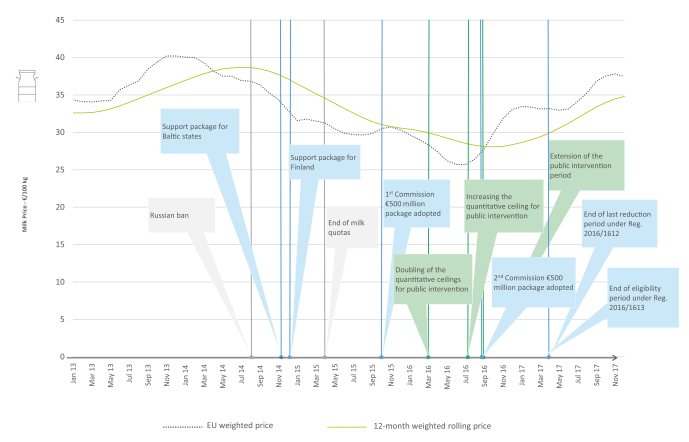
Figure 7 gives a simplified timeline of exceptional measures taken by the Commission from 2014 to 2016. In particular, in line with Article 228 of the CMO Regulation, the Commission adopted five delegated regulations (see Annex) providing support for dairy farmers and other livestock sectors.
Figure 7
Exceptional measures, 2014-2016
Source: ECA, based on Commission data.
Audit scope and approach
25The aim of this audit was to determine how well the European Commission and the relevant authorities in Member States had managed the response to the dairy market disturbance of 2014-2016. More specifically, we examined how the Commission reacted to the market disturbance, assessed the need for exceptional measures and targeted these measures, and how Member States implemented them. We also looked at whether the Commission and the Member States had assessed the outcome of the exceptional support and drawn the necessary conclusions to prepare for future disturbances in the milk market.
26In 2019 we reported on the use of exceptional measures to stabilise farmers’ income in the fruit and vegetable sectors16. This report focuses on EU milk producers. The audit scope covered the exceptional support measures introduced by the delegated regulations listed in the Annex. We also examined the measures in the safety net to the extent that they complemented the exceptional measures.
27Following the COVID‐19 outbreak, on 30 April 2020 the Commission adopted regulations on milk production planning by producer organisations and private storage aid for SMP, butter and certain cheeses. While the Commission’s management of the impact of the COVID-19 pandemic on dairy markets was not part of our audit work, this report looks at how the Commission reacted to and can learn lessons from how it dealt with an earlier crisis.
28We carried out our audit work between July 2019 and December 2020, based on audit criteria we established using EU policy papers, legislation, legislative discussions, studies and other published material.
29We interviewed Commission officials, and reviewed Commission documentation, to analyse how the institution had assessed the need for exceptional measures, designed those measures, monitored their implementation and evaluated their effects. We took account of the work of the Commission’s Internal Audit Service, which had previously examined the crisis management processes of the Directorate-General for Agriculture and Rural Development (DG AGRI).
30We also visited relevant authorities in Ireland, France, Italy and Finland, where we:
- collected audit evidence through analysis of documents and data;
- interviewed representatives of the authorities responsible for designing and implementing the exceptional measures;
- reviewed the documentation supporting 120 payments selected randomly and visited 12 farmers.
In addition to these visits, we reviewed the use of exceptional measures in Germany, also using work done on the implementation of exceptional measures by two German institutions17. We selected these five Member States on the basis of the amounts of exceptional support they received, the nature of the measures they implemented and specific characteristics of their dairy sectors – such as exposure to the Russian market or variations in total milk deliveries.
31Lastly, we sent a questionnaire to:
- the relevant national authorities in 16 Member States18 which together received more than 80 % of EU funding for the exceptional measures benefiting milk producers. The reply rate was 100 %.
- 56 professional bodies among the main ones operating in the dairy sector. The reply rate was 44.6 %.
We analysed and used the replies, in combination with our other sources of evidence, when drawing up our findings.
Observations
The Commission reacted quickly to the Russian ban, but took longer to address underlying market imbalances
32We have previously reported19 that “the concept of market disturbance is quite general and is not further developed in the EU legislation”, and that the situation “gives a large margin of discretion as to when to consider using exceptional measures”. For this audit we assessed whether the Commission had identified imbalances in the market in good time and proposed appropriate exceptional measures.
The Commission reacted quickly to the Russian ban
33The Milk Market Observatory (MMO), a body set up in April 2014 and composed of Commission staff and market experts from sectoral organisations, is charged with analysing and disseminating data on the dairy market. In a report dated 24 September 2014, the Economic Board of the MMO stated that “[c]oming from high levels, prices have been under pressure due to difficulties for the market to absorb increased production in the major milk producing regions of the world and this has been exacerbated by the Russian import ban. This downward trend could continue if production does not slow down.” The Board also warned about a milk market imbalance in four reports from the first half of 2016. For instance, on 23 February 2016 it noted: “While developments on the cost side and in world demand provide some relief, farm gate milk prices and dairy commodity continue to be under pressure, due to deteriorating EU market balance. Improvement in the supply/demand equation remains necessary.”
34Using data from the Milk Market Observatory, in 2014 the Commission estimated the magnitude of the impact of the Russian ban20 on the EU dairy market, especially in terms of lost exports of butter, cheese and whey powder. Before the crisis, around a quarter of dairy production in Finland, and over 15 % in the three Baltic states was exported to Russia. These four Member States accounted for 3.6 % of EU milk deliveries in 2013, but around a third of EU exports to Russia. In 2014 the Commission issued a first package of exceptional financial support for dairy farmers in the Baltic states and Finland, taking into account the respective milk production volumes and the scale of the decrease in milk prices.
Public stocks of skimmed milk powder overhung the market during the recovery period
35Starting in September 2014, shortly after the Russian import ban, the Commission provided support for private operators storing SMP. This measure had no clear impact on SMP prices, which continued to decrease until mid-2016. Public intervention came into play from July 2015 to September 2016, when the market price reached the intervention price. SMP prices remained low until almost all intervention stocks had been sold in early 2019 (see Figure 8). A Commission assessment of the measure concluded in April 2019 that the high quantities bought-in under public intervention managed to smoothen the price decline but weighed on the SMP market balance and contributed to delay its price recovery.
Figure 8
Evolution of SMP public and private stocks and price

Source: ECA, based on data from the Milk Market Observatory.
The measure supporting voluntary production reduction entered into force when production had started to decrease
36In September 2015, the Commission adopted Regulation 2015/1853 providing exceptional support for the EU livestock sector. The regulation did not make support conditional on reducing or freezing milk production volumes. In April 2016, the Commission adopted rules21 allowing producer organisations and cooperatives to conclude voluntary joint agreements and take common decisions on the planning of milk production on a temporary basis, but they did not take advantage of this possibility. According to the Commission, this was probably due to the lack of attached funding, and the fact that farmers not committing to production reduction would have benefitted from any reduction in production (so-called “free riding”).
37In July 2016, the Commission announced what would become Regulation 2016/1612 providing support for voluntary production reduction, and Regulation 2016/1613, which also included voluntary reductions as an activity eligible for exceptional support. At this time, the most recent information available to the Commission showed a significant monthly price decline in May 2016 – by 4.0 % to 26.2 c/kg (14 % lower than in May 2015) – and Member State estimates suggested that prices had continued to fall in June 2016. The latest available data from April 2016 showed that the increase in deliveries was slowing down, and the Commission projected that they would decrease in the second half of 201622. The Commission adopted the two regulations in September 2016.
38Regulation 2016/1612 set aid levels at €14 / 100 kg of milk and a total budget of €150 million, with the aim of reducing the volume delivered to dairies by around 1.1 million tonnes during a three-month reduction period. The Commission did not estimate how much, or how soon, this reduction would affect prices.
39Table 2 shows that the reduction in deliveries supported by Regulation 2016/1612 corresponded to 1.69 % of the volume of milk delivered to dairies in the EU in the reference period October 2015 - January 2016. This amounted to 833 551 tonnes, or 75 % of what the Commission had anticipated. The Commission did not obtain data on the volume of milk removed from the market through Member State schemes implemented under Regulation 2016/1613. We found that this type of support measures cost between €200 and €250 million of the €390 million spent from EU funds on the milk sector under the two regulations.
Table 2
Reduction in milk deliveries (Regulation 2016/1612)
| Indicator | EU | Germany | Ireland | France | Italy | Finland |
| Milk deliveries 10/2015 – 1/2016 (tonnes) | 49 466 | 10 583 | 1 249 | 8 499 | 3 444 | 784 |
| Reduction in deliveries supported by Regulation 2016/1612 (tonnes) | 834 | 232 | 50 | 153 | 17 | 11 |
| Proportion (*) | 1.69 % | 2.19 % | 4.00 % | 1.79 % | 0.50 % | 1.36 % |
(*) Differences due to rounding.
Source: ECA, based on Commission data.
The reduction period for the voluntary production reduction scheme (October 2016 to January 2017) came after the milk price had started to recover in August 2016. In fact, milk production had already been decreasing since June 2016 as a reaction to historically low prices (see Figure 9). Between June and September 2016, milk deliveries decreased by around 1 million tonnes compared to the same months in the previous year, a volume exceeding the reductions supported by the voluntary reduction measure. It is therefore highly likely that some producers supported would have reduced production anyway. The Thünen Institute reached similar conclusions when it examined the use of Regulation 2016/1613 exceptional support for German milk producers23, noting that they had already reduced their milk production before the aid measures became effective.
Figure 9
Change in delivery volumes and prices during the reduction period

Source: ECA calculation based on Eurostat data (APRO_MK_COLM).
The French authorities stated that they would have welcomed support for voluntary reductions earlier, as soon as the first exceptional measures were put in place24. The German authorities noted in their reply to our survey that, even with falling prices, some dairy farmers increased their production to cover fixed costs, which further increased supply pressure. Overall, until June 2016 milk production in Germany kept increasing. From this perspective, the Germans considered that voluntary reduction measures could have been more effective if implemented sooner. In Germany, 20 % of farmers withdrew from the scheme before submitting payment claims.
42In its 2019 internal assessment of agricultural market crisis management measures, the Commission concluded that “the timing of the measure does not allow to state that it has impacted on production reduction, as the latter had started already when the measure was introduced. However, the scheme provided support only to the farmers contributing to the production reduction conducive to price recovery”. The Commission identified production reduction as one factor among many others to influence the price recovery in the second half of 2016 (see Box 2).
Box 2
Many drivers of price recovery
In the late 2016 edition of its annual medium-term foresight document25, DG AGRI identified various external and domestic drivers of price recovery:
- a strong decline in milk production in Argentina, Uruguay and Australia due to unfavourable weather conditions;
- rising world import demand for cheese and butter, particularly benefiting the EU (imports up in China, the USA, the Philippines, Mexico);
- public intervention, through the safety net, to withdraw approximately one third of EU annual SMP production from the market;
- increasing domestic consumption of cheese and butter in the EU, more than offsetting the decline in liquid milk sales;
- EU monthly milk production was below the previous year’s levels since June 2016, and an additional reduction could be expected, especially in view of the support schemes adopted in September 2016.
Coupled support reduces incentives to adjust production during market disturbance
43Voluntary coupled support to dairy farmers (see paragraph 15) is based on the size of their herds, as a payment per head. In order to reduce milk supply to adjust to the new market conditions – including under voluntary production reduction measures – certain farmers had to reduce their herd. In September 2016 the Commission adopted a derogation26 for claim year 2017, allowing Member States to pay coupled support to dairy farmers on the basis of their 2016 herd size, even if this had meanwhile decreased. Regulations 2017/2393 and 2020/2220 empowered the Commission to adopt similar provisions for claim years 2018 to 202227. These provisions addressed the practical implications of policy inconsistency from 2017, but during the period of milk market disturbance coupled support reduced the incentives for farmers to adjust production by cutting the size of their herds.
The Commission produced an overall assessment of the impact of the market disturbance leaving targeting of the support to national authorities
44During the 2014-2016 period, the Commission introduced temporary exceptional measures to support farmers in the dairy sector. These measures did not aim to compensate farmers in full for the decrease falling prices, but mainly to alleviate their cash flow difficulties. We checked whether the Commission had analysed the impact of the market imbalance on the dairy sector before adopting the exceptional measures, and whether these took into account the financial situation and cash flow of dairy farmers.
45We also assessed whether the Commission had taken steps to ensure that aid would be sufficiently targeted, taking into account how the disturbance had affected the financial situation of dairy farmers, as well as the EU objective of promoting the balanced and environmentally sustainable development of rural areas. We checked whether the Commission targeted support in a way that addressed the risks of moral hazard and deadweight inherent in exceptional support and production reduction schemes.
The Commission sought to address farmers’ liquidity issues
46Exceptional measures are one of a number of tools available under the CAP. Other CAP subsidies, mainly direct payments to producers (see paragraphs 14‑16), have played a stabilisation role as an income buffer. The share of direct payments in dairy farm income28 increased in 2015 and 2016, when revenue from the sale of milk was decreasing (see Figure 10). Among the five Member States we focused on, direct payments had a particularly prominent stabilisation role in Finland, where their share of dairy farm income was between 76 % and 96 % over 2013-2018.
Figure 10
Share of CAP subsidies in the income of EU dairy farms

Source: ECA calculation based on FADN data. Total direct payments (SE606), and other subsidies excluding those on investments, as a % of FNVA (SE415). Other subsidies excluding those on investments calculated as Total subsidies excluding on investments (SE605) minus Total direct payments (SE606).
Despite the income stabilisation effect of EU subsidies, a sudden price fall can create liquidity issues. In September 2015 the Commission allowed Member States to disburse up to 70 % of 2016 direct payments and 85 % of area-based rural development payments from 16 October 2015 (six weeks early), provided that they had completed their administrative checks on payment claims. This compared to a maximum advance of 50 % and 75 %, respectively, under standard rules29. The Commission granted this derogation again the following year.
48In September 2015, the Commission also triggered EU-wide exceptional measures to support farmers. In its replies to our special report 23/201930 on exceptional measures in the fruit and vegetable sectors, the Commission agreed that overall returns to producers, including the impact of direct payments, should be taken into account in the analysis made before the Commission can propose triggering or ending such measures. When setting its budget for liquidity support in the context of the 2014-2016 milk market disturbance, the Commission did not assess the scale of dairy farms’ cash-flow difficulties. We found that, in practice, the amount of available resources played a major role in the budget allocation.
Little targeting in the initial Commission’s delegated regulations
49The Commission allocated around 80 % of funding to Member States in proportion to each country’s 2014-2015 milk production quota. For the remaining 20 % it took into account other factors: the average milk price, dependence on the Russian market, the impact of drought on forage crops, and the share of small farms.
50The two delegated regulations for the Baltic states and Finland (see paragraph 34) made EU aid available to “provide targeted support to milk producers affected by the Russian ban”. The recitals to delegated regulation 2015/1853 stated that “[i]n order to ensure targeting the support to those farmers most affected by the market disturbance taking into account the limited budget resources, the Member States concerned should be given the flexibility to distribute that national amount through the most effective channels”. None of these three regulations specified how national authorities were to target funding. The recitals indicated that aid was granted to Member States “with a view to supporting farmers in the livestock sectors who are experiencing the deepest price fall, the direct consequences of the prolongation of the Russian import ban, and the impact of the drought on feed crops”.
51Delegated regulation 2016/1613 stated that “Member States should choose the most appropriate measures, in particular in terms of market stabilisation and economic sustainability” and listed seven activities in which milk producers needed to engage to be eligible for exceptional aid. Next to reducing or freezing production volumes (see paragraph 36 onwards), the list included environment and climate activities, risk and quality management, and cooperation projects. This set of conditions introduced a greater element of targeting than the previous regulations.
Unclear results of the Commission’s attempt to target sustainability in dairy farming
52Milk production has a number of implications for environmental and climate policy. Dairy farming – particularly when intensive – has complex impacts on soil, air and water, mainly due to the application and management of fertiliser and manure, and enteric fermentation in cows. Strong production growth conflicts with the EU’s ambition to reduce its greenhouse gas emissions. At the end of 2014, livestock farmers in six Member States (Belgium, Denmark, Italy, Ireland, the Netherlands and the United Kingdom) had a derogation from the ceiling of 170 kg of nitrogen per hectare per year of livestock manure in vulnerable zones defined in the Nitrates Directive31, which is intended to protect water from pollution from agricultural sources. Farmers benefiting from the derogation are bound by specific obligations with respect to manure and land management.
53Delegated regulation 2016/1613 introduced some sustainability targeting. Three of the seven activities in which milk producers needed to engage to be eligible for exceptional aid were specifically linked to environmental concerns: small-scale farming, the use of extensive production methods, and that of environmental and climate-friendly production methods. Member States had to make aid conditional on one or more of these seven activities.
54The Commission assessed which activities Member States had chosen. It found that 13 Member States included small-scale farming as a condition for aid, 12 specified environmental and climate-friendly production methods, and seven specified extensive production methods (see Box 3). However, this raw information is not sufficient to assess the uptake or impact of these measures.
Box 3
Example of one Member State targeting sustainability and one Member State not
In Ireland, one of the eligibility criteria applied to the cash-flow loan scheme (see Box 5) was the use of environmental and climate-friendly production methods supported by the national rural development programme. These included organic farming, various agri-environmental schemes, and a beef data and genomics programme aimed at improving the genetics of the beef herd to deliver climate benefits. The dairy and livestock sector was the main source of increased greenhouse gas emissions in Ireland between 2011 and 2017.
Germany did not make exceptional aid conditional on any of the three activities specifically linked to environmental concerns. In its evaluation of the measures, the German Federal Court of Audit criticised the fact that funding was not linked to sustainability objectives, and concluded that in such a case “liquidity support is merely a ‘rescue’ operation without sustainability and lasting effects”32.
The risk of moral hazard in exceptional support measures
55We have previously reported33 that “the more frequently public aid is offered during or after a ‘crisis’, the lower the incentive for farmers to mitigate risk through the use of risk management tools”. This creates moral hazard: in that farmers have an incentive to increase their exposure to risk. For example they have a greater incentive to increase production because, if demand does not increase, they consider that the EU budget will support them if prices fall.
56During 2014-2016, many factors contributed to falling prices, but particularly excess supply (see paragraphs 05 and 06). In the years prior to the market disturbance, farmers in some Member States significantly increased milk production taking advantage of higher prices, and some continued increasing production even after prices began to fall (see paragraph 03 and Table 1). The resulting overproduction weighed on market prices. We noted that DG AGRI discussed the appropriateness of using exceptional measures to compensate farmers who had decided to invest – under their own responsibility – and were contributing to overproduction. It ruled out the idea of paying off farmers’ debt in exchange for lower production, as it considered this to present a clear moral hazard risk. However, the Commission did not address this issue in its delegated regulations providing liquidity support to dairy farmers.
57A 2018 study carried out for the Commission also found that the existence of the safety net may have led SMP producers to be less attentive to market signals in the short-term. It concluded that this was likely to have been the case during the market disturbance, especially in the Netherlands, but also in Poland, Spain and Czechia34.
A high risk of deadweight for production reduction measures
58A further risk associated with exceptional measures, and particularly with support for voluntary production reduction, is that of deadweight. Lower milk prices reduce production incentives, and dairy farmers are therefore expected to respond to lower prices by reducing production. This response is often partial or delayed, sometimes because of cash-flow needs (e.g. to service debt), the need to cover high fixed costs, or free riding. In 2014-2016, as prices continued to decrease, some producers would have reduced production even without support.
59The Commission quickly identified the inherent risk of deadweight in its exceptional support for voluntary production reduction. However, it did not propose safeguards to contain that risk in the delegated regulations.
60We consider that Regulation 2016/1612 created deadweight by providing support also to farmers who would have ceased their production anyway. We found the risk to be particularly high in Finland, where a quarter of applicants for the scheme reduced their deliveries by more than 90 % (accounting for 60 % of the total reduction). The 2018 study by the Thünen Institute35 assessing the voluntary measure to reduce milk production in Germany also concluded that deadweight was a significant risk, though unquantifiable.
61Regulation 2016/1612 did not prohibit eligible farmers from transferring their herds to other holdings, where they could continue to produce milk. In these circumstances the aid generated no effect on the market, as overall production stayed the same. For example, one case we examined in Ireland involved an applicant who “decreased” milk deliveries by transferring around 200 cows, along with a lease on its milking facilities and land, to another farmer, who continued to deliver milk from those cows during the reduction period.
62Unlike Regulation 2016/1612, where the rules of the scheme were mainly set by the Commission, under Regulation 2016/1613 Member States were free to design their own rules for voluntary measures to reduce or stabilise milk production. We found that the national authorities had put in place some safeguards to lessen the risk of deadweight by excluding applicants that were ceasing or had ceased production (Germany, Finland), or that had transferred cows to another farm (Germany).
Member States favoured simplicity and a wide distribution of support
63Four of the five Commission delegated regulations on exceptional measures gave Member States significant discretion in designing and running schemes. The exception was Regulation 2016/1612 on support for reduced milk production.
64We assessed to what extent Member States used efficient working arrangements to target the most affected farmers and distribute funds.
65Commission figures show that 21 Member States paid support to milk producers under the 2014 and 2015 delegated regulations either for each litre of milk delivered, for each milking cow or as a lump sum. These payments cost around €250 million out of the total of around €350 million spent from EU funds on the milk sector under those regulations. More than half of EU funding under the 2016 delegated regulations was spent on voluntary schemes to reduce milk production or maintain it at current levels (see paragraph 39). Figure 11 illustrates the mix of measures in the five Member States we focused on, representing 64 % of the €737 million spent under the regulations listed in the Annex.
Figure 11
Typology of exceptional measures in five Member States: support (in million euros)
Source: ECA, based on data received from the Member States visited.
In Ireland, France and Italy we found schemes under which beneficiaries did not have to submit any specific applications for support. The authorities made payments after consulting the databases used for other CAP payments or data provided by dairies (see Figure 12). In Ireland, the authorities applied Regulation 2015/1853 directly, with no additional national implementing rules. This allowed the Irish authorities to pay most beneficiaries three months before the deadline.
Figure 12
Administrative simplification

Source: ECA.
The delegated regulations gave Member States significant discretion in targeting support (see paragraphs 49‑51). Nine of the 17 respondents to our survey of Member State authorities mentioned using at least one targeting criterion, referring in four cases36 to criteria linked to financial loss because of the downturn in prices. Eight respondents did not mention any targeting criteria.
68The use of lump-sum payments (see Figure 11), while simple, did not take account of the level of financial difficulty that individual farmers were facing. In France, all beneficiaries received an identical lump sum of €1 000, and in Ireland all received €1 395. These amounts accounted for 37 % of the total exceptional aid distributed in France, and 49 % in Ireland.
69Two of the five Member States we focused on used a proportional approach. In Italy and Finland, the rationale for paying all dairy farmers based on the volume of milk they delivered to the first purchasers or the number of milking cows was to quickly compensate farmers in proportion to their loss of turnover.
70Where Member States used targeting criteria, our assessment of the criteria’s effectiveness revealed a mixed picture (see Box 4).
Box 4
Targeting criteria in Member States
In France, the authorities applying Regulations 2015/1853 and 2016/1613 used three criteria to target beneficiaries: specialisation in the dairy sector, loss of income from milk sales and the weight of bank loans on a producer’s balance sheet. Recent investors and newly established farmers benefited from higher support ceilings.
In Germany, under Regulation 2015/1853, farmers with medium and long-term bank loans who were able to demonstrate a loss of at least 19 % of their farm-gate milk price were eligible for exceptional aid. The average drop in the farm-gate price in Germany was around 23 % at the end of 2015.
In Italy, the authorities targeted support under Regulation 2016/1613 at farmers in areas facing natural or other specific constraints. While this criterion took into account social and environmental concerns, it meant that a mountainous region with only 3 % of total national milk production received one third of all national support, even though the milk prices in the region remained stable throughout the 2014-2016 disturbance due to the specific nature of local production.
Germany, Ireland and France subsidised bank loans to farmers. These measures helped to re-finance farms by reducing the amount of annual instalments and interest and/or by restructuring loans. Unlike traditional EU grants, they ensured that farmers contribute financially in the form of capital repayments and interest. This approach is a way of broadly supporting businesses with liquidity needs (see Box 5). We also found loan schemes initiated by dairies with private funds to increase the sector’s financial resilience.
Box 5
Example of a subsidised loan scheme providing support to farmers
In Ireland, the “Agriculture CashFlow Support Loan Scheme” set up under Regulation 2016/1613 subsidised €126 million of bank loans to dairy farmers to replenish working capital. Total public support of €21 million was used to provide credit risk guarantees and lower interest rates. The scheme was oversubscribed within weeks of launch.
The Commission has learned from the experience, but has not completed its assessment of the measures
72We examined whether lessons learned from recent experience, based on an assessment of the exceptional measures, allowed authorities, both EU and national, to be prepared better for potential future market disturbances.
73In September 2016, the Commission proposed amended rules for risk management tools supported by EU rural development policy, with the aim of making the tools more attractive for farmers. For instance, from 2018 the Omnibus Regulation37 introduced the possibility of sector-specific income stabilisation tools for farmers suffering a drop in income of at least 20 %38. From December 2020, the same minimum threshold applies to income stabilisation tools that are not sector-specific39. At that time, in the whole of the EU we identified two rural development programmes offering support for income stabilisation tools, and no such tool was operational.
74Following a 2017 internal audit report on DG AGRI's management of agricultural market crises, the Commission amended its internal procedures in 2018 with a view to better determining agricultural risk scenarios 24 months into the future. Where a new major risk is identified, the new procedure provides that the Commission must be prepared to propose, if needed, a set of possible mitigating measures within a reasonable time period.
75To fund its exceptional measures for 2014-2016, the Commission considered calling on the “reserve for crises in the agricultural sector”. This is an emergency reserve that is maintained by applying a €400 million (in 2011 constant prices) annual reduction to the direct payments budget. This reduction is reimbursed to farmers in the following year if it is not used by the end of each financial year. In practice, the EU has never called on the reserve for crises. An interinstitutional agreement between the Parliament, the Council and the Commission requires “any Commission proposal for a transfer from the Reserve [to] be preceded by an examination of the scope for reallocating appropriations”. On this basis, the Commission considered that it could not trigger the reserve for crises to address the 2014-2016 disturbance, as other resources were available in the CAP budget.
76For the next CAP multiannual financial framework (2021-2027), the Commission has proposed to strengthen the role and potential impact of the reserve for crises by making its use more flexible and allowing annual unused amounts to be rolled over to the following budget year. The Commission has also proposed financing the reserve independently of direct payments to farmers, but still within the CAP overall budget.
77As part of a package to support the agriculture and food sectors in response to the COVID-19 outbreak40, including the measures mentioned in paragraph 27, the Commission has adopted a regulation41 exceptionally allowing more flexibility in the use of EU funding, including rural development programmes. One area of flexibility is that stand-alone working capital, not only when linked to investment costs, is eligible for financial instruments supported by rural development programmes.
78The Commission has carried out and funded42 studies on the use of exceptional measures at EU level, which provided insight on crisis prevention and management in the agricultural sector. However, none of them have focused on the effects of the aid arrangements made by Member States under Regulations 2015/1853 and 2016/1613. The Commission’s internal assessment concluded that it was difficult to evaluate the direct impact of the measures due to their heterogeneity and the nature of the information provided to the Commission.
79Delegated Regulation 2016/161343 required Member States to provide output data (amounts paid per measure, the number and type of beneficiaries) and an assessment the effectiveness of the measures to the Commission by 15 October 2017. Our work in the five Member States we focused on showed that while they had sent the required data, France, Italy and Finland had not carried out an assessment of the measures.
Conclusions and recommendations
80We examined how well the European Commission and the relevant authorities in Member States had managed the response to the dairy market disturbance of 2014-2016, and whether they had drawn appropriate conclusions for future crises.
81We found that the Commission and the Member States took broad measures to help farmers during the dairy market disturbance of 2014–2016, but the underlying analysis was generally insufficient to decide on the level of support needed and to target it. While the Commission reacted quickly to the Russian ban on EU dairy products, it took longer to address underlying market imbalances. It proposed mitigating measures to alleviate farmers’ liquidity issues, but without adequately assessing needs or setting targets. Given the flexibility available to them under shared management, Member States favoured exceptional measures that were simple to deliver and opted to distribute funds widely. Efforts to target aid were limited. The Commission has since taken some steps to improve the management of market imbalances, but has not completed its assessment of the measures.
82Following the Russian ban, and before the end of 2014, the Commission provided exceptional financial support to the Baltic States and Finland, which were the most affected by the ban. Also other factors caused prices to fall, particularly excess supply. The Commission took steps to reduce supply by introducing support for private storage, expanding public intervention and allowing production planning by producer organisations and cooperatives. However, these measures involved trade-offs. For example, while public buying-in of skimmed milk powder initially contributed to absorbing part of the oversupply, the accumulated public stocks weighed on the SMP market price (paragraphs 33‑36).
83The Commission adopted voluntary production reduction measures in September 2016. Production had been decreasing anyway since June 2016, and the measures only came into effect when the milk price had already started to recover (paragraphs 37‑42). In this situation, there was a significant risk of deadweight. Some national authorities put in place safeguards to reduce this risk by excluding applicants that were ceasing or had ceased production, or that had transferred cows to another farm (paragraphs 58‑62). Furthermore, throughout the market disturbance farmers may have been discouraged from cutting herd sizes as a way of lowering production because doing so could mean losing voluntary coupled support (paragraph 43).
Recommendation 1 – Dealing with future market imbalancesTo improve the way it deals with potentially significant market imbalances, the Commission should update its procedures so that, before approving any support for production reduction in the future, it would:
- examine whether conditions attached to CAP support, for example coupled support, contribute to oversupply;
- reduce the risk of deadweight by considering the inclusion of appropriate safeguards in the regulations.
Target implementation date: 2022
84The Commission proposed measures to support farmers, but did not quantify farmers’ needs when setting the budget. Other CAP support, in particular direct payments, play a stabilisation role at times of market disturbance, as they are a buffer against changes in prices. The Commission did not take into account overall returns to producers in its budget needs assessment. Instead, the amount of available resources played a major role in the budget allocation (paragraphs 44‑48).
85In its successive delegated regulations, the Commission indicated that aid was meant to provide targeted support to farmers, but did not specify how national authorities should have achieve this (paragraphs 49‑51). Member States often adopted straightforward approaches to simplify delivery – such as using lump-sum payments or payments proportional to the size of farms. The five Member States we focused on generally favoured simple arrangements and a wide distribution of funds (paragraphs 63‑71).
86Milk production has a number of environmental and climate implications. The last of the five delegated regulations (adopted by the Commission in 2016) took some sustainability concerns into account, but at present insufficient information is available to assess the impact of the associated measures. We found no evidence that the Commission had considered or assessed potential environment and climate impacts when devising any of the other four regulations (paragraphs 52‑54).
87In the years prior to the 2014-2016 market disturbance, farmers in some Member States significantly increased milk production, taking advantage of higher prices, and continued increasing production when prices began to fall. In its delegated regulations providing liquidity support to dairy farmers, the Commission did not address the risk of moral hazard inherent to these circumstances (paragraphs 55‑57).
Recommendation 2 – Improving budgeting and targetingTo ensure a more efficient use of public funds, the Commission should:
- establish thresholds for analysing potentially significant market disturbances;
- be prepared to analyse the likely impact of a market disturbance on the dairy sector, taking into account the stabilising effect of existing support and, if it then concludes that exceptional support is needed, link it to clear objectives and targets.
Target implementation date: 2022
88Due to complex rules and available resources in the CAP budget, the reserve for crises in the agricultural sector did not play a role during the 2014-2016 market disturbance. The Commission proposed changes in order to strengthen the role of the crisis reserve for the future (paragraphs 75 and 76). Furthermore, as from 2018, the Omnibus Regulation introduced the possibility of sectorial income stabilisation tools. As of December 2020, we identified two rural development programmes offering support for income stabilisation tools, and no such tool was operational (paragraph 73).
89Evaluations carried out after the market disturbance provided some overall conclusions regarding the exceptional measures at EU level, and the Commission has since taken steps to improve its crisis management procedures. However, it has not adequately assessed the effects of the arrangements made by Member States. We consider that an analysis of this kind could produce important conclusions and lessons that would increase preparedness in any future market disturbances (paragraphs 72‑79).
Recommendation 3 – Increased preparedness for future market disturbancesTo draw lessons from the 2014-2016 market disturbance and help prepare for the future, the Commission should analyse the effects of the various models for delivering exceptional aid on dairy farms’ behaviour and liquidity, and on market stabilisation and the environment, together with the role of risk management by producers and dairies, and should then publish its findings.
Target implementation date: 2024
This Report was adopted by Chamber I, headed by Mr Samo Jereb, Member of the Court of Auditors, in Luxembourg on 19 May 2021.
For the Court of Auditors

Klaus-Heiner Lehne
President
Annex – Delegated regulations on exceptional support measures in the milk sector
| Commission Delegated Regulation | Purpose | EU spending for milk producers | EU spending per tonne of milk delivered to dairies in the MS concerned(1) | Additional national support (“top-up” aid) | Time frame(2) |
| 1263/2014 | Temporary exceptional aid for milk producers in Estonia, Latvia and Lithuania | €28.6 million | €10.3 / tonne | Up to 100 % | 26.11.2014 – 30.4.2015 |
| 1370/2014 | Temporary exceptional aid for milk producers in Finland | €10.7 million | €4.7 / tonne | Up to 100 % | 19.12.2014 – 31.5.2015 |
| 2015/1853 | Temporary exceptional aid for farmers in the livestock sector | €308.3 million(*) | €2.2 / tonne | Up to 100 % | 15.10.2015 – 30.6.2016 |
| 2016/1612 | Aid for reduced milk production | €108.7 million(**) | €0.8 / tonne | Not applicable | 8.9.2016 – 30.9.2017 |
| 2016/1613 | Exceptional adjustment aid for milk producers and farmers in other livestock sectors | €281.1 million(*) | €2.0 / tonne | Up to 100 % | 8.9.2016 – 30.9.2017 |
| Total | €737.3 million | €5.2 / tonne | €357.8 million |
(*) Spending in the milk sector only. The total available for all livestock sectors was €420 million under Regulation 2015/1853 and €350 million under Regulation 2016/1613.
(**) Spending out of an available total of €150 million.
(1) Includes all milk delivered to dairies in 2013 in the Member States concerned, including by farmers who did not receive EU support.
(2) From publication date of regulation to deadline for payments to beneficiaries.
Source: ECA, based on Commission data.
Acronyms and abbreviations
CAP: Common agricultural policy
DG AGRI: Directorate General for Agriculture and Rural Development - European Commission
FADN: Farm Accountancy Data Network
FAO: Food and Agriculture Organization (United Nations)
MMO: Milk Market Observatory
SMP: Skimmed milk powder
WMP: Whole milk powder
Glossary
Dairy products: Milk and products obtained from milk, such as butter, cheese and milk powder.
Deadweight: A situation where an activity would have gone ahead without receiving public aid.
Delegated act (delegated regulation): A legally binding act used by the Commission, if Parliament and the Council express no objection, to supplement or amend non‑essential parts of EU legislation, for example by giving details of implementing measures.
Direct payments: Agricultural support payments, mostly area-related aid, made directly to farmers under the European Agricultural Guarantee Fund.
European Structural and Investment Funds: The five main EU funds which together support economic development across the EU: the European Regional Development Fund, the European Social Fund, the Cohesion Fund, the European Agricultural Fund for Rural Development, and the European Maritime and Fisheries Fund.
Farm Accountancy Data Network: A tool based on Member State surveys of commercial farms, used to evaluate EU farm income levels and determine the impacts of the common agricultural policy.
Farm net income: Indicator of the FADN, which describes the amount available to remunerate the holding’s own production factors. It is calculated by deducting wages, rent and interest paid by the holder from farm net value added, and adding the balance of subsidies and taxes on investments.
Farm net value added: An indicator used in the FADN to describe a farm’s total production value, including subsidies, after deducting depreciation and the value of the goods and services consumed during the production process. This is the amount available to pay for all fixed production factors of an agricultural holding (land, labour and capital), whether own or external.
Financial instrument: Financial support from the EU budget in the form of equity or quasi-equity investments, loans or guarantees, or other risk-sharing instruments.
Milk equivalent: A measure of the equivalent quantity of liquid whole milk used in dairy products, such as condensed/evaporated milk, milk powder, yoghurt, cream, casein, skimmed milk and whey.
Thünen Institute: German research institute reporting to the Federal Ministry of Food and Agriculture.
Audit team
The ECA’s special reports set out the results of its audits of EU policies and programmes, or of management-related topics from specific budgetary areas. The ECA selects and designs these audit tasks to be of maximum impact by considering the risks to performance or compliance, the level of income or spending involved, forthcoming developments and political and public interest.
This performance audit was carried out by Audit Chamber I Sustainable use of natural resources, headed by ECA Member Samo Jereb. The audit was led by ECA Member Nikolaos Milionis.
Endnotes
1 Eurostat data explorer – Economic accounts for agriculture – values at basic prices – update 9 March 2020.
2 European Commission, “EU agricultural outlook – For markets and income 2019-2030”, December 2019, p. 82, Annex Table 9.23 EU milk market balance.
3 Eurostat data explorer – Cows' milk collection and products obtained – monthly data –update 31 March 2020.
4 Commission calculation based on available Eurostat data and estimates. The underlying balance sheets are published in the Commission’s short-term outlooks.
5 Calculated on the basis of volumes of milk equivalents reported by the FAO in Food Outlook – November 2020 – Appendix table 19.
6 See Milk Market Observatory Economic Board meeting report, 27 May 2014.
7 Calculated on the basis of EU trade data available on the Commission’s Access2Markets database, Harmonized System codes 0401 to 0406.
8 According to a study prepared for the Commission: Written Wageningen Economic Research and Ecorys – Evaluation for the Commission, “Improving crisis prevention and management criteria and strategies in the agricultural sector” (05.087713) Final report, August 2019, p. 37.
9 Commission report: “Development of the dairy market situation and the operation of the "Milk Package" provisions”; COM(2016) 0724 final.
10 See the Commission’s agri-food data portal for more information.
11 For more information on the Commission’s measurement of farm incomes, see our special report 01/2016: “Is the Commission’s system for performance measurement in relation to farmers’ incomes well designed and based on sound data?”
12 ECA special report 23/2019: “Farmers’ income stabilisation: comprehensive set of tools, but low uptake of instruments and overcompensation need to be tackled”.
13 Article 17 of the CMO Regulation.
14 Articles 14 and 15 of the CMO regulation.
15 Council Regulation (EU) No 1370/2013 of 16 December 2013 determining measures on fixing certain aids and refunds related to the common organisation of the markets in agricultural products – Articles 2 and 3.
16 ECA special report 23/2019: “Farmers’ income stabilisation: comprehensive set of tools, but low uptake of instruments and overcompensation need to be tackled”.
17 The Bundesrechnungshof and Thünen Institute.
18 Belgium, Czechia, Denmark, Germany, Estonia, Ireland, Spain, France, Italy, Latvia, Lithuania, Hungary, the Netherlands, Poland, Romania and Finland.
19 Paragraph 63 of ECA special report 23/2019.
20 Information on the Russian import ban is available on the Commission’s website.
21 Commission Delegated Regulation (EU) No 2016/558 and Commission Implementing Regulation (EU) No 2016/559.
22 MMO economic board meeting report – 28 June 2016, in particular p. 68.
23 Andrea Rothe and Sascha A. Weber, "Evaluierung über die in Deutschland erfolgte Umsetzung der Milchmengenverringerungsmaßnahme sowie der Milchsonderbeihilfe" [“Evaluation of the implementation in Germany of the milk reduction measure and the special milk aid scheme”], Thünen Working Paper 88.
24 See also the evaluation support study by EEIG Agrosynergie for the Commission – “Evaluation on the impact of the CAP measures towards the general objective ‘viable food production’”, August 2018, section 8.5 “Timeliness of the Commission's reaction to market crises”, p. 147.
25 European Commission, “EU Agricultural Outlook: Prospect for the EU agricultural markets and income 2016-2026”, December 2016, p. 32.
26 Commission Implementing Regulation (EU) No 2016/1616.
27 Article 3(11)(c) of Regulation (EU) No 2017/2393, and Article 9(14) of Regulation (EU) No 2020/2220.
28 The definition of income we use here is the Farm Net Value Added.
29 Article 75(1) of Regulation (EU) No 1306/2013.
30 Recommendation 3(a) of the report, p. 46, and replies of the Commission, p. 9.
31 Council Directive 91/676/EEC concerning the protection of waters against pollution caused by nitrates from agricultural sources.
32 Bundesrechnungshof, “Abschließende Mitteilung an das Bundesministerium für Ernährung und Landwirtschaft über die Prüfung der Maßnahmen zur Entwicklung des Marktes von Milch und Milcherzeugnissen”, 19 September 2019.
33 Special report 23/2019, paragraph 35.
34 EEIG Agrosynergie, op. cit., section 9.2 “Effects of market measures in production decisions in the short term: generation of occasional surplus”, pp. 152‑154.
36 In Czechia, Germany, Spain and France.
37 Article 1(19) of Regulation (EU) No 2017/2393, inserting Article 39a in Regulation (EU) No 1305/2013.
38 For more information on income stabilisation and other risk management tools supported by the CAP, see also our special report 23/2019.
39 Article 39 of Regulation (EU) No 1305/2013 as modified by Article 7(7) of Regulation (EU) No 2020/2220.
40 See more information on the Commission’s website.
41 Regulation (EU) No 2020/558 of the European Parliament and of the Council of 23 April 2020 amending Regulations (EU) No 1301/2013 and (EU) No 1303/2013 as regards specific measures to provide exceptional flexibility for the use of the European Structural and Investments Funds in response to the COVID-19 outbreak.
42 EEIG Agrosynergie, op. cit.; and Written Wageningen Economic Research and Ecorys, op.cit.
43 Article 3(b) of Regulation (EU) No 2016/1613.
44 Regulation (EU) 2017/2393 of the European Parliament and of the Council of 13 December 2017 amending Regulations (EU) No 1305/2013, (OJ L 350, 29.12.2017, p. 15–49).
45 Commission Delegated Regulation (EU) 2015/1853 of 15 October 2015 providing for temporary exceptional aid to farmers in the livestock sectors, (OJ L 271, 16.10.2015, p. 25–30).
46 Commission Delegated Regulation (EU) 2016/1612 of 8 September 2016 providing aid for milk production reduction C/2016/5681, (OJ L 242, 9.9.2016, p. 4–9).
47 Regulation (EU) 2017/2393, Article 1(19), inserting Article 39a in Regulation (EU) No 1305/2013.
48 See Article 39 of Regulation (EU) No 1305/2013 as modified by Article 7(7) of Regulation (EU) 2020/2220.
49 Regulation (EU) 2020/872 of the European Parliament and of the Council of 24 June 2020 amending Regulation (EU) No 1305/2013, (OJ L 204, 26.6.2020, p. 1–3).
50 Written Wageningen Economic Research and Ecorys – Evaluation for the Commission, “Improving crisis prevention and management criteria and strategies in the agricultural sector” (05.087713) Final report, August 2019.
51 A Farm to Fork Strategy for a fair, healthy and environmentally-friendly food system, COM/2020/381 final, 20.5.2020.
Timeline
| Event | Date |
|---|---|
| Adoption of Audit Planning Memorandum (APM) / start of audit | 15.5.2019 |
| Official sending of draft report to Commission (or other auditee) | 26.3.2021 |
| Adoption of the final report after the adversarial procedure | 19.5.2021 |
| Commission’s official replies received in all languages | 17.6.2021 |
Contact
EUROPEAN COURT OF AUDITORS
12, rue Alcide De Gasperi
1615
Luxembourg
LUXEMBOURG
Tel. +352 4398-1
Enquiries: eca.europa.eu/en/Pages/ContactForm.aspx
Website: eca.europa.eu
Twitter: @EUAuditors
More information on the European Union is available on the internet (http://europa.eu).
Luxembourg: Publications Office of the European Union, 2021
| ISBN 978-92-847-6136-4 | ISSN 1977-5679 | doi:10.2865/593145 | QJ-AB-21-011-EN-N | |
| HTML | ISBN 978-92-847-5994-1 | ISSN 1977-5679 | doi:10.2865/30285 | QJ-AB-21-011-EN-Q |
COPYRIGHT
© European Union, 2021.
The reuse policy of the European Court of Auditors (ECA) is implemented by Decision of the European Court of Auditors No 6-2019 on the open data policy and the reuse of documents.
Unless otherwise indicated (e.g. in individual copyright notices), the ECA’s content owned by the EU is licensed under the Creative Commons Attribution 4.0 International (CC BY 4.0) licence. This means that reuse is allowed, provided appropriate credit is given and changes are indicated. The reuser must not distort the original meaning or message of the documents. The ECA shall not be liable for any consequences of reuse.
You are required to clear additional rights if a specific content depicts identifiable private individuals, e.g. in pictures of the ECA’s staff or includes third-party works. Where permission is obtained, such permission shall cancel and replace the above-mentioned general permission and shall clearly indicate any restrictions on use.
To use or reproduce content that is not owned by the EU, you may need to seek permission directly from the copyright holders:
Figures 6 and 11: Icons made by Pixel perfect from https://flaticon.com.
Software or documents covered by industrial property rights, such as patents, trade marks, registered designs, logos and names, are excluded from the ECA’s reuse policy and are not licensed to you.
The European Union’s family of institutional Web Sites, within the europa.eu domain, provides links to third-party sites. Since the ECA has no control over them, you are encouraged to review their privacy and copyright policies.
Use of European Court of Auditors’ logo
The European Court of Auditors logo must not be used without the European Court of Auditors’ prior consent.
GETTING IN TOUCH WITH THE EU
In person
All over the European Union there are hundreds of
Europe Direct Information Centres. You can find the address of the centre nearest
you at: https://europa.eu/european-union/contact_en
On the phone or by e-mail
Europe Direct is a service that your
questions about the European Union. You can contact this service
- by freephone: 00 800 6 7 8 9 10 11 (certain operators may charge for these calls),
- at the following standard number: +32 22999696 or
- by electronic mail via: https://europa.eu/european-union/contact_en
FINDING INFORMATION ABOUT THE EU
Online
Information about the European Union in all the official
languages of the EU is available on the Europa website at: https://europa.eu/european-union/index_en
EU Publications
You can download or order free and priced EU
publications at: https://op.europa.eu/en/web/general-publications/publications. Multiple
copies of free publications may be obtained by contacting Europe Direct or your
local information centre (see https://europa.eu/european-union/contact_en)
EU law and related documents
For access to legal information
from the EU, including all EU law since 1952 in all the official language versions,
go to EUR-Lex at: http://eur-lex.europa.eu/homepage.html?locale=en
Open data from the EU
The EU Open Data Portal (https://data.europa.eu/euodp/en/home) provides access to datasets from the
EU. Data can be downloaded and reused for free, both for commercial and
non-commercial purposes.