 Special Report
Free Movement of Workers – the fundamental freedom ensured but better targeting of EU funds would aid worker mobility
About the report In 2018, we celebrate the 50th anniversary of the founding regulation on the free movement of workers, one of the four fundamental freedoms of the Union.
We found that the tools put in place by the Commission ensure the freedom of movement of workers but deserve to be better known. The similarity of the respective objectives of the two EU funds supporting labour mobility (ESF and EaSI) make complementarity between them challenging and weaknesses in the monitoring system hamper the evaluation of the funded actions. Finally, the EURES portal of vacant posts in the EU will only develop into a true European placement tool if shortcomings such as the low rate of vacancies published on it are addressed.
 |
Executive summary
About labour mobility
IThe free movement of workers is one of the four fundamental freedoms of the Union. In 2018 the EU will celebrate the 50th anniversary of the founding regulation on the free movement of workers. It entails the abolition across Member States of any discrimination based on nationality as regards employment, remuneration and other conditions of work and employment. In 2015, 11.3 million EU-28 movers of working age were living in an EU Member State other than their country of citizenship. This equates to 3.7 % of the total working age population across the EU.
How we conducted our audit
IIWe assessed how the Commission ensures the freedom of movement of workers and the effectiveness of EU actions facilitating labour mobility. We carried out our audit between October 2016 and July 2017 at the Commission and in the five Member States with the largest inflows of non-national workers and the largest outflows of workers to other countries (Germany, Luxembourg, Poland, Romania and the United Kingdom).
What we found
IIIWe found that the Commission provides EU workers with information on their rights through several channels, but there are opportunities to improve awareness of them.
IVObstacles to moving to and working in another country (such as the recognition of professional diplomas) are long standing. Whilst the Commission and Member States have taken several actions to address such obstacles, they persist.
VMember States are at different levels with regard to data on skills and labour imbalances at both regional and national levels. The Commission is continuing to work with Member States to improve such data.
VIThe EU supports labour mobility through the ESF for Member States identifying that as a need. However, labour mobility has not been defined as a distinct investment priority and monitoring of such activity was lacking during the approval process for the current ESF programme period. Therefore, the extent to which the ESF is used for this purpose is unknown.
VIIThe main source of known funding to support labour mobility is the Commission’s Employment and Social Innovation (EaSI) programme with 165 million euro for 2014 to 2020. We found that the EaSI-EURES has similar policy objectives to those of the ESF with regards to labour mobility, meaning the required complementarity of both EU funds is challenging.
VIIIWe reviewed 23 EURES projects run by Cross Border Projects (CBP) and supported by EaSI. We found that few projects had defined results (e.g. job seekers finding employment), and that weaknesses in the projects’ monitoring resulted in their inability to aggregate outputs and results at programme level.
IXThe “EURES Job mobility portal” is the main tool at EU level to facilitate labour mobility, but it faces significant challenges, not least because a significant proportion of national PES vacancies are not placed on the EURES portal. Furthermore, our analysis of vacancies placed onto the portal found them often to be inadequate for a useful job search e.g. 39 out of 50 vacancies we reviewed excluded a deadline for applying.
XMeasuring job placements achieved through EaSI-EURES is a fundamental measure of the programme’s effectiveness. According to the Commission, 28 934 job placements in 2016 were the result of EURES advisors’ support to jobseekers. This only represents 3.7 % of contacts by jobseekers with EURES advisors. Moreover, most of the Public Employment Services (PES) which we surveyed stated that they are unable to measure effective job placements, or have discontinued measuring that as an indicator.
What we recommend
XIWe recommend that the Commission should:
- Measure the awareness amongst EU citizens of existing tools relating to information provision on the freedom of movement of workers and reporting discrimination.
- Making better use of available information in order to identify types of discrimination.
- Work with Member States to improve the collection and use of data on patterns and flows of labour mobility and labour market imbalances.
- Improve the design of EU funding to address labour mobility.
We recommend that the Member States should:
(e)Improve the monitoring of the EaSI-EURES’s effectiveness, especially with regard to job placements.
(f)Address the limitations of the EURES Job mobility portal to make it a true European placement tool.
Introduction
Free movement of workers: a fundamental freedom
01The free movement of workers is one of the four fundamental freedoms of the Union1. In 2018 the EU will celebrate the 50th anniversary of the founding regulation on the free movement of workers. It is an important right individual to any worker, and is a vital constituent of the single market. Under this freedom, EU workers from other Member States enjoy equal treatment with nationals in access to employment, working conditions and all other social and tax advantages. This means that any national authority and any employer, whether public or private, must apply and respect the rights stemming from Article 45 of the Treaty on the Functioning of the European Union (see Box 1). The freedom is also guaranteed in EFTA countries (Iceland, Liechtenstein, Norway and Switzerland). It is important to note that the freedom of movement of workers is distinct to the freedom of all EU citizens to move and reside freely within the territory of the Member States.
Box 1
Freedom of movement of workers - Article 45 of the Treaty on the Functioning of the European Union (TFEU)
- Freedom of movement for workers shall be secured within the Union.
- Such freedom of movement shall entail the abolition of any discrimination based on nationality between workers of the Member States as regards employment, remuneration and other conditions of work and employment.
- It shall entail the right, subject to limitations justified on grounds of public policy, public security or public health to:
- accept offers of employment actually made;
- move freely within the territory of Member States for this purpose;
- stay in a Member State for the purpose of employment in accordance with the provisions governing the employment of nationals of that State laid down by law, regulation or administrative action;
- remain in the territory of a Member State after having been employed in that State, subject to conditions which shall be embodied in regulations to be drawn up by the Commission.
- The provisions of this Article shall not apply to employment in the public service.
The latest figures available indicate that, within a total EU working age population of 306 million, around 11 million EU-28 movers of working age (20-64 years) were living on a long-term basis in another EU Member State which is not the country of their citizenship, representing 3.7 % of the total working age population in the EU-28. In terms of annual flows of working age movers, 1.1 million moved in 2014 (that includes some 100 000 EFTA nationals moving to the Union and represents 0.4 % of the total working age population). A further 1.3 million cross a border each day to work in a different Member State to that in which they reside (see Table 1).
| Extent | Type of mobility |
|---|---|
| 11.3 million | ‘Long-term’ EU-28 movers of working age (20-64 years) living in EU-28 |
| 3.7 % | … as share of the total working age population in the EU-28 |
| 8.5 million | Active EU-28 movers (employed or looking for work) |
| 1.3 million | Cross-border EU-28 workers (20-64 years) in 2015 |
| 1.1 million | Annual flow of working age EU-28 and EFTA movers who moved in 2014 |
| 0.4 % | … as a share of the total working age population living in the EU-28 and EFTA |
| 0.6 million | Movers who returned to their country of citizenship in 2014 |
Note: The annual flow of movers does not include return mobility.
Source: Annual Report on intra-EU Labour Mobility Final Report, European Commission December 2016.
03For the 11.3 million movers, the main countries of destination were Germany, which accommodated the largest number of movers of working age (2.7 million or 22 % of all movers), followed closely by the United Kingdom with 2.1 million. The countries with the largest proportion of mobile workers within their working age population were Luxembourg (43 %), Switzerland (19 %), Cyprus (15 %) and Ireland (10 %).
04Recent active movers are defined as those who have lived in an EU country different to their country of citizenship for up to 10 years. The numbers of these movers are presented in Figure 1.
Figure 1
Recent active EU-28 movers of working age (20-64), by country of residence, data for 2015 (in thousands)
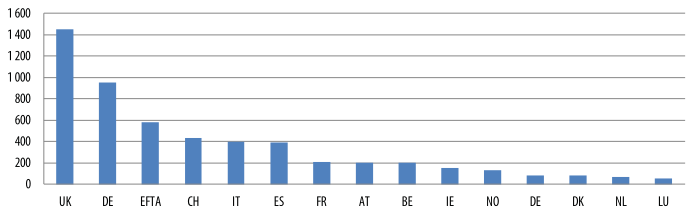
Note: Numbers of recent movers under 50 000 are not represented.
Source: Annual Report on intra-EU Labour Mobility Final Report, European Commission December 2016.
Responsibilities relating to labour mobility
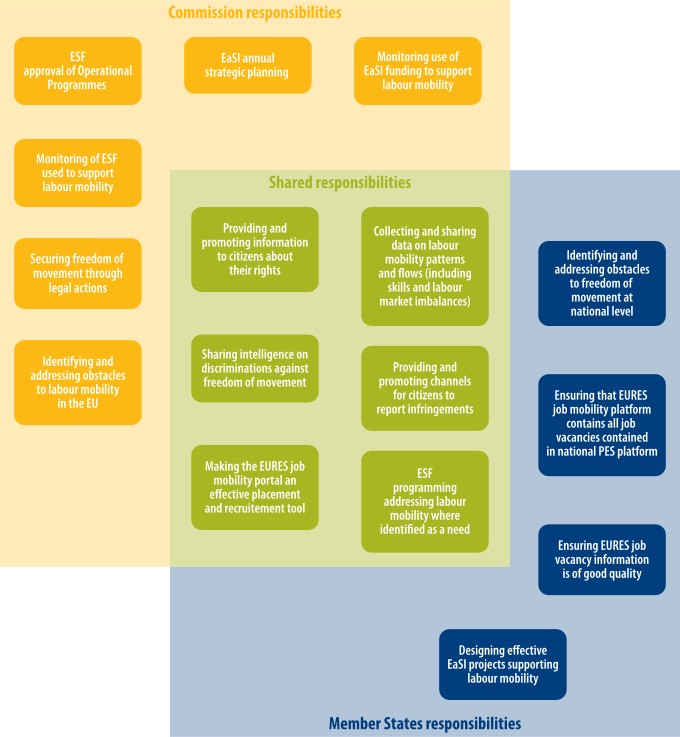
05To appreciate the different levels of responsibility in ensuring the freedom of movement of workers, one has to consider that the freedom is directly applicable in the Member States, and any discrimination thus may be brought to a National Court. The Commission may also take direct action, potentially leading to infringement procedures against a Member State involving the European Court of Justice. However, the responsibility for employment and social policies lies primarily with the Member States. These shared responsibilities are described in Figure 2.
Figure 2
Responsibilities relating to labour mobility
Source: ECA.
The European Commission and labour mobility
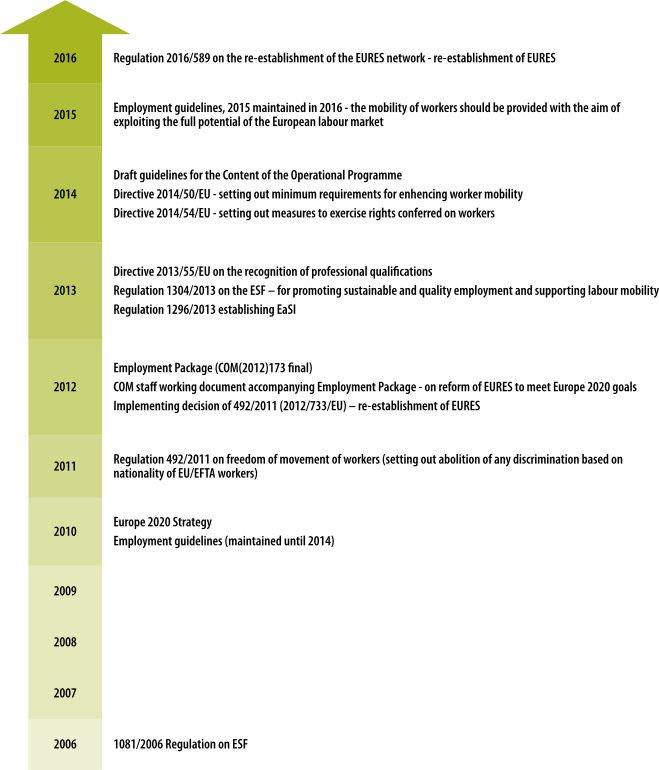
06Moving country for employment reasons is essentially an individual decision. However labour mobility can be facilitated and EU funding may usefully support labour mobility related actions. In 2010 with its “EUROPE 2020 - A strategy for smart, sustainable and inclusive growth”2, the Commission sets the facilitation of labour mobility in the context of better matching labour supply with demand, supported by the Union’s structural funds, notably the ESF. It promotes a “forward-looking and comprehensive labour migration policy which would respond in a flexible way to the priorities and needs of labour markets”. In recent years, the Commission has issued several policy documents, legislative proposals and guidelines on labour mobility, underlining its importance as an EU policy (see Figure 3).
Figure 3
Timeline of actions by the Commission in regard to labour mobility
Source: ECA.
EU funded actions facilitating labour mobility
07The ESF is managed by the Commission and the Member States. One of its objectives is to increase the geographical and occupational mobility of workers within the European Union3. Its overall funding for the 2014-2020 programme period is 86.4 billion euro. Within this, approximately 27.5 billion euro has been allocated to a specific thematic objective: “Promoting sustainable and quality employment and supporting labour mobility”4, under which Member States can fund labour mobility actions. The amounts used by Member States for such purposes are unknown.
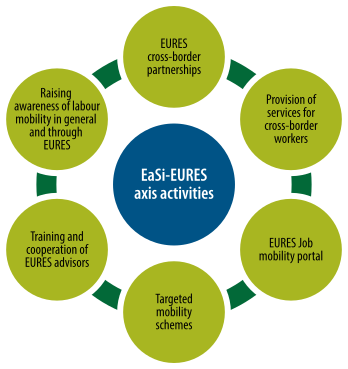
08The Employment and Social Innovation (EaSI) programme, managed by the Commission, consists of three axes, of which the “EURES”(European Network of Social Services) axis aims at facilitating labour mobility. The funding for EaSI for the 2014-2020 period amounts to 919 million euro. The funding for dedicated EaSI-EURES activities amounts to 165 million euro, 18 % of total funding. EaSI-EURES supports activities to promote voluntary geographical mobility for workers. An overview of these activities is presented in Figure 4.
Figure 4
The different activities of the EaSI-EURES axis
Source: ECA.
Audit scope and approach
09We assessed how the Commission ensures the freedom of movement of workers and the effectiveness of EU actions facilitating labour mobility.
10In particular, we examined:
- the information tools put in place by the Commission to support workers interested in moving or having moved to another Member State and the actions taken by the Commission to address existing obstacles to labour mobility, this including the data collected by the Commission upon flows and patterns of labour mobility (Part I);
- the effectiveness of EU funding in support of labour mobility through the ESF and the EaSI programme in the 2014-2020 programme period (Part II).
Our audit was conducted between October 2016 and July 2017 and we carried out the following examinations:
- We reviewed the actions taken by the Commission in relation to labour mobility.
- We visited and interviewed the relevant national authorities in Germany, Luxembourg, Poland, Romania and the United Kingdom.
- We reviewed 23 completed EaSI-EURES Cross-border partnerships (CBP) projects financed in 2015 and 2016 and interviewed project managers in Germany, Luxembourg, Poland and the United Kingdom.
- We addressed a survey to the 28 National Coordination Offices (NCO) of the EURES network and the NCO of Switzerland to review the functioning of EURES and analysed the quality of 50 job vacancies placed on the EURES Job mobility portal.
- Furthermore, the audit team was aided by an expert panel comprising of three specialists in the field of labour mobility5.
This audit did not assess the impact of the “Brexit” upon freedom of movement, this being a key part of the ongoing negotiations between the EU and the United Kingdom. Similarly, this audit did not review the impact of the 2014 referendum in Switzerland concerning immigration, the outcome of which will affect the freedom of EU workers to move to Switzerland, when it has been translated into Swiss legislation.
Observations
Part I – The Commission has put in place tools to ensure freedom of movement of workers, but it has incomplete information on how labour mobility is working in practice
13Part one reviews the tools put in place by the European Commission to support workers interested in moving to or having already moved to another Member State. It further addresses the existing obstacles to labour mobility, and the actions taken by the Commission to address those. Finally, Part I also assesses the data collected by the Commission to monitor the flows and patterns of labour mobility, and labour market imbalances.
The Commission has established tools to inform citizens of their rights, but it does not know the existing level of awareness of these tools
14It is important that information on conditions and rights is available to those either working already or seeking to work in another country. In addition, those to whom such information would be useful need to be aware that it exists and is available to them.
15The Commission provides information to citizens about labour mobility rights and opportunities through two dedicated websites: YOUR EUROPE and EURES (see Box 2).
Box 2
Information about rights and opportunities on working in another Member State
- YOUR EUROPE6 provides general information on working in another Member State, such as your basic rights and social security issues; YOUR EUROPE ADVICE offers advice through a network of legal experts operating under contract with the Commission; YOUR EUROPE also provides links to relevant national bodies, rules and assistance services.
- The EURES7 portal offers access to job vacancies published by national Public Employment Services (PES) through the EURES Job mobility portal and provides more detailed information about national labour markets and legislation. It also offers the possibility to contact specialised EURES advisors, who can guide a jobseeker actively through the different job opportunities available.
Furthermore, Member States have set-up their own sources of information for EU citizens working in their countries, or their nationals intending to work in another Member State. Such systems may be supported by public authorities, unions or other bodies (see Box 3).
Box 3
Examples of Member States providing information to workers on their rights in another country
Polish authorities have translated the legal rights concerning the free movement of workers and mobility into their own guidance for EU workers coming to Poland and for Polish citizens moving abroad. The information is available in brochures written in Polish, English, German and French. These are available at Polish embassies and consulates in other Member States, at job centres in Poland as well as on the website of the Ministry for Family, Labour and Social Policy.
Romanian authorities describe the legal rights arising from the free movement of workers on their web sites. Romanian consulates in other Member States also display information regarding labour conditions in the respective country and supply Romanian nationals with flyers and brochures regarding these aspects.
The Commission measures user satisfaction for both YOUR EUROPE and EURES. In 2016, 64 % of visitors to YOUR EUROPE rated the site as a good or excellent tool, 25 % as satisfactory, and 5 % as poor or very poor. Of those using the EURES portal, 40 % agreed that EURES is easy to find and that they will use the service again.
18Whilst the Commission measures the satisfaction of users, it has not measured awareness of either system among EU citizens. The need to raise awareness is reflected in the findings from a 2017 Commission report8 which identifies that amongst those already using EURES most found the site via web searches or by chance.
The Commission has set up systems to report discrimination against freedom of movement but the scale of such discrimination at an EU level remains unknown
19Workers need to be aware of their rights and have the opportunity to report discrimination against the freedom of movement of workers. An understanding of the scale and types of existing discrimination is necessary if they are to be effectively addressed.
20SOLVIT is the Commission’s system enabling citizens to complain against unfair rules or decisions by national public administrations. In 2016, 2 414 cases were dealt with by SOLVIT, relating to all aspects of the single market. One complaint category is on the free movement of workers, while other categories may also be indirectly related to free movement. These include the recognition of professional diplomas, social security or access to education for family members. In 2016, there were 34 cases related to the free movement of workers.
21Since 2010, the Commission has launched 33 legal proceedings against Member States concerning the freedom of movement, and 21 related to social security issues, which indirectly impact on such rights.
22Compared to the 11.3 million movers of working age in the EU, the number of cases both from SOLVIT and the infringement procedures are very low.
23In addition to SOLVIT, some Member States have set up their own distinct systems for citizens to report and deal with cases of discrimination. For example, foreign workers in Luxembourg can contact the national labour inspectorate which can follow up the complaint. In other Member States such as Germany, workers may address information offices run by unions, which have specialised mediators who may take over the complaint, and refer it to national authorities or contact employers directly for a conciliation.
24Beyond its own SOLVIT system and the network of legal experts through YOUR EUROPE ADVICE, the Commission has limited knowledge of cases raised nationally, because these are not routinely reported to the Commission. Thus it does not know the full extent of discrimination against the freedom of movement. According to a Directive from 20149, Member States had until 2016 to designate bodies for the promotion, analysis, monitoring and support of equal treatment of Union workers and members of their family. These designated bodies are to conduct surveys and analyses concerning unjustified restrictions and obstacles to the right to free movement, or discrimination on the grounds of nationality.
The Commission has taken action to address other restrictions on labour mobility but some obstacles persist
25Workers may also face obstacles to moving which, whilst not representing an infringement to their rights, can nonetheless affect labour mobility (for instance, the recognition of qualifications).
26“The difficulties they (EU citizens who want to move or who actually move) face go some way to explaining why geographical mobility between EU Member States has remained at a relatively low level: according to the EU Labour Force Survey, in 2011 only 3.1 % of the working age European citizens … lived in an EU Member State other than their own”10.
27Table 2 presents the obstacles identified commonly in Commission documents which hinder labour mobility, alongside the action taken by the Commission and our assessment upon the effectiveness of the actions taken. The table identifies that the Commission has taken actions to address these obstacles to labour mobility. But from the point of view of a European worker having the intention to work in another Member state, these are not always effective. Addressing these obstacles remains an ongoing challenge for the European Union. These remaining obstacles have to be put in perspective of the unexploited potential of the Union’s labour mobility: in 2014, available survey data indicated that about 2.9 million EU citizens would have liked to move in the following 12 months, but only just over 1 million workers did so.
| Obstacles | Responsibilities | Has the Commission taken action? | Example of the actions taken | Is the obstacle hindering labour mobility effectively addressed? |
|---|---|---|---|---|
| Lack of information upon legal rights to freedom of movement for workers | European Commission | Yes | The Commission has set up: YOUR EUROPE EURES SOLVIT |
Yes |
| Lack of sufficient information about job opportunities | European Commission and Member States | Yes | The Commission is running the “EURES Job mobility portal”, in conjunction with the national PES, the portal contains general information about national labour markets and provides a direct access to job vacancies. | Not fully addressed The EURES Job mobility portal does not contain all national job vacancies; vacancies are often incomplete (see paragraphs 51 to 57). |
| Differences in social security | European Commission and Member States | Yes | The Commission proposed in December 2016, as part of its “Labour Mobility package”, a revision of current Regulation 883/2004 and its implementing Regulation, focussing on more closely linking the payment of benefits to the Member State which collected the social security contributions, thus making the system fairer and more equitable. | Not fully addressed Member States currently place more emphasis on supplementary forms of retirement income, supplementing the basic national retirement schemes. Directive 98/49/EC on safeguarding the supplementary pension rights of employed and self-employed persons does not cover the "portability" of supplementary pensions, i.e. ability to transfer such pension entitlements when moving to a different Member State (which is however already possible in national retirement schemes). That lack of portability can act as a serious disincentive to workers’ mobility. |
| Recognition of professional and academic diplomas | European Commission and Member States | Yes | Automatic recognition of university diplomas Setting up a European framework for regulated professions The European Professional Card (EPC) is a new tool for facilitation of recognition, available only since 18 January 2016. |
Not fully addressed The 2016 report on labour mobility identifies that the recognition of professional diplomas remains an important obstacle to mobility. |
Note: More detailed information on the actions taken and how we assessed that is included under Annex I to this report.
Source: ECA.
28The following example in Box 4 identifies what kind of action the Commission has taken, and why this is not fully effective.
Box 4
Example of a Commission action addressing an identified obstacle to labour mobility
Obstacle “Recognition of professional and academic diplomas”
Action: The European Professional Card (EPC)
The Commission introduced the EPC for nurses/healthcare professionals, chemists, physiotherapists, ski and mountain guides and estate agents. This is an electronic certificate, for which applicants submit the proofs required for recognition to the relevant authority in their home Member State for verification. After completion of the documentary check, the documentary evidence is forwarded to the competent authority of the host Member State, which then examines the equivalence of the professional qualification. If the outcome of this examination does not lead to compensatory training measures, this authority issues the EPC. This is intended to create greater transparency and legal certainty for professionals and increase their mobility.
Since the introduction of the EPC on 18 January 2016, a total of 3 239 applications have been made across the EU for EPCs, of which 1 390 have been issued (figures June 2017).
The Commission monitors labour mobility flows and patterns, however data available in Member States can be better used to understand labour market imbalances
29The collection of good quality data on flows and patterns of labour mobility is necessary to support decision making in the context of labour mobility at both national and EU level.
30The Labour Force Survey (LFS) is the largest European household survey data on labour participation of people aged 15 and over. The LFS is the main data source used by the Commission to monitor patterns of labour movement11. The annual labour mobility report builds mainly on LFS data and provides aggregated data upon stocks and annual flows. Each year the report includes a focus on specific topics. For 2016, these included cross border workers and return mobility.
31As regards monitoring labour mobility, the LFS has some limitations, which are recognised by the Commission12:
- replying to the survey is compulsory in only 12 Member States and the non-response rates among foreigners are known to be very high, due notably to language issues;
- in many Member States, recently arrived foreigners and short term workers may not be covered by the survey, as the LFS in line with international census recommendations only covers persons who have stayed for one year or more;
- the small sampling size in many countries reduces the ability to analyse the data by nationality.
In 2005, the Commission identified the need to improve information on labour mobility flows between EU Member States, in addition to the LFS. The Commission produces an annual compendium of relevant data sources available within Member States. In 2016, almost all countries reported that they collect data in a centralised way on EU non-national citizens who are either employed or who are registered jobseekers. Some PES collect data describing the individual “profile” of EU workers, such as the German system which contains information about: the profession/occupation, the type of work carried out, and the education of the worker. However, it has proved difficult to use such data due to the lack of comparability between Member States.
33In 2010, the Commission initiated the project “Monitoring labour market developments in Europe”. Its aim was to gather up-to-date information on job vacancies, which would also serve as an early-warning tool for bottlenecks and mismatches across EU labour markets. Data limitations, such as the limited availability of comparable vacancy data by Member State, made this difficult to achieve. This aim was further reflected in the 2016 EURES Regulation13, which requires the Member States' national work programmes to take into account data on mobility flows and patterns, and data analysis of existing and forecast labour shortages and surpluses. The 201614 report by the Commission details research upon labour shortages and surpluses and explores the possible matching of these shortages and surpluses across countries.
34We found that Member States are at different stages with regard to the quality and depth of information on skills and labour imbalances and their magnitude. Of those visited Germany and the UK produce data which goes beyond what the Commission can provide, and may share that bilaterally with the PES of other Member States (see Box 5). The 2016 Commission report also recognises the need to improve the collection of such data across all Member States. For that study, only 13 of the 26 PES which submitted data could provide information on the magnitude of shortages and surpluses in their national labour markets. At the time of closing our audit, a comprehensive assessment of skills and labour shortages or surpluses across Member States continues to be a work in progress.
Box 5
Examples of data skills and labour imbalances within Member States
Germany “Fachkräfteengpassanalyse”- a detailed overview of labour market shortages for specialised workforce, by region and economic sector
The German Public Employment Service produces an analysis of foreseeable shortages of specialised work force (“Fachkräfte” in German), differentiated by economic sector and region. This initiative is set in the context of the demographic changes in Germany, the low unemployment rate and the growing problems of recruiting specialised workers. The shortage is measured based on posts remaining vacant (not filled), the regional unemployment rate and the ratio of unemployed persons to vacant posts. Thus, for example for the specific qualification of mechatronics and automation specialists, the report provides the following overview:
Specialised workforce for mechatronics and automation, December 2016
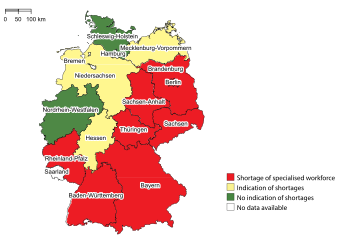
Administrative boundaries © EuroGraphics.
Data source: Statistics of the Federal Employment Agency.
The German Public employment service shares such data with other PES on a bilateral basis, to improve the recruitment process of specialists from that other Member State, but data is not collected nor recorded at an EU level.
… and the United Kingdom providing more detailed information on skills shortages, including minimum salaries to be expected
In the United Kingdom, the Department of Works and Pensions establishes a skills shortage list for inward movement. The list covers the whole of the United Kingdom (with a separate listing for Scotland) and indicates the vacancy and the specific job details, and provides the minimum salary which can be expected. This listing is publically accessible and is shared with other Member States15.
Part II - Weaknesses in the design and monitoring of EU funded actions facilitating labour mobility
35This part of the report reviews the effectiveness of EU funding facilitating labour mobility. The programmes available for such purposes are the ESF and the EaSI programme. We analysed the financial allocations of both funds and the complementarity of the ESF objectives with those of EaSI. We further examined whether those programmes are effective in supporting labour mobility, and how any such activity is monitored.
36Regarding EaSI-EURES activities, we reviewed two of its elements: EURES projects managed by Cross border partnerships (CBPs) with regard to their design and performance monitoring, as well as the EURES Job mobility portal, particularly its effectiveness in bringing job seekers and job vacancies together.
Total EU funding addressing labour mobility is unknown and complementarity of funds is not ensured
37Where the EU funds activities addressing a major priority such as labour mobility, the Commission should ensure that the funding can be identified and monitored. Where several EU funds are available, their complementarity should be ensured.
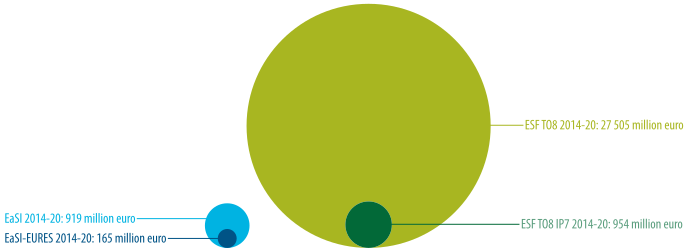
38Figure 5 indicates how EU programmes relevant to labour mobility compare in financial terms. The ESF is potentially the main instrument for supporting employment, of which labour mobility is part. Under one of the ESF’s Thematic Objectives, the objective “Promoting sustainable and quality employment and supporting labour mobility” (so called “TO 8”) and its related investment priority “modernisation of labour market institutions including labour mobility“ (so called “IP 7”), Member States may programme labour mobility related activities. It can be seen that the ESF funding under the TO 8 with 27.5 billion euro available to Member States to address labour mobility is significantly larger than the 919 million euro EaSI programme, specifically its EURES axis with 165 million euro, which is also dedicated to addressing labour mobility issues.
Figure 5
Comparison of respective funding streams that can be used to support labour mobility
Source: ECA.
Under the current 2014-2020 programme period for the ESF, Member States could plan their national activities relating to EURES (such as staff and IT cost occurring in the participating PES) and the development of specific mobility schemes and strategies at local, regional, national and cross-border by using the ESF. The Commission presented this new approach to Member States in 2013, highlighting the aim of a better functioning of labour markets by enhancing the transnational geographical mobility of workers16.
40During the approval of ESF Operational Programmes in 2013/14, the Commission did not monitor the extent to which Member States actually programmed actions addressing labour mobility. In September 2015, after the approval of the underlying ESF Operational Programmes, in an attempt to collect such information the Commission sent a survey to Member States seeking data about the volume of the planned budget within ESF for intra-EU labour mobility and EURES actions. However, only 15 Member States replied. 12 of those responding stated they would support EURES services through the ESF. As regards the financial means allocated to that, the evaluator of the survey concluded that “Because of the great diversity of the responses, and a huge heterogeneity in indicating the expenditures per year or in total, it is not possible to compare the dataset received from the 15 countries.” Box 6 outlines ways in which individual Member States are using the ESF for such purposes.
Box 6
Examples of ESF activities addressing labour mobility in Member States, and their respective financial importance
Portugal
The programme supports actions aimed directly at jobseekers or employers, particularly in terms of information, advice and support for placement and recruitment to nationals or employers who wish to work or recruit in another Member State.
To do so, Portugal programmed 2.16 million euro for the 2014-2020 period, that is 0.02 % of the total ESF budget for that period (EU and national funding), being 8.9 billion euro.
Ireland
Ireland supports jobseekers through Jobs Fairs, the promotion of European vacancies on Jobsireland, the EURES Portal and the EURES Facebook Page. Employers could arrange Jobs Fairs, advertise their vacancies on Jobsireland and the EURES Portal, and were supported at overseas recruitment events.
To do so, Ireland programmed 2.7 million euro for the 2014-2020 period, that is 0.28 % of the total ESF budget for that period (EU and national funding), being 948 million euro.
Within the design of ESF, EU labour mobility has not been defined as a separate investment priority17, nor has it been earmarked in any other way. As a result, the actual ESF budgets allocated to EURES actions or labour mobility in the 28 Member States cannot be determined resulting in an inability to know what funding has been used for which purposes.
42We reviewed the ESF Operational Programmes for the Member States visited and were unable to determine the amounts allocated to support labour mobility. From the review and our visits to Member States, we established that the programming of labour mobility actions under the ESF was not a priority for them. In Romania, the emphasis was upon stimulating return mobility, because the constant outflow of workers from Romania had created shortages in key areas of the economy (see Box 7).
Box 7
Addressing Labour mobility though ESF funding in the five Member States visited
| Member State visited | Does the current ESF address Intra EU labour mobility? |
|---|---|
| Germany | No ESF funding focuses on the integration of youth, the long-term unemployed and migrants into the labour market |
| Luxembourg | No The ESF addresses the unemployed over 45 and the integration of the unemployed under 30 years into the labour market |
| Poland | Limited, e.g. by paying a re-location allowance to young people moving to another Member State |
| Romania | Limited, to stimulate return mobility to Romania by providing individual loans |
| United Kingdom | No Priority is given to those groups facing labour market disadvantages, including young people, disabled people, and those with poor levels of qualification and skills |
The underlying Regulation defining the horizontal rules for all European structural and investment funds (“ESIF”, which also covers the ESF)18 requires the need for coordination and complementarity of different ESI and other EU funds. The underlying EaSI regulation also requires activities carried out under the EaSI Programme to be “consistent with, and complementary to, other Union action, such as the European Structural and Investment Funds (ESIFs)”19. However, as presented in Figure 6, both the EaSI Programme and the ESF cover very similar actions addressing comparable objectives in relation to labour mobility. Both funds address or may address labour mobility on a transnational level and foresee specific measures to foster mobility, including the support of cooperation of relevant institutions.
Figure 6
Comparison of overlapping ESF and EaSI objectives relating to Labour Mobility

Source: ECA.
Cross border partnerships facilitate labour mobility, but shortcomings exist in the design of CBP projects and reporting on effectiveness
44EaSI-EURES Cross border partnerships address labour mobility. They comprise partners from at least two participating Member States (or associated countries), generally the national PES, but also other actors such as employers’ organisations, trade unions or other regional associations. Under EaSI-EURES, CBPs can apply for annual project funding for their activities. Box 8 provides an example of a CBP project funded by EaSI-EURES.
Box 8
The Oberrhein cross border project – an example of longstanding and successful cooperation

The EURES-T Oberrhein CBP was established in 1999 and covers the regions of Baden and South Palatinat (DE), Alsace (FR) and Argovie, Bale, Bale city, Jura and Soleure cantons (CH). Some 93 300 daily commuters cross its borders, the second highest number of trans-frontier workers in the EU.
Cooperation between the public employment services, trade unions and employers associations of all three countries allows the facilitation of cross border employment.
The Oberrhein cross border partnership project we reviewed was financed partly by EaSI-EURES and addresses 8 of the 10 objectives stated in the annual call for proposals published by the Commission (projects need to address at least five objectives to be considered).
Objective 4 – One-stop-shop is a successful measure in Oberrhein: there are 3 EURES advisors attributed to this, who can be reached through telephone or email and provide answers to the questions of job-seekers. In 2016 there were 2 271 requests made to this service.
Objective 5 requires the CBPs to design and implement innovative services. In the case of Oberrhein CBP this took the form of supporting cross border apprenticeships, especially for the young French jobseeker to do his or her apprenticeship at a German company.
At the application stage, few projects define the intended quantitative results
45We reviewed 23 CBP projects (11 from 2015 and 12 from 201620), and our project assessment is contained in Annex II. We found that the activities funded and approved by the Commission as part of an annual process, were often a repeat of the previous year’s activities. The most common activities consisted of organizing conferences and job fairs, workshops, CV writing training courses, or language training. More innovative solutions included using social media (Facebook, Linkedin, Twitter) or creating contacts with universities. Such innovative solutions are rarely programmed.
46We found that 21 project applications had a qualitative description of their situation, such as a description of mobility flows and the rationale of cross-border mobility in the region. However only nine projects had defined a quantitative baseline, giving the numbers from which progress can be measured (Figure 7). A further four projects in each year provided statistics that could have been used as a quantitative baseline against which to measure progress, but they were not used for this purpose.
Figure 7
Existence of baselines, against which progress can be measured
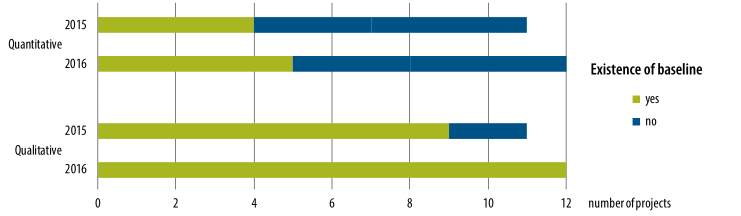
Note: A quantitative baseline is a situation against which project results can be measured.
A qualitative baseline only provides a description of the cross-border situation but cannot be used for progress measurement.
Source: ECA.
The grant agreement for projects requires the collection and submission of information “regarding the outputs and results of the actions”. Despite this, our review found that only 16 of the selected 23 projects had defined output targets (e.g. the number of participants at job fairs organised by the CBP project), and only nine projects had defined results (most commonly, the number of intended job placements). For some projects, there was no straightforward link between outputs and results, as output targets were set but expected results had not been defined. Between 2015 and 2016, we identified an improvement though in setting results targets, as in 2015, only 18 % of projects contained a results target, but in 2016, this had risen to 58 %.
48Box 9 presents the variable practices within the projects we assessed in terms of their design and performance monitoring.
Box 9
Good and bad practices from the 23 EURES CBP projects
From a poor practice
The majority of projects only define outputs. For instance EURADRIA, a cross-border cooperation between Italy, Slovenia and Croatia, did not define any quantitative baseline (current status), nor provide a target for results (i.e. job placements), nor measure the results of the project (placements, jobs found). The project however provided figures on outputs, such as number of participants in conferences, or workshops.
… to a good practice
Some smaller cross-border cooperation, for instance the one between Denmark and Sweden (Oresund), identify more targeted actions, are able to provide figures on baselines, targets and results of the project on the number of job placements.
The EaSI monitoring system does not enable actual results from CBP projects to be aggregated at programme level
49The Commission monitors activities in CBP projects using a standard reporting template, which each project coordinator is required to complete. The report contains a qualitative and quantitative section. The quantitative part does not collect any outputs or results relevant to labour mobility. The qualitative part of the report is used by many project coordinators to explain outputs and sometimes results, but as there is no requirement for such explanation, there is a lack of coherence and consistency which makes it difficult to aggregate outputs and results.
50In 2016, the Commission introduced an additional reporting template for CBP projects. The new template requires data which, as we found for the projects visited, were not retrievable because of newly solicited statistical classifications. Furthermore, some of the additional data requested for the new template does not originate from the CBP project itself, but from the monthly questionnaire the Commission addresses to all EURES advisors in the EU. This decreases the reliability of the reporting for individual projects as the data does not originate from project activities. Overall, the steps taken to improve the ex-post monitoring require further refinement.
The Commission aims to make the EURES Job mobility portal a true European placement and recruitment tool, but this will be challenging to achieve
51The EURES portal enables jobseekers to find information on labour markets in other Member States, and access job vacancies from all the EU and EFTA countries through the EURES Job mobility portal. Similarly, it allows employers to advertise their vacancies to jobseekers in other countries. The portal is maintained by the Commission21.
Coverage of available job opportunities through the EURES Job mobility portal is low
52With its reform proposal for EURES in 2016 (Regulation (EU) 2016/589), the Commission stated that “in order to promote freedom of movement for workers, all job vacancies made publicly available through PES and other EURES Members …, should be published on the EURES portal.” An “incomplete pool of vacancies accessible at EU level” was one of the key limitations of EURES identified in 2014 by the Commission.
53Survey data provided to us by National Coordination Offices indicates that in 11 Member States, over 90 % of PES vacancies were also placed on the EURES Job mobility portal in 2016. In contrast, four Member States placed less than 20 % as can be seen in Figure 8. Overall, a significant proportion of national PES vacancies are not being posted on the EURES Job mobility portal.
Figure 8
Percentage of national PES vacancies posted on the EURES portal in 2016
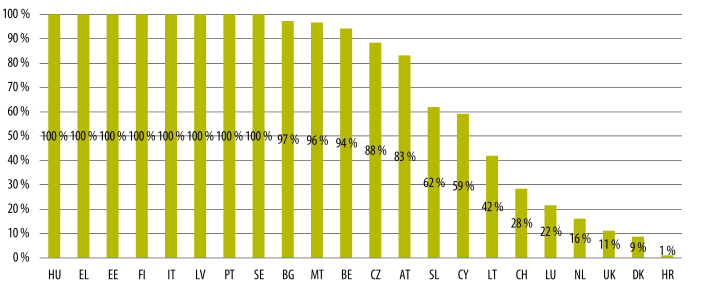
Note: The data originate from the Member States’ NCOs who responded to our survey. Data was not available for Ireland, Germany, Spain, Poland and Romania. Some NCOs indicated technical issues, such as the double input of vacancies in national databases e.g. when one vacant post to be filled is published in several advertisements. This may affect the reliability of the data reported.
Source: ECA.
We analysed the survey data provided by the NCOs to compare the proportion of national PES vacancies advertised on EURES between 2015 and 2016. For 13 Member States, the proportion was the same or had increased, but for nine Member States, the proportion had decreased. It can be estimated from data included in Figure 9 that overall there was a 15 % reduction between 2015 and 2016 in the proportion of PES vacancies placed on the EURES Job mobility portal.
Figure 9
Change in the proportion of national PES vacancies advertised on EURES portal between 2015 and 2016

Note: The data originate from the Member States’ NCOs who responded to our survey. Data was not available for Ireland, Germany, Spain, Poland and Romania. Some NCOs indicated technical issues, such as the double input of vacancies in national databases e.g. when one vacant post to be filled is published in several advertisements. This may affect the reliability of the data reported.
Source: ECA.
Regulation (EU) 2016/589 also allowed Member States to provide employers with the possibility to not publish a job vacancy on the EURES Job mobility portal, “… following an objective assessment by the employer of the requirements relating to the job in question, namely specific skills and competences required in order to adequately perform the job duties, on the basis of which the employer justifies not publishing the vacancy for those reasons alone.” In the Member States we visited, this predominately explains why the number of job vacancies on EURES is significantly lower than on national PES job portals. Employers can simply opt out of publishing their vacancies on EURES without any further justification being required.
56But even if the PES were to post all vacancies contained in their dedicated national database onto the EURES Job mobility portal, this would still only represent a small portion of all vacancies in the labour market. For example in Luxembourg, the vacancies included in the national PES database represent only 18 % of all annual recruitments in the labour market. The vacancies from Luxemburgish employers placed on the EURES Job portal only represent 4 % of these annual recruitments.
57In a recent survey22 of those using at least one of 11 different EU websites for citizens dealing with skills and employment; only 36 % of the users stated they would be very likely to use EURES if seeking work in another country. Further to that end-user feedback, 10 of the 27 national NCOs who responded to our survey consider that EURES is less effective than their PES system as a job placement portal for job seekers or as a job portal for employers.
There are gaps in the information provided to jobseekers about advertised vacancies
58We tried to understand the practical difficulties that jobseekers face when using the EURES portal, and we analysed vacancy notices using certain benchmarks which we considered helpful for any job search. We chose two professions, “Electrical/Electronics engineer” and “Care worker“. In total, we randomly selected for review 50 vacancies for each profession posted on EURES across nine countries. The review disclosed that there are still important opportunities to improve the information available for jobseekers. For instance, 39 of the vacancies did not mention a deadline for applying, 28 of them did not provide information about the required education level, 26 of them did not define the level of qualification required for the post, 44 of them did not even mention the start date of the job published, 33 of them did not give information about working hours per week and 35 of them did not give details of salary.
The monitoring of job placements achieved through the EURES network is unreliable, though this is a key performance indicator for EaSI
59Measuring job placements achieved through the use of the EaSI-EURES network is a measure of its effectiveness. According to the Commission, for 2016, the support of EURES advisors resulted in 28 934 job placements. This figure represents 3.7 % of contacts between jobseekers and a EURES advisor resulting in a job placement.
60Such data is collected by the Commission addressing the EURES advisors directly by a monthly survey. There are problems with the accuracy of the data: on average 60 % of advisers make a return and their feedback is based on individual estimates, which are not further corroborated. When we interviewed NCOs during our visits, they could often not validate the figures which the Commission uses in the publically available monitoring documents. In order to collect more reliable data for measuring the performance of EaSI-EURES activities, the reform of EURES in 2016 also required the Commission to propose detailed specifications for data collection and analysis to monitor and evaluate the functioning of the EURES network23.
61When we surveyed national NCOs, only 3 of the 27 who responded stated they are able to measure job placements. The two main challenges to doing this are:
- employers may withdraw vacancies without notifying if the post was filled by a ‘EURES’ job seeker (21 Member States stated this);
- there is no systematic follow up of vacancies posted on EURES (e.g. vacancies are closed after a defined standard time) (16 Member States).
Both the United Kingdom and the German NCOs no longer measure such an indicator for their own vacancies databases, but would rather measure the effectiveness against an outcome indicator such as the unemployment rate. The Commission is currently reviewing the EURES performance measurement system, including its performance indicators, but intends to maintain the indicator on job placement. For this to be reliable, it will need to overcome the challenges noted above.
Conclusions and recommendations
62Overall, we conclude that the European Commission has put several tools in place to ensure the freedom of movement of workers. However, these can be improved. Furthermore, EU funded actions facilitating labour mobility under the ESF cannot be identified, or their effectiveness cannot be adequately monitored as regards the EaSI programme.
63The Commission provides a number of tools to inform workers of their rights. However, the extent to which citizens are aware of these tools remains unknown. Workers can report cases of discrimination against the freedom of movement through numerous channels but a full picture of such cases does not exist. Other restrictions to the freedom of movement continue to persist, despite actions taken by the Commission (see paragraphs 14 to 28).
64The Labour Force Survey (LFS) is the Commission’s main instrument for collecting data on labour mobility but it fails to provide a full picture of the flows and patterns of labour mobility. Better data exists in Member States, but work to collect comparable data at a Europe-wide level, in order to foster labour mobility, still remains a work in progress (see paragraphs 29 to 34).
65EU funding may support labour mobility through the ESF and the EaSI programme. The similarity of the respective objectives makes complementarity between them challenging. The way in which the ESF is used by all Member States for the support of labour mobility is not known by the Commission. The EaSI monitoring framework has a number of weaknesses. The funding used within the EaSI programme has had little impact in terms of recorded job placements compared to the number of movers (see paragraphs 35 to 50).
66The EURES portal will only develop into a true European placement tool if shortcomings such as the low rate of vacancies published on it are addressed (see paragraphs 51 to 60).
67We therefore recommend:
Recommendation 1 - Measuring awareness amongst EU citizens of existing tools relating to information provision on the freedom of movement of workers and reporting discrimination
- The Commission should measure awareness levels amongst citizens for EURES, YOUR EUROPE and SOLVIT.
- Once awareness levels are known, the Commission and the Member States should then use this data for effective targeting and the promotion of these tools.
Target implementation date: July 2018.
Recommendation 2 - Making better use of available information in order to identify types of discrimination against the freedom of movement
The Commission should make more use of easily available data in Member States in order to provide a better indication of areas of discrimination and how these vary between Member States. Such information will enable actions to address discrimination to be better targeted.
Target implementation date: December 2018.
Recommendation 3 - Improving the collection and the use of data on patterns and flows of labour mobility and labour market imbalances
The Commission should with Member States improve the collection of data upon labour mobility and its comparability, namely the composition of those workers who move, and the potential for labour mobility to address labour market imbalances.
These analyses should then lead to targeted interventions to address skills and labour market imbalances. This should be developed in time for the next programme period so it can be used by Member States in their decision for funding allocation for European programmes, such as the ESF.
Target implementation date: March 2020.
Recommendation 4 - Improving the design of EU funding to address labour mobility
Currently labour mobility is specifically addressed through the ESF and the EaSI programme. The Commission should assess how the design of EU funding can be improved to ensure complementarity and better performance monitoring of EU funding.
Target implementation date: March 2020 (in the context of the new Multiannual Financial Framework).
Recommendation 5 - Improving the monitoring of the EaSI-EURES effectiveness, especially with regard to job placements
- The Commission should refine its monitoring framework for EaSI-EURES CBP projects so that there is a clear link between targets, outputs and results at application stage, which will improve the monitoring reporting at the end of the project and the aggregation of CBP results at programme level.
- The Commission should enhance the EaSI-EURES performance measurement system by providing detailed specifications for data collection and analysis to Member States, based on which the Member States should ensure the collection of reliable data on EURES activities, especially on job placements.
Target implementation date: July 2018.
Recommendation 6 - Addressing the limitations of the EURES Job mobility portal
The Member States should address the current limitations of the EURES Job mobility portal to make that portal “a true European placement and recruitment tool” by 2018. This can be achieved by:
- ensuring a greater proportion of PES job vacancies are being posted on EURES, which implies that Member States need to address under which conditions employers may decide to opt out from placing their vacancies on EURES;
- improving the quality of notices of job vacancies, which implies that Member States’ PES should ensure that only vacancy notices with a good quality of information are put on the EURES Job portal e.g. the deadline for application, the type of job on offer, salary details, and location of work. Provision of such information will lead to better results for both job seekers and employers.
Target implementation date: July 2019.
This Report was adopted by Chamber II, headed by Mrs Iliana IVANOVA, Member of the Court of Auditors, in Luxembourg at its meeting of 24 January 2018.
For the Court of Auditors

Klaus-Heiner LEHNE
President
Annexes
Annex I
Overview on our assessment of actions taken by the Commission on obstacles affecting labour mobility
| Obstacles | Responsibilities | Has the Commission taken action? | Which were the main elements of the Commission’s action | Is the obstacle hindering labour mobility effectively addressed from a workers point of view | Explanation of our assessment |
|---|---|---|---|---|---|
| Lack of information upon legal rights to freedom of movement for workers | European Commission | Y | The Commission has set up: YOUR EUROPE EURES SOLVIT |
Y1 | YOUR EUROPE and EURES provide a good basis to get information on individual rights and national labour markets. SOLVIT is a robust system for complaints against unfair treatment by national administrations and YOUR EUROPE ADVICE provides the possibility to contact a legal expert. |
| Lack of sufficient information about job opportunities | European Commission and Member States | Y | The Commission administers the EURES Job mobility portal, in conjunction with the national PES. On 13 December 2016 the Commission presented a proposal for a Regulation of the European Parliament and of the Council to amend the EU rules on social security coordination. The aim is to modernise the current rules to ensure that they are fair, clear and easier to enforce, thereby providing more transparency and legal clarity in several areas of social security coordination. The Commission's proposal has been passed on to the European Parliament and Council for discussion. |
Not fully addressed | EURES Job mobility portal is still an incomplete pool of vacancies, because not all vacancies accessible at national PES are contained within it. EURES vacancies uploaded from national PES are often incomplete which makes them of limited value for workers interested in working abroad. |
| Differences in social security | European Commission and Member States | Y | Regulation (EC) No 883/2004 and its implementing regulation addresses the following main aspects:
The Commission proposed in December 2016, as part of its Labour Mobility package, a revision of Regulation 883/2004 and implementing Regulation 987/2009. The revision is focused on more closely linking the payment of benefits to the Member State which collected the social security contributions, thus making the system fairer and more equitable. |
Not fully addressed | Member States are currently placing more emphasis on supplementary forms of retirement income, supplementing the basic national retirement schemes. Directive 98/49/EC on safeguarding the supplementary pension rights of employed and self-employed persons does not cover the "portability" of supplementary pensions, i.e. ability to transfer such pension entitlements when moving to a different Member State (which is however already possible for the national retirement schemes). That lack of portability can act as a serious disincentive on workers’ mobility. The recent directive 2014/50/EU seeks to address this. It covers minimum requirements for enhancing workers mobility between Member States by improving the acquisition and preservation of supplementary pension rights. Member States are expected to transpose this into national legislation by May 2018. |
| Recognition of professional and academic diplomas | European Commission and Member States | Y | Automatic recognition of university diplomas Setting up a European framework for regulated professions The European Professional Card (EPC) is a new tool for facilitation of recognition, available only since 18 January 2016. The take up of this tool by the first wave of professions was, on 30.6.2017: 3239 EPC applications registered and 1390 issued EPCs. |
Y For the recognition of qualifications in regulated professions |
The 2016 report on labour mobility identifies that recognition of professional diplomas remains an important obstacle to mobility. The Commission has set up a database comprising the regulated professions in the Member States and indicating the competent authorities to be consulted on the recognition of qualifications and diplomas. The audit has revealed that when properly implemented the recognition for regulated diplomas works well, with a high positive reception rate of applications submitted. The EPC may be extended to other mobile professions meeting the criteria set out in the Professional Qualifications Directive. However, there is no set date for such an extension, which will be considered after gaining more practical experience with its functioning and subject to consultations with all stakeholders concerned, including Member States' authorities. The Commission is currently assessing the experiences of the first year of the operation of the EPC. |
| Not fully addressed For the recognition of professional qualifications |
|||||
1As the general awareness of the existence of these systems has not been measured, it cannot be established if all workers interested in working in another Member State are aware of these tools.
Annex II
Overview on our assessment of 23 EaSI-EURES CBP projects reviewed
| Project name | Member States participating | EU grant awarded (max) | Execution rate | Objectives | Baseline | Targets | Monitoring | |||
|---|---|---|---|---|---|---|---|---|---|---|
| Qualitative | Quantitative | Output | Outcome | Output | Outcome | |||||
| 2015/0062 EURADRIA 2015 | IT, SI, HR | 193,159.97 | 82.95% | 12345789 | Yes | No* | Yes | No | Yes | No |
| 2015/0272 EURADRIA 2016 | IT, SI | 198,014.90 | 76.23% | 123467 | Yes | No* | Yes | No | Yes | No |
| VS/2015/0096 Northen Ireland/ Rep of Ireland 2015 | IE, UK | 220,663.32 | 82.46% | 1235789 | Yes | No* | Yes | No | No | No |
| VS/2015/0283 Northern Ireland/Rep of Ireland 2016 | IE, UK | 221,283.35 | 86.01% | 12345689 | Yes | No* | Yes | Yes | No | No |
| VS/2015/0065 Galicia-North Portugal 2015 | ES, PT | 205,581.27 | 65.69% | 124578 | Yes | No* | No | No | Yes | Yes |
| VS/2015/0279 Galicia-North Portugal 2016 | ES, PT | 233,254.30 | 69.11% | 1234567810 | Yes | No* | No | Yes | Yes | No |
| VS/2015/0066 Bayern-Tschechien 2015 | DE, CZ | 335,107.34 | 68.98% | 123478 | Yes | Yes | Yes | No | Yes | No |
| VS/2015/0284 Bayern-Tschechien 2016 | DE, CZ | 708,075.60 | 82.95% | 123478 | Yes | Yes | Yes | Yes | Yes | Yes |
| VS/2015/0072 Oberrhein 2015 | DE, FR, (SW) | 485,053.56 | 76.22% | 123478 | Yes | No | No | No | Yes | Yes |
| VS/2015/0314 Oberrhein 2016 | DE, FR, (SW) | 460,806.23 | 91.20% | 12345678 | Yes | No | No | Yes | Yes | No |
| VS/2015/0068 Oresund 2015 | DK, SE | 198,172.19 | 84.70% | 123489 | Yes | Yes | Yes | Yes | Yes | Yes |
| VS/2015/0278 Oresund 2016 | DK, SE | 195,512.96 | 80.97% | 1234569 | Yes | Yes | Yes | Yes | Yes | Yes |
| VS/2015/0082 Scheldemond 2015 | NL, BE | 213,504.91 | 71.24% | 123678 | No | Yes | Yes | No | Yes | Yes |
| VS/2015/0285 Scheldemond 2016 | NL, BE | 214,281.46 | 77.29% | 123456789 | Yes | Yes | Yes | No | Yes | Yes |
| VS/2015/0084 ERW-ERMN-EMR 2015 | DE, BE, NL | 617,629.20 | 87.99% | 1234578 | Yes | No | Yes | No | Yes | Yes |
| VS/2015/00281 ERW-ERMN-EMR 2016 | DE, BE, NL | 671,117.63 | 72.60% | 123456789 | Yes | No | Yes | No | Yes | Yes |
| VS/2015/0095 Triregio 2015 | DE, CZ, PL | 216,130.78 | 85.32% | 12345789 | Yes | No* | Yes | No | Yes | No |
| VS/2015/0266 Triregio 2016 | DE, CZ, PL | 261,093.85 | 77.22% | 1234568910 | Yes | No* | Yes | No | Yes | Yes |
| VS/2015/0101 Grande Region 2015 | FR, BE, DE, LU | 600,000 | 100.00% | 123478 | Yes | Yes | No | No | Yes | Yes |
| VS/2015/0277 Grande Region 2016 | FR, BE, DE, LU | 646,242.28 | 97.87% | 123456789 | Yes | Yes | No | No | Yes | No |
| VS/2015/0111 Pannonia 2015 | HU, AT | 254,188.53 | 86.23% | 123458 | No | No | Yes | Yes | Yes | No |
| VS/2015/0268 Pannonia 2016 | HU, AT | 278,728 | 98.04% | 12345689 | Yes | Yes | No | Yes | No | No |
| VS/2015/0287 Beskydy 2016 | CZ, PL, SK | 272,124.90 | 43.58% | 12345678910 | Yes | No | Yes | Yes | Yes | No |
Notes:
"Objectives: show the number of the activity selected: (1) Client services to workers (2) Client services to employers (3) Facilitate job matching (4) One stop shop (5) Design and implement Innovative services (6) Monitor placements (7) Monitor mobility (8) Enhance CBP cooperation (9) Specific placement projects (e.g.SMEs) (10) Creation of new bodes of assistance."
*NO means that there is statistics that might be used for quantitative baseline but is not used consistently (not followed up).
Glossary and abbreviations
Active workers: Any person who is either employed or unemployed (definition according to the EU Labour Force Survey).
Baseline: Baselines are intended to establish a reference value against which targets are subsequently set and assessed.
Cross-border partnerships (CBP): are groupings of EURES Members and associated partners, financially supported by the EaSI. The groupings engage in long-term cooperation across Member States to support the mobility of cross-border workers. They involve regional or local employment services, social partners and other organisations (such as chambers of commerce, unions, universities, local authorities, etc.) of at least two neighbouring Member States.
Cross-border worker: Any EU or EFTA citizen who works in an EU or EFTA country other than the one in which he or she resides.
Direct management: A method of implementing the EU budget directly by the Commission’s departments.
Employment and Social Innovation (EaSI): An EU programme whose “EURES” axis aims at supporting activities to promote voluntary geographical mobility for workers on a fair basis and to contribute to a high level of quality and sustainable employment.
European Free Trade Association (EFTA): The European Free Trade Association is the intergovernmental organisation of Iceland, Liechtenstein, Norway and Switzerland, set up for the promotion of free trade and economic cooperation between its members, within Europe and globally.
European Network of Social Services (EURES): The European network of labour market organisations aims at facilitating the freedom of movement for workers within the Union. The network is composed of: the European Coordination Office (ECO), the National Coordination Offices (NCOs), EURES Partners and the Associated EURES Partners. Launched in 1993, EURES exchanges job vacancies and applications for employment and provides information concerning living and working conditions. It shares this information via a Job mobility portal. In addition to the EU-28 Member States, Norway, Iceland, Liechtenstein and Switzerland participate in this network. Overall, there are more than 850 EURES advisers active in the network, providing support and counselling.
European Professional Card (EPC): is an electronic certificate issued via the first EU-wide fully online procedure for the recognition of qualifications.
European Social Fund (ESF): The European Social Fund aims at strengthening economic and social cohesion within the European Union by improving employment and job opportunities (mainly through training measures), encouraging a high level of employment and the creation of more and better jobs.
European structural and investment funds (ESIF): Over half of EU funding is channelled through the 5 European structural and investment funds. They are jointly managed by the European Commission and EU Member States. The purpose of these funds is to invest in job creation and a sustainable and healthy European economy and environment.
Europe 2020 Strategy: The European Union’s ten-year jobs and growth strategy was launched in 2010 to create the conditions for smart, sustainable and inclusive growth.
EU-28: All 28 Member States of the Union.
Freedom of movement (FoM): and residence for EU citizens was established by the Treaty of Maastricht in 1992. The gradual phasing-out of internal borders under the Schengen agreements was followed by the adoption of Directive 2004/38/EC on the right of EU citizens and their family members to move and reside freely within the EU. This freedom is distinct from the freedom of movement of workers.
Labour Force Survey (LFS): The EU European household sample survey, providing quarterly and annual data on labour participation of people aged 15 and over.
Labour mobility (LM): The right of all EU citizens to the freedom of movement for workers, as defined by the Treaty on the Functioning of the EU article 45. It includes the rights of movement and residence for workers, the rights of entry and residence for family members, and the right to work in another Member State and be treated on an equal footing with nationals of that Member State. Restrictions apply in some countries for citizens of new Member States.
Long-term labour mobility: means that that someone moves to work in another Member State for at least one year.
Mobile workers (“movers”): EU-28 citizens who move to another Member State or EFTA country other than their country of citizenship to seek a job or to integrate into the labour market on a long-term or permanent basis.
Operational Programme (OP): A programme setting out a Member State’s priorities and specific objectives and describing how the funding (EU and national public and private co-financing) will be used during a given period (generally 7 years) to finance projects. These projects must contribute to a certain number of objectives defined at EU level. OPs can receive funding from the European regional development fund (ERDF), the Cohesion fund and the ESF. An OP is prepared by the Member State and has to be approved by the Commission before any payments from the EU budget can be made.
Output: Something that is produced or accomplished with the resources allocated to an intervention (e.g. training courses delivered to unemployed young people, number of sewage plants or km of roads built, etc.).
Programme period: The multi-annual framework within which Structural Funds and Cohesion Fund expenditure is planned and implemented.
Public Employment Services (PES): Those organisations in Member States responsible for implementing active labour market policies and providing quality employment services in the public interest. They may be part of relevant ministries, public bodies or corporations falling under public law.
Recent movers: Those workers who have lived in an EU country different to their country of citizenship for up to 10 years.
Result: The immediate effects of the programme on recipients (e.g. trainees who have found employment, decrease in pollutants in treated waste water, decrease in travel time, etc.).
Return mobility: The migratory movement of EU-28 citizens back to their country of citizenship from another Member State.
Shared management: A method of implementing the EU budget in which the European Commission delegates implementation tasks to the Member States, while retaining final budgetary responsibility.
SOLVIT: is the European Commission’s system enabling citizens to report a complaint against unfair rules or decisions by Member States’ administrations.
Thematic Objective (TO): An objective that should be supported by European Structural and Investment Funds. Thematic objectives establish a link to EU level strategic objectives.
Worker: The term includes both the employed and those registered as jobseekers or unemployed citizens.
Working age: Age between 15 and 64 (categorisation used by EUROSTAT); note that in publications such as the Labour mobility report, the Commission adjusts this category to the 20-64 years old, and that is the definition used in this report.
Your Europe: A website maintained by the European Commission providing information, help and advice on EU rights for EU nationals and businesses (i.e. travel, work, shopping, funding opportunities, doing business and procedures).
Endnotes
1 The other three freedoms are the free movement of goods, the free movement of capital and the free movement of services. Contrary to the freedom of movement for workers, “posted workers” are employees seconded by an employer to carry out a service in another Member State on a temporary basis. Posted workers fall thus under the free movement of services and therefore this aspect is not covered by our audit.
2 COM(2010) 2020 final of 3.3.2010.
3 Article 162 of the Treaty on the Functioning of the European Union (TFEU).
4 Article 3 of Regulation (EU) No 1304/2013 of the European Parliament and of the Council on the European Social Fund (OJ L 347, 20.12.2013, p. 470).
5 The expert panel comprised: a university researcher specialised in European labour mobility, an experienced Labour union member from the Greater region surrounding Luxembourg and a representative of the Employers group in the European Social and Economic Committee.
6 http://europa.eu/youreurope/index.htm.
7 https://ec.europa.eu/eures/public/fr/homepage.
8 Study on Impact of Branding for EU services for Skills and Qualifications Final Report 17 March 2017.
9 Directive 2014/54/EU of the European Parliament and of the Council of 16 April 2014 on measures facilitating the exercise of rights conferred on workers in the context of freedom of movement for workers (OJ L 128, 30.4.2014, p. 8).
10 COM(2013) 236 final of 26.4.2013 “Proposal for a Directive of the European Parliament and of the Council on measures facilitating the exercise of rights conferred on workers in the context of freedom of movement for workers”.
11 The other sources are Eurostat demographic data, Eurobarometer data, administrative data, OECD data and national data.
12 Shortcomings identified by the Commission, see “Compendium of data sources on EU citizens residing/working in other EU Member States”, December 2016.
13 Regulation (EU) 2016/589 of the European Parliament and of the Council of 13 April 2016 on a European network of employment services (EURES), workers' access to mobility services and the further integration of labour markets, and amending Regulations (EU) No 492/2011 and (EU) No 1296/2013 (OJ L 107, 22.4.2016, p. 1).
14 European Commission, “A comparison of shortage and surplus occupations based on analyses of data from the European Public Employment Services and Labour Force Surveys”, February 2017.
15 See https://www.gov.uk/government/publications/tier-2-shortage-occupation-list.
16 Regulation (EU) No 1304/2013.
17 European Commission, “The analysis of the outcome of the negotiations concerning the Partnership Agreements and ESF Operational Programmes, for the programming period 2014-2020”, September 2016.
18 Regulation (EU) No 1303/2013 of the European Parliament and of the Council of 17 December 2013 laying down common provisions on the European Regional Development Fund, the European Social Fund, the Cohesion Fund, the European Agricultural Fund for Rural Development and the European Maritime and Fisheries Fund and laying down general provisions on the European Regional Development Fund, the European Social Fund, the Cohesion Fund and the European Maritime and Fisheries Fund and repealing Council Regulation (EC) No 1083/2006 (OJ L 347, 20.12.2013, p. 320).
19 Article 7 of Regulation (EU) No 1296/2013 of the European Parliament and of the Council of 11 December 2013 on a European Union Programme for Employment and Social Innovation ("EaSI") and amending Decision No 283/2010/EU establishing a European Progress Microfinance Facility for employment and social inclusion (OJ L 347, 20.12.2013, p. 238).
20 The funding for these CBP projects reviewed amounted to 3.5 million euro in 2015 and 4.4 million euro in 2016.
21 The costs for developing that portal for clearing job vacancies amounted to 5 million euro in 2016.
22 Study on Impact of Branding for EU services for Skills and Qualifications Final Report, 17 March 2017.
23 Article 32 of Regulation (EU) 2016/589.
1 http://ec.europa.eu/social/main.jsp?catId=738&pubId=8041&furtherPubs=yes
2 http://ec.europa.eu/social/main.jsp?catId=738&langId=en&pubId=8047&furtherPubs=yes
3 http://ec.europa.eu/social/main.jsp?catId=738&langId=en&pubId=8047&furtherPubs=yes.
| Event | Date |
|---|---|
| Adoption of Audit Planning Memorandum (APM) / Start of audit | 26.10.2016 |
| Official sending of draft report to Commission (or other auditee) | 17.11.2017 |
| Adoption of the final report after the adversarial procedure | 24.1.2018 |
| Commission’s (or other auditee’s) official replies received in all languages | 6.2.2018 |
The ECA’s special reports set out the results of its audits of EU policies and programmes, or of management-related topics from specific budgetary areas. The ECA selects and designs these audit tasks to be of maximum impact by considering the risks to performance or compliance, the level of income or spending involved, forthcoming developments and political and public interest.
This performance audit was carried out by Audit Chamber II Investment for cohesion, growth and inclusion spending areas, headed by ECA Member Iliana Ivanova. The audit was led by ECA Member George Pufan.
Contact
EUROPEAN COURT OF AUDITORS
12, rue Alcide De Gasperi
1615 Luxembourg
LUXEMBOURG
Tel. +352 4398-1
Enquiries: eca.europa.eu/en/Pages/ContactForm.aspx
Website: eca.europa.eu
Twitter: @EUAuditors
More information on the European Union is available on the internet (http://europa.eu).
Luxembourg: Publications Office of the European Union, 2018
| ISBN 978-92-872-9296-4 | ISSN 1977-5679 | doi:10.2865/411775 | QJ-AB-18-003-EN-N | |
| HTML | ISBN 978-92-872-9339-8 | ISSN 1977-5679 | doi:10.2865/437690 | QJ-AB-18-003-EN-Q |
© European Union, 2018.
For any use or reproduction of photos or other material that is not under the European Union copyright, permission must be sought directly from the copyright holders.
GETTING IN TOUCH WITH THE EU
In person
All over the European Union there are hundreds of Europe Direct Information Centres. You can find the address of the centre nearest you at: https://europa.eu/european-union/contact_en
On the phone or by e-mail
Europe Direct is a service that answers your questions about the European Union. You can contact this service
- by freephone: 00 800 6 7 8 9 10 11 (certain operators may charge for these calls),
- at the following standard number: +32 22999696 or
- by electronic mail via: https://europa.eu/european-union/contact_en
FINDING INFORMATION ABOUT THE EU
Online
Information about the European Union in all the official languages of the EU is available on the Europa website at: http://europa.eu
EU Publications
You can download or order free and priced EU publications from EU Bookshop at: https://op.europa.eu/en/web/general-publications/publications. Multiple copies of free publications may be obtained by contacting Europe Direct or your local information centre (see http://europa.eu/contact)
EU law and related documents
For access to legal information from the EU, including all EU law since 1951 in all the official language versions, go to EUR-Lex at: http://eur-lex.europa.eu
Open data from the EU
The EU Open Data Portal (http://data.europa.eu/euodp/en/data) provides access to datasets from the EU. Data can be downloaded and reused for free, both for commercial and non-commercial purposes.