 Special Report
Farmers’ income stabilisation: comprehensive set of tools, but low uptake of instruments and overcompensation need to be tackled
About the report:
Risk is inherent in the agricultural sector therefore farmers need to develop strategies to address losses following climate events or plant and animal diseases and price volatility. The common agricultural policy (CAP) includes instruments to support risk management by farmers and respond to crises. The recent CAP reform proposals aim to increase the focus on risk management.
We found that the CAP offers a comprehensive range of preventive instruments to increase farmers’ resilience, but that the impact of these on farmers’ behaviour is limited. The use of EU support for insurance remains low and has benefitted only a fraction of farmers. No specific criteria were used to consider the use of exceptional measures following the Russian ban. We also found that the EU support for withdrawing products for free-distribution was costly leading to some overcompensation cases.
We make recommendations to the Commission, aimed at encouraging farmers to better prepare for crises, designing and monitoring of support for insurance, clarifying the criteria for triggering and ending exceptional measures, and adjusting compensation for withdrawal operations.
ECA special report pursuant to Article 287(4), second subparagraph, TFEU
 |
Executive summary
IAs the European Commission has noted, risk is inherent in the agricultural sector, and farmers need to develop strategies to address production losses (for example resulting from climate events or plant and animal diseases) and price volatility. The common agricultural policy (CAP) includes instruments to support risk management by farmers and respond to crises. An ambition of the recent CAP reform proposals is to increase the focus on risk management.
IIWe examined the completeness and coherence of the EU instruments offered to prevent and manage risks and crises. We looked at whether risk and crisis management tools had been efficiently implemented and were delivering results. We focused on how farmers used EU support for insurance and the exceptional measures triggered for the fruit and vegetable sector following the 2014 ban by the Government of the Russian Federation on some imports from the EU (the “Russian ban”). Overall, we found that EU agricultural risk management instruments and crisis measures partially met their objectives, although not always in an efficient way.
IIIWe found that the CAP offers a comprehensive range of instruments to increase farmers’ resilience. Direct payments (€41 billion a year) have a significant impact on income stabilisation for certain farmers. The CAP includes preventive instruments to help farmers boost their resilience, but evidence indicates that the impact of these on farmers’ behaviour is limited.
IVThe way in which ex-post measures have been used to respond to some extreme climate risks may not be aligned with the strategy of supporting greater use of instruments such as insurance. There are some overlaps between different EU instruments supporting harvest insurance.
VThe use of EU support for insurance remains low and has benefitted only a fraction of farmers. Most farmers who insure do so without EU support, which raises questions about the added value of EU support. We found that the Commission does not collect relevant information to monitor the use of risk management instruments. A high proportion of EU support for insurance is used in the wine sector in the two Member States using this support the most. It is associated with a risk of deadweight. Insured farmers may have less incentive to apply a more resilient business strategy or adapt to new climate conditions.
VIRegarding the exceptional measures triggered following the Russian ban, we found that no specific criteria were used to consider the use of this measure and that the level of support was mainly based on the loss of the Russian market, without taking into account the existence of alternative outlets until the third year of the ban. These measures lasted four years and were also used to address underlying problems of structural surplus for some fruits, rather than being justified by the exceptional circumstances stated in the regulation.
VIIWe found that EU support for the apple market exceeded relevant average market prices. Withdrawing peaches and nectarines for processing them was costly for the EU and most of the juice ended up with processing industries as a contribution in kind. Finally we could not confirm that products withdrawn from the market were actually removed either because of a lack of traceability or because these products came back onto the market in a different form, for example processed into juice.
VIIIOur recommendations to the Commission cover: encouraging farmers to better prepare for crisis, the design and monitoring of support for insurance, the criteria for recourse to exceptional measures and compensation for withdrawal operations.
Introduction
Risk is inherent in agriculture
01As the European Commission has noted, risk is inherent in the agricultural sector, and farmers need to develop strategies to address production losses (for example resulting from climate events or plant and animal diseases) and price volatility (for example resulting from geopolitical risks).The common agricultural policy (CAP) includes mechanisms to support risk management by farmers and respond to crises. An ambition of the recent CAP reform proposals is to increase the focus on risk management.
02Agricultural activities have a strong link with climate. Weather conditions can either boost or hinder production. According to the European Environment Agency, crop losses in the EU as a result of extreme weather conditions are in danger of increasing1. Figure 1 shows the extreme weather events, such as surplus rain, heat waves and droughts, that hit the EU the summer of 2018. The ECA has recently reported on the risks of both flooding2 and desertification3.
Figure 1
Areas of concern: extreme weather events
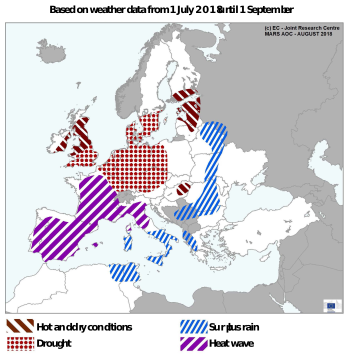
Source: JRC MARS Bulletin, August 2018.
Other major risk factors that affect agricultural production are the consequences of plant and animal diseases. Outbreaks of these have been frequent in recent years, partly as a result of increased trade and human movement (both leading to an increased risk of new pathogens).
04How risks such as production losses and price volatility are addressed depends on their frequency and impact. In its analysis, the Commission refers to a risk classification developed by the organisation for economic co-operation and development (OECD), setting out where risks should be faced by farmers alone, by means of for example, insurance mechanisms, and where they should be addressed through public intervention (see Figure 2).
Figure 2
Different categories of risks faced by farms and related instruments
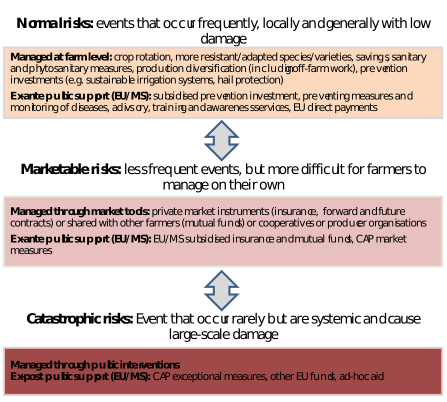

Fluid borders because instruments addressing different risk categories influence each others’:
Good “on farm” strategy reduces exposure to marketable and catastrophic risk
Expectations of strong ex-post public intervention reduce the incentive to develop farm strategy or market tools.
Note: the allocation of the instruments to different risk layers is indicative as they can play also a role to other layers
Source: ECA based on DG AGRI information and OECD classification of risks.
At farm level, farmers can use different strategies to reduce their exposure to risks. Most of these strategies can be considered preventive. Farmers can diversify their agricultural production or sources of income to spread the risk of loss in one of their agricultural activities. They can also adopt on-farm practices such as the use of more resilient crops/animals, reinforced sanitary measures, locally adapted agricultural practices and appropriate preventive investments (for example, anti-hail nets or sustainable irrigation). They may complement these with the use of private/public tools, such as insurance and mutual funds.
Using the CAP to foster a resilient agricultural sector
06Support from the EU budget for agriculture in the EU is managed under the CAP. In its communication on “The future of food and farming” (2017)4, the Commission stated its ambition “to further develop an integrated and coherent approach to risk prevention, management and resilience, which combines, in a complementary way, EU-level interventions with Member States' strategies and private sector instruments which address income stability as well as climate risks”.
07The current CAP and the legislative proposals for the post-2020 CAP seek to make European agriculture more resilient (see examples in Figure 3) chiefly by reinforcing robustness (the capacity of farmers to resist external disturbances and maintain existing levels of functionality) and, to a lesser extent by reinforcing adaptability (the capacity to respond to changing external circumstances)5.
Figure 3
New CAP objectives related to reinforcing farmers’ resilience
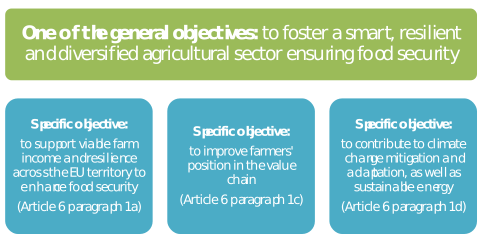
Source: ECA based on New CAP proposal (COM(2018) 392).
Under the CAP, the EU provides support to instruments under each category of risk. Table 1 shows EU support for risk management tools (support for insurance premiums and mutual funds) and exceptional measures, and how they are financed from the EU budget. This table does not include generalised support such as direct payments to farmers, which also plays an important role in how risk is managed at farm level.
09Support from the CAP is funded under two pillars. Under Pillar I, the EU finances market measures, risk management and crisis prevention measures for some sectors (wine, fruit and vegetables) and exceptional measures. Under Pillar II, the EU gives Member States the possibility of supporting three risk management instruments (M17): insurance (M17.1), mutual fund (M17.2) and income stabilisation tools (M17.3). On 7 August 2014, the Russian Government banned imports of products, including fruit and vegetables, from a number of countries, including EU Member States. Exceptional measures against market disturbances were triggered for the livestock sector (including milk and dairy products) and for the fruit and vegetable sector following the Russian ban. Exceptional measures were activated in the wake of the African Swine Fever, and avian flu outbreaks and to resolve specific problems such as flooding in the Baltic countries.
Table 1
EU expenditure on risk management instruments and exceptional measures covered by this audit
| Pillar II | Pillar I | ||||
| Risk management tools | Exceptional measures | ||||
Measures |
Support for risk management tools (M17) 2015-2018 |
Support for insurance premium (wine and fruit and vegetable sector) 2015-2018 |
Measures against market disturbance 2014-2018 |
Market support measures related to animal diseases due to public, animal or plant health risks 2014-2018 |
Measures to resolve specific problems 2017-2018 |
| EU expenditure (in million euros) | 682 | 174 | 1 454 | 51 | 24 |
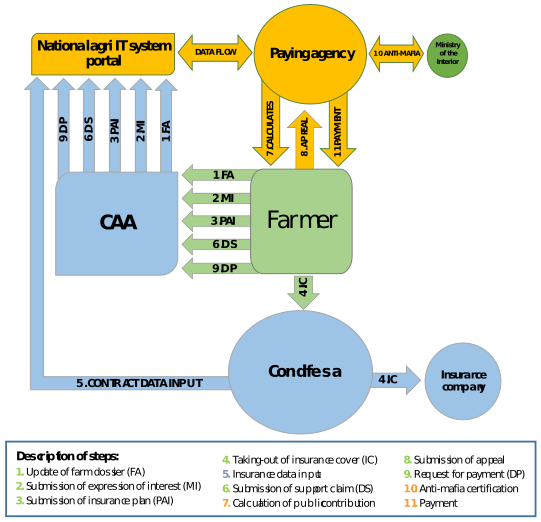
Source: Commission data.
10At national level, the Member States have devised different strategies for risk and crisis management in agriculture. Seven Member States finance their own national insurance support systems (Austria, Bulgaria, Czech Republic, Spain, Luxembourg Poland and Slovenia). All Member States provide ex-post support in the wake of catastrophic events. For example, in response to the 2018 drought, Germany, France, Poland and Sweden compensated their farmers from national funds.
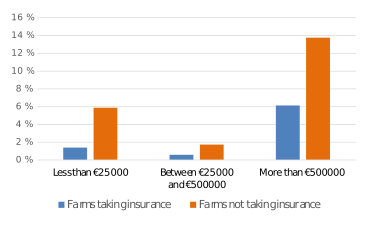
Audit scope and approach
11In view of the 2017 statement by the Commission regarding its ambition to increase the risk management capacity of farmers, we looked at the risks and crisis management instruments in place. Against a background of increasing risks of crises due to extreme weather and animal and plant disease and price volatility, our analysis aims to contribute to the better use of EU support for improving farmers’ risk management capacity.
12We examined the completeness and coherence of the EU toolbox to prevent and manage risks and crises, and looked at whether risk and crisis management tools had been efficiently implemented and were delivering results. In examining risk management tools, we focused on EU support for insurance premiums. We also focused on the use of exceptional measures in the fruit and vegetable sector following the “Russian ban”. We did not examine the exceptional measures triggered for the meat and milk sectors.
13The main audit question was “Did the EU measures managing risks and dealing with crises meet their objective in an efficient way?” Three sub-questions helped to answer this question:
- Is the EU toolbox offered to prevent and manage risks and crises complete and coherent?
- Have EU risk management instruments met their objectives in an efficient way?
- Have EU exceptional measures for the fruit and vegetable sector met their objectives in an efficient way?
Our audit covered action in the period 2014 to 2018. We collected audit evidence through:
- reviews of data and documents and/or interviews with staff from three Commission directorates general (AGRI, SANTE, ESTAT); and with specialist staff of the OECD;
- visits to four Member States selected to cover the use of support for insurance (Italy, France and Germany) and exceptional measures (Poland, Italy and France).
- in these Member States, we met national authorities, insurance companies, insurance federations, reinsurance companies, farmers’ associations and unions and charities;
- examination of 80 beneficiary files (sent by national authorities) covering risk management tools and exceptional measures, and visits to 16 beneficiaries on the spot (in France, Poland, Germany, Italy, and Greece). Greece was added to our sample because of a transaction reviewed in the context of our legality and regularity audit (annual report).
- interviews with 105 farmers from 17 Member States about their risk management strategy (see Annex);
- a survey completed by national authorities in all Member States on their national agricultural risk and crisis management strategies.
Observations
The EU supports a wide range of measures to improve farmers’ resilience
15This section assesses whether the EU toolbox to prevent and manage risks and crises forms a complete and coherent package. We examined whether the overall design of the system helps to effectively increase farmers’ resilience to risks and crises they may face.
EU instruments address all types of risks faced by farmers, with an important role played by direct payments
16The CAP contains many mechanisms addressing risks affecting farmers (although not all are available to all farmers). Direct payments reduce income variation for most farmers, but cannot easily be mapped against the OECD classification of risks (see Figure 2). Instruments that are more easily mapped against the risk layers include those in Table 2.
17Table 2 shows that two groups of instruments explicitly address risks and crises and thus contribute to increasing farmers’ resilience:
- risk management tools such as insurance and mutual funds, designed to compensate farmers in the event of certain defined risks;
- exceptional measures aimed at stabilising the market when serious disturbance occurs 6.
Table 2
CAP prevention, risk and crisis management instruments
| Risk layer adressed | Pillar | Instruments | |
| Normal | I | Direct payments | |
| Prevention and risk management instruments Ex ante measures |
Marketable | I | Support for fruit and vegetable producer organisations, including support for harvest insurance premiums and mutual funds |
| Marketable | Support for harvest insurance premium and mutual funds in the wine sector | ||
| Marketable | II | Risk management tools: Support for insurance premium Support for mutual funds (includes income stabilisation tool) | |
| Normal | Support for prevention and restoration investment | ||
| Normal | Support for investment in physical assets | ||
| Normal | Advisory services - ie farm advisory services | ||
| Normal | Knowledge transfer and information actions | ||
| Marketable | Support when setting up producer groups and organisations; support to promote cooperation | ||
| Exceptional measures Ex post measures |
Catastrophic | I | Public intervention and aid for private storage |
| Catastrophic | Measures against market disturbance | ||
| Catastrophic | Measures related to animal diseases and loss of consumer confidence due to public, animal or plant health risks | ||
| Catastrophic | Measures to resolve specific problems |
Note: the allocation of the instruments to different risk layers is indicative as they can play also a role to other layers
Source: ECA based on EU regulations 1305/2013, 1307/2013 and 1308/2013.
18Increasing support for farmers’ income may shift some marketable risks to the normal category since, as farmers receive more income protection, their ability to manage risks on the farm will increase (see paragraphs below) 7. Conversely, the provision of this income buffer may lead farmers to farm in a less risk-adverse manner (for example, concentrating on a single crop).
19Direct payments (representing an annual cost of more than €41 billion) form a stable element of farmers’ income, and thus increase resilience. Direct payments act as a buffer, allowing farmers to cope with falling prices or lower production.Decoupled payments (89 % of direct payments) are not tied to production. The remaining 11 % of direct payments are linked to production. This additional income represents, according to the Commission, around 26 % of farmers’ income8. Figure 4 illustrates the share of direct decoupled payments alone in farmers’ agricultural income. The share of decoupled payment in farmers’ agricultural income represents frequently more than 20 %.
20In 2017, direct payments reached 6.4 million EU farmers9. Our survey of all Member States showed that nine Member States consider direct payments to be an important part of farms’ risk management strategy (i.e. direct payments act as a “safety net” and assure “income protection”).
21Figure 4 shows that the share that direct payments make up of agricultural income for farmers grouped by economic size varies from less than 20 % to more than 30 %. Figure 5 shows that the bigger the economic size of the farm the higher the probability of taking out farm insurance. The share of direct payments in agricultural income and the use of insurance are negatively correlated. This result is also reflected in the farmers’ questionnaire (see Annex - Figure 24). As direct payments offer a buffer to absorb production losses, the need to take out insurance is reduced as the risk could be borne at farm level10. There are however other factors which can influence a farmer’s decision to take out insurance. A significant share of farmers in receipt of EU support are part-time, and this is particularly true of smaller farmers11. This reduces the risk exposure of their farms, as other activities offer a source of income independent of weather conditions and product prices.
Figure 4 and 5
Share of decoupled aid in the income of EU farmers and % of insured farmers by farm economic size

* In 2015 this minimum varied between Member States from €2 000/year to €25 000/year
Note:
Farm economic size is represented by the average annual marketed production expressed in euros.
Farmers’ income is represented by the Farm Net Value Added.
The FADN farm population is 4.7 million farms of which 2.9 million (63 %) have an annual marketed production of less than €25 000, 1.7 million (35 %) are between €25 000 and €500 000 and €0.1 million (2 %) are above €500 000.
2.1 million farms receiving direct payments are too small by economic size to be included in the FADN population
Source:
Farm Accountancy Data Network (FADN) data for 2016.
Farms with a greater economic size, have a higher share of agricultural income in their overall income. The higher the share of agriculture in total income (above an area of 20 hectares a majority of farmers are full-time12), the greater the use of insurance (see Annex - Figure 24).
The CAP increasingly promotes preventive measures
23Preventive measures (see paragraph 05) can increase farmers’ resilience by reducing their exposure to risks and adapting production to new risks. Prevention and adaptation strategies can facilitate continuing production in the face of, for example, a climate event.
Effective prevention measures can limit production losses
24Given the impact of climate change, measures encouraging resilience including long-term preparedness (adaptation to new conditions) are important. Box 1 illustrates the change in the perception of drought risks in Australia.
Box 1
From emergency response toward preparedness and risk management
In Australia, as drought has become more frequent, public authorities no longer consider it to be an exceptional event. A recent official report concluded that it is important to “shift away from an emergency response paradigm of drought assistance and eligibility, towards measures encouraging preparedness and risk management”13.
The New National Drought Agreement14 recognises the need to support farming businesses and farming communities to manage and prepare for climate change and variability. It focuses measures across all jurisdictions on bolstering risk management practices and enhancing long-term preparedness and resilience.
Crop rotation, use of adapted/more resistant crops and savings were the three most frequent preventive measures considered by the farmers we interviewed (see Annex - Figure 22). Crop rotation is part of good agricultural practice as it has a positive impact on soil fertility and helps to control weeds, diseases and pests.
26Currently, direct payments to larger farmers include a crop diversification requirement (through greening payments, a new type of direct payment introduced in 2013 to enhance the environmental performance of the CAP). In the new CAP proposals, direct payments could boost crop rotation and indirectly increase farm resilience provided that:
- the national standards set by the Member States are sufficiently ambitious15;
- farmers follow the requirements of good agricultural and environmental conditions;
- real changes in behaviour are achieved.
We have reported in the past that greening often does not lead to changes in behaviour16.
27Sanitary risks are an area where successful prevention limits the need for ex-post intervention. Public authorities (EU and Member States) are heavily involved in addressing animal disease risks, using ex-ante measures such as prevention (including eradication), monitoring and risk management tools. Significant efforts are made ex-ante to avoid the potentially high costs and negative consequences of ex-post measures (for example, the bovine spongiform encephalopathy crisis experience which cost the EU more than 5 billion ECU in 1996-1998). Although these efforts have had a significant positive impact, independent studies have estimated that public expenditure on compensation for animal and plant diseases cost EU Member States half a billion euros annually in the period 2010 to 201417.
The extent to which the new tools available increase farmers’ resilience to prices risks cannot yet be evaluated
28The Commission considers18 forward contracts and futures markets as tools to address price risks. Contractualisation (use of forward contracts) was the fourth most frequently mentioned preventive measure by the farmers we interviewed (see Annex - Figure 22).
29Under the EU legal framework, the Member States can require either the use of mandatory contracts or a written offer for a contract from the first purchaser to the producer19. The agricultural part of the Omnibus Regulation20 introduced changes in the legislative framework. It now gives the producer the right to require a written contract between the parties and/or a written offer of a contract from buyers. In April 2019 a directive entered into force to ban some unfair trading practices in the food chain (i.e. unilateral contract changes by the buyer)21. It is still too early to assess the impact of these recent changes.
30Pillar II of the CAP can support income stabilisation tools offering compensation to farmers for a “severe drop” in income. The Omnibus Regulation reduced the threshold for compensation through insurance from 30 % production losses to 20 % and allowed for the possibility of a sectorial income stabilisation tool (for example an income stabilisation tool specific to cereals). However, no EU supported income stabilisation tools are currently operational.
31In the event of significant price volatility, direct payments, market intervention and exceptional measures against market disturbances remain the most important EU tools supporting farmers.
There are some overlaps between EU instruments
32EU support schemes for insurance exist under both Pillars I and II. They overlap for the wine and fruit and vegetable sectors. Support for mutual funds is only complementary with support for insurance when different risks are covered. Exceptional measures triggered to address specific problems caused by extreme events may not be aligned with the strategy to support greater use of risk management tools such as insurance.
Complementarity between insurance and mutual fund only exists when different risks are covered
33Under the first Pillar of the CAP, support for mutual funds has been eligible for financing in the operational programmes (OP) for fruit and vegetables and the national wine programmes since 2009, but there has been no uptake of this financing. Under Pillar II, there has been little use of financing available for mutual funds (see paragraph 43).
34The low uptake of mutual funds is partly explained by the higher complexity of this tool. It is necessary for a sufficient number of farmers to take part for it to function. For example, in Italy the minimum number of farmers joining a mutual fund is 700. This complexity may “incite farmers to turn to other available risk management tools, in particular insurance”22. Only when mutual funds cover risks not covered by insurance, are these two instruments complementary. In France, EU support for insurance is restricted to “harvest insurance” covering only climate risks for crops, whereas the national Mutual Fund, which receives EU support, covers animal and plant diseases and pollution incidents.
Inappropriate use of exceptional measures may reduce incentives to use risk management tools
35Uncertainty about the circumstances which may trigger crisis measures has an impact on farmers’ perceptions as to where the boundaries of their own risk management responsibilities lie. The more frequently public aid is offered during or after a “crisis”, the lower the incentive for farmers to mitigate risk through the use of risk management tools such as insurance23.
36For example, in 2018, the Commission approved an implementing regulation, financing a CAP measure to support farmers affected by floods and heavy rainfall at the end of 2017 in certain areas of Lithuania, Latvia, Estonia and Finland. Farmers were eligible if they had lost at least 30 % of their winter sowing area and did not benefit, for the same loss, from any kind of national aid or insurance (Commission implementing Regulation No 108/2018 - €15 million was allocated and broken down according to the numbers affected, as follows: €9.12 million for Lithuania, €3.46 for Latvia, €1.34 for Estonia and €1.08 for Finland). Farmers who had insured against this risk were therefore not eligible for compensation for their production losses. Such criteria may discourage farmers from insuring in the future.
37On the other hand, the Commission’s involvement in the 2018 drought crisis was in line with its strategy of developing risk management tools. The Commission did not put in place additional (ex-post) measures but rather used the flexibility of pre-existing instruments. Notably, this involved derogations from greening and environmental rules allowing farmers to cut grass or graze cattle on areas that would otherwise lie fallow. This is in line with several national strategies aiming to shift public expenditure from ex-post to ex-ante measures (prevention and support for risk management tools) in seven Member States (Austria, Italy, France, Greece, Netherlands, Spain and Slovenia).
Commission proposals for the reform of the CAP seek to boost support for risk management tools for which national support is already available
38For the current period, 17 Member States decided not to implement risk management tools under Pillar II (support for insurance and mutual funds). Eight of them consider their current risk management tools to be satisfactory. Seven of the Member States which have not implemented risk management tools under Pillar II (see paragraph 10) have national support for insurance premiums and two have a compulsory national insurance scheme24.
39In its new CAP proposals, the Commission proposes obliging Member States to make EU support available for risk management tools25. Our survey of Member States shows that eleven disagree with this proposal. Several justify using their own national support system on the basis of the EU subsidiarity principle.
For the risk management tools, most EU support goes on insurance, but uptake is low and uneven
40Since EU support is concentrated on insurance (see Table 3), we focused on this, under both pillars of the CAP. We reviewed the management of the EU’s support for insurance and assessed the use of insurance by farmers.
41More than a third of farmers use insurance. Among those insured, around 8 % are supported by the EU under Pillar II (mainly through harvest insurance). More farmers pay for insurance out of their own funds and national funds than do so with EU funds.
Uptake of EU risk management tools has been low and uneven
42As discussed in paragraph 39, interest among Member States in using EU funding for risk management tools is limited. Seventeen Member States do not intend to apply for support for risk management tools under Pillar II.
43Table 3 presents the three EU risk management tools and shows that for the eleven participating Member States, most support goes for insurance. Only three Member States (France, Italy and Portugal) offer EU support for mutual funds and two (Italy and Hungary) for income stabilisation mutual funds. For the 2014-2020 period, 91 % of the planned spending on risk management tools relates to insurance.
Table 3
Risk management tools under Pillar II
| Tool | Risk coverage | Threshold to trigger compensation | Public contribution | Planned public expenditure 2014-2020 (in million euros) | |
| M17.1 | Insurance | adverse climatic events, animal or plant diseases, pest infestation, or an environmental incident | > 20 % losses in production | up to 70 % of the insurance premium | 2 317 |
| M17.2 | Mutual fund | > 30 % losses in production | up to 70 % of ► the administrative costs of setting up the mutual fund and of interest on commercial loans taken out by the mutual fund. ► the compensation paid by the mutual fund ► supplementing annual payments into the fund ► the initial capital stock of the fund | 125 | |
| M17.3 Income stabilisation tool | Mutual fund sectoral | severe drop in farmers' income | > 20 % drop in income | 116 | |
| Mutual fund non-sectoral | > 30 % drop in income |
Source: ECA based on legislation and Commission’s data, March 2019.
Figure 6 shows which Member States offer support for insurance.
Figure 6
Map of support for insurance in the EU
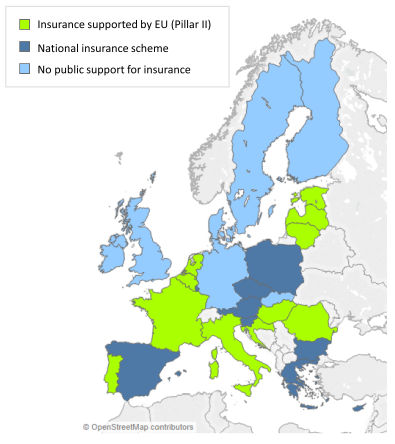
Note: Little EU support for insurance exists under Pillar I for Germany, Cyprus and Slovakia.
Source: ECA.
Table 4 shows that even in Member States proposing the EU scheme, the uptake is low. France, Hungary, Latvia and Italy have the highest proportion of farmers insured with EU support.
Table 4
Public expenditure and number of farmers insured under EU scheme (Pillar II) in 2017
| Member State | Public expenditure (in million euros) | Number of farmers insured with EU support | % of insured farms with EU support |
| France | 100 | 57 996 | 19  |
| Hungary | 25 | 15 708 | 15 |
| Latvia | 5 | 2 300 | 9 |
| Italy | 110 | 41 076 | 8 |
| Netherlands | 27 | 2 012 | 4 |
| Portugal | 26 | 3 793 | 4 |
| Croatia | 4 | 1 953 | 2 |
| Lithuania | 2 | 402 | 1 |
| Total EU | 299 | 125 240 | 3 |
Note: Belgium, Estonia and Romania have still not incurred expenditure.
Source: ECA based on Member States’ data notified to the Commission and FADN data, March 2019.
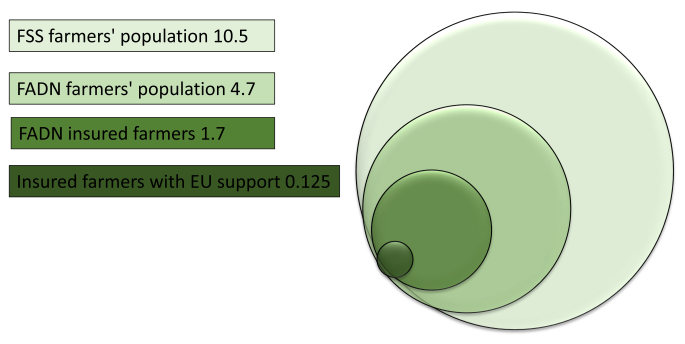
Figure 7 shows that:
- EU support reaches a very small share of EU farmers;
- more than 90 % of farmers who insure do so without EU support.
Figure 7
Farmers supported with EU funds compared to different farm populations, in millions
Note:
The FADN farm population represents only farms above a certain economic size. In contrast, the Farm Structure Survey (FSS) aims to cover all farms, including the very small ones. The circles do not fully overlap as farm populations are different. We consider that, as FSS farmers excluded from the FADN are small, they tend to insure less, and that most insured farmers with EU support belong to the insured FADN farm population.
Source:
ECA based on FADN Data, December 2018.
Mono-risk insurance, mainly against the risk of hail has existed since the nineteenth century and is the form most widely used. More recently introduced, multi-risk insurance (18 risks in France and up to 11 risks in Italy) is less widespread and has been developed mainly with public support. The Commission leaves it up to Member States to decide which kind of insurance to support (mono- and/or multi-risk).
48We found that in France (2017), 5.2 million hectares were insured against hail (mainly without support) and 4.7 million hectares were covered by EU supported multi-risk insurance, meaning that 36 % of the utilised agricultural area was insured. In Germany, around 8 million hectares (48 % of the utilised agricultural area) were insured against hail26, mainly without public support27.
49European added value is the value that an EU action adds through EU policy, regulation, legal instruments and spending, over and above that created by Member States acting alone. The low up-take of support for insurance under Pillar II and the large number of farmers choosing to pay for mono-risk insurance rather than subsidised multi-risk insurance raises questions about the added value of EU support for insurance.
The Commission does not collect relevant information on the use of risk management schemes
50The Commission has set only one overall result indicator for risk management schemes: “percentage of farms participating in risk management schemes”. This relates to two measures under Pillar II: measure 17 and measure 5. Measure 17 covers support for insurance, mutual funds and income stabilisation tools, and measure 5 covers support in restoring agricultural production potential and preventive actions. As the indicator covers multiple activities, it cannot reflect them properly.
51In France, for example, this indicator covers more than 99 % of farms, reflecting the compulsory membership of the national mutual fund. This therefore obscures the much lower share of farmers who take up EU-supported insurance, belong to an income stabilisation mutual fund or restore agricultural production potential. The same indicator’s coverage in Italy is below 5 % and mainly reflects the share of farmers taking out EU-supported insurance.
52France and Italy also have national indicators for the number of hectares and capital value insured. These provide a more telling insight into the extent to which the agricultural sector employs risk management tools (i.e. they measure outputs). A meaningful result indicator would measure the impact of insurance on income stability.
Supporting insurance requires complex management systems
53The systems and processes established by the national authorities for managing the provision of public support for insurance (Pillars I and II) are complex. Although insurance coverage is provided to a relatively small number of farmers, the number of insurance contracts to be managed each year is appreciable (140 000 in Italy and 70 000 in France). One farmer can have several insurance contracts. The total number of contracts is therefore higher than the number of farmers insured. Box 2 illustrates Italy’s system for managing support for insurance; it involves two intermediaries (Condifesa and CAA) to help farmers. Although membership of these intermediaries is not compulsory, the complexity of the system is such that more than 95 % of farmers join and pay for the services they provide. We estimate the costs specifically linked to this measure that Italian farmers pay to private entities facilitating access to support to be at least €2.8 million per year.
Box 2
Italian administrative process for insurance support
Source: ECA based on information from Italian authorities’.
Our survey of the Member States showed that, of the 17 that did not apply measure 17, five decided not to support insurance because of the costs and administrative burden involved.
Insurance has a positive impact on income stability, but the impact of the EU support scheme for insurance is less clear
Insured farmers have greater income stability and are likely to receive compensation earlier
55We compared the evolution in farm income from 2014 to 2016 for insured versus uninsured farmers, regardless of whether they had received EU funds or not. To evaluate the variation of the income (represented by the Farm Net Value Added) over this period, we used the standard deviation (dispersion of the income between years). The lower the standard deviation, the more stable the income is. Figure 8 shows that, across all farm types, insured farmers’ incomes vary less than those of their uninsured counterparts.
Figure 8
Income variation (in %) of EU farms by the farms’ economic size (2014 to 2016)
Source: ECA’s analysis based on FADN data.
In France and Italy, compensation payments from insurance companies occur within the year of the climate event. In Italy, insurance contracts bind insurers to pay compensation before the end of the year. This helps farmers manage their cash flow and facilitates continued operation. We found that the delivery of compensation for 2018 events through ex-post measures by public authorities has taken longer and will only be completed during 2019.
EU support for insurance is focused on the wine sector
57In the two Member States making most use of EU support for insurance, we observed a concentration of EU support in the wine sector. In Italy, the wine sector has two possible channels through which to receive support for insurance (see paragraph 32). In 2015, this sector benefited from almost one third of total public insurance support. In France, the vineyard area insured with EU support has grown; it exceeded one quarter of the total vineyard area in 2017. Insured capital in the wine sector can reach €115 000/ha, while the average insured capital per hectare for the agricultural sector in France was €1 649/ha in 201728. The higher the insured capital, the higher the premium and the higher the level of public support.
58Member States channeling EU support for insurance to their farmers are not required to be selective29. As an example, one beneficiary we selected for desk review is a worldwide player in the wine sector, with vineyards across the world, estimated wine assets of €600 million and an estimated annual turnover of €50 million. Given the amount invested, the financial capacity and the risk profile of some beneficiaries, it is likely that they would have insured their production without subsidies, creating a deadweight effect. We have previously noted deadweight in EU support for insurance30.
Compensation may affect the behaviour of farmers
59As shown in Box 3, insured farmers may have less incentive to apply more resilient business systems. When farmers know they will receive an insurance payout if their crop fails, they may find it less important to invest in growing resistant crops and have fewer incentives to diversify. Insurance companies frequently require some mitigation activities from their clients, and so can reduce this hazard. The legal provision for Pillar I makes reference to this practice, but no provision exists for Pillar II to reduce risk exposure.
Box 3
Insured farmers are less adaptable to extreme conditions
In the United States, where harvest insurance is widespread and also supported by public funds, a study has demonstrated that insured corn and soybeans are significantly more sensitive to extreme heat than uninsured crops (lower yield).
The study concluded that the sensitivity of insured crops demonstrates the lower capacity/incentive of insured farmers to adapt to extreme conditions, because they rely on insurance payouts31.
Insufficient control over some exceptional measures
60Article 219 of Regulation (EU) 1308/2013 allows the Commission to take exceptional measures to address “threats of market disturbance caused by significant price rises or falls on internal or external markets or other events and circumstances significantly disturbing or threatening to disturb the market”. We examined whether the exceptional measures addressing significant market disturbance for the fruit and vegetable sector were appropriately targeted and whether withdrawal operations had operated efficiently. We focused upon action taken in the fruit and vegetable markets in the wake of the “Russian ban” (see paragraph 09).
61In the wake of that ban, considered as a threat to the market, the Commission established exceptional measures for the fruit and vegetable sector. Expenditure on these exceptional measures in 2014-2018 amounted to €513 million, corresponding to 1.8 million tonnes of withdrawn products. The measures involved withdrawing fruit and vegetables affected by the Russian ban from the market through different options (see Figure 9). Free distribution was the main withdrawal option (representing 60 % of the quantities withdrawn and more than 86 % of the amount paid).
Figure 9
Withdrawal options and their respective share of the EU support

Source: ECA.
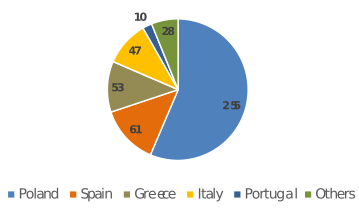
Figure 10 and 11 show the main products withdrawn and the geographical spread of free distribution.
Figure 10 and 11
Amounts supported under free distribution schemes, by product and Member State (million euros)

Source: DG AGRI, October 2018.
The EU has not established objective parameters for consideration of the use of exceptional measures
63The concept of market disturbance is quite general and is not further developed in the EU legislation. The absence of specific criteria gives a large margin of discretion as to when to consider using exceptional measures. In the context of the Russian ban, the Commission triggered exceptional measures through seven delegated regulations that make reference to the risk of market disturbances (913/2014; 932/2014, 1031/2014, 1371/2014, 1369/2015, 921/2016 and 1165/2017). Nevertheless, the continuation of the measures was not based on an assessment that losses exceeded a defined threshold.
64When establishing the level of EU support, the Commission took into consideration production and export data in the three years preceding the Russian ban (2011-2013). The Commission did not take into account alternative outlets, such as other external or intra-EU markets under the third year of the ban.
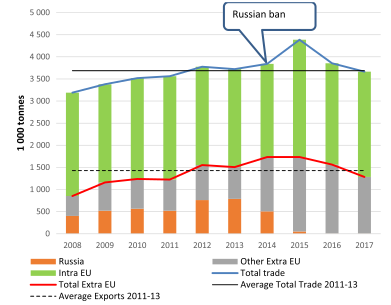
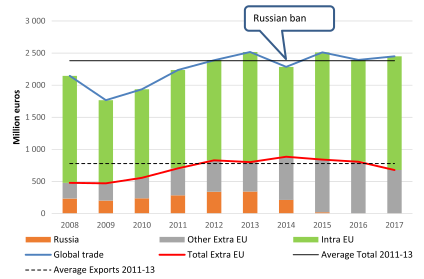
65Apples accounted for more than half of EU support by both value and withdrawn quantities. Figure 12 shows that, during the Russian ban, intra- and extra-EU exports increased in 2014 and 2015 and in total remained above the average before the ban. Other extra-EU markets have compensated for the loss of the Russian market. As a result, Figure 13 shows that the intra- and extra-EU export value apple trading remained mostly stable, with only a slight decrease in 2014 (-4 % compared to the 2011-2013 average). The drop in the value of the total exports in 2014 was lower than that of 2009, when no emergency measures were put in place.
Figure 12
Evolution of EU apple exports in volume
Source: ECA based on Eurostat data – International trade in goods, January 2019.
Figure 13
Evolution of EU apple exports in value
Source: ECA based on Eurostat data – International trade in goods, January 2019.
This indicates that, for the EU as a whole, the “market disturbance” due to the Russian ban on the apple market was limited and did not last four years (as the exceptional measures did). The decline in direct exports to Russia was offset by increases in exports to other destinations.
Exceptional measures have been applied to goods that are in structural surplus
67The EU has also applied exceptional measures to support the withdrawal of peaches and nectarines. The cost of withdrawal of peaches and nectarines represented 34 % of the total withdrawn operations for Spain and 45 % for Greece. The first delegated regulations refer to the Russian ban and also to an imbalance between supply and demand. “The seasonally high supply levels in peaches and nectarines and the slowdown in consumption due to adverse weather conditions at the peak of the harvest created a difficult market situation ”32. “The exceptional measures were taken mostly to address the specific situation to the peaches and nectarines sectors”33.
68Figure 14 shows that peach and nectarine production is growing in Spain and Greece. The production potential of these countries is also increasing, as their planted area increased by respectively 6 % and 20 % between 2006 and 2016. Italy, which was the largest peach and nectarine producer until 2012 (when it was overtaken by Spain), has decreased its planted area by 30 %34 and progressively reduced production.
Figure 14
Evolution of the production of peaches and nectarines in Spain and Greece

Source: DG AGRI Dash board data.
If production rises without a corresponding increase in internal consumption or exports, this leads to structural overproduction: orchards produce more than can be absorbed through consumption and export. In Spain, a steady decline in domestic peach consumption has not been offset by increased exports 35.
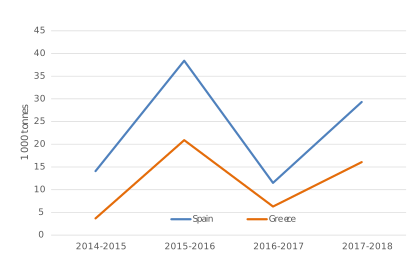
70Figure 15 shows that, during the four years of withdrawal operations in Spain and Greece, the withdrawal rate was not reduced progressively (as a way of phasing out the measure) but rather mirrored levels of production.
Figure 15
Evolution of peach and nectarine of quantities allocated for withdrawal
Source: Commission and delegated regulations.
We conclude that, at least in part, exceptional measures were triggered by a structural problem of overproduction of peaches/nectarines in Spain. The objective of exceptional measures is not to address structural overproduction but rather to address market disturbance.
The first-come first-served principle has encouraged swift implementation at the expense of adequate targeting
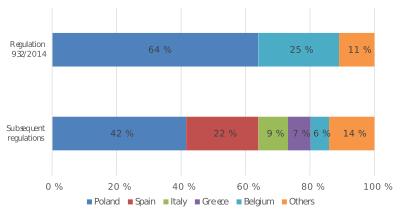
72Following the 2014 delegated regulation36 more than 85 % of support (by value and volume) was used by Poland and Belgium on a first-come-first-served basis. In subsequent regulations, withdrawal quantities were allocated for each Member State. Figure 16 suggests that fixing ceilings for each Member State, instead of applying the first-come-first-served principle, allowed more Member States to access support in line with their forecast needs.
Figure 16
Breakdown by Member State of volume of products withdrawn under different regulations37
Source: DG AGRI implementation data on exceptional measures, October 2018.
EU support for withdrawing products for free distribution is costly
EU support for the apple market has exceeded relevant average market prices in previous years
73Support for withdrawals intended for free distribution comprises two components: the maximum contribution per type of product, and ancillary costs to compensate for sorting, packaging and transport expenses.
74Apples were the product most supported through free distribution, as shown in Figure 10. Poland was the biggest beneficiary of EU support, both by volume and in monetary terms.
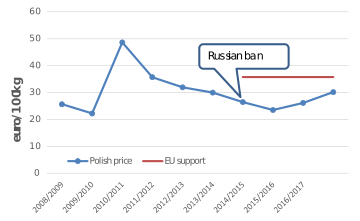
75Figure 17 compares the free distribution aid (covering both product price €16.98/100 kg and sorting/packaging €18.77/100 kg) against the Polish market price for the sorted and packaged product38. The “olympic average” market price of apples for the last five years preceding the Russian ban in Poland was 10 % lower than the level of EU support provided, meaning that apple producers were overcompensated.
Figure 17
Comparison of free distribution support for apples with Polish market prices
Source: DG AGRI.
During the first three marketing years39 (2014/2015, 2015/2016 and 2016/2017) the EU paid Polish apple producers compensation worth €200 million for 559 448 tonnes of apple freely distributed (estimates of transport costs have been excluded), whereas average market prices for this volume of apples amounted to €182 million40.
Disproportionately high cost borne by the EU for processing peaches and nectarines
77The cost of the emergency measures for the free distribution of peaches and nectarines amounted to €55 million. For peaches and nectarines, costs of sorting and packaging represent around 37 % and transport costs 13 %, so the value of the withdrawn products themselves is only around 50 % of the total costs. Some €48 million (87 %) went to producers in Spain and Greece.
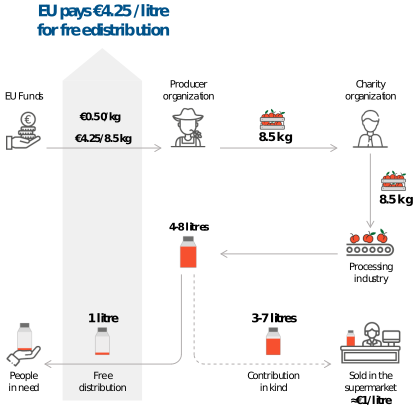
78The cost borne by the fund per litre of juice destined for consumption by people in need was up to €4.25 by litre: around four times the cost of a litre of juice in a supermarket. This cost was made up of payments of the value of the withdrawn peaches and nectarines, sorting and packaging costs, transport costs and payments for contributions in kind to juice processors.
There is not enough evidence that the products withdrawn are actually removed from the market
79Owing to their perishable nature, peaches and nectarines withdrawn for free distribution may be processed under certain conditions. The processed product (juice/nectar) is given free of charge to people in need. Spain and Greece together held over 94 % of the peaches and nectarines supported for free distribution. Out of 132 000 tonnes withdrawn under free distribution in Spain and Greece, 99 000 tonnes were processed into nectar/juice.
80To cover processing costs, juice processors retained most of the processed product as a contribution in kind as allowed for under the EU rules41. For example, the Commission‘s files show that Spain authorised an exchange ratio of up to 11 kilogrammes of peaches delivered to juice processors in exchange for one litre of peach nectar and Greece had an exchange ratio of up to 8.5 kilogrammes of peaches per litre of peach nectar. See Figure 18 for an example of withdrawal operation. In the end, most of the withdrawn products were put back on the market as juice, while only a fraction reached people in need. Allowing processors to retain most of the withdrawn quantities paid for by the fund as if destined for fresh consumption runs counter to the final objective of free distribution.
Figure 18
Circuit of withdrawn peaches and nectarines processed for free juice distribution in Greece
Source: ECA.
We estimate that the quantities of peaches and nectarines used as a contribution in kind in Greece and Spain represent a cost to the EU budget of €34 million. Free distribution’s effectiveness and efficiency is compromised, as 62 % of costs covered this contribution in kind, allowing products to return to the juice market, and only 38 % served to give people in need free juice and fresh fruit.
82We also estimated that peaches and nectarines retained by processors as a contribution in kind represented between 20 % and 25 % of the supply of peaches and nectarines during the 2014-2018 period to process juice. Juice processors received almost one quarter of their raw product as contribution in kind rather than through purchase.
Incomplete traceability of some withdrawn products
83Aid for “other destinations” is conditional upon delivering distilled products for energy purposes only. In Italy, we found that supervisors tracking withdrawn products forwarded to “other destinations” for distillation for industrial or energy purposes ceased their checks before the alcohol had been denatured for energy purposes (see Figure 19).
Figure 19
Incomplete checks in Italy on products for other destination

Source: ECA.
Conclusions and recommendations
84We examined the completeness and coherence of the EU toolbox available for preventing and managing risks and crises in the agricultural sector. We looked at whether risk and crisis management tools had been efficiently implemented and were delivering results. Overall, we found that EU agricultural risk management measures partially met their objectives, but with low uptake, and that there were cases of overcompensation for the crisis measures.
85There are a number of EU measures increasing farmers’ resilience to price volatility and production losses resulting from climate events or plant and animal diseases. These include direct payments, which allow many small farmers to bear risks at farm level and tend to reduce their need to insure (paragraphs 16-23). Although the CAP can promote preventive measures, notably through good agricultural and environmental conditionality, there is currently limited evidence that these significantly impact farmers’ behaviour. In the future, stricter obligations on good agricultural and environmental conditions (including crop rotation), could be a powerful instrument with which to boost farmers’ resilience and improve the environmental impact of the CAP (paragraphs 24-26).
86Preventive measures are important and reduce risk exposure (paragraphs 23-26). Insured farmers may have less incentive to apply a more resilient business strategy or adapt to new climate conditions (paragraph 59), but insurance companies may require that their clients take steps to reduce risk. We found that EU support in the area of sanitary risks, especially animal disease, prioritised prevention/monitoring measures (paragraph 27).
Recommendation 1 – Encourage farmers to prepare better for crisesIn the context of climate change, public support should favour prevention/adaptation measures, encouraging farmers to boost their preparedness and their resilience. The Commission should link EU support to agricultural practices that reduce risk exposure (such as crop rotation) and mitigate damage (such as the use of more resistant crops).
Timeframe: 2021 (implementing regulations of CAP post-2020)
87The uptake of EU support for risk management tools is low and uneven. Most Member States do not use it. EU support, concentrated on insurance, reaches only a fraction of farmers. Most farmers who are insured do so without EU support. EU funds, through the choices made by Member States making the most use of insurance support, are concentrated on supporting wine producers. Such support is associated with a risk of deadweight. We conclude that there is currently limited evidence of the EU added value of this support (paragraphs 42-49 and 57-58.
88We found that the Commission does not collect some relevant information to monitor the complex application of the risk management tools, although information is available in the Member States making most use of the measure (paragraphs 50-52).
Recommendation 2– Better design and monitoring of support for insuranceThe Commission should:
- assess whether, in the light of the low take-up of support for insurance and its concentration on certain sectors and larger producers, the support represents EU added value;
- monitor spending through pertinent output indicators (such as area and capital insured, which are already used at Member State level) and result indicators.
Timeframe: 2021 (implementing regulations of CAP post-2020)
89The Commission took measures to address the threat of market disturbance in the wake of the Russian ban but did not set specific criteria to trigger the use of exceptional measures. The level of support did not take into account alternative outlets (paragraphs 63-66).The Commission granted compensation to apple producers (61 % of EU support) while exported quantities were growing, and the overall value of exports remained relatively constant. Structural surpluses also affected peach and nectarine production supported under these measures (paragraphs 68-71).
90The way that ex-post measures have been used to respond to climate risks may not be aligned with the strategy to support greater use of instruments such as insurance (paragraphs 24 and 35-37).
Recommendation 3 – Clarify the criteria for triggering and ending exceptional measures and their combination with other instrumentsThe Commission should clarify the scope of intervention of exceptional measures by:
- defining objective market and economic parameters and criteria for deciding when a sufficient basis exists for considering the use of exceptional measures. These parameters should take account of overall returns to producers, including the impact of direct payments and increases in output;
- focusing the use of exceptional measures for extreme weather events on farmers who had made appropriate use of prevention and risk management tools where these are sufficiently developed and available to farmers.
Timeframe: 2021
91Our audit showed that the support paid for the free distribution of apples has frequently exceeded market prices, and thus allowed overcompensation (paragraphs 73-76). The provisions allowing fresh products to be processed under free distribution carry the risk that the level of support is too high and that processors retain a substantial share of the withdrawn products to cover their processing costs (paragraphs 77-82).
Recommendation 4 – Adjust compensation for withdrawal operationsIn order to avoid overcompensation, the Commission should:
- ensure that support for withdrawal operations does not exceed the pre-crisis average market price in the producer’s Member State;
- assess the practicality of setting aid rates below 100 % and requiring significant co-financing when Member States play a large role in defining key elements of support schemes.
Timeframe: 2021
This Report was adopted by Chamber I, headed by Mr Nikolaos Milionis, Member of the Court of Auditors, in Luxembourg at its meeting of 16 October 2019.
For the Court of Auditors

Klaus-Heiner LEHNE
President
Annex
Farmers questionnaires
Introductory notes
We discussed risk management with 105 farmers visited within the Statement of Assurance exercise in 2018, in 17 Member States. This sample was based on the size of the subsidy received, and thus focused on larger farms.
Our questions relate to risks and risk management strategies at farm level.
Figure 20
Distribution of questionnaires by Member State
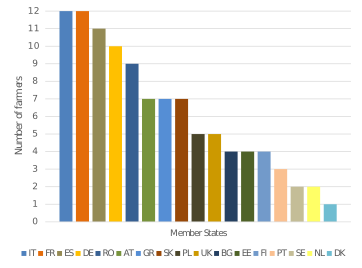
Note: The graph shows that the countries with the highest number of farmers interviewed were Italy and France (12 interviews), Spain (11) and Germany (10).
Source: ECA.
Figure 21
Causes of substantial production losses (%)
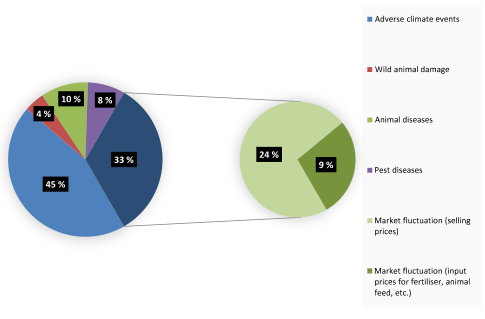
Note:
In this question farmers could indicate more than one cause of losses. The major causes of losses, as perceived by farmers, were adverse climate events, followed by market price fluctuations.
Source:
ECA.
Figure 22
Preventive measures at farm level

Note:
Preventive measures do not include farmers with insurance contracts or belonging to a mutual fund. Ten farmers said that they did not have any preventive measure in place at farm level.
Source:
ECA.
Figure 23
Percentage of farmers currently insured or belonging to a mutual fund
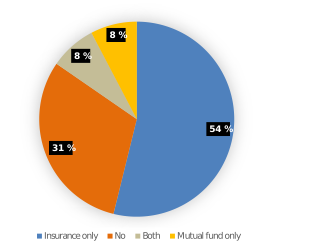
Note:
Most farmers have insurance or belong to a mutual fund. A majority of farmers (57) have Insurance on a voluntary basis. 33 have neither insurance nor mutual fund.
Source:
ECA.
Figure 24
Insurance cover by share of direct payments in relation to total agricultural income
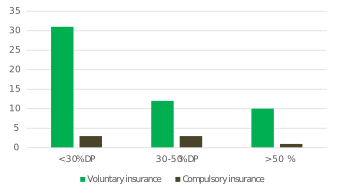
Note:
The higher the share of direct payments in relation to the agricultural income, the lower the use of insurance.
Source:
ECA.
Figure 25
Main reasons given by farmers for not having insurance or not belonging to a mutual fund

Source:
ECA.
Acronyms and abbreviations
CAA: Centri di Assistenza Agricola - authorised farmers’ assistance centres
CAP: Common agricultural policy
CPM: Crisis prevention and management (measure)
ESTAT: Eurostat
FADN: Farm Accountancy Data Network
FNVA: Farm Net Value added
FSS: Farm Structure Survey
OECD: Organisation for Economic Co-operation and Development
Glossary
Adaptability: The capacity of a system to adjust internal elements and processes in response to changing external circumstances and so to continue along the same trajectory while maintaining all important functions (Folke et al., 2010).
Condifesa: An Italian regional farmers’ associations for insuring against climate risks.
Deadweight: A situation where public money is used to fund an activity that would have gone ahead without public support.
Farm Net Value added (FNVA): An indicator in the Farm Accountancy Data Network, to describe the total production value of an agricultural holding, plus subsidies minus intermediate consumption (value of the goods and services consumed in the course of a production process) and depreciation.
First-come first-served principle: A selection criterion rewarding solely the rapidity to react.
Green harvesting: The harvesting of unripe non-marketable products across a given area. The products concerned must not have been damaged in any way beforehand.
Income: The sum of revenues a farmer receives from the market, plus any additional public support, minus input costs.
Marketing year: The reference period, determined by harvest times, for analysing and reporting crop production and fixing prices.
Non-harvesting: The termination of a production cycle on an area where the product is well developed and of sound, fair and marketable quality.
Olympic average: The average of a range after removing the highest and lowest values.
Resilience: The capacity of farmers to withstand shocks and continue with their activity. It has three components; robustness, adaptability and transformability.
Robustness: The capacity of a system to resist external perturbations and to maintain previous levels of functionality without major changes to its internal elements (Urruty et al., 2016).
Russian ban: On 7 August 2014, the Government of the Russian Federation banned imports of a list of products from a number of countries, including EU Member States.
Subsidiarity principle: The rule which states that the EU does not take action unless it can be more effective than actionat national, regional or local level).
Transformability: The capacity of a system to develop or incorporate new elements and processes, to a degree that changes its operational logic in order to maintain important functions when structural changes in the ecological, economic, or social environment render it untenable or dysfunctional.
Audit team
The ECA’s special reports set out the results of its audits of EU policies and programmes, or of management-related topics from specific budgetary areas. The ECA selects and designs these audit tasks to be of maximum impact by considering the risks to performance or compliance, the level of income or spending involved, forthcoming developments and political and public interest.
This performance audit was carried out by Audit Chamber I, headed by ECA Member Nikolaos Milionis. The audit was led by ECA Member Samo Jereb, supported by Kate Henderson, Head of Private Office and Jernera Vrabič, Private Office Attaché; Helder Faria Viegas, Principal Manager; Céline Ollier, Head of Task; Paulo Oliveira, Deputy Head of Task, Antonella Stasia, Jan Huth, Michela Lanzutti, Mateusz Minich and Maciej Szymura, Auditors, Murielle Siffert, Secretarial assistant.
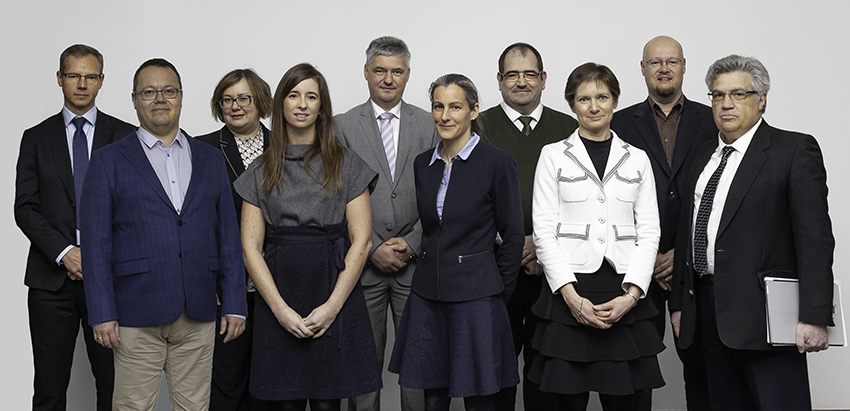
From left to right: Maciej Szymura, Mateusz Minich, Jerneja Vrabič, Antonella Stasia, Samo Jereb, Céline Ollier, Paulo Oliveira, Michela Lanzutti, Jan Huth, Helder Faria Viegas.
Endnotes
1 EEA - Report Climate change impacts and vulnerability in Europe, 2016 - Chapter 5.3 Agriculture.
2 ECA special report 25/2018 “Floods Directive: progress in assessing risks, while planning and implementation need to improve”.
3 ECA special report 33/2018 “Combating desertification in the EU: a growing threat in need of more action”.
4 https://ec.europa.eu/eip/agriculture/en/news/future-food-and-farming
5 Assessing how policies enable or constrain the resilience of farming system in the European Union: case study results, 2019.
6 See Regulation (EU) No 1308/2013: Article 219 on exceptional measures against market disturbance, Article 220 on animal diseases and loss of consumer confidence, and Article 221 on specific problems.
7 “Managing risks in agriculture: a holistic approach”- 2009, OECD.
8 Commission document on the CAP post-2013, Graph 5. The Commission estimates that total public support amounts to 38 % of farmers’ income.
9 https://agridata.ec.europa.eu/extensions/DashboardIndicators/FarmIncome.html
10 An Ecorys study on risk management found a neutral/negative correlation between direct payments and risk management tools (table 5.6).
11 According to the FSS data base, more than 30 % of farmers with less than 5 ha have another gainful activity.
12 Briefing paper-“Future of the CAP”, March 2018.
13 Review of the inter-governmental agreement on national drought programme reform.
14 12 December 2018.
15 See ECA opinion 7/2018:“concerning Commission proposal for regulations relating to the Common Agricultural Policy for the post-2020 period”, paragraphs 55-58, Box 6.
16 ECA special report 21/2017 “Greening: a more complex income support scheme, not yet environmentally effective”, paragraphs 26-57
17 Estimates by Bardaji and Garrido (2016) presented in the EU Agricultural Markets Brief, table 2, September 2017.
18 Risk management schemes in EU agriculture, September 2017.
19 See article 148 in the milk sector, article 168 of Regulation (EC) No 1308/2013 for other sectors with the exception of sugar.
20 Regulation (EU) No 2393/2017 of the European Parliament and of the Council.
21 Directive No 633/2019 on unfair trading practices in business-to-business relationships in the food supply chain.
22 EU Agricultural Markets Brief, September 2017.
23 According to the OECD, public ex-post intervention is “part of the risk management system which farmers take into account when planning their own decisions and strategies”. See “Managing risks in agriculture: a holistic approach”, 2009. See also “Risks management schemes in EU agriculture”, section 3, September 2017.
24 Greece and Cyprus.
25 Cf. COM(2018) 392, article 70.
26 Landwirtschaftliche Mehrgefahrenversicherung für Deutschland, Gesamtverband der Deutschen Versicherungswirtschaft, November 2016.
27 Pillar I supports insurance for the fruit and vegetable (€2.6 million /year) and wine sectors (€0.164 million /year).
28 Calculation based on figures from the French Ministry of Agriculture.
29 See Article 49 Regulation (EU) 1305/2013.
30 ECA special report 10/2013 “Common Agricultural Policy: Is the speficic support provided under Article 68 of Council Regulation (EC) No 73/2009 well designed and implemented?”, paragraph 44.
31 Francis Annan and Wolfram Schlenker “Federal Crop Insurance and the disincentive to adapt to extreme heat”, 2015.
32 Delegated regulation 913/2014 preamble, paragraph 1)
33 Delegated regulation 932/2014 preamble, paragraph 22)
34 Data source DG AGRI Dash board, 2017.
35 “Fruta de hueso: análisis de campaña 2018”, Ministerio de agricultura, pesca y alimentación.
36 Delegated regulation 932/2014.
37 Delegated Regulations 1031/2014, 2016/921 and 2017/1165.
38 Article 98(1) of Regulation 543/2011.
39 The marketing year is a period of one year designated for reporting an analysis of production, marketing and use of an agricultural product. Campaign year of apples production starts in august year n and end in July n+1.
40 Olympic average 2009/2010-2013/2014 PL market price apple: €32.54/100 kg.
41 Pursuant to article 80(2) of Regulation 543/2011.
Timeline
| Event | Date |
|---|---|
| Adoption of Audit Planning Memorandum (APM)/Start of audit | 18.4.2018 |
| Official sending of draft report to Commission (or other auditee) | 29.7.2019 |
| Adoption of the final report after the adversarial procedure | 16.10.2019 |
| Commission’s (or other auditee’s) official replies received in all languages | 21.11.2019 |
Contact
EUROPEAN COURT OF AUDITORS
12, rue Alcide De Gasperi
1615 Luxembourg
LUXEMBOURG
Tel. +352 4398-1
Enquiries: eca.europa.eu/en/Pages/ContactForm.aspx
Website: eca.europa.eu
Twitter: @EUAuditors
More information on the European Union is available on the internet (http://europa.eu).
Luxembourg: Publications Office of the European Union, 2019
| ISBN 978-92-847-3779-6 | ISSN 1977-5679 | doi:10.2865/296138 | QJ-AB-19-017-EN-N | |
| HTML | ISBN 978-92-847-3714-7 | ISSN 1977-5679 | doi:10.2865/865191 | QJ-AB-19-017-EN-Q |
© European Union, 2019.
Reuse is authorised provided the source is acknowledged.
For any use or reproduction of photos or other material that is not under the copyright of the European Union, permission must be sought directly from the copyright holders.
GETTING IN TOUCH WITH THE EU
In person
All over the European Union there are hundreds of Europe Direct Information Centres. You can find the address of the centre nearest you at: https://europa.eu/european-union/contact_en
On the phone or by e-mail
Europe Direct is a service that your questions about the European Union. You can contact this service
- by freephone: 00 800 6 7 8 9 10 11 (certain operators may charge for these calls),
- at the following standard number: +32 22999696 or
- by electronic mail via: https://europa.eu/european-union/contact_en
FINDING INFORMATION ABOUT THE EU
Online
Information about the European Union in all the official languages of the EU is available on the Europa website at: https://europa.eu/european-union/index_en
EU Publications
You can download or order free and priced EU publications at: https://op.europa.eu/en/publications. Multiple copies of free publications may be obtained by contacting Europe Direct or your local information centre (see https://europa.eu/european-union/contact_en)
EU law and related documents
For access to legal information from the EU, including all EU law since 1952 in all the official language versions, go to EUR-Lex at: http://eur-lex.europa.eu/homepage.html?locale=en
Open data from the EU
The EU Open Data Portal (http://data.europa.eu/euodp/en/data) provides access to datasets from the EU. Data can be downloaded and reused for free, both for commercial and non-commercial purposes.