Education and awareness raising
In Poland, the National Institute of Architecture and Urban Planning has developed a manifold set of actions to support awareness and create a culture of quality architecture (cases studies 8 to 11).
(8) THE MULTIDISCIPLINARY POSTGRADUATE COURSE ‘ARCHIKULTURA – EDUKATOR ARCHITEKTONINCZNY / ARCHI-CULTURE – ARCHITECTURAL EDUCATOR’
This is a standout project focused on introducing a postgraduate programme to qualify educators of architecture in Poland. The question of who educates the educators is an emerging theme for heritage conservators and skilled workers who recognise the benefits of apprenticeships and believe that trade guilds help to keep building standards high. This postgraduate course helped to establish a cross-disciplinary dialogue between the faculties of teaching and architecture, who jointly established a comprehensive way to structure and organise individual activities and events to implement meaningful Baukultur education in primary and high schools – either as extra-curricular classes or as cross-curricular topics. This is a particularly good example of a postgraduate programme to qualify educators of architecture, which can easily inspire educators in other Member States to create a similar course.

Archikultura – Edukator Architektoninczny / Archi-Culture – Architectural Educator’ training kit, 2021. Courtesy of the National Institute of Architecture and Urban Planning in Poland
(9) ADE – ARCHITEKTURA DLA EDUKACJI – ARCHITECTURE FOR EDUCATION
During the COVID-19 pandemic digital meetings, networking and access to virtual conferences and courses advanced exponentially. This case study demonstrates how the tools of the digital age were used to develop an online platform to create a space for various stakeholders to exchange knowledge and experience with the aim of gaining extra skills. The main aims of the platform were: e-learning (postgraduate studies, online learning courses, films, ‘archipedia’ – an architectural encyclopaedia, educational materials), networking (strengthening the community of educators of architecture, also creating a database of those formally and informally committed to the architectural education), knowledge sharing (of specialist and non-specialist in character) and creating popular formats (short films, exercises and educational games for children and educators).
(10) LABORATORIUM REGIONÓW
The Laboratory of Regions aims to increase the awareness and knowledge of regional heritage in Poland and the potential of places that have an architectural identity. This project has model character and can be considered in other countries who are looking for solutions to addressing regional planning issues of abandonment and depopulation in rural or previously industrial areas. The project is based on extensive research which led to the publication of a manual which provided tools and procedures to advance good architecture and urban design. The Laboratory of Regions aims to improve the quality of the built environment by raising awareness of local approaches to building and development, distinctive architectural languages and the character of local communities.
(11) GOLDEN CUBES AWARDS
Awards in the Polish edition of the international Golden Cubes are given to the most prolific educational projects. The awards honour the work of proactive educators and organisations who raise awareness of architecture’s importance among young people.
‘Architektura w ruchu’ (‘Moving Architecture’) exhibition by Artanimacje
Association.
Golden Cubes competition, 2021. ©Artanimacje

(12) ARHITEKTUURIKOOL (ESTONIA)
The School of Architecture (Arhitektuurikool) is a hobby school where kids between the ages of seven and 19 explore and create the spaces around them. There is no other initiative like it in Estonia and only a handful of this kind in Northern Europe and the Baltics. Arhitektuurikool students develop environmental literacy through noticing, understanding and seeing alternatives to the way places are built and what they mean to the public. In addition to weekly lessons, Arhitektuurikool also organises inspiring architecture-related events across Estonia, publishes study materials to promote creative thought and provides education about the built environment. In addition, the team behind Arhitektuurikool has developed a unique elective course that is taught in high schools, also training teachers and preparing teaching materials for them. Parents have also started to participate in the programme.

‘Explore Space!’ (‘Uuri ruumi!’) exhibition by Arhitektuurikool (case study 12) in the Estonian Museum of Architecture in Tallinn, 2019. Courtesy of Arhitektuurikool. © Liisi Anvelt
(13) ESTONIAN CENTRE FOR ARCHITECTURE
The Estonian Centre for Architecture (ECA) focuses on developing architectural culture in Estonia and promoting contemporary Estonian architecture abroad. Besides the promotion of contemporary Estonian architecture, its mission is to raise awareness of the benefits of good quality architecture and urban space and to help Estonian architects and architecture offices to gain international prospects and contracts. By crossing borders and reaching new audiences and stakeholders, the ECA aims to combine the knowledge and competence of the architecture sector with other sectors in society – and by doing so contributes to the advancement and innovation of both. The centre’s main activities include the international Tallinn Architecture Biennale, the City Forums (Linnafoorumid), the Open House Tallinn project, various tours and exhibitions, the ‘lightning’ (‘Välkloeng’) lecture series, training courses for both the public and private sector, screenings, seminars and workshops, as well as coordinating and producing the biannual Estonian exhibition at the international Venice Architecture Biennale.

Body Building installation by Siim Tuksam and Sille Pihlak at the
Tallinn Architecture Biennale
Estonian Centre for Architecture), 2015.
© Tõnu Tunnel
(14) ORIS HOUSE OF ARCHITECTURE (CROATIA)
Oris House of Architecture in Croatia offers activities that encourage creativity in the fields of architecture, urbanism, design and other arts. The organisation also conducts events and activities that contribute to the quality of life and spiritual wealth of citizens in general. This impressive building is also the headquarters of the editorial office of Oris, the leading regional architectural magazine. With more than 600 square metres of space right in the centre of the Croatian capital, Oris House of Architecture is a place that promotes architecture, design, art and culture. Its interior includes a multimedia hall, a readers’ corner, offices and a restaurant – it is a place for meetings, socialising and creativity. Its programme includes lectures by prominent architects from Croatia and abroad. Exhibitions, seminars, conferences, product and service presentations, cultural events and workshops are also part of the varied programmes.
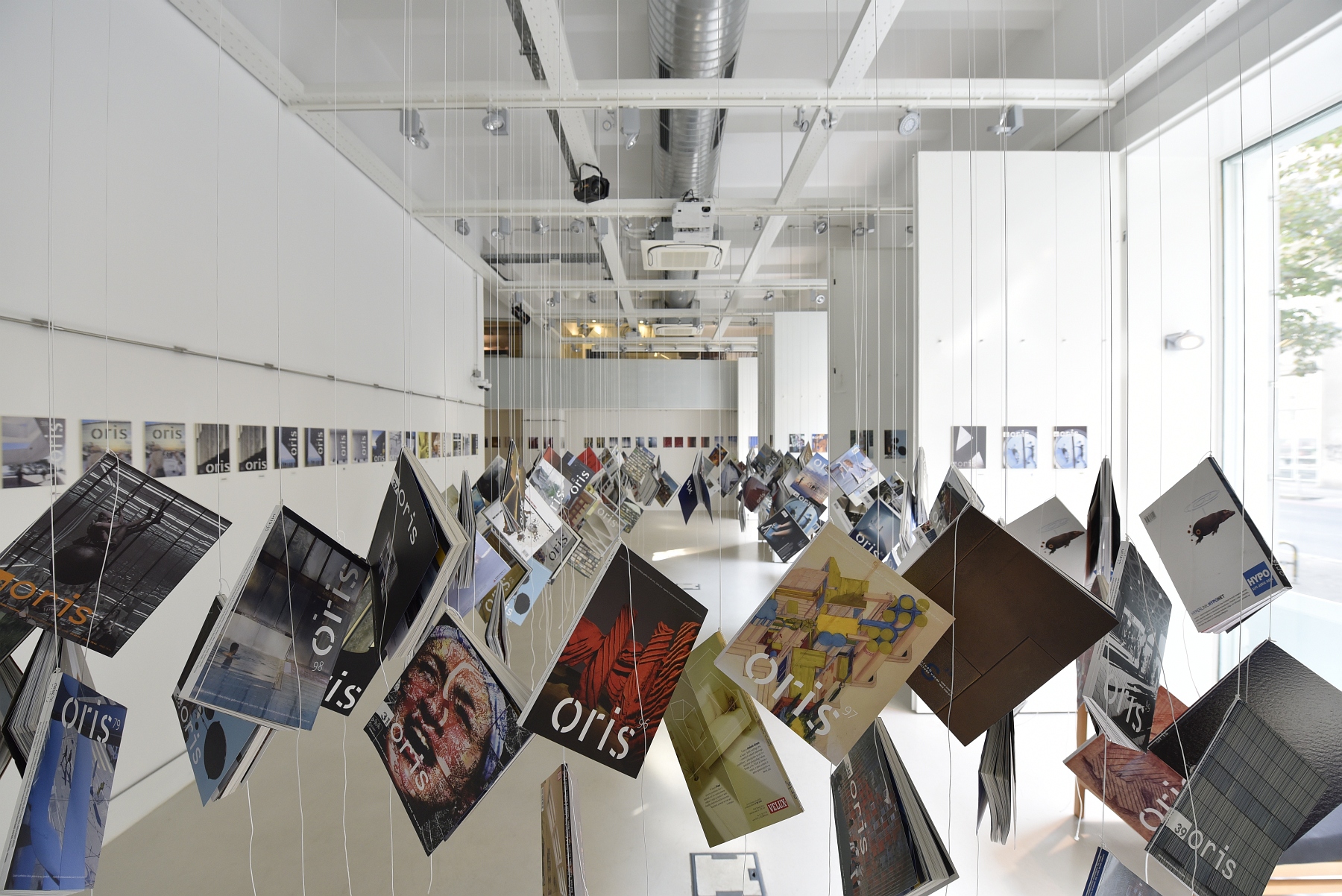
Oris magazine for architecture and culture
(case
study 14), exhibition ‘Oris 100’.
© Damil Kalogjera
(15) FEDERAL BAUKULTUR FOUNDATION (BUNDESSTIFTUNG BAUKULTUR) (GERMANY)
The Bundesstiftung Baukultur, launched in 2007, is an independent institution with the goal of advancing and publicising issues related to building culture. Apart from promoting Baukultur as a topic of public debate through publications, events and workshops, the foundation also initiates far-reaching debates among professionals in charge of planning and construction, also including other disciplines and fields of expertise. It receives funding from the German federal government and is the only institution of its kind in Europe. The foundation is one of very few institutions in Germany that can submit a report to Germany’s federal parliament and cabinet, thanks to a statute in law. Its main publication is the biennial Baukultur Report, which addresses current issues and gives recommendations to decision-makers. The report is available in German, French and English. The most recent edition on the topic of public spaces particularly focused on urban development and open space, designing infrastructures as well as on democracy and process culture.
(16) THE SALVOS PROJECT (FINLAND)
The Finnish Salvos project brought architectural and environmental education into visual arts, studying the content of architectural and environmental education and teaching in art schools for young people. The project examined the overlaps of the two topic areas with the help of methods from the visual arts. New targets were set for the national curriculum for visual arts after a thorough examination of arts education (1). These new targets included visual literacy, building a relationship with the arts, inclusion and influencing. The purpose of the project was to enhance environmental awareness and to increase knowledge of the history and the present-day impact architecture has on our lives and the role it plays in building a sustainable future. The project focused on the immediate surroundings as a learning environment and supported children and young people to take a stand on environmental planning, also encouraging them to create works of art in public spaces. The Salvos project helped to establish experiential and communal teaching methods to strengthen visual observation of the environment and the formation of a personal relationship with the built environment and nature. It is a leading example which highlights natural heritage and biodiversity are integral parts of the built environment and of the wellbeing of societies, which require greater consideration in building processes.

Approximately 1 000 children and young people were involved in the Salvos
project in 2016–2018
© Miia Änäkkälä, Arts and Crafts School Emil Valkeakoski
(17) LANDLUFT (AUSTRIA) is a non-profit association based in Austria advocating building culture in the rural areas of German-speaking Europe, focusing on small and mid-sized towns, villages and communities. The basis of the approach is to generate an understanding of building culture as a catalyst for positive and future-proof community development. Its Baukulturgemeinde-Preis is an award given out every 4 years for exceptional Baukultur at local government level to exemplary communities in Austria and southern Germany. An exhibition shares the winning communities’ experiences and approaches, combined with study trips, workshops and lectures.

20th anniversary of Landluft 2019.
© Landluft / Jonathan
Meiri
Findings and observations
- A solid framework for informal and formal learning strategies when teaching the topics of spatial design and architecture in primary and secondary education will positively increase awareness of the living environment. Poland’s ‘ADE – Architektura dla edukacji – Architecture for education’ course is a good example of this approach.
- There is a wide range of topics and issues that can be included in educational frameworks and curricula, with perspectives ranging from local to national to international. This can include the value of historic sites, reuse of materials and structures, the circular economy, spatial design, the use of scale in architecture, design craftsmanship, international initiatives such as the UN’s sustainable development goals, professional skills and social awareness. Generally, it is important to link the challenges facing societies to design thinking.
- In formal education, it is important to re-activate the awareness of spatial design and architecture from time to time so pupils will encounter the topic several times during their school years and also have this reflected in the curriculum.
- Informal manuals and tools for citizens who want to work on their spatial environment and its quality will help to foster awareness and public participation. This may be promoted by national governments.
(1) ‘Basic education in the arts’ is art education provided primarily for children and young people on an extracurricular basis. Basic education in the arts is organised across Finland in nine art forms: architecture, visual arts, crafts, media arts, music, literary art, circus art, dance and theatre. It is an official part of the Finnish educational system, with its own legislation and National Core Curriculums. It is goal-oriented education that progresses from one level to the next. Basic education in the arts comprises two syllabuses: the general (500-hour) syllabus and the advanced (1300-hour) syllabus. The schools’ financing comes from ministries, municipalities and participation fees.